



What if Ocrevus treatment didn’t have to mean another long drive to an infusion center or a hospital appointment? If you’re balancing work, family, and multiple sclerosis care, it’s understandable to want a calmer, more private setting. For some patients, Ocrevus at home may be an option, with care coordinated with their neurologist and insurance plan.
This guide explains how to explore home-based Ocrevus care in Syracuse, Rochester, or Albany, including the steps involved, the role of nursing support, and questions to ask about coverage and eligibility. Ocrevus IV maintenance infusions typically take 2.5 to 4 hours. If home administration is appropriate, receiving treatment at home may reduce travel and make the treatment day more manageable.
You’ll also learn how to discuss this option with your neurology team and ask a local infusion provider about care coordination. The goal is a clear, clinically supported plan that fits your needs while maintaining appropriate oversight.
Key Takeaways
- Learn what to discuss with your neurologist when considering Ocrevus at home or in an infusion suite.
- Compare IV Ocrevus with the subcutaneous option, including how their administration schedules differ.
- Find out which insurance and authorization details to confirm before planning a change in treatment setting.
- See how to ask a local provider about care coordination in Syracuse, Rochester, and Albany.
- Explore how a private treatment setting and professional nursing support may make infusion days feel more manageable.
Understanding Ocrevus at Home: Why Patients are Making the Switch
Ocrevus, whose generic name is ocrelizumab, is a B-cell therapy used to treat relapsing forms of multiple sclerosis (RMS) and primary progressive multiple sclerosis (PPMS). It targets specific B cells involved in the immune response. For a concise overview of its uses and how it works, see Ocrelizumab (Ocrevus).
For patients who qualify, Ocrevus at home may replace some trips to a hospital or infusion center with treatment in a familiar, private setting. Home infusion is one possible care setting, subject to clinical suitability, insurance approval, and provider availability. Traditional “white bag” arrangements generally involve medication supplied through a specialty pharmacy for administration at a designated care site. Home treatment may reduce time in a busy shared facility, but it cannot eliminate infection risk or replace appropriate medical monitoring.
For a related perspective on making daily life at home more supportive for people with MS, watch this video from Aaron Boster, MD:
The Evolution of MS Treatment Locations
Patients have typically received Ocrevus in infusion centers or hospitals, while home and suite-based care are also options to discuss. The right setting depends on health needs and the treatment plan, not convenience alone. For people traveling from Rochester or Buffalo, or from communities around Auburn or Binghamton, the trip can add fatigue and time away from work or family. Ask your neurologist and infusion provider whether a home or suite option is available for your location and treatment plan.
These alternatives reflect a broader move toward care outside hospital outpatient departments. They don’t mean every patient is eligible, or that home treatment is automatically more cost-effective. Coverage, authorization, and individual circumstances all matter.
Safety and Monitoring in a Private Setting
Before Ocrevus administration, premedication typically includes medicines such as a corticosteroid and an antihistamine to help reduce the risk of treatment-related reactions.
In a home-care arrangement, a nurse may monitor vital signs and watch for reactions during treatment. Before scheduling, ask the provider to explain the monitoring plan, what emergency-response procedures and equipment are available, and when a hospital setting may be more appropriate. A private setting should still have clear clinical safeguards tailored to your treatment and medical history.
IV Infusion vs. Subcutaneous Injection: Your Ocrevus Options
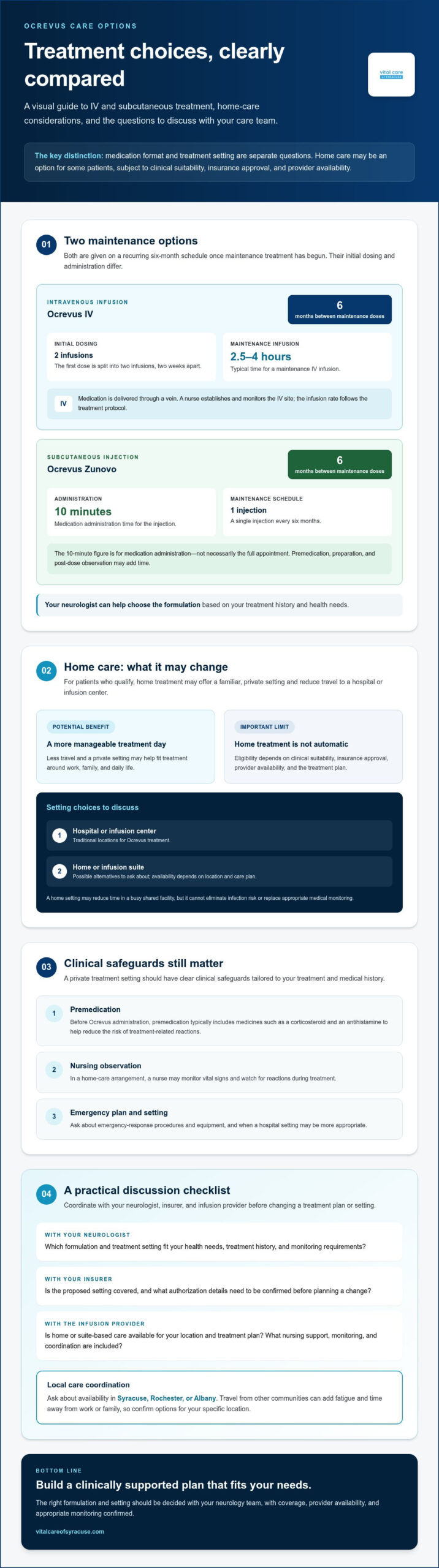
Ocrevus is available as an intravenous (IV) infusion and as Ocrevus Zunovo, a subcutaneous injection. Both are given on a recurring six-month schedule once a patient is on maintenance treatment, but their initial dosing and administration differ. With IV Ocrevus, the first dose is split into two infusions two weeks apart; maintenance infusions follow every six months. Ocrevus Zunovo is administered as a single injection every six months. Your neurologist can help determine which formulation fits your treatment history and health needs.
One practical distinction matters when considering Ocrevus at home: a short injection time doesn’t necessarily mean a short appointment. Premedication, preparation, and post-dose observation may add time. Care arrangements also depend on clinical suitability, provider availability, and insurance approval.
Traditional Ocrevus IV Infusion
IV treatment delivers medication through a vein. A nurse establishes and monitors an IV site while the infusion runs. Maintenance appointments typically take 2.5 to 4 hours. The infusion rate is managed according to the treatment protocol, with observation for possible reactions. Some patients may feel more comfortable with this gradual, closely supervised process, particularly if they have concerns about reactions or have done well with IV treatment. Hydration needs vary, so ask your clinician whether fluids are appropriate rather than assuming they’re part of every infusion.
Ocrevus Zunovo: The 10-Minute Injection
Approved by the FDA in 2024, Ocrevus Zunovo combines ocrelizumab with hyaluronidase-ocsq, which helps deliver the medication under the skin. The 10-minute subcutaneous injection can reduce medication administration time compared with an IV infusion. However, the first dose requires a one-hour observation period, and later doses require 15 minutes of observation. Premedication and nursing coordination may add to the total visit, including in a home setting.
Switching isn’t simply a matter of choosing the faster format. Your neurologist should review your current regimen, treatment history, and whether the injection is appropriate. The care team can also clarify authorization and coverage. Ask whether subcutaneous administration can be arranged at home or in a suite in your area, since availability may vary. Vital Care of Syracuse provides home- and suite-based infusion services. Ask the team whether Ocrevus can be coordinated for your care plan, or learn about local infusion care as you discuss your options with your care team.
The Benefits of Choosing Home Care Over Hospital Infusion Centers
For some people receiving Ocrevus, home infusion can make treatment feel less like a full day organized around a hospital visit. Instead of traveling to a busy Rochester hospital, waiting in a shared infusion area, and arranging the trip home, a patient may receive care in a familiar setting with a nurse focused on their treatment. Home care isn’t right for everyone. Eligibility, clinical needs, and insurance coverage all matter, but it can offer a different balance of privacy and professional oversight.
Less travel may also mean less fatigue and logistical strain for patients and caregivers. Stress and fatigue can make day-to-day MS symptoms more difficult to manage, so tell your neurologist if infusion days seem to affect how you feel. Don’t assume a change in symptoms is simply stress or a pseudo-exacerbation. Your care team can help assess what’s happening.
Personalized Clinical Attention
At home, the nurse can focus on one patient during the visit, monitor their response, and explain what’s happening as treatment proceeds. A familiar care team, when available, may also learn a patient’s preferences and concerns over time. For someone in Albany or Utica, home or suite-based care may reduce the burden of getting to a larger medical center while keeping treatment clinically coordinated.
The setting can feel more personal, too. Patients may be able to choose a comfortable chair, adjust the lighting, and have permitted snacks nearby. Discuss scheduling needs with the provider in advance. Home appointments may offer more flexibility, but timing depends on clinical coordination and availability. These details can help you plan around work or family responsibilities without assuming every preferred time can be accommodated.
For more on what to consider when choosing a provider, read about the benefits of a local home infusion company.
Economic Advantages of Home Infusion
Home infusion may be more cost-effective than treatment in a hospital outpatient setting, but the actual financial impact varies. Insurance rules, authorization, and where medication and nursing are billed can affect a patient’s out-of-pocket responsibility. Ask your insurer and care provider to clarify coverage before making a switch. Request an explanation of any applicable patient costs rather than assuming home care will automatically be less expensive.
It’s also useful to account for expenses beyond the treatment itself. Driving to a center in Syracuse or Buffalo may involve gas, parking, time away from work, or a caregiver’s lost wages. A home visit may reduce some of those burdens, depending on your circumstances. Ask whether manufacturer assistance programs may apply to your insurance situation. Eligibility varies, and assistance isn’t guaranteed through a home infusion provider. Comparing the full logistics and coverage picture can help you decide whether Ocrevus at home is a practical fit.
How to Transition to At-Home Ocrevus Therapy in New York
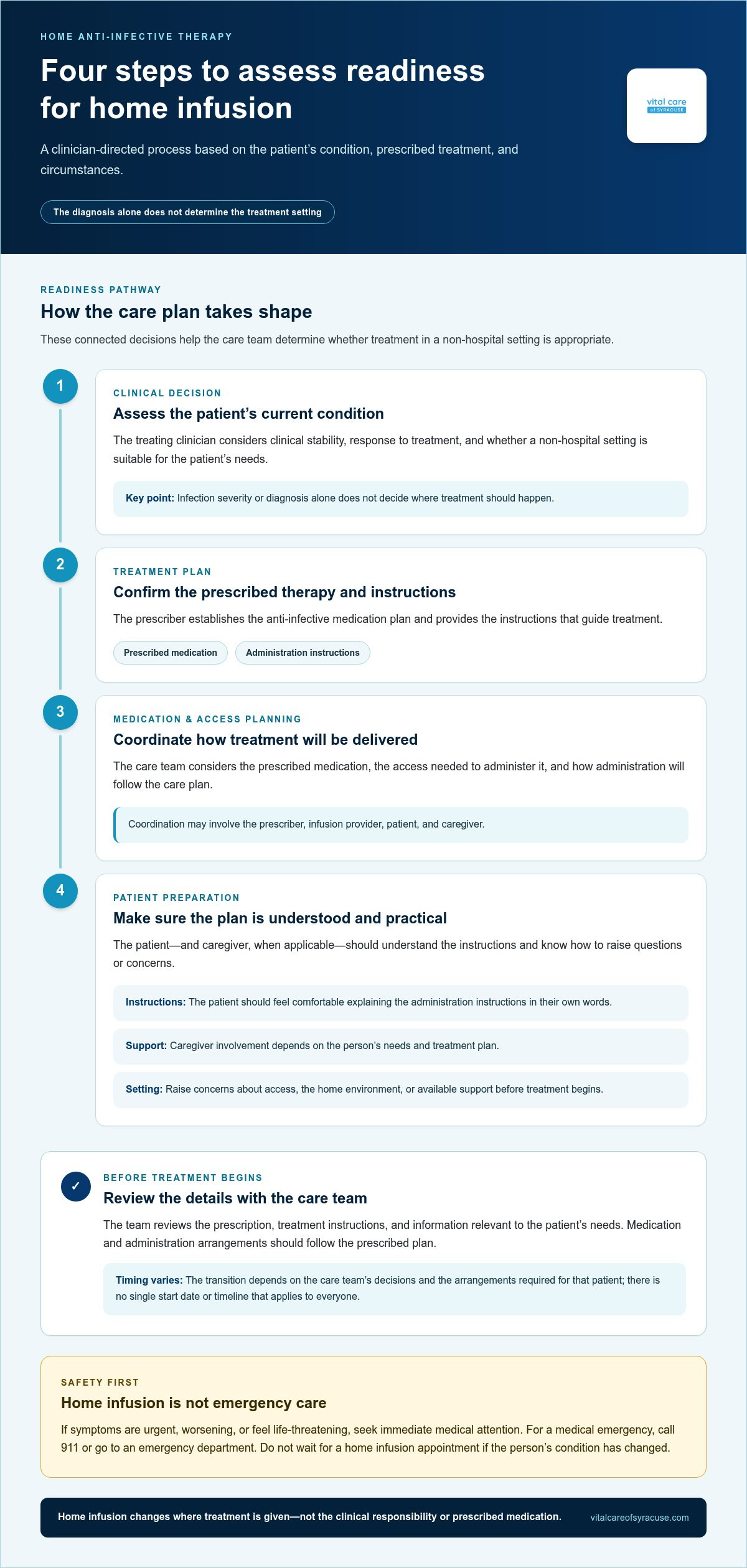
Moving treatment out of a hospital involves more than choosing a location. Your neurologist, infusion provider, pharmacy, and insurer may all need to coordinate. The steps can vary by plan and individual medical needs. Use this sequence to start the conversation and clarify what must be in place before a home visit is scheduled.
- Discuss your options with your neurologist. Ask whether home administration or an infusion suite is appropriate for your treatment history and health needs.
- Identify a local infusion provider. Ask about availability in your area and how the provider coordinates with your neurology team.
- Confirm insurance requirements. The provider or insurer can explain benefits, prior authorization, and required documentation. Don’t assume approval until it’s confirmed.
- Plan the first visit. If home care is approved, ask whether an assessment is needed and what to expect on treatment day.
Working with Your Neurologist
In Rochester or Syracuse, bring specific questions to your appointment: Is home infusion clinically suitable for me? What symptoms or medical factors could make a center the safer setting? Who should I contact if my health changes before the visit? You can also review this guide to home infusion for neurological disorders in Syracuse.
With your permission, your neurologist and the infusion provider’s pharmacy team can coordinate the prescribed treatment plan, medication logistics, and clinical instructions. Ask who will handle each step, what records are needed, and how you’ll learn whether prior authorization is complete. Coverage rules vary, so confirm your specific plan’s requirements directly before scheduling.
What to Expect During the First Home Visit
Before the appointment, the provider should explain any home-readiness assessment, arrival expectations, and preparation instructions. During a visit, the nurse may arrange supplies in a suitable work area, review your treatment plan, and check vital signs before administration. This creates a clinical workspace in your home, but the exact process depends on the provider’s protocol and your care plan.
Medication handling is coordinated with the dispensing pharmacy. Follow the pharmacy’s specific directions for delivery, storage, and temperature control. Contact the care team if the medication appears compromised or you’re unsure how to store it. Don’t improvise storage arrangements.
After administration, the nurse follows the prescribed observation and monitoring plan to assess your response before concluding the visit. Ask in advance how long observation is expected to last, what symptoms to report, and whom to contact with concerns afterward. For details about local home- and suite-based infusion options, contact Vital Care of Syracuse and ask whether Ocrevus may be coordinated for your care plan.
Vital Care of Syracuse: Compassionate MS Support Across Central New York
Choosing home infusion is a personal decision, and the process should be clear as well as clinically grounded. Vital Care of Syracuse is a locally owned and operated franchise within the Vital Care network. The company provides specialized home and suite-based infusion services, including anti-infective therapy, immunoglobulin therapy, and parenteral nutrition. If you’re considering Ocrevus, ask whether it can be coordinated for your treatment plan, location, and insurance coverage.
A local connection can matter during a treatment transition. Patients need clear communication, respect for their preferences, and care that recognizes the person behind the diagnosis. Ask how the provider will explain the process and coordinate with your neurology team so you know what to expect.
Local Care, National Network Support
A local provider within a national network brings community presence together with broader organizational support. If you’re considering Ocrevus at home, ask how the provider coordinates with your neurologist and pharmacy, whom to contact with questions, and whether a pharmacist is available to discuss medication-related concerns. Confirm the contact process directly rather than assuming a pharmacist or nurse is immediately available by phone.
Vital Care of Syracuse’s local service information includes Syracuse, Albany, Rochester, Utica, and Buffalo. If you live in Auburn or Binghampton (Binghamton), ask whether your address is within the current service area. Availability can depend on location, clinical suitability, and insurance arrangements, so confirm before making plans.
Getting Started with Your Home Infusion
Begin by discussing home or suite-based treatment with your neurologist. If the option is appropriate, ask the infusion provider what information is needed to review your referral, confirm coverage, and determine whether prior authorization applies. Insurance requirements differ by plan, so request confirmation of benefits and any approval status before scheduling. You can also ask whether the provider assists with insurance verification or paperwork, and which steps you’ll need to complete yourself.
Before proceeding, clarify how the first visit is planned, what nursing support is involved, and how the care team will communicate with your prescriber. These practical details help you make an informed choice without assuming that every patient, treatment, or insurance plan follows the same process.
For a personal discussion about whether home or suite-based infusion may fit your care plan, contact Vital Care of Syracuse to discuss your MS home infusion options.
Explore a More Supported Path to MS Infusion Care
Choosing where and how to receive Ocrevus is a decision to make with your neurologist, based on your clinical needs, treatment history, and insurance requirements. As you consider Ocrevus at home, remember that home and infusion-suite care may offer alternatives to a hospital visit, while still requiring careful coordination and monitoring. Confirm your eligibility, coverage, and authorization details before making plans.
Vital Care of Syracuse provides specialized home- and suite-based infusion services in the region. If you’re in Syracuse, Rochester, Buffalo, Albany, Utica, Auburn, or Binghampton (Binghamton), ask the team whether your location and treatment needs can be accommodated. You can also ask what support is available for understanding insurance requirements and whether any co-pay assistance resources may apply to your situation.
If you’re ready to discuss whether home or suite-based infusion could fit your care plan, contact Vital Care of Syracuse to discuss your infusion options. A conversation with your neurologist and infusion provider can help clarify the next steps.
Frequently Asked Questions
Is Ocrevus at home as safe as in a hospital?
Home treatment may be an option for patients whose neurologist and infusion provider determine it is appropriate, but safety depends on individual health needs and the care plan. A qualified nurse can administer treatment and monitor for reactions, while a hospital offers access to its on-site resources. Ask your care team to compare settings for your situation, including how reactions are managed and whether a home or infusion suite is suitable.
Do I need to buy any medical equipment for home Ocrevus infusions?
Ask the infusion provider before purchasing anything. Patients generally shouldn’t arrange infusion equipment independently. The provider can explain which medication, supplies, and equipment are arranged for the visit and whether you need to prepare a suitable space. Follow the pharmacy’s specific directions for medication delivery and storage, including temperature requirements. If you’re unsure whether something is needed or how to handle it, contact the care team rather than buying or storing supplies on your own.
Will my insurance cover Ocrevus if it is administered at home?
Coverage depends on your insurance plan, the prescribed treatment, and any prior authorization requirements. Before scheduling, ask your insurer and infusion provider to verify benefits, explain how medication and nursing are billed, and confirm whether approval is needed for home administration. Requirements can differ between Medicare, Medicaid, and commercial plans, so don’t assume approval based on another patient’s experience. Patients in Syracuse, Albany, Rochester, Utica, Buffalo, Auburn, and Binghampton (Binghamton) should confirm their own plan details.
What happens if I have an allergic reaction during my home infusion?
Tell the nurse promptly if you notice symptoms such as itching, rash, flushing, breathing difficulty, or swelling during treatment. The nurse will follow the prescribed response plan, which may include pausing treatment and providing appropriate care. Before the visit, ask how the team handles reactions, what emergency procedures are in place, and when emergency services should be contacted. Report new or concerning symptoms immediately. Don’t wait for the infusion to finish.
Can I switch from IV Ocrevus to the Ocrevus Zunovo injection at home?
Possibly, but your neurologist must determine whether switching is clinically appropriate. Home administration also depends on provider availability and insurance approval. Ocrevus Zunovo is injected under the skin by a healthcare professional. Medication administration takes about 10 minutes, but observation and preparation add time, and the first dose has a longer observation period than later doses. Ask your neurologist and infusion provider whether home or suite-based administration is an option for you.
How long does a typical home Ocrevus nursing visit last?
A maintenance IV Ocrevus infusion typically takes 2.5 to 4 hours, and the full nursing visit may take longer because of preparation, premedication, and post-infusion observation. Visit length depends on your formulation, treatment plan, and how you respond. If you receive the subcutaneous option, the injection itself is shorter, but observation is still required. Ask the care team what to expect for your specific appointment before arranging work or family plans.
Do I need a caregiver present during my Ocrevus at-home treatment?
Whether a caregiver must be present depends on your clinical needs and the infusion provider’s policies. Ask your neurologist and provider before scheduling, especially if you live alone, need help moving around, or would feel more comfortable with someone nearby. The nurse’s role and any caregiver expectations should be explained in advance. Don’t assume a family member can replace nursing supervision, or that a caregiver is required for every patient.
Can Vital Care of Syracuse coordinate with my neurologist in Rochester or Buffalo?
Vital Care of Syracuse’s local service information includes Syracuse, Rochester, Buffalo, Albany, and Utica. Auburn and Binghampton (Binghamton) are also nearby locations to ask about. Confirm whether your specific location and care needs can be accommodated, and ask how your neurologist’s prescription and treatment instructions would be coordinated. Check referral documents, insurance authorization, and scheduling arrangements with both offices so each member of your care team understands the plan.
Leave a Reply