


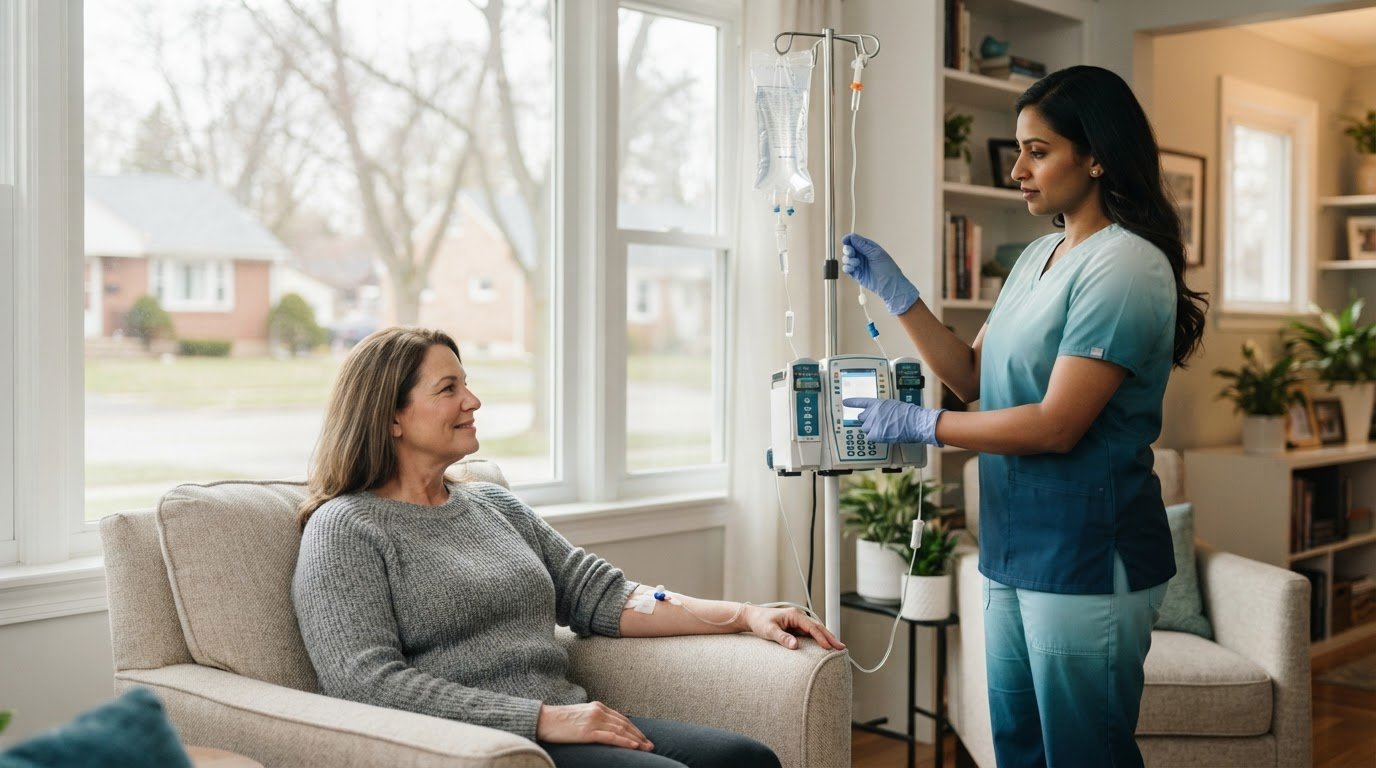
Could treatment for a bone infection continue at home with the clinical oversight it requires? If you’re searching “home infusion for bone infections Utica,” you may be weighing that possibility and wondering what infusion care involves and how it fits with the rest of treatment.
Home infusion isn’t a replacement for the clinician managing a bone infection. It’s a way to receive prescribed anti-infective therapy outside the hospital when the care team determines it’s appropriate. The clinician directs the medication plan and decisions about the infection; infusion care supports delivery of the prescribed therapy.
This guide explains how home anti-infective infusion may fit into a bone-infection treatment plan, what patients and caregivers can expect during coordination, and how to take a practical next step in Utica. Vital Care of Syracuse provides home-based and suite-based infusion care, including anti-infective therapy, for patients in Utica and other New York communities. Its local communities include Syracuse, Albany, Rochester, Utica, Buffalo, Auburn, and Binghampton.
Key Takeaways
- Learn what osteomyelitis means and why diagnosis and treatment decisions belong to the clinical care team.
- Understand how prescribed anti-infective infusion can support a bone-infection treatment plan while the clinician directs medication and duration.
- Compare home and facility-based care, and understand why suitability depends on individual circumstances.
- Review the steps involved in arranging therapy, from a clinician’s recommendation to coordinating care and understanding the plan.
- See how home infusion for bone infections Utica may be supported by Vital Care of Syracuse’s anti-infective therapy and home- or suite-based care.
Bone infection treatment in Utica: where home infusion may fit
A bone-infection diagnosis can raise questions about the treatment and where it will happen. Osteomyelitis is the clinical term for an infection involving bone. If you’re exploring home infusion for bone infections Utica, separate the treatment itself from the setting where prescribed therapy is delivered. Infusion at home changes the care setting, not who makes clinical decisions.
What does a bone infection diagnosis mean?
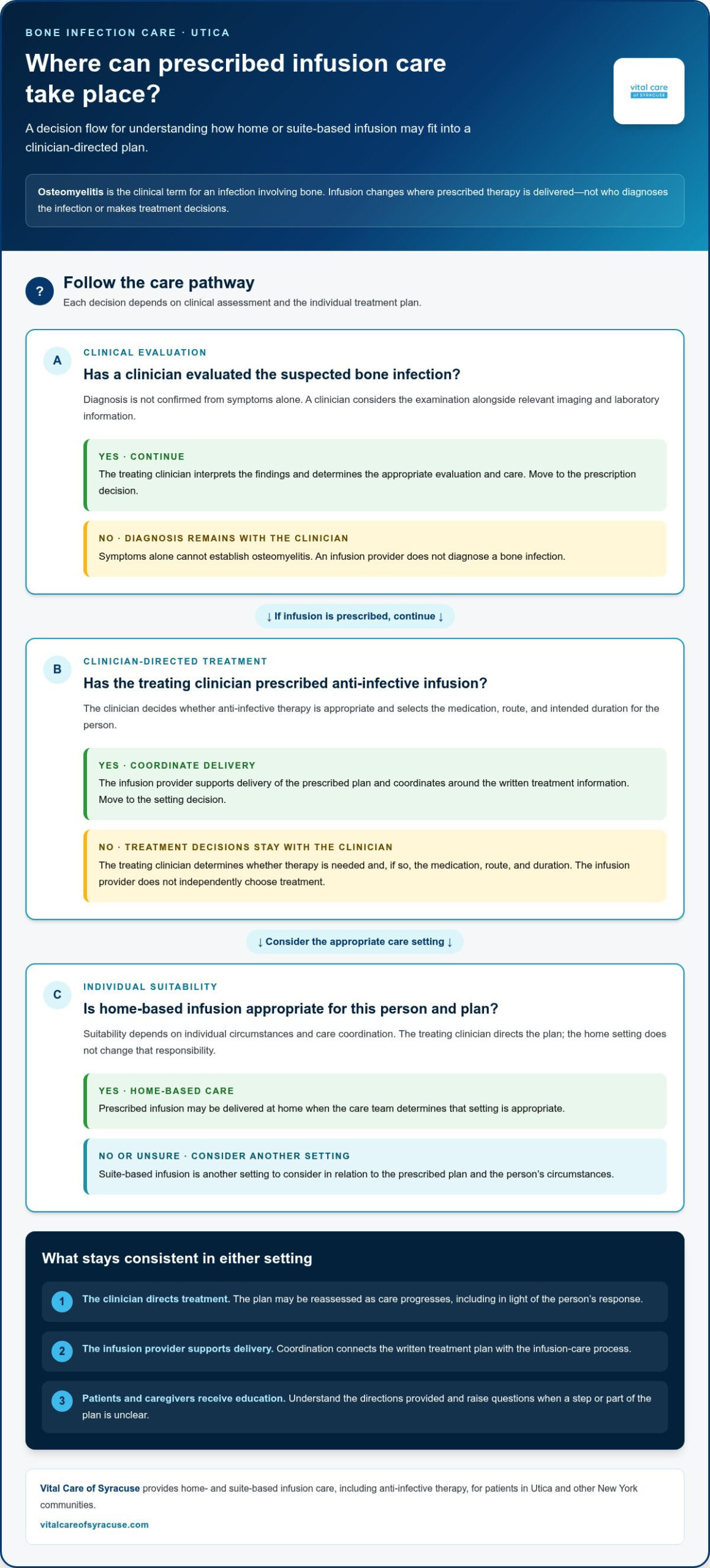
Osteomyelitis is a medical diagnosis, not something that can be confirmed from symptoms alone. How it presents and what findings appear can vary. A clinician considers the person’s examination alongside relevant imaging and laboratory information to assess the situation and determine appropriate evaluation or care. This Osteomyelitis overview describes the condition and common approaches to diagnosis and treatment, but it cannot determine what is causing symptoms in an individual.
The cause and severity help inform the treatment plan. The treating clinician interprets the available findings, decides whether anti-infective treatment is appropriate, and selects the medication, route, and duration for that person. These decisions depend on clinical judgment and individual circumstances. An infusion provider supports delivery of the prescribed plan; it doesn’t diagnose a bone infection or independently decide how to treat it.
What is home infusion for a bone infection?
Home infusion is a setting for prescribed infusion therapy. For a bone infection, the clinician directs treatment and an infusion provider supports its delivery. The arrangement depends on the prescription and care coordination. Therapy may take place at home when appropriate; Vital Care of Syracuse also provides suite-based infusion care, giving patients another setting to consider in relation to their plan.
In brief: anti-infective treatment is the clinician-directed therapy for an infection; infusion care supports delivery of prescribed therapy in an appropriate setting. This distinction can make conversations with the care team clearer. The prescription describes the planned therapy, while the infusion provider coordinates support for its delivery.
For Utica residents, home infusion for bone infections Utica can be part of a broader, clinician-directed treatment plan when home-based care is appropriate. Vital Care of Syracuse provides home- and suite-based infusion care, including anti-infective therapy, for patients in Utica and communities such as Syracuse, Albany, Rochester, Buffalo, and Auburn. The treating clinician remains responsible for diagnosis and treatment decisions; infusion support focuses on carrying out the prescribed therapy.
How prescribed anti-infective infusion supports a bone-infection plan
After a clinician assesses a bone infection, the treatment plan is tailored to the diagnosis and the person receiving care. The treating clinician decides whether anti-infective therapy is appropriate and, if so, determines the medication, route, and intended duration. Home infusion supports delivery of that prescription; it doesn’t replace the clinical decisions behind it. Knowing who guides each part of care can help patients and caregivers ask focused questions.
Who decides the medication and treatment duration?
The treating clinician makes decisions using the clinical findings and the individual’s circumstances. The plan may be reassessed as care progresses, including in light of the person’s response. There isn’t one medication or duration for every bone infection. Osteomyelitis Treatment at Johns Hopkins provides general context, but it cannot determine the right plan for an individual.
Bone-infection treatment plans differ because infections and patients’ clinical circumstances differ. A prescription may specify infusion therapy, but the clinician determines details such as route and duration, not the home setting or infusion provider. If symptoms change or you have questions about the treatment plan, raise them with the treating care team, which can interpret them in light of the patient’s situation.
How does the infusion team coordinate with the care team?
Once infusion therapy is prescribed, the infusion provider coordinates around the plan and the information needed to deliver the prescribed therapy. The provider connects the written treatment plan with the infusion-care process rather than making independent diagnosis or treatment decisions. Patients and caregivers can receive education about what the planned infusion process involves and how it fits into care.
Clear instructions help patients follow the plan and identify anything they need clarified. Make sure you understand the directions you’ve received and raise questions if a step is unclear. The care team and infusion provider have distinct roles, and communication keeps the prescribed plan at the center of care. Vital Care of Syracuse’s anti-infective therapy at-home guide offers broader context on receiving prescribed anti-infective therapy at home.
For people considering home infusion for bone infections Utica, the practical question is how the prescribed plan can be supported in a suitable setting. Vital Care of Syracuse provides anti-infective therapy and home- or suite-based infusion care, with support centered on the prescription and the patient’s circumstances. You can explore Vital Care of Syracuse’s home infusion support while discussing care arrangements with your treating clinician.
Is home infusion appropriate for every patient with osteomyelitis?
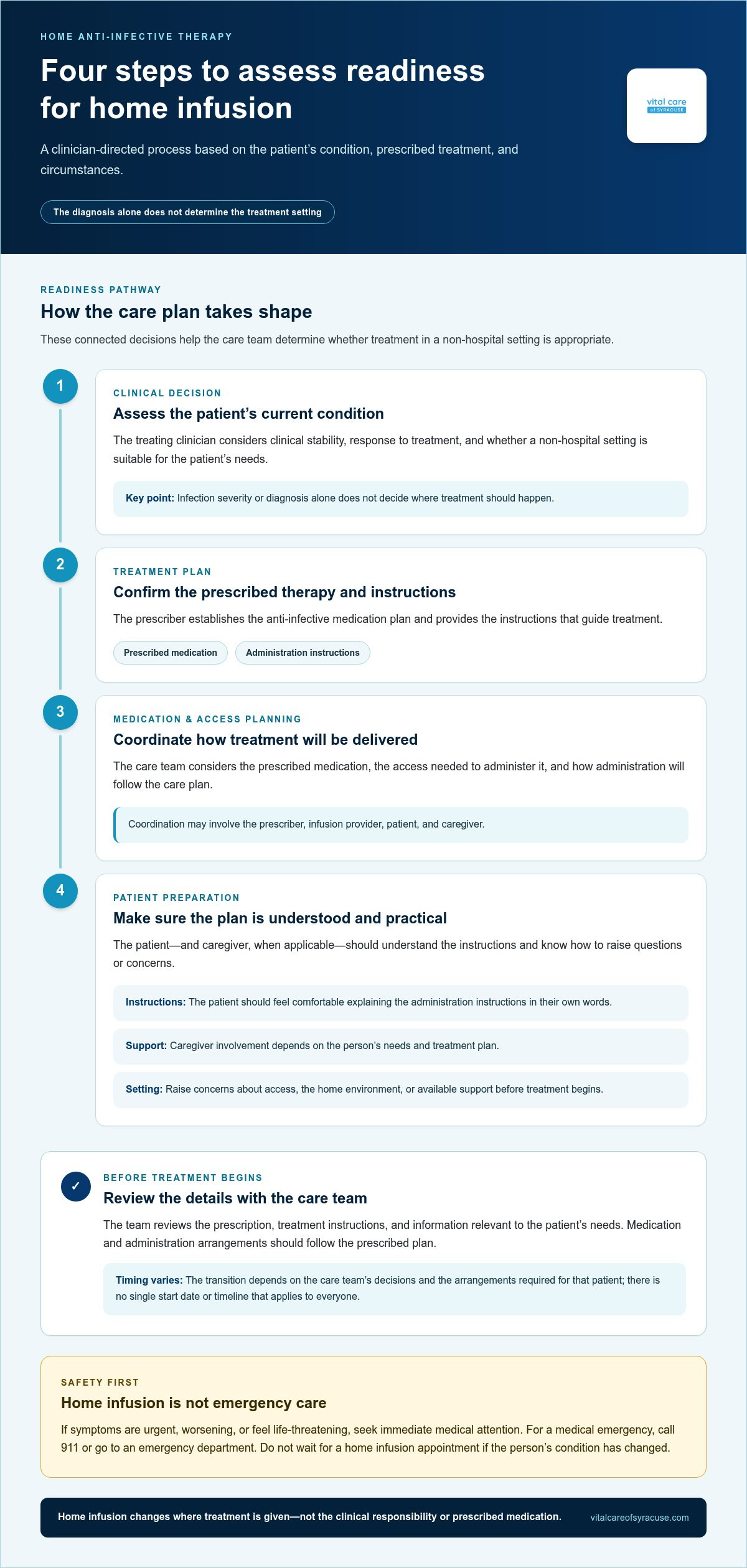
No. Home infusion isn’t suitable for every person with osteomyelitis, and a diagnosis alone doesn’t determine the care setting. The treating clinician and infusion team consider the prescribed therapy, clinical needs, home circumstances, and support available to the patient. For someone in Utica, the decision about home infusion for bone infections Utica should be part of a coordinated care discussion, not a choice based on convenience alone.
What factors may shape the care-setting decision?
The care team considers whether the prescribed therapy can be supported in the proposed setting and what coordination it requires. A patient’s overall clinical situation, ability to understand the care plan, home environment, and available caregiver support may also inform the discussion. These are considerations, not a checklist that guarantees eligibility. Each person and plan is different.
Some treatment plans or changes in clinical circumstances may call for facility-based care or additional clinical oversight. If the team recommends a different setting, that reflects the needs of the prescribed plan at that time, not a failure by the patient or caregiver. Discuss the appropriate setting as part of ongoing coordination with the treating clinician and infusion team.
How can patients compare home and facility-based infusion?
Compare the practical experience while keeping the prescribed therapy and clinical plan at the center. Home-based care takes place in familiar surroundings, while facility-based care happens in a designated treatment setting. Neither is universally preferable, and the location itself doesn’t determine which treatment is appropriate.
- Daily routine: Home care takes place within the patient’s home routine; facility care means attending an infusion setting as arranged.
- Travel: Home-based care may reduce trips for infusion, while facility-based care involves getting to the treatment location.
- Coordination: Both settings require the care plan to be understood and coordinated, though the practical steps differ.
- Support needs: The patient’s circumstances and the support available at home can help the team assess whether that setting is workable.
Home infusion isn’t a way to manage a serious infection without professional coordination. It’s a setting for prescribed infusion care when the treating clinician and infusion team determine it fits the plan. Patients and caregivers can help clarify the decision by discussing daily routines, travel, home support, and questions about the planned care.
Vital Care of Syracuse provides home-based and suite-based infusion care, including anti-infective therapy, for patients in Utica and other New York communities. Its infusion support is centered on the prescribed plan and individual circumstances. Discussing how each setting fits those needs with the treating clinician and infusion team can help clarify the care arrangement without assuming one option is right for everyone.
What to expect when arranging home infusion for a bone infection
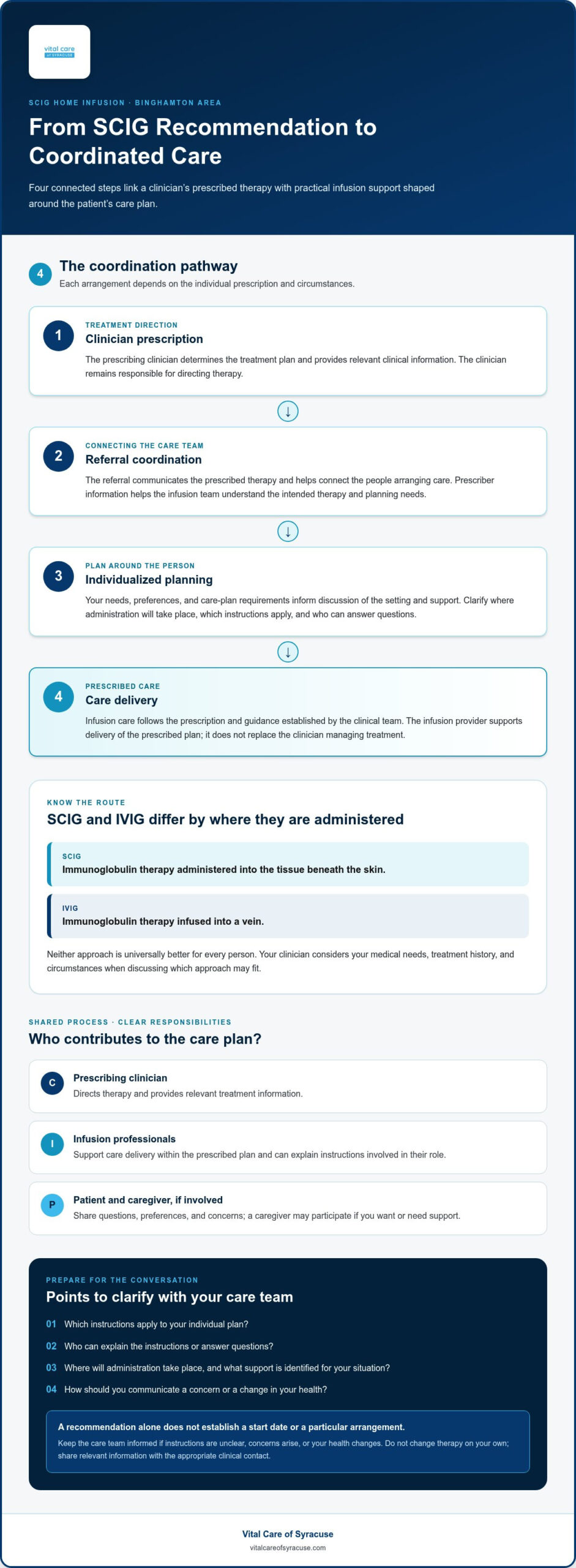
Starting home infusion involves coordination, not simply moving treatment from a facility into the home. For people considering home infusion for bone infections Utica, the process begins with the treating clinician’s recommendation and a prescription. The infusion provider works from that plan to coordinate prescribed therapy and explain the arrangements. Details depend on the prescription, clinical coordination, and individual circumstances.
What information helps the care team coordinate treatment?
Clear, current information helps align infusion arrangements with the clinician’s instructions. Share prescriptions and relevant care-team directions through appropriate secure channels, and tell the team about questions, allergies, or practical concerns that could affect care at home. Don’t post private medical details in public comments or send sensitive health information through an unsecured message.
A simple sequence can make the process easier to follow:
- Discuss the recommendation. Ask the treating clinician what therapy is prescribed, what the plan involves, and whether home or suite-based infusion is being considered.
- Coordinate the prescription. The infusion provider and care team align arrangements with the prescribed therapy and relevant instructions.
- Review the plan. Make sure you and any caregiver understand the information provided, know what to expect, and can raise questions before care begins.
For a patient in Utica, coordination should be based on the actual prescription and the people involved in the patient’s care, not assumptions about location or a standard process. Keep a current medication list and written care-team instructions together so you can refer to accurate information during conversations. If details change, share updates with the appropriate care-team contact so everyone coordinating therapy has the current plan.
How can patients and caregivers prepare for infusion care?
Practical preparation can help patients and caregivers feel more settled. Set aside a clean, comfortable space for the planned care, following instructions from the infusion team. Keep written directions and medication information somewhere easy to find, and make sure involved caregivers know where those materials are. Don’t change the prescribed plan based on guesswork; bring uncertainties to the appropriate care-team contact.
Before therapy begins, clarify whom to contact with routine questions about arrangements or instructions. Knowing the right contact can prevent confusion if something is unclear. For new, severe, or worsening symptoms, don’t wait for a routine response about infusion arrangements. Seek prompt medical attention through the appropriate clinical or emergency service.
Vital Care of Syracuse provides anti-infective therapy and home-based or suite-based infusion care for patients in Utica and other New York communities. If a clinician has recommended infusion support, learn about Vital Care’s home infusion support as you coordinate the next steps around the prescribed plan.
Explore bone-infection home infusion support in Utica with Vital Care
When a clinician recommends infusion therapy, a local point of coordination can help make the process more manageable. Vital Care of Syracuse is an East Syracuse-based home infusion provider serving Utica and other New York communities, including Syracuse, Albany, Rochester, Buffalo, Auburn, and Binghampton. Its anti-infective therapy and home-based or suite-based infusion care support treatment plans prescribed by a patient’s clinician.
How Vital Care supports anti-infective infusion care
Vital Care supports delivery of prescribed anti-infective therapy through infusion care. The clinician and care team direct diagnosis and medical treatment decisions, while infusion support is organized around the prescription and the patient’s circumstances. Home or suite-based care offers different practical settings for receiving therapy, with the arrangement guided by the care plan rather than a promised outcome or standard approach for every person.
That distinction matters. A home infusion provider doesn’t replace the clinician overseeing a bone infection; it supports the infusion component of the clinician-directed plan. For broader context on how a local provider can contribute to care coordination, explore the benefits of local home infusion in Central New York.
What is a practical next step for Utica patients?
If a clinician has prescribed anti-infective infusion, patients or caregivers can gather the current treatment plan and relevant instructions from the care team. Having these details available can make a conversation about coordination more focused and provide useful context about the prescribed therapy and the patient’s circumstances.
It can help to note questions before speaking with the care team or infusion provider. You might clarify what the clinician’s plan calls for, which infusion setting is being considered, or what information is needed to coordinate next steps. Keep clinical treatment questions with the treating clinician, who can interpret them in light of the patient’s diagnosis and care.
For those researching home infusion for bone infections Utica, Vital Care offers a local connection for prescribed anti-infective infusion care. Patients and caregivers can discuss the care-coordination process with the clinician’s plan available. A useful starting point is the prescribed therapy and the questions that matter to the patient and family.
When you’re ready, contact Vital Care to discuss infusion care coordination around the clinician-directed plan.
Take the next step with a clear plan
Considering home infusion can bring practical questions alongside medical ones: how care might fit into daily life, what support would help, and what still needs clarification. Bringing your priorities to the discussion can help make the next decision more personal and manageable.
For anyone exploring home infusion for bone infections Utica, keep the treating clinician involved as you consider the care setting. The goal is to understand how infusion support may align with the prescribed plan and your circumstances, not to make clinical decisions on your own. A thoughtful conversation can help you identify what to clarify and what step makes sense next.
Talk with Vital Care about home anti-infective infusion support and discuss care coordination in a calm, practical way.
Frequently Asked Questions
Can a bone infection be treated with home infusion?
Yes, home infusion may support prescribed treatment for a bone infection when the care team considers it suitable. The clinician decides whether infusion therapy is part of the plan, and the infusion team helps coordinate its delivery. Vital Care of Syracuse provides anti-infective infusion care for communities including Utica, Syracuse, Albany, Rochester, Buffalo, Auburn, and Binghampton. A patient’s diagnosis alone doesn’t determine whether home care is appropriate.
How long does home infusion treatment for osteomyelitis last?
There isn’t one standard duration for home infusion treatment of osteomyelitis. The treating clinician sets the plan based on the infection and the patient’s clinical circumstances, and may reassess it as care progresses. Ask the clinician how the planned duration will be communicated and what to do if instructions change. Don’t stop, extend, or alter prescribed therapy based on feeling better or on a general timeline.
Who decides whether I can receive bone-infection therapy at home?
The treating clinician and infusion team determine whether home infusion fits the prescribed plan and the patient’s circumstances. They may consider therapy requirements, the person’s care needs, the home environment, and available support. A useful question to raise is whether anything about your routine or home setup could affect the arrangement. The decision is individualized, so another person’s experience doesn’t establish what will be right for you.
Can I continue normal activities during home infusion?
Possibly, but activities should follow the instructions for your specific therapy and the guidance of your care team. Ask how to plan meals, rest, work, or errands around the infusion process, and whether any activity needs to be adjusted during care. The answer may depend on your health, the prescribed plan, and how infusion is arranged. Don’t assume that feeling well means you should change treatment instructions or activity guidance.
Will insurance cover home infusion for a bone infection?
Coverage depends on your insurance plan and the details of the prescribed therapy and care arrangement. Before care begins, ask your insurer about applicable benefits, authorization requirements, and any deductible or cost-sharing responsibilities. Keep notes on whom you spoke with and what the plan said. If you have questions about how coverage relates to coordinated infusion care, raise them with the appropriate contacts before making assumptions about your out-of-pocket responsibility.
What should I do if symptoms worsen during home infusion?
If symptoms worsen, seek prompt medical guidance rather than waiting for a routine infusion-arrangement response. Follow the instructions your care team gave you for urgent concerns; if symptoms are severe or you believe there’s an emergency, contact emergency services. Don’t change or stop prescribed therapy on your own while waiting for advice. Keeping your care instructions and the treating clinician’s contact information accessible can help you act without delay.
Leave a Reply