



A serious infection doesn’t automatically rule out treatment at home, but home infusion is never a shortcut around clinical judgment. If you searched for “home infusion for severe infections Syracuse,” you may be wondering whether home treatment could be appropriate and how medication administration and monitoring would be managed. Those are important questions, especially when care is changing after a hospital stay or clinic visit.
It’s understandable to want the comfort of home while also feeling confident that treatment is planned and supervised appropriately. The right setting depends on the individual’s clinical needs and the prescribing clinician’s direction. Home and suite-based infusion may each be considered as part of care.
This guide explains how clinicians assess whether home infusion may be suitable for certain serious infections, what safety planning and patient support can involve, and how a transition from hospital or clinic care may work. Based in East Syracuse, Vital Care of Syracuse provides anti-infective therapy through home and suite-based infusion, with care coordinated alongside prescribing clinicians. The following steps can help patients and caregivers prepare for a conversation with the care team.
Key Takeaways
- Infection severity alone doesn’t decide where treatment happens. The treating clinician considers the patient’s condition and circumstances.
- Readiness involves a clinician’s decision, a clear treatment plan, medication and access planning, and patient preparation.
- Home infusion changes the care setting, not the prescribed medication or clinical responsibility. Consider how each setting fits the patient’s needs and daily routine.
- Before treatment begins, clarify administration steps, follow-up, escalation instructions, the home setup, caregiver involvement, and how to share concerns.
- Patients considering home infusion for severe infections in Syracuse can discuss next steps with their treating clinician and Vital Care of Syracuse, which provides anti-infective therapy through home and suite-based infusion.
When can home infusion for a severe infection be considered in Syracuse?
Home infusion is the clinician-directed administration of prescribed anti-infective medication outside a hospital. It changes where treatment is given, not how serious the infection is. People searching for “home infusion for severe infections Syracuse” may be hoping to continue treatment at home after a hospital stay. Whether that is appropriate depends on the person’s condition and care needs, not on the diagnosis alone.
Clinicians consider the full picture, including the diagnosis, the patient’s response to treatment, and their overall clinical condition. They also assess whether treatment can be delivered safely in a non-hospital setting and what support the patient’s circumstances require. A serious infection may call for hospital care at one point and a different setting later, if the treating clinician determines a transition is appropriate.
What does severe infection mean for treatment planning?
“Severe” describes the seriousness of an illness, but it doesn’t by itself determine where treatment should happen. The treating clinician assesses the patient’s condition and response to care, then decides whether a change in setting is suitable. An infectious disease physician may guide the plan when involved in the patient’s care, but not every patient has one. The decision is individual, rather than based on a diagnosis alone.
When is hospital or emergency care still needed?
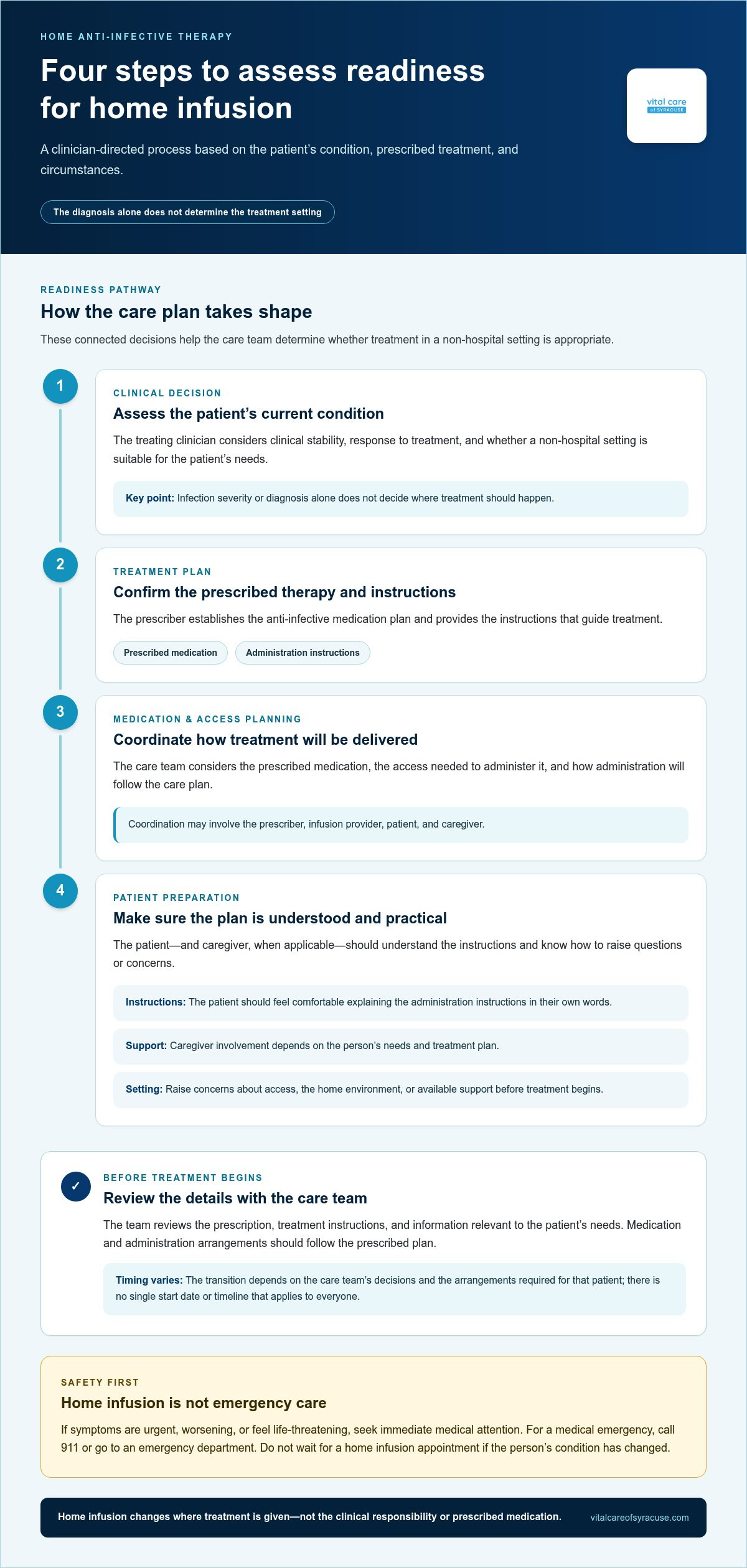
Home infusion isn’t emergency care and can’t replace urgent evaluation. If symptoms are urgent, worsening, or feel life-threatening, seek immediate medical attention. For a medical emergency, call 911 or go to an emergency department. Don’t wait for a home infusion appointment or assume a planned treatment setting is suitable if the person’s condition has changed.
For someone receiving hospital care, the treating clinician decides whether and when a transition to home or another infusion setting is appropriate. Patients and caregivers should share concerns about new or worsening symptoms with the treating team so the care plan can be reassessed. Home treatment is considered only within that clinician-directed plan, with the patient’s current needs guiding the decision.
How Syracuse clinicians assess readiness for home anti-infective therapy
Readiness isn’t determined by the infection label alone. Clinical readiness for home infusion is an individualized decision made by the care team, based on the patient’s condition, prescribed treatment, and circumstances. Understanding the steps can make a transition feel more manageable for people exploring home infusion for severe infections in Syracuse.
The plan generally takes shape through several connected decisions:
- Clinician decision: The treating clinician considers the patient’s clinical stability, response to treatment, and whether a non-hospital setting is appropriate.
- Treatment plan: The prescriber establishes the anti-infective medication plan and provides the instructions needed to guide treatment.
- Access and medication planning: The care team considers the prescribed medication, the access needed to administer it, and how administration will follow the care plan.
- Patient preparation: The patient, and caregiver when applicable, should understand the instructions and know how to raise questions or concerns.
Coordination may involve the prescriber, infusion provider, patient, and caregiver. Clear communication helps align the prescribed treatment with practical considerations, including the patient’s ability to follow instructions and the suitability of the home setting.
What happens before treatment begins?
Before home treatment starts, the care team reviews the prescription, treatment instructions, and information relevant to the patient’s needs. Medication and administration arrangements should follow the prescribed plan. The timing of a transition depends on the care team’s decisions and the arrangements required for that patient, so there isn’t one start date or timeline that applies to everyone.
What should patients and caregivers understand?
Patients should feel comfortable explaining the administration instructions in their own words and knowing whom to contact with questions. Caregiver involvement depends on the person’s needs and treatment plan; it shouldn’t be assumed that every patient needs the same level of help. If access, the home environment, or available support raises concerns, bring them to the care team before treatment begins. Addressing these details during planning can reduce uncertainty on the first day of therapy.
Vital Care of Syracuse provides anti-infective therapy through home and suite-based infusion for patients in the Syracuse area. Discuss the proposed treatment setting with the treating clinician, then connect with Vital Care of Syracuse infusion support as part of coordinating next steps.
Home infusion or hospital care: how to understand the trade-offs
Home infusion and hospital care can both be part of infection treatment, but they offer different settings and routines. The key question isn’t which is universally better. It’s whether the patient’s current clinical needs can be supported safely in the setting selected by the treating team.
Home infusion changes the care setting, not the prescribed medication or the clinical responsibility for the treatment plan. Home treatment still requires appropriate instructions, support, and a clear plan for communication and follow-up. The comparison below can help patients and caregivers frame a conversation with the care team.
| Consideration | Home infusion | Hospital care |
|---|---|---|
| Setting | Prescribed infusion is given in the patient’s home, if the care team considers that setting appropriate. | Treatment takes place in a hospital, where hospital-based services are available. |
| Clinician oversight | Oversight, monitoring, and follow-up are arranged according to the individual treatment plan. Care isn’t provided at the bedside continuously. | The patient is in a hospital setting with clinical staff and hospital resources available on site. |
| Daily routine | Home may offer familiarity and reduce trips to a facility, while requiring the patient to follow instructions and keep planned communication with the care team. | Care takes place within the hospital’s routines and may involve remaining there or returning for hospital-based treatment. |
| Patient-specific fit | May be considered when the clinical plan and individual circumstances support treatment outside the hospital. | May be needed when the patient’s condition or care requirements call for hospital-based treatment. |
What may home treatment change in daily life?
For some eligible patients, receiving treatment at home can make familiar surroundings part of the routine and may reduce facility visits. Those advantages depend on the person and their plan. Home infusion also calls for attention to administration instructions, scheduled communication, and practical needs related to the home setting. It’s an option for selected patients, not a universal replacement for hospital care.
What oversight and safety planning matter?
The care team determines what monitoring and follow-up the treatment plan requires. This can include clear directions for administering medication, infection-prevention practices, and instructions for what to do if a concern arises. The Infectious Diseases Society of America’s 2018 outpatient parenteral antimicrobial therapy guideline, published in Clinical Infectious Diseases in 2019, recommends serial laboratory monitoring for patients receiving OPAT. The treating team should guide the specific monitoring plan.
For anyone considering home infusion for severe infections in Syracuse, the practical trade-off is between settings, not between receiving care and going without it. Ask the treating clinician how the plan addresses oversight, communication, and changes in the patient’s condition.
Questions to discuss before starting home infusion in Syracuse
A clear conversation before treatment begins can help patients and caregivers understand what to expect and where to turn with concerns. Use these questions to guide a discussion with the treating clinician and infusion team if you’re considering home infusion for severe infections in Syracuse. Answers should reflect the individual prescription and care plan.
Questions about medication and follow-up
- What medication schedule has the prescriber ordered? Ask how and when each dose should be administered, and request clarification about any instructions that are unclear.
- What should we do if a dose is delayed or an administration concern comes up? Confirm the steps to follow rather than making changes to the prescribed schedule independently.
- Which symptoms or changes should prompt a call to the care team? Ask whom to contact and what to do if the patient’s condition worsens or a new concern develops.
- How will follow-up and response to treatment be reviewed? Clarify what follow-up the individual plan includes and how the team will communicate about the patient’s progress.
Questions about home preparation and coordination
- What preparation does the home setting require? Discuss where treatment will take place and whether practical needs or accessibility concerns could affect administration.
- Who should we contact with routine questions? Make sure the patient and caregiver know the appropriate contact for treatment questions and concerns.
- What role, if any, should a caregiver have? Discuss the patient’s needs and preferences so everyone understands whether caregiver participation is part of the plan.
- What should we know about coverage and payment? Benefits depend on the patient’s insurance plan and individual coverage details. Ask the appropriate care or insurance contact how benefits and any patient responsibilities apply.
Write down the answers and keep the instructions accessible to the patient and anyone involved in care. If information changes or the plan is unclear, raise the concern with the care team before acting on an assumption. For information about Vital Care of Syracuse’s anti-infective therapy, learn about anti-infective infusion support.
Getting started with Vital Care of Syracuse anti-infective therapy
For patients in the Syracuse area considering infusion treatment, the next step is a conversation with the clinician directing infection care. Vital Care of Syracuse provides anti-infective therapy through home and suite-based infusion. The treating clinician and infusion team can coordinate around the prescribed treatment plan and discuss which setting may be appropriate for the patient’s needs.
Home infusion for severe infections in Syracuse isn’t a decision patients need to make alone. The treating clinician guides the clinical decision, while the patient or caregiver can raise practical questions about the proposed setting, instructions, and support. The care plan, rather than a general rule, guides what happens next.
How to begin a care conversation
Start by asking the treating clinician whether home or suite-based infusion should be considered as part of the prescribed plan. Share questions about the transition, administration, or home circumstances so they can inform the discussion. Patients and caregivers can then connect with Vital Care of Syracuse to discuss its anti-infective therapy service in relation to that plan.
To learn more about the service and how anti-infective treatment at home is approached, explore the anti-infective therapy information.
What support can patients expect from a local infusion provider?
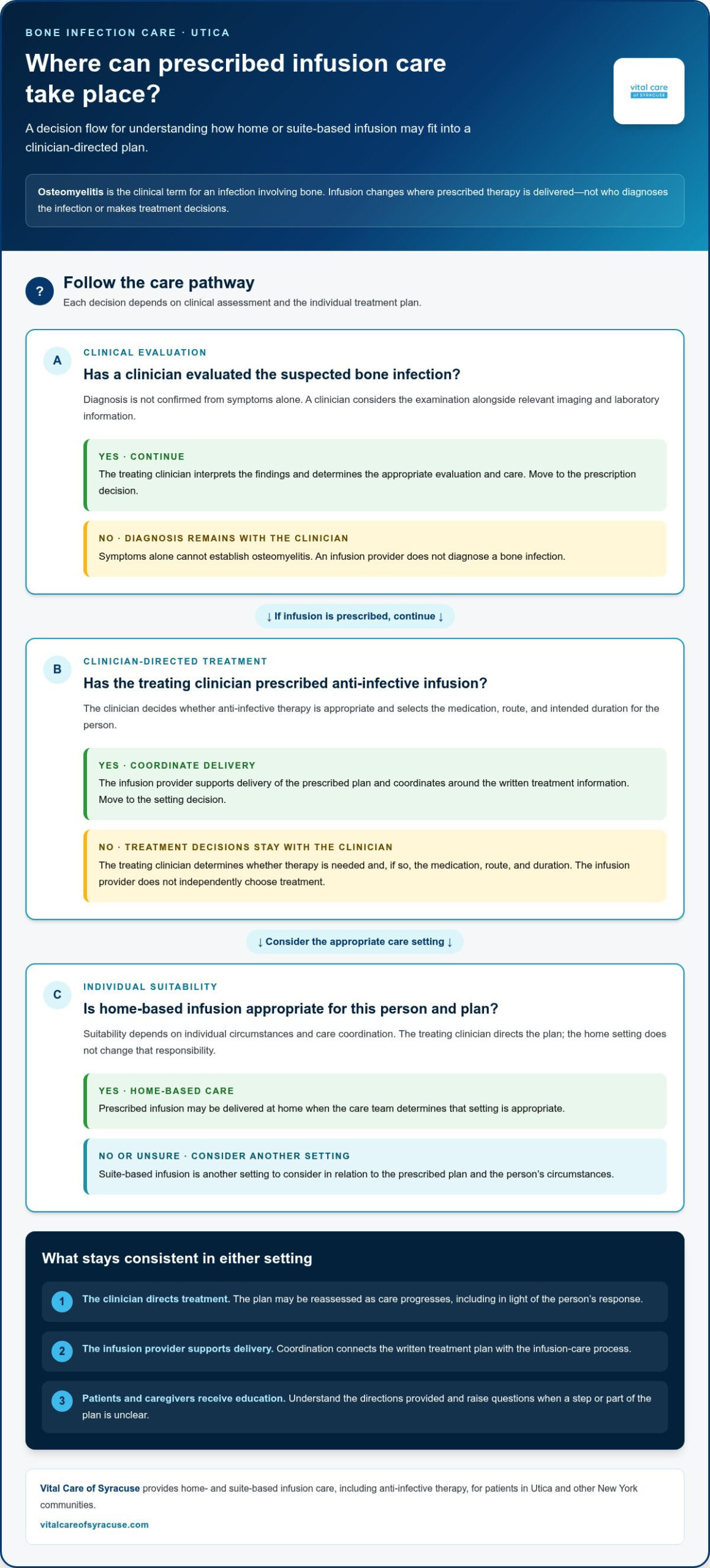
Based in East Syracuse, Vital Care of Syracuse is a specialized infusion provider offering home-based and suite-based care. These settings provide different ways to receive infusion treatment; neither is automatically suitable for every patient. The right arrangement depends on the clinician’s direction and the individual treatment plan.
Vital Care of Syracuse serves patients in Syracuse, Albany, Rochester, Utica, Buffalo, Auburn, and Binghampton. Bring questions about the prescribed therapy and care setting to the treating clinician and Vital Care team as you plan next steps. Treatment setting, eligibility, coverage, timing, and expected outcomes depend on individual clinical and plan details.
Explore your next step with a local infusion team
Home infusion may be an option for some people receiving treatment for a serious infection, but the care setting depends on the treating clinician’s assessment and the patient’s individual needs. A clear plan should explain how treatment will be administered, what follow-up involves, and how to raise concerns. Home care changes where infusion takes place, not the clinical responsibility behind the prescribed therapy.
For people researching home infusion for severe infections in Syracuse, Vital Care of Syracuse offers specialized anti-infective therapy through home-based and suite-based infusion. Based in East Syracuse, the team serves Syracuse, Albany, Rochester, Utica, Buffalo, Auburn, and Binghampton. The treating clinician can help guide a conversation about the treatment setting and coordinate around the prescribed plan.
Explore anti-infective therapy support from Vital Care of Syracuse to learn more about local infusion care. With clinical guidance and a thoughtful plan, patients and caregivers can take the next step with greater clarity.
Frequently Asked Questions
Can a severe infection be treated with home infusion?
Yes, some serious infections may be treated with prescribed anti-infective medication through home infusion when the treating clinician determines that setting is appropriate. Infection severity alone doesn’t decide where care should happen; the patient’s condition, response to treatment, and support needs all matter. People exploring home infusion for severe infections in Syracuse should discuss setting options with the clinician directing their care.
Is home infusion safe for serious infections?
Home infusion may be appropriate when an individualized clinical plan and suitable support are in place, but no care setting is right for every patient. The treating team determines what administration instructions, monitoring, follow-up, and escalation guidance the plan requires. Patients and caregivers should understand whom to contact with questions and what changes need prompt attention. Urgent or worsening symptoms require immediate medical attention, not waiting for a planned infusion.
What happens before starting home anti-infective therapy?
Before treatment begins, the care team reviews the prescription, medication instructions, and information relevant to the patient’s needs. The prescriber determines the treatment plan, while the patient and caregiver, when involved, should understand how administration will work and whom to contact with concerns. The team also considers practical factors such as the home setting and available support. Timing depends on the individual plan and coordination required.
How long does home infusion treatment for an infection last?
There isn’t one standard duration for home infusion treatment of an infection. The prescribed course depends on the medication plan and the patient’s clinical needs, while the treating clinician guides decisions about treatment and any changes. Patients should follow the instructions they receive and avoid stopping or adjusting medication on their own. Ask the care team how treatment response and follow-up will be reviewed for the individual plan.
Can I receive home infusion after a hospital stay in Syracuse?
Home infusion may be considered after a hospital stay if the treating clinician determines that a transition is appropriate for the patient’s condition and treatment plan. Vital Care of Syracuse is based in East Syracuse and provides home-based and suite-based infusion. Its local service area includes Syracuse, Albany, Rochester, Utica, Buffalo, Auburn, and Binghampton. The treating team guides the care-setting decision and coordination around the prescribed therapy.
What should I ask before starting home infusion for an infection?
Ask what medication schedule and administration instructions have been prescribed, what symptoms or changes should prompt a call, and how follow-up will review treatment response. Clarify whom to contact with routine questions and what to do if a concern arises. Discuss home preparation, accessibility needs, and whether a caregiver has a role in the plan. Write down the answers so the patient and caregiver can refer to them.
Does insurance cover home infusion for severe infections?
Coverage depends on the patient’s insurance benefits, plan details, and prescribed treatment. Don’t assume that every medication, service, or setting is covered in the same way. Review the plan information and ask the insurer or appropriate care-team contact how benefits, authorizations, and patient responsibilities apply to the individual situation. For help understanding Vital Care of Syracuse’s anti-infective therapy in relation to a prescribed plan, contact the team.
Leave a Reply