



If you’re wondering how to prevent infusion site infections, it’s understandable to feel unsure about what to clean, what to leave alone, and whether redness or soreness is routine. The right care depends on your type of access and treatment, so use your clinician’s instructions to guide your routine.
This guide can help you feel more prepared to care for your infusion site at home, but it does not replace advice from your care team. You’ll learn what to do before, during, and after an infusion, how to keep the area and supplies clean, and which changes to report. We’ll also cover warning signs such as spreading redness, increasing pain, warmth, swelling, or drainage. Consistent clean handling and early communication make infection prevention a shared part of your care.
Key Takeaways
- Identify your type of infusion access so you can follow site-care instructions for your prescribed treatment.
- Learn how to prevent infusion site infections with clean-handling habits that match your training and care plan.
- Know which site changes to report, while remembering that symptoms can have different causes and need clinical assessment.
- Use a before-during-after checklist to prepare your workspace, handle supplies as instructed, and observe your site.
- Clarify questions with your prescribing and infusion teams, including when receiving anti-infective therapy at home.
How to Prevent Infusion Site Infections Starts With Knowing Your Access Type
Careful, consistent site care can lower the chance of infection, but no routine can remove the risk entirely. To learn how to prevent infusion site infections, start by identifying your access device and following instructions written for that device. A routine that’s appropriate for a short-term peripheral IV may not be right for a central line or a subcutaneous infusion site.
An infusion-site infection involves the skin or tissue where an infusion device enters the body, or nearby structures affected by that device. It’s different from an infection in the medication itself. The entry point and the external parts you may handle depend on your access type. Intravenous therapy provides general background on IV access and its risks.
For a visual overview of IV line care, watch this video:
What counts as an infusion site, and why does the device matter?
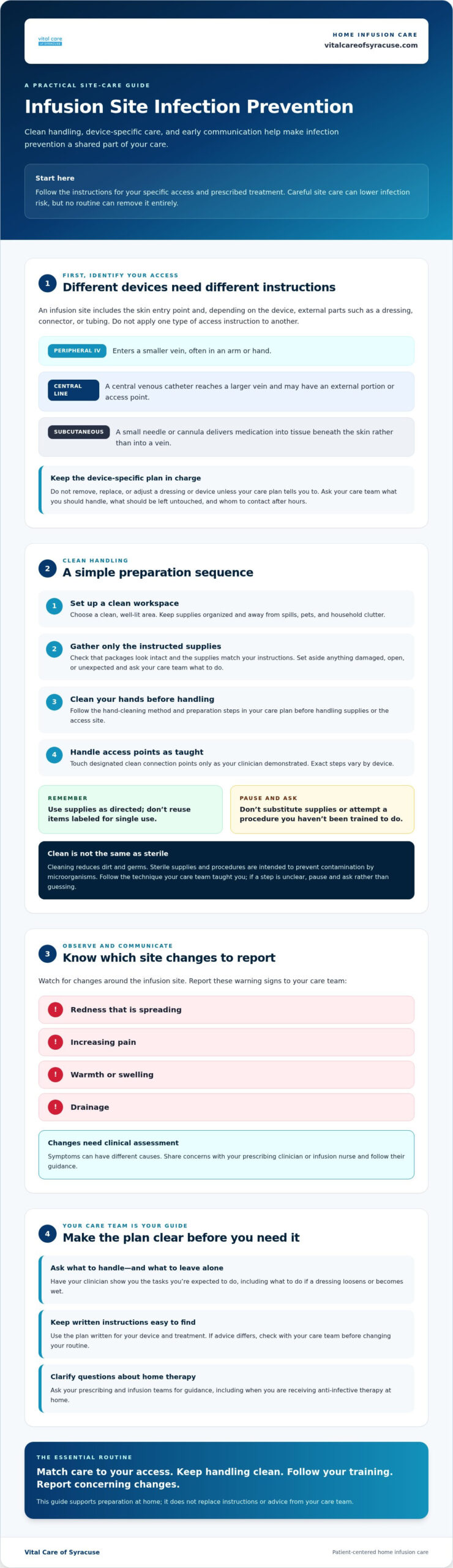
The site includes the skin entry point and, depending on the device, external parts such as a dressing, connector, or tubing. A peripheral IV enters a smaller vein, often in an arm or hand. A central venous catheter reaches a larger vein and may have an external portion or access point. With subcutaneous access, a small needle or cannula delivers medication into tissue beneath the skin rather than into a vein.
Device care differs, so don’t apply one type of access instructions to another. Don’t remove, replace, or adjust a dressing or device unless your care plan tells you to. The World Health Organization’s central venous catheter guidance addresses catheter-specific prevention, reinforcing why instructions should match your access type.
Who should guide your personal infection-prevention routine?
Your prescribing clinician and infusion nurse are your primary sources for site-care instructions. Ask them to show you what you’re expected to handle, what should be left untouched, and what to do if a dressing loosens or becomes wet. Keep your device-specific written plan somewhere easy to find, and ask whom to contact after hours if you have a concern. If advice differs, check with your care team before changing your routine.
Which Clean-Handling Habits Help Prevent Infusion Site Infections?
Clean handling means following a sequence of small, repeatable steps: clean your hands, prepare supplies on a clean surface, handle access points only as instructed, and follow your device-specific care plan. These habits can lower infection risk, but they can’t remove it entirely. The CDC’s Core Infection Prevention and Control Practices identify hand hygiene and safe care practices as foundational across healthcare settings, including home care.
“Clean” and “sterile” don’t mean the same thing. Cleaning reduces dirt and germs. Sterile supplies and procedures are intended to prevent contamination by microorganisms. Your care team will teach you the technique required for your infusion. Don’t attempt a sterile procedure or any task you haven’t been trained to do. If a step is unclear, pause and ask your infusion clinician rather than guessing. This patient-safe approach is central to preventing infusion site infections at home.
How should patients prepare before an infusion?
Set up in a clean, well-lit area where supplies can stay organized and away from spills, pets, and household clutter. Gather only the items your instructions call for, then clean your hands before handling supplies or the access site. Follow the hand-cleaning method and preparation steps in your plan.
Before use, check that packages look intact and that supplies match what you were instructed to use. Don’t use an item if its packaging is damaged, open, or unexpected. Set it aside and contact your care team for guidance. Don’t substitute a different supply just because it looks similar.
What should patients avoid touching or changing?
Some device parts, such as connector ends, are designated clean connection points. Touching them can contaminate the surface, so handle them only as your clinician demonstrated. Exact steps vary by device. Don’t rely on instructions meant for another type of line or access site.
- Leave dressings and devices in place unless you’ve been trained and specifically instructed to change or adjust them.
- Use supplies as directed. Don’t reuse items labeled for single use or improvise with substitute supplies.
- Avoid unapproved products such as creams, powders, or home remedies at or near the site. Ask your care team before applying anything.
There’s no universal dressing-change schedule, antiseptic, or flushing routine that’s right for every patient and device. Follow your written protocol, and check with your prescribing or infusion team before changing any step. If you’re considering home infusion support for anti-infective therapy, learn about home infusion services from Vital Care of Syracuse.
Which Infusion Site Changes Need Attention, and Which Need Urgent Help?
Not every change at an infusion site means there’s an infection, but new or worsening symptoms deserve attention. Watch for increasing redness, warmth, swelling, tenderness or pain, drainage, or fever. Symptoms can have different causes, and an article can’t diagnose what’s happening. Contact your care team promptly so they can advise you about assessment and next steps.
What changes around an infusion site should you report?
Contact your care team promptly if the area becomes redder, warmer, more swollen, or more painful, if you notice drainage, or if you develop a fever. Report a change even if you’re unsure whether it’s related to the infusion. Note when it started, whether it’s spreading or worsening, and whether you have other symptoms. Follow your care team’s instructions rather than trying to identify the cause or treat the site yourself.
When should symptoms be treated as urgent?
Seek urgent medical evaluation for severe or rapidly worsening symptoms, particularly if you feel seriously unwell. Difficulty breathing, fainting, new confusion, or a rapid decline in how you feel can require emergency attention. Call your local emergency number for emergency symptoms. Don’t wait for a routine response from your infusion provider if you believe you may be experiencing a medical emergency.
| Contact your care team promptly | Seek urgent help |
|---|---|
| New or increasing redness, warmth, swelling, pain, or drainage at the site; fever or a change that’s getting worse. | Severe or rapidly worsening symptoms, difficulty breathing, fainting, confusion, or feeling critically unwell. Call local emergency services for an emergency. |
This table is a general guide, not a diagnosis or a replacement for your individual care plan. If you’re uncertain, use the contact instructions your team provided and describe what you’re noticing. A clear timeline can help: when the change began, how it has progressed, and whether you have a fever or other symptoms. Don’t remove or adjust your device or dressing unless your instructions specifically tell you to.
Knowing how to prevent infusion site infections also means knowing when prevention steps aren’t enough and it’s time to ask for clinical guidance. Vital Care of Syracuse provides infusion care, including anti-infective therapy, but it isn’t a 24/7 emergency service. For an emergency, contact local emergency services.
How to Follow a Daily Infusion Site Infection-Prevention Checklist
A checklist can make your routine easier to follow, as long as it supports rather than replaces your prescribed care plan. Use these steps as reminders, and skip any procedure you haven’t been taught to perform. Your device-specific instructions take priority.
Before, during, and after an infusion: a patient checklist
- Before: Set up in a clean, well-lit workspace. Gather only the supplies listed in your instructions, and wash your hands before handling them or your access site. Check packages as directed. If a supply looks damaged or unfamiliar, don’t use it until you’ve checked with your care team.
- Before: Observe the site as instructed. Notice any new redness, warmth, swelling, pain, or drainage, but don’t remove a dressing or manipulate the device to inspect it more closely.
- During: Follow the steps you’ve been trained to do, handling connections and supplies only as demonstrated. Avoid touching designated clean connection points. If something disconnects, becomes contaminated, or doesn’t look right, stop and follow your written instructions for contacting the care team rather than improvising.
- After: Complete only the after-infusion steps in your plan. Secure and discard used supplies as instructed, and check the site again if your care plan calls for it. Record concerns such as a dressing that becomes loose or wet, a connection problem, or a change in the site.
If you have a concern, note what happened, when it began, and whether it’s changing. Keep your infusion team’s contact details and written instructions nearby so you can report the issue accurately. Don’t flush, reconnect, change a dressing, or apply a product unless your instructions specifically direct you to do so.
How can caregivers support safe site care?
A caregiver can help prepare the workspace, locate supplies, or observe the site. Before helping with hands-on steps, they should learn the patient’s specific instructions from the clinical team. Keep the contact information and written care plan somewhere both patient and caregiver can find them. If either person isn’t sure what to do, pause and ask the care team instead of guessing. A shared routine can make infection-prevention steps clearer and more consistent at home.
If you’re seeking anti-infective home infusion support, learn about Vital Care of Syracuse home infusion services and discuss your care needs with your prescribing and infusion teams.
How Home Infusion Care Teams Support Safer Anti-Infective Therapy
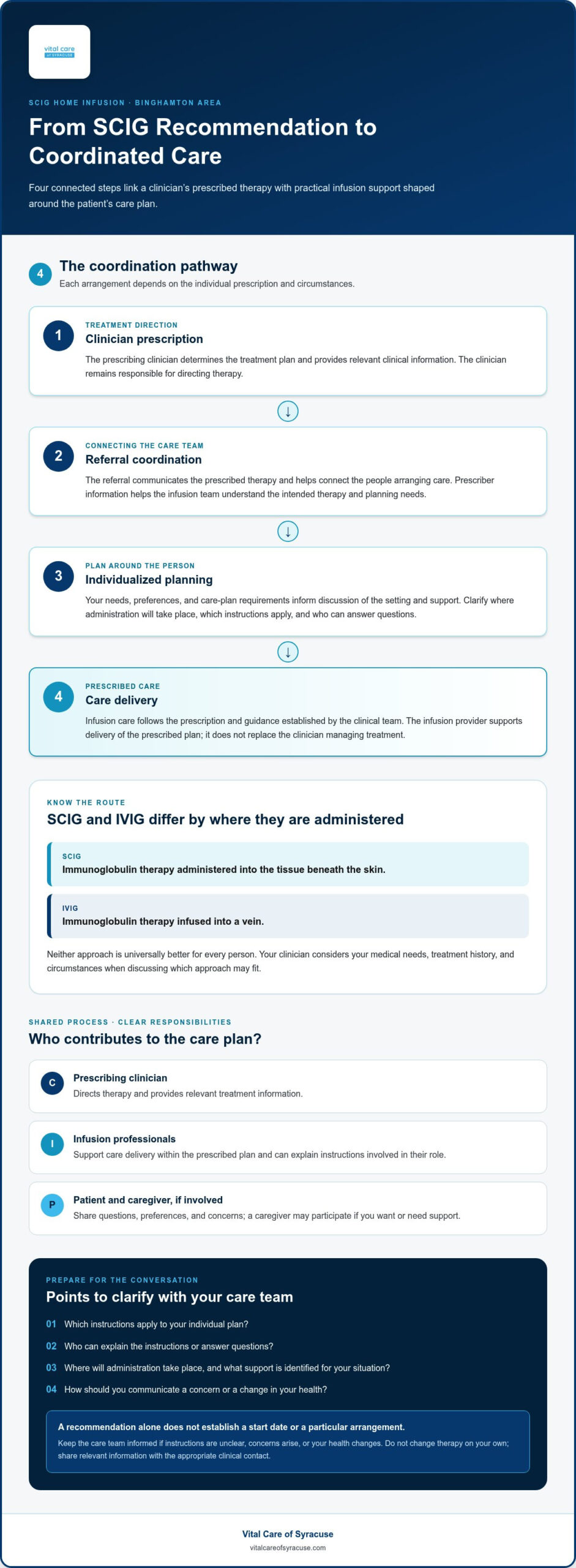
A clear plan makes it easier to manage infusion care at home, especially when questions come up. Your prescribing clinician and infusion team can explain which site-care steps apply to your access device, what you’re trained to do, and how to report a concern. Their guidance should take priority over general advice about how to prevent infusion site infections.
What questions should you ask your infusion care team?
Before treatment, ask your team to review the routine with you and your caregiver, if applicable. Written answers can help you follow the same instructions each time.
- Which instructions are specific to my access type, and which tasks am I trained to perform myself?
- Who should I contact about a site change, a damaged or unexpected supply, or a dressing or connection concern?
- Whom should I contact after hours, and what should I do if I can’t reach that person?
- How should I report symptoms, and what details should I share, such as when they began and whether they’re worsening?
Keep these answers with your written care plan and contact information. If a step is unclear, ask for clarification rather than changing your routine or improvising. For urgent or emergency symptoms, follow the appropriate medical guidance. An infusion provider isn’t a substitute for emergency services.
Where can patients in Central New York learn about anti-infective infusion?
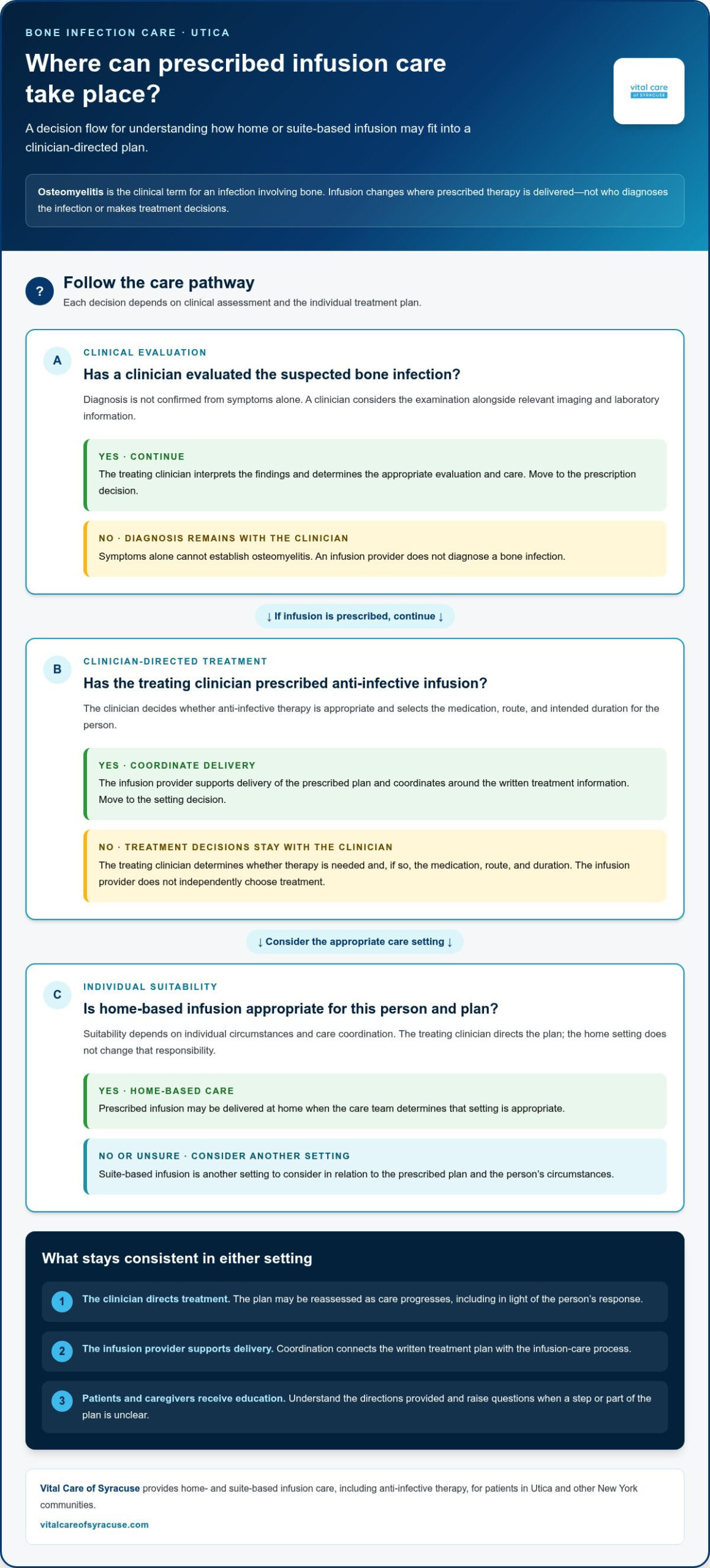
Vital Care of Syracuse, based in East Syracuse, provides anti-infective therapy and home or suite-based infusion care. Patients and caregivers can discuss with their care team whether this option fits the prescribed treatment. Availability depends on individual treatment needs and should be confirmed directly. No infusion-care routine can eliminate infection risk.
For background to discuss with your clinician, ask about the Anti-Infective Therapy at Home guide. To take a practical next step, contact Vital Care of Syracuse about anti-infective infusion care and ask whether home or suite-based care may be appropriate for your prescribed therapy. Your prescribing clinician and infusion team remain your partners in determining the care plan and answering site-specific questions.
Keep Your Infusion Care Routine Clear and Personal
Knowing how to prevent infusion site infections starts with following instructions for your specific access type and checking with your care team when something changes or feels unclear. Consistent clean handling can reduce risk, but it can’t eliminate it. Keep your written plan and contact information close, and seek urgent medical help for severe or rapidly worsening symptoms.
Good home infusion care is a partnership between you, your prescribing clinician, and your infusion team. Vital Care of Syracuse, based in East Syracuse, New York, provides anti-infective therapy and home and suite-based infusion care. If you’re exploring whether its services may fit your prescribed treatment, talk with Vital Care of Syracuse about anti-infective infusion care.
With clear guidance and a routine suited to your care, you can feel more prepared to manage infusion therapy at home.
Frequently Asked Questions
How can I prevent an infection at my infusion site?
Follow the instructions for your specific access device, since peripheral IVs, central lines, and subcutaneous sites can require different care. Wash your hands before handling supplies or the site, prepare them on a clean surface, and avoid touching designated clean connection points. Use supplies only as directed, and don’t change dressings or perform steps you haven’t been trained to do. Your written care plan is the best guide to preventing infusion site infections.
What are the first signs of an infusion site infection?
Possible warning signs include new or increasing redness, warmth, swelling, pain, or drainage around the site. Fever or feeling unwell may also need prompt clinical attention. These symptoms can have different causes, so they don’t confirm an infection on their own. Contact your infusion or prescribing team about new or worsening changes, and note when they started and whether they’re progressing. Seek urgent help for severe or rapidly worsening symptoms.
Should I remove an IV or central-line dressing if it looks dirty?
Don’t remove or replace a dressing unless your care team has specifically instructed and trained you to do so. If it’s dirty, wet, loose, or damaged, contact your infusion team promptly and follow the device-specific instructions they gave you. Avoid touching the insertion site or applying creams, powders, or other products. If you can’t reach your team, use the alternative contact instructions in your care plan rather than improvising.
Can I shower or bathe with an infusion site?
It depends on your access device, dressing, and care plan, so ask your infusion team before showering or bathing. They can explain how to protect the site and dressing and whether any activities, including soaking or submerging the site, should be avoided. Don’t assume a dressing is waterproof unless your instructions say so. If it becomes wet or comes loose, follow your care plan and contact your team for guidance.
What should I do if my infusion site becomes red or painful?
Contact your infusion or prescribing team promptly if redness or pain is new, worsening, spreading, or accompanied by warmth, swelling, drainage, or fever. Describe when it began and how it has changed. Don’t diagnose the cause yourself, remove a dressing, or adjust the device unless your instructions specifically tell you to. For severe or rapidly worsening symptoms, or if you feel critically unwell, seek urgent medical help or call local emergency services.
Does home infusion increase the risk of an infection?
Home infusion doesn’t automatically mean you’ll develop an infection, but no care setting or routine removes the risk entirely. Consistent clean handling, device-specific training, and following your care plan are important at home. Ask your infusion team how to prepare supplies, care for your access site, and report concerns. Vital Care of Syracuse provides home and suite-based infusion care from East Syracuse. If you’re in Syracuse, Albany, Rochester, Utica, Buffalo, Auburn, or Binghampton, confirm current service availability directly.
Leave a Reply