



If you searched for “home infusion pharmacist consultation Syracuse,” you may be looking for a chance to clarify how a prescribed therapy fits into a safe, coordinated care plan at home. It’s understandable to have questions about medication instructions, infusion steps, possible side effects, or whom to contact.
A conversation with a pharmacist can help you identify questions about how your prescribed therapy is administered, what instructions to follow, and how the infusion provider coordinates with your prescriber and care team. This article covers what to ask, what information to have ready, and how to raise insurance and next-step questions. Consultation availability, referral requirements, and coverage can vary, so confirm them directly.
Vital Care of Syracuse is a home infusion provider based in East Syracuse, offering specialized therapies including anti-infective treatment, immunoglobulin, and parenteral nutrition. We’ll outline what to clarify with the local team, including whether a consultation is available for your situation and whether your community is within its service area.
Key Takeaways
- A home infusion pharmacist consultation may help clarify medication questions and how a prescribed therapy connects with care at home.
- Before a conversation, gather your medication list, allergy information, home setup concerns, and questions. Don’t change your prescribed treatment.
- Ask how the provider coordinates with your prescriber and care team, and confirm what follow-up and contact options are available.
- Consultation format, intake steps, therapy fit, coverage, and service-area availability can vary. Verify details with the provider.
- Vital Care of Syracuse offers home-based and suite-based infusion services. Contact the local team to ask whether its services may fit your prescribed therapy and address.
Home Infusion Pharmacist Consultation Syracuse: What It Can Clarify
Moving a prescribed infusion into the home can raise practical questions: How should the medication be stored? Which instructions apply to preparing or administering it? Who should you contact with a concern? A pharmacist conversation may help you understand medication-related details and how the prescribed therapy fits into your care plan.
“A pharmacist consultation is a focused conversation about medication use, instructions, and questions related to a prescribed therapy.” The discussion can vary based on the prescription, the provider’s process, and your circumstances. For a basic overview of how medication or fluids can be delivered into a vein, see Intravenous therapy.
For additional context about home infusion pharmacy, watch this video from the National Home Infusion Association:
What medication questions may be appropriate to raise?
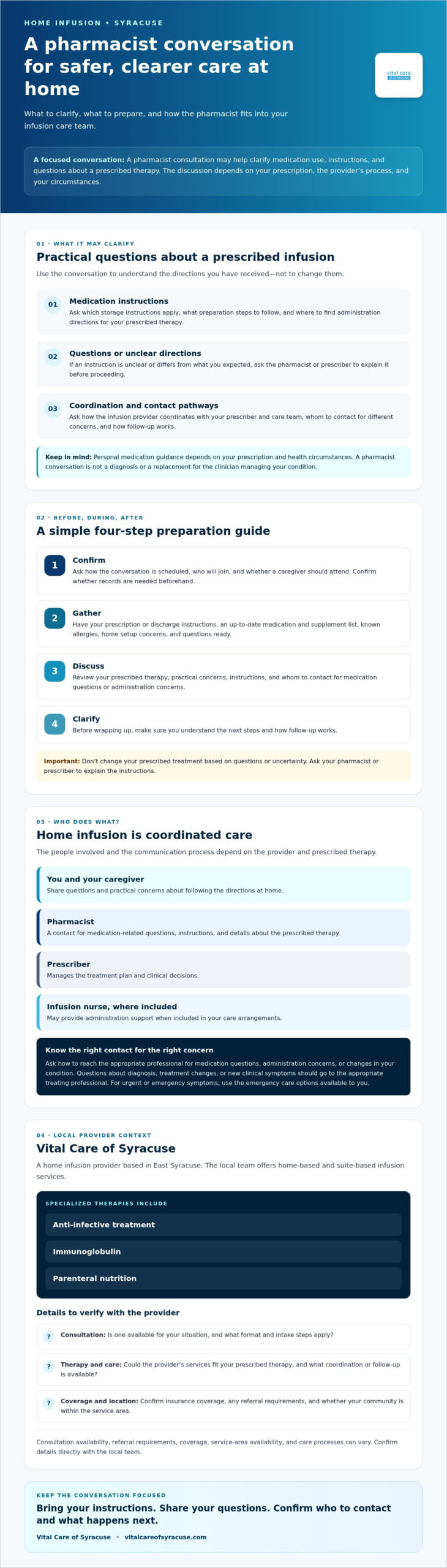
Use the conversation to clarify the directions you’ve received, not to change them. Ask which storage instructions apply to your medication, what preparation steps to follow, and where to find administration instructions for your prescribed therapy. If a direction is unclear or differs from what you expected, ask the pharmacist or prescriber to explain it before proceeding.
Share an up-to-date list of medicines and supplements, known allergies, and relevant concerns with your care team. Mention practical questions too, such as whether you’re unsure about a step or need an instruction repeated. Personal guidance must come from your pharmacist or prescriber because it depends on your prescription and health circumstances.
A consultation is not a diagnosis or a replacement for the clinician managing your condition. A pharmacist can discuss medication-related matters within their role, but questions about diagnosis, treatment changes, or new clinical symptoms should go to the appropriate treating professional. For urgent or emergency symptoms, use the emergency care options available to you.
How does the pharmacist fit into the home infusion care team?
Home infusion care may involve you, a caregiver, prescriber, pharmacist, and, where applicable, an infusion nurse. The pharmacist is a contact for medication questions; the prescriber manages the treatment plan and clinical decisions. An infusion nurse may provide administration support when included in your care arrangements. Responsibilities and communication processes depend on the provider and prescribed therapy.
Before relying on a particular contact pathway, ask how to reach the right professional with medication questions, administration concerns, or changes in your condition. Vital Care of Syracuse is based in East Syracuse, but its consultation availability and escalation process should be confirmed directly. This helps you know whom to contact without assuming a particular format or response time.
What to Expect Before, During, and After a Syracuse Infusion Consultation
A little preparation can make a pharmacist conversation more useful, especially if you’re managing new instructions or coordinating care at home. The discussion may take place by phone or in another format, and other members of the care team may participate. Confirm the process, who will join, and whether records are needed beforehand.
A simple four-step guide:
- Confirm: Ask how the conversation is scheduled, who will join, and whether a caregiver should attend.
- Gather: Have your prescription or discharge instructions, medication list, known allergies, and questions ready.
- Discuss: Review your prescribed therapy, practical concerns, and whom to contact for different kinds of questions.
- Clarify: Before wrapping up, make sure you understand the next steps and how follow-up works.
What information should patients have ready?
Collect documents you already have, such as prescription directions or discharge paperwork, along with a current list of medicines and supplements and any known allergies. Write down questions, symptoms you want to report, practical concerns, and the best way to reach you. Don’t change your prescribed treatment based on general information. Ask your pharmacist or prescriber for instructions specific to you.
Before the conversation, ask whether a caregiver should join or whether records should be sent in advance. Having someone who helps with your care participate may make it easier to remember instructions and confirm who handles follow-up questions.
What should patients ask during the conversation?
Bring questions that turn the care plan into clear next steps. Ask whom to contact about medication directions, infusion supplies, or non-urgent concerns. Confirm the planned schedule and ask what instructions to follow if a dose is missed or delayed. Don’t guess or adjust timing on your own. Request guidance from the appropriate member of your care team.
Ask the care team to explain which symptoms need prompt clinical attention and which situations require emergency evaluation. The right contact may depend on the concern and the provider’s process, so clarify the difference in advance. A pharmacist consultation isn’t emergency care, and the provider’s communication and follow-up pathways should be confirmed directly.
If you’re looking for a home infusion pharmacist consultation Syracuse patients may request, ask Vital Care of Syracuse whether a consultation is available, how it’s arranged, and what information to bring. You can review home infusion support in Syracuse as you prepare your questions.
Choosing a Syracuse Home Infusion Provider: Questions Beyond the Consultation
A pharmacist conversation can clarify medication-related questions, but it may not resolve concerns about coverage, care arrangements, or urgent symptoms. Comparing providers can help you understand how therapy coordination works and which questions belong with your prescriber, insurer, or another care professional. The right fit depends on the prescribed therapy, clinical assessment, and your circumstances.
Use these topics to guide a comparison. Ask each provider for current, patient-specific details rather than assuming the same process applies everywhere.
| Area to compare | Questions to ask |
|---|---|
| Communication | Who answers medication questions? How are non-urgent concerns routed, and what should I do if I need help outside regular business hours? |
| Therapy coordination | How does the provider coordinate with my prescriber and share relevant therapy updates? Who should I contact about clinical changes? |
| Service location | Is home-based or suite-based infusion an option for my prescribed therapy? Does the provider serve my Syracuse-area address? |
| Intake steps | What referral, prescription, or other information is needed to review my situation? How are coverage questions handled? |
How can patients compare communication and coordination?
Clear contact pathways matter because questions can involve different parts of care. Ask how the provider communicates with your prescriber and shares relevant therapy updates. Distinguish medication questions from concerns about symptoms or treatment decisions. Confirm how after-hours needs are handled, including which contact route applies and whether urgent concerns require another service. Don’t assume a pharmacist conversation resolves every coverage or clinical question.
Vital Care of Syracuse is a locally owned provider based in East Syracuse and offers home-based and suite-based infusion services. Confirm its consultation availability, communication process, intake requirements, and approach to coverage questions directly.
Does home infusion fit every patient or prescription?
Not necessarily. Whether home infusion is appropriate depends on the prescribed treatment, a clinical assessment, and decisions made with the care team. Ask whether the therapy is among the provider’s offerings, whether your address is served, and which location options may be appropriate. If you’re exploring anti-infective treatment, see the anti-infective therapy at-home guide.
Consider a pharmacist conversation as one part of evaluating fit. Ask who can answer remaining questions about treatment decisions, coverage, and urgent needs so you know the right next contact.
How to Prepare for a Home Infusion Pharmacist Conversation
A short written checklist can help you use the conversation well and leave with clear next steps. Preparation doesn’t mean changing your medication or trying to resolve every concern in advance. It gives you and your care team a shared picture of your current medicines, daily routine, and questions about the prescribed therapy.
What should you bring or write down?
Gather what you have, then note what you’d like clarified. Include details that may affect how instructions fit into your day, such as caregiver availability or the space where supplies will be kept. If someone helps with your care, ask whether they can join and prepare their questions too. Share personal health information through the provider’s recommended communication method.
- Medication reconciliation: List current prescription medicines, over-the-counter medicines, and supplements. Include the instructions or labels you have, and flag anything you’re unsure is current.
- Allergies and relevant paperwork: Write down known allergies and bring relevant discharge papers, prescription directions, or other records requested by the provider.
- Home and routine concerns: Note questions about timing, storage, supplies, administration instructions, and how treatment may fit into daily routines. Include home setup concerns and whether a caregiver is available to help.
- Questions and answers: Write down your concerns beforehand. During the conversation, record the answer, who gave it, any next step, and the right contact for follow-up.
What if a question is urgent or outside the pharmacist’s role?
Ask which contact pathway to use for clinical concerns and which professional handles questions outside medication guidance. Follow the instructions provided by your treating clinician and care team. A routine pharmacist discussion isn’t a substitute for urgent assessment, so don’t wait for a scheduled conversation during a medical emergency. Follow emergency guidance available to you.
Quick preparation checklist: Before arranging a home infusion pharmacist consultation Syracuse patients may ask about, have your medication and supplement list, allergy information, relevant paperwork, questions about home routines, caregiver concerns, and a way to record answers ready. Confirm whom to contact afterward and how to reach them.
To clarify the appropriate next step, contact Vital Care of Syracuse about home infusion and ask whether a pharmacist conversation is available, how it’s arranged, and what information to have ready. Confirm availability and intake steps directly.
Contact Vital Care of Syracuse About Home Infusion Pharmacy Support
A prepared conversation can connect questions about a prescribed therapy with a practical next step, such as confirming intake requirements or identifying the right contact. Vital Care of Syracuse is based in East Syracuse and offers home-based and suite-based infusion services, including anti-infective therapy, immunoglobulin (IVIG/SCIG), and parenteral nutrition. Whether a service or location is appropriate depends on the prescription and care-team assessment.
What to ask when contacting the local team
Have your prescribed therapy and Syracuse-area address available, then ask for details specific to your situation:
- Is my prescribed therapy among your current services, and is my address within your service area?
- What referral, prescription, or records are needed to begin the intake process?
- Can a pharmacist discussion be arranged, and how would it be scheduled?
- How does the team coordinate with my prescribing clinician, and whom should I contact with medication questions?
- How are patient-specific insurance and coverage questions handled?
These questions help clarify the process without assuming that a consultation, coverage, or eligibility is guaranteed. Answers may depend on the therapy and the provider’s current procedures, so confirm details directly.
Where to learn more about local home infusion care
For more context about evaluating a local provider and understanding how location can matter, read the Central New York local home infusion provider guide. Use it as general information, then discuss your prescribed therapy and circumstances with your care team. A provider’s service list alone can’t determine whether home or suite-based infusion is clinically appropriate for you.
Vital Care of Syracuse serves a regional area that includes Syracuse, Albany, Rochester, Utica, Buffalo, Auburn, and Binghampton. Ask the local team whether a pharmacist discussion can be arranged, whether your address is served, and what information to have ready.
Take a Confident Next Step With Your Home Infusion Questions
A pharmacist conversation may help clarify medication instructions, practical questions, and the right contact for follow-up. Bringing your medication list, allergies, relevant paperwork, and questions can make the discussion more focused. The pharmacist’s role is medication-related; discuss treatment decisions and individual care needs with your treating clinician and care team.
Vital Care of Syracuse is a locally owned and operated provider in the Vital Care, Inc. network, based in East Syracuse. Its home-based and suite-based infusion services include anti-infective, immunoglobulin, and parenteral nutrition therapies. Service fit, consultation availability, referral steps, and coverage depend on your circumstances, so confirm those details directly.
Contact Vital Care of Syracuse to ask about home infusion support, including whether your prescribed therapy and address may fit its current services, how intake works, and whether a pharmacist discussion can be arranged.
Frequently Asked Questions
Can I speak directly with a home infusion pharmacist in Syracuse?
Possibly, but confirm whether a pharmacist conversation can be arranged and how to request one. Vital Care of Syracuse is a specialized home infusion provider based in East Syracuse, with a stated regional focus that includes Syracuse, Albany, Rochester, Utica, Buffalo, Auburn, and Binghampton. Ask whether your address and prescribed therapy fit its current service area and whether a referral or other intake steps are required.
What happens during a home infusion pharmacist consultation?
A consultation may give you an opportunity to discuss medication-related questions about your prescribed infusion. Depending on the provider’s process and your circumstances, topics could include the directions you received, storage, preparation, administration instructions, and whom to contact with questions. The format and participants may vary. Bring your prescription or discharge instructions and a current medication list, and confirm the provider’s process before expecting a specific type of meeting.
What questions should I ask a pharmacist before starting home infusion?
Ask which instructions apply to your prescribed medication, how it should be stored, and where to find guidance about preparation and administration. Clarify whom to contact about medication questions, supplies, or a missed or delayed dose, and ask the care team which concerns need prompt attention. Share your medicines, supplements, allergies, and relevant concerns. Follow personal instructions from your pharmacist or prescriber rather than general information.
Can a home infusion pharmacist change my prescription or dosage?
Don’t change your prescription or dose based on a conversation alone. A pharmacist can help explain medication-related instructions and may communicate a concern to the prescribing clinician, but treatment decisions should be confirmed with the appropriate prescriber. If the directions seem unclear or you’re concerned about your dose, contact your pharmacist or prescriber before making a change. The right next step depends on your prescription and care plan.
Does Vital Care of Syracuse offer pharmacist consultations for anti-infective therapy?
Vital Care of Syracuse offers anti-infective therapy, but confirm directly whether a pharmacist consultation can be arranged for your situation. Ask whether your prescribed treatment is among the provider’s current services, what referral or intake information is needed, and how to request a pharmacist discussion. The care team must assess individual circumstances, and consultation availability or format shouldn’t be assumed from the therapy listing alone.
Will insurance cover a home infusion pharmacist consultation?
Coverage depends on the plan, prescribed therapy, and services involved, so don’t assume a consultation is covered. Ask the provider how patient-specific benefits and coverage questions are handled, and contact your insurer to confirm requirements, authorization steps, or potential costs before care begins. Keep notes about whom you spoke with and what was confirmed. Coverage for infusion therapy and a pharmacist discussion may not be identical.
What should I do if I have an urgent question about my infusion?
Use the contact instructions provided by your care team for clinical concerns, and ask in advance which contact handles medication questions and urgent needs. Don’t wait for a routine consultation if you believe you’re experiencing a medical emergency. Follow your clinician’s instructions and emergency guidance available to you. Vital Care of Syracuse does not provide 24/7 emergency medical services, so confirm the appropriate contact pathway before you need it.
Leave a Reply