


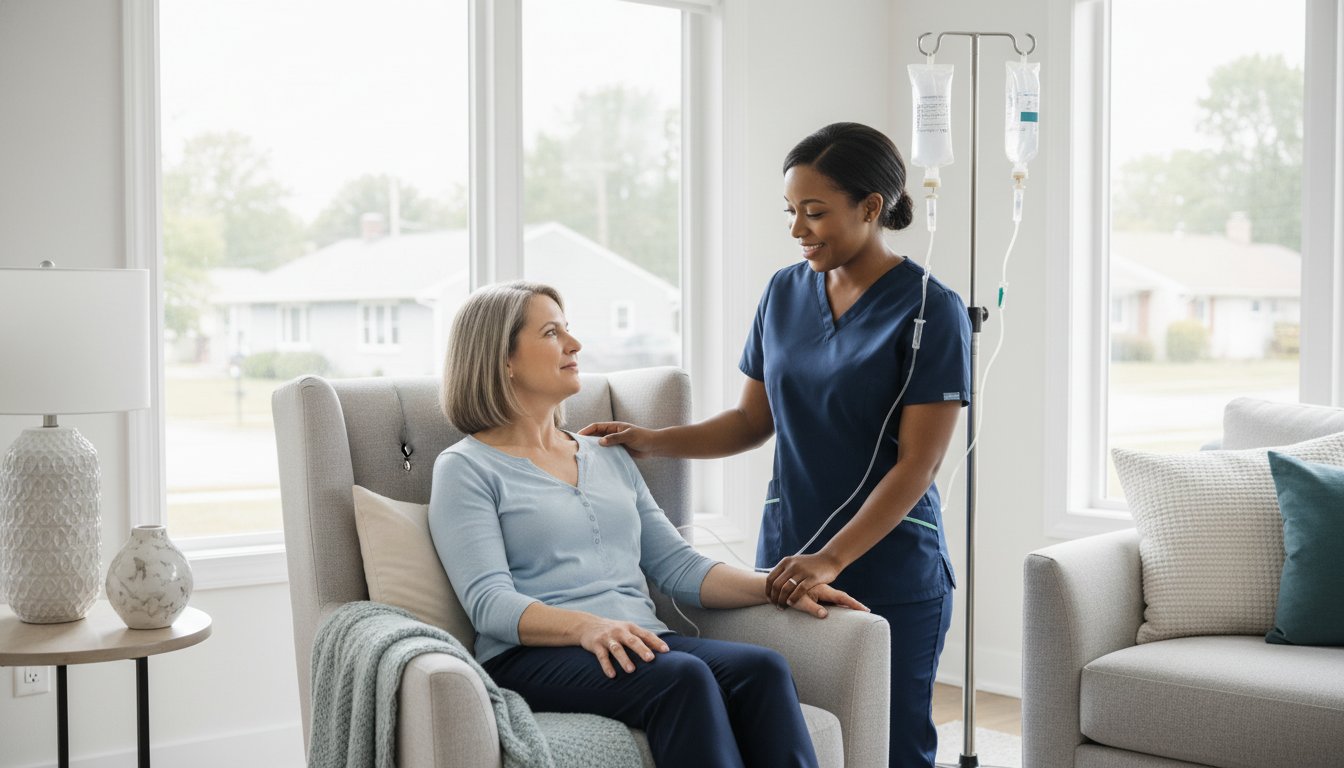
For a patient managing a complex neurological condition, the most effective treatment environment might not be found within the walls of a Rochester hospital, but rather within the quiet comfort of their own living room. You’ve likely experienced the physical and mental toll of navigating Lake Ontario snow squalls for a clinical appointment, or felt the strain of a rigid schedule that forces your family life to revolve around a hospital’s timeline. It’s a common struggle that often adds unnecessary stress to an already challenging health journey.
Choosing home infusion for neurological conditions Rochester patients prefer can fundamentally change this dynamic, providing a clinically effective and safer alternative that prioritizes your personal well-being. Discover how transitioning to home-based care minimizes environmental stressors, reduces exposure to hospital-acquired infections, and allows you to receive expert, personalized treatment from a consistent nurse in the place where you feel most secure. We’ll examine how this shift not only supports your clinical needs but also helps you reclaim a sense of stability and comfort in your daily life.
Key Takeaways
- Understand how home-based treatment minimizes the physiological stress responses that can exacerbate complex neurological symptoms.
- Learn about the specialized role of infusion nurses in providing consistent, one-on-one monitoring during the administration of treatments like IVIG.
- Discover how home infusion for neurological conditions Rochester patients prefer provides a more accurate clinical picture by eliminating the “white coat syndrome” often found in hospitals.
- Explore the structured process for safely transitioning your therapy from a traditional hospital setting to the comfort of your own residence.
- Identify the clinical and personal benefits of choosing a local, Rochester-area partner that offers more responsive support than national clinical chains.
Understanding Home Infusion for Neurological Conditions
Home infusion represents a sophisticated shift in how we approach chronic care, moving complex medical procedures from the sterile environment of a clinic into the familiar surroundings of your own home. By Understanding Home Infusion for Neurological Conditions, it’s clear that this model offers a vital bridge between high-level medicine and personal comfort. This method involves the administration of specialty medications through intravenous (IV) or subcutaneous routes, providing a stable foundation for the home infusion for neurological conditions Rochester residents need to maintain their quality of life.
Rochester’s healthcare community is increasingly prioritizing the patient experience by utilizing home-based specialty pharmacy services. This model ensures that life-altering treatments are integrated into your life, rather than your life being dictated by hospital schedules. It’s a supportive approach that views the patient as an individual with a life to lead, not just a diagnosis to manage.
To better understand how this transition impacts daily life, watch this helpful video:
The role of the infusion nurse is particularly critical when managing neurological health. Unlike standard antibiotic treatments that might require basic oversight, home infusion for neurological conditions Rochester clinicians provide involves continuous monitoring of specific vitals and subtle physical reactions. These nurses are trained to recognize the nuances of neurological responses, ensuring that every session is both safe and effective. They act as a steady, reliable hand, offering clinical expertise and empathetic reassurance throughout the process.
Neurological medications often carry different risks and requirements than other therapies. This level of oversight is essential because many neuro-biologics can cause immediate physiological shifts that require a professional to manage. Because the nurse remains present for the duration of the treatment, they can adjust the pace of the infusion or provide immediate care if any sensitivities arise.
The Role of Specialty Pharmacy in Neurology
Specialty pharmacies act as the backbone of this care model, handling high-cost and temperature-sensitive biologics that require exacting storage conditions. These medications are often the primary defense against disease progression, making precise dosage and timing vital for chronic management. Your local clinical team coordinates closely with your Rochester neurologist to ensure the treatment plan is followed with absolute accuracy. This partnership ensures that the medication you receive is handled with the same level of care as the treatment itself.
Who Benefits Most from Home-Based Neuro-Care?
While many patients appreciate the flexibility of home care, certain individuals find it transformative. Those facing mobility challenges often find navigating large medical complexes in Monroe County exhausting and physically taxing. Additionally, patients requiring frequent, long-term treatments like IVIG benefit from the consistency of a familiar environment. For caregivers, the reduction in transport logistics provides a significant emotional and practical reprieve, allowing them to focus on supporting their loved one’s well-being rather than managing traffic and parking logistics.
Common Neurological Conditions Treated at Home in Rochester
Many neurological challenges stem from the immune system mistakenly attacking the body’s own nervous tissue. Home-based care has become a primary strategy for managing these autoimmune-driven disorders. By delivering specialized medications like Intravenous Immunoglobulin (IVIG) and high-dose steroids directly to the patient, clinical stability is maintained without the disruption of a hospital stay. This supportive approach is central to the home infusion for neurological conditions Rochester families rely on to preserve their independence and daily routines. Patients with degenerative conditions often find that receiving care in a familiar environment helps them maintain a sense of agency that is frequently lost in traditional clinical settings.
Chronic Inflammatory Demyelinating Polyneuropathy (CIDP)
Chronic Inflammatory Demyelinating Polyneuropathy (CIDP) requires a disciplined treatment schedule to manage nerve inflammation and prevent long-term disability. Whether utilizing IVIG or subcutaneous immunoglobulin (SCIG), consistent home-based scheduling ensures that therapy remains a predictable part of life. Research indicates that home-based IVIG administration maintains high success rates while significantly improving the patient’s perceived quality of life compared to clinic-based alternatives. This consistency is vital for CIDP maintenance, as it prevents the “peaks and valleys” of symptom management that can occur with irregular scheduling.
Myasthenia Gravis and Multiple Sclerosis
For those living with Myasthenia Gravis (MG), regular immunoglobulin infusions at home serve as a critical defense against the onset of a respiratory or muscular crisis. Similarly, patients managing Multiple Sclerosis (MS) often require supportive infusion therapies to manage acute relapses and inflammatory flares. Receiving these treatments at home reduces the profound physical exhaustion that often follows a trip to a busy Rochester medical center. This allows the body to dedicate its limited energy toward recovery and symptom stabilization rather than the logistics of travel.
Small Fiber Neuropathy and Rare Disorders
Rare conditions such as Stiff Person Syndrome or Small Fiber Neuropathy demand a high level of clinical precision and tailored infusion protocols. These patients benefit from the presence of a dedicated nurse who understands the specific, often unpredictable, progression of their disease. This personalized attention ensures that even the most complex cases receive the specialized care they deserve within the safety of their own home. If you are exploring these options for yourself or a loved one, you might find that partnering with a local infusion specialist provides the continuity of care and empathetic support needed for these sensitive conditions.
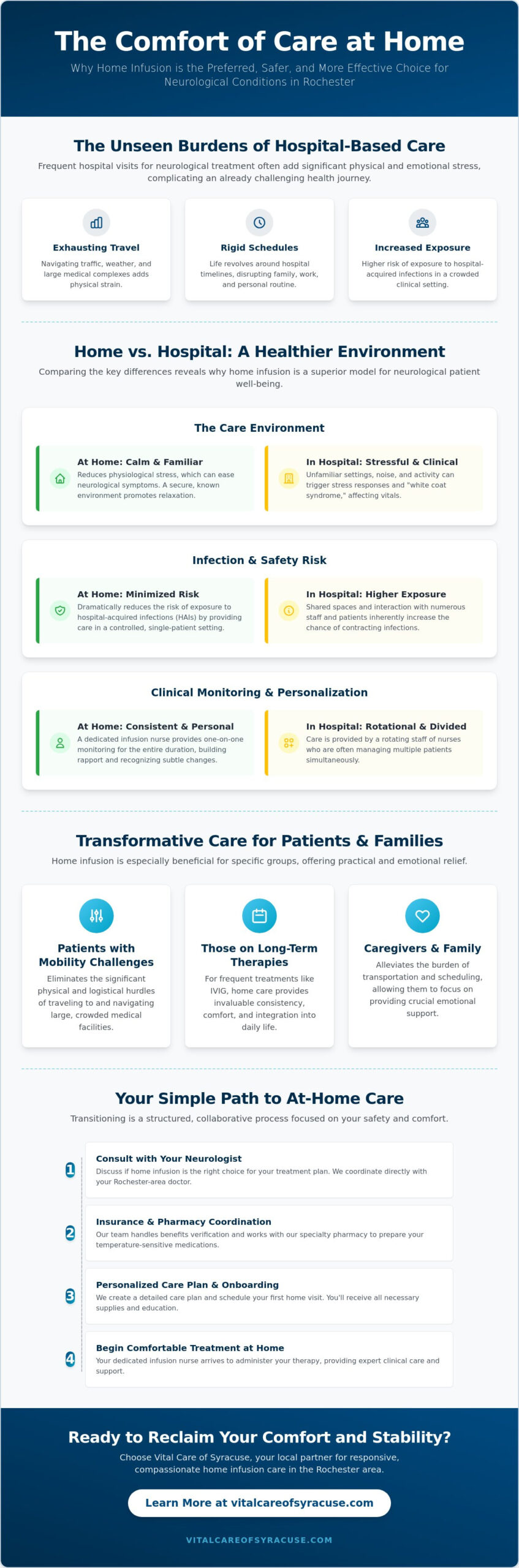
Home vs. Hospital: Why the Environment Matters for Neuro-Health
Clinical evidence suggests that the environment where you receive treatment is not just a matter of convenience, but a factor that directly influences your physiological response. For individuals managing autoimmune or degenerative neurological disorders, the body’s stress response can act as a trigger for symptom flares. When you enter a large hospital system, the elevation of cortisol levels due to environmental stress can lead to a temporary worsening of symptoms. This phenomenon, often called “white coat syndrome,” can also skew patient assessments by artificially raising blood pressure or heart rate, making it difficult for clinicians to capture an accurate baseline of your health.
In our local community, the logistical strain of reaching a major medical center adds another layer of difficulty. Navigating the dense traffic on Elmwood Avenue or searching for accessible parking near Park Avenue during a Rochester winter can be physically exhausting for someone already dealing with mobility challenges or fatigue. When you opt for home infusion for neurological conditions Rochester specialists provide, you eliminate these external stressors entirely. Staying home also offers a significant safety advantage by reducing your exposure to hospital-acquired infections, which is a vital consideration for patients who may be immunocompromised due to regular biologic or immunoglobulin therapies.
The Clinical Advantage of a Low-Stress Environment
Neurological stability often improves when a patient remains in familiar, predictable surroundings. By receiving care at home, your nervous system can remain in a relaxed state, which may enhance the overall effectiveness of the therapy. One of the most practical benefits is the ability to rest immediately after an infusion without the jarring experience of a long, taxing drive home. Many patients find they can even maintain their professional or personal obligations by choosing to work or relax in their own space while the medication is administered, ensuring the treatment supports their life rather than interrupting it.
Consistency of Care: The Same Nurse, Every Time
There is a profound psychological and clinical benefit to building a relationship with a dedicated Rochester infusion nurse. In a large health system, you are often met by rotating staff, which can lead to a fragmented experience where you must repeat your medical history at every visit. Home infusion offers a different path, where the same professional enters your home for every session. This consistency allows your nurse to become deeply familiar with your specific condition, making them much more likely to detect subtle neurological changes that a new caregiver might overlook. This level of personalized oversight provides a sense of security and expertise that is difficult to replicate in a high-volume clinical setting.
How to Start Home Infusion for Neurology in Rochester
Moving your care from a high-volume hospital center to a personalized home setting is a structured process designed to prioritize your safety and clinical stability. While the idea of changing your routine might feel significant, the transition is managed by a collaborative team that ensures no detail is overlooked. The path to receiving the home infusion for neurological conditions Rochester patients deserve begins with a careful alignment between your neurologist, the specialty pharmacy, and your dedicated nursing team. This coordination ensures that your first dose at home is administered with the same clinical rigor you would expect in a traditional medical facility.
Before your first treatment session, a clinical professional will conduct a comprehensive home safety assessment. This visit isn’t just about equipment; it’s about ensuring your environment is optimized for a sterile and comfortable infusion experience. We look at everything from the storage requirements for temperature-sensitive biologics to the physical layout of your preferred treatment area. This proactive approach allows us to address any logistical needs well before the medication arrives at your door, providing you with a sense of security and preparedness.
Step-by-Step Transition Guide
- Consult with your Rochester neurologist: Discuss the clinical viability of home-based care to ensure it aligns with your specific treatment goals and medical history.
- Verify insurance and pharmacy availability: Your provider will work to confirm that your plan covers home-based specialty services and that the required medications are in stock.
- Schedule a home safety assessment: A nurse will visit your residence to evaluate the environment and set up any necessary infusion pumps or supplies.
- Receive your first home infusion: Your initial treatment is conducted under 1-on-1 nursing supervision to monitor for reactions and ensure you feel comfortable with the process.
Insurance and Financial Support in New York
Managing the financial aspects of high-cost neurological biologics can be complex, especially with New York-specific insurance requirements. Local providers are deeply familiar with these regulations and often act as an advocate for the patient during the authorization process. As of 2021, Medicare Part B includes specific benefits for home infusion therapy services, which covers the professional clinical services associated with your treatment. This can make home care a highly cost-effective alternative to outpatient hospital facilities, where facility fees often inflate the total cost of care.
Beyond basic coverage, many patients are eligible for co-pay assistance programs offered by pharmaceutical manufacturers. Our team helps you identify and apply for these resources to minimize your out-of-pocket expenses. If you’re ready to explore how these benefits apply to your specific situation, you can speak with our intake specialists to begin the verification process. This transparent approach ensures you can focus entirely on your health while we handle the complexities of insurance coordination and clinical logistics.
Vital Care of Syracuse: Your Local Partner for Rochester Neuro-Care
Choosing a partner for your medical journey is a decision rooted in trust and the need for reliability. While national clinical chains often operate with a high-volume mentality, Vital Care of Syracuse functions as a locally owned entity with a deep commitment to the Rochester community and surrounding Monroe County areas. This local focus allows us to be significantly more responsive to the unique needs of our neighbors. We understand that when you’re managing a complex condition, you don’t want to be just another number in a database; you want a dedicated partner who understands the local landscape and the specific challenges of home infusion for neurological conditions Rochester patients face.
Our clinical pharmacists possess specialized expertise in intricate neurological protocols, ensuring that every medication is prepared with exacting precision. We act as a vital bridge between Rochester’s premier neurologists and your front door, maintaining a seamless flow of communication that keeps your entire care team aligned. By choosing a local provider, you gain the peace of mind that comes from knowing your support system is nearby, ready to provide the steady, reliable hand you need. This proximity ensures that we can adapt quickly to changes in your treatment plan, providing a level of agility that larger systems often lack.
Personalized Clinical Oversight
Our “patient-first” philosophy isn’t just a mission statement; it’s the foundation of how we administer care. We prioritize your physical comfort alongside clinical excellence, recognizing that a calm mind is an essential component of healing. You have direct access to our Syracuse-based clinical team for any questions, ensuring you never feel alone in your treatment. This level of oversight extends across all our specialized services, including our Anti-Infective Therapy at Home: A Comprehensive Guide for Syracuse Patients, where we apply the same rigorous standards of safety and compassion.
Comprehensive Support for Rochester Families
We believe that confidence is key to successful home-based treatment. That’s why we provide extensive training for both patients and caregivers, ensuring you feel completely secure in your own environment. From coordinating supplies and medication deliveries to aligning nursing schedules with your personal life, we handle the logistics so you can focus on your well-being. Our team is also experienced in managing specialized requirements, such as Bleeding Disorder Therapy in Syracuse: A Comprehensive Guide to Home Infusion Care, offering support that adapts to the complexities of your health journey. By integrating the home infusion for neurological conditions Rochester families require into a predictable, supportive routine, we help you reclaim your sense of stability.
Reclaiming Your Independence and Comfort at Home
Choosing to move your treatment into your own residence is a significant step toward managing your health on your own terms. By prioritizing a low-stress environment and consistent clinical oversight, you can reduce the physiological burden that hospital visits often impose. We’ve explored how specialized home infusion for neurological conditions Rochester patients select provides a safer, more integrated approach to chronic care. This model allows you to receive high-level medical therapy while maintaining the familiar routines that support your emotional well-being.
Vital Care of Syracuse is proud to be a locally owned partner serving the Rochester and Monroe County area. Our team brings deep expertise in IVIG and SCIG therapies for chronic neurological management, ensuring that every session is guided by dedicated 1-on-1 nursing care. We are here to act as your advocate, bridging the gap between clinical requirements and your personal needs. Contact Vital Care of Syracuse to discuss your Rochester home infusion options today. You don’t have to navigate these complex health challenges alone; our experts are ready to provide the steady, compassionate hand you deserve as you move forward in your health journey.
Frequently Asked Questions
Is home infusion safe for complex neurological conditions?
Home infusion is a safe and clinically established option when managed by specialized professionals who prioritize patient safety. Every session involves 1-on-1 nursing oversight, where a trained clinician monitors your vitals and neurological responses in real-time. This level of personalized attention often exceeds what’s possible in a high-volume hospital setting, as the nurse is dedicated solely to your care for the duration of the treatment.
By receiving care in a controlled, familiar environment, you also significantly reduce the risk of hospital-acquired infections. This is particularly vital for patients whose immune systems may be compromised by their condition or their medication. Our nurses carry specialized emergency kits to every appointment, ensuring they’re prepared to handle any immediate clinical needs.
What neurological medications can be administered at home in Rochester?
Several specialty therapies are available for the home infusion for neurological conditions Rochester patients require to manage their health. These include Immunoglobulin (IVIG and SCIG) for autoimmune disorders, high-dose steroids for acute inflammatory flares, and various biologics for chronic disease management. Our clinical pharmacists ensure these complex medications are handled and prepared with the highest degree of precision before they reach your residence.
Will my Rochester neurologist still oversee my care during home infusion?
Your Rochester neurologist remains the primary architect of your treatment plan and retains full clinical control over your care. The home infusion team acts as a dedicated partner, providing regular clinical updates and detailed data to your doctor after every session. This collaborative approach ensures that your neurologist has an accurate, real-time view of your progress without you needing to visit their office for every infusion.
How long does a typical neurological home infusion take?
The duration of a treatment session depends entirely on the specific medication prescribed and your individual tolerance. While some biologic infusions may take only an hour or two, a typical IVIG session can last between three and six hours. Because you’re in your own home, you can spend this time resting in your favorite chair or staying productive with work while your nurse manages the clinical details.
Does insurance cover home IVIG for CIDP or Myasthenia Gravis in New York?
Most insurance providers in New York, including Medicare and private commercial plans, provide coverage for home-based neurological therapies. Since January 1, 2021, Medicare Part B has included a specific benefit for home infusion therapy services, which covers the professional clinical oversight required during administration. Our intake team works directly with your insurance provider to verify your specific benefits and explore any available co-pay assistance programs.
What happens if I have an allergic reaction during a home infusion?
Infusion nurses are meticulously trained to manage adverse reactions and carry anaphylaxis kits to every appointment. These kits contain the necessary medications and supplies to address allergic responses immediately. Because your nurse is present throughout the entire procedure, they can identify subtle signs of a reaction and intervene long before it becomes a serious clinical issue, providing a level of safety comparable to a clinic.
Can I switch from a hospital infusion center to home care mid-treatment?
You can absolutely transition from a hospital-based center to home care at any point in your treatment journey. Many patients make this switch once they’re clinically stable and wish to reclaim the time and energy spent on hospital travel and parking. We coordinate closely with your current provider to ensure a seamless transfer of medical records and a consistent, safe start to your home-based sessions.
Do I need to provide any equipment for the home infusion nurse?
You don’t need to provide any medical equipment or clinical supplies for your treatment. The specialty pharmacy coordinates the delivery of everything required, including the medication, infusion pumps, and sterile supplies. All we ask is that you provide a comfortable, well-lit area where you can relax while your nurse handles the clinical aspects of your care with precision and expertise.
Leave a Reply