



IVIG is not a one-size-fits-all infusion. For people considering IVIG for inflammatory conditions in Albany, it is a treatment given through a vein that delivers concentrated antibodies made from donated human plasma. It may help modify immune activity, while the treatment plan and schedule depend on the condition being treated.
It is understandable to want a clear picture of treatment before planning around it. An IVIG infusion typically takes a few hours, and some schedules involve repeat treatments every few weeks or monthly. By comparison, SCIG delivers immunoglobulin under the skin, so the route and scheduling experience differ.
This article explains how IVIG may affect immune activity, what can influence its use for inflammatory conditions, and how infusion settings and schedules compare with SCIG. You will also learn what to expect from treatment, so you can have a more informed conversation about which approach fits your care plan.
Key Takeaways
- Understand how IVIG delivers antibodies and why it may be considered for certain inflammatory conditions.
- See how infusion settings, treatment length, and repeat schedules can vary with the care plan.
- Compare IVIG and SCIG by their administration routes and how each can support immune function.
- Learn which kinds of specialists may evaluate inflammatory conditions and how infusion therapy can fit into coordinated care.
What is IVIG Infusion Therapy?
Intravenous immunoglobulin (IVIG) is made from concentrated antibodies isolated from donated human blood plasma. These immunoglobulins are pooled from thousands of healthy donors. During therapy, antibodies enter a vein and interact with immune processes. Depending on the condition, treatment may replace insufficient antibodies or modify harmful immune activity.
In autoimmune disorders, the immune system mistakenly targets the body’s own cells or tissues. IVIG can help change that response rather than simply suppressing all immune activity. Providers may recommend it for conditions such as immune thrombocytopenia, myasthenia gravis, Guillain-Barré syndrome, or myositis. Myositis includes polymyositis and dermatomyositis, which involve inflammation affecting muscle tissue.
IVIG may also be part of care plans for some neurological and rheumatological conditions. Examples include multiple sclerosis, systemic lupus erythematosus, and rheumatoid arthritis. Its role varies by diagnosis and treatment goal. In lupus, for instance, IVIG may help raise abnormally low platelet counts or, in particular situations, low red blood cell counts.
Some inflammatory skin conditions may also be treated with IVIG, including atopic dermatitis, blistering diseases, and immune urticaria. It may be considered when other treatments are no longer effective. IVIG is also a standard treatment for Kawasaki disease, which can affect children and the heart’s coronary arteries.
Evidence differs across conditions, so these examples don’t mean IVIG is appropriate for every patient. A small study of 15 patients with fibromyalgia reported positive results for pain relief, tenderness, and muscle strength after IVIG therapy, according to Authors of the 15-patient fibromyalgia study. For Albany residents considering IVIG for inflammatory conditions, the diagnosis and treatment goal shape how clinicians assess this option. People in Albany exploring IVIG for inflammatory conditions can discuss those goals with the specialist managing their care.
Infusion settings and treatment scheduling
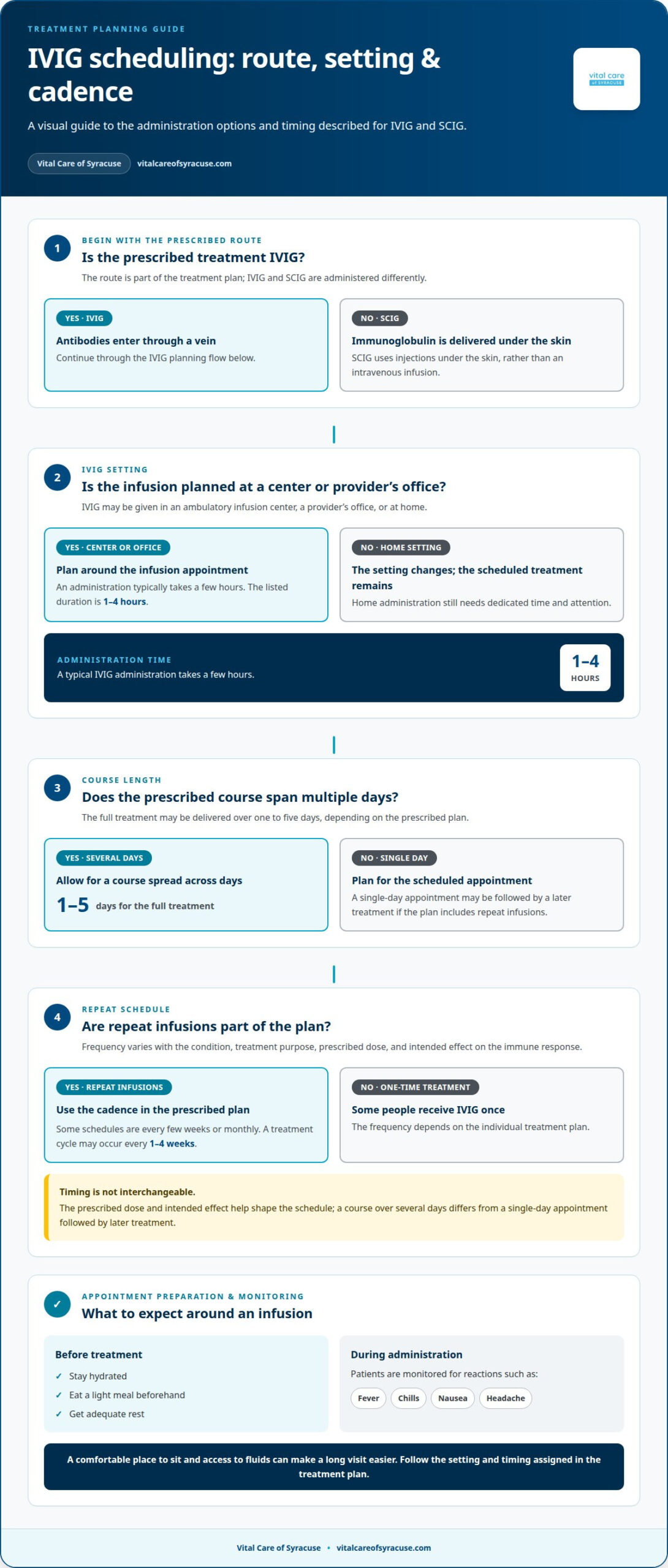
IVIG is given intravenously, through a vein, in an ambulatory infusion center, a provider’s office, or at home. An administration typically takes a few hours; the listed duration is 1 to 4 hours. The full treatment may be delivered over one to five days, depending on the prescribed plan. A center visit means planning for the infusion time, while home administration changes the setting, not the need for a carefully scheduled treatment.
Frequency varies with the condition and treatment purpose. Some people receive IVIG once, while others have repeat infusions every few weeks or monthly. A treatment cycle may occur every 1-4 weeks. These schedules are not interchangeable: the prescribed dose and the intended effect on the immune response help shape the timing. For some patients, a course spread across several days differs from a single-day appointment followed by a later treatment.
SCIG differs from IVIG in both route and routine. Instead of an intravenous infusion, it delivers immunoglobulin through injections under the skin. The administration method is distinct: IVIG places the antibodies directly into a vein. The choice between these methods depends on the prescribed therapy and individual treatment plan. Other infusion therapies also vary by medication and purpose, so IVIG timing should not be assumed to match an infusion for an infection or deficiency.
Setting affects practical preparation. Plan for a few hours at an infusion appointment, or for the schedule assigned when treatment spans several days. Staying hydrated, eating a light meal beforehand, and getting adequate rest are recommended preparation steps. During administration, patients are monitored for reactions such as fever, chills, nausea, or headache. A comfortable place to sit and access to fluids can make a long visit easier. For a home setting, the infusion appointment still needs dedicated time and attention. Explore infusion care information to understand how the setting can fit into treatment planning.
How IVIG and SCIG affect the immune system
IVIG and SCIG deliver immunoglobulins that can support immune function in different ways. For people with immunodeficiency, replacement therapy supplies antibodies that are missing or insufficient. These antibodies help the body respond to infections. The goal differs when immunoglobulin is used to modify an autoimmune response, in which immune activity can damage the body’s own tissues.
Primary and secondary immunodeficiencies can both involve insufficient antibody protection. In either case, clinicians consider antibody levels, infection history, and overall condition when evaluating replacement therapy. Regular immunoglobulin treatment may help people with very low antibody levels who are susceptible to infections. IVIG delivers antibodies intravenously, while SCIG delivers them under the skin. Both use immunoglobulins pooled from healthy plasma donors.
For some immune disorders, IVIG can change how immune cells interact with the body. In immune thrombocytopenia, for example, it may raise platelet counts by modulating the immune response and reducing platelet destruction. In myositis, an inflammatory disorder affecting muscle cells, IVIG may address immune attacks on muscle tissue. These examples show why the same therapy can serve different purposes across diagnoses.
Lupus illustrates how treatment goals can vary within one condition. IVIG may help raise abnormally low platelet counts or, in particular situations, low red blood cell counts. It may also help protect against infections when immune-suppressing treatment has lowered antibody levels enough to increase susceptibility. The intended effect depends on the specific immune problem, not just the diagnosis.
IVIG and SCIG do not increase the risk of infection. Their role is not to cure autoimmune disease, but to supply antibodies or influence immune activity for defined treatment goals. Before choosing a route, patients can consult their healthcare provider about immune function, infection patterns, diagnosis, and treatment history. Those details help clarify whether replacement or immune modulation is the focus.
Which Albany-area specialists prescribe IVIG for inflammatory conditions?
The specialist involved depends on the condition and reason for IVIG. In Albany, a rheumatologist may evaluate inflammatory diseases such as lupus or myositis, while a neurologist may assess conditions such as myasthenia gravis or Guillain-Barré syndrome. A hematologist may be involved when immune thrombocytopenia causes low platelet counts. These specialists connect treatment decisions to the affected body system and the patient’s diagnosis.
For suspected immune deficiency, an allergist-immunologist may assess antibody levels and infection history. That evaluation differs from considering IVIG to modify autoimmune activity. For example, a patient with lupus may need assessment of low blood-cell counts, while someone with recurrent infections may need evaluation for insufficient antibodies. The treatment goal helps determine which clinical expertise is relevant.
Care can involve more than one specialty. A rheumatologist managing dermatomyositis may coordinate with a neurologist if muscle weakness or other neurological concerns shape the treatment plan. A hematologist may contribute when platelet or red blood cell counts are central to care. Each specialist brings condition-specific context to decisions about IVIG, monitoring, and how treatment fits with existing therapies.
For an Albany-area appointment, start with the specialist already managing the diagnosed condition. Bring a current medication list, relevant test results, and a concise record of symptoms or infections. These details help connect the clinical picture with the treatment goal. If IVIG is being considered, the specialist can explain why it may fit the diagnosis and how the plan relates to other treatments.
IVIG is not used in the same way for every condition. A neurologist assessing myasthenia gravis, a rheumatologist treating myositis, and a hematologist addressing immune thrombocytopenia are considering different effects and outcomes. For Albany residents exploring infusion support after a treatment decision, review immunoglobulin infusion care as part of planning the next stage with the prescribing specialist.
Vital Care of Syracuse: Immunoglobulin (IVIG/SCIG)
Vital Care of Syracuse provides immunoglobulin (IVIG/SCIG) therapy for people whose prescribed care includes these treatments. After a specialist determines that immunoglobulin therapy is appropriate, this offering can support the infusion portion of the care plan. IVIG and SCIG differ in how they’re administered, so the prescribed approach guides the treatment arrangements.
For Albany-area patients managing an inflammatory condition, the next step is to connect the specialist’s treatment plan with the infusion service. Vital Care of Syracuse also provides therapies for other complex needs, including anti-infective therapy, parenteral nutrition, and hemophilia and bleeding disorder therapy. Each serves a distinct clinical purpose.
For questions about immunoglobulin therapy, contact Vital Care of Syracuse.
Take the Next Step With a Care Plan That Fits
For people considering IVIG for inflammatory conditions in Albany, a useful next step is to connect the specialist’s treatment goals with the practical details of ongoing infusion care. Consider what matters most in daily life, such as coordinating treatment with existing care or understanding how infusion support fits into a broader plan. Sharing these priorities can make conversations about care more focused and useful.
Vital Care of Syracuse provides immunoglobulin (IVIG/SCIG), anti-infective therapy, and parenteral nutrition (TPN). These services address distinct treatment needs, so the relevant next step depends on the care already prescribed. A clear discussion of the intended therapy and support needed can help you move forward with greater confidence.
Connect with Vital Care of Syracuse about infusion care, and take the next step at a pace that feels right for you.
Frequently Asked Questions
How does the IVIG treatment work?
IVIG introduces pooled antibodies into the bloodstream to support a specific treatment goal. For example, a care plan may use immunoglobulin to replace insufficient antibodies or influence immune activity in a diagnosed disorder. The prescribing specialist determines the goal and regimen based on the patient’s condition and clinical needs. This distinction helps explain why IVIG plans can differ between people, even when they share a diagnosis.
How does IVIG suppress the immune system?
IVIG does not simply switch off the immune system. Its effects depend on the disorder and treatment purpose. In some autoimmune conditions, it can reduce immune destruction of blood cells, such as platelets. In other cases, immunoglobulin replaces antibodies that are too low. Because these effects differ, patients can ask their specialist which immune process the treatment is intended to address.
What Does IVIG Do For Autoimmune Diseases?
For autoimmune diseases, IVIG can help modify immune activity that is harming the body, rather than cure the underlying disease. For instance, a specialist may consider it when immune activity contributes to low platelet counts or muscle inflammation. The intended outcome depends on the individual condition and treatment plan. Patients can ask how progress will be assessed, such as through symptoms, examination, or relevant blood tests.
Which inflammatory conditions are treated with IVIG?
IVIG is used for selected inflammatory and autoimmune conditions, including myositis, dermatomyositis, polymyositis, systemic lupus erythematosus, and immune thrombocytopenia. It also has established use for Kawasaki disease and may be considered for some skin disorders, including blistering diseases or immune urticaria. These examples do not mean it is suitable for everyone with that diagnosis; the treatment purpose and clinical circumstances matter.
When is IVIG recommended for inflammatory or autoimmune conditions?
Specialists consider IVIG when a particular diagnosis and treatment goal support its use, such as addressing immune-related platelet destruction or muscle inflammation. They weigh the condition’s activity, prior treatments, medical history, and relevant test findings. For an Albany patient, the specialist managing the affected body system can explain why IVIG is being considered, what outcome the plan targets, and how it fits alongside other prescribed treatments.
How do I get a referral and prior authorization for IVIG in Albany?
Start with the clinician managing your inflammatory or autoimmune condition and discuss whether IVIG fits your treatment plan. If prescribed, the infusion provider can coordinate with healthcare professionals and assist with insurance verification, prior authorization, and reimbursement coordination. Coverage varies by insurance plan, so timing and requirements depend on the insurer’s process. Keep your care team informed about insurer communications and any requested documentation.
Leave a Reply