



An infusion can be delivered at home without making complex treatment a do-it-yourself task. With home infusion for autoimmune disease in Buffalo, a healthcare professional administers medication through an IV and monitors the session. Depending on the medication and condition, treatment may take from 30 minutes to several hours.
It’s understandable to want a clear picture of what ongoing therapy involves, including how it may fit into daily life and what can affect the cost. Infusions are used for some autoimmune conditions, but the medication and schedule depend on the treatment plan prescribed for the individual.
This guide explains how home infusion works, which autoimmune conditions may be treated with infusions, and what factors affect budgeting, including the prescribed therapy, treatment frequency, and care required during each session. It also outlines what to consider when arranging professional support, so you can approach the next steps with greater clarity.
Key Takeaways
- Understand how professional home infusion works, including medication administration and monitoring during treatment.
- See which factors shape ongoing therapy costs, so you can better plan around your prescribed treatment and care needs.
- Explore autoimmune conditions that may be treated with infusions and why treatment depends on the condition and medication.
- Learn what to consider when reviewing home infusion medications and whether a prescribed therapy can be given at home.
How does home infusion therapy work?
Home infusion brings prescribed treatment from a hospital or infusion center into a patient’s home. A qualified healthcare professional administers the medication and monitors the patient during treatment.
Nurse-Administered Care and Team Oversight
A registered nurse typically inserts a small IV line into an arm vein and administers the prescribed medication. Sessions may last from 30 minutes to several hours, depending on the medication and condition. Some patients receive treatment every few weeks; others may need monthly infusions.
The nurse monitors for reactions during treatment and observes the patient afterward. Possible side effects include headache, fatigue, nausea, fever or chills, rash, and irritation at the IV site. The pharmacist and care team oversee medication-related details and coordinate the treatment plan. Discuss symptoms or skin changes with the care team rather than adjusting treatment yourself.
For patients, home care can be an alternative to traveling to a hospital or infusion center. The right setting depends on the prescribed therapy and care needs. In Buffalo, New York, home infusion still involves professional administration, monitoring, and communication with the care team.
Eligibility and Backup Care
For New York patients, home infusion is appropriate when the prescribed medication and clinical plan support administration at home. The assessment considers the patient’s condition and the treatment’s monitoring needs. These factors help determine whether home infusion is a suitable alternative to hospital or infusion-center care.
There is no single Buffalo-area hospital designated as backup for every home infusion complication. The care plan should explain how the nurse and clinical team respond to a reaction and where the patient should seek urgent care when needed. The appropriate response depends on the symptoms and individual treatment plan.
Cost considerations for chronic infusion therapies
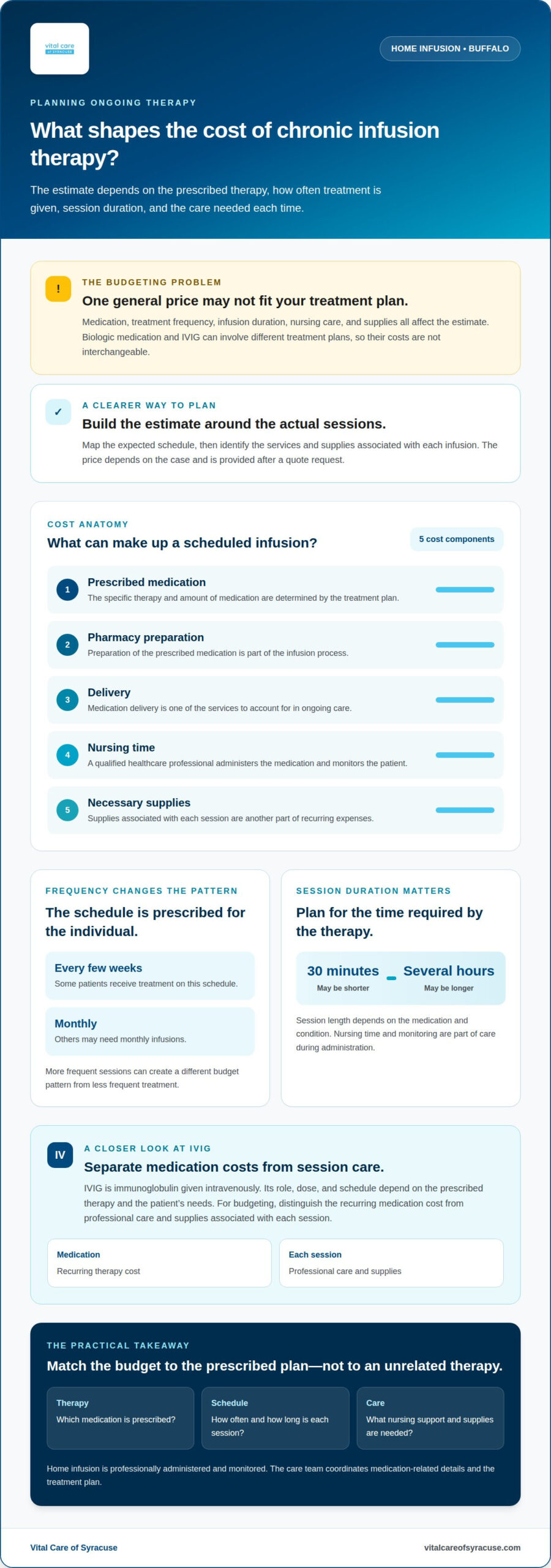
Chronic infusion therapy involves more than the medication itself. An IV infusion delivers prescribed medicine through a vein during a planned session. The treatment plan determines the session schedule and amount of medication. Budgeting therefore depends on the therapy, its duration, and the care needed during administration. Biologic medication and IVIG may involve different treatment plans, so their costs are not interchangeable.
For ongoing care, consider the components of each scheduled infusion: prescribed medication, pharmacy preparation, delivery, nursing time, and necessary supplies. The amount of medication and treatment frequency can affect recurring expenses. A plan with frequent visits may create a different budget pattern from one with less frequent sessions. These factors explain why a general estimate may not reflect an individual’s condition or treatment plan.
IVIG is immunoglobulin given intravenously. Its role, dose, and schedule depend on the prescribed therapy and the patient’s needs. The process includes preparing the medication, administering it through an IV, and monitoring the patient during treatment. For budgeting, distinguish the recurring medication cost from professional care and supplies associated with each session. Together, these components shape the overall expense of continued IVIG therapy.
The price depends on the case and is given after a quote request; medication, treatment frequency, infusion duration, nursing care, and supplies shape the estimate. A useful planning step is to map the expected treatment schedule and identify which services occur with each session. This gives patients a clearer view of recurring expenses without relying on an unrelated therapy’s price. For care-specific information, explore home infusion support.
Autoimmune conditions treated with infusions
Infusion treatment is used for several autoimmune conditions, but a diagnosis alone does not determine the medication or care setting. Conditions treated with infusion therapy include rheumatoid arthritis, Crohn’s disease, and ulcerative colitis. Lupus, psoriasis, multiple sclerosis, ankylosing spondylitis, and vasculitis are also among them. The prescribing clinician selects treatment based on the patient’s diagnosis and plan.
- Rheumatoid arthritis and ankylosing spondylitis
- Crohn’s disease and ulcerative colitis
- Lupus, psoriasis, multiple sclerosis, and vasculitis
- Refractory bullous pemphigoid, in selected cases
Bullous pemphigoid shows why treatment can differ within one diagnosis. For refractory cases, a healthcare provider may prescribe rituximab or IVIG infusions. This does not mean that every person with bullous pemphigoid needs infusion therapy. The decision depends on whether the condition is refractory and whether the prescribed medication fits the individual treatment plan.
For other conditions, the infusion medication also depends on the diagnosis. The conditions listed above are examples of where infusion therapy is used, not a promise that every patient will receive the same drug. Treatment varies according to the condition and medication prescribed. Nurses administer the prescribed therapy and monitor patients, while the care team coordinates treatment details.
For Buffalo patients, the practical next step is to understand the prescribed therapy rather than assume a diagnosis automatically qualifies for home treatment. Home infusion describes the care setting, while infusion therapy describes how medication is given. They are related but distinct decisions. The treatment plan should specify the medication and whether home administration fits its clinical requirements.
This distinction matters for chronic conditions requiring ongoing care. For example, a person with multiple sclerosis and someone with Crohn’s disease may both receive infusion treatment, but their medications and schedules can differ. The condition, prescribed therapy, and care requirements shape the plan. Discussing these details with the treating team helps patients understand what their infusion care involves.
Home Infusion Meds for Autoimmune Diseases in Buffalo
Medication choice depends on the autoimmune condition and prescribed treatment plan. IVIG, or intravenous immunoglobulin, is one medication used in infusion therapy. Examples of IVIG brands include Privigen, GAMUNEX-C, GAMMAGARD, and octagam. These names identify products, not interchangeable treatment recommendations. The prescribing clinician determines which medication fits the patient’s diagnosis and care needs.
For patients considering home infusion for autoimmune disease in Buffalo, the question is not simply whether a medication can be infused. The clinical team also considers the treatment plan and whether home administration is appropriate. A brand name alone does not establish that a medication suits every patient or setting. The prescribed product, dose, and administration plan guide the decision.
IVIG is used in immunology infusions, and its role differs from that of other infusion medications. A patient’s diagnosis helps establish why the therapy is prescribed. The selected product and administration instructions then guide how the infusion is arranged. Use the medication name on your treatment plan to discuss therapy clearly with your care team.
Before treatment, the care team reviews the medication plan, current medications, allergies, and medical conditions. These details inform administration and monitoring. During the session, a nurse follows the prescribed instructions and watches for reactions. Possible side effects include headache, fatigue, nausea, fever or chills, rash, and irritation near the IV site. Reporting symptoms promptly helps the clinical team respond appropriately.
Keep the medication name, diagnosis, and administration plan together when discussing treatment. For example, noting “IVIG” and the prescribed brand helps distinguish this therapy from another infusion medication. For someone planning home infusion for autoimmune disease in Buffalo, this information can support a focused conversation about the intended treatment.
For professional support with treatment delivered at home, explore home infusion care and how it can fit into a prescribed care plan.
Vital Care of Syracuse: Home infusion
Vital Care of Syracuse provides home infusion, including immunoglobulin (IVIG/SCIG) therapy for patients with a prescribed treatment plan. If your care team has recommended immunoglobulin therapy, Vital Care of Syracuse can coordinate professional infusion care at home.
Home infusion is also available for anti-infective therapy and parenteral nutrition (TPN), which address different clinical needs. The appropriate therapy depends on the prescription and patient’s care plan. For autoimmune disease, IVIG or SCIG may be relevant when prescribed, but these treatments are not suitable for every condition or patient.
If home infusion is the next step in your prescribed care, contact Vital Care of Syracuse to discuss your treatment plan and support needs.
Plan Your Next Step With Confidence
Choosing home infusion is also a decision about how treatment fits into everyday life. Before moving forward, consider what a workable care routine looks like for you, including visit timing, the space where care will take place, and how treatment updates will be communicated. These practical details can make the transition more organized and manageable.
For home infusion for autoimmune disease in Buffalo, bring your treatment goals and questions into a conversation with the care team. A clear discussion can connect your prescribed plan with the support you need at home, while keeping decisions grounded in your individual circumstances. You deserve to understand the next step before care begins.
Contact Vital Care of Syracuse today to discuss home infusion support. A thoughtful conversation can help you move forward with greater clarity and confidence.
Frequently Asked Questions
What Is Infusion Therapy for Autoimmune Disease?
Infusion therapy delivers prescribed medication by IV or injection when a clinician determines that approach fits the treatment plan. For autoimmune disease, the medication’s purpose and administration instructions depend on the diagnosis. Before treatment begins, the prescribing clinician and infusion team coordinate the plan, including relevant medical history, allergies, and current medications, so care reflects the patient’s clinical needs.
Which autoimmune diseases are treated with home infusion therapy in Buffalo, NY?
Conditions for which infusion therapy may be used include rheumatoid arthritis, Crohn’s disease, ulcerative colitis, lupus, psoriasis, multiple sclerosis, ankylosing spondylitis, and vasculitis. IVIG or rituximab may be prescribed for refractory bullous pemphigoid. These examples do not mean that every medication for each condition is appropriate at home. The prescribed treatment and clinical requirements guide the setting and care plan.
Which Buffalo-area providers offer home infusion for autoimmune diseases?
Vital Care of Syracuse provides home infusion in Buffalo and offers immunoglobulin therapy, including IVIG/SCIG. Other therapies include anti-infective treatment and parenteral nutrition, which serve different clinical needs. For autoimmune care, the key question is whether the prescribed medication and clinical plan fit home administration. The treating clinician’s prescription and the infusion team’s assessment guide the care arrangement.
Does insurance, Medicare, or Medicaid cover home infusion for autoimmune disease in Buffalo?
Coverage varies by plan and prescribed treatment, so Medicare, Medicaid, and private insurance do not have identical benefits. Vital Care of Syracuse assists with insurance verification, prior authorizations, and reimbursement coordination. This review can clarify how the specific medication and care arrangement are handled under a patient’s plan. Coverage details and any patient responsibility depend on the individual plan’s terms.
What does home infusion cost in Buffalo with and without insurance?
There is no single cost for every home infusion plan. The amount depends on the prescribed medication, dose, treatment frequency, nursing care, supplies, and delivery needs. Insurance can affect the patient’s out-of-pocket responsibility, while self-pay costs depend on the treatment plan. Requesting a case-specific quote is the way to receive pricing; general figures may not reflect an individual’s therapy.
How do I get a home infusion referral and set up treatment in Buffalo?
Start by discussing infusion treatment with the clinician managing your autoimmune condition. If home administration is prescribed, the care team coordinates treatment details with the infusion provider, including the medication plan and clinical considerations. Vital Care of Syracuse also assists with insurance verification and prior authorization coordination. Share relevant medication and allergy information so the care team can organize the next steps around your prescribed therapy.
Leave a Reply