


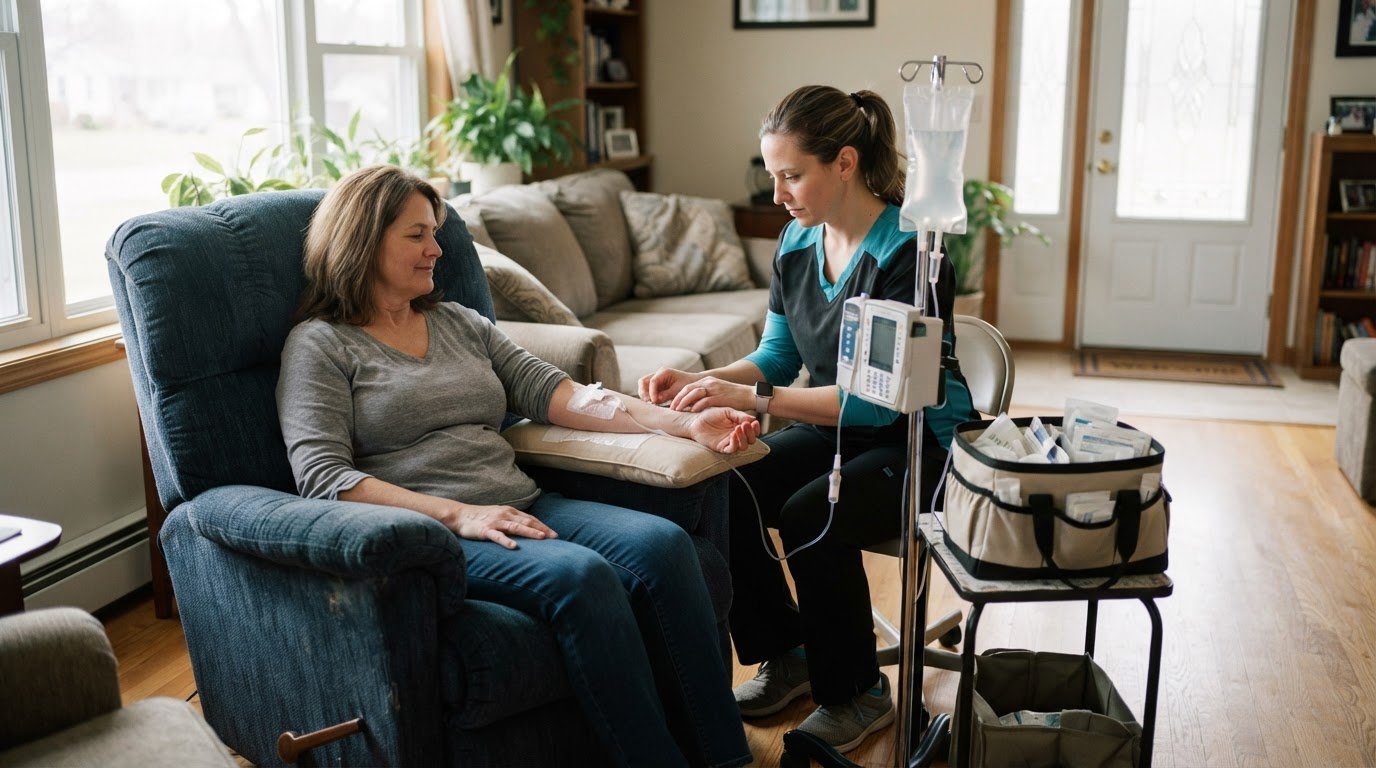
A nurse’s visit schedule depends on the treatment plan, not a one-size-fits-all calendar. Some people need daily visits; others may need a nurse a few times a week. The home infusion intake process helps determine the right support by assessing clinical needs, treatment risks, and the home environment.
It’s understandable to want to know when a nurse will arrive and how care will fit into daily life. This article explains how the intake team reviews clinical needs, the home setting, and insurance requirements, then coordinates with the prescribing clinician and pharmacy to plan care. You’ll learn why the schedule may change as treatment progresses and what to expect from the first visit, so you can plan around your needs.
Key Takeaways
- Nursing visit frequency is tailored to the treatment plan and the patient’s clinical needs, rather than set by a universal schedule.
- Home safety planning considers where supplies are stored, how easily the patient can move around, and whether the care setup fits the treatment.
- Insurance coverage and prior authorization can affect when care begins, so approval is an important part of intake planning.
- Clear coordination between the prescriber, pharmacy, and nursing team helps align medication, delivery, and home visits.
Patient clinical stability and infusion reaction risk
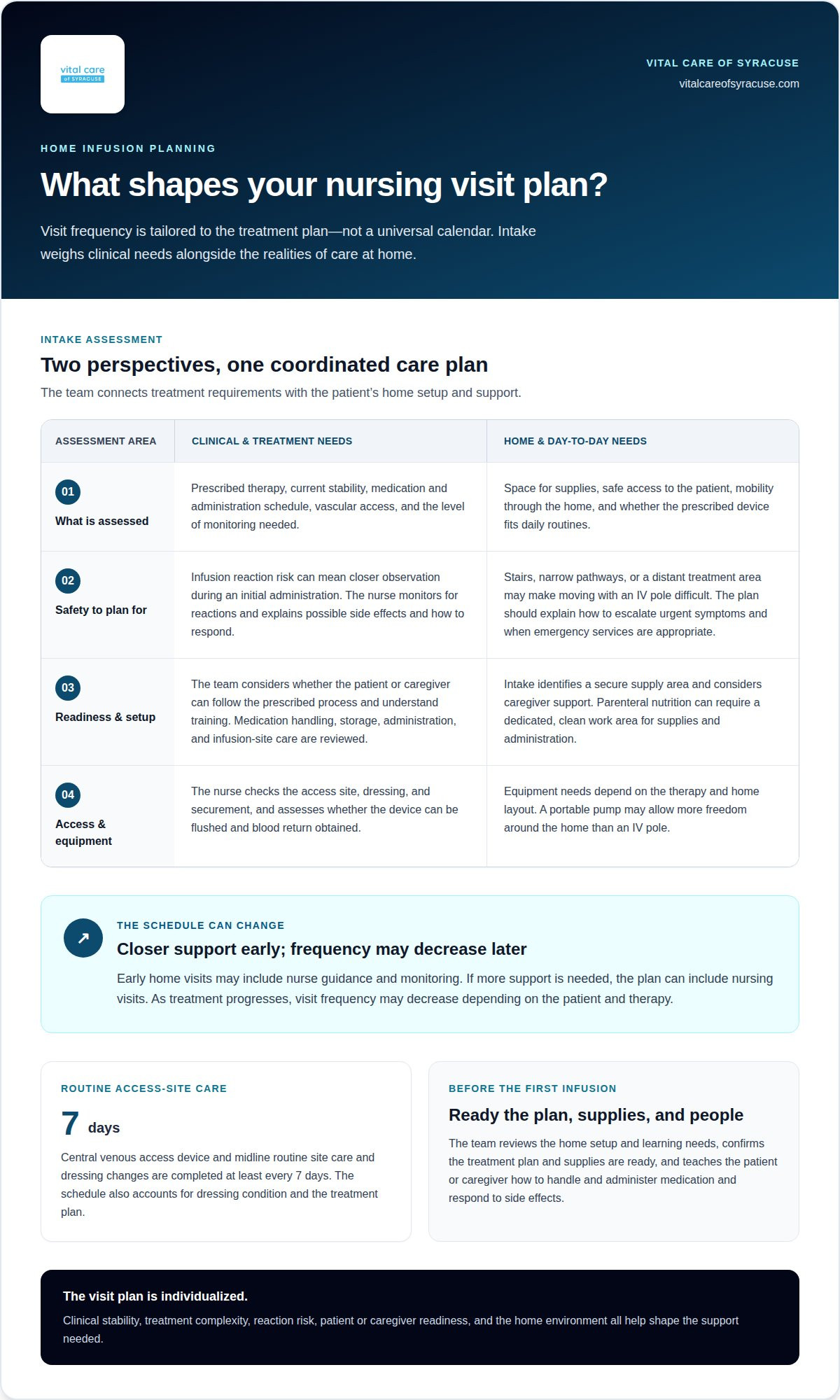
Clinical assessment helps determine whether treatment can be delivered safely at home and what nursing support it requires. The Infusion Therapy Standards of Practice identifies Standard 66, in its 9th edition, as the home infusion therapy section guiding patient appropriateness. The assessment considers the prescribed therapy, the patient’s current stability, and the level of monitoring needed during administration.
During intake, the team gathers information about the treatment plan, medication, administration schedule, vascular access, and the patient’s or caregiver’s ability to administer therapy. These details help shape the care plan and the timing of nurse visits. The 21st Century Cures Act was introduced on December 13, 2016, according to U.S. Congress.
The risk of an infusion reaction matters because an initial administration may require closer observation. During early home visits, an infusion nurse guides the patient through the process and monitors for reactions. If more support is needed, the plan can include nursing visits. As treatment progresses, visit frequency may decrease, depending on the patient and therapy.
Training covers the practical details of safe administration. A nurse reviews medication storage instructions, possible side effects, and how to respond if they occur. For example, medication with specific temperature requirements must be stored as directed. The nurse also explains treatment goals and how to care for the infusion site between visits.
Patient and caregiver readiness is assessed, not assumed. The nurse considers whether the person responsible for administration can follow the prescribed process and understand the training. If the patient isn’t confident administering medication independently, nursing support can guide care at home. The patient’s abilities, treatment complexity, and reaction risk all inform the visit plan.
Before the first infusion, the team reviews the home setup and learning needs alongside clinical considerations. The patient or caregiver receives instruction on medication handling, administration, and responding to side effects. The nurse also confirms that the treatment plan and supplies are ready for the visit.
Home environment and access to emergency services
Home infusion moves care from a hospital or infusion center into the patient’s living space. Intake therefore considers the room available for supplies, safe access to the patient, and how the prescribed device will fit daily routines. Stairs, narrow pathways, or a distant treatment area can make moving with an IV pole difficult. Depending on the therapy and equipment, a portable pump may allow more freedom around the home.
Requirements for home infusion depend on the location and the professionals involved. Intake planning considers where care will take place and the requirements that apply. Because home care happens outside a hospital, the plan should also explain how to escalate urgent symptoms and when emergency services are appropriate.
Vascular access assessment connects the prescribed therapy with the right device and its monitoring needs. The nurse checks the access site, dressing, and securement for integrity or signs of complications. Patency assessment includes checking whether the device can be flushed and whether blood return can be obtained. If access needs attention, the care team coordinates the appropriate vascular access services rather than treating the device as a minor detail.
For central venous access devices and midlines, routine site care and dressing changes are completed at least every 7 days. The schedule also accounts for dressing condition and the patient’s treatment plan. A caregiver may need to understand how to keep supplies organized and how to protect the site between visits. Parenteral nutrition can require a dedicated, clean work area for its supplies and administration routine.
Unlike center-based care, home visits must account for the patient’s actual layout, mobility, and caregiver support. Intake identifies a secure supply area and considers whether the patient can move safely with the device. A home infusion therapy plan can bring these practical details into the same discussion as clinical needs.
Insurance coverage and prior authorization
Coverage review identifies which parts of home infusion a health plan may pay for and what approval steps apply. The intake team aligns the prescription and clinical rationale with payer requirements before treatment is set up.
Coverage and Payer Requirements
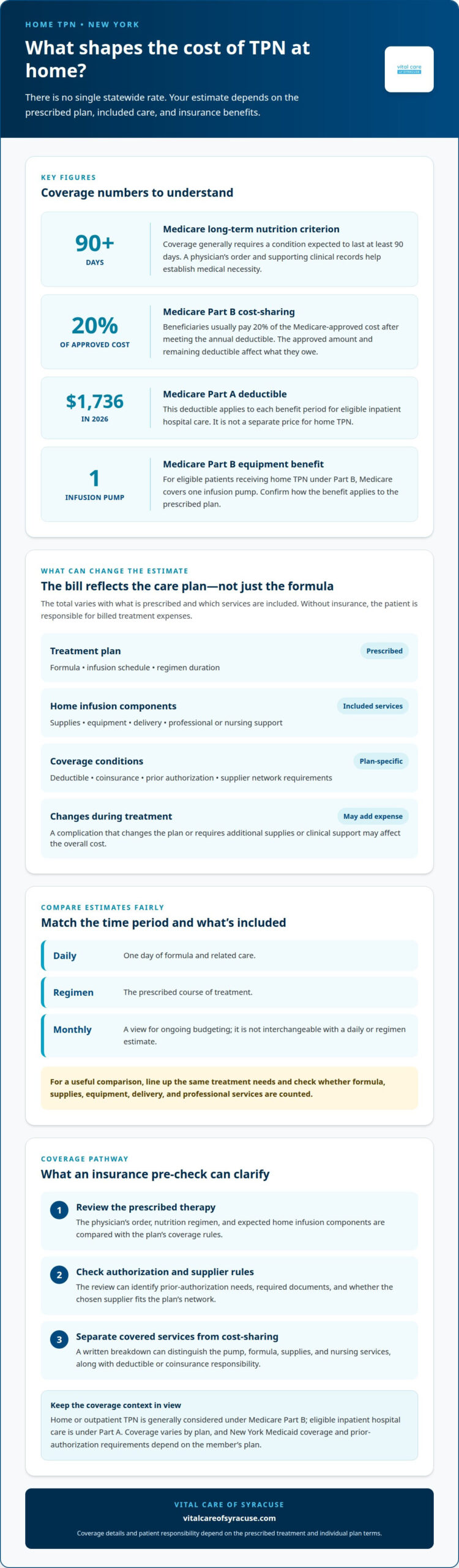
Coverage and payer requirements are the plan rules used to evaluate prescribed care and payment. Section 5012 of the 21st Century Cures Act established a new Medicare home infusion therapy benefit, according to U.S. Congress. Medicare Part B covers some home infusion therapy when patients meet specified criteria. For services covered under its Durable Medical Equipment benefit, Part B requires a pump for administration.
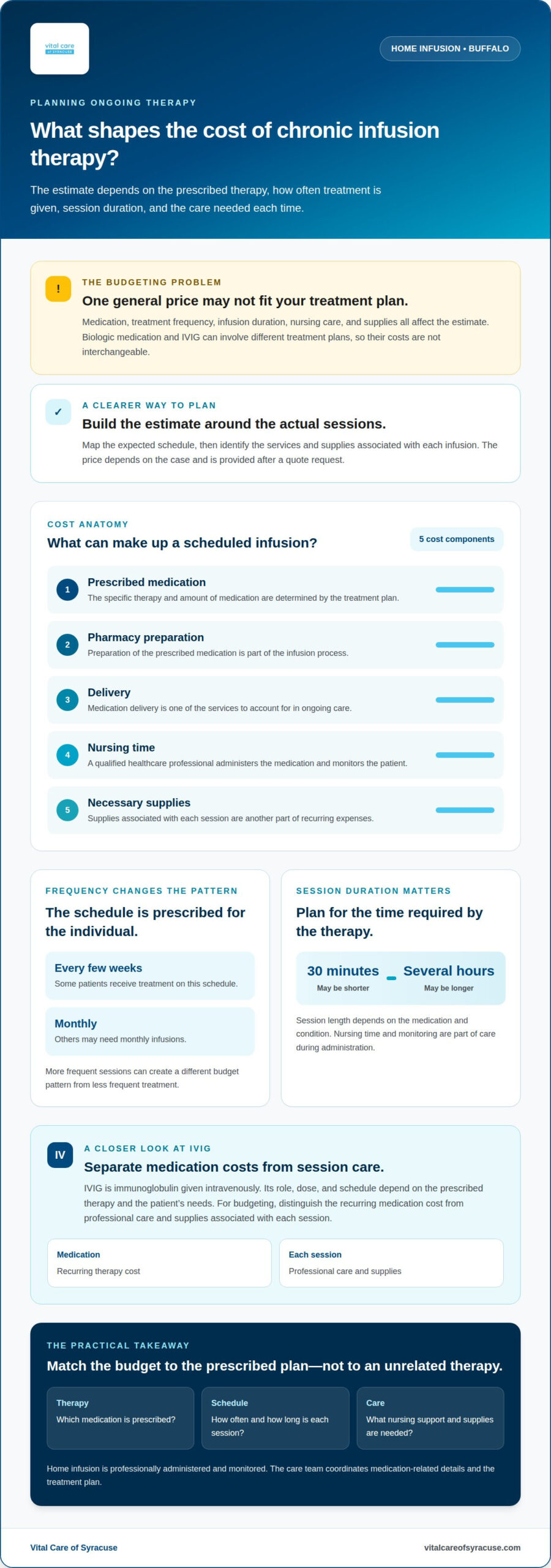
Coverage depends on the patient’s plan, the prescribed treatment, and the clinical information submitted for review. Prior authorization may be needed before a payer approves care. Copays and other out-of-pocket expenses depend on plan cost-sharing and coverage decisions. The treatment price depends on the case and is given after a quote request; medication, administration needs, and plan benefits affect the overall expense.
Documents and Prescriptions
Prescriptions and supporting documents provide the clinical and administrative details needed to assess and prepare treatment. The prescriber’s order identifies the medication and intended therapy, while clinical information explains why home administration is appropriate. The payer may request information to review medical necessity and determine coverage.
Accurate, complete records help the pharmacy and nursing team coordinate the prescribed medication, route, and schedule. For example, an intravenous antibiotic order needs to align with the administration plan submitted for review. If the payer requests additional clinical details, that may affect approval and setup. The care team organizes the required materials around the plan’s review process.
Approval and Setup Timing
Approval and setup involve intake review, a payer decision, and preparation for treatment. There is no single timeline for every case. The steps depend on the completeness of the prescription and clinical records, the payer’s review, and the treatment’s preparation needs.
Once the required information is assembled, the payer reviews eligibility and authorization requirements. The pharmacy and nursing team then coordinate medication, supplies, and visits around the approved plan. A request for additional records or a change in treatment details may add steps before care begins. For chronic therapy, coordinating approval and delivery helps prepare for the transition to home treatment.
Coordination among physician, pharmacy, and nursing team
Home infusion relies on coordinated decisions, not a single handoff. The patient, physician, hospital discharge planner, health plan, home infusion pharmacy, and, when applicable, home health agency may all contribute. Each role connects the treatment order with medication preparation, coverage, delivery, and nursing visits.
The physician’s prescription establishes the intended therapy and clinical plan. The pharmacy uses that information to prepare medication and coordinate supplies, while the nursing team plans administration and patient support. The health plan’s review can affect when care is ready to begin. Sharing current instructions across the teams helps prevent a mismatch between the prescribed treatment and what arrives at home.
A hospital-to-home transition needs particular attention when infusion therapy must continue without interruption. For a continuous infusion, the pump and medication can be delivered to the hospital so the patient can transition to the home pump before discharge. This planned sequence connects the hospital team, pharmacy, and home nursing service before the patient leaves, supporting continuity of treatment.
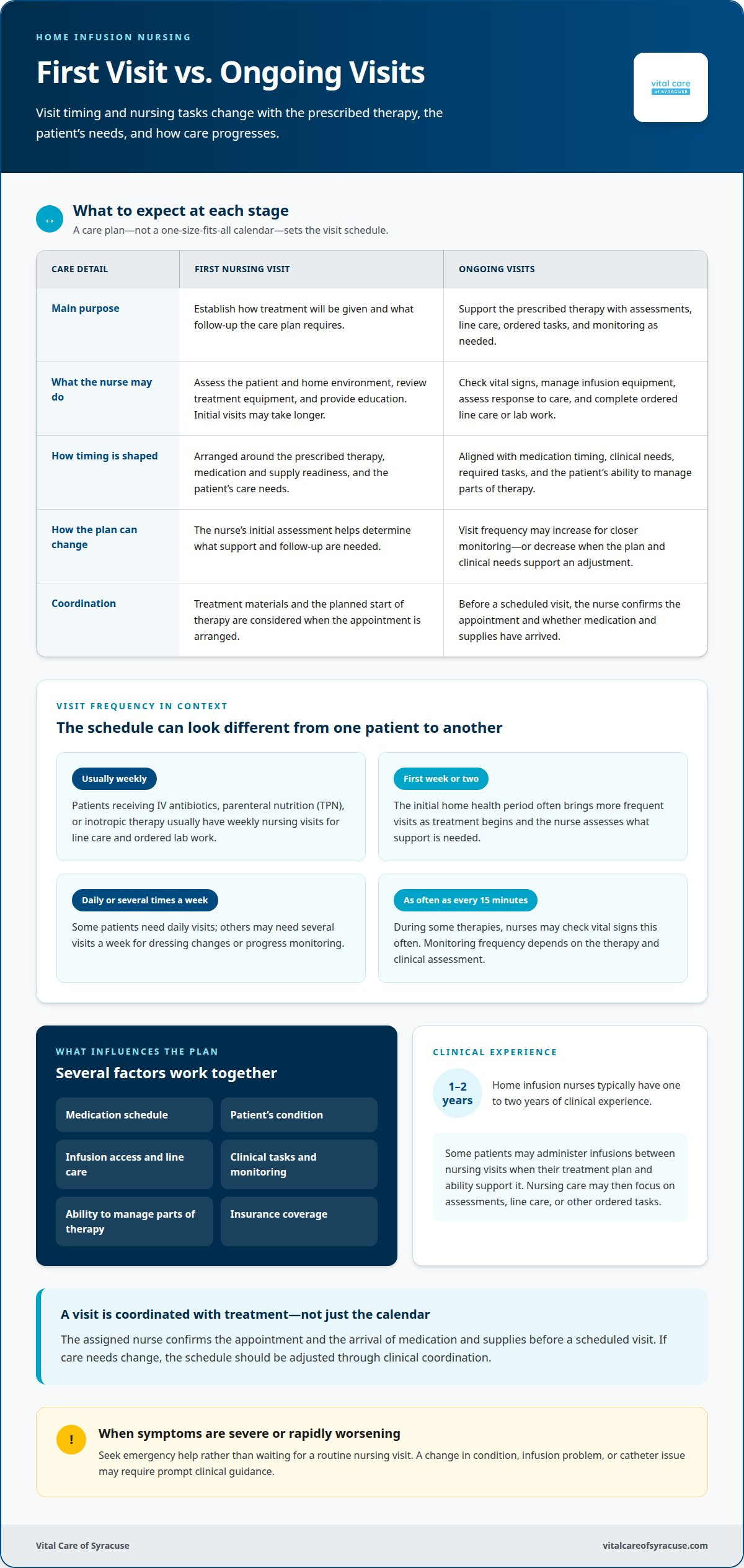
After the transition, nursing visits follow the patient’s treatment plan. Some patients need daily visits; others need a few visits each week. The nurse administers prescribed medication or fluids at the prescribed rate, monitors for adverse reactions, and teaches the patient how to care for the IV site between visits. For chronic therapy, sharing changes in the patient’s condition or treatment instructions helps keep care aligned.
Clear coordination also gives the patient and caregiver a shared understanding of who manages each part of home care. For example, the pharmacy handles medication preparation and delivery, while the physician directs clinical treatment and nurses provide infusion support. Discuss coordinated home infusion care when planning a transition to treatment at home.
Vital Care of Syracuse: Home infusion
Vital Care of Syracuse provides home infusion for patients whose prescribed treatment can be delivered at home with coordinated clinical support. Its therapies include Anti-infective Therapy, Immunoglobulin (IVIG/SCIG), and Parenteral Nutrition (TPN). These services may be appropriate when a physician has prescribed one of these treatments and home administration is part of the care plan.
Intake brings together the prescription, clinical needs, home setting, coverage review, and nursing plan to prepare for treatment. This coordination clarifies how medication will be delivered and what nursing visits are needed. Patients and caregivers can also receive guidance on administration and treatment-related care.
If home infusion may suit your prescribed care, contact Vital Care of Syracuse to discuss the next step.
Take the next step toward a home care plan
As you consider treatment at home, think about what would help you feel prepared: a clear care plan, support during visits, and an understanding of how therapy may fit your daily routine. The home infusion intake process brings these considerations together, so the next conversation can focus on your needs and your physician’s prescription.
Vital Care of Syracuse provides home infusion, including Anti-infective Therapy, Immunoglobulin (IVIG/SCIG), and Parenteral Nutrition (TPN). These therapies may be appropriate when they align with your prescription and clinical plan. Discussing your treatment goals and concerns can help determine whether home infusion is the right setting for your care.
Contact Vital Care of Syracuse to discuss your home infusion needs and next steps. With a thoughtful plan, you can approach care at home with greater clarity.
Frequently Asked Questions
What are the steps in the home infusion intake and referral process?
The home infusion intake process usually moves from a clinician’s referral to a suitability review, coverage coordination, and treatment planning. A referral helps the care team understand the prescribed therapy and why it is needed at home. The team aligns clinical information, support needs, and the planned start of care. For a hospital discharge, coordinating the handoff helps maintain continuity at home.
How does insurance coverage and prior authorization work for home infusion?
Coverage varies by health plan, and prior authorization is the payer’s review before certain treatments can proceed. As part of the home infusion intake process, the review may consider the prescription, clinical rationale, and requested services or equipment. Vital Care of Syracuse assists with insurance verification, prior authorizations, and reimbursement coordination. Patients can ask how their plan handles medication, nursing services, and applicable cost-sharing.
Who qualifies for home infusion therapy, and what clinical assessments are required?
Eligibility depends on the prescribed medication, diagnosis, and clinical considerations assessed by the patient’s healthcare provider. The home infusion intake process considers whether treatment is appropriate at home, the patient’s stability, and the monitoring required. It also considers whether the patient or caregiver can follow the administration plan and whether the home setup supports care. A diagnosis alone doesn’t determine suitability.
How are home infusion providers, nurses, equipment, and medication arranged?
The care team coordinates these elements around the prescription and the patient’s needs. Vital Care of Syracuse offers home infusion and in-clinic infusion suites, coordinating treatment plans with physicians, nurses, and pharmacists. Its service area includes Syracuse, Albany, Rochester, Utica, Buffalo, Auburn, and Binghampton. Home infusion support includes caregiver training and supply delivery, connecting medication and equipment with planned nursing care.
What are the risks, contraindications, and emergency procedures for home infusion?
Risks include infusion reactions and vascular access complications. Nurses monitor for reactions and check the access site, dressing, securement, flushing, and blood return. The patient or caregiver learns about side effects and how to respond. The care plan should explain how to escalate urgent symptoms and when emergency services are appropriate.
Leave a Reply