


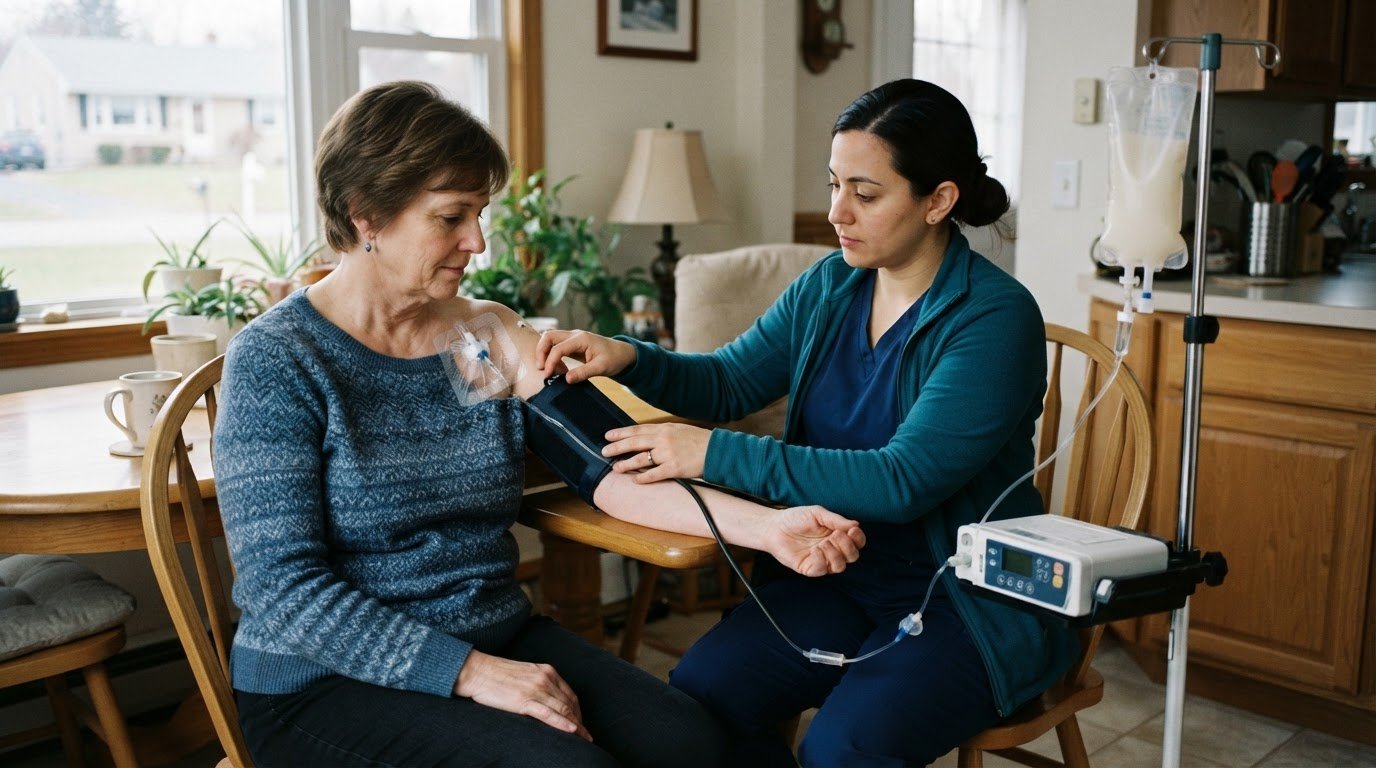
A home infusion nurse doesn’t follow one fixed schedule for every patient. Home infusion nurse visit frequency depends on the treatment plan. Patients receiving IV antibiotics, parenteral nutrition (TPN), or inotropic therapy usually have weekly nursing visits for line care and ordered lab work. Some need visits more often, depending on their care needs and medication schedule.
It’s understandable to want a clear picture of how often a nurse will visit and what happens during each appointment. The schedule is only one part of the plan: nurses also assess your needs, monitor your care, and coordinate follow-up as treatment progresses.
This article explains what home infusion nursing involves, what a nurse may assess during a visit, and how follow-up is arranged. You’ll learn why visit timing varies, what routine care may include, and how specialized home infusion supports treatment at home.
Key Takeaways
- Your visit schedule reflects your treatment plan, medication needs, and the care required for your infusion access.
- Clinical check-ins can include reviewing your condition, monitoring vital signs, and managing infusion equipment.
- Follow-up scheduling helps coordinate the next visit with your medication and supply needs.
- Knowing what can affect visit timing can help you understand how your care plan supports treatment at home.
What Is Home Infusion Nursing?
Home infusion nursing supports prescribed medication, fluids, or nutrients delivered into the bloodstream through a needle or catheter. Visit timing depends on the treatment plan and the patient’s care needs.
Factors Shaping Skilled Visit Frequency
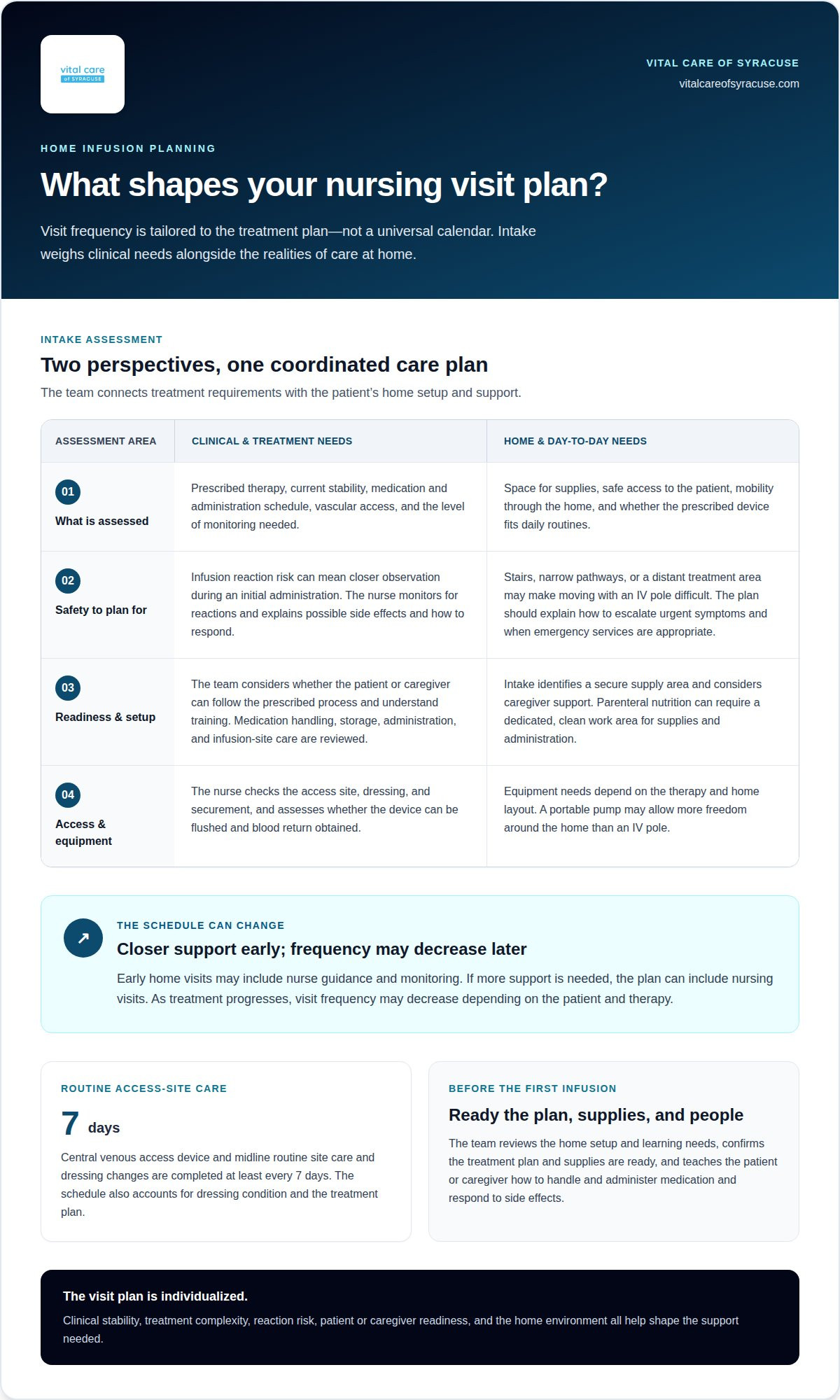
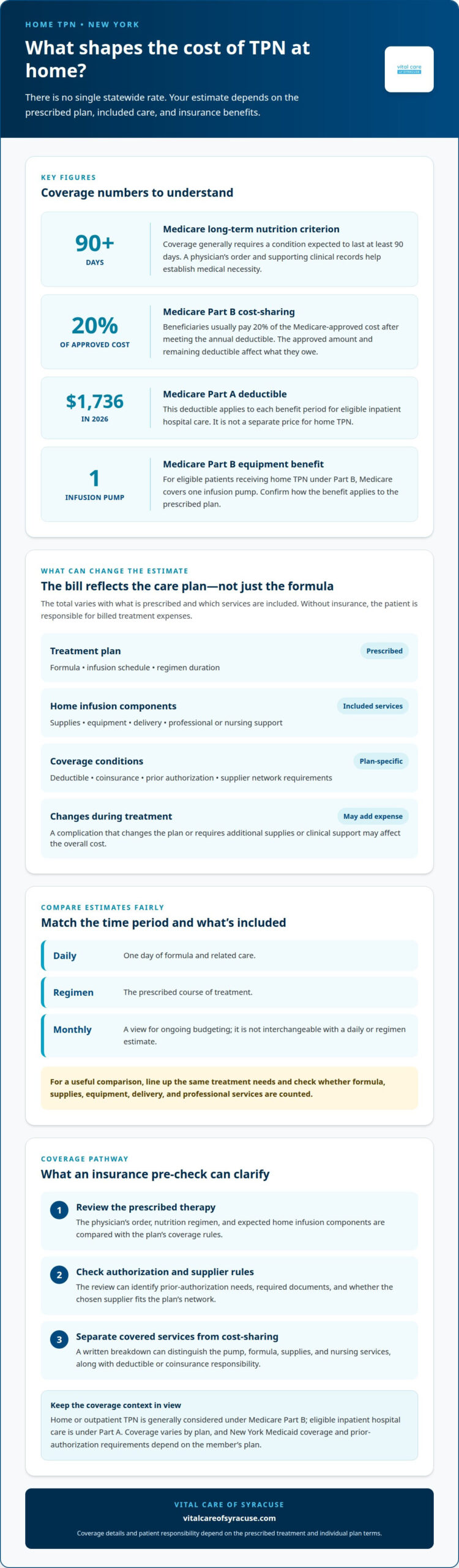
Nursing visit frequency reflects the medication schedule, the patient’s condition, and the clinical tasks required. A care plan may call for more visits when treatment needs closer monitoring, or fewer visits when patients can manage parts of their therapy. Insurance coverage may also affect the schedule. These factors help align visit timing with the prescribed care and each patient’s needs.
Home infusion nursing may include IV anti-infective therapy, as well as infusion-related assessments and care. With in-clinic infusion, patients travel to receive treatment at an infusion suite. At home, nursing visits are coordinated with the treatment plan and the clinical support required.
Medicare-covered skilled nursing may include IV therapy when it is medically necessary and part-time or intermittent, according to the Centers for Medicare & Medicaid Services (CMS). These are the stated conditions for this skilled nursing coverage.
Some patients can administer their own infusions between nursing visits when their treatment plan and ability support it. The nurse’s role may then focus on assessments, line care, or other ordered tasks.
A change in the patient’s condition, an infusion problem, or an issue with the catheter may require prompt clinical guidance. Severe or rapidly worsening symptoms call for emergency help, not a routine visit.
Scheduling the First Nursing Visit
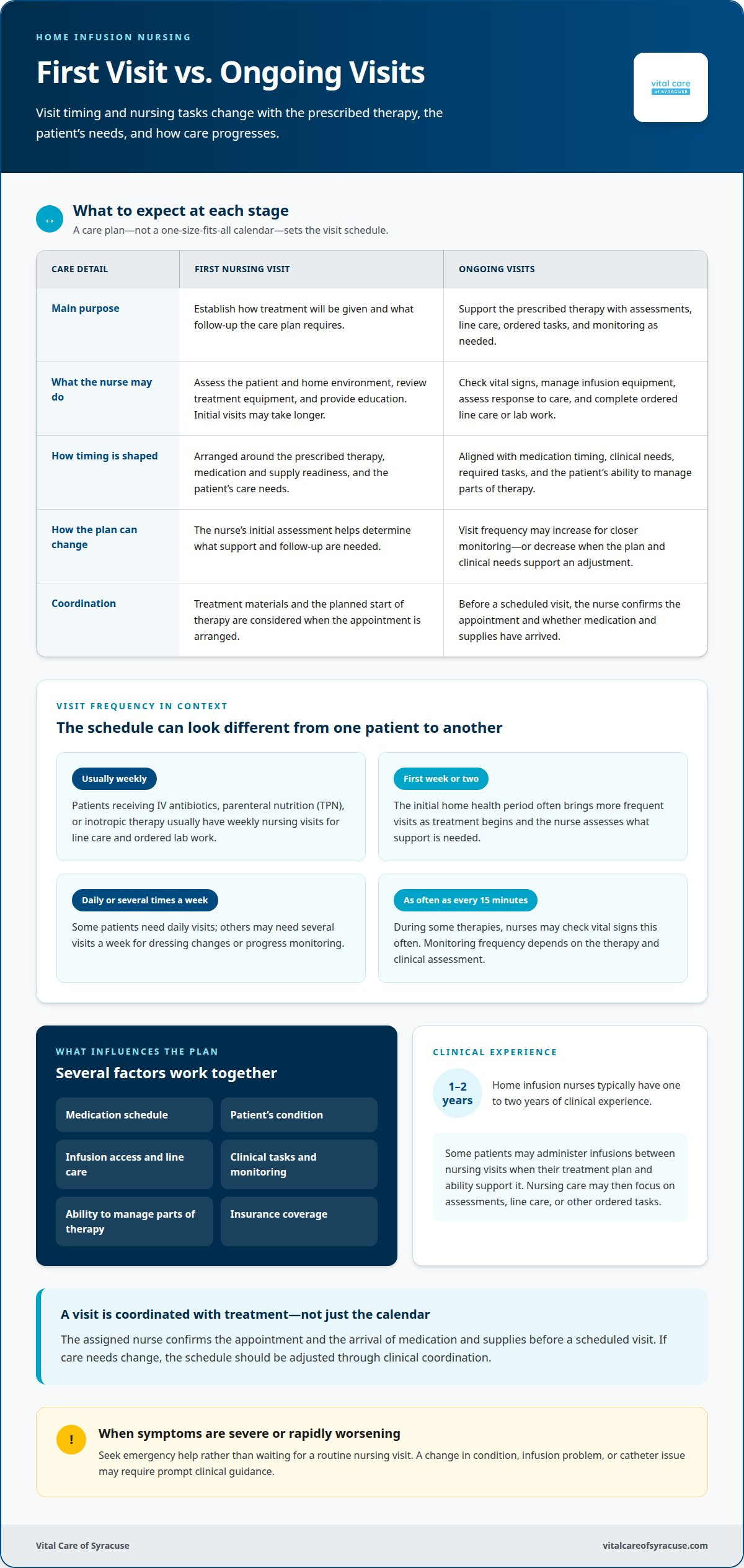
The first nursing visit is arranged around the prescribed therapy, medication and supply readiness, and the patient’s care needs. Initial visits may take longer than routine visits because the nurse completes additional assessments and education. This appointment helps establish how treatment will be given and what follow-up the care plan requires.
Home infusion nurses typically have one to two years of clinical experience. During the first visit, the nurse can assess the home environment and review the equipment needed for treatment. Patients and families can use this time to understand the care schedule and how future visits fit with the prescribed therapy.
Patient check-ins and clinical assessment
A home infusion check-in gives the nurse a chance to assess the patient and the treatment setup. The nurse monitors vital signs, manages infusion equipment, and considers how the patient is responding to care. These observations help determine whether the plan continues to meet the patient’s needs.
During some therapies, nurses may check vital signs as often as every 15 minutes. How closely a patient is monitored depends on the therapy and the clinical assessment. A patient receiving a treatment that needs frequent observation may require more nursing contact than someone whose plan centers on periodic line care or progress monitoring.
The initial home health period often brings more frequent visits during the first week or two. That closer schedule gives the nurse opportunities to assess the patient as treatment begins and understand what support the plan requires. Some patients need daily visits; others may need several visits a week for dressing changes or progress monitoring. The patient’s condition and ability to manage aspects of care help shape the routine.
At the first visit, the nurse assesses the home environment and the equipment used for treatment. This provides context for delivering care in the patient’s actual setting, rather than relying only on details from a treatment plan. The nurse also considers the patient’s condition and care needs, helping connect clinical observations with the support required at home.
Check-ins are useful because a schedule can change as care progresses. For example, a patient who needs daily nursing visits may later need fewer if the treatment plan and clinical needs support that adjustment. The nurse’s observations, including vital signs and equipment needs, inform ongoing care. Patients and families can raise questions about the routine during these visits, keeping communication connected to the care being delivered.
For a closer look at clinical support for infusion treatment, explore how professional care can fit into treatment at home.
Follow-up and scheduling the next visit
The assigned home infusion nurse contacts the patient before a scheduled visit to confirm the appointment and whether the medication and supplies have arrived. Confirming these details helps align the planned nursing care with the treatment materials needed at home. For ongoing therapy, this contact also gives the nurse an opportunity to clarify the visit’s timing and purpose.
Medication and supply readiness matters because the nurse’s planned tasks relate to the prescribed treatment. For example, a visit for line care or ordered lab work depends on the patient’s current care plan. Confirming preparations connects those clinical needs with practical arrangements and can flag a mismatch between the planned visit and the medication or supplies expected.
Follow-up should reflect the treatment plan, rather than assume every patient needs the same recurring appointment. A chronic condition may involve continuing therapy, while nursing tasks and the medication schedule still shape the next visit. The assigned nurse’s coordination keeps appointments connected to the current plan. If care needs change, the visit schedule should be adjusted through clinical coordination.
For patients and families, the day-before call creates a clear point for appointment coordination. The nurse confirms the expected visit and receipt of treatment materials, so the patient knows what the appointment is intended to support. This communication is especially useful when medication delivery and nursing care must align. It makes follow-up part of the care schedule, not simply a reminder detached from treatment.
Think of appointment coordination as a practical step: the visit, medication, and supplies are considered together. This helps keep the next nursing appointment focused on prescribed care and required follow-up. The details depend on the treatment plan and the nursing tasks due at that visit.
How often home infusion nurses visit
Home infusion nurse visit frequency depends on the treatment plan, medication schedule, and nursing tasks. It isn’t a fixed number of visits for every patient. The schedule also reflects whether a patient can administer treatment independently or needs a nurse to provide it. These differences help explain why two people receiving home infusion may have different visit patterns.
Patients receiving IV antibiotics, parenteral nutrition (TPN), or inotropic therapy usually have weekly nursing visits for PICC line dressing changes, port care, and ordered lab work. These visits support line care and monitoring. The infusion itself may happen more often than the nurse visits because some patients administer doses between appointments.
Other patients need daily visits or multiple visits in a day. The medication schedule and the patient’s ability to self-administer help determine how often nursing care is needed. For example, if a nurse must administer treatment at scheduled times, the visit plan needs to account for those times. When patients manage doses between appointments, nursing visits can focus on assessment or line care.
For chemotherapy or biologic infusions at home, there isn’t one visit interval that applies to every treatment. Nursing frequency follows the prescribed regimen, the need for clinical monitoring, and whether the patient can administer treatment independently. Those factors shape the schedule, rather than the treatment category alone.
The practical takeaway is that infusion frequency and nurse visit frequency aren’t always the same. A weekly nursing visit may support medication given on a different schedule, while other treatment plans require more frequent nursing support. Home infusion nurse visit frequency reflects the work needed to deliver and monitor the prescribed therapy.
Explore home infusion care to learn how professional nursing support can align with your treatment schedule.
Vital Care of Syracuse: Home infusion
Vital Care of Syracuse provides home infusion for patients whose prescribed treatment can be delivered at home. Its services include anti-infective therapy, immunoglobulin (IVIG/SCIG), and parenteral nutrition (TPN), supporting people with different infusion needs through specialized care.
If your care plan includes one of these therapies, home infusion may be a practical way to receive treatment outside an infusion center. Visit timing depends on the treatment plan and the nursing tasks required, so understanding your schedule is part of coordinating care with your clinical team.
For patients and families considering home infusion, Vital Care of Syracuse provides specialized therapy and coordinated support. Contact Vital Care of Syracuse to discuss home infusion care.
Move forward with a care plan that feels clear
A thoughtful care schedule is more than a calendar of appointments. Your home infusion nurse visit frequency should fit your treatment goals and the support you need at home. As care continues, clear communication about changes in your needs helps keep the plan aligned with your experience and gives you and your family a practical way to take part in conversations about ongoing care.
When home infusion is part of your treatment, the next step is to discuss how professional support can fit your prescribed therapy. Vital Care of Syracuse offers home infusion care, including Anti-infective Therapy, Immunoglobulin (IVIG/SCIG), and Parenteral Nutrition (TPN). Contact Vital Care of Syracuse to talk about home infusion and your care needs. A clear conversation can help you approach the next stage of treatment with confidence.
Frequently Asked Questions
How often do home infusion nurses visit patients?
Home infusion nurses may visit weekly, daily, or multiple times in one day, depending on the patient’s treatment plan. For some patients, the nurse visits for specific clinical tasks while medication doses happen on a different schedule. Infusion timing and nursing visit timing aren’t necessarily identical. The care plan determines how these schedules work together.
What factors determine home infusion nurse visit frequency?
Visit timing depends on the prescribed therapy, the patient’s medical condition, and the nursing care required. Medication schedules and the patient’s ability to manage treatment also affect how often a nurse needs to visit. Insurance coverage may be another factor. A plan requiring more frequent clinical support may have a different schedule from one centered on periodic follow-up.
How often are nursing visits needed for IV antibiotics at home?
Patients receiving IV antibiotics usually have weekly nursing visits for PICC line dressing changes, port care, and ordered lab work. The antibiotic dosing schedule may differ from the nursing appointment schedule. A patient may receive medication between visits, while a nurse provides planned line care and monitoring. The treatment plan and required nursing tasks determine how these needs fit together.
What happens during a home infusion nurse visit?
A home infusion nurse assesses the patient, monitors vital signs, and manages infusion equipment during care. The visit may also include line or port care and lab work when ordered. The nurse’s observations connect the patient’s condition with the needs of the treatment plan. For example, a dressing-change appointment may also include checking the infusion setup and reviewing the patient’s current care.
Leave a Reply