



Insurance may cover IVIG therapy when it is medically necessary and you meet your plan’s requirements, but coverage does not guarantee low out-of-pocket costs. Financial assistance for IVIG therapy may help with eligible expenses. Options depend on your insurance type, income, diagnosis, and each program’s rules.
It is understandable to want clear information before starting ongoing treatment. Manufacturer copay assistance is generally for people with commercial or private insurance; Medicare patients may need to explore other options. This guide explains how insurance coverage and prior authorization affect IVIG costs, who may qualify for assistance, and practical steps for finding support. Knowing the criteria can help you prepare for conversations about treatment and coverage.
Key Takeaways
- Separate insurance coverage from copay assistance, then identify which costs your plan may leave you responsible for.
- Review how insurance type, income, and program rules can affect eligibility for assistance.
- Prepare diagnosis, lab results, and treatment history that may be needed for prior authorization.
- Explore assistance routes suited to your coverage, including disease-specific charitable funds and support through a home infusion company.
How infusion copay assistance works with insurance
Copay assistance may reduce eligible costs remaining after insurance processes an IVIG claim. Ask about home infusion as an option, since the treatment setting can affect facility expenses.
-
Review Insurance-Based Copay Options
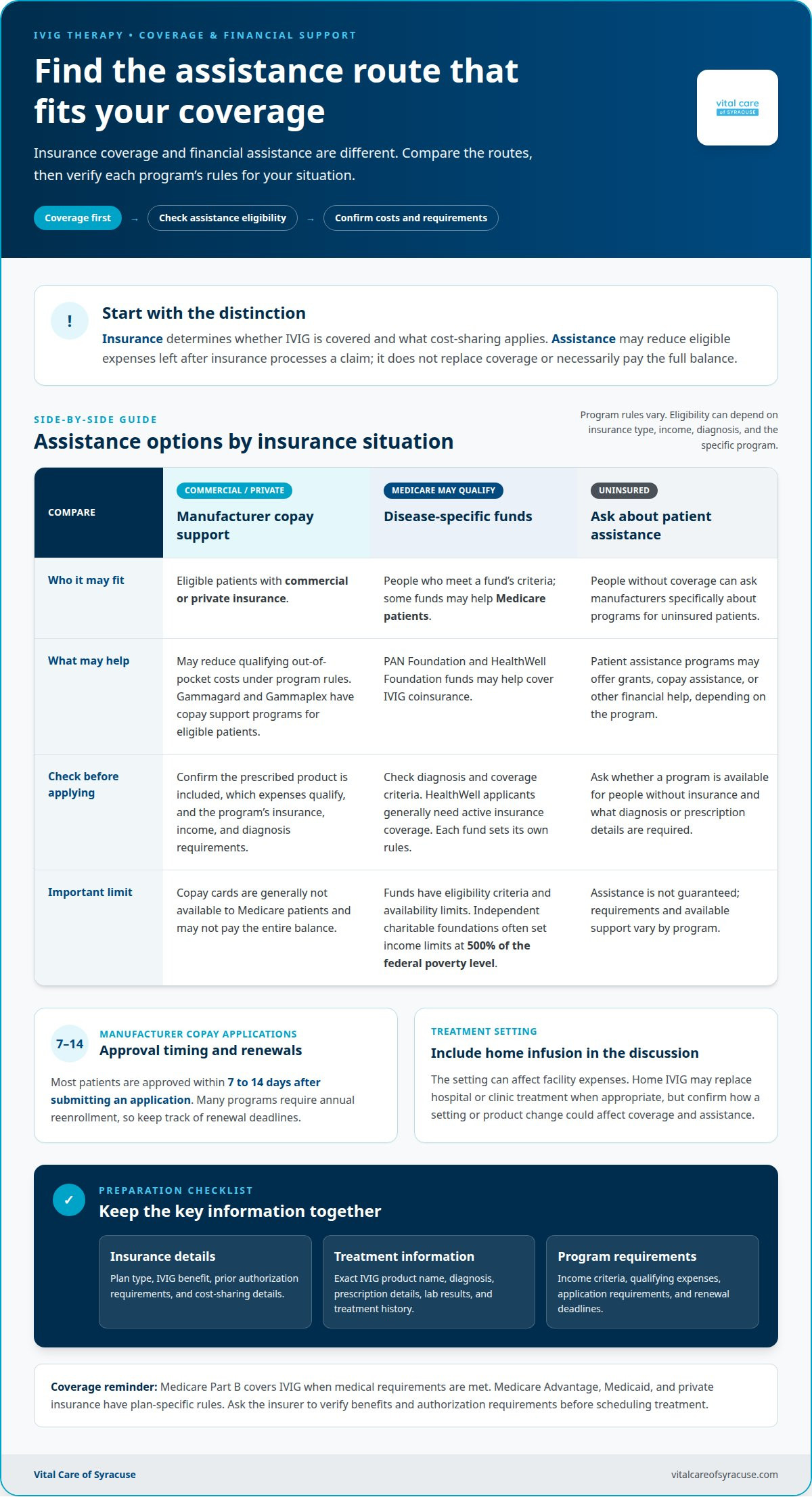
First, identify whether your insurance is commercial or private and how it processes infusion claims. Manufacturer copay assistance generally applies to eligible patients with commercial or private insurance and may reduce qualifying out-of-pocket costs under program rules. Check whether the program covers your prescribed product and which expenses qualify. Assistance may not pay the entire balance or replace insurance coverage.
-
Check Manufacturer Program Eligibility
Ask your prescriber for the exact IVIG product name, then contact its manufacturer about patient assistance programs. Gammagard and Gammaplex have copay support programs for eligible patients. Eligibility may depend on insurance type, income, diagnosis, and each program’s rules. Most patients are approved for manufacturer copay assistance within 7 to 14 days after submitting an application. Many programs require annual reenrollment, so track renewal deadlines.
-
Use Medicare-Compatible Assistance Routes
If you have Medicare, do not rely on a manufacturer copay card. These cards are generally limited to people with commercial or private insurance and typically are not available to Medicare patients. Instead, explore disease-specific assistance funds. The PAN Foundation and HealthWell Foundation offer funds that may help cover IVIG coinsurance, including for some Medicare patients. Eligibility depends on each program’s criteria, so review the requirements for your diagnosis and coverage.
-
Discuss Other Treatment Options
Ask your healthcare provider whether a generic IVIG alternative, a different appropriate dosage, or another treatment option could meet your clinical needs. These decisions depend on your diagnosis and treatment plan. When appropriate, home IVIG may replace hospital or clinic treatment and reduce facility expenses. A change in product or setting can affect coverage and assistance, so discuss the prescription and insurance implications before changing treatment.
Does insurance cover IVIG infusion therapy?
Coverage depends on your plan, diagnosis, and documented medical need. Confirm your benefits and any authorization requirements before scheduling an infusion.
-
Identify Your Insurance Coverage
Review your plan’s IVIG benefit and ask how it classifies the medication and infusion. Medicare Part B covers IVIG when patients meet its medical requirements. Medicare Advantage, Medicaid, and private insurance each have plan-specific rules, so check the benefit that applies to you. Ask whether prior authorization is required and which diagnosis details, lab results, and treatment history the insurer needs.
-
Estimate Patient Cost-Sharing
Request benefit verification for the prescribed treatment and setting, then identify deductibles, copays, and coinsurance. Medicare Part B coverage depends on medical rules; the available facts do not establish a single cost for home versus facility treatment. Include travel, infusion, and nursing expenses in your budget, along with any amounts your plan assigns to those services. Ask which costs count toward your out-of-pocket maximum. For covered, in-network care, the plan pays 100% of remaining covered costs after you reach that maximum for the year.
Home infusion may be a useful setting to discuss as part of your treatment plan. Patients exploring home infusion care can consider how the setting fits their coverage and care needs.
- Prepare the authorization record. Ask your prescribing clinician to submit the diagnosis, relevant lab results, and treatment history requested by the insurer. IVIG approval commonly requires prior authorization and supporting records. Confirm the insurer received the materials and find out whether anything is missing before scheduling treatment.
- Respond to a denial with documentation. Read the denial notice to understand the reason and appeal instructions. Ask your prescribing clinician to address the stated reason with relevant diagnosis details, lab results, and treatment history. Submit the appeal according to the process and deadline in the notice, and keep copies of your submission and the insurer’s response.
Independent charitable foundations often set income eligibility limits at 500% of the federal poverty level. Financial assistance depends on the fund’s rules and your insurance situation, so include patient assistance programs in your coverage review.
Who Qualifies for Infusion Copay Assistance?
Eligibility depends on the assistance program, your diagnosis, and your insurance status. Compare manufacturer programs with nonprofit funds, which may support different expenses and patient groups.
-
Explore Patient Assistance Programs
Ask the IVIG product manufacturer whether it offers a patient assistance program for your situation. Programs may provide grants, copay assistance, or other financial help to eligible people receiving IVIG, but requirements vary. If you are uninsured, ask specifically about programs for people without coverage. Do not assume a copay card applies, since manufacturer cards are generally for people with commercial or private insurance. Have your diagnosis and prescription details ready when reviewing options.
-
Check Program Eligibility Rules
Review each program’s criteria before applying, including diagnosis, insurance type, income, and application requirements. PAN Foundation and HealthWell Foundation offer disease-specific funds that can help cover IVIG coinsurance, including for Medicare patients. HealthWell applicants generally need active insurance coverage. Independent charitable foundations often set income eligibility limits at 500% of the federal poverty level, though each fund has its own rules and available assistance.
- Match the fund to your disease. Look for patient assistance funds that name your specific condition, such as primary immunodeficiency. A disease-specific fund may have different eligibility rules from a manufacturer program, so check whether your diagnosis and prescribed treatment fall within its scope.
- Review grant details before applying. For Patient Advocate Foundation TotalAssist grants, review the program’s current criteria and application requirements. Check whether the grant addresses your treatment expenses, what insurance status it requires, and which documents you will need. Keeping your diagnosis, insurance details, and prescription information together can make applications easier to complete.
- Ask about other support routes. If you receive home infusions, ask your home infusion provider about assistance options. Consider this alongside nonprofit and manufacturer programs, and compare eligibility rules and covered expenses. Applying early can help you organize paperwork before treatment-related bills become difficult to manage.
Eligibility for financial assistance
There is no single eligibility test for every program. Compare each program’s diagnosis, insurance, and income criteria with your treatment situation.
- Match the program to your diagnosis. Start with the condition listed on your prescription and medical records. Disease-specific funds may support treatment for eligible diagnoses, while other programs may cover different conditions. For primary immunodeficiency, IVIG authorization records may include IgG levels or vaccine response testing. These records can document why treatment is prescribed, but each assistance program sets its own eligibility rules.
- Separate insurance eligibility from income eligibility. Manufacturer copay programs generally require commercial or private insurance, while charitable assistance may use different criteria. Independent foundations often set income limits at 500% of the federal poverty level. Treat that threshold as a common foundation limit, not a guarantee of acceptance; the specific fund’s rules and your financial information matter.
- Review each application’s requirements. Compare the diagnosis, insurance coverage, income rules, and covered expenses listed by each program. HealthWell Foundation applicants generally need active insurance coverage. A patient with Medicare, for example, may need to explore a charitable fund rather than a manufacturer copay card. Keep your prescription and coverage details together so you can provide consistent information across applications.
- Ask about support for specialty treatment. If you receive home infusions, ask whether your home infusion provider can help identify relevant assistance options. The treatment setting may affect which expenses a program considers, so distinguish medication costs from infusion-related charges when reviewing eligibility. Apply early, especially if upcoming treatment depends on authorization or financial support.
- Take a focused next step. List your diagnosis, insurance type, and the program’s income criteria, then identify which applications fit. For help coordinating IVIG-related care, discuss your immunoglobulin therapy needs.
Vital Care of Syracuse: Immunoglobulin (IVIG/SCIG)
Vital Care of Syracuse provides immunoglobulin therapy (IVIG/SCIG) for people whose prescribed treatment requires infusion care. If you are weighing coverage, assistance eligibility, and how treatment fits into daily life, discuss your therapy needs with the care team.
Bring your prescription and any insurance or authorization information you have, so the conversation can focus on your treatment needs. Financial assistance rules vary by insurer and program, but understanding your prescribed therapy and infusion plan can help you consider practical next steps. Vital Care of Syracuse also provides anti-infective therapy, parenteral nutrition, and hemophilia and bleeding disorder therapy.
Contact Vital Care of Syracuse to discuss immunoglobulin therapy and your care needs.
Make Your Next Step a Clear One
Planning for ongoing IVIG care involves more than finding financial assistance for IVIG therapy. Keeping your treatment plan, coverage details, and assistance paperwork together can help keep conversations about care focused on your needs.
If you are considering immunoglobulin therapy, connect with a care team to discuss how treatment may fit into your broader care plan. Vital Care of Syracuse provides immunoglobulin therapy alongside other specialty therapies and can support you as you consider next steps.
Contact Vital Care of Syracuse to discuss your immunoglobulin therapy needs. Taking one informed step at a time can help you move forward with greater clarity.
Frequently Asked Questions
How much does IVIG cost per treatment?
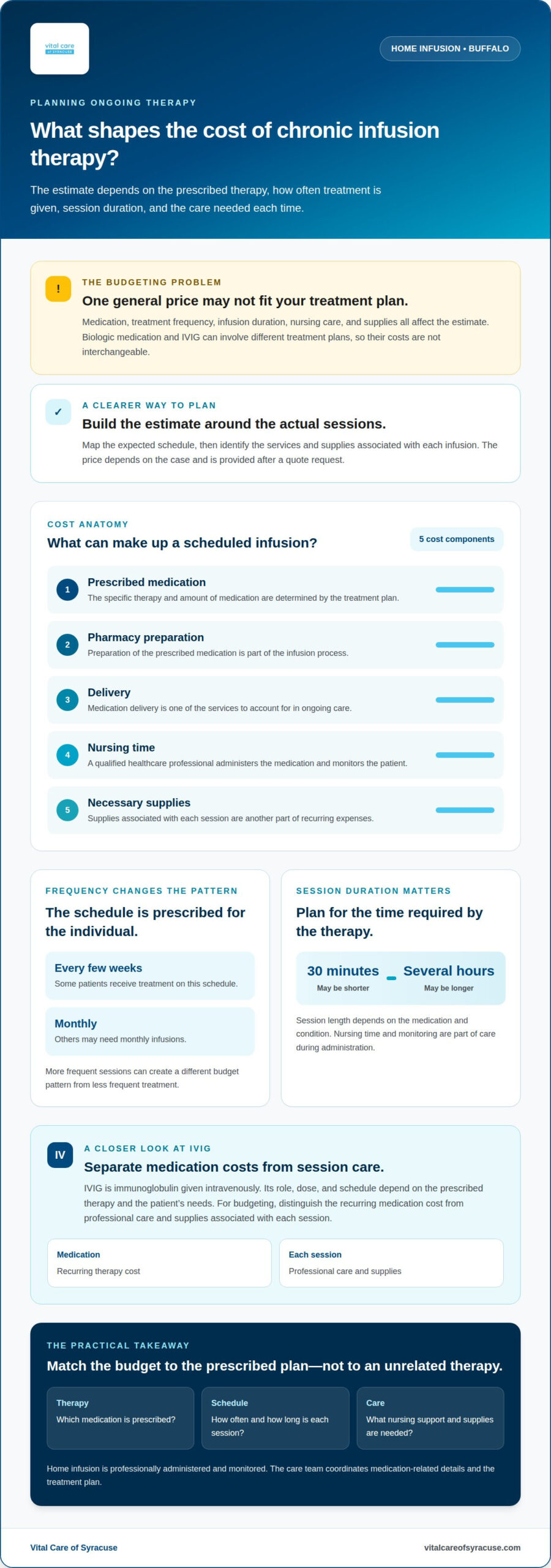
The amount owed for an IVIG treatment varies with the prescribed dose, insurance benefits, and treatment setting. A billed charge differs from your personal responsibility: insurance may pay part of a covered claim, while deductibles or coinsurance affect what you owe. Ask for an estimate based on your prescription and plan before treatment, and clarify which infusion-related services it includes.
Is there financial help for IVIG?
Eligible patients may find help through manufacturer programs, charitable foundations, or assistance connected with home infusion. Financial assistance for IVIG therapy depends on factors such as diagnosis, insurance type, income, and program requirements. Start by identifying the IVIG product and diagnosis on your prescription, then look for programs that address the condition and type of expense.
What is a patient assistance fund?
A patient assistance fund provides financial support to people who meet its criteria for a particular disease, treatment, or expense. Depending on the fund, help may come as a grant or support for eligible out-of-pocket costs. Funds have different application rules, and some require active insurance. Review the criteria to see whether your diagnosis and coverage fit the fund’s purpose.
Why is IVIG so expensive?
IVIG is made from donated human plasma, and manufacturing it requires collecting plasma from many donors. The need for a substantial donor supply is one factor in its expense. The cost of an individual treatment also varies with the prescribed dose and care setting. Your treatment plan and insurance benefits help determine how much of the allowed charge you are responsible for.
What is the average cost of IVIG therapy in the United States without insurance?
There is no single cost for every uninsured patient. The total depends on the prescribed dose, product, and infusion setting, so an average may not reflect your treatment. For a useful estimate, request an itemized projection based on the prescription and setting. Review medication charges separately from administration and related services.
Does health insurance cover IVIG therapy, and what medical criteria are required?
Health insurance may cover IVIG for a diagnosed condition when treatment meets the plan’s medical requirements. Medicare Part B coverage applies when patients meet its medical rules; other plans set their own criteria. Insurers commonly require prior authorization and supporting documents, such as diagnosis, lab results, and treatment history. The prescribing clinician’s records help explain medical need and support the coverage request.
Leave a Reply