


Imagine waking up in your own home in the Southern Tier, feeling the familiar comfort of your own bed while your body slowly regains the strength that Guillain-Barré syndrome tried to take away. For many residents in the Triple Cities, the standard path to recovery involves exhausting trips to clinical centers, but choosing IVIG for Guillain-Barré syndrome at home Binghamton offers a more restorative alternative. It’s a choice that prioritizes your physical energy, allowing you to focus entirely on healing rather than the logistics of transportation or the noise of a hospital ward.
We understand that the journey toward neurological health is often marked by profound physical exhaustion and the persistent worry of hospital acquired infections. You deserve a recovery environment that feels safe and supportive, where specialized nursing care is tailored specifically to your needs. This 2026 recovery guide explains how home based immunoglobulin therapy brings expert neurological support directly to your living room, helping you reclaim your independence without the stress of travel. We’ll explore the latest Medicare coverage updates, the benefits of one on one clinical attention, and how local expertise from Vital Care of Syracuse ensures your safety every step of the way.
Key Takeaways
- Understand how IVIG therapy works to neutralize harmful autoantibodies and protect the myelin sheath, effectively halting the progression of Guillain-Barré syndrome.
- Discover why choosing IVIG for Guillain-Barré syndrome at home Binghamton allows you to conserve vital energy and avoid the increased infection risks associated with traditional clinical settings.
- Learn the essential steps for a seamless transition from hospital to home, including coordination with local neurologists and navigating 2026 Medicare Part B coverage updates.
- Explore the advantages of personalized, one-on-one nursing care that prioritizes your comfort and independence in a familiar environment.
- Find out how Vital Care of Syracuse provides Southern Tier families with dedicated local expertise and 24/7 clinical pharmacist support throughout the recovery journey.
Understanding GBS Recovery and the Role of Home IVIG in Binghamton
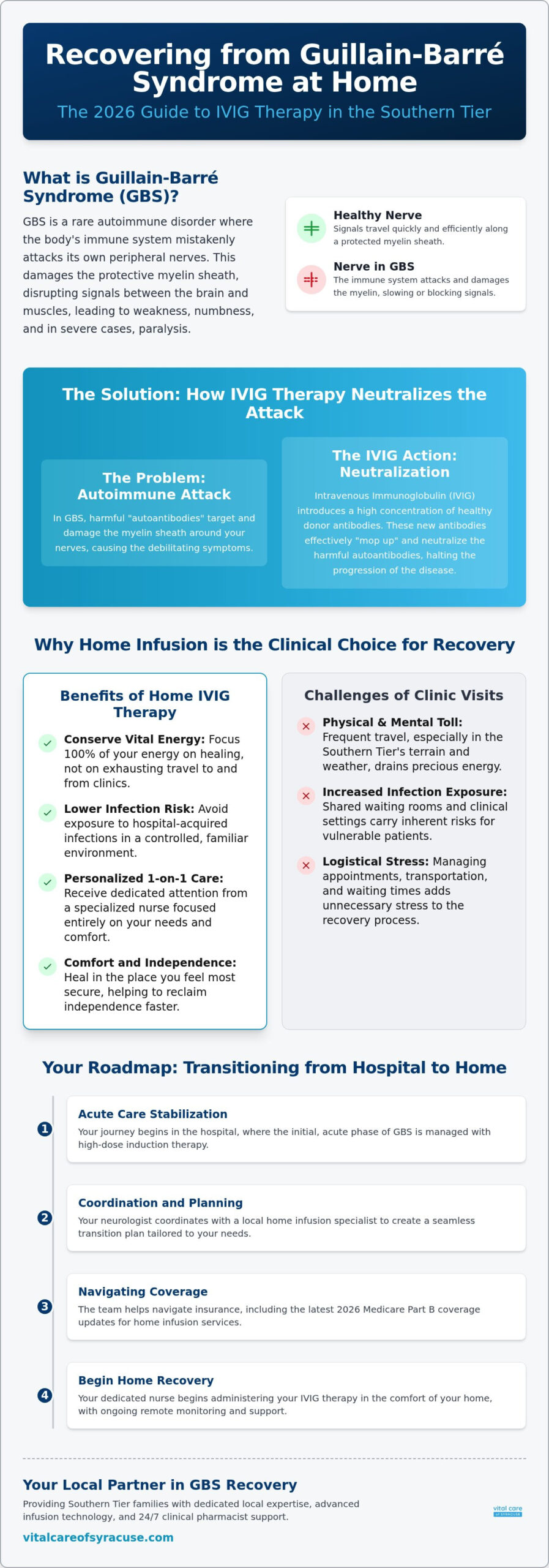
Receiving a diagnosis of Guillain-Barré syndrome (GBS) can feel like your world has suddenly slowed down. This acute autoimmune attack on the peripheral nerves disrupts the signals between your brain and your muscles, leading to weakness that often requires immediate clinical intervention. While the initial phase usually happens in an acute care setting, the long road to recovery often involves Intravenous Immunoglobulin (IVIG) therapy. This treatment works by introducing healthy antibodies to halt the immune system’s progression against your nervous system.
In 2026, the “Hospital-at-Home” model has become a cornerstone for patients in the Southern Tier. This clinical approach is designed to provide hospital-level expertise without the institutional environment. The primary objectives of this transition include:
- Halting Immune Progression: Neutralizing the autoantibodies that damage nerve coatings.
- Accelerating Motor Recovery: Providing a stable, familiar environment for nerves to heal.
- Minimizing Secondary Stress: Reducing the physical and mental toll of frequent hospital visits.
The GBS Challenge in the Southern Tier
Binghamton presents a unique set of hurdles for those recovering from neurological illness. The region’s hilly terrain and unpredictable winter weather make even a simple commute to a facility like UHS or Lourdes feel like a marathon. For a person facing GBS, muscle weakness isn’t just a symptom; it’s a barrier to accessing care. Guillain-Barré syndrome is a rare but serious condition where the immune system attacks the myelin sheath, and the physical toll of navigating the Triple Cities while your strength is low can actually hinder your progress. Choosing IVIG for Guillain-Barré syndrome at home Binghamton removes these physical demands, allowing your body to dedicate every ounce of energy toward nerve regeneration.
Why 2026 is the Year of Home Neurological Care
The landscape of healthcare has shifted significantly, making this the ideal time to transition your recovery to a private setting. Advancements in portable infusion technology and remote monitoring allow clinical teams to track your progress with incredible precision without you ever leaving your living room. Patients now prioritize infection-controlled environments more than ever, seeking to avoid the risks inherent in busy waiting rooms while their immune systems are vulnerable. There are clear benefits of a local home infusion company like Vital Care of Syracuse, as our proximity ensures a rapid response for Southern Tier families. This localized approach means you aren’t just another number; you’re receiving expert care in the environment where you feel most secure.
The Science of Healing: How IVIG Neutralizes GBS Autoantibodies
Understanding how Intravenous Immunoglobulin (IVIG) facilitates recovery requires a look at the microscopic battle occurring within your body. In a healthy system, antibodies protect you from viruses and bacteria. However, GBS causes your immune system to produce “autoantibodies” that mistakenly target your own peripheral nerves. IVIG is a proven effective treatment for GBS because it introduces a high concentration of healthy donor antibodies into your bloodstream. These donor antibodies effectively “mop up” and neutralize the harmful ones, halting the attack before permanent nerve damage occurs.
Current 2026 clinical protocols distinguish between high-dose induction therapy, which is used to stabilize the condition during the acute phase, and maintenance therapy, which supports long-term recovery. This anti-inflammatory effect is vital for protecting the remaining myelin sheath. Our Vital Care of Syracuse nurses are specifically trained to manage these complex infusions. By carefully monitoring and adjusting infusion rates, they can significantly reduce common side effects like “infusion headaches” or systemic inflammation, ensuring your experience with IVIG for Guillain-Barré syndrome at home Binghamton is as comfortable as possible.
Protecting the Peripheral Nervous System
To visualize the impact of GBS, think of your nerves as electrical wires. The myelin sheath is the protective insulation that allows electrical signals to travel from your brain to your muscles. When GBS strips away this insulation, the signals “short-circuit,” leading to the paralysis and weakness characteristic of the condition. IVIG acts as a biological shield, preventing further breakdown of this insulation. By neutralizing the autoantibodies early in the recovery timeline, we help ensure that nerve-to-muscle communication remains intact. This early intervention is often the deciding factor in how quickly a patient regains their mobility and strength.
Clinical Monitoring in the Home Setting
One of the greatest advantages of receiving care at home is the level of personalized attention you receive. Unlike a busy hospital ward, home infusion allows for one-on-one nursing where your clinician can titrate the medication precisely based on your immediate physical response. This careful titration is backed by 24/7 support from our clinical pharmacists, who are always available to address medication concerns or adjustments. You can learn more about these home infusion for neurological disorders Syracuse trends to see how specialized care is evolving. If you have questions about starting your journey, please reach out to our clinical team for a compassionate consultation.
Why Home Infusion is the Clinical Choice for Binghamton Patients
In the clinical management of GBS, energy is a finite and precious resource. When you’re recovering from an autoimmune attack on your peripheral nerves, your body requires every calorie and every moment of rest to rebuild damaged tissue. Traditional clinic visits at major facilities like UHS or Lourdes often impose an “Energy Tax” that many patients simply cannot afford. Between the physical effort of getting into a vehicle and the sensory overload of a hospital environment, the toll is significant. Choosing IVIG for Guillain-Barré syndrome at home Binghamton shifts the focus toward “Energy Conservation.” By bringing therapy directly to you, we ensure that your metabolic resources are dedicated to healing rather than navigating a commute.
Safety is another critical factor. A private home in the Southern Tier is an inherently more controlled environment than a busy medical waiting room. For patients in a vulnerable recovery state, minimizing exposure to community-acquired infections is a clinical priority. Furthermore, the psychological impact of being surrounded by family shouldn’t be underestimated. Recovering in a familiar space provides a sense of security and stability that institutional settings often lack, allowing for a personalized schedule that adapts to your specific fatigue levels each day.
Eliminating the Southern Tier ‘Commute Penalty’
The geography of Binghamton is beautiful, but its steep hills and sprawling medical corridors aren’t designed for those experiencing muscle weakness. Navigating parking garages and long hallways creates a physical strain that can lead to temporary symptom flares or “crashing” after an appointment. Vital Care of Syracuse eliminates this commute penalty by bringing the clinic to your living room. Our team understands that travel stress is more than an inconvenience; it’s a physiological barrier to recovery. We prioritize your comfort by removing the logistical hurdles that stand between you and your immunoglobulin therapy.
One-on-One Care vs. Clinical Staffing Ratios
In a hospital ward, nursing staff must often balance the needs of multiple patients simultaneously. While these professionals are highly skilled, the multitasking required in an acute care setting can result in less frequent monitoring. A Vital Care nurse provides dedicated, one-on-one attention throughout your entire infusion process. This high-touch approach leads to the earlier detection of minor side effects, such as subtle changes in heart rate or the earliest signs of a headache. This level of focused care provides immense peace of mind for caregivers who may feel overwhelmed by the complexities of GBS management. Our nursing model ensures that you aren’t just a chart number; you’re a person receiving precise, compassionate expertise in the environment where you feel most at ease.
Transitioning from Hospital to Home Care: A Step-by-Step Binghamton Roadmap
Moving from an acute care facility to receiving IVIG for Guillain-Barré syndrome at home Binghamton is a collaborative journey that begins the moment your clinical team determines you are stable for discharge. This transition is designed to be seamless, ensuring that the high level of care you received in the hospital continues without interruption in your own living room. We’ve developed a structured roadmap to guide Southern Tier families through this process, removing the logistical burden from your shoulders so you can focus on regaining your mobility.
- Step 1: Clinical Assessment: Your Binghamton area neurologist evaluates your progress and issues the official order for home based immunoglobulin therapy.
- Step 2: Insurance Verification: Our intake specialists navigate the 2026 Medicare Part B home infusion benefit and private insurance requirements to confirm your coverage.
- Step 3: Discharge Coordination: We work directly with hospital discharge planners at UHS or Lourdes to synchronize your first home dose with your release date.
- Step 4: Home Safety Evaluation: A Vital Care of Syracuse nurse visits your home to perform a clinical intake and ensure the environment is optimized for safe infusions.
- Step 5: Medication Delivery: Your customized IVIG therapy is delivered to your door, followed by the arrival of your dedicated nurse for the first session.
Coordinating with Local Binghamton Neurologists
Success in GBS recovery depends on a unified clinical front. Our team maintains close communication with specialists at Guthrie and UHS, ensuring that your neurologist remains the primary architect of your care plan. We understand the specific protocols preferred by Southern Tier providers and integrate them into our home care delivery. Vital Care of Syracuse handles all necessary clinical documentation and progress reporting, allowing your doctor to monitor your recovery milestones with precision. This collaborative approach is a primary reason why we maintain a 97% patient satisfaction rating across our service area.
Navigating Insurance in the 2026 Healthcare Landscape
The financial aspect of high dose immunoglobulin therapy often causes significant anxiety for families already dealing with a health crisis. In 2026, navigating the Medicare Part B home infusion therapy benefit requires specialized knowledge of recent regulatory updates. Prior authorization is a mandatory step for these high cost therapies, and our team acts as your advocate to ensure maximum coverage is secured before the first drop of medication is administered. We address the common concern of “how will we pay for this” by providing a transparent breakdown of your benefits early in the process. If you are ready to begin this transition, you can start by utilizing our referral and insurance coordination services to get the answers you need.
Vital Care of Syracuse: Your Local Partner for GBS Recovery in the Southern Tier
Choosing a provider for IVIG for Guillain-Barré syndrome at home Binghamton requires more than just clinical skill; it requires a partner who understands your community. Vital Care of Syracuse is a locally owned and operated franchise with deep roots in Central New York and the Southern Tier. We aren’t a faceless national chain. We are neighbors who understand the specific challenges of the region, from the winter weather on I-81 to the specialized protocols of local hospital systems. This local presence allows us to provide a level of responsive, personalized care that impersonal corporations simply cannot match.
Our specialized focus on neurological immunoglobulin therapies means your care is managed by professionals who understand the nuances of GBS recovery. We view our role as a bridge between the complex requirements of your neurologist and the personal needs of your household. By maintaining a disciplined approach to clinical excellence while remaining emotionally present, we help you navigate the transition from acute illness back to the life you love. Our team acts as your dedicated advocate, ensuring that every aspect of your therapy is handled with the precision and kindness you deserve.
Local Expertise with National Clinical Standards
Our Syracuse based hub is specifically designed to provide rapid, reliable medication delivery and nursing support to the Binghamton area. This proximity is vital for maintaining the strict schedules required for immunoglobulin therapy. While we adhere to the most rigorous national clinical standards, our heart remains local. Southern Tier families benefit from the 24/7 availability of our clinical pharmacists, who provide a steady hand and expert guidance whenever questions arise about your treatment. We don’t just deliver medication; we provide a continuous circle of support that bridges the gap between hospital protocols and your personal comfort. This localized approach ensures that if your needs change, our response is measured in hours, not days.
Start Your Recovery Journey Today
Initiating your transition to home care is a straightforward process that begins with your medical team. To start, simply speak with your neurologist at UHS, Guthrie, or your private practice about a referral to Vital Care of Syracuse. We recommend that families reach out to us early for a preliminary insurance check. Our intake specialists are experts at navigating the 2026 healthcare landscape and will work tirelessly to confirm your benefits and secure necessary authorizations. This proactive step removes the financial guesswork, allowing you to focus entirely on your physical progress.
Reclaiming your independence after a GBS diagnosis is a journey that shouldn’t be walked alone. By choosing IVIG for Guillain-Barré syndrome at home Binghamton, you’re opting for a path that respects your physical limits while providing the highest level of clinical expertise. We’re ready to help you rediscover your strength in the safety and warmth of your own home. Contact Vital Care of Syracuse to discuss IVIG at home in Binghamton.
Reclaiming Your Strength in the Comfort of Your Binghamton Home
The journey toward overcoming Guillain-Barré syndrome is a test of both physical endurance and emotional resilience. By choosing IVIG for Guillain-Barré syndrome at home Binghamton, you’re making a clinical decision that prioritizes your body’s need for rest while maintaining the highest standards of neurological care. We’ve explored how home based therapy eliminates the physical toll of travel and provides a safer, infection controlled environment for your peripheral nerves to heal. This transition isn’t just about convenience; it’s about creating a stable foundation for your long term independence.
As a locally owned and operated provider, Vital Care of Syracuse offers a specialized neurological IVIG team that understands the unique needs of Southern Tier families. With 24/7 clinical pharmacist support and dedicated nursing care, you’re never alone in your recovery journey. Your path back to mobility deserves the focused attention that only a personalized home setting can provide. We invite you to Request a Consultation for Home IVIG in Binghamton today. You have the strength to move forward, and we’re honored to provide the expert hand that helps you get there.
Frequently Asked Questions
Is home IVIG therapy safe for someone recovering from GBS?
Home IVIG is safe for stable GBS patients when administered by a specialized nurse who provides one on one monitoring throughout the treatment. This environment significantly reduces your exposure to hospital acquired infections, which is a vital consideration during your recovery phase. Our clinical pharmacists are available 24/7 to support the nursing team, ensuring that any physiological changes are addressed with professional precision. This controlled setting allows for immediate, safe adjustments in real time.
How long does a typical GBS home infusion session last in Binghamton?
A typical IVIG session for GBS can last anywhere from three to seven hours depending on your specific dosage and clinical tolerance. Because we prioritize your comfort, our nurses titrate the infusion rate slowly to minimize potential side effects like headaches or fatigue. You can relax in your own chair or bed in Binghamton while the treatment proceeds at a pace that respects your body’s current energy levels and neurological requirements.
Will my insurance cover at-home IVIG for GBS in New York?
Most New York health insurance plans and Medicare Part B provide coverage for medically necessary IVIG for Guillain-Barré syndrome at home Binghamton. In 2026, navigating these benefits requires careful coordination with your provider’s prior authorization department. We handle the complex documentation and advocacy needed to verify your benefits before therapy begins, ensuring you understand your coverage details and any out of pocket responsibilities without any unexpected financial surprises.
Can I switch from a hospital infusion center to Vital Care of Syracuse?
You can certainly transition your care from a hospital infusion center to Vital Care of Syracuse at any point in your recovery journey. We coordinate directly with your current discharge planners and neurologists to ensure a seamless handoff of your clinical records and treatment protocols. This transition allows you to receive the same high quality medication in a more private setting without disrupting your established treatment timeline or your doctor’s supervision.
What happens if I experience a side effect during my home infusion?
If you experience a side effect, your dedicated nurse will immediately assess the situation and adjust the infusion rate or pause the treatment as needed. Our nurses carry emergency kits and follow strict clinical protocols to manage common reactions like chills, nausea, or headaches. Because our clinical pharmacists are available 24/7, they can provide immediate pharmacological guidance to the nurse, ensuring your safety remains the primary focus during every session.
Do I need a special setup in my Binghamton home for IVIG?
You don’t need a complex medical setup, just a clean, comfortable area where you can rest during the infusion process. A dedicated chair or bed near an electrical outlet is ideal for the infusion pump and monitoring equipment. During our initial home safety evaluation, a Vital Care of Syracuse nurse will help you identify the best location and ensure there is adequate lighting and space for medical supplies, making the process unobtrusive.
How does Vital Care coordinate with my Binghamton neurologist?
We act as an extension of your neurologist’s office by providing regular clinical updates and detailed documentation of your recovery progress. Whether you see a specialist at Guthrie or UHS, we ensure they remain the lead architect of your care plan. By handling the logistical details of IVIG for Guillain-Barré syndrome at home Binghamton, we allow your doctor to focus on your neurological recovery while we manage the daily complexities of infusion therapy.
What is the difference between IVIG and plasmapheresis for GBS?
IVIG and plasmapheresis are both effective for GBS, but they work through different mechanisms to stop the immune attack. While plasmapheresis filters harmful antibodies out of your blood, IVIG introduces healthy donor antibodies to neutralize the attack on your nerves. IVIG is often preferred for home care because it doesn’t require the specialized equipment or large bore intravenous access needed for plasma exchange, making it a less invasive and more convenient option.
Leave a Reply