



Imagine waking up to another lake-effect snow warning in Western New York, knowing you have to navigate icy roads to reach a hospital for your scheduled treatment. For many managing Chronic Inflammatory Demyelinating Polyneuropathy, the physical toll of the journey can feel as taxing as the condition itself. We understand that travel fatigue and the anxiety of navigating busy medical centers often complicate your path to wellness. Finding reliable IVIG for CIDP Buffalo services shouldn’t mean sacrificing your comfort or your safety during a harsh winter.
You likely believe that clinical-grade care requires a hospital setting, but your home can be a sanctuary for healing. This guide reveals how home-based infusion therapy offers a sophisticated, professional alternative that prioritizes your independence and peace of mind. We’ll preview the 2026 Medicare administration rates, explain how to navigate complex insurance requirements, and show you how a consistent, dedicated nurse can transform your treatment experience into a seamless part of your daily routine.
Key Takeaways
- Understand how IVIG therapy works to protect your nervous system by neutralizing the antibodies responsible for nerve inflammation and progressive muscle weakness.
- Explore the logistical advantages of receiving IVIG for CIDP Buffalo in your own home, which eliminates the stress of hospital commutes and unpredictable Western New York winter weather.
- Evaluate the differences between intravenous (IVIG) and subcutaneous (SCIG) administration to determine which treatment schedule best supports your lifestyle and health goals.
- Learn the essential steps for a seamless transition to home care, including how to coordinate clinical referrals and navigate complex insurance authorizations for specialty biologics.
- Discover how personalized attention from a consistent nurse provides a clinical-grade, safer alternative to the busy environment of traditional hospital-based infusion centers.
Understanding CIDP and the Role of IVIG Therapy
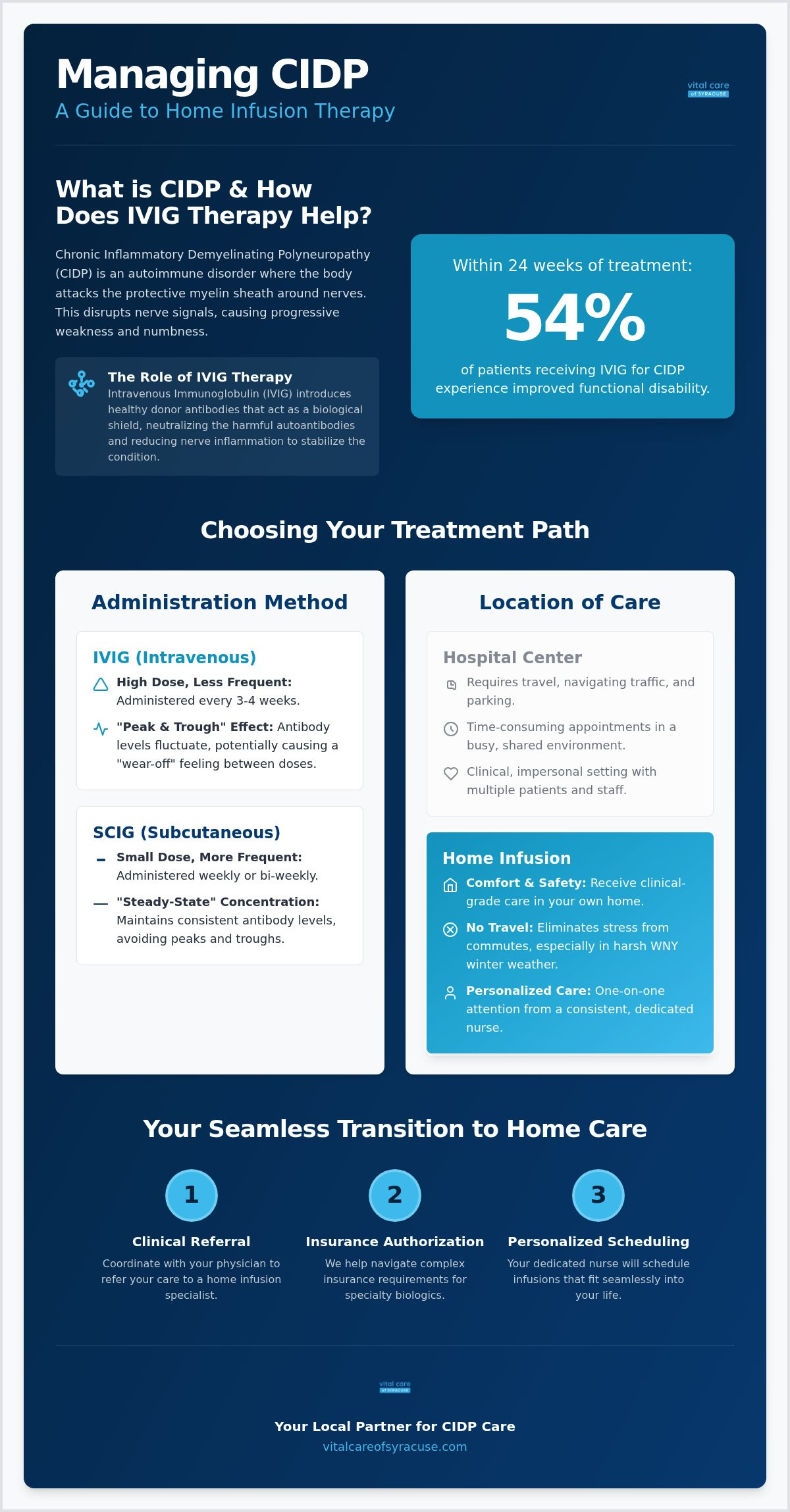
Chronic Inflammatory Demyelinating Polyneuropathy (CIDP) is a rare autoimmune disorder where the body’s immune system mistakenly attacks the myelin sheaths, which are the protective coverings that insulate peripheral nerves. This internal conflict disrupts the vital signals traveling between your brain and your limbs, often leading to a gradual loss of motor function and sensation. A definitive diagnosis of CIDP requires a progression of neurological symptoms that lasts for at least two months, distinguishing it from more acute conditions. For those Understanding CIDP and its complexities, the primary focus is often on halting this nerve damage before it leads to permanent disability.
Intravenous Immunoglobulin (IVIG) therapy serves as a cornerstone of treatment by introducing a concentrated pool of healthy antibodies into your bloodstream. These donor antibodies work to neutralize the harmful autoantibodies that are actively stripping away your nerve insulation. Accessing IVIG for CIDP Buffalo provides a biological shield that reduces inflammation, allowing the nerves a chance to stabilize and, in some cases, begin the delicate process of repair. It is a sophisticated clinical intervention that replaces a malfunctioning immune response with a protective one.
To better understand how this therapy interacts with your immune system, watch this helpful video:
Common Symptoms Managed by IVIG
The physical experience of CIDP often begins with a subtle heaviness or tingling, but it can quickly evolve into more significant challenges. Many patients seek therapy to address progressive weakness in the arms and legs, which can make simple tasks like climbing stairs or buttoning a shirt feel monumental. Clinical studies show that 54% of patients receiving IVIG for CIDP see improved functional disability within 24 weeks, a significant margin compared to those without treatment. Key symptoms managed through consistent therapy include:
- Symmetric weakness in the hips, shoulders, hands, and feet
- The loss of deep tendon reflexes, such as the knee-jerk response
- Numbness, tingling, or a “pins and needles” sensation in the extremities
- Difficulty maintaining balance or a steady gait
Why Buffalo Patients Require Long-Term Maintenance
Because CIDP is a chronic condition, the immune system requires ongoing “re-education” to prevent it from returning to its self-destructive patterns. Consistent maintenance dosing is vital for long-term mobility, as it keeps the level of protective antibodies stable in your system. This steady approach reduces the frequency of acute “flares,” which are sudden worsenings of symptoms that can lead to a loss of independence. For patients in Western New York, maintaining this schedule is the best way to ensure that neurological function remains stabilized, allowing you to focus on your life rather than your next health crisis.
IVIG vs. SCIG: Choosing the Right Administration for CIDP
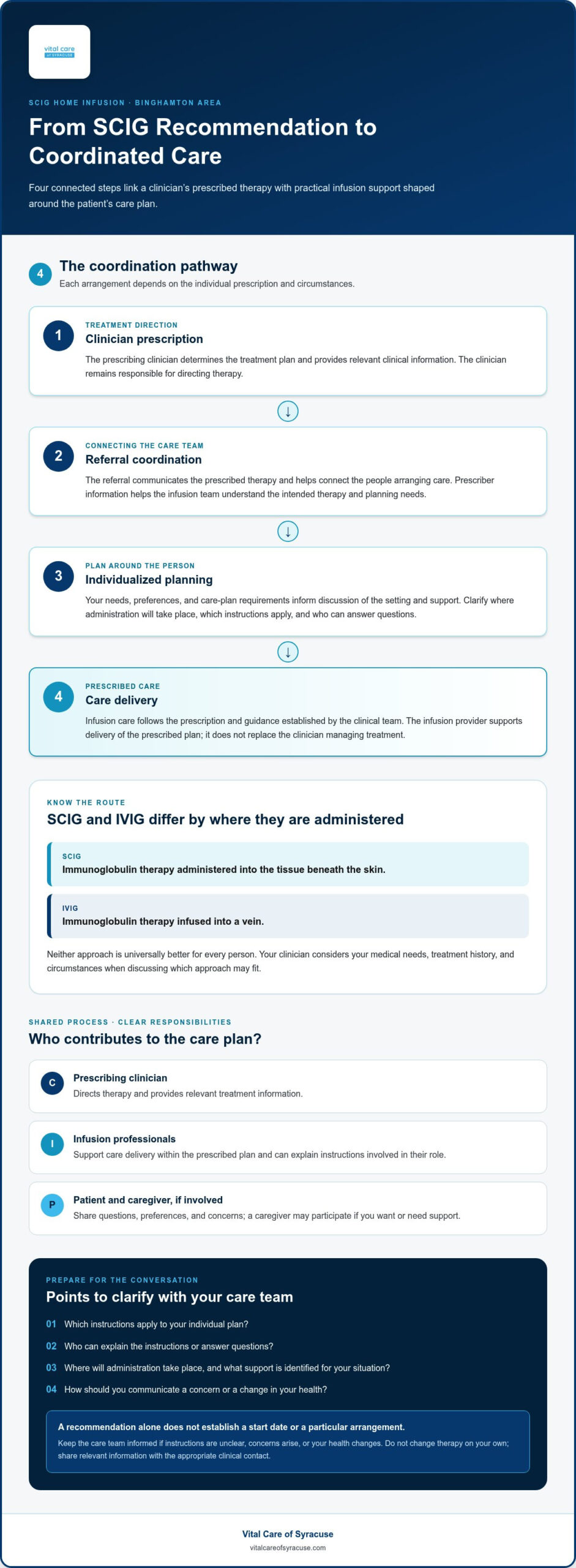
Deciding between Intravenous Immunoglobulin (IVIG) and Subcutaneous Immunoglobulin (SCIG) is a pivotal step in managing your health, as each method offers specific clinical and lifestyle benefits. While both therapies provide the same life-altering antibodies, their delivery systems impact how you feel throughout the month. IVIG is typically administered in high doses every three to four weeks. This approach creates a “peak and trough” pharmacokinetic profile, where antibody levels are highest immediately following the infusion. For some, this can lead to a “wear-off” effect toward the end of the cycle, where symptoms like fatigue or minor weakness may temporarily resurface.
In contrast, SCIG utilizes smaller, more frequent doses, often administered weekly or bi-weekly. This method aims for a “steady-state” concentration, keeping antibody levels consistent in your bloodstream without the dramatic fluctuations seen in monthly cycles. When evaluating IVIG for CIDP Buffalo, it’s helpful to consider your vein health, as SCIG bypasses the need for direct venous access by delivering medication into the fatty tissue just under the skin. Selecting the right path requires a careful look at your clinical needs and how much time you wish to dedicate to treatment sessions.
Evidence-based IVIG treatment protocols emphasize that there is no one-size-fits-all approach to neurological care. Your choice often depends on your body’s specific response to the medication and your preference for professional oversight versus personal autonomy. It’s about finding a rhythm that supports your physical health without overshadowing your daily life.
When is IVIG the Preferred Choice?
IVIG remains the preferred option for patients who require higher concentrations of immunoglobulin that cannot be easily delivered through smaller subcutaneous injections. It’s also ideal for those who prefer the reassurance of professional clinical supervision during their treatment. Because infusions only occur once or twice a month, it limits the number of days you need to focus on therapy, allowing for more uninterrupted time between sessions. This route is often the best starting point for those new to therapy or those who find comfort in the steady hand of a dedicated nurse.
The Rise of SCIG for Maintenance
SCIG has become an increasingly popular choice for Buffalo residents who lead active lives and seek greater independence. By allowing for patient-administered therapy, SCIG offers a level of autonomy that traditional infusions cannot match. It’s particularly beneficial for individuals with difficult venous access, as it eliminates the stress of finding a viable vein for every treatment. This flexibility allows you to integrate your care into your own schedule, making it easier to maintain a healthy work-life balance while managing a chronic condition.
Benefits of Home Infusion vs. Hospital Centers in Buffalo
For many patients, the decision to seek IVIG for CIDP Buffalo is driven by more than just clinical necessity; it’s about reclaiming time and energy that would otherwise be spent on the road. Traveling to a hospital center often involves navigating the congested streets near the Buffalo Niagara Medical Campus, searching for available parking, and spending hours in a sterile waiting room. Home infusion removes these logistical barriers entirely, allowing you to receive the same high-standard care without the “hospital hassle” that often accompanies specialty treatments.
In Western New York, the weather plays a significant role in healthcare accessibility. Lake-effect snow can turn a routine commute into a hazardous journey, often leading to canceled appointments and interrupted treatment cycles that can trigger a relapse of CIDP symptoms. By choosing home care, you ensure that your therapeutic schedule remains consistent regardless of the forecast in the Southtowns or the city. Your treatment comes to you, provided by a consistent clinical team that understands your specific needs and medical history.
Safety is never compromised in a home setting. You receive hospital-grade therapy in a private, low-exposure environment, which significantly reduces the risk of healthcare-associated infections (HAIs) often found in crowded medical facilities. This setting also fosters a unique clinical relationship. Instead of a rotating staff of hospital nurses, you work with a dedicated professional who becomes intimately familiar with your specific response to the medication, providing a level of personalized care that is difficult to replicate in a high-volume facility.
Comfort and Quality of Life
Your home is designed for your comfort, making it the ideal setting for a multi-hour infusion session. You can relax in your own recliner, access your personal kitchen, and remain in a familiar space with your family or pets nearby. This environment doesn’t just feel better; it supports a better work-life balance by allowing you to schedule treatments around your professional and personal commitments. Because you aren’t exposed to the pathogens common in busy clinics, your overall well-being is better protected during your recovery.
Local Support in Western New York
Choosing a provider with a regional presence offers distinct advantages for Buffalo residents. A local pharmacy understands the specific logistics of Western New York, from navigating winter road closures to ensuring rapid response times for medical supplies. If you have a clinical question or need an emergency supply adjustment, you aren’t calling a distant corporate office. Instead, you’re reaching a team that is personally invested in your community. There are numerous benefits of a local home infusion company, including the peace of mind that comes from knowing your support system is just a short drive away.
Navigating the Transition to Home IVIG in Buffalo
Moving from a hospital-based infusion center to the comfort of your living room is a structured journey designed to ensure your safety and continuity of care. This transition is not something you have to manage alone; it is a collaborative effort between your medical team and our specialized clinical staff. When you choose IVIG for CIDP Buffalo, the process follows four essential steps to guarantee a seamless start to your home-based therapy.
- Step 1: Clinical Referral – Your journey begins with your Buffalo neurologist, who provides a detailed order for home therapy based on your specific clinical needs and history.
- Step 2: Insurance Verification – Our team navigates the intricate prior authorizations required for specialty biologics, ensuring your coverage is secure before the first dose is delivered.
- Step 3: Home Assessment – A clinical professional ensures your home environment is safe and equipped for clinical-grade infusions, identifying a stable and comfortable area for your treatment.
- Step 4: First Infusion – Your initial visit is a comprehensive experience where a registered nurse monitors your response to the medication and establishes your personalized care routine.
Insurance and Financial Coordination
Specialized pharmacies play a critical role in managing the financial complexities of CIDP care. We understand that specialty biologics come with significant administrative requirements, and our intake coordinators are experts at streamlining this process. They act as your advocate, working directly with insurance providers to secure the necessary approvals. Additionally, they help identify co-pay assistance programs that can significantly reduce out-of-pocket expenses, ensuring your focus remains on your health rather than your billing statements. This advocacy is especially vital given that the Medicare payment rate for home IVIG administration in 2026 is set at $442.19, reflecting the specialized nature of this service.
The Clinical Intake Process
Before your first treatment, a comprehensive clinical intake is performed to review your medical history and current neurological status. This phase is essential for establishing a baseline and ensuring that your home care plan aligns perfectly with your neurologist’s goals. If you are transitioning to SCIG, this period includes hands-on training to empower you with the skills needed for self-administration. This close coordination between your Buffalo-based medical providers and our home infusion team creates a stable foundation for your long-term wellness. If you are ready to begin this journey, you can contact our clinical team to discuss your specific needs.
Vital Care of Syracuse: Your Local Partner for CIDP Care
Vital Care of Syracuse serves as a dedicated advocate for patients seeking IVIG for CIDP Buffalo, bridging the gap between complex medical requirements and the comfort of your own home. Our unique model combines the expansive resources of a national network with the attentive, hands-on care of local ownership. This structure allows us to offer the clinical precision of a large-scale pharmacy while maintaining the compassionate, personalized touch that Western New York families deserve. We understand that managing a neurological condition requires more than just a delivery of medication; it requires a partner who is physically present and emotionally invested in your health journey.
Our specialized expertise in home infusion for neurological disorders Syracuse ensures that Buffalo residents receive treatment protocols based on the latest clinical trends and safety standards. We’ve built our reputation on reliability, particularly during the challenging winter months. While larger, distant providers might struggle with the logistics of lake-effect snow, our local presence ensures your therapy remains on schedule, protecting you from the risk of symptom relapse. We prioritize your stability and peace of mind by ensuring that your clinical support is never more than a local phone call away.
Comprehensive Clinical Monitoring
Your safety is our primary focus, which is why our care model includes 24/7 access to clinical pharmacists who are ready to answer urgent therapy questions at any hour. This constant availability provides a sense of security that is often missing in traditional hospital settings. Beyond the infusions themselves, our registered nurses conduct regular assessments to track your CIDP progression and monitor the efficacy of your therapy. We maintain seamless communication with your Buffalo-based neurology team, ensuring that every adjustment to your care plan is informed by real-time clinical data and shared goals. This collaborative approach ensures that your treatment remains as dynamic as your health needs.
Get Started with Home Infusion Today
Transitioning to home care is a straightforward process that begins with a simple clinical referral from your physician. Our service area extends across the City of Buffalo and the surrounding Western New York counties, bringing clinical excellence directly to your doorstep. If you’re ready to trade the stress of the hospital for the comfort of home, our intake coordinators are standing by to assist with insurance verification and care coordination. We invite you to contact Vital Care of Syracuse to discuss your CIDP care plan and discover how personalized home infusion can improve your quality of life.
Empowering Your Path to Neurological Wellness
Managing Chronic Inflammatory Demyelinating Polyneuropathy requires steady resolve, but your treatment environment shouldn’t add to your burden. By transitioning to home-based care, you reclaim the time and energy once lost to hospital commutes and the logistical challenges of Western New York winters. This shift allows you to prioritize your health in a space where you feel most secure, supported by a clinical plan that respects your lifestyle and your independence. Finding reliable IVIG for CIDP Buffalo is the first step toward a more balanced life where your condition no longer dictates your daily schedule.
Our Expert Neurological Infusion Team provides the clinical excellence you expect from a hospital with the personalized warmth of a local partner. We offer Dedicated Western NY Support and Comprehensive Insurance Navigation to handle the complexities of your care, allowing you to focus entirely on your recovery. You deserve a partner who views your health through a lens of compassion and precision.
Start Your Journey to Comfortable Home CIDP Care
Your journey toward better mobility and peace of mind is within reach, and we’re honored to walk that path with you. Better days are ahead when your care is centered around you.
Frequently Asked Questions
Is home-based IVIG for CIDP as safe as receiving it in a Buffalo hospital?
Yes, home-based therapy is a clinically safe alternative for eligible patients when administered by specialized registered nurses. Receiving IVIG for CIDP Buffalo at home follows the same rigorous safety protocols used in hospital settings but in a private environment that reduces your exposure to healthcare-associated infections. Our nurses are specifically trained in neurological infusions, ensuring you receive professional oversight in the comfort of your own living room.
How long does a typical IVIG infusion for CIDP take at home?
A typical home infusion session generally lasts between three and five hours, though this depends on your specific dosage and how well you tolerate the medication. Your first few sessions may take slightly longer as your nurse carefully monitors your response and establishes a comfortable infusion rate. Because you are at home, you can spend this time relaxing in your own chair, watching a movie, or catching up on work.
Will my insurance cover IVIG therapy if it is administered at home in Buffalo?
Most major insurance providers, including Medicare and Blue Cross Blue Shield, provide coverage for home-administered IVIG when it is medically necessary for CIDP. For 2026, the Medicare payment rate for home administration services is set at $442.19, and updated policies from providers like Blue Cross Blue Shield specifically include CIDP as an approved indication. Our intake team handles the complex prior authorizations to ensure your IVIG for CIDP Buffalo services are fully coordinated with your benefits.
What happens if I have a reaction to the IVIG during a home infusion?
Your infusion nurse is equipped with an emergency kit and specific protocols to manage side effects or allergic reactions immediately. Common minor reactions, such as headaches or chills, are often managed by simply adjusting the infusion rate or using pre-medications as directed by your physician. Before your first session, we establish a clear emergency plan so you and your family feel secure and prepared for every treatment.
Can I switch from IVIG to SCIG for my CIDP maintenance?
Many patients successfully transition from intravenous (IVIG) to subcutaneous (SCIG) therapy once their condition has stabilized. This switch is often preferred by those seeking more independence, as SCIG allows for smaller, more frequent doses that you can often learn to administer yourself. Your neurologist will determine if your clinical status and dosage requirements make you a good candidate for this steady-state delivery method.
Do I need a special doctor’s referral to start home infusion in Buffalo?
You do need a clinical referral and a specific prescription from your neurologist to begin receiving home infusion services. This order must detail the exact medication, dosage, and frequency required for your CIDP maintenance. Once your doctor provides the referral, our team takes over the logistics, including insurance verification and the delivery of all necessary supplies directly to your Western New York home.
How does Vital Care coordinate with my local Buffalo neurologist?
We act as a clinical bridge by providing your neurologist with regular updates on your treatment progress and physical assessments. After each infusion, our nursing team shares detailed clinical notes with your doctor’s office to ensure your therapy remains aligned with your overall neurological goals. This collaborative approach ensures that your specialist remains fully informed about your status without requiring you to make extra trips to the clinic.
Leave a Reply