


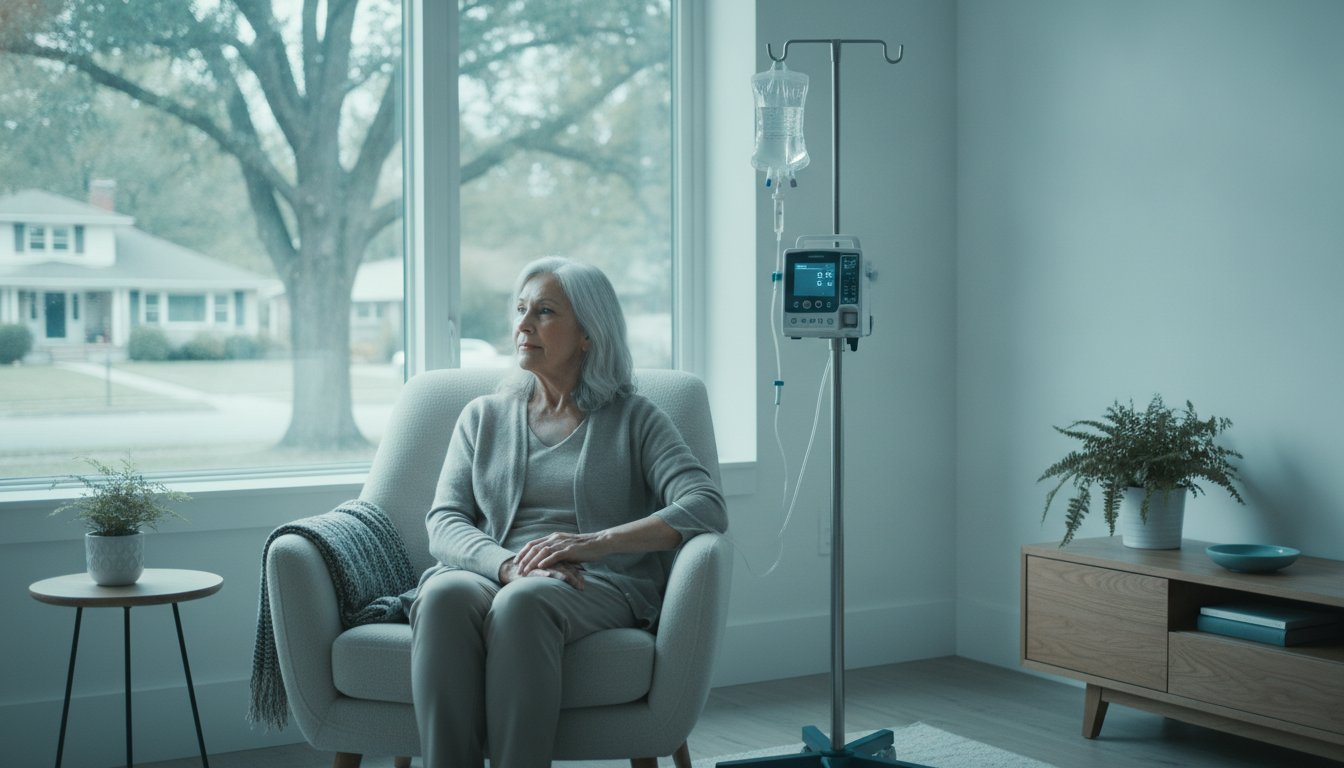
Imagine waking up in your own bedroom, looking out at a familiar Syracuse neighborhood, rather than the sterile white walls of a hospital room at Upstate or St. Joseph’s. For many families in Central New York, this sense of peace isn’t just a dream; it’s a reality made possible through home inotropic therapy Syracuse. You’ve likely spent far too many nights in waiting rooms or navigating the stress of hospital commutes, feeling your independence slip away with every readmission. It’s exhausting for you and overwhelming for your caregivers who want nothing more than to see you comfortable and stable at home.
We believe that managing advanced heart failure shouldn’t mean a permanent residence in a clinical facility. This guide explains how life-sustaining medications can be administered safely in your living room, allowing you to reclaim your daily routine while maintaining the highest standards of safety. We’ll explore the benefits of professional cardiac monitoring, the role of specialized nursing support, and how this advanced care model reduces hospital visits while prioritizing your dignity and well-being.
Key Takeaways
- Understand how continuous IV medication can strengthen heart contractions and improve daily life for those living with Stage C or D heart failure.
- Discover the clinical protocols, including PICC line care and initial hospital titration, that ensure your safety during home treatments.
- Learn why home inotropic therapy Syracuse is a cost-effective choice that eliminates the stress of frequent commutes to regional medical centers.
- Identify the essential home preparations, from designating a dedicated sterile area to ensuring a consistent power supply for your infusion pump.
- Explore how local expertise combined with 24/7 clinical availability provides a reliable safety net for patients and their families.
What is Home Inotropic Therapy and How Does it Support Heart Health?
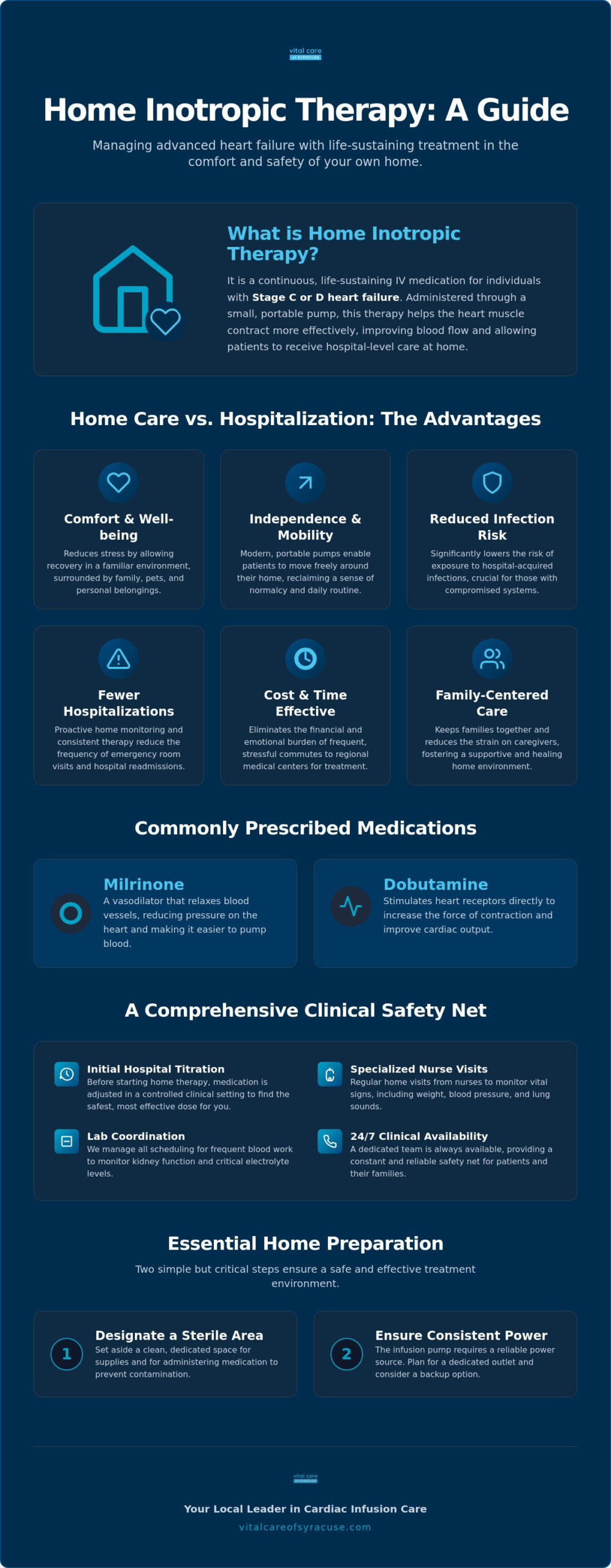
Home inotropic therapy is a life-sustaining cardiac treatment delivered via a small, portable pump in a patient’s residence. This advanced level of care is designed for individuals living with Stage C or D heart failure who require continuous intravenous medication to support their heart’s pumping action. By delivering these medications through a dedicated infusion pump, we help the heart muscle contract more effectively, which improves blood flow to the rest of the body. For many in our community, home inotropic therapy Syracuse offers a bridge to a heart transplant or a way to maintain comfort and stability during palliative care. Even for families outside of Central New York, models of care like those offered by Eternal Life Hospice demonstrate how physician-led support can prioritize dignity and quality of life during advanced illness.
Cardiologists at major institutions like Upstate University Hospital and St. Joseph’s Health are increasingly referring patients for home-based drips. This shift reflects a growing understanding that clinical outcomes often improve when patients are treated in a familiar, low-stress environment. To gain a deeper clinical understanding of What is Inotropic Therapy and its physiological impact, it’s helpful to look at how these medications alter the force of heart muscle contractions to sustain vital organ function.
To better understand how these medications are administered safely outside of a hospital setting, watch this helpful video:
Commonly Prescribed Inotropic Medications
Our clinical team works closely with your cardiologist to manage specific medications tailored to your heart’s needs. Milrinone is a frequently prescribed vasodilator that works by relaxing the blood vessels, which reduces the overall pressure on your heart and allows blood to flow more easily. Alternatively, Dobutamine acts by stimulating specific receptors in the heart to increase cardiac output. Your Syracuse clinical team carefully determines the right medication and dosage by monitoring your response to therapy, ensuring the treatment remains both safe and effective as your needs evolve.
The Benefits of Home-Based Cardiac Care
Choosing home inotropic therapy Syracuse provides several significant advantages for both the patient and their family. The use of modern, portable pumps means you aren’t confined to a bed; you can maintain a level of mobility that is often impossible in a traditional hospital ward. This ability to move around your own home contributes heavily to your psychological well-being. To explore how specialized care models prioritize emotional health, you can discover ZenVana Medical and Wellness Group LLC. Being surrounded by family, pets, and your own belongings creates a sense of peace that directly supports heart health. Additionally, receiving care at home significantly reduces the risk of hospital-acquired infections, providing a safer environment for those with compromised systems while eliminating the exhaustion of frequent travel for your loved ones.
Clinical Monitoring and Safety for Cardiac Infusions at Home
Safety is the cornerstone of successful home care, especially when managing advanced heart failure. Delivering continuous medication requires a stable access point, typically a PICC line or a central venous catheter, which ensures the heart receives a precise and uninterrupted flow. Before transitioning to home inotropic therapy Syracuse, patients undergo an initial titration phase. This usually occurs in a hospital or a controlled clinical suite, allowing medical staff to observe exactly how your heart responds to the medication and adjust the dosage for maximum stability before you return home.
Once you’re settled in your own environment, the clinical oversight remains intensive and methodical. Our specialized nurses conduct regular home visits across the Syracuse and Rochester regions to track key indicators like daily weight fluctuations, blood pressure, and lung sounds. We also manage all laboratory coordination, facilitating frequent blood work to monitor kidney function and electrolyte balance. This level of detail is supported by clinical research, such as this home inotrope program for end-stage heart failure, which demonstrates that rigorous monitoring can lead to better outcomes and significantly fewer hospital readmissions.
Emergency Preparedness and 24/7 Support
We provide a 24/7 clinical on-call system so that Syracuse families never feel alone in their care journey. It’s vital to recognize the difference between a clinical red flag that requires a call to your nurse, like a persistent pump alarm, and a true emergency that requires 911, such as sudden chest pain or severe respiratory distress. Because we understand the unpredictability of a Central NY winter storm, we ensure every patient has backup power solutions and extra pump supplies. This prevents any interruption in therapy during power outages, keeping your heart support consistent and reliable.
The Vital Care Nursing Advantage
Our infusion nurses serving Auburn and Utica possess specialized cardiac training, allowing them to act as an expert bridge between your home and your cardiologist. We prioritize one-on-one education, teaching caregivers how to safely change medication bags and troubleshoot equipment. This collaborative approach ensures that real-time data is relayed back to your local heart failure specialist, allowing for quick adjustments to your care plan. If you’re exploring options for a loved one, you can learn more about our specialized home inotropic therapy Syracuse and how we support families through every step of the journey.
Home Care vs. Hospitalization: Evaluating the Best Setting for Heart Failure
Deciding where to manage advanced heart failure is a choice that affects the entire family. While hospitals provide intensive oversight, the “commute factor” for families in Buffalo, Albany, and Binghamton creates a significant emotional and financial strain. Traveling hours for a visit, paying for parking, and staying in hotels can lead to rapid caregiver burnout. By choosing home inotropic therapy Syracuse, families can stay together, removing the logistical barriers that often separate patients from their support systems during critical times.
The clinical benefits of a home setting extend far beyond convenience. Studies on Parenteral inotropic therapy in the home indicate that this model is an effective way to manage symptoms while respecting a patient’s desire for independence. From a financial perspective, home infusion is significantly more affordable for New York insurance providers than extended stays in an inpatient cardiac unit. This cost-efficiency doesn’t come at the expense of quality; rather, it allows for a 1:1 nursing ratio during visits, which is a stark contrast to the busy, multi-patient wards found in many large medical centers.
There are also hidden clinical advantages to being at home, specifically regarding sleep quality and nutrition. Hospital environments are notoriously disruptive, with frequent alarms, bright lights, and scheduled interruptions that hinder restorative sleep. In your own bed, your circadian rhythm remains more stable, which is essential for heart health. Likewise, eating familiar, home-cooked meals that meet your specific dietary needs is often more appealing than institutional food, helping you maintain the strength required for your ongoing care journey.
Serving the Central New York Corridor
Our operational hub in East Syracuse is strategically positioned to support the entire Central New York region. We manage the logistics of medication delivery with precision, ensuring that patients from Rochester to Utica receive their infusions without delay. Because we are locally owned and operated, we offer faster response times and more personalized coordination than national “big-box” infusion companies. You can read more about The Benefits of a Local Home Infusion Company to understand why a community-based approach makes such a difference in complex cardiac care.
Insurance and Financial Navigation
Navigating the complexities of Medicare and private insurance can be overwhelming for families already dealing with a health crisis. We take the lead on the prior-authorization process, working directly with New York providers to secure coverage for the home inotropic therapy Syracuse families need. By managing these administrative hurdles, we help reduce the financial burden of long-term cardiac care. Our team acts as your advocate, ensuring you receive life-sustaining therapy without the added stress of navigating insurance paperwork on your own.
Essential Preparation for Receiving Inotropic Support at Home
Preparing for home inotropic therapy Syracuse requires a thoughtful approach to your physical surroundings to ensure treatment is both safe and seamless. You’ll need to designate a “Clean Zone” in your home. This should be a clutter-free area, preferably a hard surface like a side table or desk, used specifically for medication storage and sterile dressing changes. It’s best to keep this area away from high-traffic zones, kitchens, or pets to minimize the risk of contamination and ensure the highest standards of hygiene are maintained.
Your infusion pump requires a consistent and reliable power source. We recommend identifying a dedicated outlet that isn’t shared with high-draw appliances like space heaters or refrigerators. While your pump includes a backup battery for mobility, keeping it plugged in whenever you’re stationary ensures the battery remains fully charged for when you’re moving around the house or during an unexpected power outage. This simple step provides an extra layer of security for your continuous medication delivery.
Monitoring your progress is a collaborative effort that involves daily health tracking. You’ll need a reliable digital scale and a blood pressure cuff to record readings each morning. These numbers act as an early warning system; they help our clinical team catch subtle changes in fluid retention or cardiovascular stability before they become serious issues. Your caregiver also plays a supportive role, but they don’t need a medical degree to help. We provide comprehensive, hands-on training so they feel confident changing medication bags and troubleshooting equipment alarms alongside you.
Setting Up Your Infusion Space
Choose a central location where you spend a significant amount of your time, such as a favorite recliner in the living room. When your initial supply delivery arrives, it will contain everything from the medication itself to alcohol swabs and medical tape. Organizing these supplies in clear, labeled bins can make the daily routine feel much more manageable and less like a medical chore. Safety is also a priority in this space. Since you’ll be carrying a portable pump, you must remove loose rugs, clutter, or electrical cords that could cause a fall or trip while you move between rooms.
Communication and Scheduling
We establish a predictable schedule for nurse visits, whether you’re located in Binghamton or Auburn, so you always know when to expect professional oversight. For everything in between, our secure patient portal allows you to reorder supplies or send non-urgent clinical questions directly to our team. On your first day of home inotropic therapy Syracuse, your nurse will arrive to walk you through the entire setup, ensuring you and your family feel empowered and secure. If you’re ready to begin this transition, you can contact our Syracuse clinical team to start your home preparation today.
Why Vital Care of Syracuse is the Local Leader in Cardiac Infusion
Vital Care of Syracuse isn’t just a provider; we’re a locally owned and operated pillar of the Central New York community. Our commitment to patients living with advanced heart failure is personal because we live and work in the same neighborhoods we serve. While we leverage the vast resources of a national network to ensure supply chain reliability and clinical excellence, our heart remains firmly in East Syracuse. We believe that every individual receiving home inotropic therapy Syracuse deserves more than a standard care plan; they deserve a dedicated partner in their health journey. Vital Care of Syracuse treats every cardiac patient like a neighbor, not a case number.
Our reach extends across the Central New York corridor, facilitating seamless coordination with major health systems from Buffalo to Albany. We act as a specialized extension of the cardiology teams at regional hubs, ensuring that the transition from hospital to home is smooth and clinically sound. This local expertise allows us to provide faster response times in areas like Binghamton and Auburn, where national “big-box” providers often struggle with logistical delays. By maintaining these deep clinical relationships, we ensure your cardiologist is always informed and your care is never fragmented.
A Specialized Approach to Complex Care
Our clinical capabilities go beyond cardiac support. We bring the same level of precision and empathy to other complex needs, such as Home Infusion for Neurological Disorders in Syracuse. This breadth of expertise is supported by our advanced pharmacy lab in East Syracuse, where we perform precision compounding for every cardiac dose. Having a local lab means your medication is prepared nearby under the strictest quality standards, allowing for rapid adjustments to your therapy when your clinical status changes. This “Vital Care Way” balances technical proficiency with a patient-centered philosophy that prioritizes your comfort above all else.
Getting Started with Home Therapy
The transition to home-based care begins with a conversation. We encourage you to talk to your cardiologist about whether home inotropic support is the right step for your recovery or long-term stability. Our team works directly with hospital discharge planners in Rochester and Syracuse to manage the referral process from start to finish. We handle the paperwork, coordinate the initial nursing visits, and ensure all equipment is ready before you arrive home. If you’re ready to explore a more independent way to manage your heart health, reach out to our East Syracuse team for a confidential consultation. We’re here to help you trade the hospital gown for the comfort of home through home inotropic therapy Syracuse.
Reclaiming Your Independence and Heart Health at Home
Managing advanced heart failure is a deeply personal journey, but it doesn’t have to be defined by frequent hospitalizations and the loss of your daily routines. By choosing home inotropic therapy Syracuse, you’re opting for a care model that prioritizes your comfort and dignity without compromising on clinical excellence. We’ve explored how specialized nursing oversight, rigorous clinical monitoring, and thoughtful home preparation create a safe, life-sustaining environment right in your living room.
As a locally owned and operated provider based in East Syracuse, we’re proud to serve families across Syracuse, Rochester, Buffalo, and Albany. Our team offers the 24/7 clinical support necessary to manage complex cardiac infusions with absolute confidence, ensuring you’re never alone in your care. Contact Vital Care of Syracuse to discuss your home cardiac care options today and learn how we can support your specific needs. You deserve the peace of mind that comes with receiving expert, compassionate care in the place you love most. We’re here to provide the steady hand and professional expertise required to help you thrive.
Frequently Asked Questions
Is home inotropic therapy safe for elderly patients living alone?
Safety for elderly patients depends on their cognitive stability and the presence of a reliable support system. While living alone isn’t an automatic disqualification, we require a designated caregiver who can be reached quickly to assist with alarms or emergencies. Our team conducts a thorough home assessment to ensure the environment is secure and that the patient feels confident managing their portable pump between nursing visits.
How often will a nurse visit my home in Syracuse for cardiac monitoring?
Most patients receive nursing visits once or twice a week, though this frequency is adjusted based on your clinical stability. During these visits, our specialized cardiac nurses perform physical assessments, maintain your IV site, and review your daily health logs. We coordinate these appointments to fit your schedule, providing consistent oversight while respecting your privacy and time in your own home.
Can I travel or leave my house while on a Milrinone or Dobutamine drip?
You can certainly leave your house for short periods and maintain a level of local mobility. The infusion pumps are small, lightweight, and fit into a discreet carrying case, allowing you to attend family gatherings or run errands. While long-distance travel requires advanced planning with our pharmacy team to manage medication supplies, staying active within your community is often encouraged for your overall well-being.
What happens if there is a power outage in Central NY while I’m on a pump?
Your infusion pump is equipped with a rechargeable backup battery designed to maintain your therapy for several hours during a power failure. We provide extra batteries and clear emergency protocols as part of your initial training. Because Central NY winters can be unpredictable, we also help you register for priority restoration status with your local utility provider to ensure your home remains a safe clinical setting.
Does insurance like Medicare cover home inotropic therapy in New York?
Medicare and most private insurance plans in New York provide coverage for home inotropic therapy Syracuse when specific medical criteria are met. Generally, this requires a diagnosis of Stage D heart failure and a recent hospital stay where the therapy was successfully started. Our administrative team handles the entire prior-authorization process for you, working directly with your insurance provider to secure the necessary approvals.
How do I switch from a hospital-based infusion to Vital Care of Syracuse?
Switching is a straightforward process that begins by asking your cardiologist or hospital discharge planner for a referral to our team. We coordinate directly with the hospital staff to ensure your medication, pump, and supplies are delivered to your home before you arrive. This seamless transition prevents any interruption in your life-sustaining therapy and allows you to move from the ward to your bedroom without stress.
What training does my family caregiver need to help with the infusion?
Your caregiver doesn’t need any prior medical experience; we provide all the necessary hands-on training. Our nurses teach your family member how to change medication bags, keep the infusion site clean, and understand pump alarms. We stay with you until everyone feels confident in their role, and our 24/7 on-call clinical team is always available to answer questions as they arise.
Can I work from home while receiving inotropic therapy?
Many patients find they can comfortably continue working from home while receiving continuous heart support. The portable nature of the infusion equipment means you can stay at your desk or move around your home office without difficulty. As long as your symptoms remain stable and you follow your prescribed care plan, maintaining your professional routine can be a vital part of preserving your quality of life.
Leave a Reply