



What if the most effective way to manage your cardiac health wasn’t found within the sterile walls of a hospital, but rather in the quiet comfort of your own Southern Tier home? For many families, the constant cycle of hospital readmissions and the technical challenge of managing complex IV pumps can feel like an exhausting, uphill battle. We understand that the transition to home-based care often comes with a mix of relief and a very real fear of managing medical requirements on your own. This guide provides a clear, supportive roadmap for home infusion for heart failure management Binghamton, showing you exactly how to move from hospital-based treatment to safe, professional inotropic therapy.
You deserve the peace of mind that comes from knowing stable heart function is achievable without sacrificing your independence or your connection to the community. With local providers reporting a 97% patient satisfaction rating, the shift toward home-based clinical support is more reliable and accessible than ever before. In this guide, we’ll examine how 2026 Medicare home infusion benefits and updated New York prescription transfer regulations simplify your care journey. You’ll learn how local clinical oversight acts as a bridge to a more stable, hospital-free lifestyle, ensuring you have the expert support you need right where you live.
Key Takeaways
- Understand how professional inotropic therapy strengthens heart contractions to help you transition from reactive hospital visits to proactive home care.
- Learn how to prepare a dedicated ‘infusion zone’ in your house for safe home infusion for heart failure management Binghamton.
- Explore the collaborative steps between local Southern Tier hospitals and clinical liaisons that ensure a smooth transition from your hospital bed to your own home.
- Gain confidence in daily health management by learning the essentials of continuous infusion pump care and vital sign monitoring.
- Discover the distinct advantages of partnering with a local provider that understands the specific needs of the Binghamton and Auburn communities.
What is Home Infusion for Heart Failure Management?
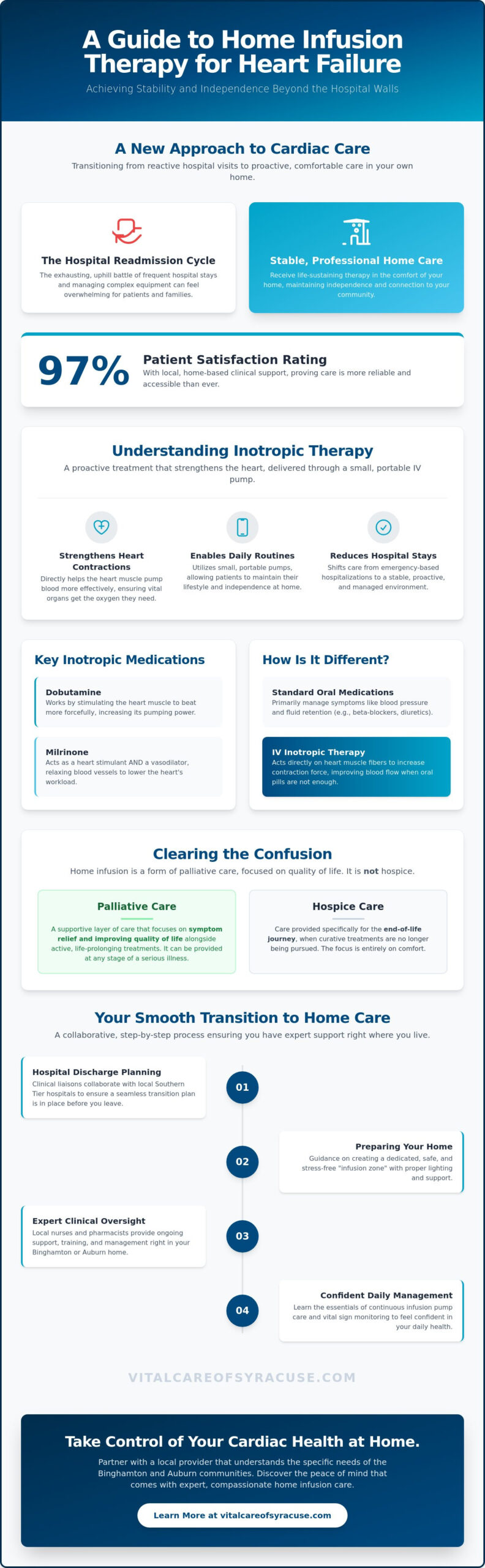
Home inotropic therapy involves the continuous administration of intravenous medications designed to help a weakened heart muscle pump blood more effectively. For residents seeking home infusion for heart failure management Binghamton, this specialized care represents a significant shift from reactive, emergency-based hospitalizations toward a proactive, stable environment at home. By utilizing small, portable pumps, patients can receive life-sustaining medication while maintaining their daily routines. What is infusion therapy in this context? It’s a sophisticated clinical intervention that directly supports the heart’s contraction strength, ensuring vital organs receive the oxygenated blood they need to function.
To better understand how this care is managed for heart failure patients, watch this helpful video:
This therapy primarily utilizes two key medications: Dobutamine and Milrinone. Dobutamine works by stimulating the heart muscle to beat more forcefully, while Milrinone acts as both a heart stimulant and a vasodilator, which helps relax blood vessels to lower the heart’s workload. While these medications were once restricted to intensive care units, technological advancements in 2026 allow for their safe administration in a residential setting. Patients across New York State, from the Southern Tier to those pursuing home dobutamine infusion in Buffalo, are benefiting from this shift toward community-based cardiac care. Typically, individuals who qualify for this level of care are those diagnosed with advanced (Stage D) heart failure or specific types of cardiomyopathy who require continuous support to manage persistent symptoms.
Inotropic Therapy vs. Standard Heart Medications
Most heart failure patients are familiar with oral medications like beta-blockers or diuretics, which manage blood pressure and fluid retention. However, IV inotropes are fundamentally different because they act directly on the heart’s muscle fibers to increase the force of each contraction. This improves systemic blood flow and can alleviate the profound fatigue or shortness of breath that oral pills alone may no longer control. Inotropic therapy serves as a vital bridge to a heart transplant or as a long-term management strategy for those who aren’t candidates for surgery.
Palliative Care vs. Hospice: Clearing the Confusion
A common misconception is that receiving advanced heart support at home means a patient has entered hospice care. In reality, palliative home infusion Binghamton is focused on symptom relief and improving quality of life alongside active treatment. While hospice is specifically for the end-of-life journey, palliative care is a supportive layer that can be provided at any stage of a serious illness. It allows you to continue life-prolonging therapies while ensuring that your daily comfort remains a top priority. This approach provides a steady, reliable hand for patients who want to manage their condition without frequent trips back to the hospital.
How to Prepare Your Binghamton Home for Infusion Therapy
Preparing your living space for medical care is about more than just making room for equipment; it’s about creating a sanctuary where clinical excellence and personal comfort coexist. Successful home infusion for heart failure management Binghamton requires a thoughtful “hospital-at-home” mindset. By designating a specific area for your treatment, you ensure that every bag change and site inspection happens in a controlled, stress-free environment. This preparation helps reduce the anxiety often associated with managing complex cardiac care outside of a traditional hospital setting.
Setting Up Your Infusion Station
Your primary infusion station should center around a chair or bed that offers firm, ergonomic support, as you’ll likely spend several hours here each day. Choose a location with excellent natural or overhead lighting to make it easier for you or your caregiver to program the pump and inspect the infusion site for any signs of irritation. It’s helpful to clear a dedicated, waist-high surface, such as a side table or desk, to keep your daily supplies organized and within reach. Maintaining a clutter-free medical storage area isn’t just about aesthetics; it’s a vital part of infection control and medication safety.
Vital Care of Syracuse provides a comprehensive equipment package delivered directly to your doorstep, including the infusion pump, tubing, and necessary hygiene supplies. It’s essential to store your cardiac medications, such as Milrinone or Dobutamine, exactly as directed by the clinical team, usually in a cool, dry place away from direct sunlight. As you begin this journey, you’ll find that consistent home monitoring for heart failure is the foundation of your safety. This includes having a reliable digital scale and blood pressure cuff ready in your infusion zone for daily tracking.
Emergency Readiness in the Southern Tier
Living in the Southern Tier means preparing for unpredictable weather, especially during the heavy snow and ice of Binghamton winters. Since your infusion pump requires a reliable power source, it’s crucial to have a verified backup plan. We recommend contacting NYSEG or your local utility provider to register your home for “critical care” status, which prioritizes your residence for power restoration during major outages. Keeping a portable battery pack fully charged and easily accessible ensures your therapy remains uninterrupted even if the lights go out.
You should also maintain a “Quick-Reference” contact sheet posted prominently in your infusion zone. This list should include your local clinical team, your cardiologist at UHS or Lourdes, and your primary emergency contacts. Having these numbers visible provides a sense of security for both you and your family members. If you’re feeling overwhelmed by the logistics of setting up your space, our team is here to offer guidance on transitioning safely to home infusion services. Taking these small, proactive steps now creates a stable foundation for your long-term heart health and independence.
The Hospital-to-Home Transition Process in Binghamton
The moment you transition from a hospital bed at UHS Wilson or Lourdes Hospital to your own living room is a significant milestone in your recovery journey. This shift requires a synchronized effort between your hospital discharge planners and our specialized clinical team. We understand that leaving the constant supervision of a cardiac unit can feel daunting, which is why our process is designed to provide a seamless handoff that maintains the highest standards of safety. Successful home infusion for heart failure management Binghamton depends on this initial coordination, ensuring that your life-sustaining therapy continues without a single moment of interruption.
Our clinical liaison serves as your dedicated advocate within Southern Tier medical facilities, working directly with your doctors to translate hospital orders into a personalized home care plan. This professional bridge ensures that every detail of your medication profile is accurately mirrored in your home environment. According to a clinical review of home inotropic therapy, a structured transition is essential for maintaining hemodynamic stability and preventing the “revolving door” of hospital readmissions. By the time you arrive home, your equipment is already staged, and your first doses are ready for administration.
Navigating insurance authorizations is another critical step that we manage on your behalf. In 2026, New York State regulations and Medicare updates have shifted, but our local expertise allows us to handle these complexities behind the scenes. We coordinate directly with regional payers to secure the necessary approvals for your inotropic therapy, allowing you and your family to focus entirely on your health rather than administrative burdens. This local presence is vital for understanding the specific requirements of Southern Tier health networks and ensuring your coverage remains stable throughout your treatment.
Coordinating with Your Binghamton Cardiology Team
Your relationship with your cardiologist doesn’t end when you leave the hospital; it actually becomes more collaborative. We provide regular progress reports to your local heart failure specialists, ensuring they have real-time data on how you’re responding to the infusion. By synchronizing our pharmacy deliveries with your scheduled follow-up appointments in Binghamton, we ensure you always have the supplies you need when you need them. This tight communication loop between the home nurse and your prescribing physician creates a safety net that spans from the clinic to your front door.
Caregiver Training and Empowerment
On your first day home, a nurse provides comprehensive, hands-on coaching for you and your designated caregiver. We walk you through every aspect of pump operation, from changing medication bags to managing battery life cycles with confidence. We also teach you how to identify ‘Red Flag’ symptoms, such as sudden weight gain or increased swelling, that require immediate clinical consultation. Caregivers are partners, not just observers, in the infusion process, and our goal is to give them the tools and knowledge to feel fully empowered in their role. This steady, reliable support ensures that you are never truly alone in managing your heart health.
Daily Management: Living with a Continuous Infusion Pump
Adapting to life with a continuous infusion pump is a journey of finding a new, healthy rhythm. It transforms your daily routine into a structured, health-focused process that prioritizes your safety without confining you to a hospital bed. Successful home infusion for heart failure management Binghamton relies on your ability to integrate these clinical tasks into your lifestyle so they become second nature. Most patients find that after the initial training period, managing medication bags and monitoring battery life cycles becomes a manageable part of their day, much like any other essential habit.
The ‘Morning Checklist’ for Heart Failure Patients
Your morning routine serves as the foundation for your clinical stability. Start each day with a thorough site check, looking for any signs of redness or irritation around the infusion area. Next, record your weight using a consistent digital scale. In heart failure care, a sudden weight gain of two to three pounds in twenty-four hours often indicates fluid retention, which is a critical metric that requires a prompt call to your clinical support team. Thanks to New York State regulations updated on January 21, 2026, transferring prescriptions and authorized refills is now more efficient, ensuring your Southern Tier pharmacy can maintain a steady, uninterrupted supply of your inotropic medication.
Maintaining Independence and Mobility
Independence remains a primary goal of home-based therapy. Modern portable infusion pumps are designed to be discreet and can be easily carried in a small pouch or backpack while you run errands in Binghamton or enjoy a stroll at Otsiningo Park. We recommend choosing button-down shirts or loose-fitting clothing that accommodates IV lines without tugging or restriction. Staying active is also encouraged; gentle walking can significantly support your circulation and overall well-being, provided you stay within the specific activity parameters established by your cardiologist at UHS or Lourdes.
The emotional impact of managing a chronic condition is just as significant as the physical requirements. It is completely normal to feel a range of emotions as you adjust to the presence of a medical device in your daily life. Our team projects the personality of a compassionate expert, acting as a steady, reliable partner to ensure you feel both technically proficient and emotionally supported. If you are ready to reclaim your independence while receiving professional cardiac care, explore our specialized home infusion services to see how we can support your journey.
Why Local Care Matters: Vital Care of Syracuse in the Southern Tier
Choosing a partner for home infusion for heart failure management Binghamton is a deeply personal decision that affects your daily comfort and long-term health outcomes. While national “big box” infusion chains may have a wide reach, they often struggle to provide the agile, community-focused support that local families require. Our clinicians live and work right here in Central New York, meaning we’re intimately familiar with the Southern Tier healthcare landscape. This local presence allows us to offer rapid response times for patients in Binghamton, Auburn, and the surrounding areas, ensuring that you’re never just a number in a distant database.
A local provider acts as a steady, reliable hand, offering a level of personalized attention that’s difficult to find elsewhere. We believe that clinical excellence should always be paired with genuine compassion. When you choose a local team, you’re choosing professionals who understand the regional weather patterns that might affect your power supply and the specific discharge protocols of our local hospitals. This proximity creates a sense of security, knowing that expert help is nearby and deeply invested in your well-being.
Local Expertise, National Standards
We pride ourselves on combining the extensive resources of the national Vital Care network with the dedicated, hands-on approach of local Syracuse ownership. This model ensures that your therapy meets the most rigorous clinical standards while remaining grounded in the everyday reality of your life in the Southern Tier. One of the most significant benefits of a local home infusion company is our ability to provide integrated care for patients with multiple complex conditions. For example, we can seamlessly coordinate your heart failure support with other specialized treatments, such as Alpha-1 antitrypsin deficiency therapy at home Binghamton, ensuring your entire treatment plan is managed by a single, cohesive team.
Getting Started with Vital Care
The path to professional home-based care begins with a referral from your Binghamton-based heart specialist or cardiologist. Once your physician determines that you’re a candidate for home infusion for heart failure management Binghamton, our intake team in Syracuse begins the process of coordinating your transition. We’ll work closely with your clinical team to gather your medical history and insurance details, navigating the 2026 Medicare and New York State authorization requirements on your behalf. Our goal is to make the intake process as transparent and stress-free as possible, providing you with the peace of mind that comes from expert clinical oversight. Contact Vital Care of Syracuse today to discuss your home heart failure management plan and take the first step toward a more stable, independent life at home.
Reclaim Your Independence and Heart Health
Managing advanced heart failure is a complex journey, but it’s one you don’t have to navigate within the confines of a hospital. By transitioning to home-based inotropic therapy, you’re choosing a path that prioritizes your comfort, family connection, and long-term stability. This guide has detailed how a coordinated transition from UHS or Lourdes, combined with a well-prepared home environment, creates a safe foundation for your recovery. You now understand that daily pump management and vital sign tracking are not just clinical tasks; they’re tools that empower you to live more fully in the community you love.
Choosing home infusion for heart failure management Binghamton through a local partner ensures that expert clinical support is always within reach. As a locally owned provider in Central New York, we offer the specialized expertise in complex inotropic therapies and the 24/7 clinical support Southern Tier patients need for true peace of mind. We act as your dedicated advocate, bridging the gap between sophisticated medical requirements and the personal needs of your household. If you’re ready to move toward a more stable and independent lifestyle, Start Your Journey to Better Heart Health at Home. Your health and comfort are our highest priorities, and we’re here to guide you every step of the way.
Frequently Asked Questions
Is home infusion for heart failure safe for elderly patients living alone in Binghamton?
Yes, home infusion is safe for elderly patients living alone when a thorough clinical assessment and caregiver training session are completed. We ensure every patient feels confident in managing their equipment before the transition begins. For those utilizing home infusion for heart failure management Binghamton, our compassionate experts provide the steady, reliable hand needed to maintain stability and avoid the stress of frequent hospital readmissions.
How much does home inotropic therapy cost compared to a hospital stay in NY?
Home inotropic therapy is documented to be significantly more cost-effective than inpatient hospital stays. Research indicates that for patients awaiting cardiac transplantation, home-based care can result in average savings between $71,300 and $120,500 per patient. These savings come from reducing the high overhead costs of hospital rooms while maintaining the same high register of clinical precision and excellence in your own familiar environment.
Will my insurance cover heart failure home infusion in the Southern Tier?
Most insurance providers, including Medicare, offer specific benefits for home infusion for heart failure management Binghamton. The 21st Century Cures Act established a Medicare benefit that covers professional services like nursing visits and patient education. For Calendar Year 2026, national payment rates for these services have been updated with a 2.0% increase, reflecting the growing industry standard for professional home-based cardiac care.
What happens if my infusion pump alarms in the middle of the night?
If your pump alarms, you should refer to the troubleshooting guide provided during your initial training or contact your clinical support team. Most alarms are related to simple issues like a low battery or a kinked tube that you can resolve quickly. Our goal is to instill a sense of security, ensuring you have the knowledge to handle these situations with quiet confidence and professional guidance.
Can I still travel within New York while on a continuous heart medication pump?
You can travel within New York State while on a continuous pump, provided you plan for medication storage and battery power. New York State regulations amended on January 21, 2026, now allow for the transfer of entire prescriptions and all authorized refills. This change significantly reduces administrative burdens, making it much easier to coordinate your care if you’re visiting other parts of the state or the Southern Tier.
How often will a nurse visit my home in Binghamton for heart failure monitoring?
The frequency of nursing visits depends on your specific physician’s orders and the complexity of your inotropic therapy. Initially, visits may be more frequent to ensure you’re comfortable with the pump and to monitor your vital signs closely. Over time, these visits may be adjusted as you become more proficient and your heart function remains stable, providing a consistent and predictable delivery of care.
What is the difference between home infusion and home health care for heart failure?
Home infusion is a specialized service focused on the administration of complex medications, whereas home health care is a broader term that often includes physical or occupational therapy. We focus specifically on high-level clinical therapies such as inotropic infusions and parenteral nutrition. This specialized focus allows us to act as a protective advocate, ensuring your heart medication is administered with the highest level of precision.
Do I need to make any electrical upgrades to my home for the infusion equipment?
Standard home infusion equipment does not require any major electrical upgrades to your Binghamton residence. You simply need a clean, grounded outlet to charge your pump’s battery and a dedicated, clutter-free space for your supplies. We recommend registering your home for “critical care” status with your utility provider to ensure you’re prioritized for power restoration during common Southern Tier winter outages or summer storms.
Leave a Reply