


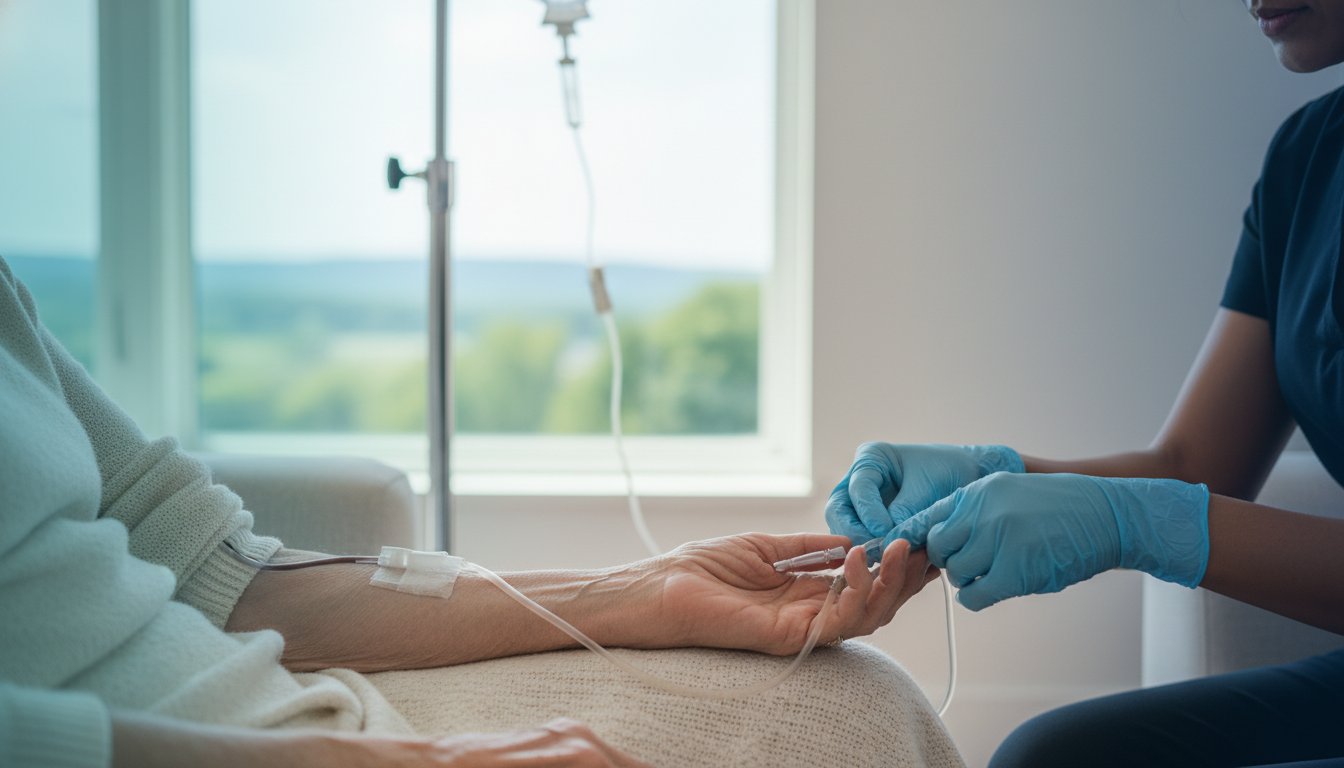
What if the clinical precision of a hospital wing could be seamlessly integrated into the quiet comfort of your own living room? For many families across the Southern Tier, the exhausting cycle of frequent trips to UHS or Guthrie hospitals becomes a heavy burden that often overshadows precious time spent together. It’s natural to feel overwhelmed when managing complex symptoms like chronic pain or nausea, especially when you’re trying to distinguish between different levels of support. This is where palliative home infusion Binghamton services offer a steadfast solution, bringing professional medical intervention directly to your bedside to ensure that comfort and clinical excellence coexist.
You deserve a care plan that prioritizes your autonomy and dignity without compromising on the quality of your medical support. This guide will show you how specialized home infusion therapies provide clinical-grade symptom relief and profound comfort for those facing advanced illness in our community. We’ll look at the significant shifts in New York healthcare for 2026, such as the implementation of the Medical Aid in Dying Act on August 5, and how these changes impact your choices. By the end of this article, you’ll understand how to improve quality of life and reduce caregiver stress through reliable, home-based clinical support.
Key Takeaways
- Discover why intravenous and subcutaneous therapies often provide more precise and effective relief for debilitating symptoms compared to standard oral alternatives.
- Learn how choosing palliative home infusion Binghamton reduces exposure to facility-based infections while maximizing your independence and personal comfort.
- Understand the essential steps for a smooth transition to home care, including the necessary clinical evaluations by a specialized pharmacy team.
- Explore the benefits of receiving clinical-grade therapies, such as inotropic or anti-infective support, in an environment that prioritizes your emotional well-being.
- Find out how a dedicated, local clinical partner can bridge the gap between complex medical requirements and your personal needs at home.
Understanding Palliative Home Infusion for Advanced Illness in Binghamton
Palliative home infusion Binghamton represents a refined approach to medical care, where the primary objective is to alleviate the physical and emotional burden of serious illness. This specialized service involves the administration of medications through intravenous or subcutaneous routes, allowing patients to receive clinical-grade symptom management in their own homes. By 2026, we’ve seen a noticeable shift toward home-based clinical support in the Southern Tier, driven by a desire for greater patient autonomy and the legislative formalization of end-of-life care standards. To understand the foundational principles of this approach, one might explore the broader question, What is Palliative Care?
The essence of this care model is the preservation of comfort and dignity. Unlike traditional hospital settings that can feel clinical and detached, home infusion allows for a deeply personalized experience. It prioritizes the management of debilitating symptoms such as pain, breathlessness, or nausea, ensuring that the patient’s daily life is as stable and peaceful as possible. This transition from facility to home is a vital step for many families seeking to maximize their time together without the constant interruption of hospital readmissions.
To better understand the practical application of these services, watch this helpful video:
Palliative Care vs. Hospice: Clearing the Confusion
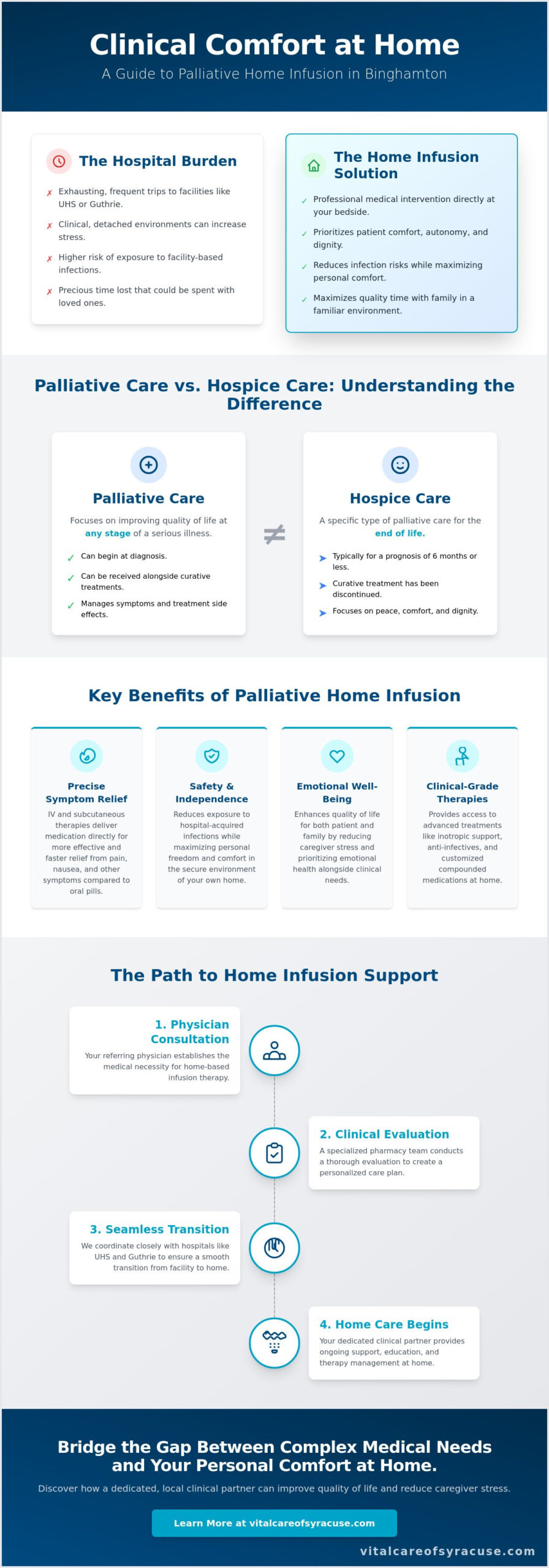
It’s a common misconception that palliative care is synonymous with end-of-life care. In reality, palliative support can begin at any stage of a serious illness, often alongside curative treatments. While hospice is a specific subset of palliative care reserved for those with a prognosis of six months or less, general palliative infusion focuses on improving quality of life regardless of the disease’s stage. You don’t have to choose between seeking a cure and managing your symptoms; both can happen simultaneously.
Who Qualifies for Home Infusion in Binghamton?
When considering palliative home infusion Binghamton, eligibility typically involves patients facing progressive conditions such as advanced heart failure, chronic obstructive pulmonary disease (COPD), or late-stage cancers. The process begins with a consultation with your referring physician, who establishes the medical necessity for home-based intervention. Local providers work in close coordination with hospitals like UHS and Guthrie Lourdes to ensure a seamless transition from facility to home. This collaborative effort ensures that your clinical needs are met with precision while you remain in the familiar environment you love.
Specialized Infusion Therapies for Chronic and Serious Conditions
When symptoms become complex, the standard “pill-by-mouth” approach often falls short of providing the necessary relief. Intravenous medications offer a direct pathway to the bloodstream, ensuring that every milligram of medication is utilized exactly as intended. This level of precision is vital for palliative home infusion Binghamton, where managing pain, breathlessness, or nausea requires immediate intervention. Specialty pharmacies play a critical role here, compounding customized formulations that address the unique clinical profile of each patient. For individuals managing rare genetic conditions, Alpha-1 antitrypsin deficiency therapy at home Binghamton enables consistent treatment that preserves lung function while maintaining the comfort of your own environment.
The efficacy of these treatments relies on rigorous clinical monitoring. It isn’t just about the medication; it’s about the expertise that ensures dosing remains accurate and side effects are minimized. For many, Palliative Care for Cancer Patients involves these specialized infusions to tackle the “total pain” that often accompanies advanced stages. This proactive management allows families to focus on connection rather than the logistics of symptom crises. It’s about bringing the highest standard of pharmacy care directly to your bedside.
Inotropic Therapy for Advanced Heart Failure
Advanced heart failure often results in a heart that struggles to circulate blood effectively. Medications like dobutamine or milrinone, known as inotropes, provide the necessary support to strengthen cardiac contractions. By administering these through a home infusion for heart failure management Binghamton model, patients in the Southern Tier can avoid the exhausting cycle of hospital readmissions. For patients across New York State, home dobutamine infusion Buffalo represents a proven approach to delivering this same hospital-grade cardiac support in the comfort of a personal environment. Safety protocols, including the use of precision infusion pumps and regular clinical assessments, ensure that these potent medications are managed with the same care you’d receive in a cardiac suite, but without the sterile atmosphere of a facility.
Anti-Infective and Nutrition Support
Secondary infections can rapidly diminish a patient’s quality of life and physical strength. Utilizing anti-infective therapy at home allows for the administration of powerful antibiotics or antivirals without requiring you to leave your bed. Similarly, Parenteral Nutrition (TPN) provides life-sustaining nutrients for those whose digestive systems are no longer functioning optimally. Hydration therapy further supports this by clearing cognitive fog and reducing the profound fatigue that often accompanies advanced illness. If you’re navigating these challenges, reaching out to the team at Vital Care of Syracuse can help you determine the best path forward for your comfort and stability.
The Benefits of Choosing Home-Based Palliative Care over Hospital Stays
Choosing palliative home infusion Binghamton allows patients to step away from the exhausting physical and emotional toll associated with prolonged hospital stays. While facilities like UHS or Guthrie provide essential acute care, the home environment offers a unique psychological sanctuary that fosters rest and emotional stability. By remaining in a familiar setting, patients often experience reduced anxiety, which can directly influence their perception of pain and overall well-being. Receiving care at home also significantly lowers the risk of healthcare-associated infections, which are more prevalent in large clinical facilities where exposure to resistant pathogens is higher.
Economic considerations also play a vital role in this decision for many Southern Tier families. Industry data highlights significant cost savings when transitioning from inpatient care to home-based services. For example, one analysis found a mean cost per day of $225.10 for home infusion compared to $586.50 for inpatient care. Another study noted that home-based anti-infective therapy resulted in savings of $40,460 per patient compared to hospital costs. These figures represent a broader trend toward more sustainable, patient-centered care models that empower families to manage serious illness without the overwhelming financial strain of a hospital room. Beyond the numbers, this model empowers caregivers by providing them with a professional clinical partner, transforming them from overwhelmed observers into supported members of the care team.
Clinical Excellence in a Comfortable Setting
Modern medical technology in 2026 has bridged the gap between the hospital and the home, allowing for sophisticated remote monitoring of infusion pumps. This capability ensures that your clinical team can track medication delivery with precision, providing a layer of safety that was once only possible in an intensive care unit. This model of care balances high-tech intervention with high-touch service, ensuring that you’re never treated like just another case number. Maintaining your dignity is paramount; receiving treatment in your own clothes and on your own schedule preserves a sense of self that is often lost in the sterile atmosphere of a hospital ward.
Local Support for Binghamton Families
The choice of a local home infusion company offers distinct advantages over national providers who may lack a physical presence in the Southern Tier. Proximity translates to faster response times for medication delivery and immediate clinical troubleshooting when questions arise. This local integration allows your team to work closely with Binghamton social services and support groups, creating a holistic network of care. When you’re facing the challenges of an advanced illness, having a partner who understands the local landscape provides a level of security and reliability that national call centers simply can’t replicate. This localized focus ensures that palliative home infusion Binghamton remains responsive to the specific needs of our community.
Navigating the Transition to Home Infusion Support
Moving from a hospital-centered model to home-based care is a structured process designed to instill confidence and ensure safety. This transition doesn’t happen in isolation; it requires a methodical approach that bridges the gap between your specialist’s office and your living room. The first step involves a detailed consultation with your primary specialist or palliative team at facilities like UHS or Guthrie Lourdes to determine the specific therapies required. Once the medical necessity is established, the palliative home infusion Binghamton team conducts a thorough clinical assessment to evaluate the home environment and the patient’s specific physical needs. This ensures that the setting is conducive to high-level clinical care.
Following the assessment, our team handles the complex logistics of insurance verification and financial counseling. We understand that the administrative side of healthcare can be a significant source of stress, so we act as your advocate to clarify coverage details. Once approved, we move to in-home education and equipment setup. A clinical nurse provides hands-on training for the patient and caregivers, ensuring everyone feels comfortable with the technology. The process concludes with a commitment to ongoing monitoring and 24/7 clinical support, providing a steady hand as you navigate the complexities of advanced illness management.
The Role of the Patient and Caregiver
The first home visit by a clinical nurse is a foundational moment in your care journey. During this time, the focus is on empowerment through education. Caregivers receive basic training on how to monitor the infusion site and recognize subtle changes in the patient’s condition. We prioritize clear communication; you’ll learn exactly how to report symptoms or equipment questions to the clinical team. This partnership transforms the home into a space of active healing, where the caregiver feels supported by professional expertise rather than burdened by medical tasks.
Insurance and Medicare in 2026
Navigating insurance in 2026 requires an understanding of how Medicare structures home-based clinical visits. For Calendar Year 2026, the Centers for Medicare & Medicaid Services (CMS) has established national payment rates for home infusion therapy. For example, the initial visit for the administration of anti-infective or pain management therapies (G0088) is set at $231.36, while subsequent administration visits (G0068) are rated at $190.22. These rates are adjusted based on our geographic location in the Southern Tier. Our team assists with the prior authorization process, helping you understand the distinctions between Medicare Part D and Part B coverage to minimize out-of-pocket costs. If you are ready to begin this process, you can contact Vital Care of Syracuse to speak with a clinical coordinator today.
Personalized Palliative Support with Vital Care of Syracuse
At Vital Care of Syracuse, we believe that the journey through advanced illness requires more than just clinical intervention; it demands a partner who is deeply invested in your personal comfort. Our commitment to providing palliative home infusion Binghamton services is rooted in the philosophy that every patient deserves high-register medical care without sacrificing the warmth of their home environment. As a locally owned entity, we offer a level of responsiveness that national providers often struggle to match, ensuring that your needs are met with both speed and genuine compassion. We act as a protective advocate for our neighbors in the Southern Tier, ensuring that clinical excellence is always paired with a supportive, patient-centered voice.
Our approach is defined by a quiet confidence that instills security in families facing complex health challenges. We don’t just deliver medication; we provide a comprehensive support system that prioritizes the individual’s well-being. By choosing a local partner, you’re ensuring that your clinical team is familiar with the Binghamton community and ready to respond to the unique nuances of your care plan. This localized focus allows us to maintain a methodical and steady rhythm of communication, providing clarity and peace of mind through every stage of your health journey.
A Dedicated Partner in Your Health Journey
Our clinical team views each patient through a lens of kindness and precision, acting as a bridge between complex medical requirements and your personal needs. We specialize in managing intricate cases, including home infusion for neurological disorders Syracuse and the surrounding areas. This expertise allows us to support individuals facing challenges that other providers might find too complex to manage outside of a hospital setting. You’ll have the security of knowing that our clinical pharmacists are accessible 24/7 to address any concerns, providing a steady hand and a reliable voice whenever you need it most. We prioritize safety and precision in every infusion, ensuring that your care is administered with the highest level of professional discipline.
Getting Started in the Binghamton Area
Transitioning to our care is a straightforward process designed to minimize stress for both the patient and their family. Whether you’re currently receiving treatment at UHS, Guthrie Lourdes, or a specialized clinic, we coordinate directly with your healthcare providers to facilitate a smooth handover of your clinical records. We manage the intricate logistics of your palliative home infusion Binghamton plan so you don’t have to, allowing you to focus on quality time with your loved ones. If you’re ready to explore how specialized support can improve your quality of life, reaching out for a compassionate consultation is the first step toward a more stable and comfortable future. You aren’t alone in this journey; we’re here to act as your dedicated partner every step of the way.
Embracing a Future of Comfort and Clinical Excellence
Choosing to manage an advanced illness at home is a profound decision that prioritizes both your medical stability and your emotional well-being. We’ve explored how specialized therapies, ranging from inotropic support to parenteral nutrition, provide clinical-grade relief without the exhausting cycle of hospital readmissions. By integrating 2026 technology with a patient-centered approach, families can maintain their autonomy while receiving the highest standard of pharmacy care. Specialized palliative home infusion Binghamton services ensure that you don’t have to navigate these complex health challenges alone; instead, you can focus on what truly matters: spending meaningful time in the environment where you feel most secure.
Our team at Vital Care of Syracuse is dedicated to acting as your protective advocate, offering locally owned and operated Central NY expertise. We specialize in complex chronic condition management and provide the reassurance of 24/7 clinical pharmacist availability to address your needs at any hour. Contact Vital Care of Syracuse for a compassionate consultation on palliative home infusion. You deserve a partner who views your care through a lens of kindness and precision. Take the first step toward a more peaceful and supported health journey today.
Frequently Asked Questions
What is the main difference between palliative care and hospice?
Palliative care is available at any stage of a serious illness and can be provided alongside curative treatments; hospice is a specific subset of care reserved for the final months of life. While hospice focuses solely on comfort when curative options are no longer pursued, palliative support allows you to manage debilitating symptoms aggressively while still working with your specialists on disease-modifying therapies to improve your daily quality of life.
Is home infusion therapy safe for elderly patients with multiple conditions?
Home infusion is a highly safe and regulated option for elderly patients, as it utilizes precision technology and rigorous clinical monitoring to manage complex medication regimens. By receiving care at home, seniors avoid the physical stress of hospital travel and the higher risk of facility-acquired infections. Our clinical pharmacists review all medications to prevent adverse interactions, ensuring that multiple conditions are managed with the highest level of professional discipline.
How quickly can palliative home infusion be started in Binghamton?
The timeline for beginning palliative home infusion Binghamton typically depends on the speed of the physician referral and the completion of a clinical home assessment. In many cases, once the specialized pharmacy receives the necessary medical orders and insurance authorization, therapy can be initiated within a few business days. This efficient transition is designed to provide immediate relief for distressing symptoms without unnecessary delays in your support plan.
Will my health insurance cover the cost of infusion equipment at home?
Most health insurance plans, including Medicare, provide coverage for home infusion equipment and the associated medications when they are deemed medically necessary. For 2026, CMS has established specific reimbursement rates for the administration and initial visits related to home infusion services. Our team works directly with your provider to navigate the prior authorization process, helping you understand your specific benefits and any potential out-of-pocket costs before therapy begins.
Can I still see my regular doctor while receiving palliative home infusion?
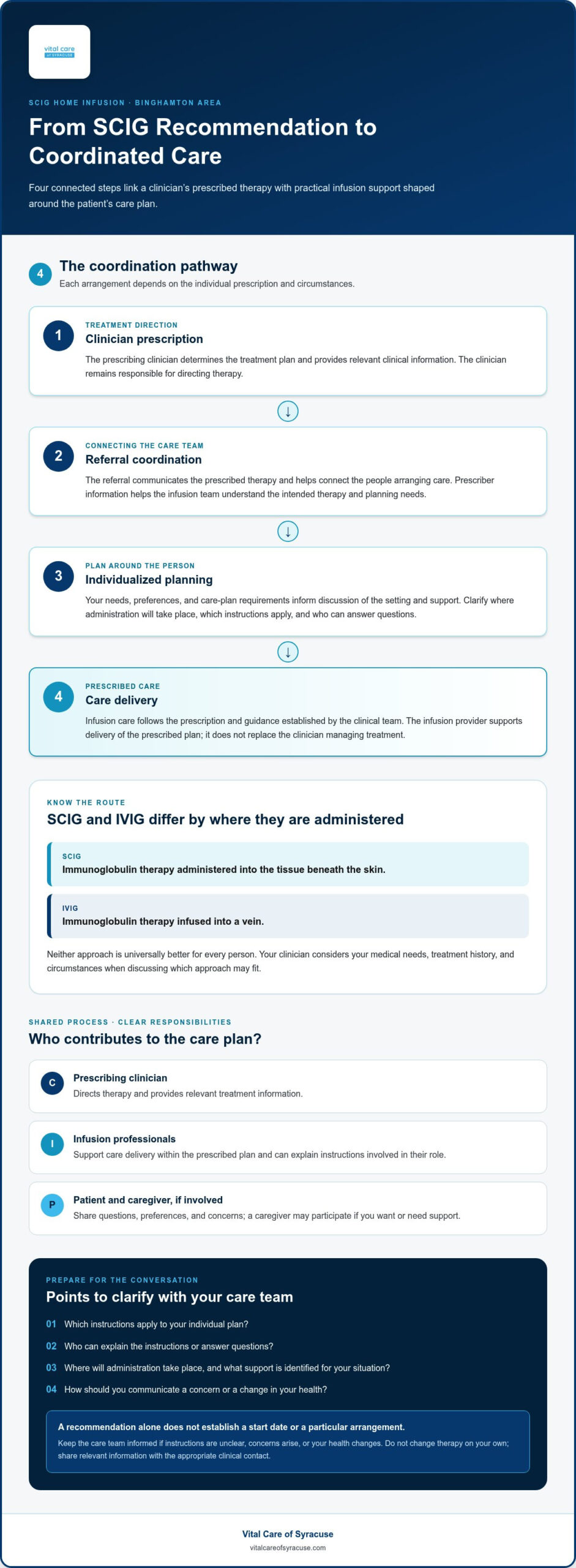
You’ll absolutely continue to see your regular doctor, as home infusion is designed to be a collaborative extension of your existing medical team. The infusion provider acts as a specialized partner, following the protocols and prescriptions established by your primary physician or specialist. This ensures that your care remains consistent and that all members of your health journey are informed of your progress and symptom management goals.
What happens if there is an issue with the infusion pump in the middle of the night?
If a technical issue or clinical concern arises after hours, you have immediate access to a clinical pharmacist through a dedicated support line. This 24/7 availability ensures that you’re never left to manage equipment alarms or medication questions alone. Having a professional expert just a phone call away provides a vital layer of security and peace of mind for both the patient and their family members.
Does home infusion for advanced illness require a full-time nurse?
Palliative home infusion Binghamton does not require a full-time nurse to be present in the home, as the system is designed to be managed by trained caregivers. A clinical nurse provides comprehensive initial training on how to operate the infusion pump and monitor the site effectively. Periodic nursing visits are scheduled to assess the patient and change dressings, but the daily administration is handled through user-friendly, automated technology.
Leave a Reply