



A suitable home infusion nurse has the clinical skills to administer the prescribed therapy and the communication skills to support care at home. Finding a reliable home infusion nurse means considering relevant experience, clear patient education, and care that follows the treatment plan. A reassuring approach matters, too, because knowing what to expect can make a complex routine feel more manageable.
It’s understandable to want confidence in the person providing treatment at home. This guide explains what home infusion nurses do, how clinical care and patient education support therapy, and what to consider when choosing a provider.
You’ll also learn how to consider the next steps, from understanding the care involved to finding a provider suited to your therapy needs.
Key Takeaways
- Understand how home infusion therapy is administered and what patient support can look like during treatment.
- Match nursing experience to the therapy’s clinical needs, including specialized care for complex conditions.
- Look for clear education that helps patients and caregivers understand the treatment routine and care plan.
- Use the provider’s therapy offerings and approach to care to identify a suitable next step for home treatment.
Home therapy drug administration and patient support
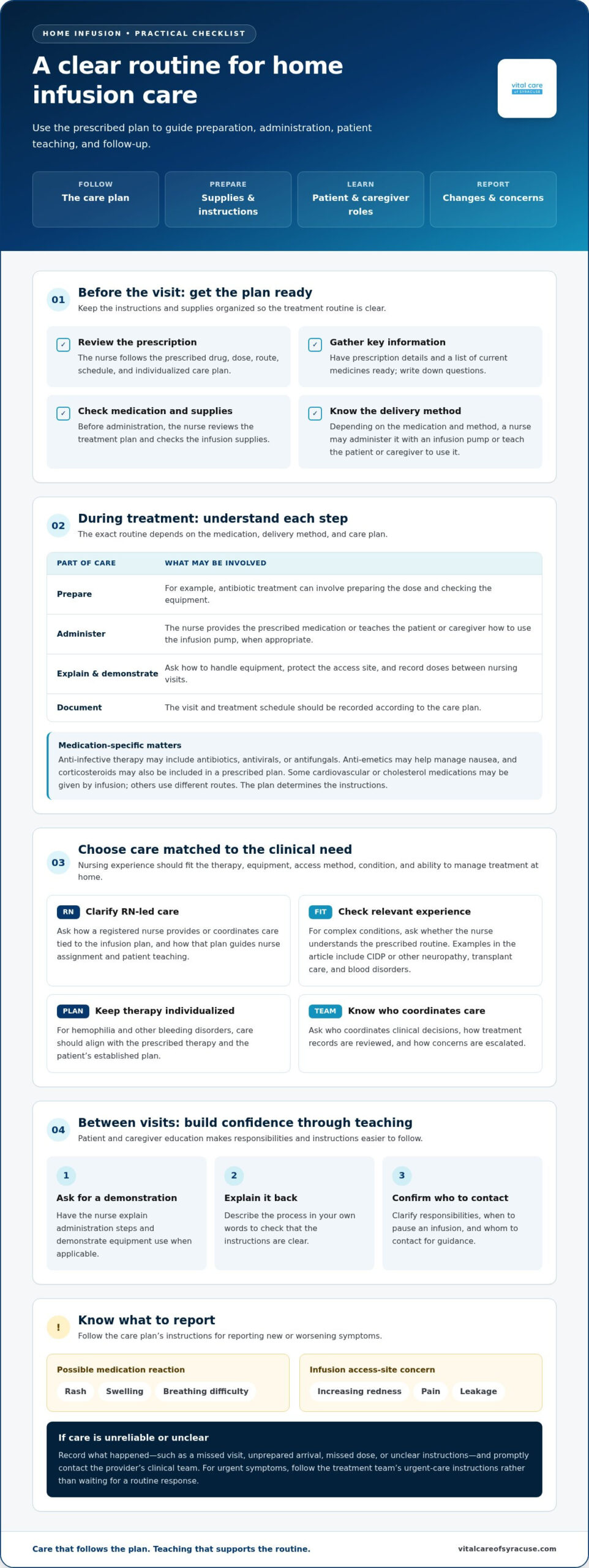
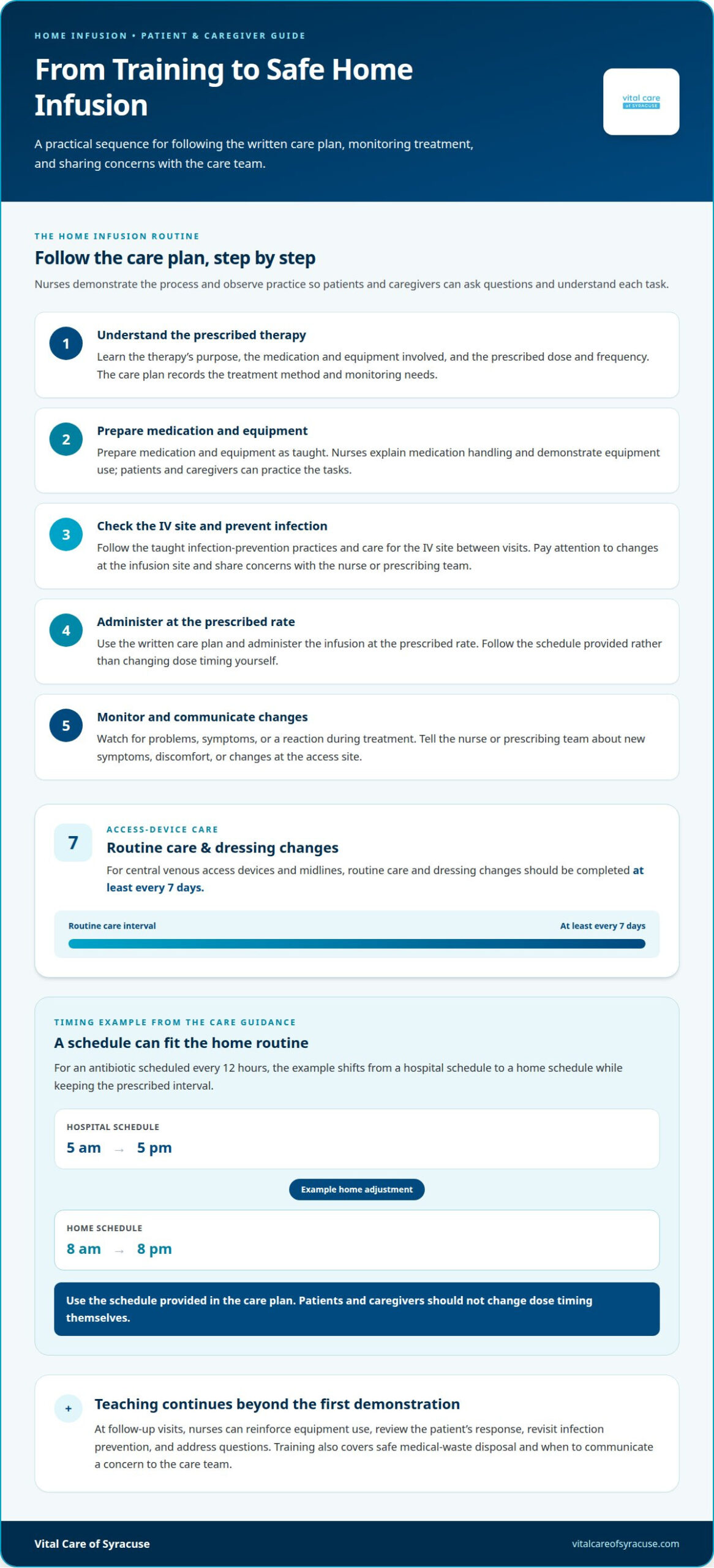
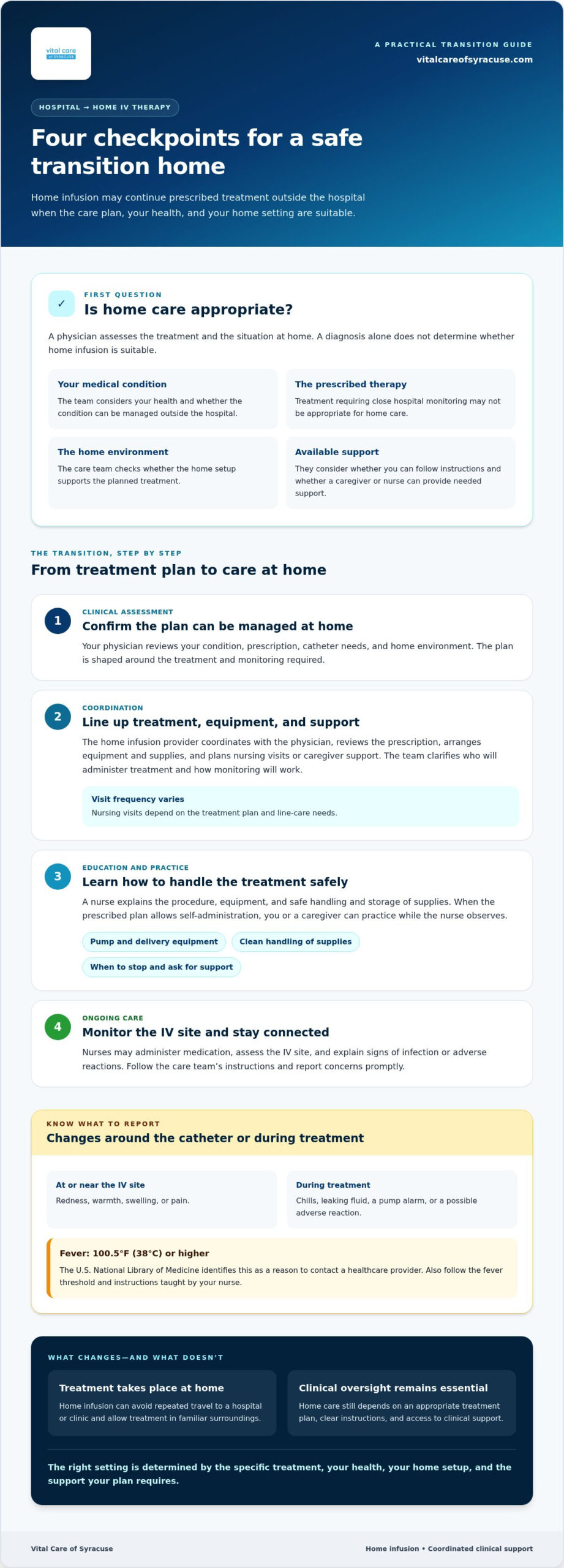
Home infusion therapy brings prescribed medication administration into a patient’s home, following a treatment plan developed for that person. Depending on the medication and delivery method, a nurse may administer therapy through an infusion pump or teach the patient or caregiver how to use it. For example, antibiotic treatment can involve preparing the dose, checking the equipment, administering the medication, and documenting the visit. The exact routine depends on the prescription and care plan.
Anti-infective therapy may include antibiotics, antivirals, or antifungals. Because these medications treat different infections, the nurse follows the prescribed drug, dose, route, and schedule rather than applying one routine to every therapy. Before administration, the nurse reviews the plan and checks the infusion supplies. During the visit, patients can ask how to handle equipment, protect the access site, and record doses between nursing visits.
Some medications for cardiovascular conditions or cholesterol management may be prescribed in infusion form, while others are taken by different routes. The medication and delivery method determine the support needed. Anti-emetic medicines, which help manage nausea, and corticosteroids may also be part of a prescribed treatment plan. A nurse can explain how each medication fits the schedule and which instructions apply before and after administration.
Home treatment still carries risks, including medication reactions and problems at the infusion access site. Watch for new or worsening symptoms, such as a rash, swelling, breathing difficulty, or increasing redness, pain, or leakage around the site. Follow the care plan’s instructions for reporting them.
Practical support starts with keeping medication, supplies, and written instructions organized in one place. Before the first home visit, gather prescription details and list current medicines and questions. During teaching, ask the nurse to demonstrate each step, then explain the process back in your own words. This can clarify responsibilities, including when to pause an infusion and whom to contact for guidance.
Infusion nurse experience and specialized care
For home infusion, relevant nursing experience means understanding the prescribed therapy, equipment, and patient’s clinical needs. That fit matters especially when care involves a complex condition or treatment plan.
RN-Led Care and Nurse Matching
RN-led infusion care means a registered nurse provides or coordinates nursing care tied to the infusion plan. Matching care to a patient involves the medication, delivery device, access method, condition, and ability to manage treatment at home. For example, a nurse supporting a patient with CIDP or another neuropathy should understand the prescribed infusion routine and explain it clearly. Ask how the care plan guides nurse assignment and patient teaching.
Specialized experience is also relevant for transplant recipients and people with blood disorders. Their infusion needs may involve schedules and clinical considerations that differ from routine medication administration. For hemophilia and other bleeding disorders, care should align with the prescribed therapy and the patient’s established plan. Home infusion can reduce travel for treatment and allow care in familiar surroundings, while nursing support helps integrate treatment into daily routines.
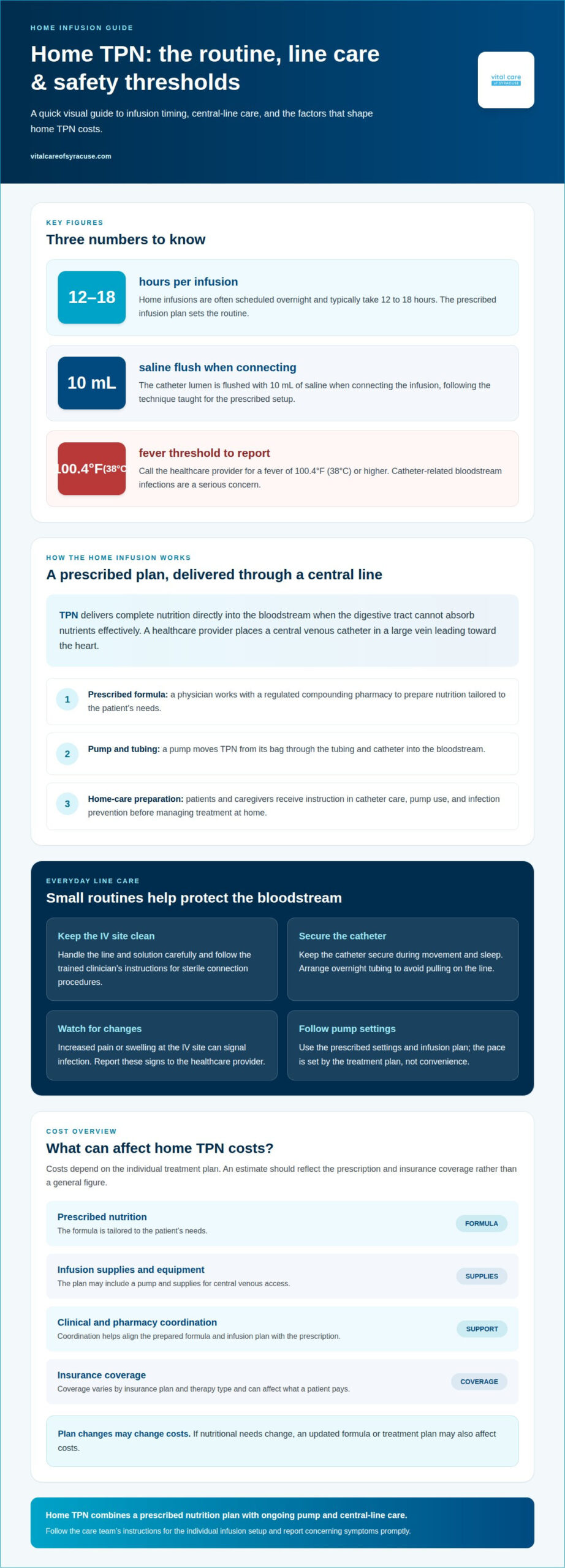
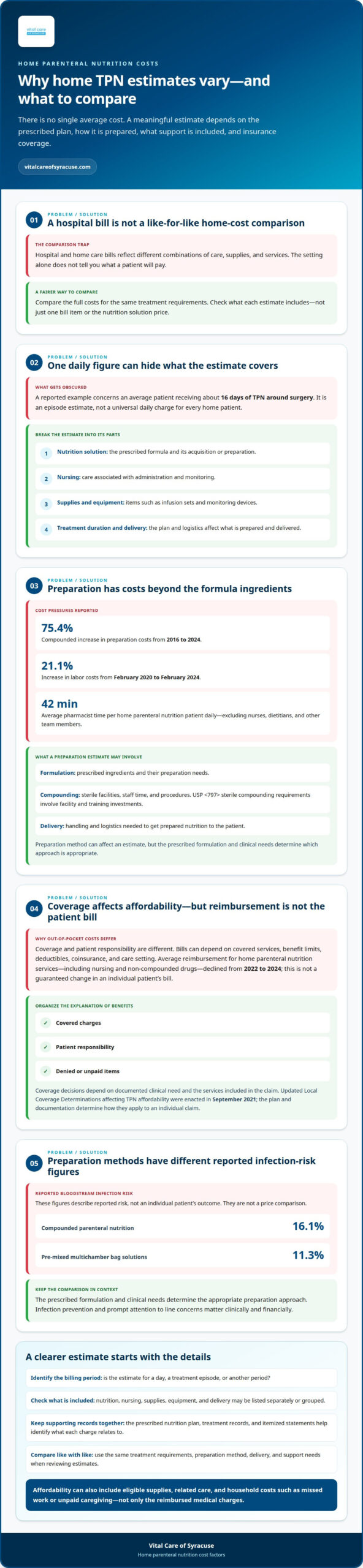
Home infusion nursing costs depend on the medication, nursing visits, supplies, and treatment schedule; the price depends on the case and is provided after a quote request. Insurance coverage depends on the plan and therapy. According to United States Congress, Medicare pays 80 percent of the lesser of the actual charge for home infusion therapy services or the amount determined under section 1834(u).
Addressing Reliability and Care Quality
If a nurse misses a visit, arrives unprepared, or doesn’t follow the care plan, record what happened and contact the home infusion provider’s clinical team promptly. Describe the specific concern, such as a missed dose or unclear instructions, and ask how the care plan will be addressed. For urgent symptoms, follow the treatment team’s instructions for urgent care rather than waiting for a routine response. Compassion matters, but dependable communication and consistent care practices matter, too.
Patients considering home infusion for bleeding disorders can explore how therapy support may fit their prescribed care plan.
Nurse clinical expertise and patient education
For safe home infusion, look for care that follows the prescribed treatment plan, uses documented procedures, and records each visit. The nurse should explain administration steps, review symptoms to report, and clarify who coordinates clinical decisions. Ask for instructions in plain language, then describe the steps back to confirm your understanding.
Clinical expertise includes understanding the medication, infusion device, access method, and patient-specific care plan. A nurse delivering therapy should explain each step, demonstrate equipment use when applicable, and answer questions clearly. For example, ask how the treatment schedule is documented and what information the patient should share at follow-up. Practical teaching helps patients and caregivers understand their roles and take part in care.
Clinical trial nursing adds protocol adherence to these responsibilities. Trial treatment may require following a study-specific schedule, documenting observations, and communicating changes through the designated research team. Before a visit, patients can review study instructions with the nurse and identify whom to contact with protocol questions. The nurse’s role is to deliver prescribed care as directed, not to make unapproved changes to study treatment.
National clinical oversight is reflected in how an organization sets and reviews its care procedures. Patients can ask how clinical leadership supports consistent nursing practice, how treatment records are reviewed, and how concerns are escalated. The National Home Infusion Association (NHIA) offers professional education, including a Home Infusion 101 webinar listed for December 17, 2025, from 12:00 to 12:30 ET. A provider’s education and review processes should translate into understandable instructions, careful documentation, and clear communication for each patient.
Finding home infusion providers
Start with the prescribed therapy, then identify providers that coordinate home infusion and nursing care for that treatment. Compare clinical fit, communication, and practical arrangements, not just a provider’s general description. For example, a patient using an infusion pump needs clear guidance about who manages the device and how treatment visits are coordinated.
Before choosing a provider, ask direct questions about how care will work for your specific treatment. Use this checklist to understand the service and how it may affect comfort and outcomes:
- How will the nursing plan reflect the prescription and the patient’s home routine?
- What experience does the nursing team have with this medication and delivery method?
- Who explains equipment use, treatment instructions, and changes to the care plan?
- How does the provider communicate about visit schedules or a missed visit?
- Which costs may involve nursing, supplies, medication, or insurance processing?
Look for answers that connect each responsibility to a clear person or process. A useful explanation, for instance, identifies who provides patient teaching, who coordinates clinical questions, and how the schedule is communicated. Clear answers help families understand what support to expect without relying on broad assurances. They also make it easier to compare the details that shape daily care.
Finding a reliable home infusion nurse begins with checking whether the provider’s care model fits the prescribed therapy and the patient’s needs. Write down the answers, then compare them against practical priorities, such as comfort during visits, understandable instructions, and predictable communication. If an answer is unclear, ask for the process to be explained in plain language before deciding.
For a next step, explore home infusion care and how it may support treatment at home.
Vital Care of Syracuse: Anti-infective Therapy
Vital Care of Syracuse provides Anti-infective Therapy for patients whose prescribed treatment can be delivered through home infusion. This may be a suitable option when a care plan includes infusion-based anti-infective medication and the patient needs clinical support at home. Therapy and nursing care should align with the prescribing clinician’s treatment plan.
Vital Care of Syracuse also provides home infusion services for Immunoglobulin (IVIG/SCIG), Parenteral Nutrition (TPN), and Hemophilia and Bleeding Disorder Therapy. These specialized treatments address different clinical needs, so the right option depends on the prescribed therapy. Patients and caregivers can discuss how home infusion fits the treatment plan and what support it involves.
For information about home infusion care, contact Vital Care of Syracuse.
Take the Next Step Toward Care at Home
Choosing a home infusion nurse is part of shaping care around your health needs and daily life. As you continue finding a reliable home infusion nurse, focus on the support that will help you feel informed and prepared to take part in treatment. A conversation about your prescribed therapy can clarify whether home infusion is suitable and which questions matter most for your care plan.
Vital Care of Syracuse offers Anti-infective Therapy, Immunoglobulin (IVIG/SCIG), and Parenteral Nutrition (TPN). If one of these therapies is part of your treatment plan, take a moment to explore how home infusion may fit your next steps. Contact Vital Care of Syracuse to discuss your care needs and learn more about its services.
With clear information and thoughtful support, you can approach care at home with greater confidence.
Frequently Asked Questions
How do I find a qualified home infusion nurse near me?
Start with the prescribed therapy and look for a home infusion provider serving your community. Compare providers by their experience with the medication and infusion method, care coordination, and patient teaching. Your prescribing clinician can clarify the treatment requirements, helping you focus your search on care that fits your plan.
What credentials and certifications should a home infusion nurse have?
Look for a nurse whose credentials match the role and clinical needs of your treatment. Ask whether the nurse is a registered nurse, has relevant infusion experience, and holds specialty credentials related to your condition, if applicable. Requirements vary by specialty and position, so distinguish between a current nursing license, which authorizes practice, and optional certifications that demonstrate focused knowledge.
How can I verify a home infusion nurse’s license and disciplinary history?
Use the official nursing license lookup provided by the state nursing board where the nurse practices. Search by the nurse’s full name or license details, then review the displayed license status and any public disciplinary information. If names are similar, compare identifying details carefully. Note the lookup date and ask the provider to clarify any record you don’t understand.
Should I use a home infusion agency or hire a nurse independently?
An agency can coordinate nursing with the prescribed therapy and related care arrangements, while hiring independently may require you to manage more details yourself. Before deciding, establish who will coordinate with the prescribing clinician, organize treatment records, and address a missed visit or change in the plan. Consider the complexity of your infusion and how much coordination you and your caregiver can comfortably manage.
Leave a Reply