



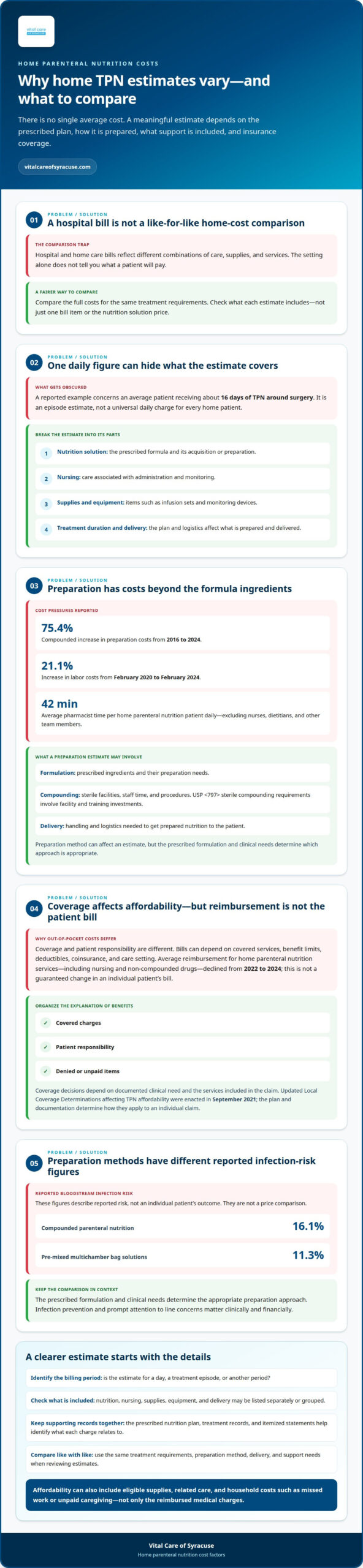
A home TPN bill isn’t a like-for-like substitute for a hospital bill. There’s no single average cost of home parenteral nutrition: the total depends on the prescribed formula, preparation method, nursing, supplies and equipment, treatment duration, and insurance coverage. Hospital costs reflect a different mix of care and services, so the setting alone doesn’t tell you what a patient will pay.
When planning ongoing nutrition support, it’s understandable to want a clear comparison. The average cost of home parenteral nutrition depends on the prescribed treatment and what an estimate includes. This guide explains the factors that shape costs, how insurance coverage may affect out-of-pocket expenses, and why preparation and professional support matter. Consider the full picture, including care and supplies, rather than focusing on one part of the bill.
Key Takeaways
- Home and hospital TPN costs reflect different combinations of care, supplies, and services, so compare the full costs rather than one bill item.
- Insurance reimbursement and eligibility criteria can shape what patients pay, making coverage documentation an important part of affordability.
- Preparation method affects TPN costs; the article explains how compounded and pre-mixed solutions compare.
- Daily cost estimates include more than the nutrition solution, with nursing, equipment, and supplies also contributing to the total.
Insurance reimbursement and patient affordability
Insurance reimbursement can reduce what a household pays, but coverage and out-of-pocket responsibility are different. That comparison concerns healthcare costs, not a guarantee of lower personal expenses. A patient’s bill also depends on covered services, benefit limits, deductibles, coinsurance, and care setting.
Reimbursement trends add another affordability pressure. Average reimbursement for home parenteral nutrition services, including nursing and non-compounded drugs, declined from 2022 to 2024. That change can affect the resources available for preparing and supporting home treatment. Families may still face expenses insurance doesn’t cover, including eligible supplies or related care. A useful first step is separating the explanation of benefits into covered charges, patient responsibility, and denied or unpaid items.
Coverage decisions depend on documented clinical need and the services included in the claim. Updated Local Coverage Determinations affecting TPN affordability were enacted in September 2021. The specific plan and documentation determine how those policies apply to an individual claim. Keep the prescribed nutrition plan, treatment records, and itemized statements together. These documents help patients understand whether a charge relates to nutrition, nursing, supplies, or another service.
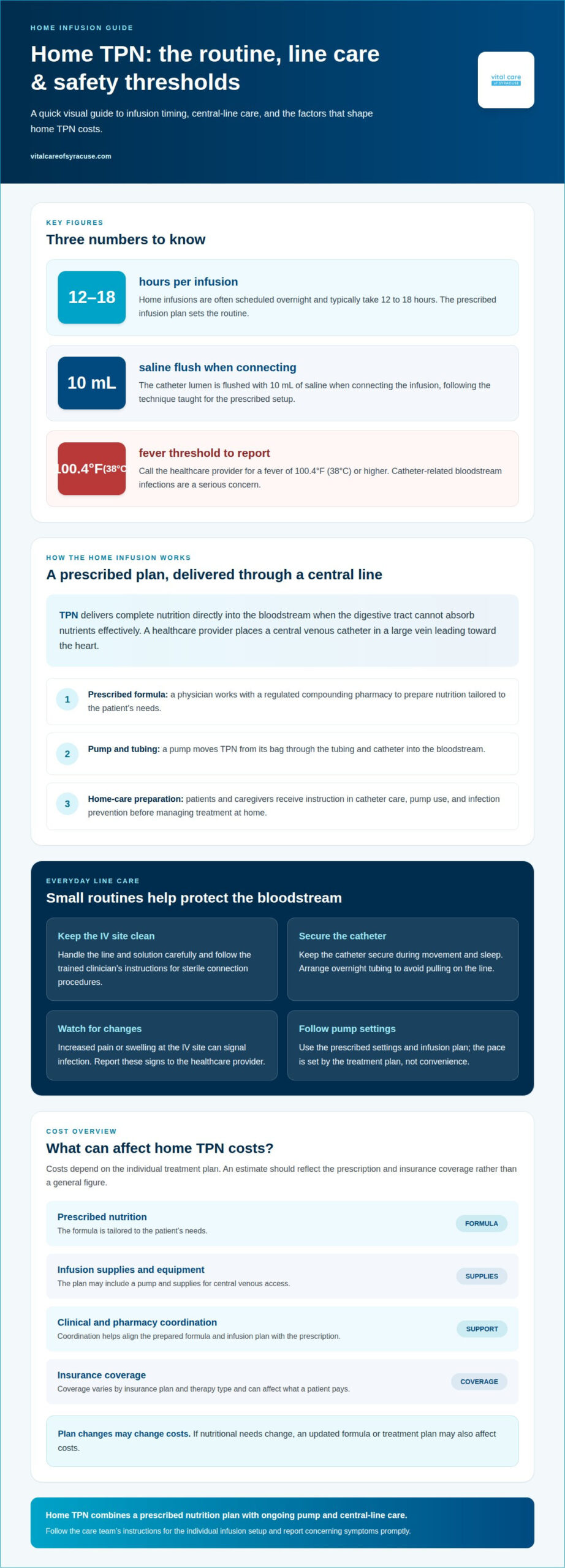
Complications can add medical costs beyond routine home treatment. A catheter-related bloodstream infection may require evaluation, antimicrobial treatment, or hospital care. Reported bloodstream infection risk is 16.1% for compounded parenteral nutrition and 11.3% for pre-mixed multichamber bag solutions. These figures describe reported risk, not an individual patient’s outcome. Infection prevention and prompt attention to line concerns matter clinically and financially.
Families caring for children may also experience costs that don’t appear on medical statements, such as missed work or unpaid caregiving. For eligible families, specialized providers like Vital Care of Syracuse help navigate complex coverage issues. Support programs can address expenses left outside insurance coverage. Assessing affordability means considering both reimbursed care and the household costs surrounding treatment.
HPN preparation cost trends
Preparing home parenteral nutrition involves more than the formula ingredients. Costs can include its components, sterile compounding, quality procedures, and delivery. These factors help explain why preparation expenses can vary even when a patient’s nutrition plan stays the same.
Preparation costs rose by a compounded 75.4% from 2016 to 2024. Labor is one pressure: costs rose 21.1% from February 2020 to February 2024. Pharmacy work also takes time. Pharmacists spend an average of 42 minutes per home parenteral nutrition patient daily, excluding nurses, dietitians, and other team members.
Sterile preparation requires specialized facilities and staff training. USP <797> sterile compounding requirements require investments in facilities and training. These requirements affect the work behind a compounded solution, not only its ingredients. The formula’s individual components and the steps needed to prepare it also shape the overall process.
The preparation method can affect the estimate, but that comparison reflects a change in method, not a universal choice for every nutrition plan. The prescribed formulation and clinical needs determine which approach is appropriate.
To understand a preparation estimate, separate the factors that contribute to it:
- Formulation: The prescribed ingredients and their preparation needs.
- Compounding: The sterile facilities, staff time, and procedures involved.
- Delivery: The handling and logistics needed to get prepared nutrition to the patient.
For planning, costs depend on the prescribed formulation, preparation method, delivery, and support needs. Since each estimate is case-specific, compare estimates based on the same treatment requirements.
What is the average cost per day of home parenteral nutrition?
A single daily figure can obscure what a TPN estimate includes. One reported example covers an average patient receiving about 16 days of TPN around surgery. That episode estimate combines treatment-related costs, rather than describing a universal daily charge for every home patient.
For a useful comparison, separate the nutrition solution from nursing, equipment, and supplies. Nursing supports administration and monitoring; supplies may include infusion sets and monitoring devices. These items can be listed separately or grouped in an estimate, so similar treatment plans may look different across billing summaries.
The prescribed nutrition plan also shapes daily expenses. The formula, administration needs, and treatment duration affect what is prepared and delivered. For example, a short course around surgery and ongoing home therapy have different cost patterns, even though both involve parenteral nutrition.
Consider the main cost categories side by side:
- Nutrition solution: The formula and its acquisition or preparation.
- Nursing: Care associated with administration and monitoring.
- Supplies and equipment: Items such as infusion sets and monitoring devices.
Daily acquisition costs also vary by solution type. Pre-mixed multichamber bags and compounded solutions have different reported acquisition costs, but that comparison covers the solution itself. It excludes nursing, supplies, equipment, and the patient’s insurance coverage. Comparing solution prices alone can therefore miss important parts of the daily estimate.
To interpret an estimate, first identify its billing period. Then note which categories it includes and whether it covers a day, a treatment episode, or another period. This helps avoid dividing an episode total across days when some charges cover services or supplies provided on a different schedule.
The average cost of home parenteral nutrition depends on the formula, support needs, and what the estimate includes. Reviewing each component separately gives patients and caregivers a clearer basis for comparing estimates and understanding which expenses relate to treatment.
What insurance coverage and eligibility rules apply to home parenteral nutrition?
Coverage depends on the insurer’s rules and the clinical documentation supporting treatment. For TPN coverage, documentation should generally include a prescribed nutrition plan providing 20 to 35 calories per kilogram of body weight per day. This detail connects the prescribed intake to the coverage review. It also helps distinguish a documented treatment plan from a general request for nutrition support.
Expected treatment duration is another consideration. A minimum expected duration of 90 days qualifies as a long-term indication for TPN coverage. The documentation should make the anticipated length of treatment clear, alongside the nutrition plan. Together, these details help explain why TPN is needed and whether the expected course fits the coverage criteria described.
Medicare covers TPN under its prosthetic device benefit, as specified in Social Security Act § 1861(s)(8), subject to eligibility restrictions. The original National Coverage Determination on enteral and parenteral nutritional therapy dates to 1984. These Medicare provisions are not a substitute for reviewing an individual plan’s benefits; coverage depends on meeting its applicable requirements.
- Nutrition plan: Document the prescribed daily calorie range.
- Duration: State the expected treatment period and whether it reaches 90 days.
- Timing: Complete coverage evaluations and documentation preferably within 30 days before therapy begins.
Reviewing coverage in line with the planned treatment start can help clarify the process. Keep the prescription, nutrition plan, and expected duration consistent across the documentation. If details change, updated records can explain the clinical basis for continued coverage. Eligibility depends on the prescribed medication, diagnosis, and clinical considerations determined by the patient’s healthcare provider. Coverage varies by insurance plan and therapy type.
For support with home TPN, explore parenteral nutrition services as part of your care planning.
Vital Care of Syracuse: Anti-infective Therapy
Vital Care of Syracuse provides Parenteral Nutrition (TPN) for people whose prescribed nutrition support is delivered at home. After reviewing preparation costs, daily expenses, and insurance criteria, you can turn to this service when home TPN is part of your care plan. The focus shifts from comparing cost categories to understanding the therapy and support involved in your individual treatment.
A discussion with an infusion provider can connect cost questions with your prescribed care. Vital Care of Syracuse also provides anti-infective therapy, immunoglobulin (IVIG/SCIG), and hemophilia and bleeding disorder therapy for patients whose care plans include those treatments.
For information about home TPN, contact Vital Care of Syracuse or visit vitalcareofsyracuse.com.
Plan Your Next Conversation About Home TPN
Planning for home nutrition support means turning cost questions into a clear picture of your care needs. Before discussing your estimate, gather your current treatment plan, insurance coverage information, and any cost estimates you’ve received. This helps you organize questions about which services and supplies each estimate includes and how your planned care fits your coverage.
Vital Care of Syracuse provides parenteral nutrition (TPN), anti-infective therapy, and immunoglobulin (IVIG/SCIG). If you’re considering home TPN, the average cost of home parenteral nutrition is a starting point for discussing the factors that shape your care, not a substitute for an estimate based on your prescribed treatment. Contact Vital Care of Syracuse to discuss home TPN and insurance coordination.
Contact Vital Care of Syracuse to discuss home TPN and your next steps. With your questions organized, you can approach the conversation with greater clarity and confidence.
Frequently Asked Questions
How do costs differ between hospital and home-based TPN?
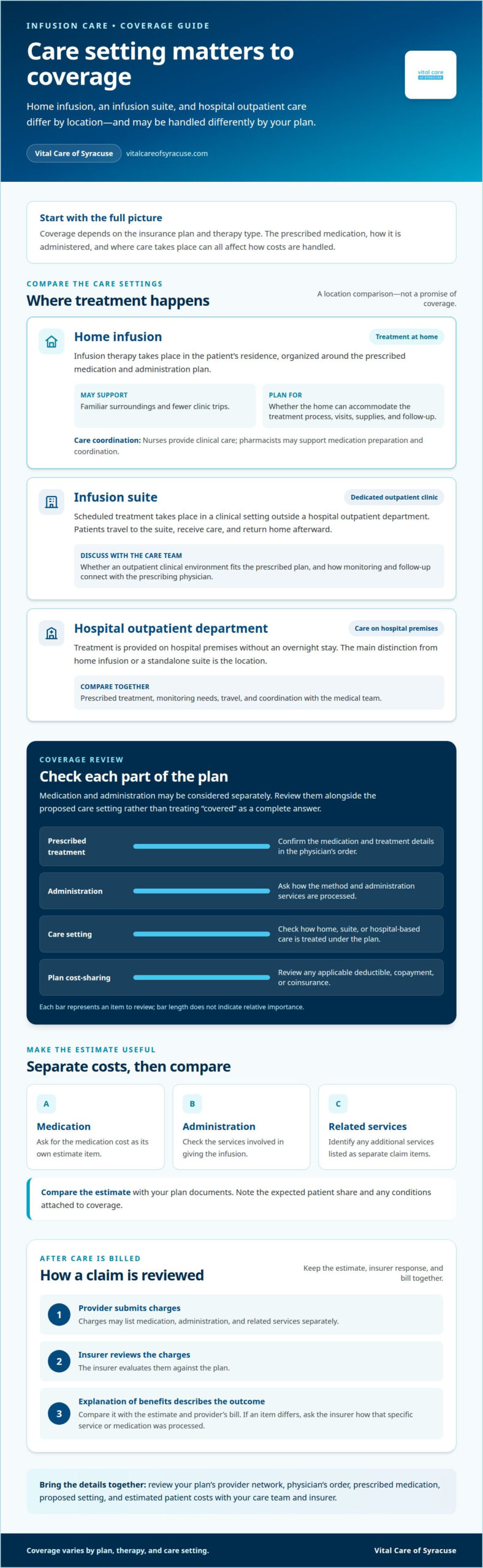
Hospital-based TPN includes care delivered in a facility, while home treatment shifts spending toward the nutrition solution, preparation, supplies, and professional support. The mix of charges differs by setting, so comparing only the formula gives an incomplete picture. An inpatient statement and a home-care estimate, for example, may cover different services and time periods.
How do current regulations and insurance policies impact the affordability of TPN?
Insurance policies affect which parts of treatment are covered and what patients owe. Medicare covers TPN under its prosthetic device benefit, as specified in Social Security Act § 1861(s)(8), subject to eligibility restrictions. Coverage varies by insurance plan and therapy type. For patients in Syracuse, Albany, Rochester, Utica, Buffalo, Auburn, and Binghampton, eligibility depends on the prescribed medication, diagnosis, and clinical considerations determined by the healthcare provider.
What about long-term or institutional costs?
Long-term institutional care can involve repeated facility and inpatient services alongside nutrition support. Its costs may therefore differ substantially from ongoing home care, where expenses are distributed across prepared nutrition, supplies, delivery, and professional support. Pediatric short-bowel syndrome is one example of a condition associated with extended TPN needs; the patient’s setting and care requirements determine which categories apply.
What are the general costs associated with Total Parenteral Nutrition (TPN)?
TPN expenses can include the prescribed solution, preparation and delivery, nursing, and supplies or equipment. Some estimates group these components, while others itemize them separately. For example, an estimate listing nutrition alone won’t show the full treatment-related expenses if nursing or infusion supplies appear on separate statements. Compare what each estimate includes before assessing the overall cost.
What factors influence the expenses of TPN, including delivery methods and associated costs?
Expenses depend on the prescribed formula, whether it is compounded or pre-mixed, and the preparation and delivery needs. Nursing, infusion supplies, and equipment can also contribute. A patient whose plan requires a compounded formulation may have different preparation needs from someone receiving a pre-mixed solution. Insurance benefits and treatment duration further affect which charges are covered or paid directly.
What is the average monthly cost of home parenteral nutrition in the United States?
A monthly total depends on the patient’s prescribed formula, treatment schedule, preparation method, nursing and supply needs, and insurance benefits. A daily or episode estimate cannot be converted reliably into a monthly figure unless its included services and billing period are clear. Review the expected treatment schedule alongside itemized estimates to understand which recurring expenses apply to the patient’s home care.
Leave a Reply