


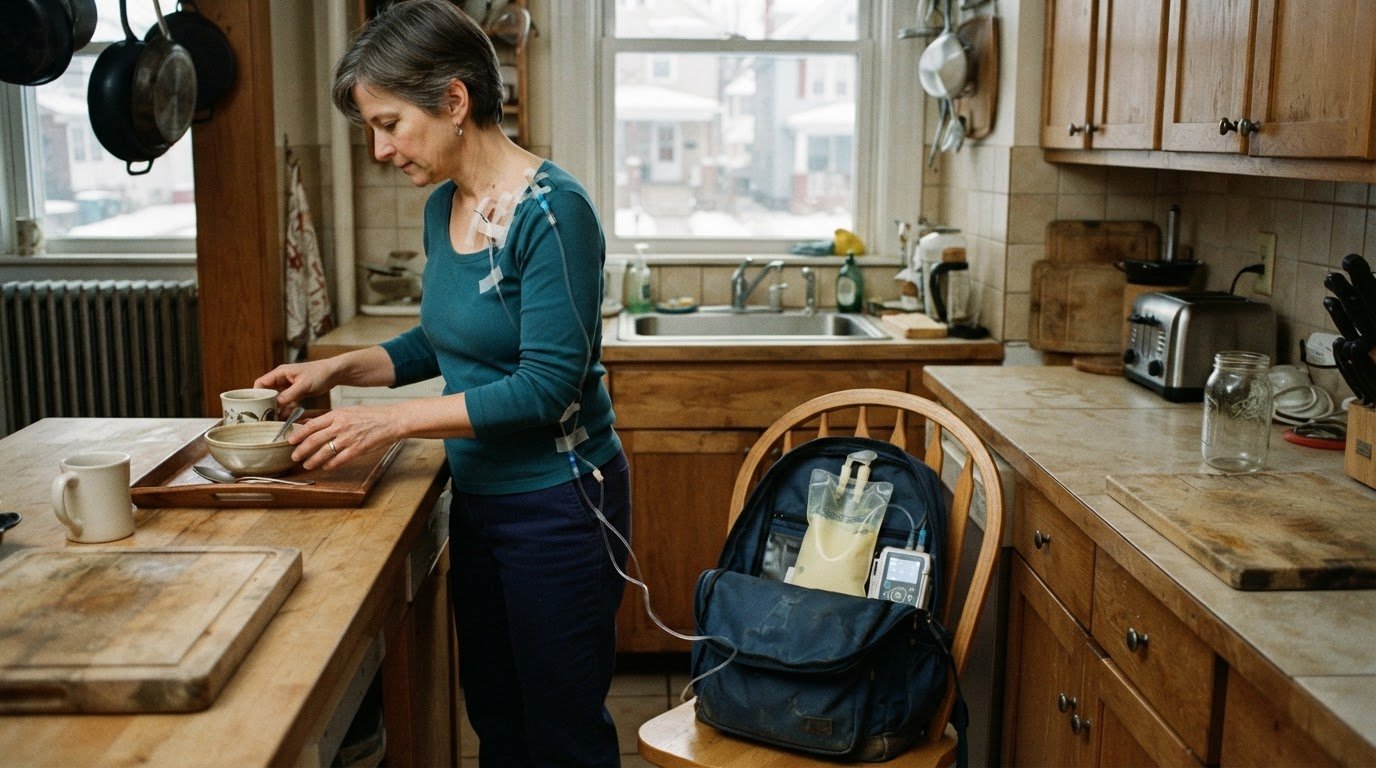
Home TPN can provide nutrition support outside the hospital, but it also requires a regular infusion routine and careful central-line care. For people considering long-term TPN at home in Albany, it delivers complete nutrition directly into the bloodstream when the digestive tract cannot absorb nutrients effectively. Long-term use requires a central venous catheter placed by a healthcare provider. Costs depend on the prescribed nutrition and supplies, as well as insurance coverage.
It is understandable to weigh those practical demands against the possibility of spending more time at home. Infusions are often given overnight, which may leave room for daily activities. However, the pump, catheter care, and infection-prevention routines become part of everyday life.
This article explains how parenteral nutrition works, why a central venous catheter is used, and what can affect home TPN costs. It also looks at how treatment may shape daily routines and quality of life, helping you understand what long-term care at home involves.
Key Takeaways
- Understand when nutrition support delivered through a vein may be considered and why long-term treatment uses a central venous catheter.
- Learn how the prescribed formula and infusion routine shape the practicalities of receiving TPN at home.
- See which factors influence the cost of home TPN and how insurance coverage can affect what a patient pays.
- Consider how overnight infusions may fit into daily life, alongside the care routines that home treatment requires.
Home TPN purpose and central venous catheter
When the digestive tract cannot absorb nutrients effectively, total parenteral nutrition (TPN) delivers complete nutrition into the bloodstream. This intravenous therapy can support people who cannot meet their nutritional needs through digestion or enteral feeding. For long-term TPN at home in Albany, a central venous catheter provides access for ongoing infusions. A healthcare provider places the catheter in a large vein leading toward the heart.
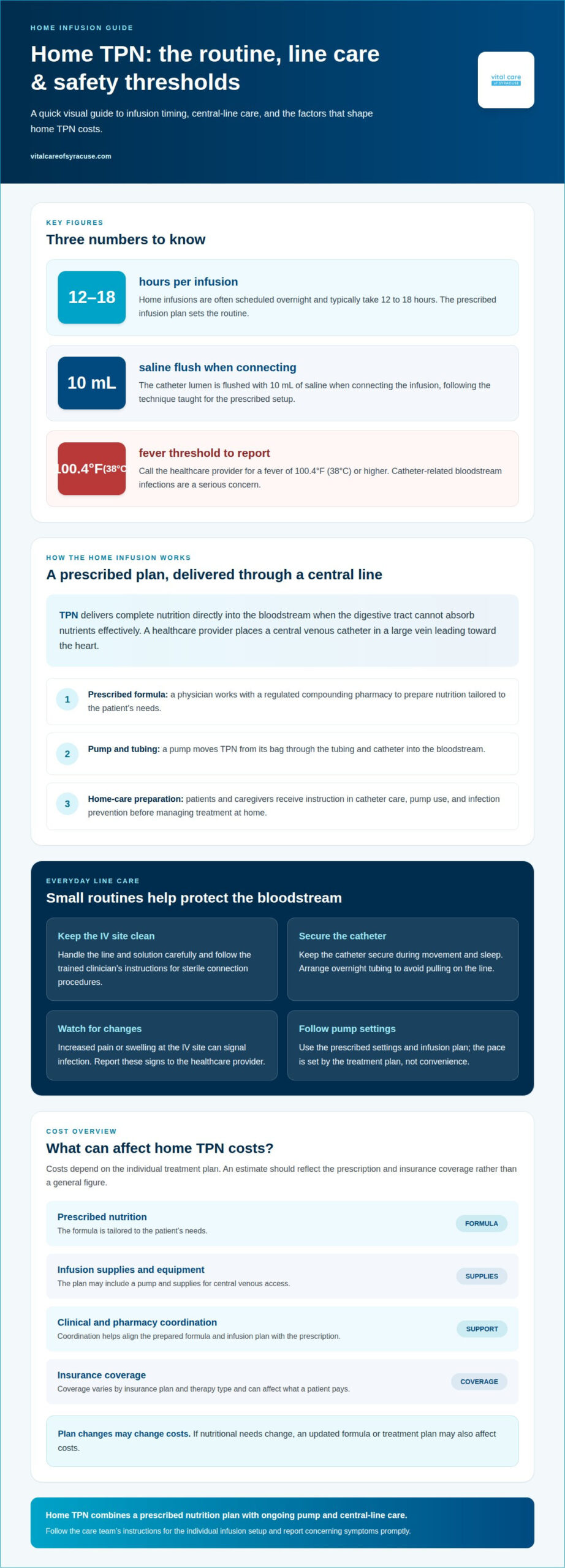
The central venous catheter, or CVC, may have one or more lumens, which are channels for administering treatment. A pump moves prescribed TPN from its bag through the tubing and catheter into the bloodstream. Home infusions are often scheduled overnight and typically take 12 to 18 hours. The exact routine follows the prescribed infusion plan, rather than a pace chosen for convenience.
Before home treatment begins, patients receive instruction in catheter care, pump use, and infection prevention. Connecting TPN involves handling the line and solution carefully, then flushing the catheter lumen with 10 mL of saline when connecting the infusion. A trained clinician teaches the specific technique and supplies for the prescribed setup. Keeping each step consistent helps reduce contamination risks.
Catheter-related bloodstream infections are a serious concern because germs can enter through the line and reach the blood. Keep the IV site clean and watch for increased pain or swelling, which can signal infection. A person receiving home TPN should call their healthcare provider for a fever of 100.4° F (38° C) or higher. Promptly reporting these signs helps the care team assess the catheter and treatment.
Daily care includes following the prescribed pump settings and keeping the catheter secure during movement and sleep. For example, an overnight infusion may require arranging the tubing to avoid pulling on the line. Patients and caregivers learn these practical steps alongside sterile connection procedures. The catheter makes ongoing home parenteral nutrition possible, while careful handling helps protect the bloodstream.
What Is Parenteral Nutrition / Parenteral Feeding?
Parenteral nutrition supplies nutrients through a vein rather than through digestion or enteral feeding. Home TPN may be considered when a patient needs prescribed nutrition support after leaving the hospital.
Qualification depends on whether the digestive tract can absorb enough nutrition and whether a physician prescribes this treatment. Starting after discharge involves a tailored nutrition plan, suitable venous access, and preparation for managing the infusion at home.
Parenteral Nutrition and Home TPN
Parenteral nutrition delivers nutrients directly into the bloodstream, bypassing the digestive tract. Total parenteral nutrition, or TPN, provides complete nutrition through this route. Home parenteral nutrition means receiving the prescribed infusion outside the hospital. The distinction matters because the formula and delivery plan need to meet the patient’s nutritional needs while fitting a home routine.
A physician works with a regulated compounding pharmacy to prepare a formula tailored to the patient. A nutrition assessment helps guide the prescription; the formula is not a standard feeding plan for everyone. For example, someone whose digestive tract cannot absorb nutrients effectively may need nutrition delivered through a venous catheter rather than enteral feeding.
Home TPN Eligibility and Medical Criteria
Home TPN may be considered when the digestive tract cannot absorb nutrients effectively and a physician prescribes parenteral nutrition. The central consideration is whether nutrition delivered through digestion can meet the patient’s needs. A patient’s medical condition and nutritional requirements inform the decision; a diagnosis alone doesn’t establish suitability.
Before treatment moves home, the plan needs a prescribed formula and a way to deliver it safely through venous access. The patient’s nutrition assessment informs the formula, while their ability to follow the infusion plan is an important consideration for ongoing care. These factors show why home TPN is a medically planned therapy, not simply a different feeding preference.
Starting Home TPN After Hospital Discharge
Starting home TPN after discharge involves preparing the prescription, formula, venous access, and home infusion plan. The physician’s nutrition assessment guides the formula, which a regulated compounding pharmacy prepares to match the patient’s needs. Planning these elements before the transition helps connect hospital treatment with care at home.
Long-term management follows the prescribed formula and infusion plan, with nutritional needs assessed over time. Patients and caregivers learn the necessary home-care routines before managing treatment independently. Clear instructions help them understand how the infusion fits daily life and what the prescribed plan involves. Changes in nutritional needs may prompt adjustments to the formula through the care plan.
How Much Does TPN at Home Cost?
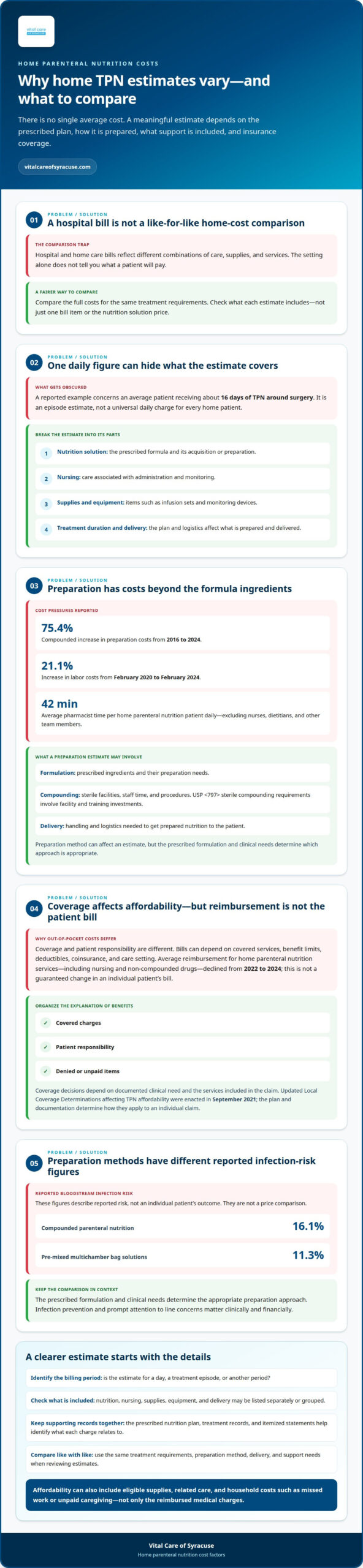
For home TPN in Albany, costs depend on the individual treatment plan, prescribed formula, infusion supplies, and clinical support. Coverage varies by insurance plan and therapy type, and Vital Care of Syracuse assists with insurance verification, prior authorizations, and reimbursement coordination. An estimate should reflect the individual prescription and coverage rather than a general figure.
Home TPN involves more than a nutrition formula. The home infusion plan may include a pump and supplies to deliver treatment through central venous access, along with instruction in sterile handling. Pharmacy and clinical coordination help align the prepared formula with the prescription. If a patient’s needs change, an updated formula or treatment plan may also affect costs.
To compare home infusion care, focus on how the service coordinates the prescribed formula, pharmacy preparation, infusion equipment, and patient education. Ask how clinical support fits the treatment plan, including how to reach the team and what support hours are available. A 24/7 clinical response shouldn’t be assumed; support arrangements depend on the service and plan.
In Albany, long-term TPN can be provided through home infusion services that coordinate treatment for patients who need nutrition delivered intravenously. Home TPN differs from enteral nutrition, which uses the digestive tract, so the prescribed route and supplies shape the care plan. For example, someone relying on a central venous catheter needs an infusion plan designed for that access.
Home-care education is another practical part of the overall plan. Patients and caregivers learn the sterile handling routines and equipment use required for their prescribed infusion. This education helps connect the pharmacy’s formula preparation with treatment at home. A nutrition support team can coordinate clinical decisions and address changes to the plan, while the service’s stated contact arrangements clarify how patients access support during treatment.
Benefits and quality of life with home TPN
Home parenteral nutrition can shift treatment from hospital routines into familiar surroundings. For some patients, overnight infusions leave daytime hours available for work, family responsibilities, or rest. That flexibility may matter when intestinal conditions make ordinary eating insufficient. The practical benefit is not simply being at home; it is fitting prescribed nutrition into a routine that also includes central venous catheter care and ongoing medical follow-up.
One patient with Crohn’s disease reported receiving TPN for 12 years. That experience illustrates how home infusion may become part of long-term life, rather than a short interruption. It doesn’t mean every patient will have the same routine or outcome. Individual schedules depend on the prescribed treatment, tolerance, and nutritional needs, while catheter care remains part of everyday planning.
A separate example involved a 39-year-old man who used TPN overnight after a work accident led to removal of a large section of his gastrointestinal tract. His reported routine shows how home treatment may support nutrition when intestinal function is reduced. Overnight care can preserve daytime flexibility, although patients still need to plan around the pump, supplies, and medical instructions.
Quality of life also includes the work treatment brings into the home. A central venous catheter requires careful handling, and infusion supplies need a designated place. It may help to build connection and disconnection steps into a consistent evening routine. Caregivers can share practical responsibilities when included in the patient’s training and care plan.
The key point is that home TPN can offer more control over where treatment happens while adding recurring tasks to daily life. Consider how an overnight infusion might fit with sleep, household routines, and commitments, then discuss those practical details with your care team. A home infusion plan works best when you understand its schedule and catheter-care requirements alongside the support it provides.
Vital Care of Syracuse: Home infusion
Vital Care of Syracuse provides home infusion, including parenteral nutrition (TPN), for people who need prescribed nutrition support at home. If your care plan includes TPN after hospital treatment, Vital Care of Syracuse can coordinate your prescribed therapy at home or in an infusion suite.
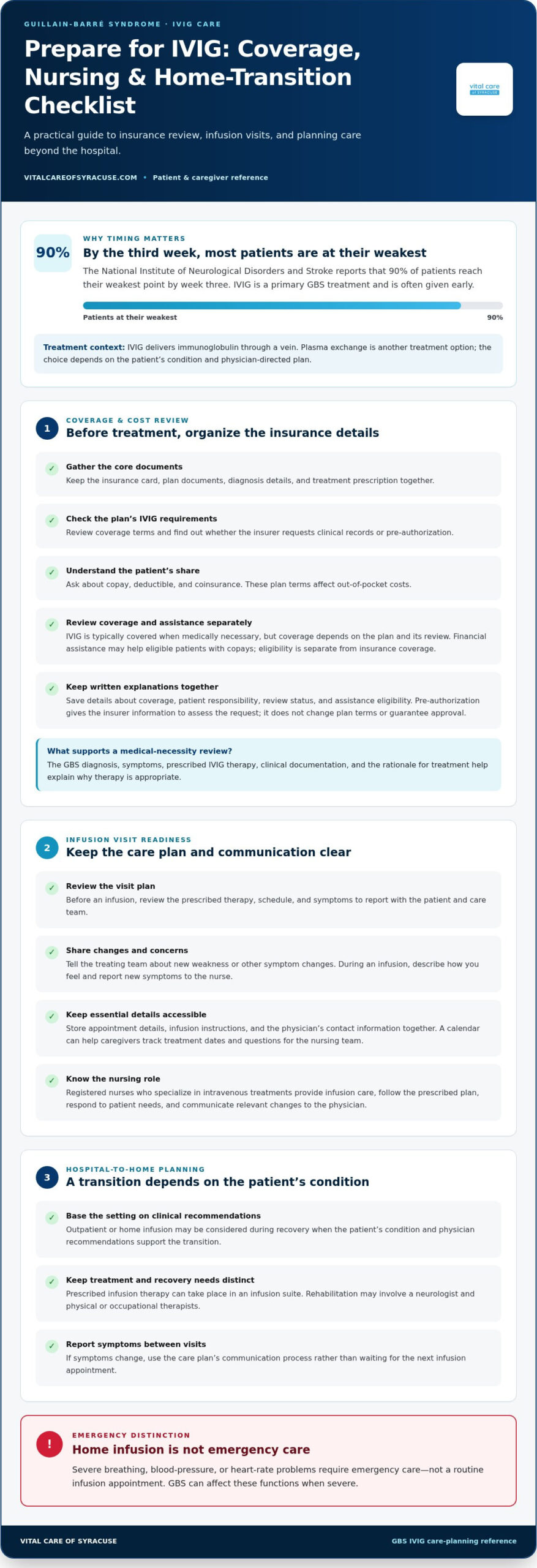
Home TPN is one part of Vital Care of Syracuse’s clinical services. The company also provides anti-infective therapy, immunoglobulin (IVIG/SCIG), and hemophilia and bleeding disorder therapy. Each service addresses a distinct treatment need, so the appropriate option depends on the therapy prescribed for you.
If you’re considering home TPN, contact Vital Care of Syracuse to discuss home infusion support for your prescribed treatment.
Plan Your Next Conversation About Home Care
Choosing home TPN is also an opportunity to define what workable care looks like for you. Before your next discussion, consider which parts of the routine matter most: fitting treatment around daily commitments, understanding how care is coordinated, or planning for changes in your needs. These priorities can help shape a conversation about care that feels practical as well as medically appropriate.
For people considering long-term TPN at home in Albany, Vital Care of Syracuse offers a place to discuss parenteral nutrition and home infusion. Its other therapies include anti-infective therapy and immunoglobulin (IVIG/SCIG), supporting different prescribed treatment needs. Contact Vital Care of Syracuse to talk about home infusion support and the next step for your care plan. A thoughtful conversation can help you move forward with greater clarity and confidence.
Frequently Asked Questions
Can I live a normal life on TPN?
Many people plan work, family time, and social activities around TPN, though treatment adds routines to daily life. For example, discuss how the infusion schedule fits a work shift or evening commitment, and plan activities around the equipment and care instructions. What feels manageable depends on your health needs and available support. A realistic routine makes room for treatment without assuming every day will be the same.
How Does TPN Work?
TPN delivers a prescribed mixture of nutrients into the bloodstream through intravenous access rather than relying on digestion. A pump moves the solution from its bag through tubing and a catheter. The formula is tailored to the patient’s nutritional needs, and the pump follows the prescribed rate. In practical terms, TPN provides nutrition through a route that bypasses the digestive tract.
Can I eat while on TPN?
TPN does not automatically mean you must avoid eating or drinking by mouth. Whether food or drink is appropriate depends on your digestive function and prescribed nutrition plan. For example, someone whose intestinal tract can tolerate some foods may have a different plan from someone who cannot absorb nutrition effectively. Follow the instructions for your specific plan, and raise changes in appetite or food tolerance with your healthcare team.
How can infections be prevented and health be monitored while on TPN?
Preventing infection means following your catheter-care and connection instructions consistently, and reporting concerning changes promptly. Watch for increased pain or swelling near the IV site, and contact your healthcare provider for a fever of 100.4° F (38° C) or higher. Monitoring also means paying attention to changes in how you feel and keeping scheduled clinical follow-up, so concerns can be assessed in context.
How long does TPN infusion take?
A home TPN infusion typically takes 12 to 18 hours, often overnight. The duration follows the prescribed plan and pump settings, so don’t speed up or shorten an infusion to fit an unexpected schedule. If an appointment, work shift, or sleep routine creates a conflict, discuss it with your healthcare team before changing the timing. The prescribed rate remains central to safe administration.
How long will I need to receive TPN?
The length of treatment varies according to why TPN is needed and whether the digestive tract can provide enough nutrition over time. Some people need ongoing support; others may have their plan reassessed as their condition changes. Your treatment team considers nutritional needs and clinical progress when reviewing the prescription. Do not stop or change TPN on your own, even if eating becomes easier.
Leave a Reply