


The treatment is only one part of home infusion. A home infusion nursing care plan individualizes the therapy type, infusion method, medication dose, and treatment frequency, while nurses teach safe administration, infection prevention, and what changes to watch for. Routine care and dressing changes for central venous access devices and midlines should be completed at least every 7 days.
It’s understandable to have questions when treatment moves from a hospital or clinic into the home. This guide explains home infusion nursing care plans, what home infusion involves, and how nurses, physicians, pharmacists, patients, and caregivers work together. It also covers how patient and caregiver education supports the plan, from understanding the prescribed therapy to knowing when to share a concern with the care team.
Key Takeaways
- Understand how home infusion delivers prescribed therapy at home and what nurses monitor during treatment.
- Learn which signs of a possible complication patients and caregivers should recognize and communicate to the care team.
- See how physicians, pharmacists, nurses, patients, and caregivers share information to keep care coordinated.
- Explore the range of conditions home infusion may support and how Vital Care of Syracuse’s therapies fit those needs.
Patient and caregiver education
Education helps patients and caregivers understand the prescribed therapy and their roles at home. A home infusion nursing care plan includes instruction tailored to the medication, equipment, and patient’s needs.
Patient and Family Learning
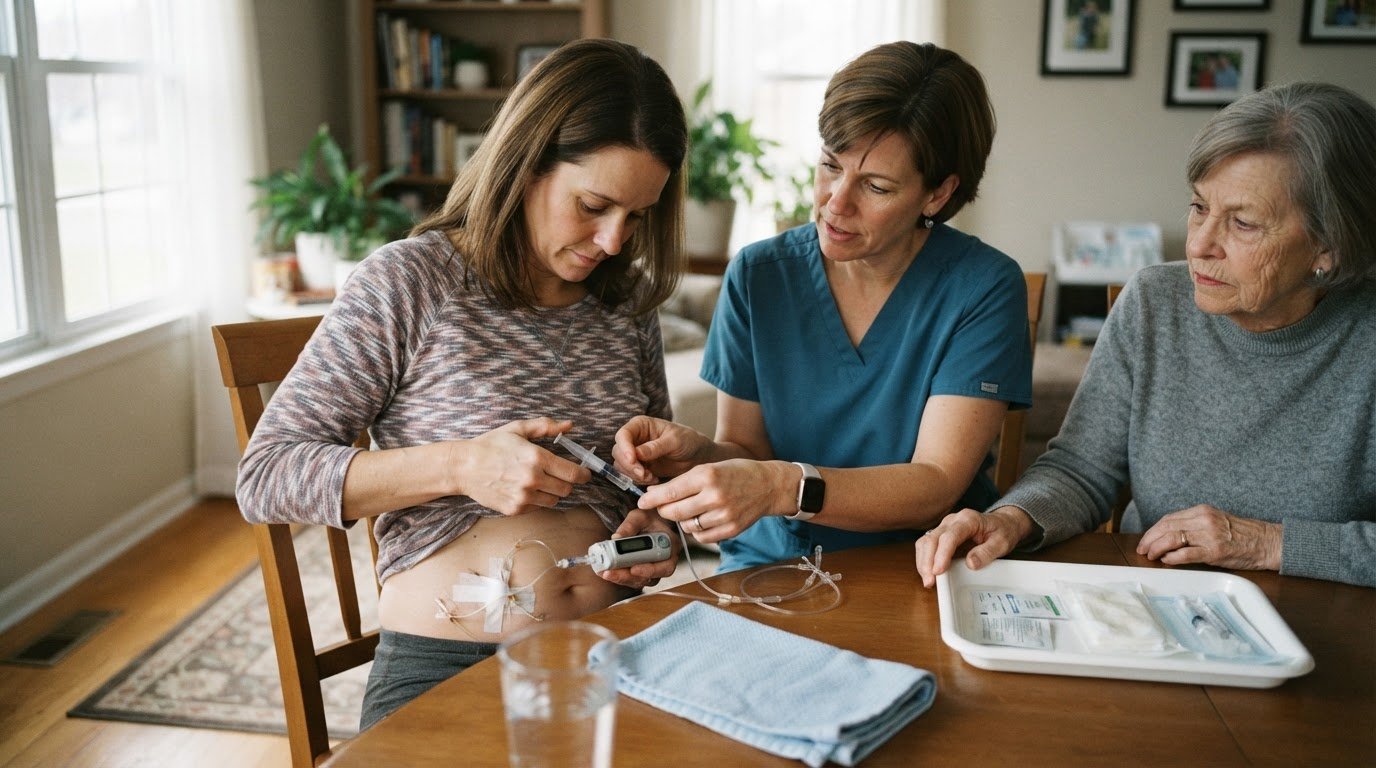
Patient and family education is practical teaching that helps people follow the care plan and recognize when something may be wrong. Nurses explain the therapy’s purpose, demonstrate equipment use, and teach infection prevention, medication handling, and IV-site care between visits. Patients and caregivers can practice each task and discuss how to make the routine manageable while supporting comfort and treatment.
Education also covers self-monitoring and signs of potential problems, such as a change at the infusion site or a reaction during treatment. The nurse explains which concerns to communicate to the care team and how medical waste should be disposed of safely. According to U.S. Congress, the 21st Century Cures Act was introduced on December 13, 2016.
Nursing Training and Infusion Steps
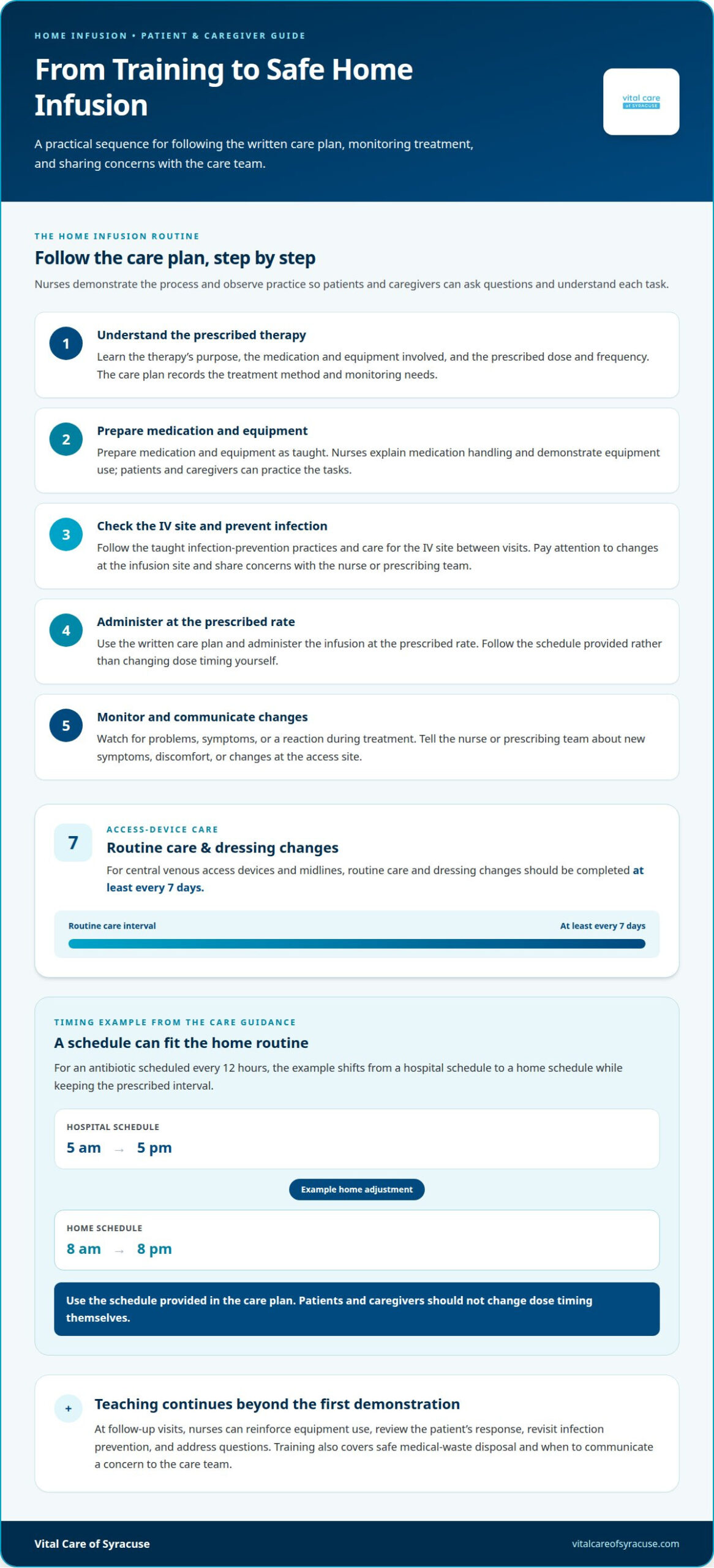
Nursing education prepares nurses to assess patients, explain prescribed therapy, and teach safe infusion practices. Patients and caregivers follow the written care plan, prepare medication and equipment as taught, check the IV site, administer the infusion at the prescribed rate, and monitor for problems. The nurse demonstrates the process and observes practice so questions can be addressed.
Training includes infection-control practices and proper disposal of medical waste. Nurses also explain how to care for the IV site between visits and when dressing changes are due. Routine care and dressing changes for central venous access devices and midlines should be completed at least every 7 days.
Timing can be adapted to a patient’s home routine while preserving the prescribed interval. For example, an antibiotic scheduled every 12 hours may move from a hospital schedule of 5 am and 5 pm to 8 am and 8 pm at home. Patients and caregivers should use the schedule provided in their care plan rather than changing dose timing themselves.
Education continues beyond the first demonstration. At follow-up visits, nurses can reinforce equipment use, review the patient’s response, and revisit infection prevention. Ongoing instruction helps patients and caregivers understand their tasks and communicate concerns clearly to the nursing team.
What Is Home Infusion?
Home infusion therapy delivers prescribed medication, fluids, or nutrients through an intravenous or subcutaneous route at home. A home infusion nursing care plan records the therapy, infusion method, prescribed dose and frequency, and monitoring needs.
An assessment considers overall health, medical history, current needs, and the prescribed treatment. It also guides monitoring and identifies changes that may prompt a care-plan review. This helps nurses and other clinicians coordinate treatment around the patient’s clinical needs.
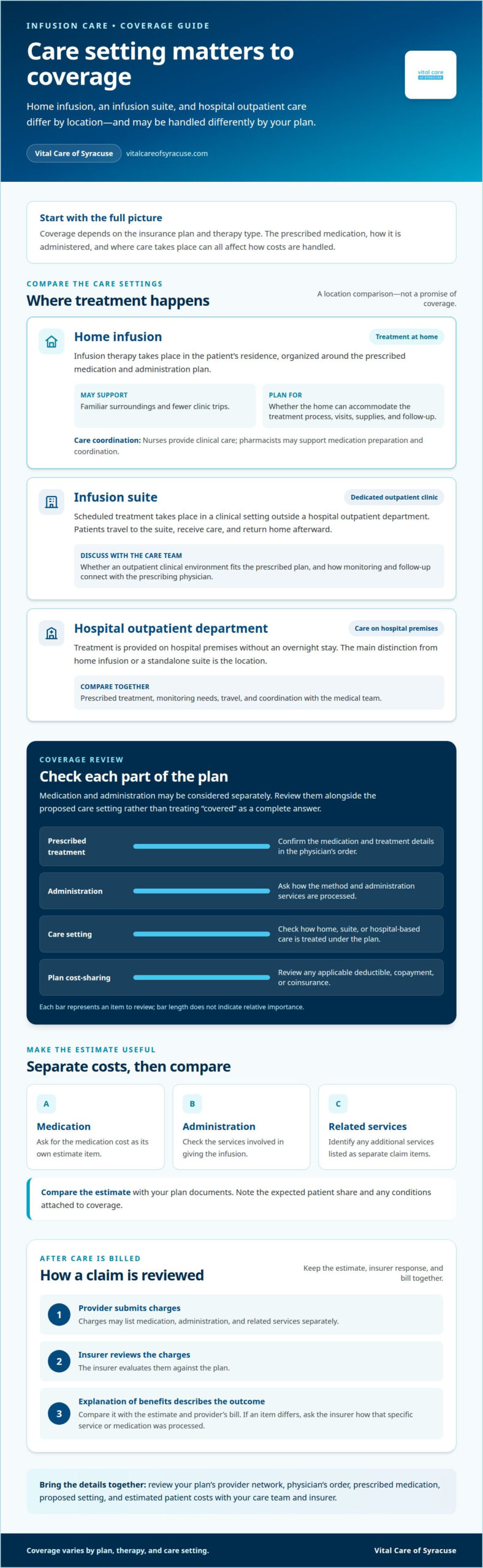
Unlike infusion center or hospital care, home infusion takes place in the patient’s home, with nursing visits planned around the treatment plan. A hospital or center provides care in a clinical setting; home infusion combines professional oversight with treatment in familiar surroundings when clinically appropriate.
Monitoring may include vital signs, symptoms, lab results, the infusion site, and the patient’s response to therapy. Nurses watch for side effects or adverse reactions during visits and document concerns for the care team. Patients should report new symptoms, discomfort, or changes at the access site to the nurse or prescribing team.
Federal and state requirements depend on the services involved, including medication preparation, pharmacy practice, and nursing care. Home infusion sterile compounding follows United States Pharmacopeia General Chapter <797> standards. The specific rules that apply can differ by state and by the therapy being provided.
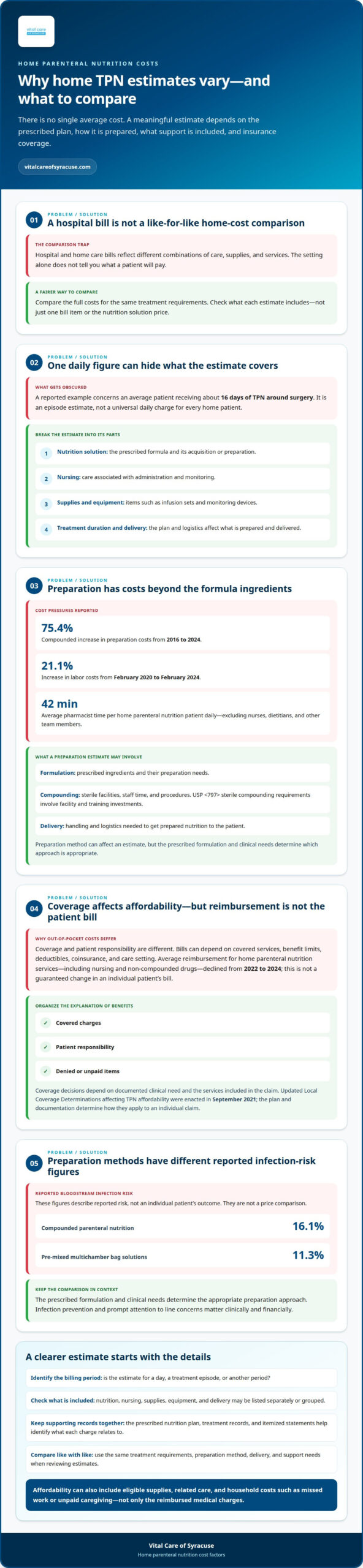
Costs vary with the medication, equipment, supplies, nursing services, and insurance coverage. Many insurance plans, including Medicare and private plans, cover home infusion when it’s medically necessary. Medicare Part B coverage is limited to approximately 30 drugs requiring durable medical equipment, such as a pump, and includes 20% cost sharing.
Monitoring links the patient’s experience at home with clinical decisions. Nurses document changes and communicate concerns so the healthcare team can evaluate the response and adjust the plan when needed. Learn about home infusion therapy as part of understanding care delivered in the home.
Coordinating care among the physician, pharmacy, and nursing team
Home infusion care depends on clear communication among the patient, physician, pharmacy, and nursing team. Each contributes information to keep treatment aligned with the patient’s needs.
Physician and Pharmacist Coordination
Coordination between the physician and pharmacist connects the prescribed therapy with medication preparation and administration details. The physician provides the treatment plan, the pharmacist supports medication and infusion details, and nurses share the patient’s progress and concerns. This communication helps the team identify information that may need review and keep the administration plan consistent. For example, a change in the patient’s response can be documented and shared with the prescribing physician and pharmacist.
Healthcare Team Collaboration
The healthcare team may include hospital discharge planners, health plans, home infusion pharmacies, home health agencies, the patient’s physician, and nurses. Sharing information helps coordinate when treatment begins, which services are involved, and how monitoring updates reach the relevant care providers. Patients and caregivers also contribute by reporting what they observe at home.
Documentation provides a practical link between visits. Nurses record relevant patient information, treatment response, and concerns, then share updates with the healthcare team for ongoing evaluation. If the patient’s condition or response changes, the team can consider whether the care plan needs revision. Clear records also help each care provider understand what has happened since the previous contact.
A hospital-to-home transition needs close coordination when a continuous infusion cannot be interrupted. In that situation, the infusion pump and medication can be delivered to the hospital so the patient can switch to the home pump before leaving. The physician, pharmacy, and nursing team coordinate the handoff to have the equipment and therapy ready for the transition. This connects hospital care with the planned home infusion routine.
Conditions treated with home infusion
Home infusion therapy can support treatment when medication, nutrients, or biologics need intravenous or subcutaneous delivery. The condition alone does not determine the approach. The prescribed therapy, route, and patient’s clinical needs shape the plan. Examples include infections requiring extended antimicrobial treatment, digestive conditions requiring nutrition support, and disorders that need specialized therapies.
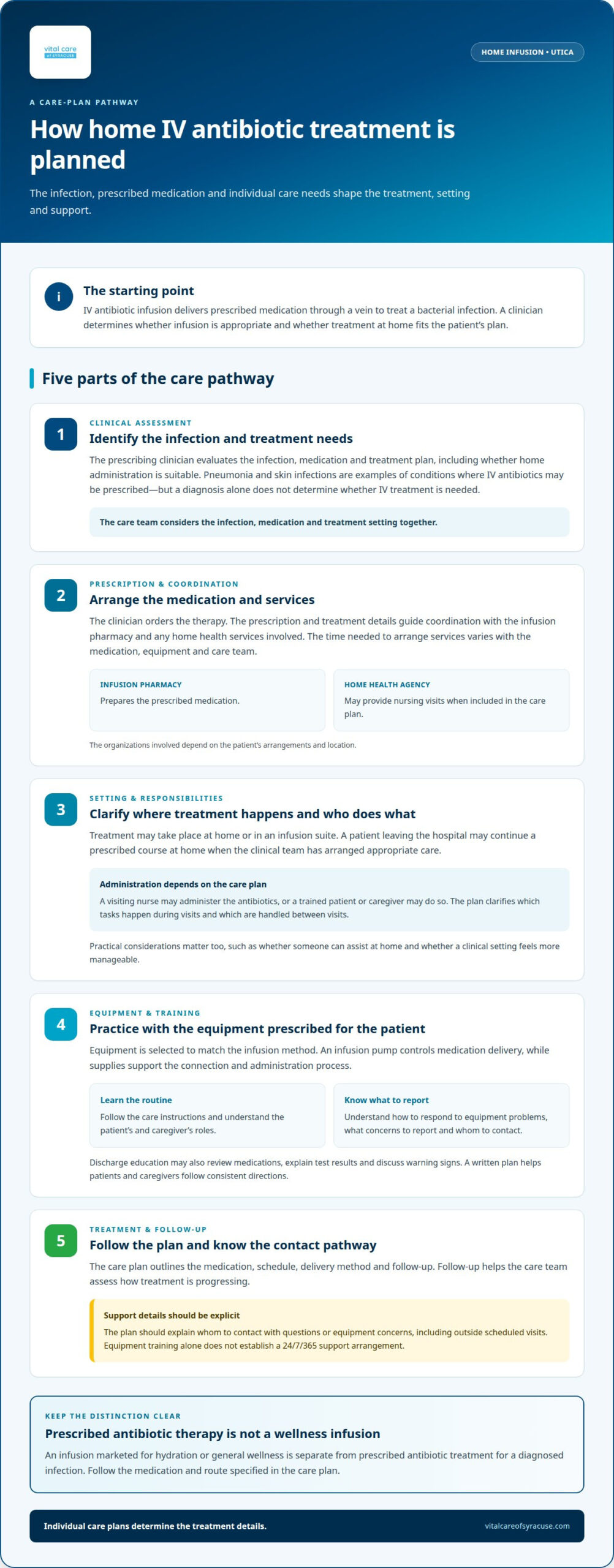
For infections, intravenous antibiotics or antivirals may be prescribed when oral medication is not the chosen route. A clinician selects the medication and infusion method based on the medical need. The care plan connects that prescription with administration at home when clinically appropriate, supporting treatment outside a hospital under professional supervision.
Total parenteral nutrition, or TPN, provides nutritional support for patients with digestive issues. Rather than relying on digestion, TPN delivers nutrition into the bloodstream. Inotropic therapy can be used for heart failure, while immunoglobulin therapy can support treatment for primary immune deficiencies and some autoimmune disorders. Each treatment has a distinct goal and requires its own clinical plan.
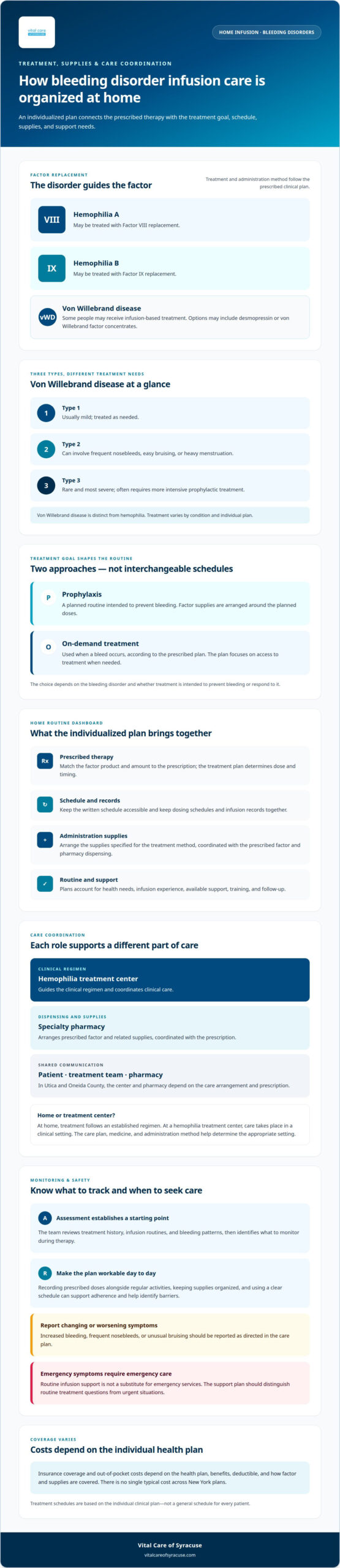
Home infusion also includes therapies for hemophilia and other bleeding disorders, as well as alpha-1 antitrypsin deficiency. These examples show why infusion therapy isn’t one standard treatment: medication, route, and care needs differ by condition. The relevant question is whether the prescribed treatment requires infusion and can be delivered safely in a home setting.
Patient education should match the therapy. Someone receiving TPN needs instruction relevant to nutrition delivery, while a patient receiving an injectable subcutaneous medication needs guidance specific to that route. Understanding the condition and treatment purpose helps patients and caregivers follow the plan and communicate clearly with clinicians.
Explore home infusion therapy options for treatment needs involving anti-infectives, immunoglobulin, TPN, or bleeding disorders.
Vital Care of Syracuse: Anti-infective Therapy
Vital Care of Syracuse provides anti-infective therapy for patients whose prescribed treatment calls for infusion care at home or in an infusion suite. Eligibility depends on the prescribed medication, diagnosis, and clinical considerations determined by the patient’s healthcare provider.
Vital Care of Syracuse also provides immunoglobulin therapy (IVIG/SCIG), parenteral nutrition (TPN), and hemophilia and bleeding disorder therapy. The appropriate treatment depends on the prescription and the patient’s clinical needs, with care coordinated across the healthcare team.
For information about home infusion services and therapies, visit Vital Care of Syracuse online or contact the team.
Plan a Supported Path Forward
Moving treatment home is more than a change of setting. It can help shape a routine that supports clinical goals and fits the patient’s daily life. A thoughtful home infusion nursing care plan clarifies the roles of patients and caregivers and gives the care team a shared starting point for discussing questions, concerns, and priorities during treatment.
For people whose prescribed treatment involves infusion, Vital Care of Syracuse offers anti-infective therapy, immunoglobulin therapy (IVIG/SCIG), and parenteral nutrition (TPN). These therapies address different clinical needs. The next step is to discuss the prescribed treatment and the support that may help make home infusion manageable.
When you’re ready to discuss home infusion care, reach out to Vital Care of Syracuse. A clear conversation can help you feel more prepared to consider the next step in care.
Frequently Asked Questions
How Often Will the Nurse Visit?
Visit frequency follows the patient’s treatment plan and care needs. Some plans call for daily visits, while others schedule visits a few times a week. For example, a patient starting a new therapy may need a different visit pattern from someone continuing an established regimen. The nursing team uses the prescribed therapy and ongoing assessment to plan monitoring and follow-up.
How should a PICC line, port, or other infusion catheter be cared for at home?
Follow the specific catheter-care instructions from the nurse, and keep the dressing and securement device intact. Check the area for changes and tell the care team if the dressing loosens, the site looks different, or the catheter seems damaged. Routine care and dressing changes for central venous access devices and midlines should occur at least every 7 days.
What monitoring and documentation are required during home infusion therapy?
Monitoring and documentation track how treatment is administered and how the patient responds. Nursing records may include vital signs, medication administration, treatment response, adverse reactions, and relevant changes in the patient’s condition. For example, noting a new symptom and when it began gives the healthcare team useful context for follow-up. Lab results and infusion-site observations may also inform ongoing evaluation.
What are the signs of infusion reactions, infection, or catheter complications, and what should patients do?
Watch for new or worsening symptoms during infusion, an unexpected reaction, or a change around the catheter site. Report concerns such as discomfort, a dressing problem, or a visible site change promptly to the nurse or care team. If symptoms arise during administration, follow the response instructions provided for that therapy and contact the designated clinical team for guidance.
How should home infusion nurses teach patients and caregivers to manage therapy safely?
Nurses should explain the prescribed therapy, demonstrate the equipment and administration process, and let patients or caregivers practice under supervision. Teaching should also cover infection prevention, IV-site care, medication management, and signs of possible problems. One useful approach is to ask the learner to describe or demonstrate the task in their own words, so the nurse can clarify any uncertain steps.
How often should home infusion nursing visits occur, and who determines the schedule?
The schedule is based on the treatment plan, with visits potentially occurring daily or a few times a week. The patient’s physician and nursing team coordinate care according to the prescribed therapy, assessment, and monitoring needs. Vital Care of Syracuse provides home infusion care in Syracuse, Albany, Rochester, Utica, Buffalo, Auburn, and Binghampton. Patients can discuss how care coordination fits their prescribed treatment.
Leave a Reply