



A lupus infusion isn’t one fixed appointment or schedule. During IV treatment, a catheter carries medication into a vein while an infusion pump controls delivery; some infusions take around 25 minutes, while others can last several hours. Home infusion for lupus patients in Auburn may be suitable after initial Benlysta loading doses in a supervised clinical setting without significant infusion reactions.
It’s understandable to want treatment that feels manageable and safe, especially when lupus care involves ongoing medication and monitoring. Whether an infusion can happen at home depends on the prescribed treatment, your response to earlier doses, and your current health needs.
This guide explains how lupus infusions work, how schedules and preparation can vary, and what clinicians consider when assessing home infusion. You’ll also learn about safety monitoring, possible reactions, and follow-up, so you can discuss which setting best fits your treatment with your care team.
Key Takeaways
- Lupus infusions deliver prescribed medication through a vein, and treatment time and schedule depend on the medication and the patient’s response.
- Health assessment, lab work, and insurance approval can shape the treatment plan before infusions begin.
- Knowing possible reactions and the monitoring plan can help you prepare for treatment and recognize when to seek medical guidance.
- For Benlysta, home infusion may be considered after initial loading doses in a supervised clinical setting without significant infusion reactions.
- Active flares, new organ involvement, or a recent serious infection can make a supervised infusion setting important until the condition is stable.
How Does Lupus Infusion Treatment Work?
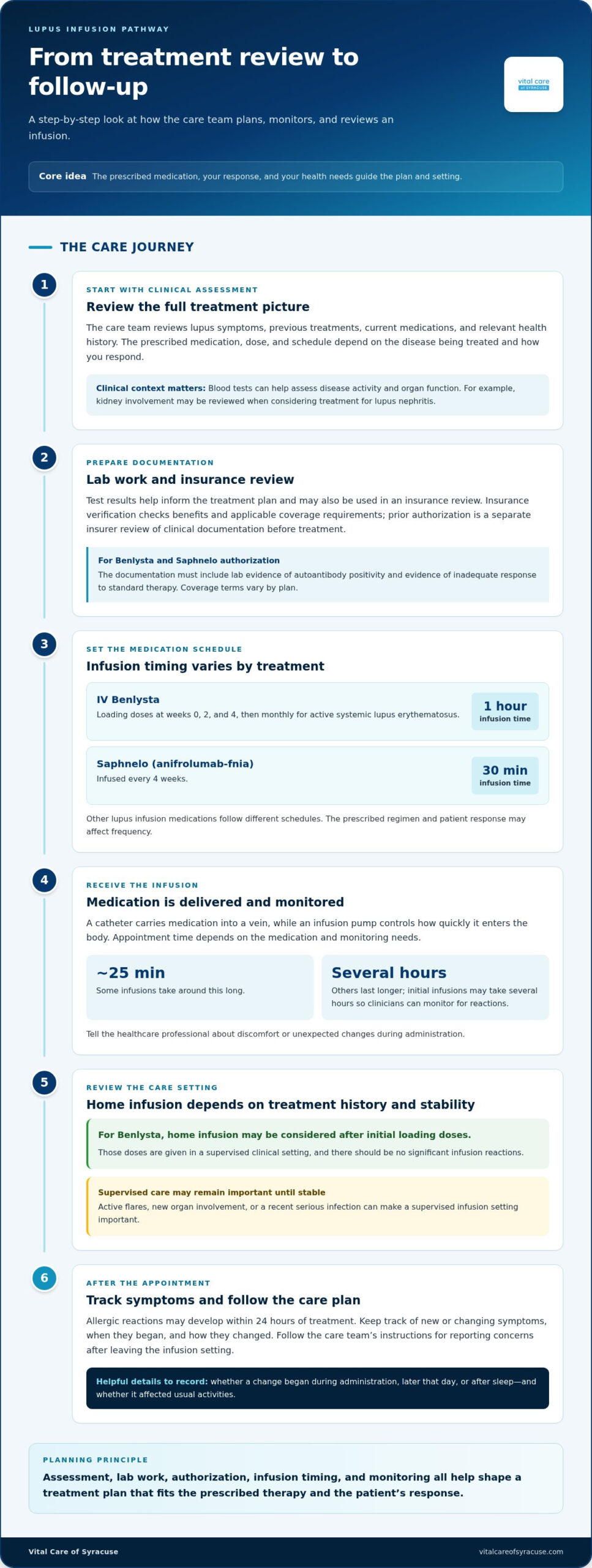
Lupus infusion treatment delivers prescribed medication into a vein through a catheter. An infusion pump controls how quickly the medication enters the body. The medication, dose, and treatment schedule depend on the disease being treated and the patient’s response. Some infusions take around 25 minutes; others can last several hours. The first step is a clinical assessment, not choosing a location based only on convenience.
During a consultation, the care team reviews lupus symptoms, previous treatments, current medications, and relevant health history. Blood tests can help assess disease activity, organ function, and whether a prescribed treatment fits your needs. For example, clinicians may review kidney involvement when considering treatment for lupus nephritis. Test results may also inform an insurance review. The prescribing clinician coordinates the treatment plan with the infusion provider.
Medication schedules differ. For active systemic lupus erythematosus, IV Benlysta is given monthly after loading doses at weeks 0, 2, and 4. The IV formulation is administered over one hour. Saphnelo, or anifrolumab-fnia, is infused over 30 minutes every 4 weeks. Other lupus infusion medications follow different schedules. The frequency may also be adjusted according to the prescribed treatment and the patient’s response.
Insurance verification and prior authorization are separate planning steps. Verification reviews your benefits and applicable coverage requirements. Prior authorization asks the insurer to review clinical documentation before treatment. For Benlysta and Saphnelo, authorization must include lab documentation of autoantibody positivity and evidence of inadequate response to standard therapy. These records help explain why the medication is being considered. Coverage terms vary by plan, and authorization is separate from clinical approval.
Appointments are coordinated once the treatment plan, lab work, and insurance process are aligned. The schedule must account for the medication’s dosing interval, infusion duration, and monitoring needs during administration. For example, Saphnelo appointments follow its four-week interval, while IV Benlysta follows its loading and monthly schedule. For home infusion for lupus patients in Auburn, suitability depends on treatment history and clinical stability, not just scheduling preference. The referring physician should direct any changes to the prescribed regimen, including dose or timing, to keep clinical and insurance records consistent.
Medication side effects and safety considerations
Lupus is an autoimmune disease that can affect different organs. Kidney involvement, for example, may lead clinicians to consider treatments such as cyclophosphamide. Heart or lung complications can also affect medication planning. Because symptoms and disease activity vary, safety discussions should take into account your prescribed medication, health history, and current condition. Tell your healthcare team about changes in symptoms and current medications before treatment.
Infusion medicines differ, as do their risks and monitoring needs. Benlysta and Saphnelo are biologics used in lupus infusion therapy. Solu-Medrol is intravenous methylprednisolone, a corticosteroid that may be used to reduce inflammation. IV corticosteroids generally form part of an overall lupus plan. Because of potential side effects, they aren’t intended as long-term treatment on their own. The medication, its purpose, and treatment duration all matter when assessing safety.
Allergic reactions are a specific concern during lupus infusions. They may develop within 24 hours of treatment, so note new or changing symptoms after an appointment and communicate them to the care team. Initial lupus infusions may take several hours because clinicians monitor patients for reactions. That observation period lets the team assess how treatment is tolerated and respond to symptoms during administration. Follow the instructions provided for reporting concerns after leaving the infusion setting.
Monitoring is part of treatment, not a sign that a reaction will occur. The infusion team observes you during administration and considers the prescribed drug and your treatment history. If you’ve had an infusion reaction before, that information can help guide planning for later doses. Describe any moderate or severe change clearly, including when it began and whether it changed. These details help clinicians assess the next step.
Before an infusion, prepare a concise medication and symptom update. Include new health changes, recent reactions, and any questions about the treatment plan. During the appointment, tell the healthcare professional about discomfort or other unexpected changes rather than waiting until the infusion ends. Afterward, keep track of symptoms during the 24-hour period when allergic reactions may develop. For home infusion, the patient and care team should understand the monitoring and communication plan for that prescribed medication. Treatment changes, including adjustments to a lupus regimen, should be made in consultation with the referring physician.
Post-infusion symptoms and follow-up
After an intravenous lupus therapy, note how you feel and when any changes begin. Lupus has no cure, but treatment may help protect health and improve quality of life. Symptoms can shift over time, so changes after an infusion need context. Record whether a change began during administration, later that day, or after sleep. Note what you noticed, how it changed, and whether it affected your usual activities. A written record gives your doctor a clearer account than relying on memory at your next appointment.
Allergic reactions to lupus IV infusion treatment may develop within 24 hours. Keep the post-infusion instructions available during that period, including the contact plan provided by the healthcare team. If a new or worsening symptom appears, describe its timing and severity when you report it. Examples include noting whether a symptom started during the infusion or after returning home. Don’t assume that every change is a reaction or a lupus flare; a clear record helps clinicians assess the difference.
Follow-up connects your infusion experience with the next treatment decision. Bring your symptom notes to the next discussion and include any changes in daily function. For example, explain whether fatigue or another concern began before or after treatment, and whether it is improving, unchanged, or worsening. Your prescribing doctor can consider that timeline alongside the treatment plan and relevant clinical findings. Keep medication instructions and appointment details together so the schedule stays clear between visits.
Lupus affects people differently, and symptoms may change as the disease evolves. Comparing your usual symptoms before treatment with anything different afterward can be useful. A written log can include the infusion date, medication name, when a symptom appeared, and what followed. If a symptom is present before the infusion, mention it before treatment. This helps the care team distinguish an existing lupus concern from a new symptom after treatment.
For home infusion, follow-up planning should clarify who receives symptom updates and how the next appointment is coordinated. Keep written instructions accessible, and follow the stated communication process if a reaction or unexpected change develops. At the next check-in, discuss whether the therapy was comfortable, whether symptoms changed, and whether you have any concerns. This information can inform the ongoing plan. Coordinate any medication or schedule changes with the referring physician.
Home infusion eligibility
For patients in Auburn, New York, home infusion suitability depends on the prescribed medication, treatment history, and current health. Local provider networks and insurance arrangements can affect care coordination, but the clinical assessment focuses on whether treatment at home fits your needs. A physician weighs these factors together rather than treating a home appointment as an automatic option.
For Benlysta, home infusion may be considered after initial loading doses in a supervised clinical setting without significant infusion reactions. That experience helps the care team understand how you tolerated earlier treatment. The physician also weighs disease activity, overall health, and the medication’s monitoring requirements. Your preference for home appointments can inform planning, but it doesn’t establish medical eligibility on its own.
Your current health may make an infusion center the more appropriate setting. Patients with active lupus flares, new organ involvement, or recent serious infections typically need physician-supervised infusions until their condition is stabilized. For example, new kidney involvement may affect the treatment plan and monitoring needs. These factors help determine whether home infusion is suitable at that time or supervised care is more appropriate.
Insurance review is separate from clinical assessment. Benlysta and Saphnelo infusions are covered by Medicare Part B and most commercial insurance plans when administered by a licensed provider to patients with documented active, autoantibody-positive systemic lupus erythematosus. Prior authorization for these medications must include lab documentation of autoantibody positivity and evidence of inadequate response to standard therapy. Coverage criteria don’t replace the physician’s assessment of your health and treatment needs.
Before arranging a home appointment, the care team needs the treatment order and relevant clinical information. Useful records include the prescribed medication, dosing plan, previous infusion history, recent symptoms, and lab documentation related to the therapy. For Benlysta, supervised loading doses and any reactions are especially relevant. Organized records support coordination among the prescribing physician, infusion provider, and insurance plan.
Eligibility can change as lupus activity and treatment response change. If you’ve previously tolerated Benlysta, a new assessment may be needed if symptoms change, organ involvement develops, or a serious infection occurs. A change in prescribed therapy may also bring different monitoring and insurance requirements. Tell your physician about relevant health changes before your next appointment so the care setting and plan reflect your current condition.
How do home infusion services compare with infusion centers for lupus treatment?
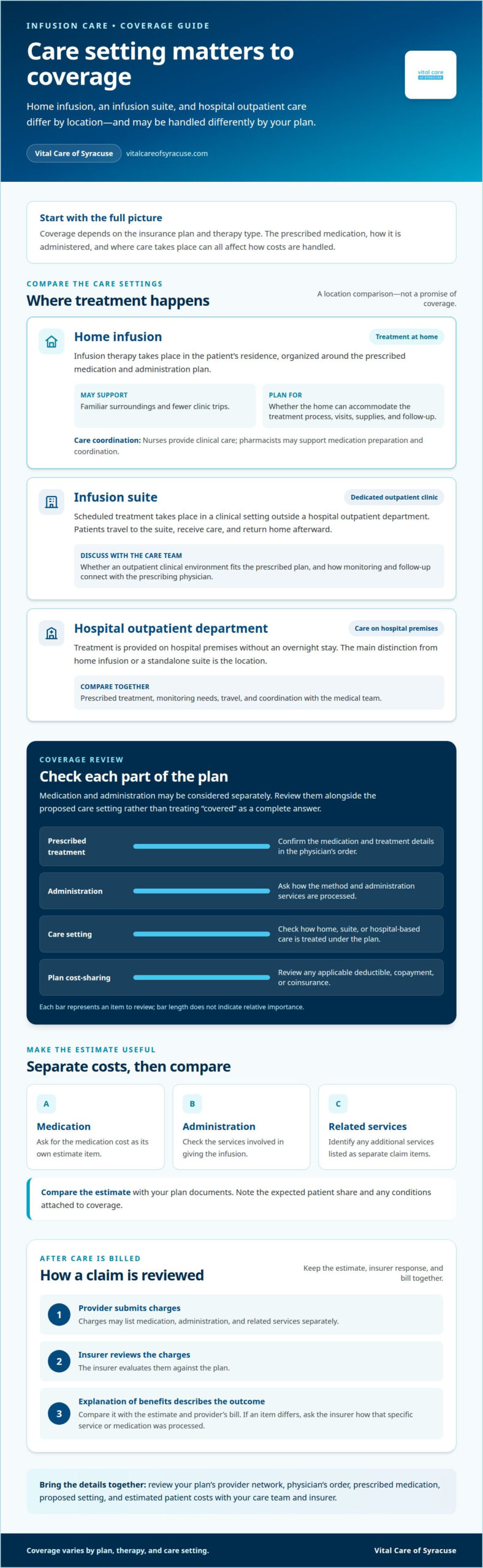
The main difference is where a prescribed intravenous medication is administered and monitored. At an infusion center, you receive treatment in a clinical setting with the infusion team present. Home treatment takes place at your residence, while the medication plan still follows the prescribing physician’s instructions. The setting doesn’t change the purpose of the therapy. The decision depends on treatment history, current health, monitoring needs, and your ability to follow the care plan.
An infusion center may be especially appropriate when treatment is new or closer observation is needed. Initial lupus infusions may take several hours so clinicians can monitor for reactions. Patients with active lupus flares, new organ involvement, or recent serious infections typically need physician-supervised infusions until their condition is stabilized. For example, new kidney involvement can affect the overall treatment plan. In these situations, the center allows clinicians to observe you while assessing your condition and response.
Home treatment may be considered for selected patients whose treatment history supports it. For Benlysta, home infusion may be appropriate after initial loading doses in a supervised clinical setting without significant infusion reactions. This history helps the care team understand how you tolerated earlier treatment. The physician also considers disease activity, current health, and the medication’s monitoring requirements. A home appointment isn’t simply a center appointment at another address: the care plan must suit the setting.
Practical differences matter, too. A center appointment requires travel and time at the facility, while a home appointment takes place in familiar surroundings. The length of the infusion still depends on the prescribed medication: IV Benlysta is administered over one hour, and Saphnelo over 30 minutes every 4 weeks. Location does not change those medication instructions. Patients should also understand the monitoring plan, whom to contact about symptoms, and how the next appointment is coordinated.
Compare the settings by discussing four factors with the prescribing physician: treatment history, current disease activity, required observation, and the patient’s home-care needs. A stable patient who tolerated supervised Benlysta loading doses may be considered differently from someone experiencing a flare or new organ involvement. Insurance authorization and appointment coordination also shape the plan, but coverage does not replace clinical suitability. For guidance on arranging a treatment setting, discuss infusion care options and the practical needs that matter for your prescribed therapy.
Vital Care of Syracuse: Anti-infective Therapy
Vital Care of Syracuse provides home infusion services, including Anti-infective Therapy, for patients with a prescribed treatment plan. Lupus infusion medications require a specific clinical plan, so use this eligibility guidance to discuss the right setting with your physician. If you also need prescribed infusion care for an infection, Anti-infective Therapy may be relevant to that separate treatment need.
Services also include Immunoglobulin (IVIG/SCIG), Parenteral Nutrition (TPN), and Hemophilia and Bleeding Disorder Therapy. The appropriate service depends on your prescribed therapy and clinical needs. Share the treatment order and care plan when arranging next steps so the infusion service can be considered in context.
For information about home infusion services, visit Vital Care of Syracuse.
Plan your next conversation with confidence
Your next step can be a focused conversation with your treating physician about your goals, treatment history, and preferred setting for therapy. If you’re considering home infusion for lupus patients in Auburn, bringing these priorities into the discussion can help make your plan more personal and practical.
Vital Care of Syracuse provides infusion services that include Anti-infective Therapy, Immunoglobulin (IVIG/SCIG), and Parenteral Nutrition (TPN). These services address distinct treatment needs, so the right fit depends on the prescribed therapy. If you’re exploring infusion support, contact Vital Care of Syracuse to start a conversation about its services and your care needs.
Thoughtful questions and clear communication can help you take the next step feeling prepared and supported.
Frequently Asked Questions
When Is Infusion Therapy Recommended for Lupus?
Clinicians may consider infusion therapy when oral medicines, such as hydroxychloroquine or steroids, don’t control lupus effectively or cause significant side effects. The choice depends on the disease being treated and your clinical needs. For example, belimumab and anifrolumab are biologics used for lupus, while other intravenous medicines may be considered for specific complications. Infusion treatment is one part of an overall plan, not a replacement for ongoing medical care.
Which lupus medications can be administered by home infusion?
Benlysta may be considered for home infusion after initial loading doses in a supervised clinical setting without significant infusion reactions. Other intravenous lupus medicines include Saphnelo, methylprednisolone, cyclophosphamide, and rituximab, but their use and setting depend on the prescribed treatment and monitoring needs. IVIG is used off-label in select lupus cases. A medication being given by infusion doesn’t automatically make it suitable for home administration.
Do Auburn home infusion providers require a physician referral or prescription?
A physician’s prescription and treatment plan are central to arranging infusion therapy in Auburn, New York. Your healthcare provider determines the medication and clinical approach, while a separate referral may be part of the insurer’s or treatment pathway’s paperwork. Have the prescription, relevant medical records, and insurance details ready for coordination. This helps clarify the documentation needed for the specific therapy and where it can be administered.
What are the eligibility and safety requirements for home infusion for lupus?
Eligibility depends on the medication, treatment history, and current health. For Benlysta, home infusion may be considered after supervised initial loading doses without significant infusion reactions. Active lupus flares, new organ involvement, or a recent serious infection generally call for physician-supervised infusions until the condition is stable. The care plan should also identify monitoring needs and how to communicate concerns during or after treatment.
Does insurance or Medicare cover home infusion for lupus in Auburn?
Coverage depends on your insurance plan, medication, and clinical documentation. Benlysta and Saphnelo infusions are covered by Medicare Part B and most commercial insurance plans when administered by a licensed provider to patients with documented active, autoantibody-positive systemic lupus erythematosus. Prior authorization for these medications must include lab documentation of autoantibody positivity and evidence of inadequate response to standard therapy. Authorization and clinical suitability are separate considerations.
What steps are involved in arranging home infusion for a lupus patient?
Start with the prescribing clinician’s treatment plan, then gather medication history, relevant lab results, and insurance information. The infusion team and healthcare provider can coordinate clinical suitability and coverage review. Next, the treatment setting and appointment are arranged around the prescribed medication and monitoring plan. Before your visit, clarify preparation instructions, whom to contact with concerns, and how follow-up will be handled after the infusion.
What are the risks and side effects of lupus infusion medications at home?
Allergic reactions to lupus IV infusion treatment may develop within 24 hours. Initial infusions may take several hours so clinicians can monitor for reactions. At home, follow the medication-specific instructions and understand how to report a new or changing symptom to the care team. Keep a note of when a symptom begins and how it changes. The prescribing physician should guide any changes to the lupus treatment regimen.
Leave a Reply