


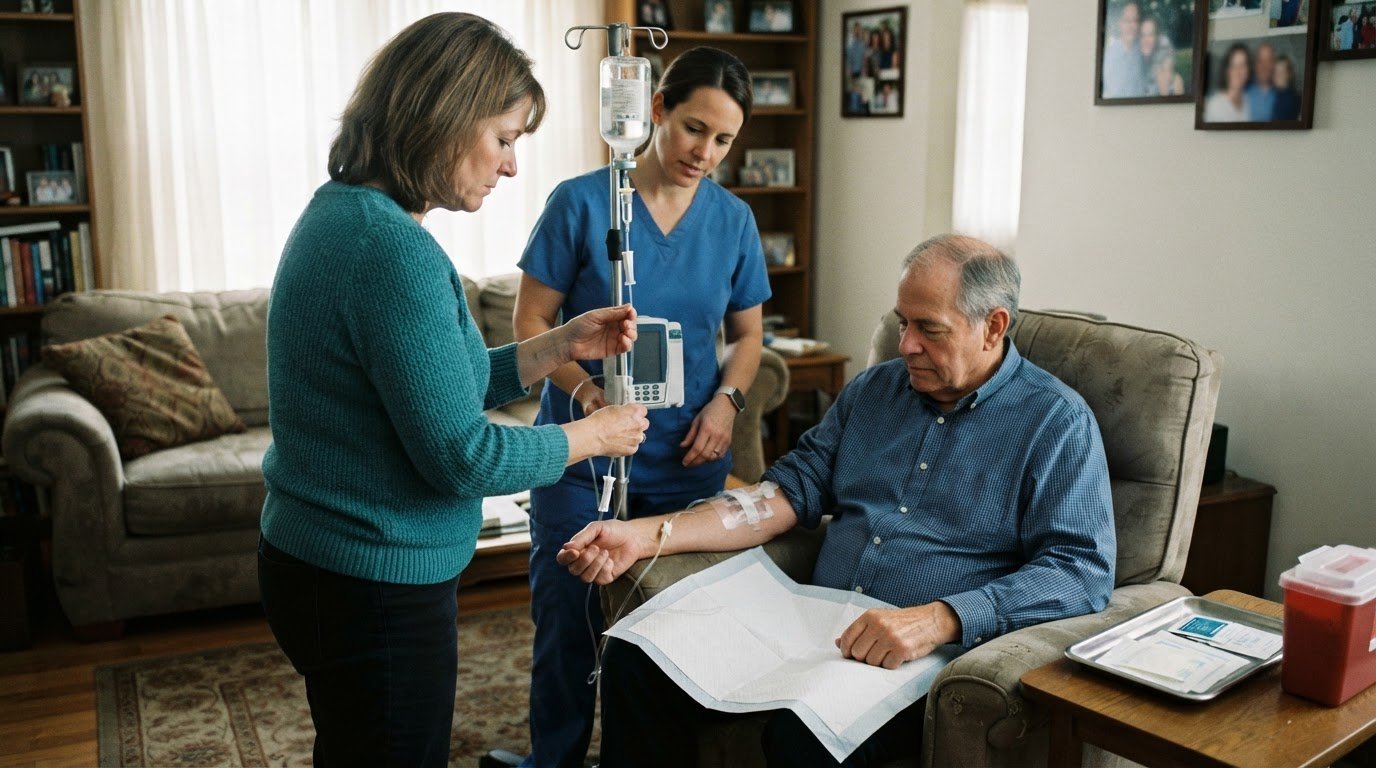
Caregiver training for home infusion is specific to the patient’s treatment plan and the tasks a family caregiver is expected to perform. In the United States, Medicare caregiver training may be provided when a health care provider determines it is appropriate for the patient’s treatment plan and the caregiver’s help is needed to meet treatment goals. Online lessons can reinforce learning, but they cannot confirm hands-on competence.
It’s understandable to feel cautious about managing equipment, preparing an infusion, or responding when something seems wrong. You don’t need to memorize every step, but you do need clear, therapy-specific instructions and a reliable way to reach the care team. This article explains when formal training may be appropriate, how to prepare for possible reactions, what information to share, and how to set up the home safely. If a step is unclear, pause and seek guidance rather than improvising.
Key Takeaways
- Learn which infusion tasks call for therapy-specific, hands-on instruction and how to use a checklist to follow the routine.
- Recognize why it’s important to follow the care plan and know what to do if a reaction or equipment concern arises.
- Keep concise records of symptoms, infusion details, and questions to make conversations with the healthcare team more useful.
- Prepare a clean, organized treatment area and follow the instructed steps for handling supplies before and after an infusion.
Do Family Caregivers Need Formal Training?
Caregiver duties vary, so instruction should match the patient’s treatment plan. Caregiver training for home infusion should cover each clinical task the family member is expected to perform.
Equipment and Clinical Task Training
A nurse may provide instruction during early home visits, supported by written instructions or video guides. Training may cover priming an IV line, monitoring pump settings, maintaining equipment, and recognizing alarms. Follow the steps taught for the specific therapy, and don’t use equipment you don’t understand. Online education can reinforce learning, but it cannot confirm hands-on competence.
Medication Preparation and Management
Preparation may include refrigerating medication or allowing it to reach room temperature, as directed. Gather supplies before opening anything, then prepare the medication according to the instructions provided. A checklist can help you follow the same sequence each time. Training does not authorize a family caregiver to change a medication, dose, or treatment plan. Contact the care team if instructions are unclear.
Medication Labels and Infusion Timing
Before starting, compare the medication label and scheduled timing with the treatment plan. Confirm that the prescribed dose follows the schedule, and pause if the label, timing, or instructions don’t match. Don’t resolve a discrepancy by changing the dose or moving an infusion yourself. Record the concern on a checklist so you can discuss it with the care team.
Training Providers and Requirements
A nurse may teach home infusion tasks during early home visits. The medication and assigned duties determine what instruction is needed, so follow the specific care plan rather than assuming one checklist fits every therapy, state, or provider. There is no fixed number of training sessions: instruction may take place across early visits, with practice and written or video materials supporting learning.
Medicare Part B covers caregiver training when its conditions apply; according to the Centers for Medicare & Medicaid Services, the caregiver pays 20% of the Medicare-approved amount after the Part B deductible. The amount owed can depend on other insurance, charges, assignment, facility type, and service location. The Agency for Healthcare Research and Quality also offers online caregiver training materials, which support but don’t replace hands-on instruction.
Recognizing adverse reactions and emergency protocols
Training should explain which reactions to watch for during the patient’s specific infusion and what response the care plan requires. Learn the warning signs identified for that therapy, where emergency directions are kept, and whom to contact if a concern arises.
Caregivers may also learn to use an infusion pump, clean and flush IV lines, and follow emergency protocols. These skills are specific to the treatment and require instruction. If an alarm sounds or the patient seems unwell, don’t guess at the cause or change the treatment plan. Follow the written directions and contact the nurse or care provider promptly.
Keep the response steps practical and easy to find:
- Keep emergency contact numbers visible near the treatment area.
- Follow the care plan’s directions for a suspected reaction or equipment problem.
- Contact the nurse or care provider immediately if you’re unsure or concerned.
- Ask for clarification when a direction is difficult to understand.
Don’t ignore emergency instructions or improvise a different response. Training should make clear which actions a caregiver is expected to take and when to seek clinical guidance. If the patient feels anxious during treatment, slow down, speak calmly, and follow the established routine. A steady, supportive presence can assist the patient without replacing the clinical steps in the plan.
Preparedness also means planning for emergencies and disasters, not just reactions during an infusion. Caregiver education can cover how to prepare for, respond to, and recover from these situations. Review relevant instructions with the care team and keep them accessible alongside contact numbers. A practice conversation can clarify whom to call and which directions apply if usual routines are disrupted.
For ongoing home infusion support, keep the focus on clear instructions, practiced skills, and a response plan that fits the patient’s therapy. Knowing where the plan is and how to reach the care team can make it easier to act calmly when something unexpected happens.
Communicating with the healthcare team
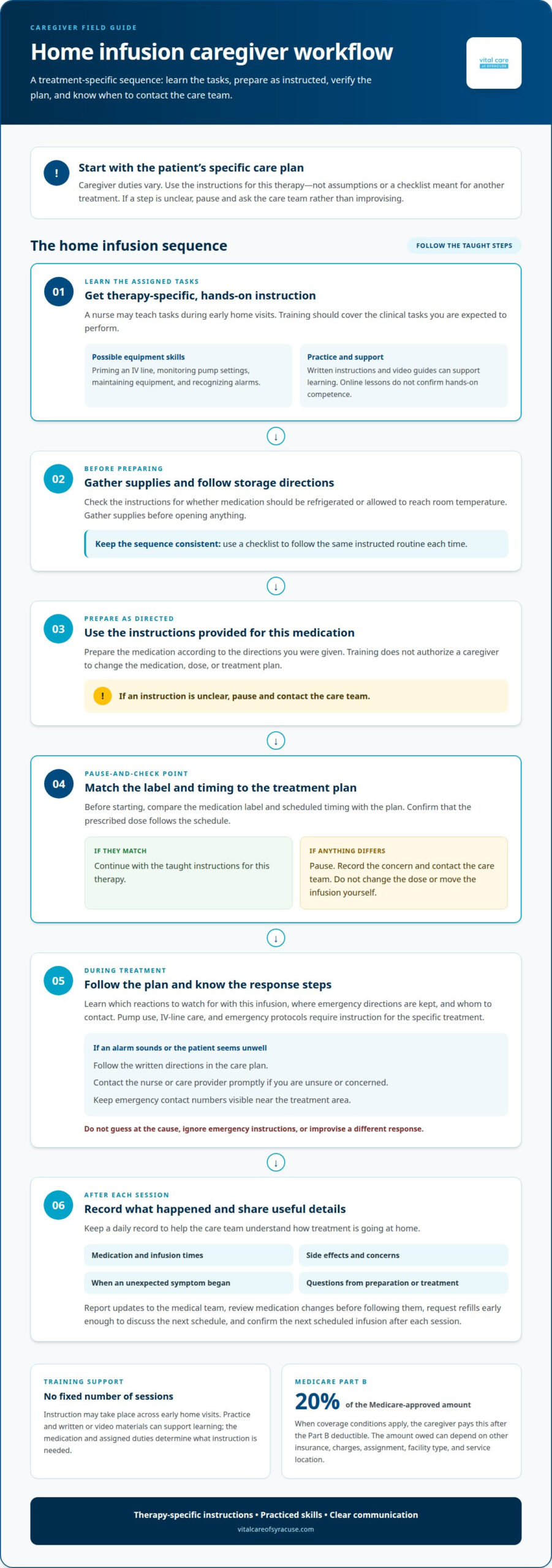
Consistent updates help the care team understand how treatment is going at home. Keep a daily record of medication, infusion times, side effects, and concerns. For example, note when an unexpected symptom began and whether it followed an infusion. These details give the care provider a clearer picture than a general recollection and can support treatment discussions.
Keep a short list of questions for your next call or home visit. After each therapy session, note anything unusual and any questions that arose during preparation or treatment. If a medication update is confusing, pause and contact the care team rather than interpreting it yourself. Clear answers can build confidence and help keep the routine consistent.
Useful communication steps include:
- Report patient updates, symptoms, and concerns to the medical team.
- Request refills early enough to discuss the next infusion schedule.
- Review medication changes with the care team before following updated directions.
- Confirm the next scheduled infusion after each therapy session.
Appointments and home visits are opportunities to discuss how the routine works in practice. Attend follow-up appointments when possible, and bring your notes so the care provider can address specific observations. Ask about any unclear step, including what information to report and how to follow updated medication instructions. Taking an active role means sharing observations, not changing a dose or treatment plan.
Simple reminders can make communication more reliable between appointments. Keep the care team’s contact information with the infusion records, and set a reminder to update the daily log after treatment. If something feels unusual during an infusion, pause and contact the care team instead of improvising. A partner or family member can help record details or prepare questions while the caregiver focuses on following the therapy instructions.
Infection prevention and home safety
A clean, well-lit surface helps keep supplies organized during home care. Before therapy, wash your hands thoroughly and gather the required items. Keep the area uncluttered, with supplies easy to find and a clear, comfortable space for the patient. Store supplies in labeled bins or drawers, separate from unrelated household items.
Follow the specific instructions for keeping the infusion area sterile. If the care plan directs you to use gloves or change a dressing, follow the procedure you were taught. Don’t add steps or substitute products on your own. Training should also explain how to protect the infusion site and which symptoms to report, so you can tell the care team about redness, swelling, or pain.
After treatment, complete the instructed cleanup rather than leaving used items on the preparation surface. Dispose of supplies as directed, store remaining materials properly, and clean the area. These steps help keep the space orderly for the next session and make it easier to notice misplaced or contaminated supplies.
- Wash hands before beginning therapy.
- Prepare supplies on a clean, well-lit surface.
- Keep the infusion area sterile and follow directions for gloves and dressing changes.
- Monitor the site for redness, swelling, or pain, and report symptoms as instructed.
- Dispose of used supplies, store remaining items properly, and clean the surface afterward.
Home safety also means making the routine manageable for both caregiver and patient. Keep the treatment area clear and place needed items within reach before starting. A calm, predictable setup can reduce distractions and support the patient’s comfort. If a safety or infection-prevention step is unclear, pause and contact the care team instead of improvising. Following the care plan helps protect the patient and maintain consistent home infusion practices.
Vital Care of Syracuse: Home infusion
Vital Care of Syracuse provides home infusion when the patient’s treatment plan calls for therapy at home. Services include Anti-infective Therapy, Immunoglobulin (IVIG/SCIG), and Parenteral Nutrition (TPN). If a clinician has recommended one of these therapies, discuss how home infusion can fit the care plan and what support the family caregiver may need.
Clear communication about the prescribed therapy and caregiver responsibilities can help families prepare for treatment at home. Contact Vital Care of Syracuse to discuss home infusion and personalized support for your family.
Build a Care Routine That Feels Manageable
Preparing for home infusion isn’t about doing everything from memory. It’s about building a clear routine with the patient and care team, so everyone understands their role and when to ask for help. Identify any unfamiliar tasks and bring questions about them to the clinical team.
That conversation can make caregiver training for home infusion more personal and practical. Discuss the patient’s treatment plan, the caregiver’s comfort with assigned tasks, and any support needed to follow instructions at home. Vital Care of Syracuse provides options including Anti-infective Therapy, Immunoglobulin (IVIG/SCIG), and Parenteral Nutrition (TPN), and can discuss how home infusion fits the patient’s care plan.
Contact Vital Care of Syracuse to discuss home infusion care. Taking one informed step at a time can help your family approach treatment with greater clarity and confidence.
Frequently Asked Questions
What Skills Should a Family Caregiver Learn?
A family caregiver should learn the duties assigned for the patient’s therapy and how to recognize when to pause and seek guidance. For example, instruction may include noticing pump alarms, documenting a concern, and explaining what happened to the care team. Caregivers can also practice organizing treatment notes so important details are ready for a call or follow-up visit.
What caregiver training is required for home infusion therapy?
Training should match the prescribed therapy and the caregiver’s assigned tasks, rather than follow one universal checklist. A nurse may provide individual instruction during home visits, supported by written directions or video materials. The patient’s health care provider determines whether Medicare caregiver training is appropriate for the treatment plan and goals. Training does not authorize caregivers to change medication, doses, or treatment plans.
What skills do caregivers learn for home infusion, including IV pump use and line care?
Depending on the care plan, caregivers may learn to operate an infusion pump, maintain equipment, clean and flush IV lines, and recognize alarms or malfunctions. For example, training can demonstrate how to respond to a pump alarm without changing settings beyond the steps taught. Use only equipment you understand, and ask for clarification before attempting an unfamiliar clinical task.
What are the steps for preparing and administering a home infusion safely?
Follow the sequence taught for the patient’s therapy: prepare the designated area, gather the required supplies, and follow the written care plan for medication and equipment. Before beginning, check that the medication label and scheduled timing match the plan. During administration, use only the steps you were taught. If an instruction or equipment response differs from what you expect, pause and contact the care team rather than improvising.
What infection prevention and sterile technique rules apply to home infusion caregivers?
Follow the care team’s specific directions for hand hygiene, maintaining the infusion area, gloves, and any dressing changes. Keep the work surface clean and use sterile technique only as taught for the patient’s therapy. Watch the infusion site for redness, swelling, or pain, and report those symptoms as instructed. After treatment, dispose of used supplies and store remaining items as directed.
What are the risks and warning signs caregivers should watch for during home infusion?
Potential concerns include a change at the infusion site, an unexpected equipment alarm, or a reaction identified in the patient’s therapy-specific instructions. Report redness, swelling, or pain at the site as directed. Keep emergency contact information accessible, follow the care plan, and contact the nurse or care provider promptly if concerned. Don’t ignore emergency directions or try to diagnose the cause yourself.
Leave a Reply