


The cost of TPN at home in NY isn’t one statewide rate. What you pay depends on the prescribed formula, the supplies and services included, and your insurance benefits. Plan requirements and coverage review also affect which expenses are covered and when your out-of-pocket share becomes clear.
If you’re planning for care, it’s understandable to want more than a broad estimate. Knowing what affects the bill can make the financial side less uncertain and help you understand the coverage process.
This article explains the main cost factors, including formula, supplies, equipment, nursing, and delivery, and how supplier requirements, physician orders, and insurance review may affect your out-of-pocket responsibility. It also covers practical considerations for receiving TPN at home, giving you a clearer picture of the costs involved.
Key Takeaways
- Understand why daily, short-regimen, and monthly estimates can differ, and which factors influence the total.
- Learn how Medicare-approved supplier requirements and physician orders relate to coverage and out-of-pocket costs.
- See how insurance pre-checks can clarify benefits, covered equipment, and potential patient responsibility.
- Identify which parts of home TPN care may contribute to the bill, from formula and supplies to nursing and delivery.
How Much Does TPN at Home Cost?
The cost of TPN at home in NY depends on the prescribed plan, included services, and insurance benefits. A useful estimate separates treatment expenses from the amount you may owe.
Daily, Regimen, and Monthly Expenses
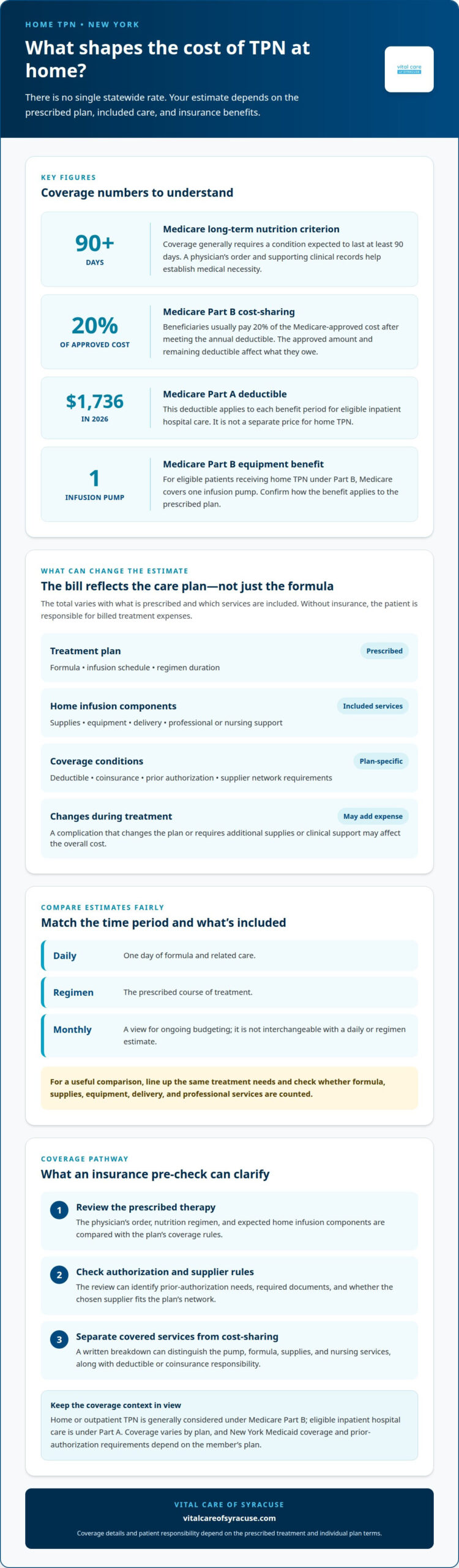
A daily estimate describes one day of formula and related care; a regimen estimate covers the prescribed course. A monthly view helps with ongoing budgeting, but these periods are not interchangeable. The cost of TPN at home in NY can change with the formula, infusion schedule, supplies, equipment, delivery, and professional services included. Comparing estimates requires matching their time periods and components.
Insurance Coverage and New York Medicaid
Coverage describes which prescribed home parenteral nutrition expenses an insurance plan pays. Many primary and secondary insurance plans cover home parenteral nutrition when prescribed by a physician, but coverage varies by plan. New York Medicaid coverage and prior authorization requirements depend on the member’s plan. A physician’s order and clinical documentation support the review, while the plan’s rules determine which approvals are needed.
Uninsured Costs and Cost Drivers
Without insurance, the patient is responsible for billed treatment expenses. The total depends on the prescribed formula, infusion schedule, supplies, equipment, delivery, and included clinical services, so a self-pay estimate for one regimen may not apply to another. If a treatment-related complication changes the plan or requires additional supplies or clinical support, those services may also affect the overall expense.
Home and Hospital Care Costs
Home and hospital treatment can include different services, making their estimates difficult to compare item by item. Hospital expenses may include facility care, while home estimates may list formula, supplies, delivery, and professional support separately. Compare estimates for the same treatment needs and check which services each includes. This shows how the care setting changes the components being counted.
Medicare-approved suppliers and physician orders
Medicare coverage depends on the treatment setting, physician documentation, and supplier requirements. These distinctions help explain which costs may fall under Part A or Part B.
Medical Necessity and Eligibility
Medical necessity means the clinical record supports TPN as appropriate nutrition therapy for the patient’s condition. Medicare’s long-term parenteral nutrition coverage generally requires a condition expected to last at least 90 days or longer. A physician’s order and supporting records help establish the need for treatment. Missing documentation, an unsupported order, or unmet eligibility criteria can affect coverage decisions.
Medicare Payment and Inpatient TPN
Medicare Part A applies to eligible inpatient hospital care, while home or outpatient TPN is generally considered under Part B. According to the Centers for Medicare & Medicaid Services, the Medicare Part A deductible for each benefit period is $1,736 in 2026. That deductible relates to inpatient coverage, not a separate home TPN price.
For home or outpatient TPN, Medicare beneficiaries usually pay 20% of the Medicare-approved cost after meeting the annual deductible. The approved amount and the beneficiary’s remaining deductible affect out-of-pocket costs. An enteral nutrition order does not by itself establish eligibility for parenteral nutrition; the physician’s analysis must support the prescribed treatment. Coverage can be denied when documentation or eligibility requirements are not met.
New York Providers and Regional Prices
Home infusion pharmacies and providers in New York arrange TPN when they can meet the prescription, supplier, and coverage requirements. Prices may vary by region because delivery arrangements, service components, and insurer network terms can differ. A hospital or infusion provider typically coordinates the physician’s order, clinical records, supplier review, and insurance authorization before arranging home treatment. Medicaid prior-authorization requirements depend on the member’s plan.
For help understanding how home infusion support fits into the process, review the treatment and coverage details with the care team.
Insurance pre-checks and affordability support
An insurance pre-check reviews benefits, authorization requirements, and likely patient responsibility before home therapy begins. It can help identify coverage questions early.
Insurance Coverage Pre-Checks
A pre-check compares the prescribed therapy with the plan’s coverage rules and identifies documents needed for review. It can clarify whether prior authorization is required, which services the plan considers, and how the chosen supplier fits its network. Because coverage varies by plan, another patient’s approval does not establish your benefits.
Useful details include the physician’s order, prescribed nutrition regimen, and expected home infusion components. The review can distinguish covered services from cost-sharing, such as a deductible or coinsurance. For eligible patients receiving home TPN under Medicare Part B, Medicare covers one infusion pump. Confirming how that benefit applies helps clarify equipment coverage without assuming every expense is covered.
Affordability Support Options
Affordability support begins with a clear explanation of benefits, estimated patient responsibility, and the plan’s payment process. If a patient has primary and secondary insurance, reviewing both plans can show how each may contribute. For Medicare Part B, beneficiaries usually pay 20% of the Medicare-approved cost after meeting the annual deductible. The remaining responsibility depends on the applicable coverage and plan terms.
A written breakdown can connect coverage decisions to the actual care plan. It can separate the pump, prescribed formula, supplies, and nursing services, then identify items that need further authorization. If gastrointestinal disease or another condition requires ongoing nutrition therapy, documentation should reflect the clinical need. A careful pre-check supports informed financial planning without relying on another patient’s benefits.
Which costs are included in home TPN, such as formula, supplies, nursing, and delivery?
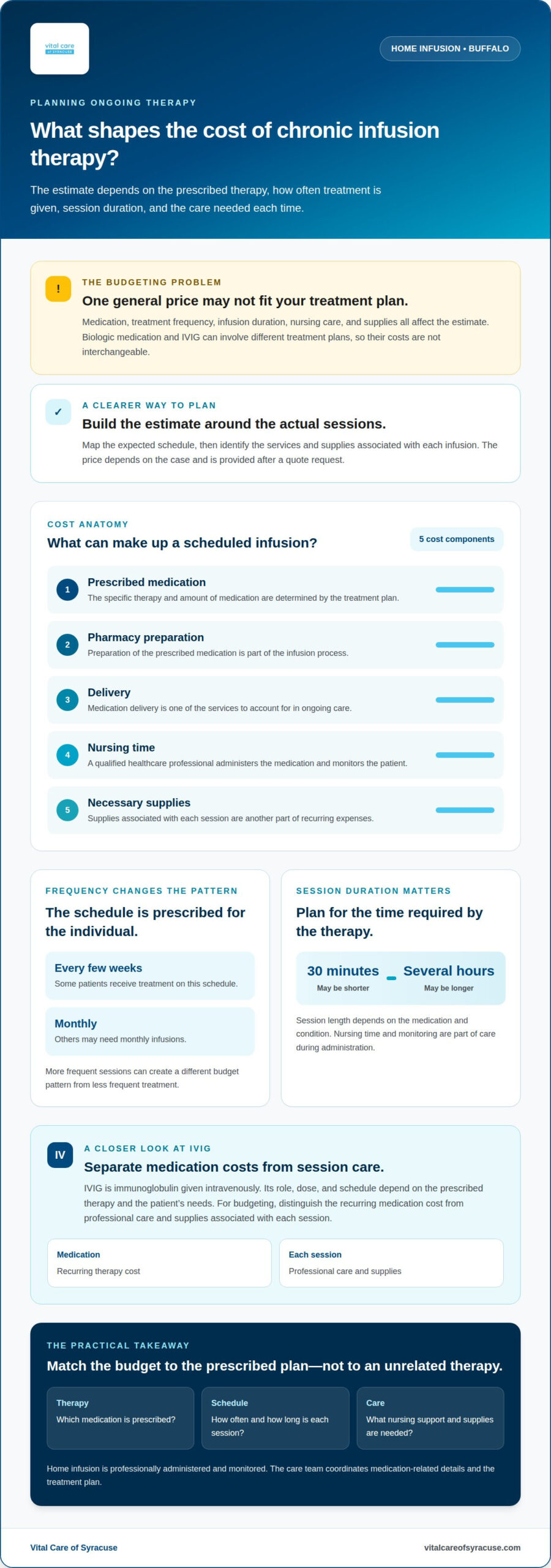
A home TPN estimate can include several distinct parts of care, not just the nutrition formula. Reviewing each component helps clarify what the treatment plan and insurance assessment include.
The formula is prepared to match the prescribed nutrition needs. Its ingredients and composition affect the contents of each delivery. Lipids generally provide 25-30% of total calories received through parenteral nutrition, though an individual formula follows the prescribed plan. The number and timing of bags also depend on the treatment schedule.
Supplies support the infusion and may include items needed to administer the formula and maintain the prescribed setup. A pump may be covered for eligible Medicare patients, while coverage for other supplies depends on the benefit and plan. A written breakdown should distinguish equipment from recurring supplies to make these categories easier to understand.
Nursing may be another cost component when professional support is part of the care arrangement. Home parenteral nutrition can involve coordination among nurses, pharmacists, and dietitians. The services included depend on the treatment plan and may differ between patients. For example, a delivery estimate may list formula and supplies, with nursing shown separately.
Delivery arrangements can also affect what an estimate includes. A delivery charge may be listed per shipment, while formula and supplies correspond to the scheduled delivery. Request a breakdown identifying the contents, frequency, and services attached to each delivery. This makes it easier to distinguish recurring components from services tied to a particular visit or shipment.
Home TPN infusion typically takes about 10 to 12 hours to administer a day’s formula, though individual needs can change the duration. To discuss how home infusion support relates to prescribed TPN care, contact Vital Care of Syracuse.
Vital Care of Syracuse: Home infusion
Vital Care of Syracuse provides home infusion, including parenteral nutrition (TPN), for people whose care plan calls for nutrition delivered by infusion at home. After reviewing cost factors and coverage considerations, patients with a TPN prescription can turn to a home infusion provider to discuss how the prescribed therapy fits into home care.
Questions about formula, supplies, equipment, nursing, and delivery can clarify what the planned care involves. Since coverage and personal costs depend on the prescription and insurance plan, these details are useful when discussing next steps for home TPN.
For a calm conversation about home infusion and TPN care, contact Vital Care of Syracuse.
Plan Your Next Step With Confidence
Understanding the cost of TPN at home in NY can help you plan care with clearer questions and more confidence. Discuss how the prescribed nutrition plan, home infusion needs, and insurance benefits fit together, keeping financial considerations in view alongside clinical needs.
Vital Care of Syracuse provides Parenteral Nutrition (TPN), Anti-infective Therapy, and Immunoglobulin (IVIG/SCIG). If you’re considering home TPN or want to discuss the infusion care connected with your treatment plan, contact Vital Care of Syracuse. A thoughtful conversation can help you take the next step with care that reflects your needs.
Frequently Asked Questions
What is the average monthly cost of home TPN in New York?
There isn’t one monthly amount that reflects every home TPN plan in New York. The total depends on the prescribed formula, treatment schedule, supplies, equipment, delivery, and included services. For a useful estimate, consider how the regimen is structured and which components the insurance plan covers. A monthly figure should reflect those details, not be treated as a standard price.
What does home TPN cost per day or per infusion in New York?
The daily or per-infusion expense depends on what the treatment plan includes and how often formula and supplies are provided. A single-infusion estimate may exclude recurring deliveries, equipment, or professional services. For example, shipment and service charges may appear as separate items. Reviewing the plan by component helps show what each estimate covers without assuming every infusion costs the same.
How much does Medicare cover for home TPN in New York, and what are the eligibility requirements?
For eligible home TPN patients, Medicare Part B usually requires beneficiaries to pay 20% of the Medicare-approved cost after the annual deductible. Medicare’s long-term parenteral nutrition coverage generally requires a condition expected to last at least 90 days or longer. A physician’s order and clinical documentation support the coverage review. Eligibility and the approved amount determine how those rules apply to an individual’s care.
How do private insurance plans in New York cover home TPN, and what are typical out-of-pocket costs?
Private insurance coverage varies by plan, so there isn’t one typical out-of-pocket amount for every New York patient. Many primary and secondary insurance plans cover home parenteral nutrition when prescribed by a physician. Your share depends on plan benefits, cost-sharing, and which parts of care are covered. With primary and secondary coverage, each plan’s contribution can affect the remaining balance.
Leave a Reply