


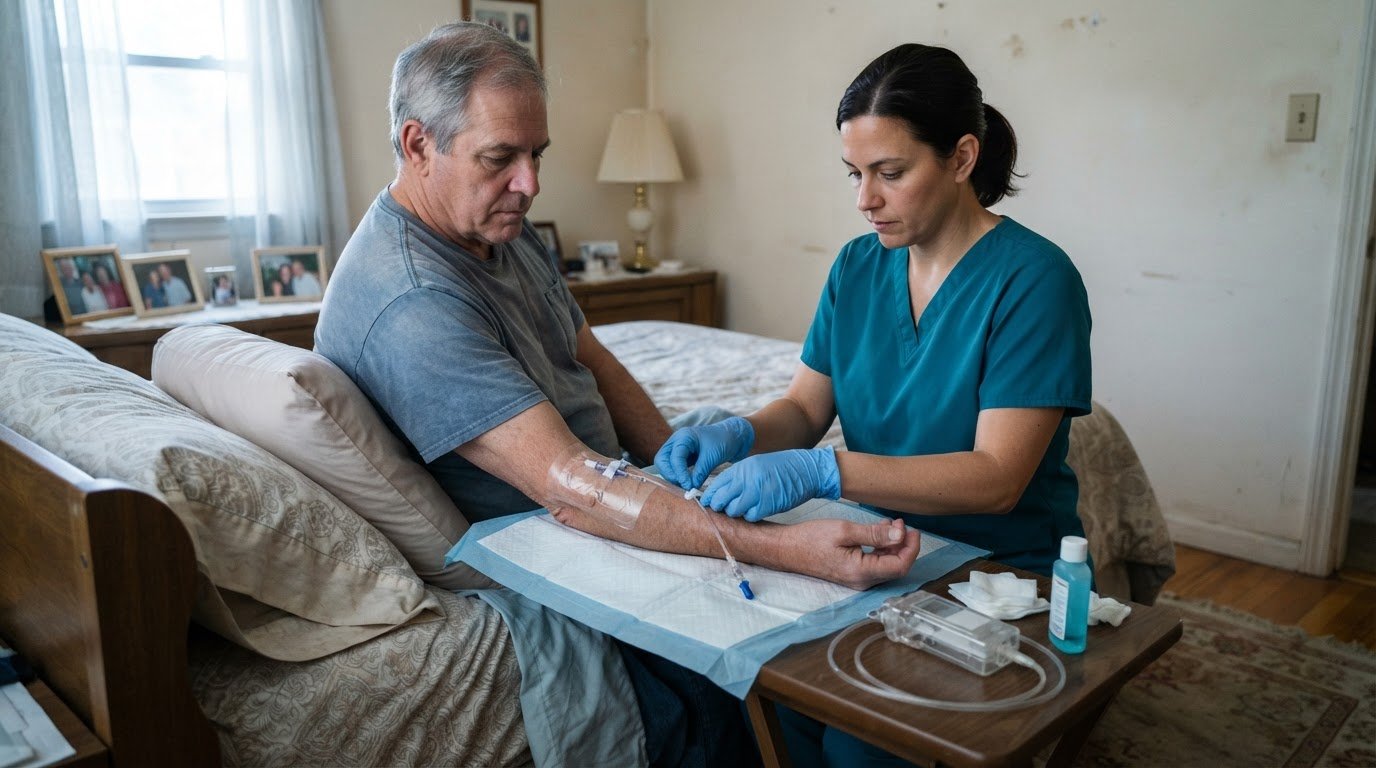
Antibiotic treatment at home doesn’t follow one universal calendar. The home antibiotic course duration depends on the infection, the treatment plan, and how the patient responds; for most acute bacterial infections in critically ill patients, limiting treatment to 7-8 days appears safe and effective. A change from IV to oral antibiotics may alter how treatment is given without automatically ending the course.
It’s understandable to expect the original plan to stay fixed, especially after a serious infection and a hospital stay. In practice, clinical progress can shape decisions: improvement, test results, and whether oral treatment is suitable all help guide the next step.
This article explains when IV antibiotics may transition to oral treatment, how clinical progress can affect a course, and why some infections call for a set duration. It also explains how home infusion fits into treatment, so you can better understand what a change in route or schedule may mean for your care.
Key Takeaways
- A switch from IV antibiotics to oral treatment changes the route, but the planned course still depends on the infection and its progress.
- Clinical improvement and test results can help shape treatment decisions; sinus symptoms that persist without improvement after 10 days may point to a bacterial infection, according to U.S. healthcare providers.
- Some infections have evidence supporting a defined course length, while others require a plan tailored to the infection and response.
- Home infusion can support prescribed IV anti-infective treatment outside the hospital, with care focused on the treatment plan and the patient’s needs.
Oral anti-infective treatment after IV therapy
After IV therapy, a patient may continue treatment with an oral antibiotic if it suits the infection and clinical plan. Changing the route doesn’t automatically end the prescribed course.
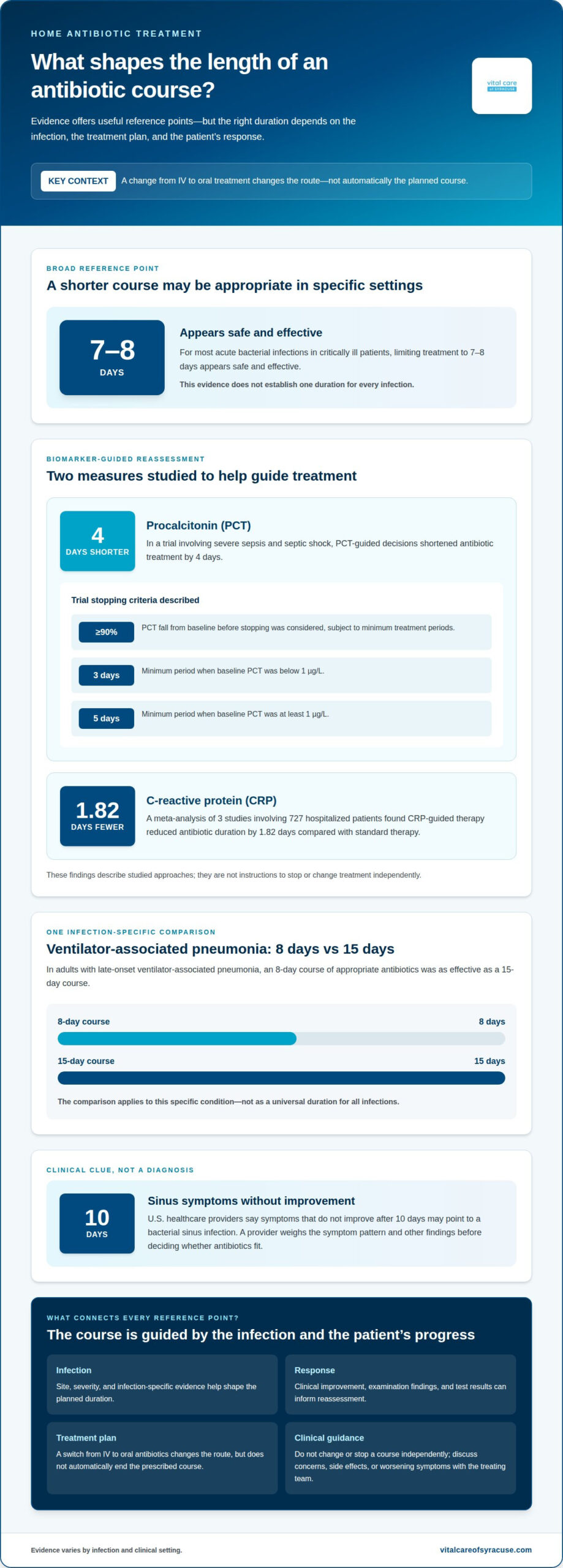
For most acute bacterial infections in critically ill patients, limiting treatment to 7-8 days appears safe and effective. That evidence doesn’t establish one duration for every infection. The care team considers the diagnosis, response, and treatment already received when planning any IV-to-oral transition.
Biomarkers can inform reassessment. In a trial involving severe sepsis and septic shock, procalcitonin-guided decisions shortened antibiotic treatment by 4 days. Treatment could stop after procalcitonin fell by at least 90% from baseline, subject to minimum periods: 3 days when baseline was below 1 µg/L, or 5 days when it was at least 1 µg/L.
C-reactive protein (CRP) is another measure studied to guide treatment. A meta-analysis of three studies involving 727 hospitalized patients found CRP-guided therapy reduced antibiotic duration by 1.82 days compared with standard therapy.
Treatment Completion and Line Removal
Finishing treatment means completing the prescribed plan and arranging removal of an IV line when it’s no longer needed. The line delivers IV medicine, not oral doses. The care team may discharge a patient from home IV antibiotic care when the infection has resolved, coordinating the transition and line-removal plan.
Managing Missed or Extended Antibiotic Courses
If you miss a dose, follow the prescription’s missed-dose instructions. If they’re unclear, contact the prescriber or pharmacist. Don’t double a dose unless instructed. Stopping early may leave an infection inadequately treated, while taking antibiotics longer than prescribed can cause harm through unnecessary medication exposure. Contact a doctor about side effects or worsening symptoms, and don’t change the course independently.
Clinical-course-based antibiotic decisions
Antibiotic decisions depend on the infection’s clinical course, not symptoms alone. A provider considers the infection site, symptom changes, examination findings, test results, and response to treatment. For example, improving symptoms may support reassessing the plan, while persistent or worsening signs can prompt further evaluation. The priority is choosing treatment that remains appropriate for the infection.
In the United States, U.S. healthcare providers say a person whose sinus infection symptoms do not improve after 10 days may have a bacterial sinus infection, for which a provider may prescribe antibiotics. That timing is one clinical clue, not a stand-alone diagnosis. A provider weighs the symptom pattern and other findings before deciding whether antibiotics fit.
Serious infections can require close review as treatment proceeds. Changes in fever, pain, breathing, or general condition can affect how the team assesses progress. Test results may also help identify the cause of infection and whether the prescribed antimicrobial remains suitable. Together, these details help distinguish steady recovery from a course that needs reassessment.
Resistance alone does not automatically mean treatment should last longer. For multidrug-resistant infections, prolonged antibiotic treatment is not generally recommended solely because of resistance when the chosen antimicrobial is appropriate and effective. The key clinical question is whether the selected therapy is working, considered alongside the patient’s progress and available test results.
After hospital discharge, clinical follow-up helps connect the home treatment plan with changes in your health. Report new or worsening symptoms to the treating team, and share concerns about doses or side effects. For example, a return of symptoms during a prescribed course is useful information for reassessing the plan, not a reason to change treatment independently.
When a prescribed plan includes IV treatment at home, home anti-infective therapy may support care while the clinical team follows the infection’s course.
Fixed antibiotic-course durations
A fixed antibiotic course sets a planned endpoint for treatment. Evidence from ventilator-associated pneumonia shows why course length can depend on the infection.
Duration by Infection Type
Duration by infection type means matching treatment length to the disease being treated. A physician considers the infection site, its severity, the patient’s clinical progress, and test findings. A culture can help identify the organism and guide antimicrobial selection, while the response to treatment helps show whether it is working. These factors matter because one duration cannot suit every infectious disease.
For patients with serious infections, the treatment plan also reflects the clinical circumstances and whether the selected antibiotic is appropriate. Research on one infection type cannot automatically establish the right duration for another. A course supported for pneumonia, for example, should not be treated as a universal rule for all bacterial infections.
Guidance on Shorter Courses
A shorter-course recommendation applies to particular infections and clinical settings, not automatically to every antibiotic prescription. In adults with late-onset ventilator-associated pneumonia, an 8-day course of appropriate antibiotics was as effective as a 15-day course. That finding supports a shorter option for this specific condition, rather than a blanket duration for all patients.
A single trial result is evidence for a defined infection, not proof that current U.S. guidelines broadly recommend shorter courses. The distinction matters: a physician considers the applicable infection-specific guidance, the patient’s response, and whether the chosen treatment remains appropriate. A shorter course should follow the relevant plan, not a general rule applied across diseases.
Typical Home Course Duration
Home treatment does not set a separate standard duration. The planned length depends on the infection, its severity, the prescribed antimicrobial, and clinical progress. IV administration at home describes where treatment occurs, not how long it must continue. The course may therefore have a specific endpoint even when treatment moves from hospital care to home.
To understand the planned endpoint, review the prescription and treatment instructions with the care team. If a culture result, symptom change, or clinical assessment leads to a revised plan, follow the updated instructions. Don’t extend or shorten treatment on your own; the infection and your response determine whether the original course still fits.
How long should a typical home antibiotic course last?
There isn’t one standard duration for every home antibiotic course. The infection, its severity, the selected medicine, and clinical progress shape the prescribed endpoint. Home treatment changes where care is delivered, not the factors that determine how long antibiotics are needed. A patient’s plan may change if an assessment shows the infection is improving or needs further treatment.
Questions about home antibiotic course duration are best considered in light of the diagnosis and treatment response. The care team weighs the infection site, prescribed antimicrobial, test findings, and clinical progress. These factors help shape a plan for the particular patient rather than applying one timeline to every infection.
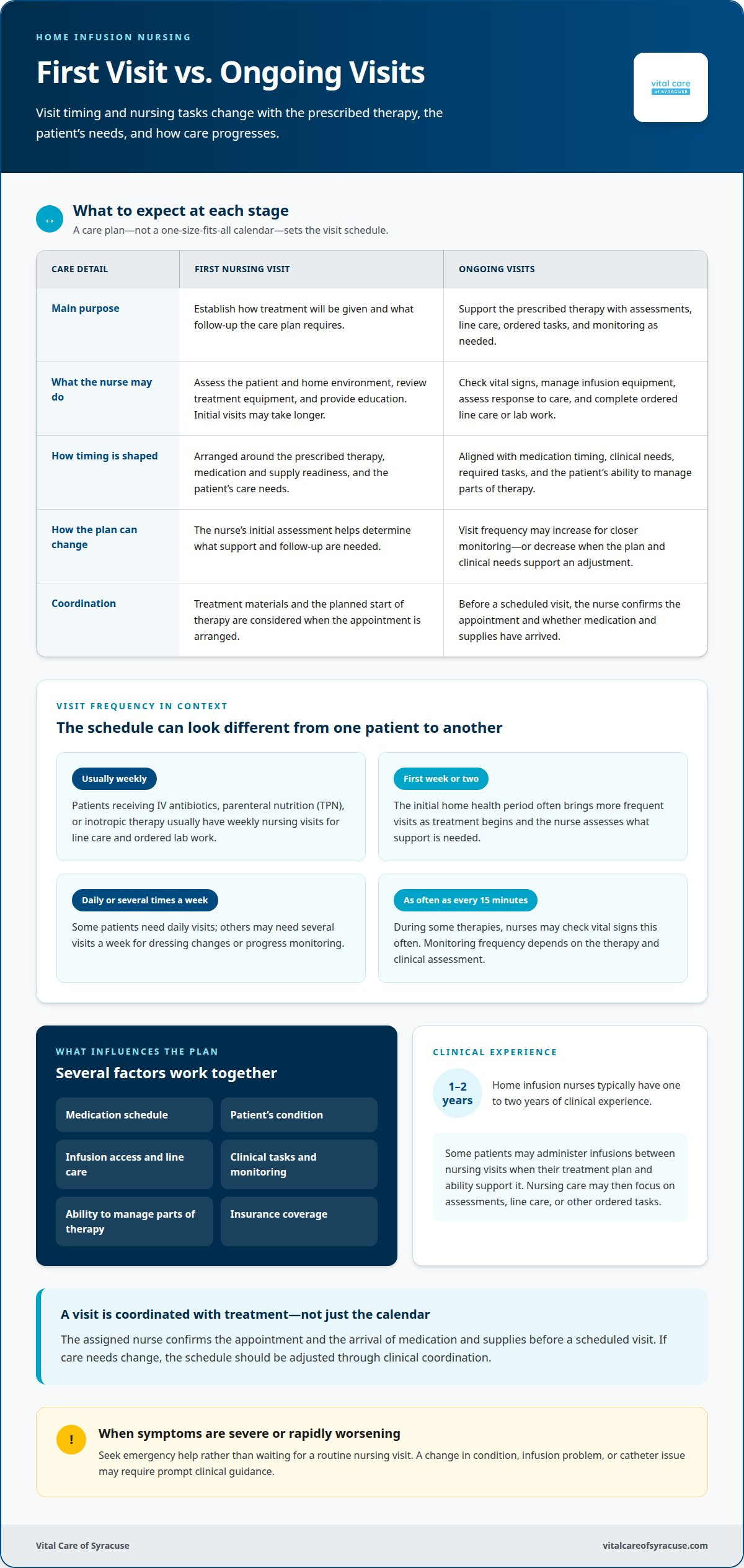
Monitoring helps the care team assess progress during outpatient IV therapy. Blood tests are usually needed once a week, and appointments may review whether the infection is improving and how treatment is going at home. Daily infusions may be part of the schedule. These steps connect the prescribed course with the patient’s current clinical condition.
A change from IV to oral antibiotics doesn’t automatically restart or end treatment. Home antibiotic course duration reflects the full treatment plan, including medicine already received and the remaining course. If symptoms change, a test result becomes available, or side effects raise concerns, share that information with the treating team. Don’t extend, shorten, or stop treatment independently.
For home IV treatment, the team may begin therapy in the hospital, monitoring the initial response and checking for side effects such as allergic reactions. Patients or caregivers who administer infusions receive instruction and assessment in hospital. Follow-up helps the team assess progress and decide whether the prescribed plan needs adjustment.
For support with prescribed IV anti-infective treatment at home, explore home anti-infective therapy.
Vital Care of Syracuse: Anti-infective Therapy
Vital Care of Syracuse provides anti-infective therapy through home infusion for patients prescribed IV antibiotics. This can be a next step when a care plan includes continuing IV therapy outside the hospital, with treatment decisions guided by the clinical team.
Course length remains specific to the infection and prescribed plan. Home infusion supports treatment at home; it doesn’t determine how long antibiotics are needed or replace clinical follow-up. If your treatment plan includes home IV anti-infective therapy, Vital Care of Syracuse can support that part of your care.
For information about home infusion for prescribed anti-infective treatment, contact Vital Care of Syracuse.
Keep Your Next Treatment Step Clear
As you move forward, keep the treatment plan and any questions it raises in one place. Note changes in symptoms, difficulties following the prescribed schedule, or concerns about the medicine. Sharing clear, timely details helps the care team understand what has changed and respond within the existing plan.
The right home antibiotic course duration is tied to the infection and the clinical decisions guiding your care, not simply to the convenience of treatment at home. If your care plan includes home infusion, knowing who supports that treatment can make the next conversation more focused. Discuss how home-based anti-infective care fits your prescribed therapy and what information the team needs to support it.
For a conversation about your home infusion needs, contact Vital Care of Syracuse. A thoughtful next step can help you feel more prepared to discuss your treatment plan with the people involved in your care.
Frequently Asked Questions
Can IV Antibiotics Be Administered at Home?
Yes, IV antibiotics can be given at home in New York when home infusion is clinically appropriate. Your healthcare provider considers the prescribed medication, diagnosis, and clinical needs when determining eligibility. For example, a plan may include infusions at home under professional supervision rather than in a hospital. Vital Care of Syracuse provides home infusion for patients with prescribed anti-infective treatment.
Fixed Duration, Biomarker-guided, or Clinical Evaluation?
These approaches can inform different parts of a treatment decision. A fixed duration sets a planned endpoint for a specific infection and situation. Biomarkers, such as procalcitonin, provide test results that may help guide reassessment. Clinical evaluation brings together symptoms, examination, test findings, and treatment response. The most useful approach depends on the infection and the clinical information available.
How long does it take for antibiotics to work?
Antibiotics begin acting against susceptible bacteria after treatment starts, but the timing of noticeable change depends on the infection and medicine. For example, a symptom caused by inflammation may remain even as treatment targets bacteria. Follow the prescribed schedule, and report worsening symptoms or concerns about the medicine to the treating team.
How long will it take for me to feel better?
Feeling better depends on the infection, its severity, and how your body responds to the prescribed treatment. Symptoms may ease at a different pace from the infection itself, so early relief doesn’t establish that treatment is complete. For example, if pain improves but fever or other symptoms persist, share the change with your care team rather than adjusting doses yourself.
What factors determine the prescribed length of an antibiotic course?
The prescribed duration reflects the infection being treated and the clinical assessment of its course. The care team considers the suspected or identified bacteria, test results, the chosen antibiotic, symptom changes, and response to treatment. For example, a culture result may help clarify which organism is involved. These details shape a plan for that diagnosis rather than a general duration for every infection.
Should you finish antibiotics if symptoms improve early?
Yes, follow the prescribed course even if symptoms improve early, unless the treating team changes the plan. Feeling better is useful information, but it doesn’t by itself establish that the infection is fully treated. If symptoms resolve before the course ends, or side effects make continuing difficult, contact the treating team for guidance before stopping or changing the medication.
Leave a Reply