



Getting a referral for home infusion starts with a clinical conversation, not just a form. Your treating clinician typically assesses whether treatment can be delivered safely at home or in an infusion suite and initiates the referral. You can help move things along by asking what information the care team needs and sharing your questions and preferences.
It’s understandable to have questions about paperwork, insurance review, and possible delays. A referral is a coordinated handoff that gives the infusion team information about your treatment plan, clinical needs, and support requirements. Complete medication orders, relevant clinical notes, and accurate demographic and insurance details can help the team review the request.
This guide explains who may start the referral conversation, what information and decisions may be needed, and what can happen after the referral is sent. Knowing the steps can help you prepare for a practical conversation with your care team and understand how home infusion planning moves forward.
Key Takeaways
- Getting a referral for home infusion begins with a conversation about your treatment goals and whether home or suite-based care may be appropriate.
- The process can include a clinical request, records review, and care planning, with steps shaped by your therapy and circumstances.
- Having medication orders, relevant health information, and insurance details ready can support the referral review.
- A referral starts an assessment. It does not automatically mean home treatment is appropriate.
- Vital Care of Syracuse provides home and suite-based infusion care in communities including Syracuse, Albany, Rochester, Utica, Buffalo, Auburn, and Binghampton.
Getting a referral for home infusion: who starts the process?
A home infusion referral is a clinical request to assess and coordinate prescribed infusion treatment outside a hospital, either at home or in an infusion suite. It connects the clinician managing your care with the team reviewing the treatment plan and coordinating next steps. For a basic overview of the procedure itself, see Intravenous therapy.
Your treating clinician considers whether home or suite-based infusion suits your prescribed therapy and individual needs. A referral begins that assessment; it does not mean treatment is approved or scheduled. A referral opens the door to review and coordination, but it is not final approval for home treatment or a scheduled start date.
This video from Johns Hopkins Medicine offers an introduction to home infusion therapy:
Can a patient request home infusion?
Yes. You or a caregiver can raise the option with the clinician managing your condition or treatment. Explain what matters to you, such as receiving care at home or learning whether an infusion suite fits your needs. Share relevant details about your home setting and available caregiver support, and ask about the infusion routine. Your preferences help guide the discussion while the care team assesses clinical suitability and support needs.
Which clinician can send a home infusion referral?
The clinician responsible for your condition or prescribed treatment often evaluates the request and provides the clinical information needed for review. The appropriate prescriber depends on the therapy and treatment plan, and requirements may also vary by payer. If you’re unsure where to begin, ask the clinician overseeing your infusion treatment who should coordinate the request.
Patients and caregivers can support a clear handoff by helping gather relevant records and sharing questions with the care team. If treatment is being discussed during a hospital stay, ask which clinician will communicate the plan and what information should accompany the referral. Getting a referral for home infusion is a shared process: the clinician leads the clinical assessment, while your questions and preferences help shape planning. Vital Care of Syracuse provides home and suite-based infusion care for patients in communities including Buffalo.
How to get a home infusion referral: the process step by step
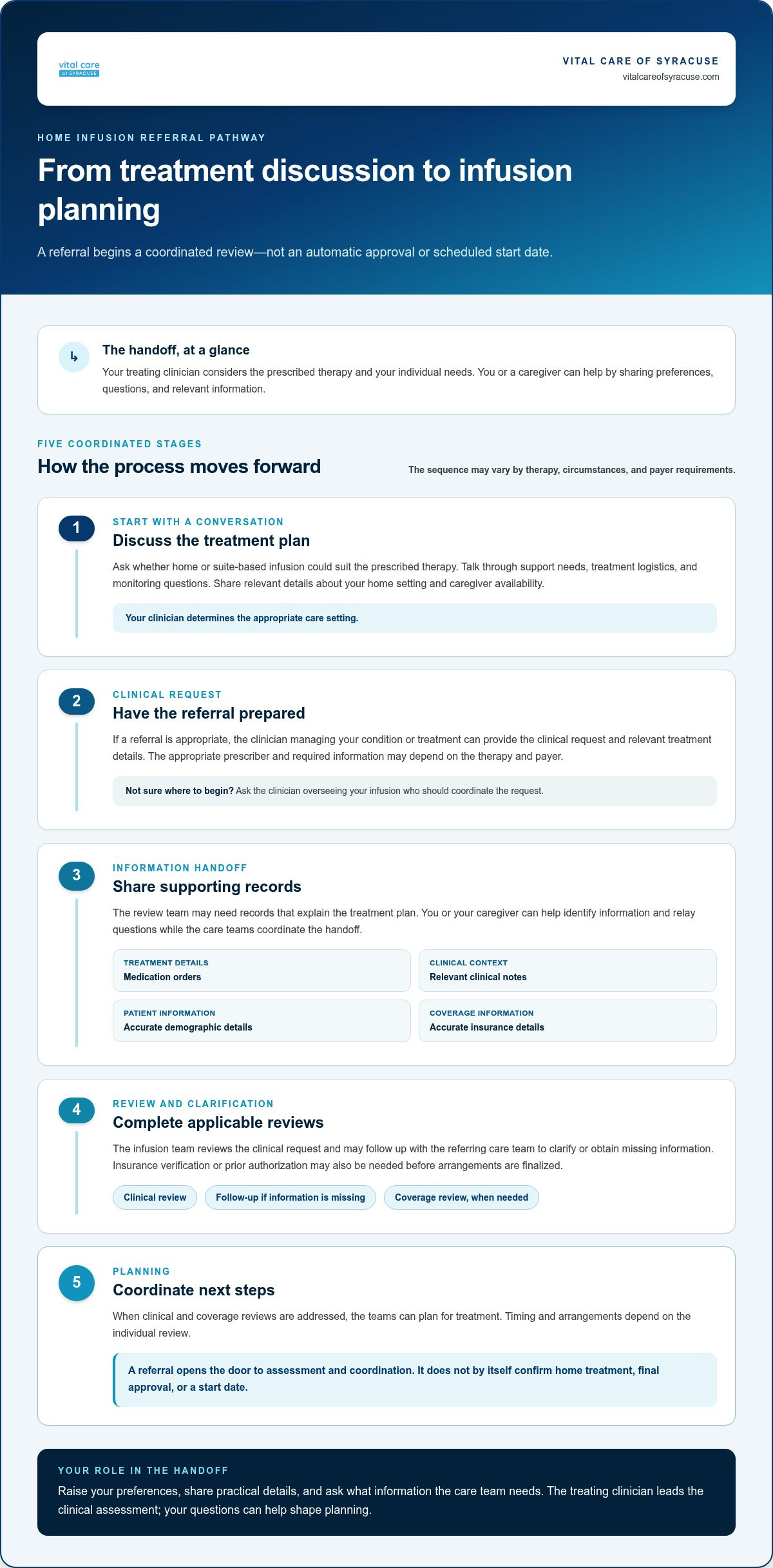
After you and your treating clinician discuss home or suite-based care, the next steps move the request from a clinical plan to an individualized review. Getting a referral for home infusion is not a single form-and-schedule transaction. The care team and infusion provider coordinate clinical details, records, and any required coverage review. The sequence can vary depending on the therapy, your circumstances, and payer requirements.
In brief: discuss the treatment, obtain a clinical referral, share supporting records, complete applicable reviews, and coordinate the start when the plan is ready.
- Discuss the treatment plan. Ask your treating clinician whether home or suite-based infusion could suit the prescribed therapy. Talk through support needs, treatment logistics, and monitoring questions. Your clinician determines the appropriate care setting.
- Have the clinical referral prepared. If the care team considers a referral appropriate, the clinician managing your condition or treatment can provide the clinical request and relevant treatment details. The required information may depend on the therapy and payer.
- Share supporting records. The referral team may need clinical notes, medication orders, and other information that explains the treatment plan. You or your caregiver can help identify records or relay questions while the care team coordinates clinical information.
- Complete clinical and coverage reviews. The infusion team reviews the referral and may follow up with the referring care team to clarify or obtain missing information. Insurance verification or prior authorization may also be needed before arrangements are finalized.
- Coordinate next steps. Once the clinical and coverage reviews are addressed, the teams can plan for treatment. Timing and arrangements depend on the individual review, so a referral alone does not establish a start date.
What should you discuss with the treating clinician?
Bring practical questions, not just a request for a different location. Ask whether your specific treatment may be delivered at home or in a suite, what support you might need, and what the care team expects for treatment logistics and monitoring. Share relevant details about your home situation and caregiver availability. This gives your clinician information to consider alongside the prescribed therapy and your needs.
What happens after the referral is sent?
The infusion team reviews the clinical request, clarifies information with the referring care team as needed, and considers coordination steps. Coverage review may also be part of the process, depending on the plan. If information is missing, follow-up may be needed before arrangements are completed. Patients in Buffalo can learn about Vital Care of Syracuse home infusion and its coordinated home and suite-based care.
What records and insurance details may a home infusion referral need?
Preparing for a referral can feel more manageable when you know what information the care team may request. There is no universal checklist: records depend on the prescribed therapy, your clinical circumstances, and your health plan’s requirements. For getting a referral for home infusion, accurate, current information helps the teams understand the proposed treatment and coordinate their review.
Which clinical information may be requested?
Your treating team determines which details are relevant to your therapy. Commonly requested information may include:
- Treatment details: medication order and information about the prescribed dose, route, and frequency, as applicable.
- Clinical context: diagnosis, relevant medical history, recent clinical notes, and records that explain the treatment plan.
- Current care information: an up-to-date medication list and contact details for the clinicians involved in your care.
These details help the infusion team review the request in context and coordinate questions with the referring care team. Before the referral is sent, you or a caregiver can check that your medication list is current and identify relevant clinicians or recent records. Your care team can explain what is needed for your treatment. Not every item applies to every referral.
How can insurance review affect the referral?
Clinical review and insurance review serve different purposes. The referral communicates the clinician’s request and supporting information; the insurer’s review considers coverage under your individual plan. Depending on the therapy and plan, benefit verification or prior authorization may be part of the process. Requirements and decisions vary, so a referral itself does not guarantee coverage, payment, or that treatment will proceed.
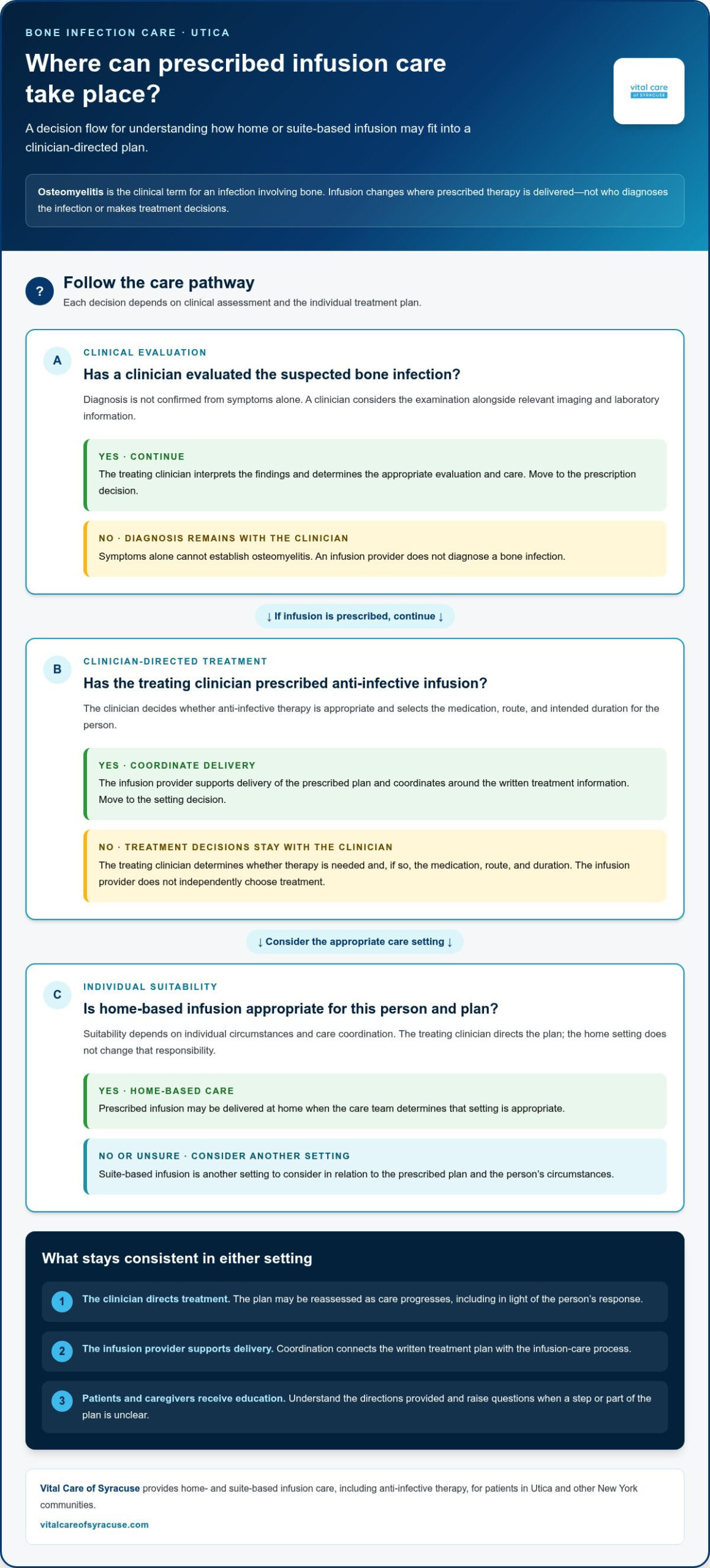
Follow instructions from your treating care team and coverage team, and share requests for additional information with the appropriate person promptly. This applies to patients across New York, including Syracuse, Albany, Rochester, Utica, Buffalo, Auburn, and Binghampton. If the therapy under consideration is an anti-infective treatment, anti-infective therapy at home offers further context on that type of care. Clear communication can help keep clinical information and coverage questions moving through review without assuming a particular outcome or timeline.
Is home infusion right for you? How clinical review addresses common concerns
A referral requests a review; it does not guarantee that treatment will be delivered at home. The care team considers whether the prescribed therapy and your individual circumstances can be supported safely outside a hospital. This assessment helps match the care setting to the treatment plan rather than assuming one setting works for everyone.
Home and suite-based infusion offer different practical arrangements. Home care takes place in your residence, while suite-based care happens in a designated infusion setting. The appropriate option depends on clinical needs and care planning, not preference alone. Your referring clinician and infusion team can discuss the setting and support that fit your situation.
What factors can shape the care-setting decision?
The team may consider the therapy’s administration requirements, your clinical stability, the level of monitoring involved, and the support available in your circumstances. These factors work together: both the treatment’s requirements and your needs matter. Your care team assesses which setting and support are appropriate for your individual situation.
- Therapy requirements: what the prescribed treatment involves and how it is administered.
- Clinical needs: stability and monitoring considerations related to your care plan.
- Personal circumstances: the home environment, available support, and practical treatment logistics.
What if home infusion is not the recommended setting?
A different recommendation does not mean the referral conversation was wasted. The review helps your care team consider an appropriate setting in light of the treatment plan. If you’re concerned about the recommendation, ask your treating clinician what factors shaped it, whether a suite-based setting was considered, and what the next steps are for your care.
For broader local-care context, read about the benefits of a local home infusion company. Vital Care of Syracuse provides home and suite-based infusion services to support planning around an appropriate setting. To learn more about home infusion care in Buffalo, explore Vital Care of Syracuse’s services.
Starting a home infusion referral with Vital Care of Syracuse
If you’re considering home infusion in Buffalo, start by speaking with the clinician managing your treatment. Ask whether a referral for home or suite-based infusion may fit your care plan and how the clinical request should be coordinated. A caregiver can join the conversation, help collect information, and share practical details about support at home.
What patients and caregivers can prepare
A little preparation can make the conversation more focused. Bring or note:
- The treating clinician’s name and contact details, along with the names of other care-team members involved in treatment.
- Your current medication list and any treatment records you already have available.
- Questions about the therapy, possible care settings, support needs, and insurance or coverage review.
- Practical home-care considerations, such as caregiver availability or factors that may affect treatment planning.
You do not need to decide on your own whether home treatment is appropriate. These details help your clinician and the infusion team understand your circumstances and coordinate next steps. Requirements can vary, so follow the specific instructions provided by your care and coverage teams.
How local coordination can support the handoff
Vital Care of Syracuse provides home and suite-based infusion care from East Syracuse, serving communities that include Syracuse, Albany, Rochester, Utica, Buffalo, Auburn, and Binghampton. After a referral conversation begins, the infusion team coordinates with the referring clinician to review treatment information and address questions that arise during planning. Clinical and coverage reviews help inform next steps, but a referral does not guarantee acceptance, coverage, or a particular start date.
Whether you’re a patient, caregiver, or referring professional, a clear handoff helps keep the clinical plan and practical needs in view. For referral-related next steps, contact Vital Care of Syracuse. The team can coordinate around the information provided by the referring care team as the request is reviewed.
Home infusion referral coordination is not a substitute for urgent medical care. If you or someone in your care has an urgent medical need, seek appropriate urgent or emergency care rather than waiting for the referral process.
Take the next step toward a coordinated infusion plan
Getting a referral for home infusion begins with a conversation between you and the clinician managing your treatment. Your care team assesses whether home or suite-based infusion is appropriate, then coordinates clinical information and any required coverage review. Having your medication list, available records, and questions ready can make the handoff clearer.
A referral is a request for assessment, not a guarantee of treatment approval, coverage, or a start date. The right care setting depends on your prescribed therapy, clinical needs, and individual circumstances. Vital Care of Syracuse provides specialized infusion therapies, including anti-infective therapy, with home and suite-based services for patients across New York communities.
To discuss home infusion referral next steps, contact Vital Care of Syracuse. The team can coordinate with your care team as the referral is reviewed.
Frequently Asked Questions
Can I get a referral for home infusion myself?
You can start the conversation, but your treating clinician needs to assess whether home infusion fits your treatment plan. Tell them you’re interested and discuss your treatment preferences, home circumstances, and questions about care. The clinician can determine the appropriate next step and whether a referral is suitable. Sharing relevant information with your care team can help them understand your needs and support the process.
Who can refer a patient for home infusion?
The clinician managing your condition or prescribing your treatment is often involved in initiating a referral, though the process depends on the therapy and your clinical circumstances. The infusion team may coordinate with that clinician to review the request and plan next steps. Patients and caregivers can ask who is responsible for sending the referral. Vital Care of Syracuse is based in East Syracuse and serves communities including Syracuse, Albany, Rochester, Utica, Buffalo, Auburn, and Binghampton.
What information is needed for a home infusion referral?
A referral may include your treatment plan, medication information, relevant clinical records, and details for the clinicians involved in your care. The specific information can vary with your therapy, personal circumstances, and insurer’s requirements, so do not assume every referral needs identical documents. Keep an up-to-date medication list available and ask your care team what else is needed. Clear records help support review and coordination.
Does insurance need to approve home infusion before treatment starts?
Insurance coverage and authorization requirements vary by insurer, plan, therapy, and individual circumstances. A referral is a clinical request, not an insurance approval, and neither one guarantees payment or that treatment will proceed. The care and infusion teams can coordinate any applicable review and explain what information may be needed. Ask which coverage steps apply to your plan before treatment arrangements are finalized.
How long does it take to get a home infusion referral processed?
There is no single timeline for every referral. Processing can depend on when clinical information is available, whether the team needs additional details, and what coverage review your plan requires. If you’re waiting, contact your referring care team or infusion coordinator to ask which step is underway and whether they need anything from you. This can clarify what remains without assuming a particular start date.
Can home infusion be arranged after a hospital stay?
Yes, a hospital care team may discuss home infusion as part of planning continued treatment when clinically appropriate. Depending on your situation, coordination may involve the prescriber, hospital team, infusion provider, and insurer. Ask which clinician is managing the referral and whether records or follow-up are needed. A discharge plan or referral begins coordination, but the care team still needs to review your individual needs and treatment plan.
What happens if home infusion is not suitable for me?
Your treating clinician considers your prescribed therapy, monitoring needs, and personal circumstances when recommending a care setting. If home infusion is not appropriate, ask the clinician to explain the reasons and discuss other arrangements for your treatment. The referral conversation can still help clarify what support is needed and what steps come next. A different care setting is about matching the plan to your needs, not a failure to ask about home care.
Leave a Reply