



Could difficulty eating or losing weight mean intravenous nutrition is the next step? Not necessarily. For people with cancer, home parenteral nutrition for cancer patients is a specialized option considered in particular circumstances, not a default response to weight loss or weakness. It’s understandable to worry that treatment side effects or cancer-related changes in appetite could leave someone without enough nourishment, and to wonder whether support at home might help.
This article explains the differences between oral nutrition, enteral nutrition delivered through the digestive tract, and parenteral nutrition delivered into the bloodstream. You’ll learn when a care team may consider PN, what home treatment can involve, and what to ask the oncology and nutrition-care teams about potential benefits, limitations, and risks. It also covers practical topics such as central-line care, infection prevention, training, supplies, and monitoring. These details can help patients and families prepare for a discussion without assuming PN is appropriate for everyone.
Key Takeaways
- Learn how parenteral nutrition differs from eating by mouth and tube feeding, and why digestive function matters when clinicians consider it.
- Understand why home parenteral nutrition for cancer patients isn’t a default response to weight loss and what factors the care team may assess.
- Explore how a patient’s goals, treatment plan, overall condition, and preferences can shape a discussion about potential benefits and risks.
- Prepare to ask what evaluation, training, home setup, and follow-up may involve, since individual plans can differ.
- Find out how Vital Care of Syracuse’s parenteral nutrition and home infusion services may fit into care coordination after the treating team determines whether PN is appropriate.
What Is Home Parenteral Nutrition for Cancer Patients?
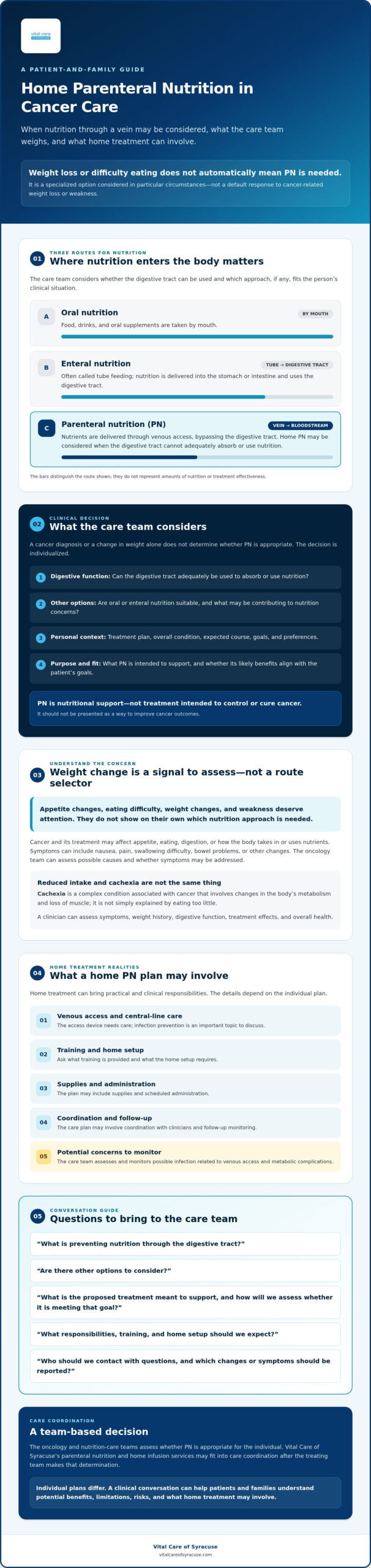
Home parenteral nutrition (PN) provides nutrients through a vein, using venous access, when a person’s digestive tract cannot adequately absorb or use nutrition. Clinicians may consider it in selected situations, but it isn’t a routine response to cancer-related weight loss or a substitute for finding out what is causing nutrition concerns.
Parenteral nutrition is nutrition delivered directly into the bloodstream through venous access, unlike oral food or supplements taken by mouth and enteral nutrition delivered into the digestive tract through a feeding tube. The Parenteral nutrition overview describes its medical uses and possible complications. For an individual patient, the oncology and nutrition-care teams assess whether the digestive tract can be used and which approach, if any, fits the clinical situation.
How does parenteral nutrition differ from tube feeding?
These options use different routes. Oral nutrition includes food and drinks, while oral supplements provide additional nutrients by mouth. Enteral nutrition, often called tube feeding, delivers nutrition into the stomach or intestine and uses the digestive tract. PN bypasses the digestive tract and delivers nutrients into a vein. The treating team considers the patient’s condition, nutrition needs, and preferences when deciding which route, if any, is appropriate.
Why might nutrition support come up during cancer care?
Cancer and its treatment can affect appetite, eating, digestion, and the body’s ability to take in or use nutrients. Nausea, pain, swallowing difficulty, bowel problems, or other symptoms may make eating harder. Weight changes and weakness deserve attention, but they don’t show on their own which route of nutrition support is needed. Ask the oncology team what may be contributing and whether any symptoms can be addressed.
It’s also helpful to distinguish reduced intake from cachexia, a complex condition associated with cancer that involves changes in the body’s metabolism and loss of muscle, and isn’t simply explained by eating too little. A clinician can assess symptoms, weight history, digestive function, treatment effects, and overall health. If PN is being discussed, patients and families can ask: “What is preventing nutrition through the digestive tract?” and “Are there other options to consider?”
For families researching home parenteral nutrition for cancer patients, the first step is a clinical conversation. A change in appetite or weight alone doesn’t mean intravenous nutrition is needed.
How Clinicians Weigh Potential Benefits and Risks of Home PN
Home parenteral nutrition (PN) may provide nutrients when a person’s digestive tract can’t meet their needs and oral or enteral nutrition isn’t suitable. Whether it fits depends on more than a cancer diagnosis or a change in weight. The care team considers what PN is intended to accomplish for this person, how it fits with the treatment plan, and whether its likely benefits align with the patient’s goals and preferences.
Decisions about PN in cancer require an individualized clinical assessment of digestive function, treatment goals, overall condition, expected course, and the patient’s preferences. The National Cancer Institute’s Nutrition in Cancer Care resource discusses nutrition support and patient selection in cancer care. PN is nutritional support, not treatment intended to control or cure cancer, and it shouldn’t be presented as a way to improve cancer outcomes.
What possible benefits and burdens should patients discuss?
If the digestive tract can’t be used adequately, PN may help provide nutrition through another route. Home treatment also brings practical and clinical responsibilities. A central venous access device needs care, and the plan may involve supplies, scheduled administration, coordination with clinicians, and follow-up monitoring. Potential concerns include infection related to venous access and metabolic complications, which the care team assesses and monitors according to the individual plan.
Ask the team to explain what the proposed treatment is meant to support and how they’ll assess whether it’s meeting that goal. Discuss the possible burdens on daily life, too. Patients and caregivers can ask who to contact with questions, what training is provided, and which changes or symptoms should be reported. Clear answers help families understand the responsibilities before deciding whether home treatment feels manageable.
Why does the cancer diagnosis alone not determine eligibility?
Cancer type is only one part of the picture. Clinicians also consider whether the digestive tract is functioning, what is affecting nutrition, the person’s overall condition and expected course, and whether PN fits with current treatment goals. A treatment plan focused on active cancer therapy may raise different nutrition questions from a plan centered on comfort. Neither circumstance automatically determines whether PN is appropriate.
Shared decision-making gives patients and families room to discuss what matters most, including quality of life, treatment burden, and personal wishes. Useful questions include: “Why is PN being considered instead of another nutrition route?” and “How will we know whether continuing remains consistent with our goals?” If the treating team determines PN may be appropriate, families can explore home infusion and parenteral nutrition support with Vital Care of Syracuse and ask about clinical oversight, training, supplies, and availability for their location.
Is Home PN Appropriate for Every Cancer Patient with Weight Loss?
No. Cancer-related weight loss alone doesn’t establish that parenteral nutrition (PN) is appropriate. Before considering a route of support, a clinician needs to understand what may be affecting nutrition and whether the digestive tract can be used. Reduced intake can have several contributors, including treatment effects, symptoms, changes in digestion, or other factors that may be manageable.
Assessment may include what the patient is able to eat and drink, symptoms affecting intake or hydration, digestive function, overall condition, expected course, and care goals. The team may consider whether addressing symptoms or adjusting other aspects of care could help, and whether oral support, enteral nutrition, or PN fits the individual situation. The least burdensome suitable option may be part of that discussion, but an online checklist can’t determine the right route for a specific person.
What questions can help clarify the cause of poor intake or weight loss?
Bring specific concerns to the oncology team, such as difficulty swallowing, nausea, pain, bowel changes, or trouble keeping up with fluids. These questions can help focus the discussion:
- Could cancer, treatment, symptoms, or another factor be affecting eating or hydration?
- Can the digestive tract be used, and might oral or tube-based nutrition be suitable?
- Are there symptoms or other potentially manageable factors to address?
- How would a proposed nutrition plan fit the patient’s goals and priorities?
Families seeking more context about digestive conditions and infusion care can review this home infusion guide for GI disorders, then discuss individual needs with the treating team.
How can patients compare oral, enteral, and parenteral support?
Oral support uses food and drinks, including supplements taken by mouth. Enteral nutrition delivers nutrients through a tube into the digestive tract. PN delivers nutrients into a vein, bypassing the digestive tract. The routes have different practical considerations. The care team weighs whether the digestive tract is functioning, what support is needed, and what fits the person’s clinical circumstances.
For families learning about home treatment, Memorial Sloan Kettering Cancer Center’s Home Total Parenteral Nutrition (TPN) guide explains practical aspects of TPN at home. Use educational material to prepare questions, not to start, stop, or change nutrition support without guidance from the care team. Decisions about home parenteral nutrition for cancer patients require individualized clinical assessment and discussion with oncology and nutrition-care professionals.
What Does Receiving Home Parenteral Nutrition Involve?
Starting home PN usually involves several coordinated steps, not simply arranging a delivery. First, the treating clinicians evaluate whether PN is appropriate and establish an individual prescription. The team then coordinates care, explains the plan, and discusses the home environment, equipment, supplies, and responsibilities. The sequence varies, so patients and families should ask who is involved at each stage and what needs to be in place before treatment begins.
Education is an essential part of preparation. The care team should explain the prescribed routine, safe handling and hygiene expectations, and what to do if questions or concerns arise. This article can help prepare for that discussion, but it can’t replace patient-specific training or instructions. Home PN still requires clinical oversight, monitoring, and follow-up.
What should patients and caregivers ask before starting?
Clear points of contact can make a complex plan feel more manageable. Before treatment begins, ask the oncology and nutrition-care teams to clarify:
- Who coordinates the prescription, supplies, education, and communication among the care team?
- Who should the patient or caregiver contact with routine questions, and what symptoms require urgent clinical advice?
- How will monitoring, laboratory work, and follow-up appointments be arranged?
- What should the patient or caregiver do if supplies, equipment, or the treatment schedule become difficult to manage?
Ask for contact instructions in a form that’s easy to refer to later. Confirm which team member is responsible for each part of care rather than assuming the oncology team and home-infusion provider handle the same tasks.
How can families prepare for nutrition support at home?
Before starting home parenteral nutrition for cancer patients, discuss practical needs with the clinicians and infusion provider. Ask what storage and handling requirements apply to the prescribed supplies, how much space may be needed, and whether the home setup presents any concerns. Talk honestly about caregiver availability, daily routines, and who will learn the responsibilities involved. Training should be specific to the patient’s prescribed plan, including hygiene and central-line care. Don’t rely on general online instructions for hands-on procedures.
Vital Care of Syracuse provides home infusion services, including parenteral nutrition. If the treating team has determined that PN may be appropriate, contact Vital Care of Syracuse to discuss home PN coordination, including questions about training, supplies, clinical oversight, and whether service is available for the patient’s location.
Exploring Home PN Support with Vital Care of Syracuse
Vital Care of Syracuse offers parenteral nutrition and home infusion services. The company may be a resource to ask about if the oncology and nutrition-care team has determined that PN is appropriate. A provider can discuss its services and care coordination, but it doesn’t decide whether PN is medically suitable for a particular patient. That decision belongs with the treating clinicians, who understand the patient’s health, treatment plan, and goals.
Before exploring home parenteral nutrition for cancer patients, confirm that service is available for the patient’s specific location and ask what referral information is needed. Referral steps, assessment, education, and follow-up arrangements can vary, so check directly rather than assuming a particular process or service area. For additional regional context, see this guide to a Central New York home infusion company.
What should you ask a home infusion provider about PN?
A short list of questions can help patients and caregivers understand how a home-infusion provider may fit into the care plan. Consider asking:
- How do you coordinate with the prescribing clinician and oncology team?
- What education is available for the patient and caregiver, and what responsibilities would each have?
- How are supplies coordinated, and what clinical support and follow-up are available?
- Is service available at the patient’s address, and what referral requirements apply?
- Who can answer questions about insurance benefits or coverage, and what should we confirm with our insurer?
These conversations can clarify roles without assuming that services, coverage, or eligibility are guaranteed. Families may also want to confirm who will communicate changes in the care plan and how monitoring arrangements will be handled.
How can a patient or caregiver take the next step?
Begin with the oncology team. Bring written questions about nutrition concerns, possible support options, and the patient’s priorities. If the team recommends home infusion, ask whether a referral is appropriate and what information the provider needs to discuss next steps. This keeps clinical decisions with the treating team while helping families explore practical support.
If home PN is recommended, explore home infusion support with Vital Care of Syracuse and ask about service availability for your location.
Take the Next Step with Clear Questions
Considering home parenteral nutrition for cancer patients starts with understanding the person’s needs, not assuming that weight loss means PN is required. The oncology and nutrition-care team can assess whether the digestive tract can meet nutritional needs, compare possible support options, and discuss how any plan fits the patient’s goals. If home PN is recommended, ask what coordination, education, supplies, and follow-up would involve.
Vital Care of Syracuse offers parenteral nutrition and home infusion services, with home-based and suite-based infusion options. Patients and caregivers in Syracuse, Albany, Rochester, Utica, Buffalo, Auburn, and Binghampton can confirm referral requirements and service availability for their location, and direct coverage questions to the relevant care teams and provider.
If the treating team recommends home infusion, contact Vital Care of Syracuse to discuss home infusion support and availability for your location. Bring your questions and take the conversation one step at a time.
Frequently Asked Questions
Can home parenteral nutrition help every cancer patient who is losing weight?
No. Weight loss alone doesn’t show that parenteral nutrition (PN) is appropriate. The oncology and nutrition-care team needs to assess what’s affecting intake and weight, whether the digestive tract can be used, and what support fits the patient’s health and goals. They may discuss symptom management, oral nutrition, tube feeding, or PN. Patients shouldn’t start or change nutrition support without guidance from their care team.
When might parenteral nutrition be considered for someone with cancer?
PN may be considered when a person’s digestive tract can’t adequately meet nutritional needs and oral or enteral nutrition isn’t feasible or suitable. The decision depends on the individual’s digestive function, treatment plan, overall condition, expected course, and preferences. PN provides nutritional support; it doesn’t treat cancer or guarantee a particular outcome. Ask the treating team why they’re considering PN and what alternatives may be appropriate.
What is the difference between parenteral nutrition and tube feeding?
Tube feeding, also called enteral nutrition, delivers nutrients into the stomach or intestine and uses the digestive tract. PN delivers nutrients into the bloodstream through venous access, bypassing the digestive tract. Food and oral supplements are taken by mouth and are different options again. The treating team assesses the person’s condition to decide which route, if any, may be appropriate.
Is home parenteral nutrition safe for cancer patients?
Home PN may be appropriate for some patients, but it requires an individualized plan and ongoing clinical oversight. Venous access can carry infection risks, and PN may require monitoring for metabolic complications. The care team should explain how the patient-specific plan will be monitored, what training is provided, and which concerns to report. Patients and caregivers should follow their care team’s instructions rather than relying on general information alone.
What happens if a patient receiving home PN develops a concern with their central line?
Follow the written contact instructions provided by the care team and promptly report concerns such as fever, new redness, swelling, pain, drainage, leakage, or a change in how the line looks or feels. Don’t attempt to repair, adjust, or remove the line unless specifically instructed by a qualified clinician. If symptoms are severe or the patient feels acutely unwell, seek urgent medical help according to the care team’s guidance.
How is home parenteral nutrition managed and monitored?
The prescribing clinician determines the PN plan, while the care team explains the schedule, equipment, supplies, training, and responsibilities for the patient or caregiver. Follow-up may include clinical review and laboratory monitoring, with details set for the individual. Ask who coordinates with the oncology team, who handles supply questions, and whom to contact about symptoms or changes. Home PN still requires clinical follow-up.
Can patients receive parenteral nutrition at home in Central New York?
Vital Care of Syracuse offers parenteral nutrition and home infusion services. Patients in Syracuse, Albany, Rochester, Utica, Buffalo, Auburn, or Binghampton should contact the provider to confirm current availability for their specific location and ask about referral requirements. The oncology and nutrition-care team must first determine whether PN is appropriate. Ask the provider directly about education, clinical support, supplies, follow-up, and insurance questions.
Leave a Reply