



What if the most effective way to regain your strength and stabilize your weight didn’t require a long-term hospital stay? For many neighbors in the Capital Region, the struggle to maintain nutrition through traditional meals is a source of constant physical exhaustion and emotional stress. You probably feel the weight of anxiety that comes with managing a complex malabsorption condition while trying to keep up with the demands of daily life. Finding reliable home TPN for malabsorption Albany residents can trust is the first step toward reclaiming your independence and your health.
We understand that the prospect of managing medical equipment at home can feel overwhelming, but you don’t have to navigate this journey alone. This guide explains how personalized parenteral nutrition provides the vital nutrients your body requires directly in the comfort of your own living room. We’ll explore the safety protocols that prevent complications, the local support systems available in 2026, and the practical steps you can take to return to a sense of normalcy. By bridging clinical expertise with compassionate care, you can achieve nutritional stability and the energy levels needed to enjoy life in Albany once again.
Key Takeaways
- Learn how total parenteral nutrition serves as a life-sustaining bridge by delivering essential nutrients directly into the bloodstream, bypassing a compromised digestive system entirely.
- Understand why conditions like Short Bowel Syndrome or severe inflammatory bowel disease may require the specialized support of home TPN for malabsorption Albany residents to ensure nutritional stability.
- Gain confidence in the transition from hospital to home through dedicated training on sterile techniques and a collaborative discharge planning process.
- Discover how cycling your infusions, typically over 10 to 12 hours overnight, allows you to maintain a sense of normalcy and independence during the day.
- Explore the benefits of partnering with a regional expert like Vital Care of Syracuse, who provides personalized nutrient compounding tailored to your specific laboratory results.
Understanding Home TPN for Malabsorption Patients
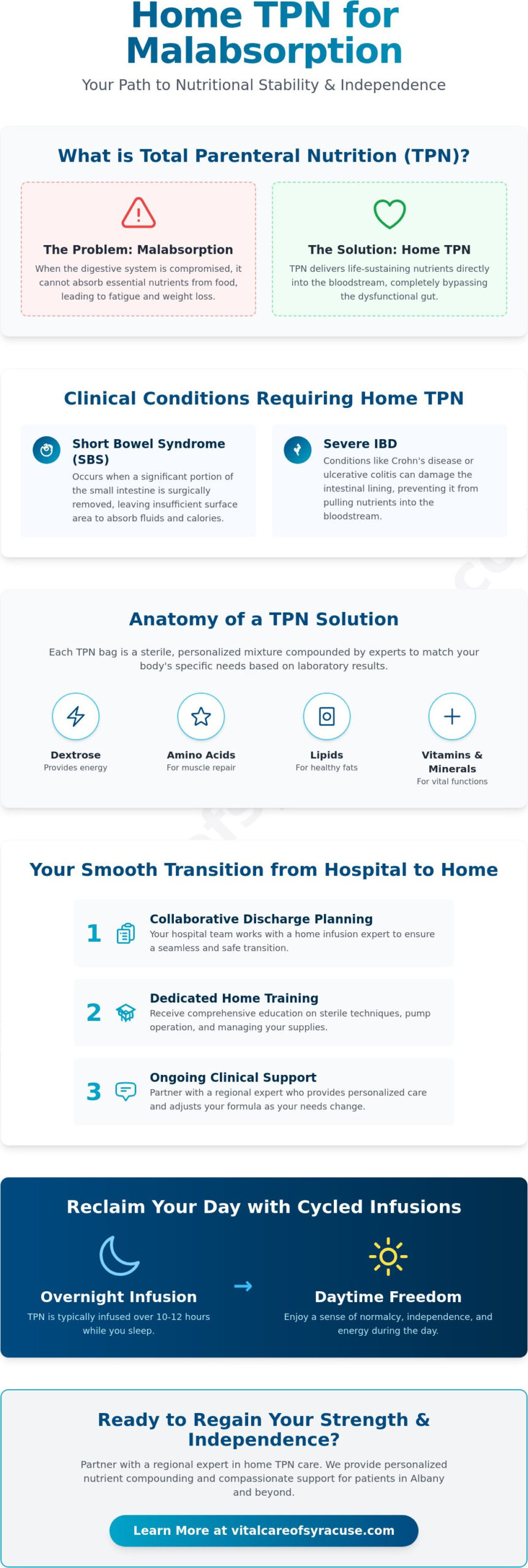
For individuals facing severe digestive impairment, the traditional process of eating and digestion may become impossible or even harmful. Total Parenteral Nutrition (TPN) serves as a specialized, life-sustaining intravenous therapy that provides all the necessary components of a healthy diet without requiring any work from your stomach or intestines. By delivering nutrients directly into a large vein, TPN bypasses the dysfunctional gastrointestinal tract entirely, allowing your body to receive the fuel it needs while your gut remains at rest. Accessing home TPN for malabsorption Albany patients means you can receive this high-level clinical support in the safety and familiarity of your own home.
The foundation of this therapy is the Parenteral nutrition (PN) solution, often referred to as a “TPN bag.” This sterile mixture is expertly compounded to include a precise balance of dextrose for energy, amino acids for muscle repair, and lipids for healthy fats, along with essential vitamins and minerals. Medical professionals typically recommend this path when oral intake or tube feeding is no longer sufficient to maintain your weight or support your vital organ function.
To better understand how this therapy is administered in a residential setting, watch this helpful video:
The Mechanics of Malabsorption
Clinical malabsorption occurs when the small intestine’s lining is damaged, inflamed, or surgically shortened, preventing it from pulling nutrients into the bloodstream. This is distinct from simple malnutrition, where an individual may not be eating enough. In cases of malabsorption, you might be consuming adequate calories, but your body cannot process or utilize them. This physiological failure often leads to chronic fatigue, rapid weight loss, and weakened immunity, making home TPN for malabsorption Albany residents a vital necessity rather than an elective choice.
Total vs. Partial Parenteral Nutrition
While some patients use partial parenteral nutrition to supplement what they can still eat, TPN is designed to be the sole source of a person’s nutritional needs. The decision between the two depends on the severity of your condition and how much of your digestive tract remains functional. Clinical guidelines typically require TPN formulas to provide between 25 and 35 calories per kilogram of body weight to ensure metabolic stability and prevent tissue wasting. Your care team will monitor your labs closely to adjust these levels, ensuring your formula remains perfectly balanced for your recovery.
Clinical Conditions Requiring Home TPN Support
Identifying the root cause of nutritional failure is the first step in tailoring a recovery plan that restores your vitality. While many digestive issues can be managed with diet or medication, certain severe conditions render the gastrointestinal tract non-functional. The medical community recognizes several Total Parenteral Nutrition indications, primarily focusing on patients whose bodies cannot digest or absorb nutrients effectively through the gut. For many navigating these complex health challenges, the availability of home TPN for malabsorption Albany residents offers a reliable path to stay out of the hospital and remain in their own community.
Short Bowel Syndrome and TPN Dependency
Short Bowel Syndrome (SBS) remains a leading driver for long-term parenteral therapy. This condition occurs when a significant portion of the small intestine is surgically removed or absent, leaving the body without enough surface area to absorb fluids and calories. Local clinicians must monitor SBS patients closely, as the loss of intestinal length often leads to rapid dehydration and electrolyte imbalances. If you’re looking for more specific regional resources, you might find our guide on TPN for short bowel syndrome Buffalo helpful for understanding how we manage these complex cases across New York.
Malabsorption in Inflammatory Bowel Disease (IBD)
Severe cases of Crohn’s Disease or Ulcerative Colitis often require a period of “gut rest” to allow the intestinal lining to heal. During intense flare-ups, inflammation is so pervasive that the gut cannot transport nutrients into the bloodstream, even if the intestine is full-length. TPN acts as a critical tool for preoperative optimization, ensuring you have the strength and protein stores necessary for successful surgery and recovery. We also see similar malabsorption needs in patients dealing with severe complications like pancreatitis in Auburn, where resting the digestive system is paramount to reducing pain and inflammation.
Other conditions that frequently necessitate home TPN for malabsorption Albany support include chronic intestinal pseudo-obstruction, where the nerves or muscles of the gut fail to move food forward. Additionally, patients recovering from enterocutaneous fistulas or those suffering from severe radiation enteritis after cancer treatment often rely on TPN to bypass damaged tissue. Conditions that impair gastric motility, such as gastroparesis, can also lead to severe nutritional deficits that require specialized intervention; our home infusion for gastroparesis patients Rochester resource guide explores how this type of digestive dysfunction is managed with home-based therapies across New York. These conditions are physically demanding, but a specialized home infusion partner can provide the steady, reliable hand needed to manage your nutrition safely at home. We view our role as a bridge, connecting complex clinical requirements with your personal need for comfort and stability.
The Transition: Moving from Hospital to Home TPN in Albany
Leaving the hospital marks a significant step toward reclaiming your independence and returning to the routines that bring you comfort. This transition is a carefully orchestrated process where your hospital clinical team collaborates closely with your home infusion provider to ensure a seamless handoff of care. For those beginning home TPN for malabsorption Albany services, the goal is to move the high-level medical support of the ward into the familiar surroundings of your own home without compromising safety or clinical excellence.
Coordination typically begins several days before your scheduled discharge. Your infusion provider ensures that all necessary hardware, such as infusion pumps and IV poles, along with your custom-compounded TPN bags, arrive at your Albany residence ahead of time. During the first 48 hours at home, a dedicated home infusion nurse often visits to oversee your first few connections. They act as a steady, reliable hand, helping you gain confidence as you move from being a patient in a facility to being a partner in your own health journey.
Training and Education for Caregivers
Education is the cornerstone of a successful home experience and a primary way we instill security in our patients. You or your caregiver will master the “SASH” technique, a methodical process involving Saline flush, Administering the TPN, a second Saline flush, and a Heparin flush to maintain catheter patency. A major focus of this training is the prevention of catheter-related bloodstream infections (CRBSI), which involves learning to recognize early warning signs such as redness, swelling, or unexplained chills. A sterile field requirement for home TPN administration means creating a dedicated, sanitized workspace where no unsterilized objects or surfaces come into contact with your medical supplies. By following these rigorous standards for managing TPN at home, you significantly reduce the risk of complications and ensure the longevity of your access site.
Albany-Based Clinical Monitoring
Long-term success with home TPN for malabsorption Albany depends on consistent, localized clinical monitoring. You don’t need to travel long distances for essential follow-up care. We utilize local Capital Region labs for your weekly blood chemistry panels, which allow us to track your electrolyte levels and organ function with precision. These results are reviewed by your home infusion pharmacist, who maintains a regular schedule of check-ins to adjust your TPN formula as your nutritional needs evolve. This collaborative approach keeps your local Albany GI specialists informed, ensuring that your long-term care plan remains cohesive and focused on your ultimate goal of improved energy and nutritional stability.
Daily Life and Safety: Managing TPN in the Capital Region
Integrating a complex medical therapy into your home life requires a shift in routine, but it shouldn’t mean the end of your independence. Most patients utilizing home TPN for malabsorption Albany residents find that the “cycle” approach offers the greatest flexibility. This method involves infusing your nutrients over a 10 to 12-hour window, usually overnight. By connecting before bed and disconnecting in the morning, you’re free to navigate your day without being tethered to a pole, allowing you to attend work, spend time with family, or enjoy a walk through Washington Park.
Managing your supplies involves some logistical planning within your home. TPN solutions require consistent refrigeration to maintain their stability and safety, so you’ll need to clear a dedicated shelf in your refrigerator. It’s also vital to account for the unique challenges of living in the Capital Region. Albany winters can bring severe ice and snow that might disrupt travel or power. We help you prepare for these moments by ensuring your infusion pump has a reliable battery backup and by teaching you how to maintain a safety buffer of supplies in case a delivery is delayed by a storm.
Catheter Care and Maintenance
Your central venous access device is your lifeline, and keeping it healthy is our top priority. You may have a PICC line, which is typically for shorter-term use, or a tunneled catheter like a Hickman or Groshong for long-term support. Daily site inspections are a critical part of your routine. You should look for any signs of moisture, redness, or swelling around the dressing. If you ever experience a sudden fever, chills, or notice the catheter has shifted, you must call your local Albany infusion nurse immediately to prevent further complications.
Travel and Mobility with TPN
A malabsorption diagnosis shouldn’t keep you from exploring the world. Traveling with TPN is entirely possible with the right preparation. When flying, TSA regulations permit you to carry your liquid nutrition and medical pumps through security checkpoints, though it’s helpful to carry a letter of medical necessity. We can assist you in packing your supplies for transport and can even coordinate with providers at your destination to ensure your next shipment is waiting for you when you arrive. If you’re ready to see how a dedicated partner can simplify your care, reach out to learn more about our Parenteral Nutrition (TPN) support for patients across the region.
Localized Care: Why Vital Care of Syracuse is the Albany Choice
Choosing a provider for home TPN for malabsorption Albany residents is a decision that impacts your daily peace of mind and long-term health. While national providers often operate from distant hubs, Vital Care of Syracuse bridges the gap across the Syracuse-to-Albany corridor with a deeply personal touch. This regional proximity allows for a more responsive level of care, ensuring that your life-sustaining nutrition is managed by clinicians who are familiar with the specific healthcare landscape of the Capital Region. We don’t just ship supplies; we act as a dedicated partner in your recovery, providing direct access to experts who understand your unique medical history and local environment.
One of the most significant advantages of this local partnership is the speed and precision of our nutrient compounding. As we discussed regarding clinical monitoring, your weekly lab results serve as the roadmap for your therapy. Because our pharmacy team is regionally based, we can quickly translate those lab values into a personalized TPN formula that addresses your specific malabsorption needs. This streamlined communication between our pharmacists and your local Albany GI specialists ensures that your therapy is always optimized for your current health status, preventing the delays often associated with larger, out-of-state operations.
Compassionate Expertise in Your Neighborhood
The Vital Care difference lies in our ability to balance clinical precision with genuine human warmth. You aren’t just a patient number; you’re a neighbor. Our local delivery drivers and nurses know the streets of Albany and the surrounding communities, which means they understand the logistical realities of the area, from winter weather patterns to the layout of local hospital systems. This local focus reduces the stress of waiting for shipments and provides a sense of security that only a regional expert can offer. Understanding the benefits of a local home infusion company is essential for anyone looking for reliable, long-term support that feels like a protective advocate rather than just a service.
Starting Your Home TPN Journey
Beginning your therapy doesn’t have to be a complicated or intimidating process. To initiate a referral, you can simply speak with your Albany-based physician about transitioning to home-based care. Our team takes the lead on the heavy lifting, including insurance navigation and the complex prior authorization process required for parenteral nutrition. We work directly with your insurance carrier to ensure your coverage is in place before your first delivery arrives, allowing you to focus on your health rather than paperwork. If you’re ready to take the next step toward nutritional stability and improved energy, you can speak with a local TPN specialist today to discuss how we can support your home TPN for malabsorption Albany requirements with precision and care.
Reclaiming Your Vitality and Independence at Home
Living with a complex malabsorption condition is undeniably challenging, but it doesn’t have to define your daily life or limit your presence in the Albany community. By transitioning to home parenteral nutrition, you can stabilize your weight and restore your energy levels while remaining in the comfort of your own home. You’ve seen how the right training, sterile techniques, and localized clinical monitoring create a safe environment for recovery. Partnering with a team that understands the specific needs of managing home TPN for malabsorption Albany patients ensures that your therapy is as precise as it is compassionate.
As a locally owned and operated provider in New York, we pride ourselves on being specialized Parenteral Nutrition (TPN) experts who prioritize your well-being. Our dedicated pharmacy team and nurses provide 24/7 clinical support, acting as a steady hand throughout your health journey. If you’re ready to move toward a more stable and energetic future, Contact Vital Care of Syracuse for Albany Home TPN Support today. You have the strength to navigate this path, and we’re here to ensure you never have to do it alone.
Frequently Asked Questions
Is home TPN safe for long-term malabsorption management?
Yes, home TPN is a highly regulated and safe therapy when administered according to strict sterile protocols. Your clinical team provides extensive training to help you prevent infections, while ongoing monitoring ensures your liver and kidney functions remain healthy. Many patients successfully manage their nutrition this way for several years, maintaining a high quality of life while receiving life-sustaining support.
Can I still eat food while receiving TPN for malabsorption?
Many patients can continue to eat for pleasure or supplemental nutrition, provided their physician hasn’t ordered strict “gut rest.” If your digestive system can handle small amounts of oral intake, you may enjoy meals while the TPN ensures you meet your total caloric and micronutrient requirements. Your specialist will guide you on what’s appropriate based on your specific intestinal capacity and symptoms.
How much does home TPN cost in Albany, NY?
The cost of home TPN varies significantly depending on your specific nutrient formula, the frequency of your infusions, and your insurance coverage. It’s helpful to know that home-based therapy is generally 60% more cost-effective than receiving the same treatment in a hospital setting. Our team works directly with your provider to navigate these financial details and clarify any out-of-pocket responsibilities you might have.
What happens if my TPN pump alarms in the middle of the night?
Most pump alarms are easily resolved and indicate minor issues like a kinked tube, an air bubble, or a low battery. You’ll receive comprehensive troubleshooting training before your first infusion so you feel confident responding to these alerts. If an issue persists, you have 24/7 access to a clinical professional who can guide you through the resolution over the phone at any hour.
How do I shower or bathe with a TPN catheter?
You can maintain your hygiene by using specialized waterproof covers or “shower bags” to protect your catheter site and dressing. It’s essential to keep the area entirely dry to prevent bacterial growth and potential infection. While you should avoid submerging the site in a bathtub, hot tub, or pool, a standard shower is safe when the proper protective barriers are securely in place.
Will insurance cover home parenteral nutrition for malabsorption?
Yes, most major insurance plans, including Medicare and New York State Medicaid, provide coverage for home TPN when medical necessity is clearly documented. Navigating home TPN for malabsorption Albany services often involves a prior authorization process that our team manages on your behalf. We’ll verify your specific benefits and explain how any 2026 policy changes might impact your coverage.
How often do I need blood work while on TPN?
Most patients require weekly blood draws during the initial phase of their therapy to ensure the nutrient formula is perfectly balanced for their metabolic needs. Once your laboratory values stabilize and your weight is consistent, your physician might reduce the frequency of these tests to every two weeks or monthly. These regular checks are vital for preventing electrolyte imbalances and ensuring your long-term safety.
Can I go back to work or school while on home TPN?
Yes, many patients return to their professional or academic lives by utilizing the “cycling” method to infuse their nutrients. By infusing over 10 to 12 hours overnight, you’re disconnected from the pump during the day, allowing for full mobility and a normal schedule. This flexibility is one of the primary reasons home-based therapy is preferred for those seeking to maintain an active, independent lifestyle in the Capital Region.
Leave a Reply