


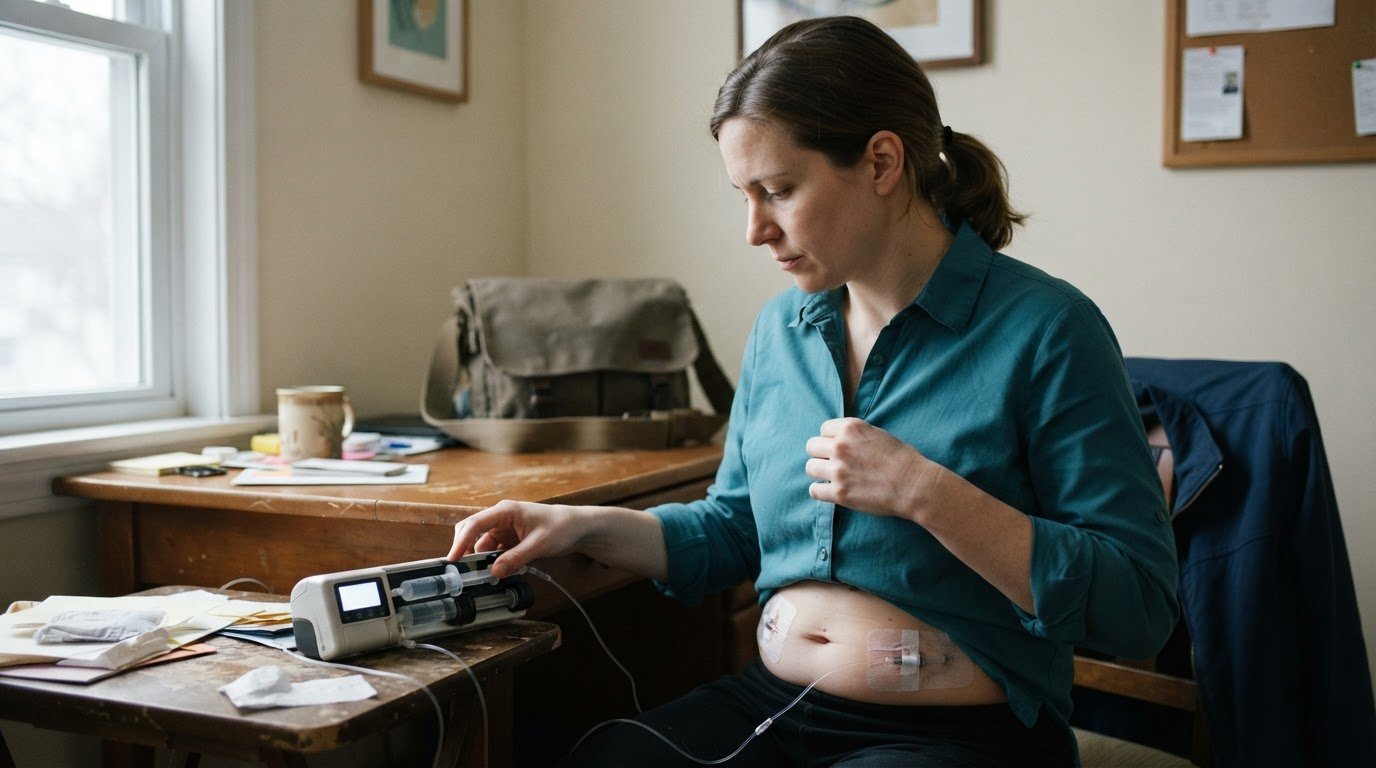
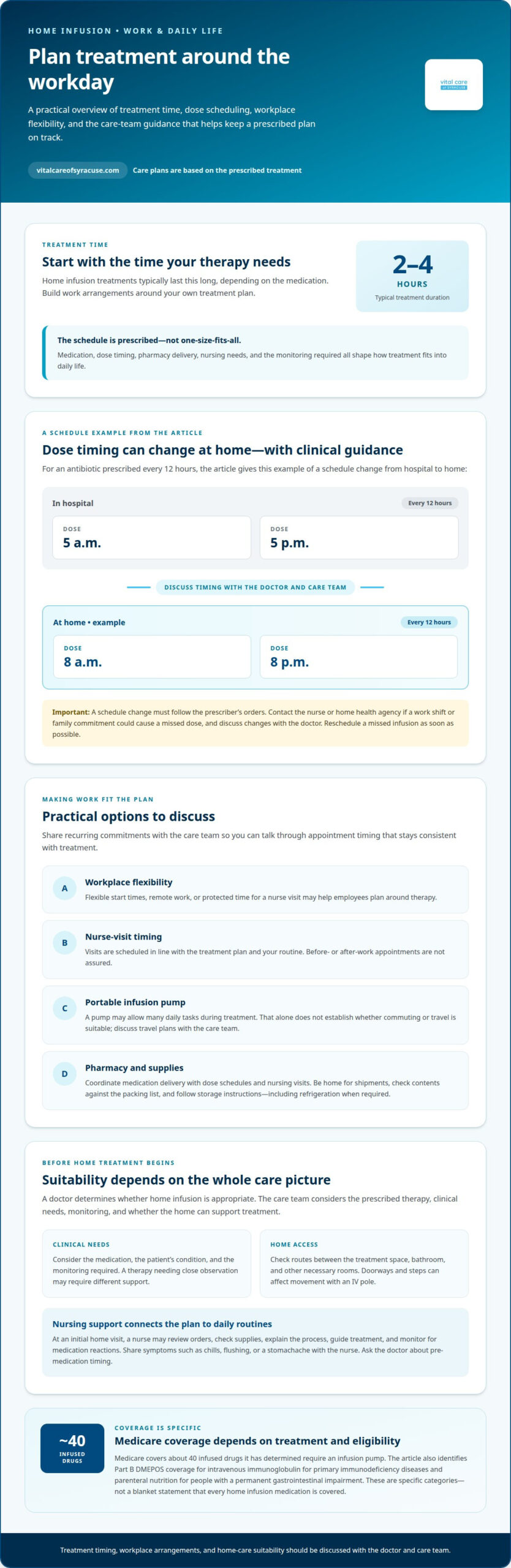
Home infusion can make treatment part of home life rather than requiring every dose to happen in a clinic. Learning how to manage work with home infusion starts with understanding that treatment is prescribed and planned around the medication, your schedule, and the clinical support required. Home infusion treatments typically last 2 to 4 hours, depending on the medication, so work arrangements need to reflect your specific treatment plan.
It’s understandable to wonder whether appointments and treatment time will disrupt a normal workday. This guide explains how to manage work with home infusion, including how scheduling and an infusion pump may help treatment fit around everyday responsibilities. It also covers what clinicians consider when assessing whether home care is suitable, and how nursing education and caregiver support can help you plan for work and home routines.
Key Takeaways
- Understand how prescribed medication, supplies, and nursing care fit together in a home infusion plan.
- See which scheduling considerations can help treatment work alongside your job and daily responsibilities.
- Learn what clinical and practical factors help determine whether home infusion may suit your needs.
- Explore how nursing education and caregiver support can make treatment routines feel more manageable.
What is home infusion?
Home infusion is prescribed therapy delivered at home, with medication, supplies, and nursing care coordinated around treatment orders. Understanding how these parts fit together helps clarify what receiving care involves.
Coordinating Medication, Supplies, and Nursing Care
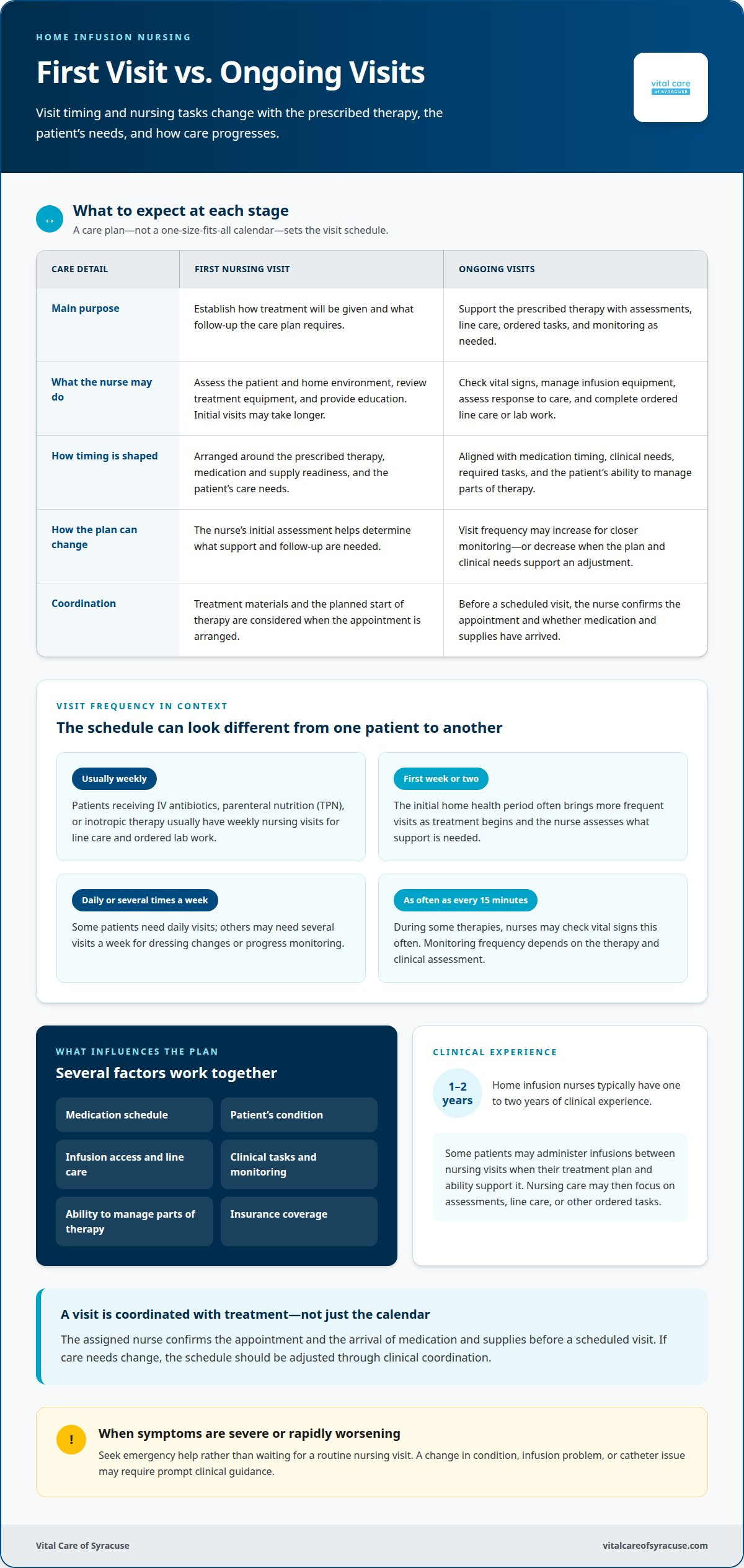
Coordination means aligning the prescriber’s orders, pharmacy-prepared medication, supplies, and nursing support for each treatment. This helps ensure the prescribed medication and equipment are ready when care is scheduled. At the first home visit, a nurse may review the orders, check supplies, and explain the process, connecting clinical instructions with the practical details of treatment at home.
Medication Administration and Clinical Monitoring
Medication administration is the delivery of prescribed therapy; clinical monitoring helps assess how the patient responds during treatment. During initial home infusion visits, a nurse guides the patient through the process and monitors for medication reactions. Tell the nurse about changes such as chills, flushing, or a stomachache, which may signal a reaction. Some prescribed treatments also include pre-medications taken before infusion. Ask the doctor about their timing or raise any questions.
Coordinating Medication and Supply Delivery and Storage
Delivery coordination helps ensure medication and supplies reach the home in time for planned treatment. Be home to receive shipments, and refrigerate medication immediately if its instructions require it. Check the shipment contents against the packing list and follow storage instructions carefully, since some medicines require specific temperatures. Planning refrigerator space in advance can also help accommodate medication and supplies with special storage needs.
Medicare coverage depends on the treatment and eligibility. Medicare’s Part B DMEPOS benefit covers intravenous immunoglobulin for primary immunodeficiency diseases and parenteral nutrition for people with a permanent gastrointestinal impairment. Medicare also covers about 40 infused drugs it has determined require an infusion pump. These are specific coverage categories, not a blanket statement that every home infusion medication is covered.
How home infusion providers help manage treatment schedules alongside daily routines
Planning how to manage work with home infusion starts with the prescribed dose schedule, pharmacy delivery, and nursing needs. Home treatment can eliminate travel to an infusion center, but treatment time and costs depend on the medication, services, and insurance coverage. Discuss with the care team how the plan could fit around work and family responsibilities.
Coordinating Pharmacy Logistics and Dose Schedules
Pharmacy coordination connects medication delivery with the dose schedule and any nursing visits. This matters because treatment needs to follow the prescriber’s orders, even when a workday changes. For example, an antibiotic prescribed every 12 hours may be rescheduled from 5 a.m. and 5 p.m. in hospital to 8 a.m. and 8 p.m. at home. The doctor and care team guide schedule changes.
Fitting Infusions Around Work and Family
A nurse visit is scheduled in line with the treatment plan and the patient’s routine. Visits before or after normal work hours are not assured, because scheduling depends on the prescribed timing and care plan. If a work shift or family commitment could cause a missed dose, notify the nurse or home health agency and discuss changes with the doctor. Reschedule a missed infusion as soon as possible.
If you’re learning how to manage work with home infusion, share practical constraints with the care team to discuss possible appointment timing. For example, explain recurring meetings or school pickup needs, then talk through options that remain consistent with the treatment plan.
Workplace Accommodations for Infusion Therapy
Flexible start times, remote work, or protected time for a nurse visit may help employees plan around therapy. A portable infusion pump may allow patients to complete many daily tasks during treatment, but that does not establish whether commuting or travel is suitable. Discuss travel plans with the care team, including dose timing, pump use, and treatment needs. This can help you plan work around home infusion while following the prescribed plan.
Assessing whether home infusion is suitable
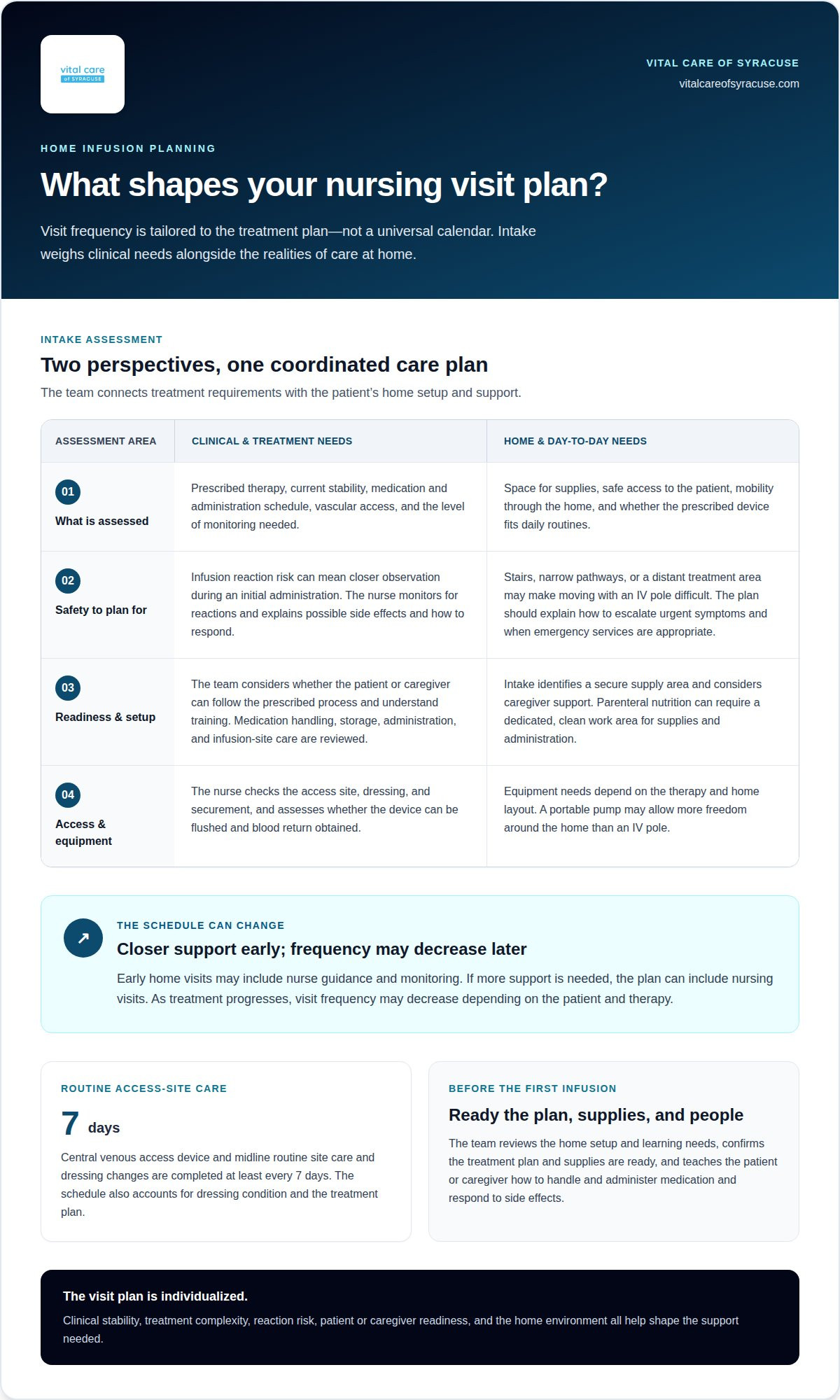
Whether home infusion is suitable depends on the prescribed therapy, the patient’s clinical needs, and whether the home can support treatment. A doctor should determine whether home infusion is appropriate before arrangements begin. The care team considers the medication, the patient’s condition, and the monitoring required during treatment. This matters because a specialty therapy requiring close observation may need different support from one that can be managed at home.
Physical access is another practical consideration. Before treatment starts, check whether the areas you need to reach are accessible with an IV pole. Consider the route between the treatment space, bathroom, and other necessary rooms. A narrow doorway or steps could affect how easily you move during an intravenous infusion. The home layout should support the prescribed treatment without making essential movement difficult.
Evidence also informs decisions about the treatment setting. Studies have shown home infusion is at least as safe and effective as treatment in an infusion center. For some patients, home infusion can help make an earlier transition from hospital care possible. It can also reduce costs and the risk of hospital-acquired infection for patients receiving services at home. These potential benefits do not replace an assessment of individual treatment and monitoring needs.
The care team weighs these considerations together rather than assuming home infusion suits every patient or medication. For example, someone returning home after hospital treatment may need continuous therapy, while another patient may have scheduled doses and different monitoring needs. The doctor determines whether the prescribed plan can be delivered safely at home. Before care begins, discuss how the treatment plan, home access, and clinical monitoring fit together.
Nursing education and caregiver support
Nursing education helps patients and caregivers understand the prescribed infusion plan, the visit process, and their roles during care. At the first home visit, the nurse assesses the patient, checks supplies, reviews therapy orders, and explains how the infusion will proceed. This visit may take longer than one at a hospital or infusion center. It gives the patient and a family member time to understand what to expect before treatment becomes part of daily life.
Support can change as treatment progresses. Nurse visits may become less frequent depending on the patient and therapy, and some patients may eventually administer their own treatment. The care team considers the individual plan and readiness for this transition. If you prefer professional assistance, discuss nursing support for ongoing treatment rather than assuming you must administer it yourself.
A caregiver can help manage practical needs around an infusion, such as protecting appointment time or keeping household routines on track. Their role should follow the patient’s care plan and the nurse’s guidance. For someone working, a family member might help communicate schedule changes or be present during a visit. This support can help balance treatment with work without shifting clinical responsibilities to the caregiver.
Nursing education also gives patients a clear point of contact for questions about prescribed therapy. For example, someone receiving anti-infective treatment can discuss planned nursing visits and the infusion process with the care team. If treatment or the patient’s needs change, the support plan can be revisited. Nurses also explain what changes to report during care, helping the team respond to relevant concerns.
Professional nursing keeps clinical tasks with trained staff while helping patients and caregivers prepare for treatment at home. To discuss professional support for prescribed infection treatment, explore home infusion care.
Vital Care of Syracuse: Home infusion
Vital Care of Syracuse provides home infusion for patients whose prescribed treatment can be delivered at home. Its therapies include Anti-infective Therapy, Immunoglobulin (IVIG/SCIG), and Parenteral Nutrition (TPN). These services may suit a care plan that calls for infusion therapy when the clinical team has determined home treatment is appropriate.
For patients balancing treatment with work and family routines, professional home infusion care brings prescribed therapy together with nursing support. The right plan depends on the medication, treatment schedule, and individual clinical needs. Discussing those needs with the care team can help clarify how treatment may fit into daily life.
If you’re considering home infusion for prescribed treatment, contact Vital Care of Syracuse to discuss your care needs.
Build a Work Routine That Leaves Room for Care
The question of how to manage work with home infusion is best approached as a planning conversation, not a test of how much you can fit into one day. Identify which parts of your work routine could shift, which responsibilities need coverage, and what support could make treatment days more manageable. A clear plan can help you discuss practical adjustments with your employer while keeping your care team informed about changes that could affect treatment.
You don’t have to solve every scheduling detail at once. As treatment progresses, revisit what’s working, raise concerns early, and include a trusted caregiver if that would help you keep track of priorities. Aim for a sustainable routine that makes room for your health, work, and personal life rather than squeezing treatment into an already crowded day. Adjust the plan as your needs change.
For a conversation about home infusion support, Contact Vital Care of Syracuse. A thoughtful next step can help you move forward with greater clarity and confidence.
Frequently Asked Questions
How can home infusion providers help patients schedule treatment around work hours?
The care team coordinates dose timing and nursing visits with the prescribed treatment plan and pharmacy delivery. Share work commitments and expected schedule changes so the team can discuss suitable timing with the prescriber. Don’t move a dose on your own to accommodate a meeting or shift; treatment timing must follow the clinical plan. If a dose may be missed, notify the nurse or home health agency and discuss changes with the doctor.
How long do home infusion treatments and setup typically take?
Treatment time depends on the medication: home infusions typically last 2 to 4 hours, while some therapies may take considerably less or longer. The first visit also includes nursing tasks, so it may take longer than a later session. Ask the care team how the prescribed therapy and initial assessment affect your expected appointment window, then plan work meetings around that full window rather than the infusion alone.
What equipment and supplies can providers arrange for home infusion at work or while working remotely?
Equipment and supplies depend on the prescribed therapy and care plan. A portable infusion pump may allow more movement during treatment, while other medications may require different supplies. Home infusion is planned for a home setting; working remotely from home is different from receiving treatment at an office. The care team can identify the equipment and supplies required and whether the home setting suits the prescribed plan.
How can the care team help patients prevent infection and safely manage an infusion during work?
The nurse can explain the treatment process, review supplies, and discuss safe care practices for the prescribed infusion. A clean, prepared workspace helps make room for the visit and treatment materials. If you work remotely, protect the appointment from competing tasks so you can follow nursing instructions and report concerns promptly. Ask the nurse to explain any care steps specific to your medication and infusion setup.
What support is available if infusion side effects or emergencies occur during work hours?
Tell the nurse promptly about changes in how you feel during treatment, including symptoms that may indicate a reaction. Follow the response instructions provided for your therapy; a life-threatening reaction requires calling 911. For a concern that isn’t life-threatening, use the contact process in your care plan to reach the appropriate care team member. Keep those instructions accessible during a workday infusion.
Does insurance cover home infusion nursing, supplies, and after-hours visits?
Coverage varies by insurance plan, prescribed therapy, and services involved, so coverage for medication does not automatically mean nursing, supplies, or after-hours visits are covered. Some plans that cover infusion or injectable treatment in a clinic also cover care at home. Vital Care of Syracuse assists with insurance verification, prior authorizations, and reimbursement coordination to help clarify how benefits apply to planned home infusion services.
Leave a Reply