



Home treatment isn’t the right fit for every situation, but it can be a choice when infusion care is clinically appropriate. Home infusion means receiving prescribed drugs or biologicals through an IV or under the skin at home. Home infusion patient rights include being offered a choice between care at home and care at an infusion center.
You deserve clear information about your treatment plan, who will provide your care, and how insurance may affect what you owe. Medicare covers certain home infusion drugs and services under specific benefits, while coverage through other plans depends on the policy. This guide explains how home infusion works, what to understand about costs and insurance changes, and how to make informed choices or raise concerns with your care team.
Key Takeaways
- Learn which factors shape your out-of-pocket responsibility and why coverage can differ by treatment and insurance plan.
- Understand how to raise a concern, describe what happened, and follow up on a grievance.
- See how sharing relevant health information and participating in care planning can support treatment at home.
- Know what information to request before deciding where to receive infusion therapy and who will provide it.
Financial obligations and insurance changes
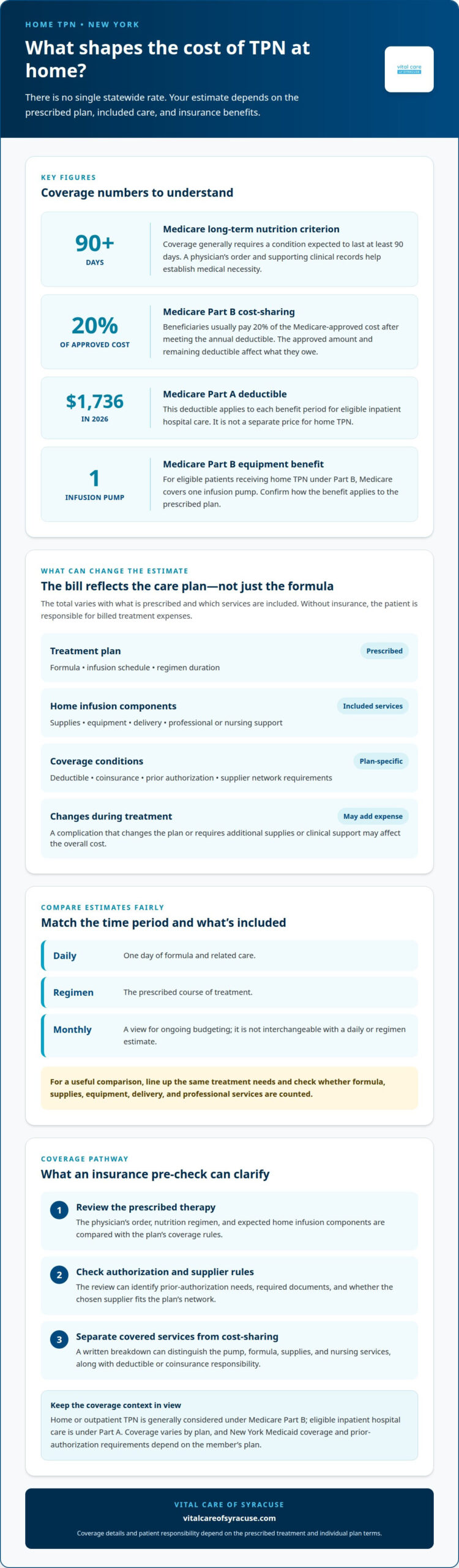
A financial obligation is the amount you may owe for covered care, medication, supplies, or services. Your responsibility depends on your treatment, insurance benefits, and how the plan processes each part of your care. Before treatment begins, ask which items are billed as medication, equipment, supplies, or nursing services. This breakdown can help you understand a bill and identify which coverage question to ask.
The 21st Century Cures Act is federal legislation introduced by U.S. Congress on December 13, 2016. Section 5012 of the act established a new Medicare home infusion therapy benefit in the United States, according to U.S. Congress. The benefit concerns certain drugs and biologicals administered intravenously or subcutaneously through a durable medical equipment pump. It does not make every home infusion service payable under the same Medicare benefit.
Medicare Part B covers a limited number of infused drugs through its DMEPOS benefit, including IVIG for primary immunodeficiency and parenteral nutrition for people with permanent gastrointestinal impairment. Medicare also covers certain infused cardiac medications, chemotherapies, and total parenteral nutrition at home when eligibility requirements are met. Medicare Part D may cover some medication costs, but generally not professional services or supplies. These distinctions matter when a treatment plan includes medication, equipment, and nursing services.
An insurance change is a new or revised plan that can alter how treatment is covered. When your plan changes, review its drug and medical benefits, pharmacy requirements, and rules for home-based care. For example, a change affecting medication coverage may leave separate questions about equipment or nursing services. Ask the insurer for its coverage decision and effective date, then discuss any changes with your care team before relying on the previous plan’s terms.
Safety standards are requirements and professional practices intended to support safe, quality care. Applicable state and federal regulations, along with professional practice standards, inform oversight. Providers seeking Medicare reimbursement for home infusion nursing services must be accredited under ACHC’s Home Infusion Therapy Accreditation program to meet CMS Conditions for Coverage. Licensing rules depend on applicable state regulations, and qualified clinical personnel must have specialized training for the services they administer.
Grievances and complaint follow-up
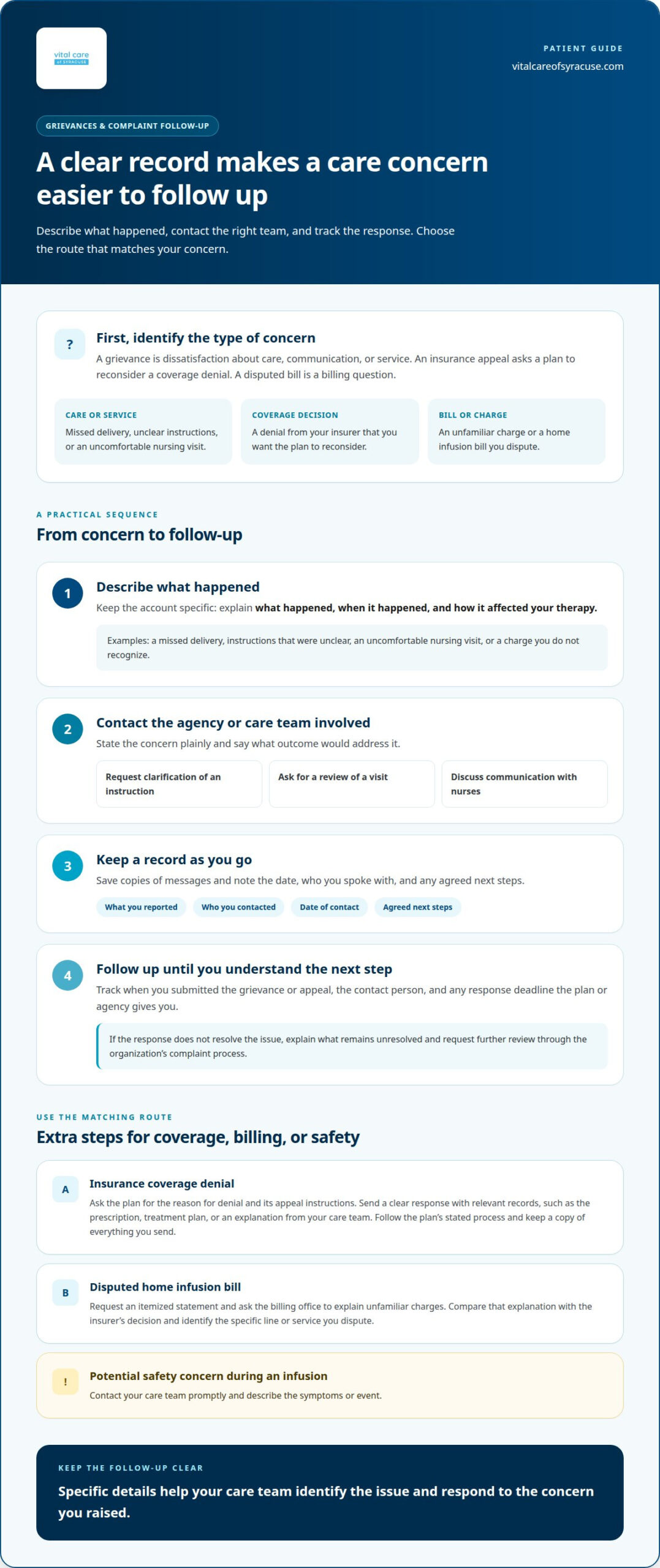
A grievance is a formal expression of dissatisfaction about care, communication, or service. A complaint may concern a missed delivery, unclear instructions, an uncomfortable nursing visit, or a charge you don’t recognize. Describe the event plainly, including what happened, when it occurred, and how it affected your therapy. Keep your account specific so the care team can identify the issue and respond to the right concern.
To raise a care concern, contact the agency or care team involved and state what outcome would address the problem. You might request clarification of an instruction, a review of a visit, or a discussion about communication with nurses. Keep copies of messages and note the date, who you spoke with, and any agreed next steps. If the response doesn’t resolve the issue, explain what remains unresolved and request further review through the organization’s complaint process.
An insurance appeal asks an insurer to reconsider a coverage denial. Ask the plan for the reason for denial and its appeal instructions, then submit a clear response with relevant records, such as the prescription, treatment plan, or an explanation from your care team. Follow the insurer’s stated process and keep a copy of everything you send. For a disputed home infusion bill, request an itemized statement and ask the billing office to explain unfamiliar charges. Compare that explanation with the insurer’s decision and identify the specific line or service you dispute.
Follow-up means tracking a concern until you receive a response and understand the next step. Record when you submitted the grievance or appeal, the contact person, and any response deadline the plan or agency gives you. If the issue involves a potential safety concern during an infusion, contact your care team promptly and describe the symptoms or event. Clear records help you discuss therapy, coverage, nurses, home health, and agencies without relying on memory.
For questions about care delivered at home, home infusion care can be part of a conversation about your treatment concerns.
Patient responsibilities and participation
Patient participation means sharing information and taking part in decisions about your care. Tell your physician and infusion team about changes in symptoms, medication, or your ability to manage treatment. For example, report a new concern during a nursing visit rather than waiting until the next scheduled discussion. Clear updates help the clinical team understand what is happening at home.
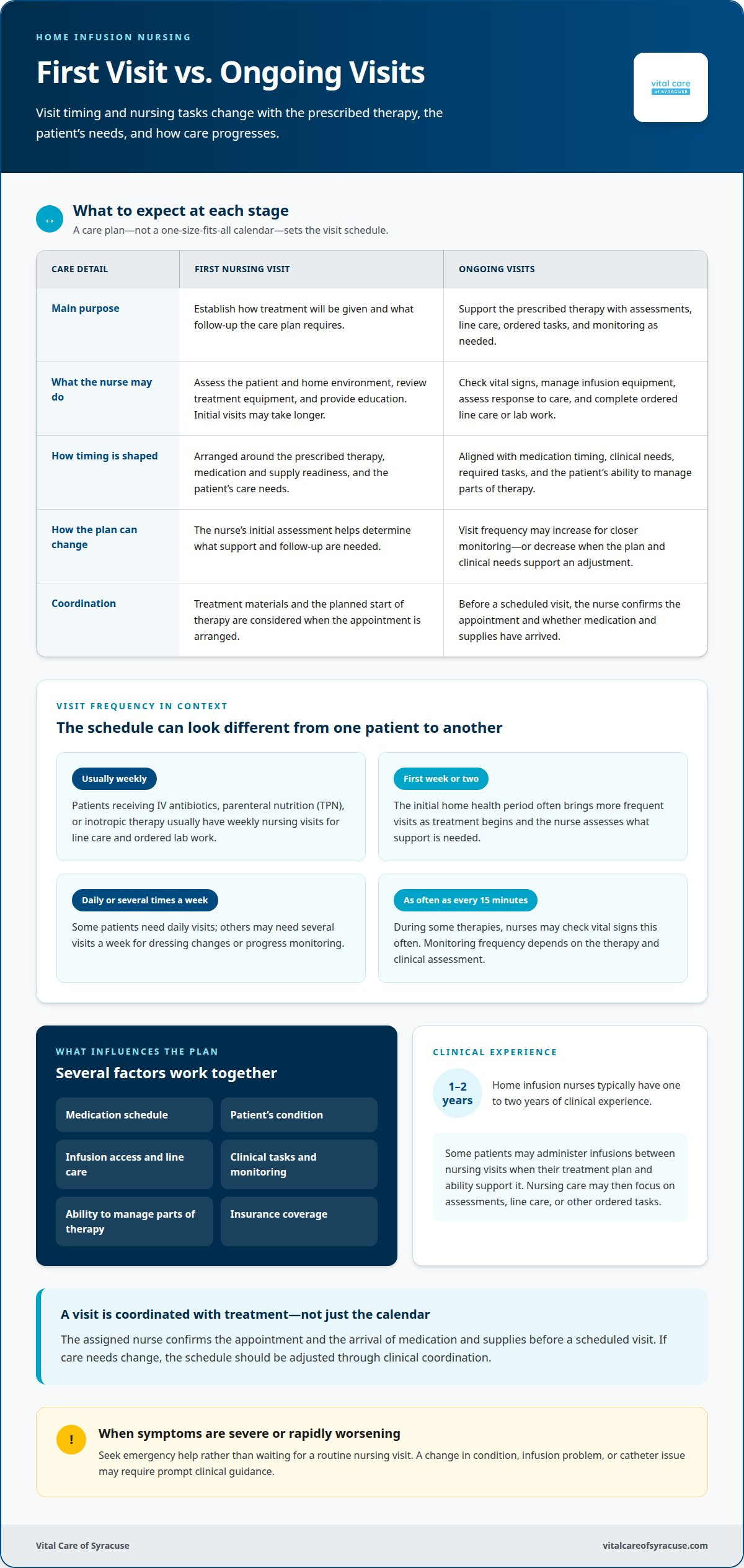
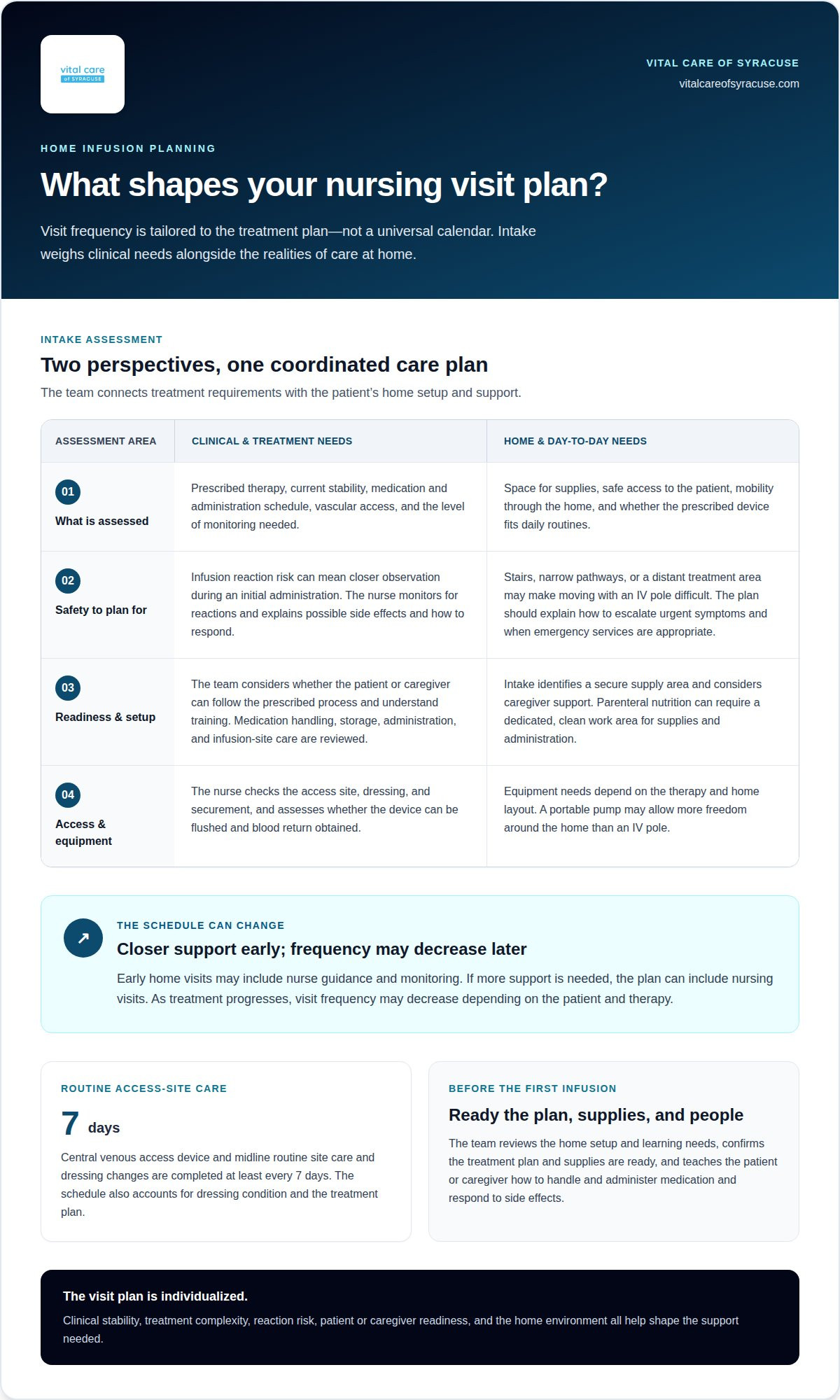
Training prepares patients or caregivers to manage prescribed infusion tasks safely. Home infusion nurses provide education and training, explain treatment goals and possible side effects, and teach you how to recognize infection or an adverse reaction. They can also review equipment troubleshooting and how to contact the care team. Ask for an explanation again if a step is unclear, especially before administering medication through an intravenous line.
Caregiver participation means practical support from someone you choose to involve. If a caregiver may help with infusion therapy, include them in the teaching session so they hear the same instructions. They can help keep track of questions, notice changes during treatment, and communicate concerns. You remain an important voice in the plan, even when someone else assists with daily tasks.
Following the agreed treatment plan means using the prescription and care-team instructions as directed. Keep scheduled nursing visits when possible, and tell the team promptly if a visit or dose cannot happen as planned. Don’t change an infusion schedule or equipment setting on your own. Your physician oversees your care, while home infusion nurses monitor treatment and can share concerns with the care team.
Monitoring means paying attention to the infusion site and changes during or after treatment. Tell the nurse or care team about redness, discomfort, fever, or a possible reaction, and describe when it began. Keep notes about missed doses, questions, and symptoms to support a clear conversation. These practical steps help you participate actively and give clinicians useful information about what is happening at home.
Patient rights to information and informed decisions
Informed decision-making means choosing care after receiving understandable information about available options. Patients must be offered a choice between receiving IV therapy at home and receiving it at an infusion therapy center. Home care is appropriate when it fits the clinical plan, and your stated preference about an infusion provider should be respected. A key part of home infusion patient rights is having your preference heard and understanding how each setting affects administration, monitoring, and support.
Treatment information is a clear explanation of the prescribed therapy and what to expect. Before agreeing to a plan, ask what medication will be administered, how it will be given, what side effects or reactions to watch for, and whom to contact with concerns. The care team should also explain which supplies are involved and what tasks, if any, you or a caregiver would perform. If a term is unfamiliar, ask for a plain-language explanation before making a decision.
HIPAA is the federal framework that protects the privacy of health information. You can request your medical records from a covered health care provider, and providers must protect health information as required by HIPAA. Ask how to submit a records request and how the organization will provide the information. You can also ask who may receive your information and how to authorize sharing it with a caregiver or another member of your care team. These protections are an important part of home infusion patient rights.
Shared decision-making is a discussion in which patients and clinicians consider treatment information and patient preferences together. For example, explain whether home administration feels manageable and raise concerns about supplies, visits, or privacy. Skilled clinical personnel can provide education about treatment goals, medication administration, possible reactions, and contacting the care team. Clear answers help you understand the plan before care begins and identify questions that need follow-up.
For a conversation about home infusion treatment options, contact Vital Care of Syracuse.
Vital Care of Syracuse: Home infusion
Vital Care of Syracuse provides home infusion for patients whose prescribed treatment is appropriate for care at home. Its offerings include Anti-infective Therapy, Immunoglobulin (IVIG/SCIG), and Parenteral Nutrition (TPN). If one of these therapies is part of your care plan, Vital Care of Syracuse can help you understand home-based treatment and how it fits your needs.
Before beginning, discuss the prescription and care plan with your physician, including questions about treatment, coverage, and your role in care. Clear communication helps you make informed choices and understand what to expect from home infusion.
For questions about home infusion care, contact Vital Care of Syracuse.
Take your next step with confidence
Understanding home infusion patient rights can help you take an active role in conversations about care that fits your life. As your needs or circumstances change, keep communication open with your physician and care team, and raise new questions before they become barriers to treatment. Your preferences and concerns belong in those discussions.
When home infusion is part of your care plan, Vital Care of Syracuse offers Anti-infective Therapy, Immunoglobulin (IVIG/SCIG), and Parenteral Nutrition (TPN). A conversation with the team can help you understand how these services relate to your prescribed treatment and what to discuss next.
Contact Vital Care of Syracuse today to discuss home infusion care. You deserve to move forward with clear information and a voice in your care.
Frequently Asked Questions
What is home infusion?
Home infusion is prescribed medication or biological treatment administered at home, usually intravenously or under the skin. It may involve a nurse’s visit, patient or caregiver training, and coordination with the treating physician. For example, someone receiving prescribed IV medication may have clinical support at home instead of traveling to an infusion setting. The treatment plan determines how care is delivered.
What rights do patients have when receiving home infusion therapy in the United States?
You can express preferences about your care and where you receive infusion therapy. You should be offered a choice between home treatment and an infusion center when both are clinically appropriate, and you can state a preference about the infusion provider. You can also raise questions about your care, ask for explanations in understandable terms, and share concerns with the clinical team.
What must home infusion providers disclose about treatment, costs, and alternatives?
Before deciding, ask for a clear explanation of the prescribed treatment, its purpose, how it will be administered, and what support is involved. Request a breakdown of medication, equipment, supplies, and professional services, along with the insurer’s coverage decision and any expected patient responsibility. Ask how an infusion center differs from home care so you can weigh the practical alternatives with your care team.
What are patients’ rights to informed consent and the right to refuse home infusion treatment?
Informed consent means understanding a proposed treatment before agreeing to receive it. You can tell your treating physician that you do not wish to start or continue home infusion and ask to discuss the clinical implications and other appropriate settings. Communicate a decision to refuse clearly, especially before a scheduled dose, so the care team can discuss next steps and update the treatment plan.
What should patients do to report medication errors, adverse reactions, or unsafe home infusion care?
Contact your treating physician or infusion care team promptly, describe what happened, and say when it occurred. For a possible medication error, include the medication and dose involved if known; for a reaction, describe the symptoms and when they began. Keep the packaging or written instructions available for reference. If an infusion is underway, follow the care team’s instructions rather than changing the treatment independently.
How can patients file complaints against a home infusion provider, and which state agencies handle them?
Start by sending the provider a written complaint that identifies the event, relevant dates, and the response you’re seeking; keep a copy and record follow-up conversations. If the concern remains unresolved, the appropriate state oversight agency depends on the provider and issue. State survey agencies review hospitals’ compliance with patient choice requirements, while complaints about other providers may follow different state oversight channels.
Leave a Reply