



Home infusion can bring prescribed treatment into a familiar setting while helping family routines continue. When explaining home infusion to family, begin with the basics: medication or fluids are given at home through a needle or catheter, often into a vein, under the skin, or into a muscle. Home treatment may be appropriate when the patient’s clinical needs and care plan support it.
It’s understandable to wonder what changes when care moves out of a hospital or clinic, and what support a patient may need. Before treatment begins, the patient or caregiver is taught how to manage the medication and equipment and what side effects to watch for. A nurse may guide early visits and monitor for reactions. An infusion can take anywhere from 30 minutes to several hours, depending on the medication.
This guide explains how a home treatment plan is arranged, what affects its duration, and how treatment schedules and caregiving may fit family life. It also covers practical considerations, including equipment and the role relatives may choose to play, so everyone has a clearer idea of what to expect.
Key Takeaways
- Understand how a home infusion nurse prepares patients and caregivers to manage treatment and recognize potential concerns.
- Learn what factors shape a transition from hospital care, including the prescribed therapy, home setting, and support available.
- See why infusion-session length varies by medication and how the treatment schedule is planned around it.
- Explore ways equipment and caregiving roles may affect household routines, and where families can make room for flexibility.
What is home infusion?
Home infusion delivers prescribed medication or fluids at home through a needle or catheter. Treatment may be intravenous, under the skin, or intramuscular. The care team explains the therapy and the patient’s or caregiver’s role in the plan.
Medication reactions and infusion complications are important risks to understand. Follow the care team’s instructions for recognizing unexpected reactions or changes during treatment and seeking medical attention promptly.
Infusion Nurse and Caregiver Education
The care team explains the prescribed therapy, equipment, medication handling, infection prevention, and possible side effects. This preparation helps families understand what to expect and how to support care at home. Families can ask: What equipment will be used? Which reactions should we watch for? How should we respond to a concern? Clear answers help everyone understand their role and when to seek medical attention.
Family Involvement in Care
Family involvement means offering practical and emotional support that suits the patient’s needs and the caregiver’s capacity. A relative might organize supplies, help the patient follow the care plan, or share observed changes with the care team. Ongoing treatment can also affect household routines. Families can discuss sharing tasks and making time to rest, so one person does not carry every responsibility. Support should respect the patient’s independence and preferences.
Patient and Caregiver Training
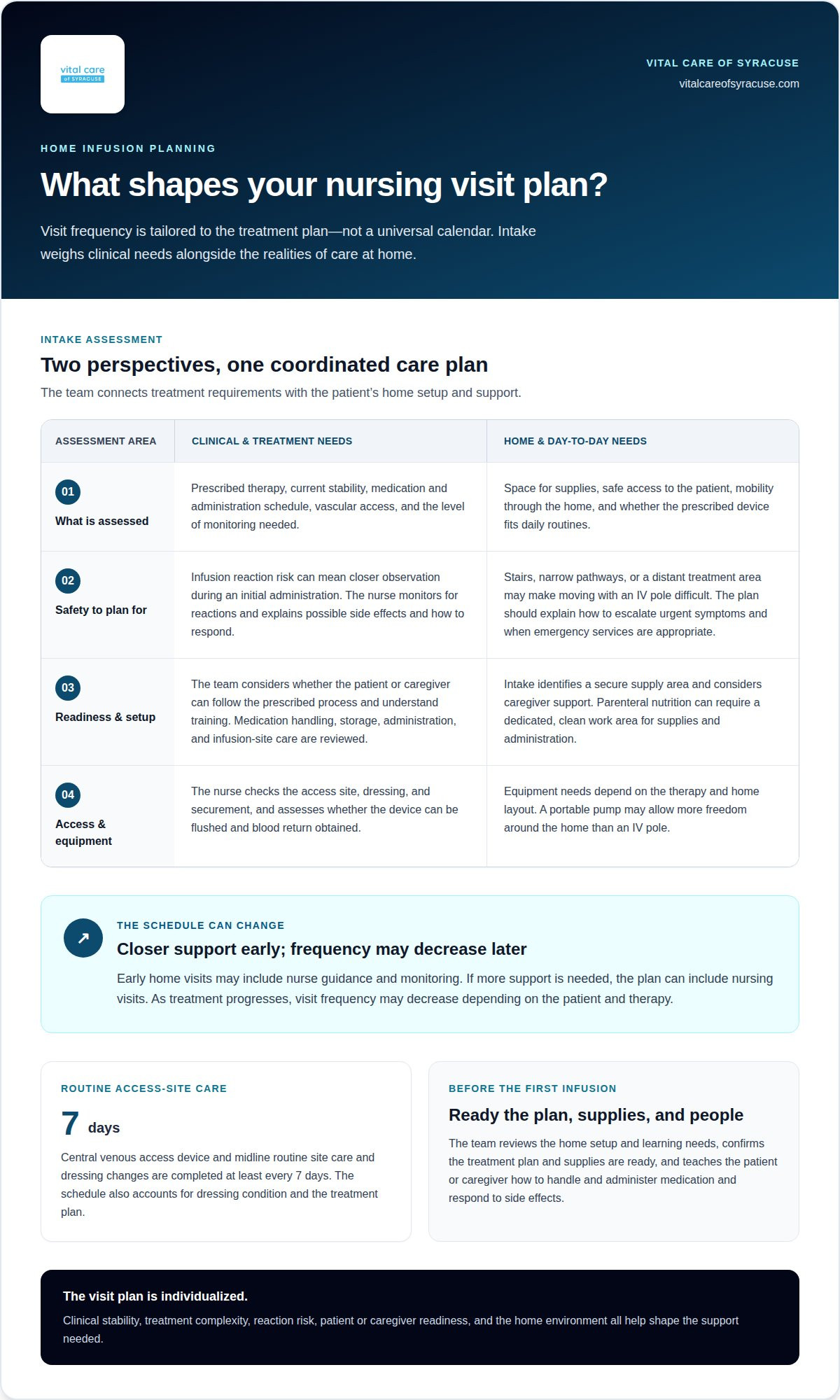
Training gives patients and caregivers guided practice with the steps required for their prescribed infusion. During initial visits, nurses can guide the process and monitor for medication reactions. Patients and caregivers learn how to use the equipment, manage medication, follow infection-control practices, and recognize possible complications. Not every family member needs to perform every task; identifying who can help with each responsibility makes the plan clearer. The care team can explain the specific instructions for the treatment.
Transitioning infusion therapy from hospital to home
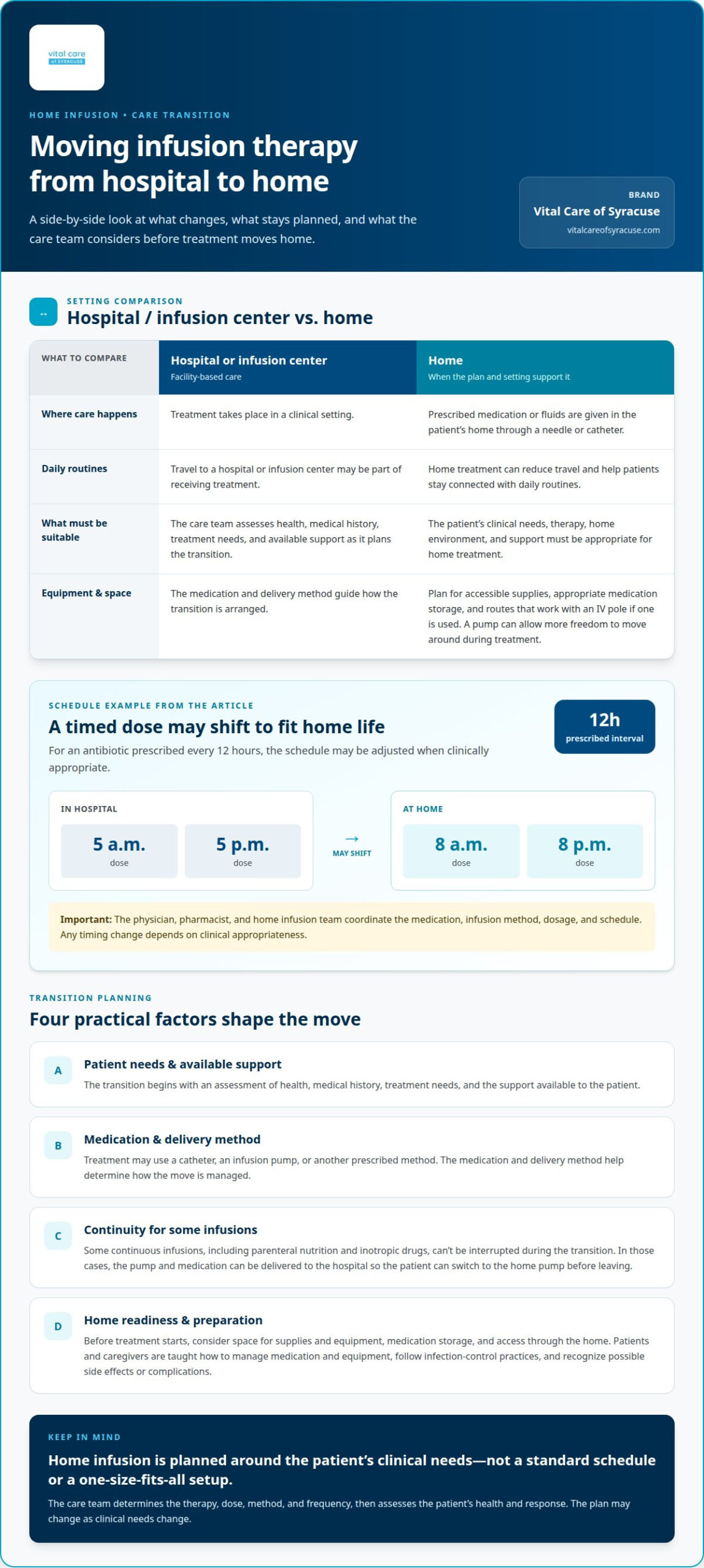
Home infusion brings prescribed treatment from a hospital or infusion center into a patient’s home. Compared with facility-based care, it can reduce travel and help patients stay connected with daily routines. Hospital care takes place in a clinical setting, while home treatment may be an option when the patient’s clinical needs, therapy, and home environment support it.
A transition starts with an assessment of the patient’s health, medical history, treatment needs, and available support. The care plan identifies the medication, infusion method, dosage, and schedule, with coordination among the physician, pharmacist, and home infusion team. For an antibiotic prescribed every 12 hours, for example, a schedule may shift from 5 a.m. and 5 p.m. in hospital to 8 a.m. and 8 p.m. at home, when clinically appropriate.
The medication and delivery method shape the move. Treatment may use a catheter, an infusion pump, or another prescribed method. Some continuous infusions, including parenteral nutrition and inotropic drugs, can’t be interrupted during the transition. In those cases, the pump and medication can be delivered to the hospital so the patient can switch to the home pump before leaving. Other medications begin with the next timed dose, with schedule adjustments as needed.
Before home treatment begins, the care team considers whether the home can accommodate supplies and equipment. The patient needs an accessible area for supplies, appropriate medication storage, and routes that work with an IV pole when one is used. A pump can allow more freedom to move around during treatment. For families considering home infusion care, these planning details help clarify how treatment may fit the household and what support the patient needs.
Treatment duration
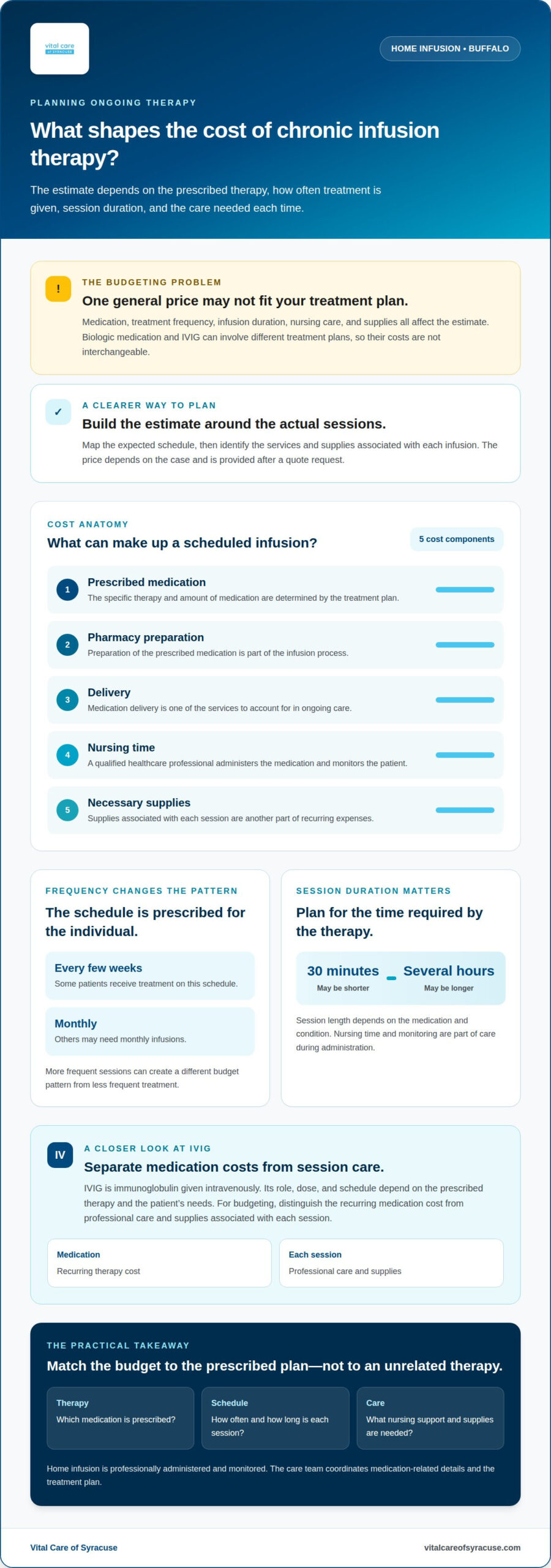
A home infusion session can last from 30 minutes to several hours, depending on the medication. That’s the time for an individual treatment, not necessarily the length of the full course. A prescribed antibiotic may be given on a recurring schedule, while parenteral nutrition can involve a continuous infusion. The medication, delivery method, and care plan shape the timing.
The treatment period depends on the condition being treated and the patient’s response. Some people need infusions daily; others receive them every few weeks or months. The prescribing healthcare provider and care team determine the therapy, dose, method, and frequency, then assess the patient’s health and response. The plan may change as clinical needs change.
Preparing the home helps treatment fit into daily life. The care team can discuss where supplies will be stored and whether the patient can move through the home with an IV pole, if one is used. Follow medication storage instructions, since some medicines require specific temperatures. A clean, organized treatment area supports infection prevention, and secure storage protects supplies between visits.
Home infusion may include anti-infective medication or parenteral nutrition, among other prescribed therapies. For example, an intravenous anti-infective course may follow a timed schedule, while nutrition therapy may be delivered continuously. The prescribed treatment determines the schedule rather than a standard session length. Comfort and routine also depend on the equipment and how long it needs to be used.
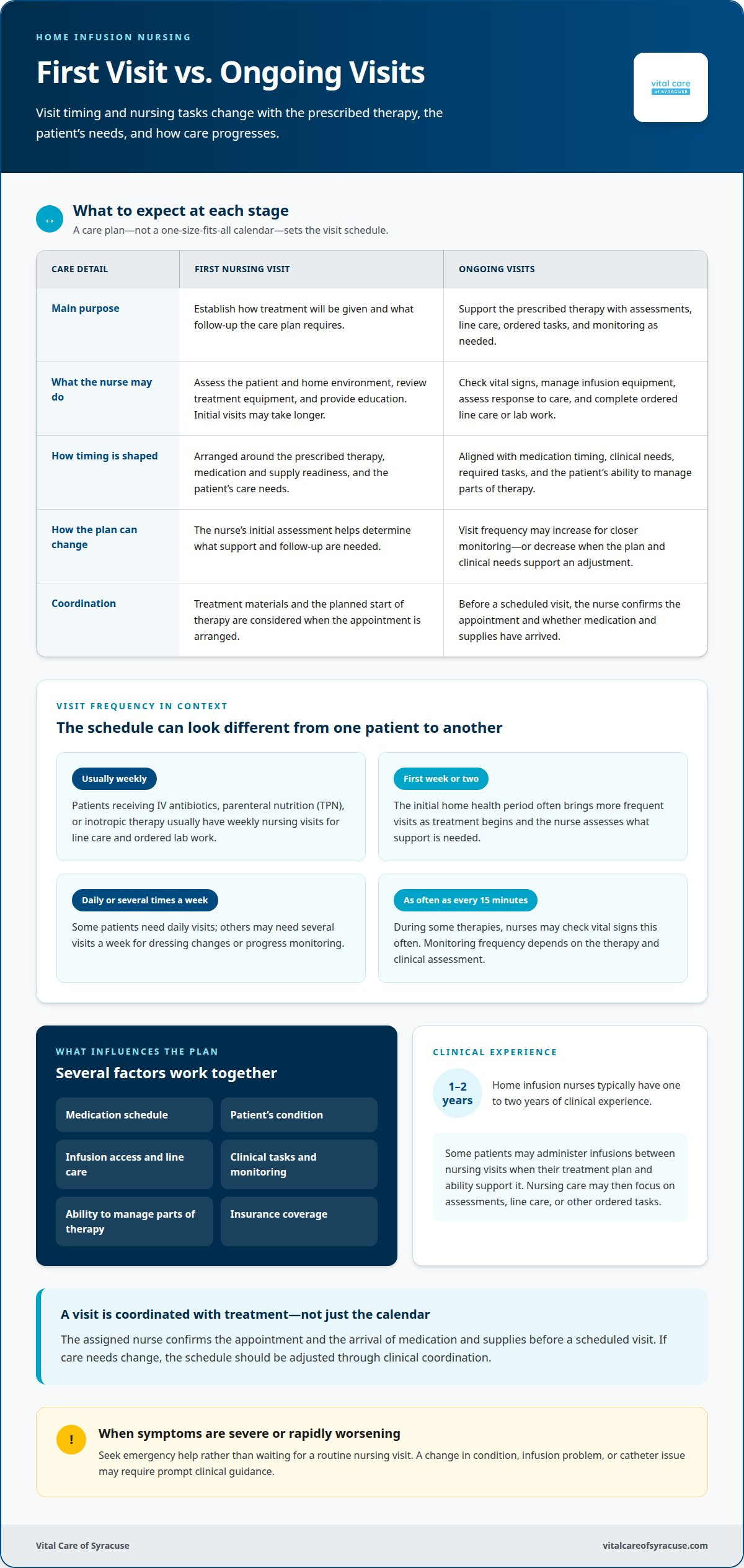
Patients and caregivers may learn to administer treatment as part of the care plan. Initially, an infusion nurse can guide treatment and monitor the patient; depending on the therapy and individual needs, nurse visits may later become less frequent. Some patients may eventually administer their own infusion. Before that shift, the patient or caregiver needs instruction on medication handling, equipment, infection prevention, and possible adverse reactions, so daily responsibilities are clear.
How home infusion can affect family routines
Home infusion changes where treatment happens, but it still takes time and coordination. A family may plan meals, work, school, and rest around medication schedules or nursing visits. Compared with traveling to appointments, treatment at home can reduce time spent driving to and from care. The patient receives therapy in familiar surroundings, while relatives can remain nearby.
A pump may let patients continue many daily activities during treatment, but the routine depends on the medication and equipment. For example, a family might set up a comfortable place for the patient, keep supplies accessible, and leave walkways clear. If treatment overlaps with a meal or work call, the household can adjust that activity rather than assume the whole day must stop.
Caregivers may take on practical tasks, such as helping organize supplies, observing the patient, or supporting medication routines. The care team explains which responsibilities belong to the patient or caregiver and how nursing visits fit the plan. As needs change, nurses may visit less frequently, and some patients may eventually administer their own treatment. That can shift family roles, so responsibilities should be discussed openly.
Home care can reduce the disruption of frequent trips to a hospital or infusion center, but it is not automatically easier for every household. Continuous treatment, limited space, or a caregiver’s work schedule can make planning more demanding. Families can compare treatment times with daily commitments, identify who can help, and protect time for rest. If one caregiver feels overloaded, relatives can share appropriate practical tasks without taking on clinical responsibilities beyond their training.
For families weighing home treatment as an alternative to facility visits, the key is understanding how medications, equipment, and nursing support affect an ordinary day. Explore home infusion support to discuss care that can be planned around the patient’s treatment needs and household routine.
Vital Care of Syracuse: Home infusion
Vital Care of Syracuse provides home infusion for patients whose prescribed treatment may be delivered at home. Its therapies include Anti-infective Therapy, Immunoglobulin (IVIG/SCIG), and Parenteral Nutrition (TPN). These services may be relevant when a patient’s treatment plan includes one of these therapies and the healthcare team is considering home-based care.
Understanding the prescribed therapy, schedule, and support needs can help families see how treatment may fit daily life. Home infusion is not the right setting for every treatment or patient; eligibility depends on the prescribed medication, diagnosis, and clinical considerations determined by the patient’s healthcare provider. Vital Care of Syracuse provides home infusion and infusion-suite care, coordinating with healthcare providers as part of the treatment plan. Contact Vital Care of Syracuse to discuss whether home infusion may fit your family’s needs.
Make the next conversation count
When explaining home infusion to family, focus on shared understanding rather than expecting everyone to take on the same role. Invite relatives to discuss what support feels manageable, which routines matter most, and what questions remain. A calm conversation can help the patient retain a sense of choice while making family expectations clearer.
Before the next care discussion, write down the concerns that matter to your household. You might ask how practical responsibilities can be shared, what changes should be reported, or how the care plan can accommodate work and family commitments. Keeping questions together gives the patient and caregivers a practical starting point for discussing their circumstances.
For guidance about home infusion, contact Vital Care of Syracuse. Taking one thoughtful next step can help your family approach care with greater clarity and confidence.
Frequently Asked Questions
Who provides the infusion nursing and what specializations do such nurses have?
Home infusion nurses provide clinical support and may have experience with venipuncture and different infusion techniques. Their work relates to the prescribed therapy, such as anti-infective treatment or nutrition support. Vital Care of Syracuse coordinates with physicians, nurses, and pharmacists, serving patients in Syracuse, Albany, Rochester, Utica, Buffalo, Auburn, and Binghampton. Its clinicians are licensed and accredited.
What is home infusion therapy and how does it work?
Home infusion therapy delivers prescribed medication or fluids at home, typically by intravenous or injection methods. The care team coordinates treatment details with the prescribing physician and pharmacist, including dosing and monitoring. It may be considered when oral medication is ineffective, unavailable, or not well-tolerated. Eligibility depends on the prescribed medication, diagnosis, and clinical considerations determined by the patient’s healthcare provider.
What medications and conditions are commonly treated with home infusion?
Home infusion can include anti-infective medication, immunoglobulin therapy (IVIG/SCIG), and parenteral nutrition (TPN). These treatments address different clinical needs, so the prescribed medication and diagnosis guide the plan. Other conditions treated through specialized infusion therapies include hemophilia and bleeding disorders, alpha-1 antitrypsin deficiency, and heart failure requiring inotropic therapy. Eligibility depends on clinical considerations determined by the patient’s healthcare provider.
How can I explain home infusion therapy to family members?
Explaining home infusion to family members can start with a simple description: prescribed treatment is given at home as part of a clinical care plan. Then clarify what the patient wants relatives to know, what support they welcome, and which tasks belong to trained caregivers or clinicians. For example, a family member might keep track of questions for the next care discussion without taking on treatment duties.
What should patients and caregivers expect during a home infusion visit?
During a home infusion visit, the clinician provides care related to the prescribed treatment and monitors the patient’s response. The clinician may discuss how treatment is going, note concerns, and coordinate relevant information with the care team. Families can share observations about symptoms or changes since the previous visit, giving clinicians useful context for care.
What training do family caregivers need for home infusion therapy?
Caregiver preparation should match the patient’s medication, equipment, and care plan. A family member who will help needs instruction on relevant medication handling, equipment use, infection prevention, and possible reactions or complications. Ask the care team which tasks the caregiver should perform and what situations require medical attention. Clear instruction helps relatives support care without guessing or taking on unfamiliar responsibilities.
Leave a Reply