


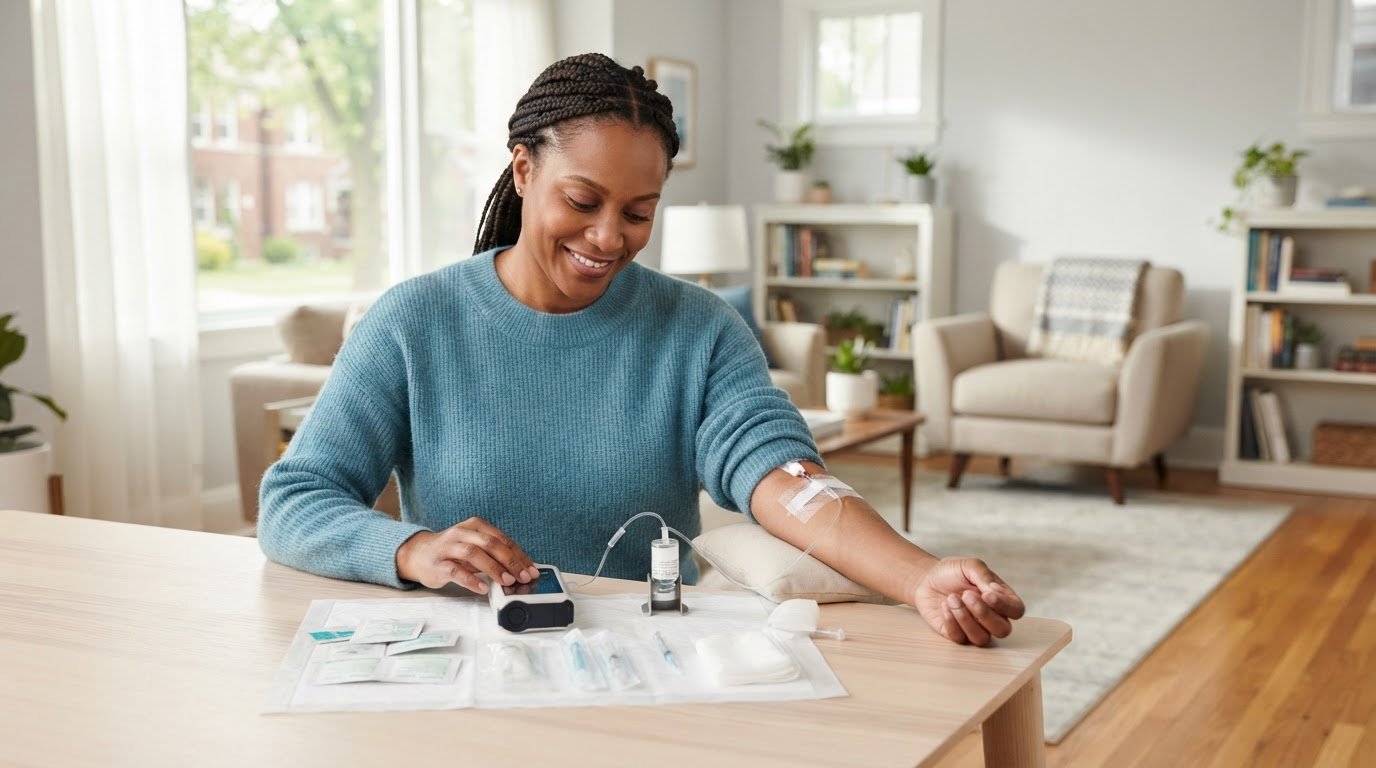
The key difference is the route and rhythm of immunoglobulin replacement. SCIg delivers immunoglobulin under the skin for primary immunodeficiency rather than through an IV; schedules generally range from 1-3 times per week to once every two weeks, and an infusion typically takes about one to two hours. For people exploring SCIG infusion support in Syracuse, understanding these basics clarifies what treatment involves and why timing and preparation matter.
It’s natural to have practical questions when treatment becomes part of a home routine. This guide explains what SCIg is and how replacement immunoglobulin supports primary immunodeficiency, how schedules and infusion times work, and what to check on a vial before treatment. Most SCIg products should sit at room temperature for at least 30 minutes before use. You’ll also learn about infusion-site preparation, so you can approach each session with clearer expectations.
Key Takeaways
- Understand how SCIg delivers immunoglobulin under the skin as replacement therapy for primary immunodeficiency.
- Learn how prescribed frequency and infusion duration shape a manageable home routine.
- Know why vial handling matters, including single-use use and allowing the product to reach room temperature before treatment.
- Explore how infusion-site rotation can support comfort and flexibility during home therapy.
Q 10: What needs to be checked on SCIg vials before an infusion?
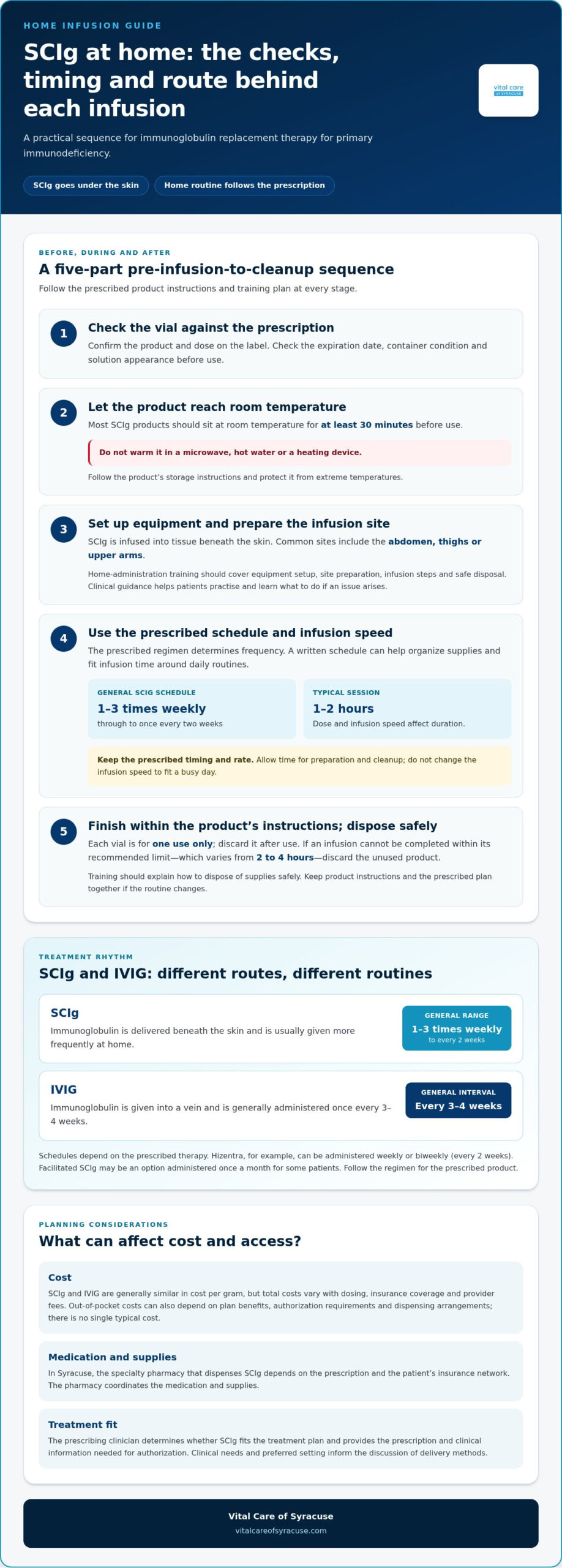
Before an SCIg infusion, compare the vial label with the prescribed product and dose. Check the expiration date, container condition, and solution appearance. Use each vial once only, then discard it. Most SCIg products should sit at room temperature for at least 30 minutes before use. Don’t warm them in a microwave, hot water, or a heating device. Follow the product’s storage instructions and protect it from extreme temperatures.
Home schedules vary with the prescribed regimen. SCIg is generally given 1-3 times per week to once every two weeks, and a session typically takes one to two hours. The dose and infusion speed affect session duration. A written schedule can help patients plan supplies and infusion time around daily routines without changing the prescribed timing.
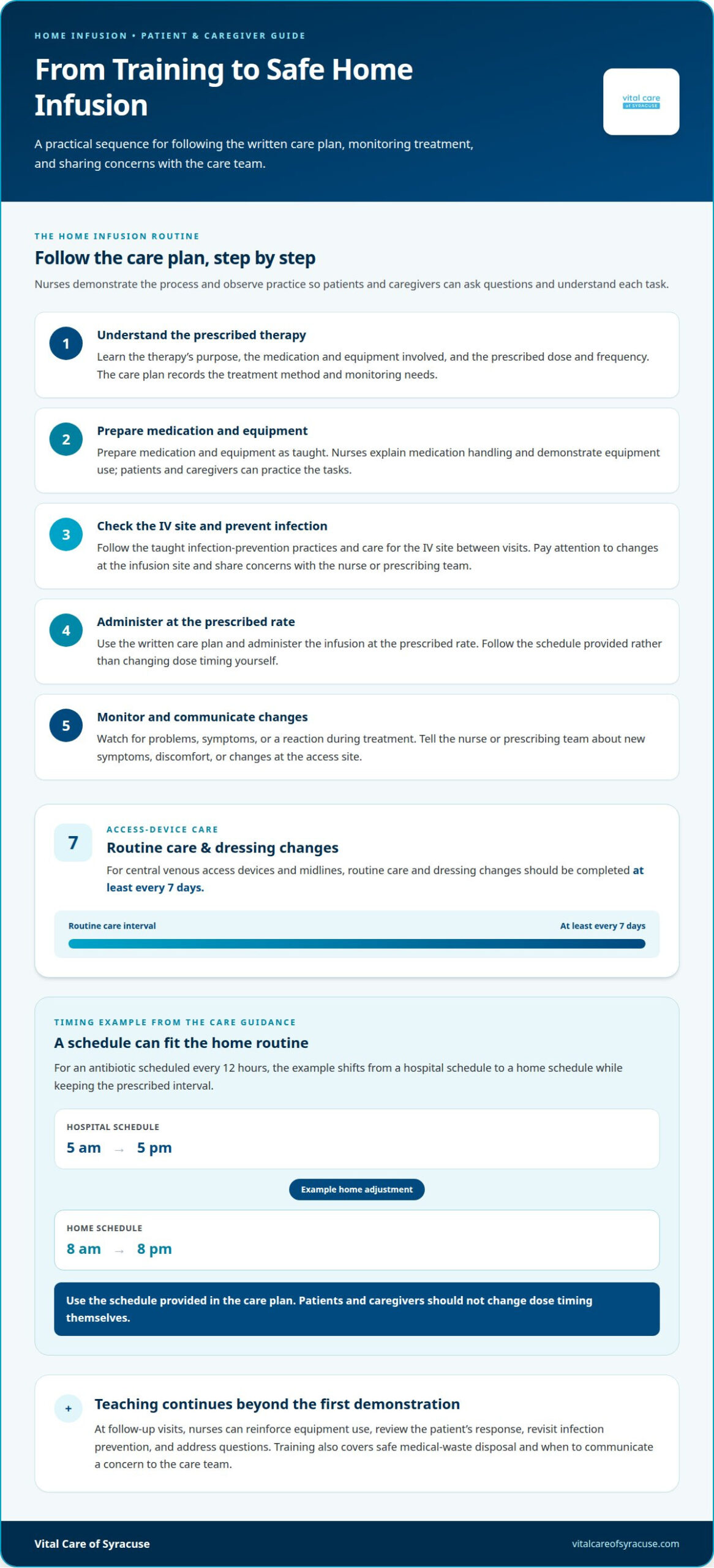
SCIg is infused into the tissue beneath the skin, often in the abdomen, thighs, or upper arms. Training for home administration should cover setting up equipment, preparing the site, following infusion steps, and disposing of supplies safely. With clinical guidance, patients can practise the process and learn what to do if an issue arises. Training also explains which sites to use and how to follow the prescribed plan.
Compared with IVIG, SCIg is usually given more frequently at home, while IVIG is generally administered once every 3-4 weeks. SCIg and IVIG are generally similar in cost per gram, while total costs vary with dosing, insurance coverage, and provider fees.
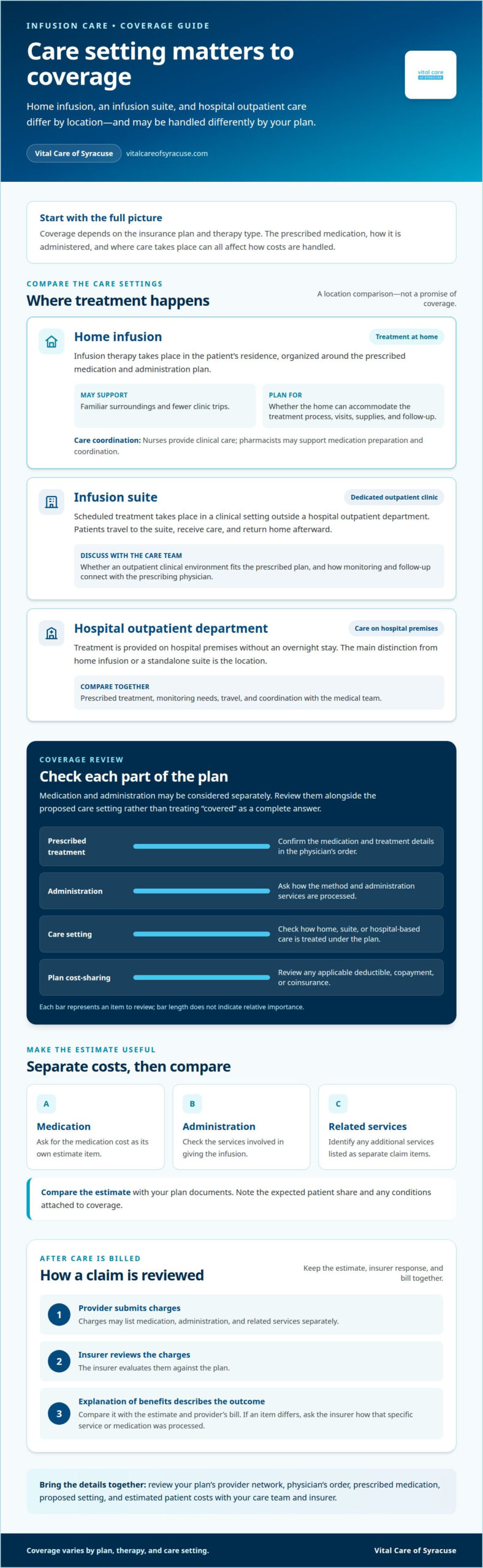
In New York, coverage varies by insurance plan and therapy type. Out-of-pocket costs can also depend on plan benefits, authorization requirements, dosing, and dispensing arrangements, so there is no single typical cost.
In Syracuse, the specialty pharmacy that dispenses SCIg depends on the prescription and the patient’s insurance network. That pharmacy coordinates the medication and supplies.
The prescribing clinician determines whether SCIg fits the patient’s treatment plan and provides the prescription and clinical information needed for authorization.
Patients can explore assistance programs and support groups through immunodeficiency organizations and treatment-program resources. Eligibility and local options vary.
Immunoglobulin replacement therapy for primary immunodeficiency
Primary immunodeficiency describes conditions affecting parts of the immune system. Immunoglobulin replacement therapy supplies antibodies as ongoing treatment, using either intravenous immunoglobulin (IVIG) or subcutaneous immunoglobulin (SCIg). These are different delivery methods for immunoglobulin therapy, so the treatment discussion includes the person’s clinical needs and preferred setting. The aim is a regimen that can be followed consistently, with practical support for the chosen method.
SCIg has been considered a safe and effective alternative to IVIG in Europe since the 1980s and in the United States since 2006. That history gives patients and care teams a basis for discussing both approaches, rather than treating one route as suitable for everyone. With IVIG, immunoglobulin is given into a vein; SCIg delivers it under the skin. The distinction affects how treatment fits into a patient’s routine.
Before choosing an approach, discuss the prescribed therapy, where it will be administered, and the practical demands of each regimen. Someone considering home SCIg may want to understand the training, supplies, and steps involved. Someone considering IVIG may focus on the infusion setting and session time. These details make the decision more concrete while leaving the clinical assessment to the prescriber.
Immunoglobulin replacement is ongoing care, and keeping treatment information together can help. Record the prescribed product, dose, schedule, and care-team instructions in one accessible place. Raise questions about changes in routine or difficulties following the plan at the next clinical discussion. Clear communication helps keep treatment aligned with the patient’s needs.
For patients considering home-based care, home immunoglobulin therapy can be part of the conversation about treatment options and support.
SCIg infusion frequency and duration
SCIg schedules follow the prescribed regimen, not one universal calendar. General administration ranges from 1-3 times per week to once every two weeks. That range allows the schedule to reflect treatment needs and the prescribed dose. A weekly routine may mean setting aside consistent days, while less frequent schedules create a different planning rhythm. Keep the written schedule accessible and record completed infusions to distinguish them from planned doses.
According to U.S. National Library of Medicine, Hizentra can be administered weekly or biweekly, meaning every 2 weeks. This product-specific schedule shows why patients should follow instructions for their prescribed immunoglobulin rather than adopt another regimen. For a patient who prefers not to infuse daily, facilitated SCIg may be an option administered once a month. The product and delivery method shape how often treatment appears on the calendar.
An SCIg session typically takes one to two hours, depending on the dose and infusion speed. Allow time for preparation and cleanup so the planned window covers the full home routine. Dose and speed affect infusion duration, so don’t change the rate to fit a busy day. Follow the product instructions and training plan to understand the expected session length.
Product instructions also set a limit for completing an infusion. If an SCIg infusion can’t be completed within its recommended time, which varies from 2 to 4 hours, discard the unused product. Build that limit into the schedule rather than assuming an interrupted session can continue later. A calendar entry can help coordinate treatment with work, school, or other commitments. Keep the prescribed timing and product instructions together, especially if the routine changes, so each infusion remains aligned with the treatment plan.
Benefits and flexibility of home infusion
Home SCIg changes where treatment takes place. A trained patient can administer prescribed therapy at home rather than plan around a clinic visit. For someone balancing work, school, or caregiving in Syracuse, home treatment may fit more naturally into the day. Preparation and cleanup become part of the home routine, so keep supplies together and follow the prescribed steps each time.
A consistent setup can make home sessions easier to organize. Choose a comfortable space with room for the supplies and equipment used during the infusion. Keep written instructions nearby and arrange the items before starting. For example, setting treatment materials in one designated area can reduce interruptions and make the process easier to follow. The goal is a repeatable routine, not a faster infusion.
Site planning can also add flexibility. SCIg infusion sites can be rotated among 2-3 sites according to patient preference. Rotation gives patients options for where treatment fits comfortably, while keeping each session aligned with their training and prescribed plan. Recording the site used can help make rotation easier to remember. If a planned area is irritated, painful, bruised, or otherwise unsuitable, follow the care team’s site guidance rather than using it automatically.
Home treatment still calls for attention to how the body responds. Local reactions such as redness or swelling can occur at an infusion site; redness usually settles within 24 hours. Note when a reaction begins and how it changes, so the details are clear during a care discussion. A simple treatment record can include the infusion date, site, and any symptoms. This supports an organized routine without changing the prescribed dose or timing.
For help understanding how home-based treatment fits an immunoglobulin plan, explore home infusion support.
Vital Care of Syracuse: Anti-infective Therapy
Vital Care of Syracuse provides anti-infective therapy and immunoglobulin (IVIG/SCIG) for patients whose treatment plans include these therapies. If you’re considering home-based immunoglobulin care, learning about SCIg schedules, vial preparation, and site rotation can help you prepare for a conversation with the care team. Vital Care’s home infusion services support treatment prescribed for administration at home.
Anti-infective therapy is a separate treatment for patients prescribed medication for an infection; it is not a form of SCIg. Vital Care of Syracuse also offers parenteral nutrition (TPN) and hemophilia and bleeding disorder therapy. The appropriate service depends on the treatment prescribed for your health needs.
For information about home infusion and immunoglobulin therapy, visit Vital Care of Syracuse online.
Take the Next Step Toward a Supported Care Plan
Choosing a home therapy approach is an opportunity to clarify what support would help treatment fit your life. Consider what you need from care at home, which questions you still have about your prescribed therapy, and what information would help you feel prepared. These priorities can guide a practical discussion about your care plan.
For people seeking SCIG infusion support in Syracuse, Vital Care of Syracuse offers immunoglobulin (IVIG/SCIG), anti-infective therapy, and parenteral nutrition (TPN). These therapies address different treatment needs, so the next step is to discuss the therapy prescribed for you.
Contact Vital Care of Syracuse to discuss home infusion options and support for your treatment plan. A conversation with the care team can help you understand the next steps.
Contact Vital Care of Syracuse.
Frequently Asked Questions
What Is SCIg?
SCIg means subcutaneous immunoglobulin: immunoglobulin medicine delivered into tissue beneath the skin rather than into a vein. It describes a route of administration, not a diagnosis or a separate immune deficiency. For patients considering therapy, this distinction helps frame discussions about the prescribed product, setting, and clinical suitability. A healthcare provider assesses the diagnosis and treatment needs before deciding whether this route fits the care plan.
Q 16: What general steps should be taken if an infusion site reaction occurs?
Note the affected site and changes, such as redness, pain, swelling, or fluid. Avoid using skin that is red, bruised, painful, hard, or irritated for an infusion. Contact a nurse or healthcare provider if a site reaction does not resolve within 48 hours, if fluid leaks or weeps, or if a fluid bubble shrinks and returns. Also seek clinical advice for a fever higher than 101 degrees lasting more than six hours.
What is SCIG therapy and who needs it?
SCIg therapy is immunoglobulin replacement delivered beneath the skin and may be prescribed for people with primary immunodeficiency. It is not automatically appropriate for everyone with immune concerns. Eligibility depends on the prescribed medication, diagnosis, and clinical considerations determined by the patient’s healthcare provider. These factors help establish whether immunoglobulin replacement and the subcutaneous route fit a person’s treatment plan.
Which Syracuse, NY providers offer SCIG infusion support?
For SCIG infusion support in Syracuse, Vital Care of Syracuse offers immunoglobulin (IVIG/SCIG) and home infusion. The team coordinates with physicians, nurses, and pharmacists to support dosing, monitoring, and response. Its service areas also include Albany, Rochester, Utica, Buffalo, Auburn, and Binghampton. A prescriber determines eligibility based on the medication, diagnosis, and clinical considerations, so care starts with an appropriate treatment plan.
Where can patients in Syracuse receive SCIG infusions at home or in a clinic?
Patients may receive infusion therapy at home when clinically appropriate and under professional supervision, or in infusion suites in East Syracuse and other locations across Central New York. Infusion therapy is considered safe when provided by licensed, experienced clinicians following established protocols. The appropriate setting depends on the prescribed medication, diagnosis, and clinical considerations, not a universal rule that every SCIg regimen belongs in one location.
What training and nursing support are available for starting SCIG in Syracuse?
People seeking SCIG infusion support in Syracuse can start by discussing training and follow-up with the prescribing clinician and infusion-care team. Vital Care of Syracuse coordinates with physicians, nurses, and pharmacists to support proper dosing, monitoring, and response. Ask who will provide administration training, what follow-up involves, and whom to contact about a reaction. Eligibility and the appropriate setting depend on the prescribed medication, diagnosis, and clinical considerations.
Leave a Reply