


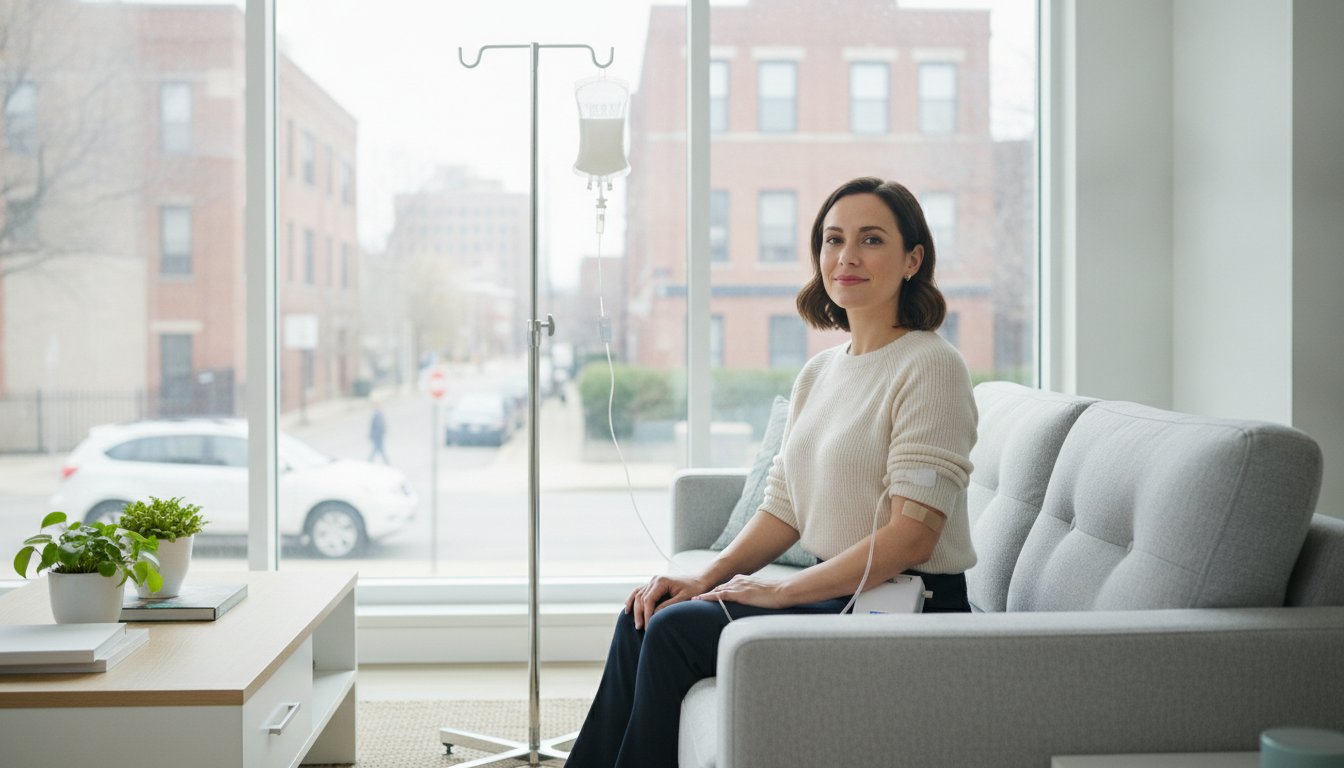
Imagine the relief of trading a sterile hospital room at Upstate Medical or St. Joseph’s for the familiar comfort of your own living room. For many of our neighbors, the cycle of frequent hospitalizations and severe weight loss feels like an inescapable part of life with chronic illness. Because up to 70% of individuals with Crohn’s disease experience some form of malnutrition, accessing reliable TPN for Crohn’s disease Syracuse is often the most vital step toward recovery. You deserve a care plan that prioritizes both your clinical needs and your personal peace of mind while you heal at home.
We understand that the transition to home-based care can feel daunting when you’re already fighting for your energy. This guide explains how professional total parenteral nutrition provides a bridge to wellness, allowing you to stabilize your weight and regain your strength where you feel most secure. You’ll learn how local expertise and home infusion therapy can replace hospital stays with personalized, compassionate support. We’ll walk through the practical steps of managing your therapy, including how local clinical teams coordinate with your gastroenterologists to ensure you have everything you need to thrive in Central New York.
Key Takeaways
- Discover how total parenteral nutrition bypasses the digestive system to provide complete nourishment during severe flares, allowing your body the necessary rest it needs to heal.
- Learn the clinical advantages of home-based therapy, including a significant reduction in infection risks compared to prolonged stays in local inpatient facilities.
- Master the transition from hospital to home with a clear five-step guide that ensures your clinical stabilization and safety are prioritized at every stage.
- See how choosing a local specialist for TPN for Crohn’s disease Syracuse ensures rapid delivery of vital supplies and direct access to pharmacists who understand your medical history.
- Gain peace of mind by understanding the essential monitoring protocols and safety measures used to protect your long-term health while managing infusion therapy at home.
Understanding TPN for Crohn’s Disease in Syracuse: Why It’s Necessary
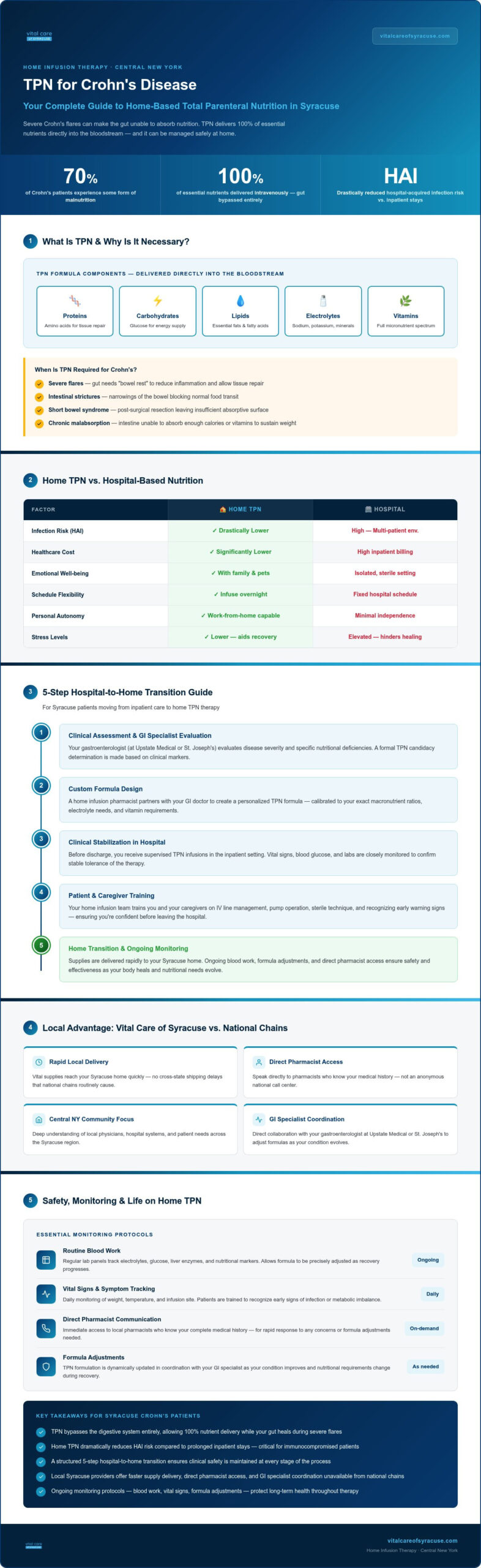
Parenteral nutrition is a life-sustaining therapy that allows the body to receive essential nutrients directly through the bloodstream, completely bypassing the digestive tract. For those managing severe Crohn’s, the digestive system sometimes requires a period of “bowel rest” to reduce inflammation and promote tissue repair. Parenteral nutrition provides a specialized, liquid mixture of lipids, proteins, carbohydrates, electrolytes, and vitamins. This custom formulation ensures that even when the gut is too compromised to process food, the body receives 100% of the fuel it needs to function. Recovering in a familiar Syracuse neighborhood rather than a hospital room can significantly lower stress levels, which is a critical component of managing any autoimmune condition.
When Crohn’s Leads to Malabsorption and TPN
The small intestine is responsible for absorbing the vast majority of nutrients from the food we eat. In complex cases of Crohn’s disease, chronic inflammation can lead to complications such as strictures, which are narrowings of the bowel, or short bowel syndrome following surgical resections. When these conditions occur, the intestine simply can’t absorb enough vitamins or calories to sustain healthy weight or energy levels. Utilizing TPN for Crohn’s disease Syracuse helps bridge this nutritional gap by delivering essential macronutrients intravenously. The primary goal is to stabilize the patient’s weight and provide the metabolic support necessary for the digestive system to heal from within, preventing the cycle of malnutrition that often leads to repeated hospital visits.
The Role of the GI Specialist in Central New York
Determining if a patient is a candidate for home nutrition therapy requires close coordination with local medical experts. Gastroenterologists at institutions like Upstate Medical or St. Joseph’s evaluate the severity of the disease and the patient’s specific nutritional deficiencies. Once the need for long-term support is identified, your doctor works alongside a home infusion for GI disorders Rochester specialist to design a plan that transitions care from the hospital to the home. This partnership ensures that clinical precision remains the priority while the patient enjoys the comfort and privacy of their own environment. Regular monitoring of blood work and physical symptoms is a vital part of this collaboration, ensuring the TPN formula is adjusted as the patient’s needs evolve during their recovery journey.
The Benefits of Home TPN Over Hospital-Based Nutrition
Transitioning from a clinical ward to the sanctuary of your own home is often the most significant milestone in a patient’s recovery journey. While Syracuse medical centers provide exceptional acute care, long-term TPN for Crohn’s disease Syracuse is frequently more effective and safer when managed in a residential setting. One of the most critical clinical advantages is the substantial reduction in the risk of hospital-acquired infections (HAIs). By avoiding the multi-patient environment of a hospital, you protect your immune system from unnecessary exposure to pathogens, which is especially vital when managing an autoimmune condition like Crohn’s. Choosing a home-based approach offers several key advantages:
- Drastic reduction in exposure to hospital-acquired infections
- Significant savings on overall healthcare costs compared to inpatient stays
- Enhanced emotional well-being by remaining with family and pets
- Greater autonomy to maintain a personal or professional schedule
Home-based care also offers a level of flexibility that’s impossible to replicate in an inpatient setting. Many patients find they can coordinate their infusion schedules around their lives, whether that means infusing overnight to have more freedom during the day or maintaining a work-from-home routine. This autonomy doesn’t just improve your schedule; it restores your sense of identity beyond being a “patient.”
Improving Quality of Life for Syracuse IBD Patients
The emotional relief of returning to your own environment is a powerful catalyst for healing. Chronic illness often strips away a person’s sense of control, but home infusion therapy restores it by allowing you to sleep in your own bed and remain close to your loved ones. This “return to normalcy” is a cornerstone of nutritional support for Crohn’s, as it directly addresses the psychological toll of long-term medical management. Instead of waiting for hospital rounds, you receive personalized, one-on-one nursing care in your living room. This creates a supportive partnership where your comfort is prioritized alongside your clinical stability.
Cost-Effectiveness and Local Insurance Navigation
From a financial perspective, home infusion services are consistently more cost-effective than outpatient hospital departments. In Central New York, hospital costs can accumulate quickly, whereas home-based care allows for significant savings without sacrificing the quality of your nutrients or equipment. However, managing TPN for Crohn’s disease Syracuse often involves complex paperwork that can be a major source of anxiety. There are distinct benefits of a local home infusion company when it comes to billing transparency and prior authorizations. Because local providers understand the regional insurance landscape, they can advocate for your coverage more effectively than a distant national chain.
This “neighbor helping neighbor” approach ensures that your focus remains on your health rather than on administrative hurdles. If you’re looking for a partner who understands the Syracuse medical community, view our personalized infusion options to see how we can help you transition home safely.
Home TPN Transition: 5-Step Guide for Syracuse Patients
Transitioning to home-based care is a structured journey that prioritizes your safety and comfort. While the process involves several clinical milestones, it’s designed to be seamless and supportive. Most Syracuse residents begin this journey while still under the direct supervision of their medical team, ensuring that every detail of the nutritional plan is validated before the move home. To manage TPN for Crohn’s disease Syracuse effectively, we follow a proven five-step roadmap:
- Step 1: Clinical Evaluation. Your gastroenterologist at a Syracuse medical center, such as Upstate or St. Joseph’s, confirms your candidacy and coordinates the placement of a central venous catheter.
- Step 2: Hospital Stabilization. You’ll spend a few days in the hospital to ensure your body tolerates the TPN formula and to monitor for any immediate metabolic changes.
- Step 3: Vital Care Coordination. Our East Syracuse team works directly with hospital discharge planners to arrange for the delivery of your infusion pump, IV poles, and customized nutrient bags.
- Step 4: Comprehensive Education. A specialized infusion nurse provides hands-on training for you and your caregivers, covering everything from line care to pump operation.
- Step 5: Ongoing Monitoring. Your care continues with weekly laboratory tests and regular formula adjustments based on your clinical progress.
Preparing Your Home for Infusion Therapy
Before your first delivery arrives, it’s helpful to designate a specific area for your supplies. This space should be clean, well-lit, and away from high-traffic areas or pets. Since TPN bags contain complex nutrients, they require consistent refrigeration to maintain their integrity. We recommend clearing a dedicated shelf in your refrigerator to store your weekly supply. Using a simple safety checklist for your central line ensures that every connection remains sterile, significantly reducing the risk of complications during your recovery.
The Clinical Intake Process in Central New York
Our East Syracuse team conducts an initial home safety assessment to ensure your environment is ready for medical equipment. During this visit, the infusion nurse focuses on empowering you through education. You’ll learn how to flush your line and respond to pump alerts with confidence. The first 48 hours of TPN for Crohn’s disease Syracuse at home are a time of adjustment. We stay in close contact during this window to answer questions and provide the steady, reliable hand you need as you settle into your new routine. This methodical approach ensures that your transition is not just a medical change, but a step toward a better quality of life.
Local Advantage: Why Vital Care of Syracuse Beats National Chains
Choosing a provider for TPN for Crohn’s disease Syracuse is a decision that deeply impacts your daily quality of life and clinical outcomes. While national “big box” pharmacies often rely on centralized call centers and long-distance shipping, our approach is rooted in the Central New York community. Having direct access to East Syracuse pharmacists who are intimately familiar with your specific GI history provides a level of security that a generic 800-number simply cannot match. When your care is managed locally, your clinical team isn’t just a voice on a phone; they’re experts who understand the regional medical landscape and the specific requirements of our local hospitals.
Logistical reliability is another area where local expertise excels. We provide rapid delivery of supplies to Utica, Auburn, and Binghamton, ensuring that your therapy is never interrupted by national shipping delays or weather-related transit issues. Because we operate within the same geography as our patients, we can respond to supply needs with a speed and precision that national chains often struggle to replicate. This proximity allows for a “neighbor helping neighbor” philosophy that prioritizes your stability over corporate efficiency, ensuring you have what you need when you need it.
CNY Expertise and Regional Support
Local ownership allows us to act as dedicated advocates for our patients, especially during complex insurance appeals. We understand the nuances of New York-based insurance providers and use that knowledge to secure the coverage you deserve. Our clinical team consists of nurses who live and work in the Syracuse and Rochester corridor, fostering a sense of trust and consistency. You won’t have to explain your history to a new person every week; instead, you’ll build a relationship with a steady team that views your health journey as a shared priority. This deep connection to the community ensures that your advocacy is personal and persistent.
Integrated Care for Complex Crohn’s Needs
Many Crohn’s patients face multifaceted health challenges that require more than just nutritional support. Our team is equipped to manage integrated care plans, including anti-infective therapy at home for those recovering from surgery or abscesses. We also support patients with overlapping conditions, such as those requiring home infusion for neurological disorders Syracuse. By coordinating these therapies under one local roof, we ensure that your care remains cohesive and focused. We also help connect our patients with local IBD support groups in Central New York, ensuring that your emotional and social needs are met alongside your clinical requirements.
Experience the difference that local, compassionate expertise makes in your recovery. Contact Vital Care of Syracuse today to discuss how our team can support your home infusion needs with the precision and care you deserve.
Safety, Monitoring, and Life on Home TPN
Successfully managing TPN for Crohn’s disease Syracuse at home relies on a foundation of rigorous clinical oversight and proactive communication. While the goal is to provide you with independence, your therapy is never unmonitored. We utilize weekly laboratory blood work to track essential markers, including electrolyte levels and liver function. These results allow our East Syracuse pharmacists to adjust your custom nutrient blend with precision, ensuring your body receives the exact balance it needs as your condition evolves. Regular weight checks and nutritional assessments further validate that the therapy is effectively stabilizing your health and restoring your energy levels.
Safety protocols are the most critical component of your daily routine. We provide comprehensive training and sterile supplies to help you prevent catheter-related bloodstream infections (CRBSI), which are a primary concern for long-term infusion patients. Our team establishes clear, repeatable steps for line care to minimize risks. If you ever encounter a technical challenge, such as a pump alarm or a question about your IV line, our clinical support line is available to provide immediate troubleshooting. This ensures that even though you’re at home, you have constant access to professional guidance when you need it most.
Managing Side Effects and Complications
Living with TPN involves staying mindful of how your body responds to intravenous nutrition. Some patients may experience blood sugar fluctuations or changes in their hydration status. Our clinical team proactively manages these risks by reviewing your labs and physical symptoms during every nursing visit. It’s helpful to know who to call when concerns arise. You should contact your Vital Care nurse for issues related to your pump, supplies, or the infusion site itself. For symptoms related to your underlying Crohn’s disease, such as a new flare or severe abdominal pain, your gastroenterologist remains your primary point of medical contact.
The Peace of Mind Provided by Expert Nursing
The transition to home therapy is often as much about emotional security as it is about clinical health. Our infusion nurses embrace the role of “compassionate experts,” providing a steady and reliable hand throughout your journey. Having a dedicated advocate who understands the complexities of TPN for Crohn’s disease Syracuse allows you to focus on your recovery rather than the mechanics of your care. This supportive partnership is designed to give you and your family the confidence to manage complex medical needs within the comfort of your own home.
You don’t have to navigate the complexities of chronic illness alone. Contact Vital Care of Syracuse to learn more about home TPN for Crohn’s today.
Reclaiming Your Independence and Health at Home
Managing a complex condition shouldn’t mean sacrificing the comfort and security of your own environment. By transitioning to home infusion, you reduce the clinical risks associated with long-term hospital stays while gaining the autonomy to live your life on your own terms. Choosing the right partner for TPN for Crohn’s disease Syracuse ensures that your journey toward weight stabilization and improved energy is supported by professionals who truly understand your specific needs. Our locally owned East Syracuse pharmacy provides a steady, reliable hand through expert GI clinical monitoring and seamless coordination with CNY hospitals.
You deserve a care plan that balances technical precision with the warmth of a neighbor-led approach. We’re here to act as your dedicated advocate, ensuring every nutrient bag and clinical check-in moves you closer to your wellness goals. When you’re ready to trade hospital walls for the sanctuary of your own home, our team is prepared to help you make that move safely and confidently. You have the strength to heal, and we have the expertise to support you every step of the way.
Start Your Transition to Home TPN with Vital Care of Syracuse
Frequently Asked Questions
Is TPN for Crohn’s disease a permanent requirement?
TPN isn’t always a lifelong commitment for those managing Crohn’s. While some individuals with severe complications like short bowel syndrome require long-term support, many patients use it as a temporary bridge. The primary goal is often to provide bowel rest during a severe flare or to optimize nutrition before a planned surgery. Your gastroenterologist will regularly evaluate your progress to determine when your digestive system is ready to resume absorbing nutrients through traditional means.
Can I administer home TPN myself, or do I need a nurse every day?
Most patients and their caregivers successfully learn to administer their own infusions after receiving comprehensive training from our specialized nurses. While a nurse will visit your home for weekly lab draws and dressing changes, you’ll be empowered to handle the daily connection and disconnection of your nutrient bags. This approach maximizes your independence and allows you to manage your therapy according to your own personal schedule within the comfort of your home.
How long does it take to infuse TPN each day?
A typical infusion cycle for TPN for Crohn’s disease Syracuse lasts between 10 and 14 hours each day. To minimize disruption to your daily life, many patients choose to cycle their therapy overnight while they sleep. This schedule allows for greater mobility during the day, making it easier to attend work or family events. Our clinical team works with you to establish a routine that fits your lifestyle while meeting your body’s metabolic requirements.
Will my insurance in Syracuse cover the cost of home TPN?
Home TPN is generally covered by Medicare Part B, New York Medicaid, and most private insurance plans when it’s documented as medically necessary. Because navigating coverage can be complex, our East Syracuse team works directly with your providers to handle prior authorizations and verify your benefits. We focus on providing billing transparency so you can understand your coverage options without the stress of administrative hurdles during your recovery in Central New York.
What are the most common risks of home TPN, and how are they managed?
The most common risks associated with parenteral nutrition include catheter-related bloodstream infections and metabolic imbalances, such as blood sugar fluctuations. We manage these risks through rigorous sterile technique training and consistent clinical monitoring. By following the precise protocols provided by our infusion nurses, you can significantly lower the likelihood of complications. Our team also monitors your liver function and electrolyte levels through regular laboratory testing to ensure your formula remains safe and effective.
Can I still travel within New York while on home TPN therapy?
You can certainly travel within New York while receiving home infusion therapy, provided you plan ahead for your supply needs. Our team can help you coordinate the transport of your pump and nutrient bags to ensure your schedule remains uninterrupted. Whether you’re visiting family in Buffalo or heading to a retreat in the Adirondacks, we provide the logistical support necessary to maintain your health journey without feeling tethered to a single location.
How often will I need blood tests while on TPN?
Weekly blood tests are the clinical standard for patients receiving TPN for Crohn’s disease Syracuse. These lab draws are essential for monitoring your electrolytes, kidney function, and liver health, allowing our pharmacists to make precise adjustments to your custom formula. These consistent check-ins ensure that your nutrition remains perfectly balanced to support your healing process. As you stabilize, your clinical team may occasionally adjust the frequency of these tests based on your progress.
Leave a Reply