


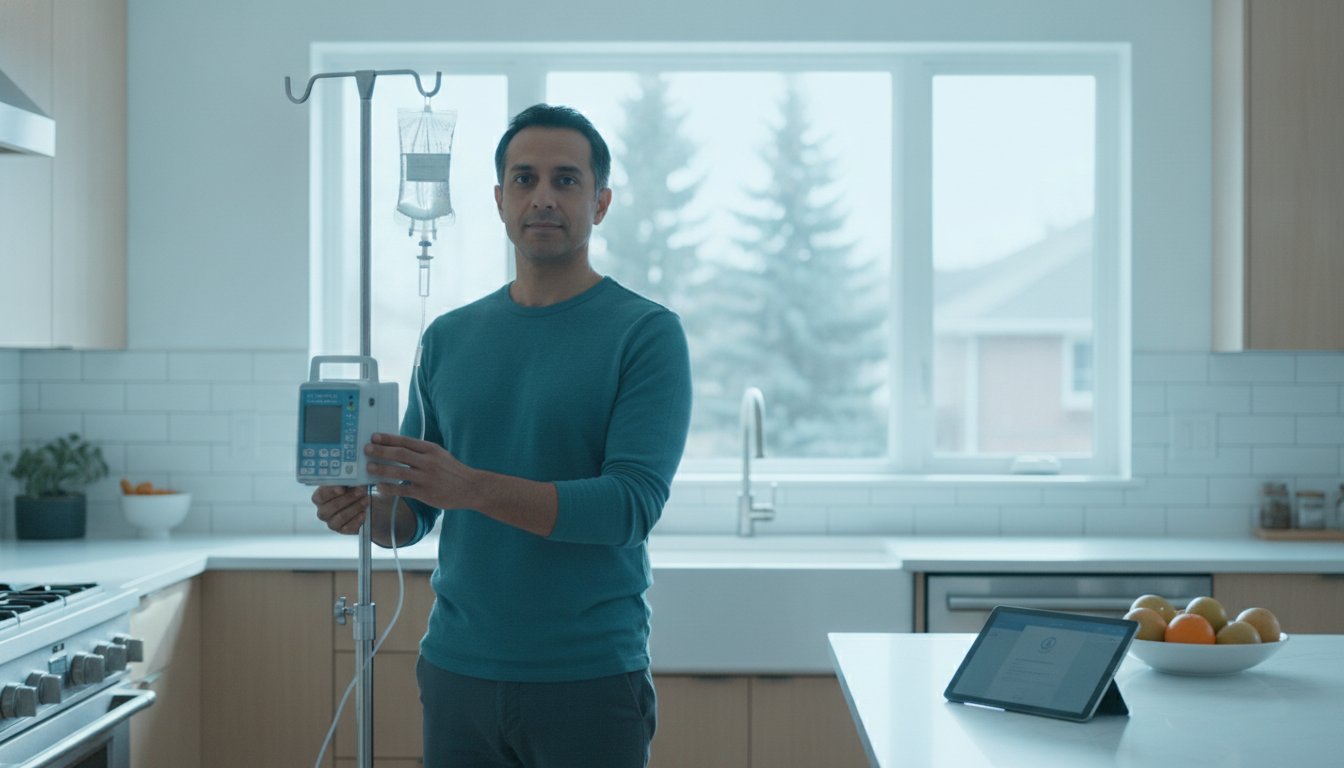
Imagine standing in your own kitchen in Brighton or Irondequoit, looking at a complex infusion pump and wondering if you’re truly ready to manage your recovery without a nurse just down the hall. While the prospect of regaining your independence is exciting, the transition to parenteral nutrition at home Rochester can feel like a daunting leap into the unknown. You aren’t alone in this feeling, as approximately 32,000 individuals across the country navigate the complexities of home parenteral nutrition each year. It’s natural to feel overwhelmed by the technical requirements of IV therapy when you’re used to the constant supervision of a hospital setting.
We understand that the shift from a clinical environment to the quiet of your home brings a unique set of anxieties regarding equipment, safety, and local medical coordination. This guide is designed to replace that uncertainty with the quiet confidence of a seasoned professional. You’ll learn how to safely transition to and manage your therapy with the support of Rochester’s expert clinical network. We’ll walk you through the essential steps of equipment management, provide tips for coordinating with local specialists, and highlight the resources available to ensure your journey toward healing is both steady and secure.
Key Takeaways
- Understand how intravenous nutrition bypasses the digestive tract to provide essential nutrients directly to your bloodstream for optimal healing.
- Learn how to navigate the discharge process from major medical hubs like Strong Memorial or Rochester General to successfully manage parenteral nutrition at home Rochester.
- Discover the clinical differences between long-term central nutrition and short-term peripheral support to better understand your personalized care plan.
- Master the critical rules of maintaining a sterile field and recognizing early warning signs to ensure your safety and prevent catheter-related infections.
- Explore how a dedicated partner with deep roots in the Central New York community provides the expert clinical guidance and compassionate reassurance you deserve.
What is Home Parenteral Nutrition (TPN)?
At its most fundamental level, parenteral nutrition is a specialized form of liquid nourishment delivered directly into your bloodstream through an intravenous line, completely bypassing the digestive tract. The word “parenteral” itself means outside the intestinal tract, which is precisely the point. When your gastrointestinal system can’t absorb nutrients effectively, whether due to disease, surgical recovery, or structural damage, your body still needs a reliable source of calories, proteins, fats, vitamins, and electrolytes to heal. Parenteral nutrition fills that gap with clinical precision. For a thorough clinical overview of how this therapy works, What is Parenteral Nutrition? offers a helpful foundation before you dive into the specifics of your own care plan.
What distinguishes managing this therapy at home from receiving it in a hospital isn’t the formula itself; it’s the environment, the rhythm of daily life, and the sense of ownership over your own recovery. To help you visualize what this process actually looks like in practice, the team at University of Rochester Medicine has created a clear, patient-focused walkthrough:
When you receive parenteral nutrition at home in Rochester, your formula isn’t pulled from a generic shelf. A local specialty pharmacy compounds your solution to match your exact clinical profile, calibrating the precise concentrations of dextrose, amino acids, lipid emulsions, and micronutrients your body requires at that specific stage of recovery. That level of personalization is one of the most meaningful differences between a hospital infusion and a home-based program built around you.
Total Parenteral Nutrition (TPN) vs. Partial Support
TPN is prescribed when your digestive system cannot contribute to meeting your nutritional needs at all, making intravenous delivery your sole source of sustenance. Partial Parenteral Nutrition (PPN), by contrast, supplements oral or enteral intake when the gut is functioning but inadequately. Your local clinical team, typically a registered dietitian working alongside your gastroenterologist, determines which approach is appropriate by carefully analyzing your caloric requirements, fluid tolerance, and current lab values. The distinction matters because PPN formulas are less concentrated and are often delivered through a peripheral vein, while TPN requires a central venous catheter to handle higher osmolarity solutions safely.
Who Benefits from Home TPN?
Several conditions make home-based parenteral therapy not just beneficial, but medically essential. The most common include:
- Short Bowel Syndrome: Significant portions of the small intestine have been removed, leaving insufficient absorptive surface.
- Crohn’s Disease: Severe active inflammation or post-surgical recovery that prevents adequate nutrient absorption.
- Gastroparesis: Delayed gastric emptying that makes oral nutrition unreliable or unsafe.
- Bowel obstruction or fistulas: Conditions requiring complete bowel rest while the body heals.
Rochester patients are increasingly choosing home-based recovery because it restores a sense of normalcy without sacrificing clinical rigor. If you’re managing one of these GI-related conditions, the comprehensive guide to home infusion for GI disorders in Rochester provides deeper context on how parenteral nutrition at home Rochester fits within a broader treatment strategy tailored to your diagnosis.
Transitioning from Rochester Hospitals to Home Care
Leaving the structured environment of a facility like Strong Memorial Hospital or Rochester General Hospital is a significant milestone in your recovery. While the hospital provides a safety net of constant monitoring, the transition to parenteral nutrition at home Rochester represents a return to your personal space and daily rhythms. This process begins well before you walk out the hospital doors. It involves a collaborative effort between your hospital’s discharge planners, social workers, and clinical nutritionists to ensure that every medical and logistical detail is addressed. They work closely with your home infusion provider to bridge the gap between acute hospital care and the comfort of your own residence.
A successful transition relies on a thorough understanding of Home Parenteral Nutrition (HPN) and the specific requirements for your safety. Before your first day at home, a clinical assessment ensures your living environment is prepared for sterile infusion practices. This isn’t just about checking boxes; it’s about making sure you feel secure in your surroundings. During your first home visit, a Vital Care clinical nurse will arrive to guide you through the initial setup. They act as a compassionate expert, staying with you as you learn to handle the equipment, manage the pump, and maintain the integrity of your IV site. If you have questions about how these services integrate with your current treatment, you can learn more about our personalized support for local patients.
Clinical Coordination for Rochester Patients
Your recovery depends on a seamless dialogue between your Rochester-based GI specialists and our dedicated pharmacists. We coordinate the delivery of your temperature-sensitive TPN solutions directly to your door, ensuring that your customized formula remains stable and effective. This level of local coordination means your doctor is always informed of your progress, and any necessary adjustments to your electrolytes or caloric intake happen quickly and accurately without requiring a trip back to the clinic.
Setting Up Your Home Infusion Station
Creating a dedicated space for your therapy helps reduce the logistical stress of daily infusions. Choose a clean, well-lit area with a non-porous surface that’s easy to disinfect. Your setup will typically include:
- An infusion pump and a sturdy IV pole.
- Sterile kits containing gloves, alcohol wipes, and dressing materials.
- Organized storage bins for your tubing and flushes.
- A sharps container for safe needle disposal.
Keeping your supplies organized in a predictable way minimizes anxiety and helps you focus on your health. By establishing a routine in a familiar environment, you’ll find that managing parenteral nutrition at home Rochester becomes a natural, manageable part of your day rather than an overwhelming medical task.

TPN vs. PPN: The Mechanics of Nutritional Delivery
Choosing the right method for delivering nutrients is a clinical decision that profoundly impacts your daily comfort and mobility. Central Parenteral Nutrition (CPN), often referred to simply as TPN, is the gold standard for patients who require long-term nutritional support. Because TPN formulas are highly concentrated with the essential sugars, proteins, and fats your body needs, they must be delivered into a large, high-flow vein where they can be diluted quickly. This is typically achieved through a Peripherally Inserted Central Catheter (PICC) or an implanted port. For those receiving parenteral nutrition at home Rochester, these access points are carefully chosen to protect your smaller peripheral veins from the irritation that highly concentrated solutions can cause.
Peripheral Parenteral Nutrition (PPN) serves a different, more temporary purpose. It’s generally intended for short-term use, often lasting less than two weeks, or as a supplemental bridge while a patient transitions back to oral eating. Since PPN formulas are less dense, they can be administered through a standard IV in the arm. However, because these smaller veins are more sensitive, the caloric and protein density of PPN is naturally limited. Understanding these mechanics helps you and your care team decide which path offers the safest and most effective route for your specific recovery goals.
Customizing Your Infusion Formula
Your nutritional needs aren’t static; they evolve as your strength returns and your activity levels increase. Our clinical pharmacists work closely with your Rochester-based physicians to balance the precise ratio of amino acids, dextrose, and lipid emulsions tailored to your metabolic profile. This isn’t a “set it and forget it” process. Regular blood work is essential to monitor your electrolyte levels and organ function. By reviewing these lab results, we can adjust your formula to prevent complications like dehydration or nutrient imbalances, ensuring your parenteral nutrition at home Rochester remains as dynamic as your recovery progress.
Continuous vs. Cyclic Infusion
One of the most significant lifestyle choices you’ll make is the timing of your infusion. Continuous infusion runs for 24 hours a day, providing a steady, low-volume flow that’s often easier for the body to tolerate during the early stages of home care. As you stabilize, you may transition to cyclic infusion. This method delivers your entire daily requirement over a shorter window, typically 8 to 12 hours, often while you sleep. This shift can be life-changing. It allows you to disconnect from the pump during the day, giving you the freedom to move about your home, visit friends, or simply enjoy your day without being tethered to medical equipment. Deciding which schedule fits your life requires a balance between your clinical tolerance and your desire for independence.
Managing Daily Life and Safety on Home TPN
Living with parenteral nutrition at home Rochester is as much about discipline as it is about recovery. The most critical responsibility you’ll undertake is the maintenance of a sterile field. Because your IV catheter provides a direct path to your bloodstream, preventing infection is the priority. This means more than just washing your hands; it requires a meticulous approach to every connection and dressing change. By treating your infusion station with the same rigor as a clinical cleanroom, you significantly reduce the risk of catheter-related complications.
Safety also involves becoming an expert in your own body’s signals. Daily monitoring is your best tool for early detection. We ask patients to track their weight each morning, monitor their temperature, and keep a simple log of fluid intake and output. Small shifts in these numbers can alert your care team to changes in hydration or nutrient absorption before they become serious issues. It’s common to wonder what happens if a pump alarms or a concern arises in the middle of the night. You aren’t navigating this alone. Having a dedicated partner means you have a reliable hand to guide you through troubleshooting and clinical questions, ensuring you never feel isolated in your care.
The Essential Home Safety Checklist
- Handwashing Protocol: Use antimicrobial soap and scrub for at least 20 seconds before touching any supplies.
- Bag Inspection: Always check your TPN bag for leaks, cloudiness, or floating particles before starting your infusion.
- Site Assessment: Look for redness, swelling, or tenderness around your catheter exit site every day.
- Power Preparedness: Keep your infusion pump plugged in whenever possible to ensure the battery is fully charged in case of a local power outage.
Emotional Wellness and Support
The transition to TPN often involves a complex emotional journey, particularly regarding the social aspects of food. For many, eating is a way to connect with family and friends. Moving away from traditional meals can feel like a loss of culture or community. Connecting with local Rochester support groups for GI and TPN patients can provide a space to share these feelings with others who truly understand. Recognizing the human element of this therapy is why we emphasize the benefits of a local home infusion company in Central New York. A local team doesn’t just deliver supplies; they act as a steady advocate for your total well-being. If you’re ready to discuss how a personalized care plan can support your independence, reach out to our clinical team today.
Why Choose Vital Care of Syracuse for Rochester Home TPN?
Selecting a provider for parenteral nutrition at home Rochester is a decision that impacts every facet of your daily life. At Vital Care of Syracuse, we operate under a “compassionate expert” model, which means we combine high-level clinical precision with a deep, personal commitment to your well-being. We don’t view our patients as case numbers; we see you as neighbors in our Central New York community. This local ownership allows us to offer a level of responsiveness that large, national corporations often struggle to match. When you call us, you aren’t reaching a distant call center. You’re speaking with clinical pharmacists and nurses who know your clinical history and your name.
Our team handles the complex heavy lifting of insurance coordination, which is frequently one of the most stressful aspects of long-term therapy. We work directly with your providers and payers to ensure your coverage is maximized and your supplies arrive without interruption. This proactive approach allows Rochester families to focus on what truly matters: the recovery and comfort of their loved ones. By managing the logistical details, we provide a layer of stability that helps you maintain your routine without the anxiety of navigating medical bureaucracy alone.
Personalized Clinical Excellence
We believe that excellence in home infusion starts with a formula that’s as unique as the patient. Our pharmacists custom-compound every TPN solution in our controlled cleanroom, specifically tailoring the balance of macronutrients and electrolytes to your metabolic needs. This isn’t a static process. We provide regular clinical monitoring, reviewing your labs and adjusting your care plan as your health evolves. Beyond the medicine, we prioritize thorough education. We’ll spend the time necessary to ensure you and your caregivers feel empowered and confident in managing your equipment and maintaining a safe, sterile environment during your parenteral nutrition at home Rochester.
Bridging the Gap Between Hospital and Home
The transition from an acute care setting to your residence requires a high degree of clinical coordination. We’ve built strong, lasting relationships with Rochester area hospitals and GI specialists, ensuring that the handoff from the hospital team to our home care team is seamless and transparent. Our focus is always on patient-centered outcomes, aiming for a long-term recovery that prioritizes your independence and quality of life. We understand the nuances of the local healthcare landscape, and we’re here to act as your steady advocate every step of the way. Ready to transition home? Contact our Rochester support team today.
Reclaiming Your Independence with Confidence
Transitioning to parenteral nutrition at home Rochester is a profound step toward reclaiming your quality of life and moving beyond the hospital walls. While the technical requirements of sterile technique and pump management may seem daunting initially, they become a predictable part of a supportive routine when you have the right clinical partner. By focusing on meticulous safety and open communication with your medical team, you can manage your nutritional needs effectively within the comfort of your own home. The journey from hospital discharge to home-based recovery is a path toward greater autonomy and personal well-being.
As a locally owned and operated provider in Central New York, we prioritize direct coordination with your specialists at Strong Memorial and Rochester General Hospital. Our commitment to your safety includes 24/7 clinical support, ensuring you never have to face a technical question or medical concern alone. We act as a bridge between complex medical protocols and your personal comfort, providing the expertise required for a successful transition. If you’re ready to take the next step in your recovery, Talk to a Rochester TPN Specialist to learn how we can support your transition. You have the strength to manage this journey, and we’re here to provide the steady hand you need to succeed.
Frequently Asked Questions
Is home parenteral nutrition safe for elderly patients in Rochester?
Home parenteral nutrition is a safe and effective option for elderly patients in Rochester when it’s supported by a comprehensive training program and a dedicated clinical team. Age itself isn’t a barrier to success, though we carefully assess manual dexterity and cognitive health to ensure the infusion process remains sterile and secure. Many local seniors maintain their independence by working closely with our nurses to master the equipment in the comfort of their own familiar environment.
How long can someone stay on TPN at home?
The duration of therapy depends entirely on your underlying medical condition and your digestive system’s ability to recover. Some patients require support for only a few weeks following a major surgery, while others with permanent conditions like Short Bowel Syndrome may remain on the therapy indefinitely. Your gastroenterologist will regularly evaluate your progress to determine when it’s safe to transition toward oral or enteral feeding as your health improves.
Can I travel while receiving home parenteral nutrition?
You can certainly travel while receiving parenteral nutrition at home Rochester, provided you plan ahead with your clinical team. Portable, battery-operated pumps and lightweight carrying cases make it possible to maintain your infusion schedule while away from home. We help you coordinate the shipment of your temperature-sensitive supplies to your destination, ensuring you have everything you need for a secure and healthy trip without interrupting your care.
What is the difference between enteral and parenteral nutrition?
The fundamental difference lies in how the nutrition enters your body: enteral nutrition uses the digestive tract via a feeding tube, while parenteral nutrition bypasses the gut entirely by entering the bloodstream intravenously. Enteral is generally preferred if the stomach or intestines are functional, but parenteral is essential when the GI tract cannot absorb nutrients or requires complete rest to heal from severe inflammation or surgery.
Does insurance typically cover home TPN in New York State?
Insurance providers, including Medicare Part B and New York State Medicaid, typically cover home parenteral nutrition when it’s deemed medically necessary due to a permanent condition. Coverage often falls under the prosthetic device benefit, requiring specific documentation that your digestive system cannot sustain you. Our team works directly with Rochester families to navigate the documentation and prior authorization requirements mandated by your individual policy.
What happens if my infusion pump alarms in the middle of the night?
If your infusion pump alarms during the night, your first step is to refer to the troubleshooting guide provided during your initial training. Most alarms are caused by simple issues like a kinked tube or a low battery. You aren’t navigating this alone; our clinical pharmacists and nurses are available 24/7 to talk you through the situation and ensure your therapy continues safely without an unnecessary trip to the emergency room.
How often will I need blood tests while on TPN?
You’ll likely need blood tests at least once a week during the early stages of your therapy to monitor your electrolytes, liver function, and glucose levels. These labs are crucial for fine-tuning your customized formula to match your body’s changing needs as you recover. Once your condition stabilizes and your lab values remain consistent, your doctor may reduce the frequency of these tests to every few weeks.
Can I still eat some food while on parenteral nutrition?
Whether you can eat while on parenteral nutrition at home Rochester depends entirely on your specific diagnosis and your doctor’s recommendations. Some patients are allowed small amounts of oral intake, often called pleasure feeds, to maintain digestive motility and social connection. Others may require complete bowel rest, meaning no oral intake is permitted until the intestinal tract has had sufficient time to heal from surgery or disease.
Leave a Reply