


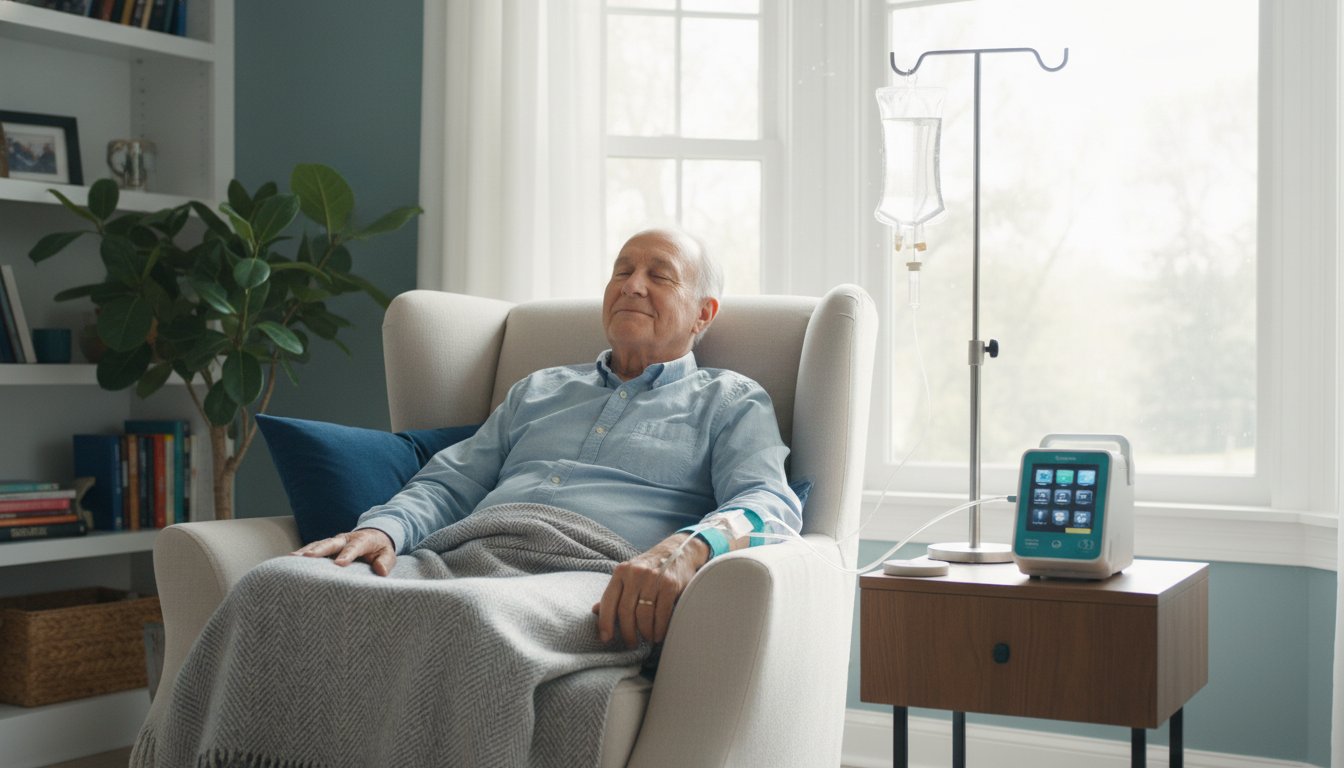
Imagine a quiet afternoon where, instead of a frantic rush to the emergency room, you’re resting in a favorite chair while your heart medication is delivered steadily through a small, portable pump. For many families navigating the complexities of advanced heart failure, this sense of normalcy often feels out of reach. You’ve likely grown weary of the revolving door of hospital stays and the clinical chill of a sterile room. It’s understandable to feel a mix of hope and hesitation when considering palliative inotropic therapy at home, especially if you’re worried about managing specialized IV equipment on your own.
We believe that your home should be a place of healing and connection, not just a site for medical procedures. This guide will show you how home-based inotropic therapy serves as a compassionate bridge; it allows for the stability of symptoms while reclaiming the quality of life that hospital walls often diminish. You’ll learn about the specific clinical requirements for coverage and how expert support makes it possible to reduce readmissions. We’ll outline the path toward bringing high-level cardiac care into your living room, ensuring you have the professional guidance needed for true peace of mind.
Key Takeaways
- Understand how continuous IV medication can manage heart failure symptoms outside a clinical setting to prioritize your comfort and dignity.
- Learn why palliative inotropic therapy at home significantly reduces stressful hospital readmissions while keeping you in a familiar, supportive environment.
- Discover the role of smart-pump technology and dedicated clinical oversight in ensuring your home infusion remains safe, precise, and reliable.
- Identify the essential steps for preparing a dedicated, clean space in your home to manage infusion supplies and daily care routines effectively.
- Explore how a local, multidisciplinary team provides a personalized bridge between complex medical requirements and your family’s daily life.
What is Palliative Inotropic Therapy at Home?
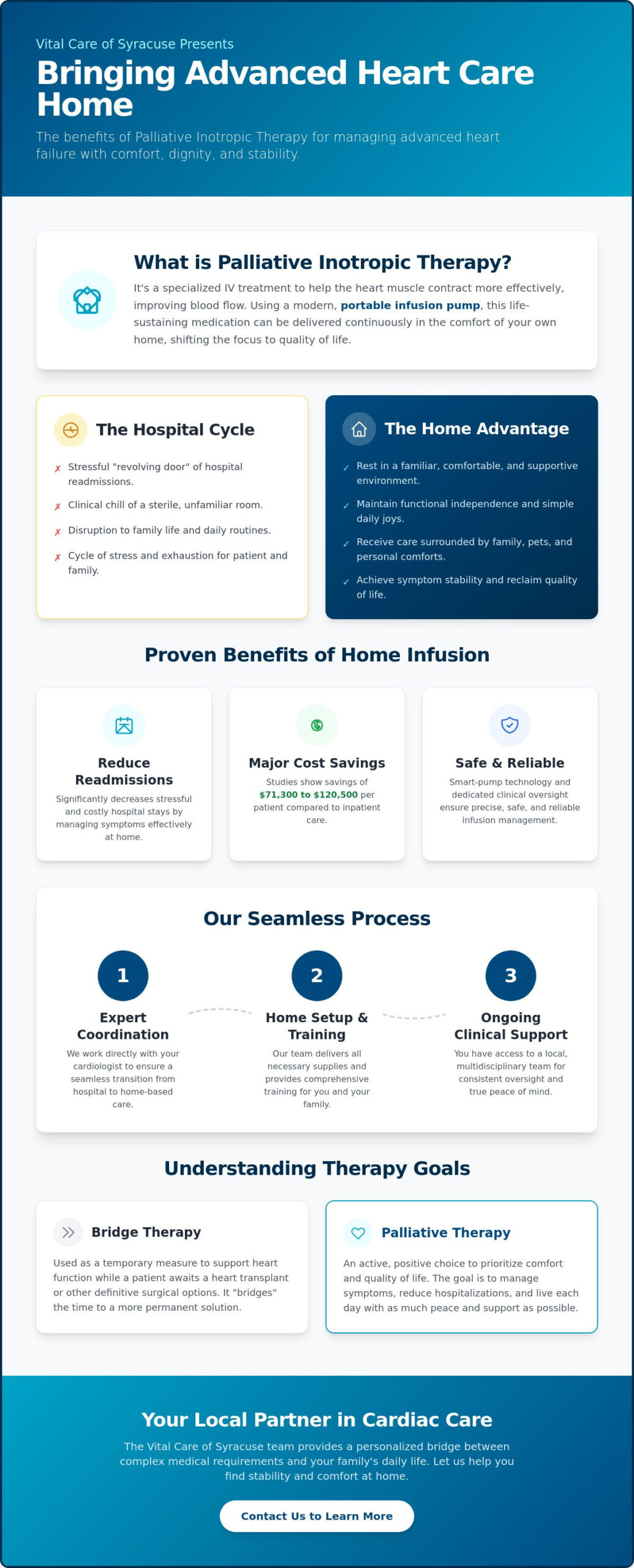
Palliative inotropic therapy at home represents a specialized approach to managing advanced heart failure outside the hospital walls. Inotropic medications are intravenous treatments designed to help the heart muscle contract more effectively; this improves the flow of oxygenated blood throughout the body. While these medications were once restricted to intensive care units, modern technology has introduced portable, lightweight infusion pumps. These devices allow patients to receive life-sustaining medication while remaining in their own living rooms, surrounded by the comforts of home.
The term “palliative” often carries a heavy weight, but in this context, it describes a proactive strategy focused on comfort and daily function. Understanding What is Palliative Care? helps clarify that this isn’t about withdrawing treatment. Instead, it’s about shifting the goal toward the highest possible quality of life. For individuals with Stage D heart failure who may no longer be candidates for surgery or transplants, this therapy provides a way to manage severe symptoms like breathlessness and fatigue without requiring a permanent hospital stay.
To better understand how these medications function in a home setting, watch this helpful overview:
Vital Care of Syracuse acts as a vital bridge in this journey, facilitating the transition from a clinical environment to a home-based one. Our team coordinates closely with your cardiologists to ensure that the setup of your infusion pump is seamless and that your supplies are consistently managed. We provide the professional oversight necessary to make home-based care a stable and secure reality for families across Central New York.
The Mechanism of Inotropes: How They Support the Heart
Medications such as Milrinone and Dobutamine work by increasing the strength of the heart’s contractions. This boost in cardiac output helps the kidneys process fluids more efficiently, which reduces the painful congestion and swelling often associated with heart failure. By managing the heart’s workload, these infusions alleviate the crushing shortness of breath that limits daily activity. It isn’t a cure for the underlying condition, but it’s a powerful tool for maintaining stability and physical ease.
The Difference Between Bridge and Palliative Therapy
It’s helpful to distinguish between the different intents of inotropic therapy. Some patients use these medications as a “Bridge to Transplant” or a “Bridge to Decision” while awaiting further surgical options. However, for many, palliative intent is the primary goal. This is an active, positive choice to prioritize time and comfort over aggressive clinical interventions. Choosing palliative care doesn’t mean giving up; it means choosing to live each day with as much peace and physical support as possible through palliative inotropic therapy at home.
Benefits of Managing Cardiac Infusions in a Home Setting
Transitioning to home care offers a profound shift in the daily experience of advanced heart failure. For many in the Syracuse area, the “revolving door” of hospital readmissions creates a cycle of stress and exhaustion that impacts the entire family. By choosing palliative inotropic therapy at home, patients often find a level of stability that allows them to break this cycle. Beyond the clinical benefits, the psychological impact of being in a familiar environment is immense. Resting in your own bed, hearing the sounds of your family, or having a pet nearby provides a sense of security that a sterile hospital room simply cannot replicate.
This transition also supports a higher degree of functional independence. When symptoms are managed effectively at home, simple joys like eating a meal at the dining table or engaging in a long conversation with a loved one become possible again. Financially, the shift is significant; research indicates that home infusion therapy can result in cost savings ranging from $71,300 to $120,500 per patient compared to inpatient stays. If you are exploring how these benefits might apply to your family, our team at Vital Care of Syracuse is here to guide you through the process.
Clinical Outcomes: Stability and Symptom Control
Managing cardiac infusions at home isn’t just about comfort, it’s about maintaining physiological balance. Continuous inotropic support helps stabilize blood pressure and supports vital renal function, which prevents the sudden, acute declines that often lead to emergency room visits. Research on the Safety and Monitoring of Palliative Inotropic Therapy highlights that while challenges like a 60% rehospitalization rate exist for this patient population, specialized home nursing provides a level of oversight that mimics hospital monitoring. This proactive care identifies small changes in health before they become crises.
Milrinone vs. Dobutamine: Which is Right for Home Care?
The choice of medication is a critical part of your tailored care plan. Milrinone is frequently preferred for home use because it acts as a vasodilator and has a longer half-life, providing a steady baseline of support. Dobutamine, which directly stimulates the heart muscle, may be more appropriate for specific clinical needs. Your Syracuse cardiologist will determine the best agent based on your unique cardiac profile. Regardless of the medication chosen, the goal remains the same: enhancing your comfort and ensuring you remain where you most want to be.
Addressing the #1 Concern: Safety and Monitoring at Home
Transitioning to palliative inotropic therapy at home often brings a natural sense of apprehension regarding the technical aspects of care. It’s common for families to worry about managing a complex infusion pump or identifying subtle changes in a loved one’s condition. At Vital Care of Syracuse, we address these concerns by acting as a dedicated clinical partner. We provide the professional oversight necessary to ensure that home care is as safe as it is comfortable. Our approach centers on precision; we utilize advanced smart-pump technology designed to prevent dosing errors and ensure that medication is delivered exactly as your cardiologist intended.
Safety is maintained through a combination of technology and human expertise. Our nursing team performs regular home visits to track vital signs and monitor symptom stability, while tele-monitoring allows for a proactive response to any physiological shifts. We don’t just drop off equipment and leave; we prioritize caregiver training to empower your family. By the time the first infusion begins, you’ll feel confident in your ability to manage the day-to-day requirements of the therapy. As noted in a practical review of home inotropes in advanced heart failure, the success of this treatment relies heavily on rigorous monitoring and a well-coordinated care team.
The Role of the PICC Line or Midline
To receive continuous inotropic medication, a patient requires a central venous catheter, typically a PICC line or a midline. These access points are essential for delivering the medication safely into the bloodstream without the need for frequent needle sticks. Maintaining these lines requires specific expertise, including regular dressing changes and flushing to prevent complications like Central Line-Associated Bloodstream Infections (CLABSI). Our nurses provide comprehensive PICC line care, teaching you how to keep the site clean and secure while we handle the more technical aspects of catheter maintenance.
Emergency Protocols and Physician Oversight
Confidence at home comes from knowing exactly what to do if a situation changes. Whether a pump alarms or symptoms like shortness of breath suddenly worsen, our patients have clear, step-by-step protocols to follow. We maintain a constant loop of communication between Vital Care pharmacists and your local Syracuse cardiologists to adjust treatment plans in real time. This collaboration ensures that medication refills and essential supplies are managed seamlessly across Central New York. Choosing palliative inotropic therapy at home isn’t a solitary journey; it’s a supported experience that keeps your safety and dignity at the forefront of every clinical decision.
Setting Up Your Home for Cardiac Infusion Success
Transitioning from a clinical environment to a home setting requires thoughtful preparation to ensure both safety and comfort. When you begin palliative inotropic therapy at home, the first step is selecting a dedicated space for your equipment. This area should be quiet and comfortable, ideally near a favorite chair or bed where you spend most of your time. It’s essential that this space is well-lit to allow for precise medication bag swaps and dressing changes; shadows can make it difficult to inspect the PICC line site or read the pump screen clearly. Keeping the area organized helps reduce the stress of daily care routines.
Reliability is the cornerstone of successful home care. Your infusion pump is a sophisticated device that requires a consistent power source. While these pumps have internal batteries for mobility, we recommend keeping the charger plugged into a wall outlet whenever you’re stationary. We’ll help you establish a backup plan for power outages to ensure your therapy remains uninterrupted. Because we serve families from Rochester to Binghamton, our logistics team organizes the delivery of supplies with meticulous care. This ensures you always have the medication and sterile materials needed for the week ahead without unnecessary delays.
Caregiver Prep: A Step-by-Step Transition
The move from the hospital is a coordinated effort led by a Vital Care clinical manager. We work directly with your hospital discharge team to synchronize the timing of your arrival with the delivery of your equipment. During the initial home assessment, we check for electrical reliability and potential safety hazards like loose rugs that could interfere with your mobility while carrying a portable pump. The first 24 hours are a learning period; your home nurse will walk you through the equipment until your family feels entirely secure in the daily routine. Our goal is to make the transition feel like a welcoming return rather than a medical event.
Navigating Insurance and Documentation in New York
Understanding the financial side of care is just as important as the clinical side. To qualify for Medicare coverage of outpatient inotropic therapy, specific criteria must be met, including documentation of dyspnea at rest despite optimal cardiac therapies. Your cardiologist must provide hemodynamic studies showing a cardiac index of ≤2.2 L/min/m² or a Pulmonary Capillary Wedge Pressure (PCWP) of ≥20 mmHg. We require a Certificate of Medical Necessity (CMN) to move forward, and our billing experts are here to help Syracuse families navigate these requirements. If you have questions about starting your journey, contact Vital Care of Syracuse to discuss your specific needs and how we can support your stability at home.
Vital Care of Syracuse: Your Local Partner in Cardiac Care
Choosing a care provider is a deeply personal decision, particularly when managing the complexities of advanced heart failure. Being a locally owned provider in Central New York gives us a unique perspective on the Upstate healthcare landscape. We aren’t a distant corporation; we’re neighbors who understand the specific needs and values of our community. Our “compassionate expert” model ensures that while we maintain the highest clinical standards for palliative inotropic therapy at home, we never lose sight of the person behind the diagnosis. This dedicated partnership allows us to act as a protective advocate, bridging the gap between your medical requirements and your desire for a peaceful, home-based life.
Our team brings together diverse expertise to provide a holistic care experience that prioritizes your stability. Clinical pharmacists oversee the precision of your medication, while specialized nurses manage the technical aspects of your daily infusion. Because heart failure often impacts other areas of health, our dietitians are also available to offer nutritional guidance that supports your overall well-being. This collaborative approach ensures that every facet of your care is synchronized, providing a level of security that helps you focus on what truly matters: spending meaningful time with your loved ones.
Comprehensive Support Beyond the Pump
Sometimes, managing advanced heart failure requires more than just cardiac support. We offer seamless integration with other essential services, such as Parenteral Nutrition, if your condition necessitates intravenous nutritional support. Beyond the physical requirements, we understand the emotional weight carried by families navigating these challenges. We provide resources to help caregivers in the Syracuse area feel supported and conduct regular clinical check-ins to ensure that palliative inotropic therapy at home continues to meet your specific quality-of-life goals.
Contacting Vital Care of Syracuse
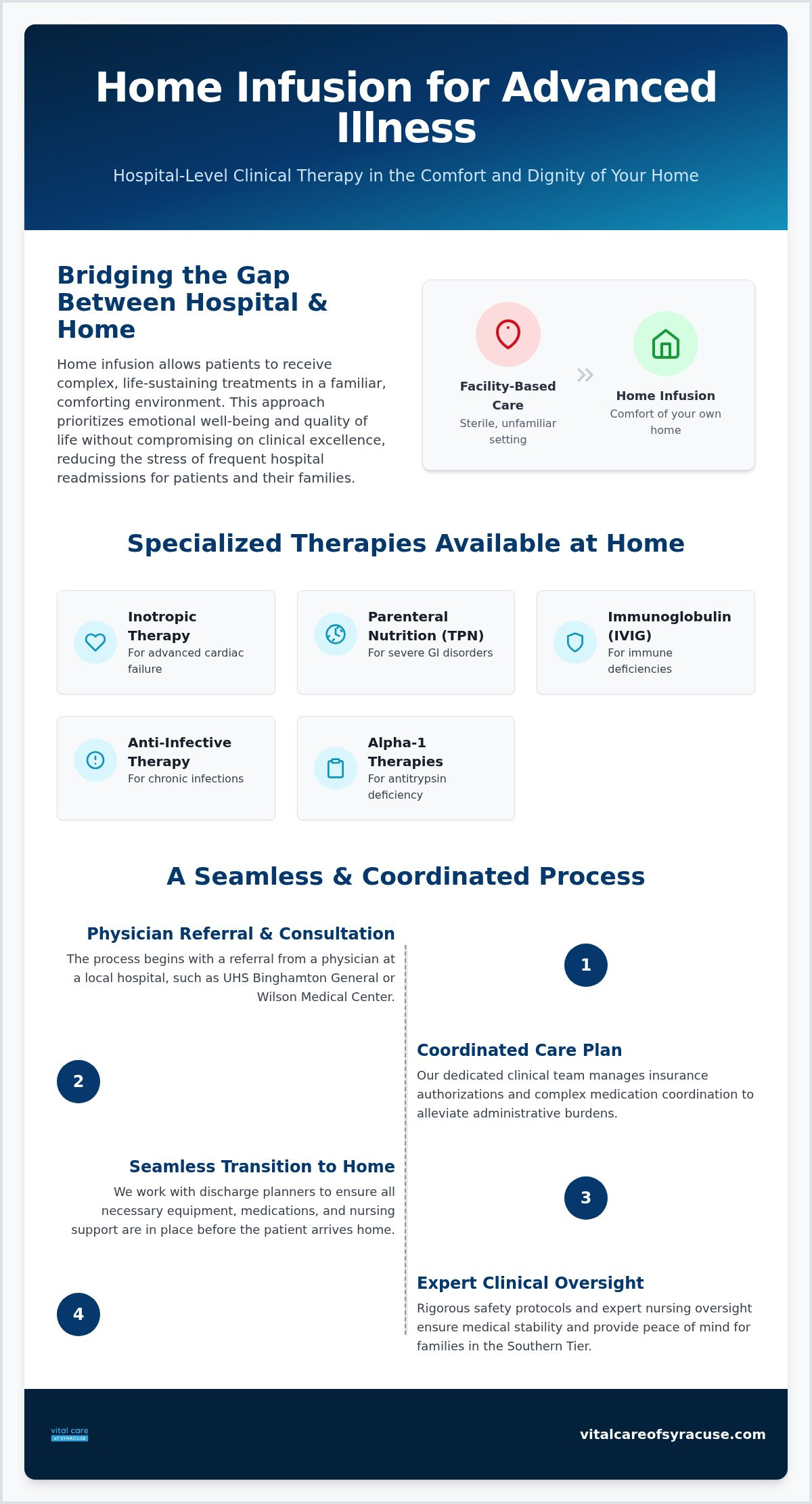
Starting the referral process is a straightforward, collaborative effort between your medical team and our coordinators. Physicians looking to refer a patient for inotropic therapy can contact our clinical intake department to initiate the transition from hospital to home. We proudly serve a wide geographic area, extending our professional support to families across Albany, Rochester, Utica, and Buffalo. Our team handles the logistical heavy lifting so you don’t have to. To begin your journey toward a more stable and comfortable home life, Speak with a clinical coordinator today to explore how we can support your family’s unique needs.
Reclaiming Your Daily Life and Dignity
Choosing palliative inotropic therapy at home is a profound step toward reclaiming the comfort and dignity that advanced heart failure often challenges. We’ve seen how modern smart-pump technology and dedicated nursing oversight create a secure environment for clinical stability. This transition isn’t merely about managing a medical condition; it’s about returning to the people and places that provide true peace. By prioritizing symptom relief in a familiar setting, you can focus on the moments that bring joy rather than the stress of clinical environments.
Our team at Vital Care of Syracuse is proud to be locally owned and operated in East Syracuse, NY. We provide 24/7 access to clinical pharmacists and infusion nurses who offer specialized expertise in complex cardiac and bleeding disorder therapies. You don’t have to navigate these medical requirements alone. If you’re ready to explore a compassionate alternative to hospital stays, Request a Home Infusion Consultation for Your Loved One today. We’re here to offer a steady hand and expert guidance as you prioritize your comfort and long-term well-being.
Frequently Asked Questions
What exactly is palliative inotropic therapy at home?
Palliative inotropic therapy at home is the continuous administration of intravenous medications that strengthen the heart’s contractions to improve blood flow and reduce symptoms. This approach uses a small, portable infusion pump, allowing you to stay in a comfortable environment rather than a hospital. It’s a supportive treatment focused on enhancing your daily quality of life during advanced stages of heart failure by managing breathlessness and fatigue.
Is home inotropic therapy safe for patients with advanced heart failure?
Home inotropic therapy is safe when overseen by a dedicated clinical team and supported by modern infusion technology. We use specialized smart pumps with built-in safety limits to ensure precise dosing and prevent errors. Regular nursing visits and consistent monitoring of your vital signs help us identify and address any changes in your condition before they become serious concerns, providing a secure alternative to clinical settings.
How long can a person stay on home inotropes like Milrinone?
The duration of therapy depends entirely on your specific clinical goals and how your heart responds to the medication over time. While some patients utilize these infusions for several weeks, others may remain on the therapy for many months. Recent cohort studies suggest a mean survival of approximately nine months for patients receiving palliative inotropic therapy at home, though every individual’s journey and response to the medication are unique.
Will insurance or Medicare pay for home cardiac infusions in New York?
Most insurance providers, including Medicare, cover home cardiac infusions when specific medical criteria are met. You’ll need documentation from your physician showing uncontrolled symptoms at rest and specific hemodynamic values, such as a cardiac index of 2.2 L/min/m² or less. Our billing experts work directly with New York families to verify coverage and manage the necessary paperwork for a smooth, stress-free transition to home care.
What happens if the infusion pump stops working or alarms at night?
You’ll have access to clinical support at any time if your infusion pump alarms or experiences a technical issue. We provide clear, step-by-step troubleshooting guides for common alarms and a direct line to our clinical pharmacists and nurses. Our team is always available to walk you through the steps to resolve the issue, ensuring your therapy remains uninterrupted and your peace of mind is preserved.
Can a patient still be active while on a continuous IV heart medication?
Patients can often maintain a degree of light activity because modern infusion pumps are designed to be lightweight and portable. These devices fit easily into a small shoulder bag or backpack, allowing you to move around your home or even enjoy short outings. This mobility helps you stay engaged with your family and participate in daily routines that would be impossible in a restricted hospital environment.
What is the role of the caregiver in managing home inotropic therapy?
The caregiver plays a supportive role by monitoring the infusion site and assisting with medication bag changes as needed. We provide comprehensive, hands-on training so you feel confident managing the equipment and recognizing when to contact our clinical team. You don’t need to be a medical professional; your primary role is to be an observant partner who ensures the home environment remains conducive to healing.
This level of support is essential for successful home recovery; for instance, AVIAN Care provides specialized home nursing and physiotherapy that helps families navigate these clinical responsibilities with confidence.
How does Vital Care of Syracuse coordinate with my existing cardiologist?
We act as a professional extension of your cardiologist’s team by following their specific treatment protocols and sharing regular clinical updates. Our pharmacists and nurses communicate directly with your heart failure specialist to ensure your therapy is meeting its intended goals. This collaborative approach ensures that your home care remains perfectly aligned with your overall cardiac management plan and local physician oversight.
Leave a Reply