



Imagine the relief of finally leaving the hospital, only to feel a sudden wave of anxiety as you look at the complex IV equipment required for your recovery. For many neighbors in our community, the transition to parenteral nutrition for pancreatitis Auburn can feel like learning a new language while you’re still trying to heal. It’s completely natural to worry about managing clinical equipment or whether your body will receive the nutrients it needs during essential gut rest. You deserve to feel secure and supported as you navigate these first steps toward wellness.
We understand that the logistics of hospital discharge often feel like a maze, especially when you’re already managing the physical toll of pancreatitis. This article provides the clarity you need, offering a steady hand to guide you through the process of bringing specialized care into your home. You’ll discover how home parenteral nutrition supports your recovery and learn the specific steps for a safe transition from the hospital. By choosing a home-based path, you can often reduce healthcare costs by 32% to 36% compared to a hospital stay, all while resting in the environment where you feel most at peace.
Key Takeaways
- Understand the clinical necessity of “gut rest” and how intravenous nourishment facilitates healing while preventing malnutrition during recovery.
- Learn how customized parenteral nutrition for pancreatitis Auburn allows for precise management of blood sugar and lipid levels outside of a hospital setting.
- Discover the structured roadmap for transitioning safely from Auburn-area hospitals to the comfort and privacy of your own home.
- Gain confidence in managing daily life with infusions by mastering sterile techniques and establishing a predictable “cycling” routine.
- Explore the benefits of partnering with local experts who provide a compassionate, patient-centered bridge between complex medical needs and your personal well-being.
Understanding Parenteral Nutrition for Pancreatitis Recovery
Living with a pancreas that is inflamed and sensitive requires a specialized approach to nourishment. Parenteral nutrition (PN) serves as a life-sustaining method of delivering essential nutrients directly into your bloodstream through a vein, bypassing the digestive system entirely. For those seeking parenteral nutrition for pancreatitis Auburn, this therapy provides a vital bridge to recovery by ensuring your body receives calories, proteins, and vitamins without taxing your internal organs. It’s a sophisticated way to maintain your strength when traditional eating isn’t an option.
According to this Acute pancreatitis overview, nutritional support is a cornerstone of managing the condition, especially when the body cannot process food normally. By delivering nutrients intravenously, we prevent the digestive tract from having to work, which is often the first step in calming a severe flare. This method of care allows you to focus on healing while we ensure your nutritional needs are met with clinical precision.
To better understand this concept, watch this helpful video:
The Science of Gut Rest
The concept of “gut rest” is central to your healing process. When you eat or drink, your pancreas is signaled to release digestive enzymes. In a healthy body, these enzymes stay inactive until they reach the small intestine; however, during a pancreatitis flare, they can activate prematurely within the pancreas itself. This leads to further inflammation and intense pain. By utilizing total parenteral nutrition (TPN), we allow the pancreas to remain dormant. This physiological pause gives your tissues the time they need to repair while maintaining your energy through controlled nutrient delivery. It’s a precise way to manage your health while avoiding the triggers that worsen your symptoms.
TPN vs. Enteral Nutrition
While many clinical guidelines suggest enteral nutrition (tube feeding) as a primary option, it isn’t always the right fit for every person. Some individuals experience severe malabsorption or simply cannot tolerate a feeding tube due to the intensity of their gastrointestinal distress. In these cases, TPN becomes the preferred choice to prevent malnutrition and support long-term recovery phases. TPN is a sterile IV solution formulated for unique nutritional needs. We carefully monitor your progress to determine if you require supplemental support (PPN) for a short duration or total support (TPN) to fully replace oral intake. This personalized approach ensures that residents in Auburn receive the exact level of care their specific condition demands.
The Role of TPN in Managing Acute and Chronic Pancreatitis
When the pancreas is compromised, the body’s ability to process essential nutrients often falters, leading to a risk of rapid weight loss and weakened immunity. For those navigating parenteral nutrition for pancreatitis Auburn, the goal of therapy extends beyond simple caloric intake; it is about providing the biological building blocks necessary for systemic repair. Total Parenteral Nutrition (TPN) acts as a specialized support system that prevents malnutrition during the long, often unpredictable recovery phases following a severe flare. By delivering a precise balance of nutrients, we help reduce the systemic inflammatory response that can otherwise delay healing and cause further distress.
Clinical standards, such as the ESPEN Parenteral Nutrition Guidelines, emphasize that intravenous support is a critical intervention when the digestive tract cannot safely absorb nutrients. This is particularly true for chronic cases where the pancreas has sustained long-term damage. By bypassing the traditional digestive route, TPN supports tissue repair and strengthens immune function while the pancreas remains in a protective, dormant state. This level of care ensures that your body isn’t just surviving the recovery period, but actively rebuilding its strength.
Essential Components of Your TPN Admixture
Every TPN bag is a carefully crafted formula tailored to your specific metabolic needs. Amino acids serve as the primary tool for muscle preservation and cellular repair, ensuring your body doesn’t break down its own tissues for energy. Lipids and carbohydrates are included as primary energy sources, providing the fuel your organs need to function without the digestive burden. We also include a vital blend of micronutrients, such as vitamins and trace elements, which act as the catalysts for your body’s natural healing processes. If you’re feeling overwhelmed by these clinical details, our team is here to provide a personalized consultation to explain how each component supports your unique journey.
Monitoring Pancreatitis-Specific Metrics
Because the pancreas plays a central role in regulating insulin, managing blood glucose fluctuations is a top priority during TPN therapy. We work closely with you to monitor these levels, ensuring your blood sugar remains stable even as your nutritional intake increases. Regular lab work is a standard part of our protocol, allowing us to adjust electrolyte levels and nutrient concentrations with clinical precision. This collaborative approach often involves working with home infusion for GI disorders Rochester specialists to ensure that patients in the Auburn area receive seamless, high-quality care. This constant oversight provides the security of hospital-level monitoring within the comforting walls of your own home.
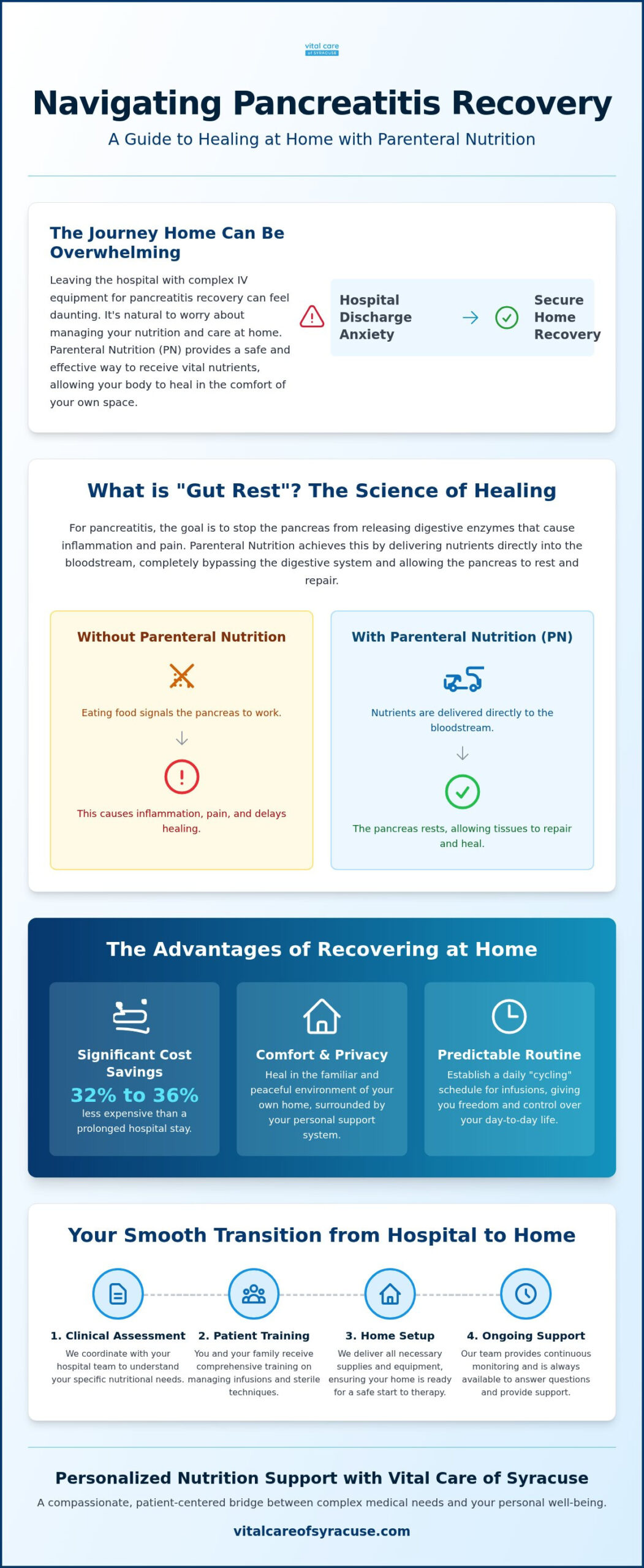
Transitioning from Hospital to Home TPN in Auburn, NY
Moving from a hospital setting to the familiar comfort of your own home in Auburn is a significant milestone in your recovery journey. This transition is carefully choreographed to ensure that your parenteral nutrition for pancreatitis Auburn plan continues without interruption. We act as a bridge between your hospital medical team and your home environment, coordinating every detail from your final discharge orders to the first time you start your pump at home. Our goal is to replace the clinical atmosphere of a hospital ward with the peace of mind that comes from professional support in your own living room.
The logistics of this move involve more than just transportation; they require a dedicated clinical team to verify that your home is ready for sterile care. Transitioning to home-based therapy isn’t just about comfort; it’s also a practical choice. Research indicates that home parenteral nutrition can reduce healthcare costs by 32% to 36% compared to hospital-based care. We help you navigate the current regulatory landscape, including the 2026 New York State Medicaid changes, so that your access to care remains stable and predictable.
Securing Vascular Access
To receive the intensive nourishment your body requires, a reliable and stable entry point is essential. Central venous access is required for the high-concentration nutrients in TPN. Most patients utilize a PICC line or a central catheter, which allows for the safe delivery of life-sustaining admixtures directly into the bloodstream. Our local nurses provide comprehensive, hands-on training for you and your caregivers right in Auburn. We teach you how to monitor the site and maintain the line with sterile precision, ensuring you feel like a capable partner in your own health journey.
The Discharge and Coordination Process
The administrative side of healthcare should never be a source of stress during your healing process. We take the lead on insurance verification and obtaining the necessary prior authorizations for your therapy. Once these hurdles are cleared, we coordinate the delivery of infusion pumps, IV poles, and sterile solutions directly to your residence. There’s a distinct advantage in choosing a local home infusion company for these needs. Being nearby allows us to provide faster response times and a more personal connection than a distant provider could offer. Our clinical team is often present for your first home infusion, providing a steady hand as you take this vital step toward independence and long-term wellness.
Daily Life with Home Infusion: Safety, Monitoring, and Support
Adjusting to a new daily rhythm is perhaps the most empowering part of your recovery journey. While the hospital environment is defined by rigid schedules, home care allows you to reclaim a sense of normalcy in your own Auburn neighborhood. Most patients utilize a process called “cycling,” where your parenteral nutrition for pancreatitis Auburn is infused over a 10 to 14-hour period, typically overnight. This schedule grants you the freedom to move about your home and engage in light activities during the day without being tethered to a pump. It’s a transition that prioritizes your comfort while maintaining the clinical excellence required for your healing.
The psychological benefit of recovering in a familiar setting cannot be overstated. Being near family and sleeping in your own bed reduces the stress that often accompanies long-term medical treatment. This peace of mind is a vital component of the “gut rest” strategy discussed earlier; when your mind is at ease, your body can better direct its energy toward tissue repair and inflammation reduction. We’re here to ensure that this transition feels like a step toward independence rather than a burden of responsibility.
Sterile Technique and Catheter Care
Maintaining the integrity of your infusion site is your primary defense against complications. We provide a comprehensive, step-by-step guide to hand hygiene and dressing changes that transforms complex medical protocols into manageable daily habits. You’ll learn to create a “sterile field” before handling any equipment, ensuring that every connection remains free of contaminants. Our team also walks you through the operation of your infusion pump, teaching you how to troubleshoot common alarms so you feel confident and in control. This consistent, compassionate expert guidance is designed to turn anxiety into mastery, making sterile care a natural part of your routine.
The Support System: You Are Not Alone
While you’re managing your infusions at home, you’re never truly on your own. You have 24/7 access to clinical pharmacists and infusion nurses who understand the specific nuances of your care plan. A dedicated dietitian also monitors your progress, adjusting your formula as your pancreas heals and your nutritional needs evolve. This proactive oversight helps us recognize early signs of complications, such as minor electrolyte imbalances or site redness, before they become serious issues. If a secondary infection arises during your recovery, we can seamlessly integrate anti-infective therapy at home into your existing treatment. If you’re ready to discuss a personalized recovery plan, contact our Auburn-area clinical team today to learn how we can support your journey back to health.
Personalized Nutrition Support with Vital Care of Syracuse
Choosing a partner for your recovery is a deeply personal decision, especially when managing a condition as complex as pancreatitis. At Vital Care of Syracuse, we believe that local ownership in Central New York matters because it ensures that our team is part of the same community you call home. For those requiring parenteral nutrition for pancreatitis Auburn, our proximity means that we’re not just a voice on the phone; we’re a dedicated resource capable of providing rapid, personalized responses to your needs. This local focus allows us to act as a bridge between the clinical requirements of your diagnosis and the comfort of your daily life, ensuring you never feel like just another case number.
Our “compassionate expert” model is built on the foundation of quiet confidence and clinical excellence. We understand that while the technical aspects of TPN are vital, the human element of care is what truly fosters healing. Our pharmacists and nurses view themselves as protective advocates for your well-being, ensuring that every customized admixture is formulated with precision. We take the time to listen to your concerns, providing a sense of security that is often lost in larger, more detached medical organizations. It’s about combining high-register clinical standards with the warmth of a supportive partner who is emotionally present for every step of your journey.
Local Expertise in Auburn and Beyond
Providing care for Cayuga County residents requires a seamless integration with your existing medical team. We maintain constant communication with your GI specialists and primary care doctors to ensure that your progress is monitored from every angle. This collaborative approach is essential for managing the long-term recovery phases of chronic pancreatitis, where adjustments to your nutrition plan must be made with surgical precision. By focusing on safe and cost-effective alternatives to prolonged hospital stays, we help you return to your routine while maintaining the highest standards of specialized infusion therapy. Our local nursing support ensures that help is always nearby if you have questions about your equipment or your care plan.
Getting Started with Vital Care
Transitioning your care or referring a loved one is a straightforward process designed to provide immediate peace of mind. Whether you’re still in the hospital or looking for a more responsive home provider, our team is ready to manage the logistics of your parenteral nutrition for pancreatitis Auburn. We handle the complexities of coordination so that you can focus entirely on your physical and emotional recovery. Having a dedicated health partner means you’re never navigating the challenges of home infusion alone. Experience compassionate home TPN care with Vital Care of Syracuse and take the first step toward a more comfortable, supported recovery today.
Moving Forward with Confidence in Your Recovery
Embracing a path toward healing often starts with the decision to prioritize your comfort and well-being. Throughout this guide, we’ve explored how total parenteral nutrition serves as a vital bridge for those managing the complexities of pancreatitis, allowing for essential gut rest while maintaining your strength. By choosing parenteral nutrition for pancreatitis Auburn, you’re not just selecting a medical therapy; you’re opting for a recovery model that values your independence and peace of mind within your own community. You now have a clearer roadmap for transitioning from the hospital and a deeper understanding of how to manage your daily infusions with sterile precision.
At Vital Care of Syracuse, we combine our specialized GI and parenteral nutrition focus with the warmth of a locally owned Central New York team. Our 24/7 clinical support ensures that Auburn residents always have an expert hand to guide them through any challenge. If you’re ready to take the next step in your health journey, contact Vital Care of Syracuse for personalized home TPN support today. You don’t have to navigate this transition alone, and we’re honored to be your partner in achieving a successful, home-based recovery. Your journey toward wellness is well within reach, and we’re here to help you every step of the way.
Frequently Asked Questions
Is TPN for pancreatitis permanent or temporary?
Parenteral nutrition is typically a temporary intervention designed to provide essential gut rest during acute flares or long-term recovery phases. Most patients transition back to oral intake as pancreatic inflammation subsides and digestive function returns. However, the duration depends entirely on your specific diagnosis and how your body responds to therapy. Our clinical team monitors your progress closely to ensure that parenteral nutrition for pancreatitis Auburn remains a supportive bridge rather than a permanent fixture.
Can I move around or go outside while on home TPN in Auburn?
You can certainly remain mobile and enjoy the outdoors while receiving home therapy. Most patients utilize a “cycling” schedule that allows them to receive infusions overnight, leaving the daylight hours free for light activities and movement. Even during active infusion, modern portable pumps and specialized backpacks make it possible to move around your home or yard comfortably. This flexibility is a key benefit of recovering in a familiar Auburn setting rather than a hospital room.
How do I know if my TPN formula needs to be adjusted?
Formula adjustments are driven by regular blood work and clinical assessments conducted by our pharmacists and dietitians. We look for specific markers, such as electrolyte levels, blood glucose stability, and liver function, to ensure your admixture perfectly matches your metabolic needs. You might also notice physical cues, like changes in energy levels or fluid retention, which you should report to our team. These precise modifications ensure that your parenteral nutrition for pancreatitis Auburn continues to support optimal healing.
What are the most common risks of home parenteral nutrition?
The most common risks include catheter-related bloodstream infections, blood sugar fluctuations, and electrolyte imbalances. While these sound concerning, we mitigate these risks through intensive training on sterile techniques and frequent clinical monitoring. Our compassionate expert model ensures you’re never managing these risks alone; we provide the tools and oversight necessary to catch minor issues before they become serious. Consistent hand hygiene and careful site observation are your best defenses against potential complications.
Will insurance cover home TPN for pancreatitis in New York?
Most insurance providers, including Medicare and New York State Medicaid, provide coverage for home TPN when it’s deemed medically necessary. Our administrative team handles the complex coordination of insurance verification and prior authorizations to ensure your transition is seamless. We also stay updated on current regulatory changes, such as the 2026 Medicaid rate adjustments, to provide accurate guidance. We’ll work directly with your provider to confirm that your specific plan supports your home recovery journey.
How do I manage the TPN pump at night while I sleep?
Managing your pump at night is a straightforward process designed to be as non-intrusive as possible. Once the infusion is started and the pump is secured on an IV pole or in a bedside carrier, the device automatically regulates the flow rate while you sleep. The pumps are equipped with safety alarms that will alert you to any issues, such as a kinked line or an empty bag. This automated approach allows you to rest deeply while your body receives the vital nourishment it needs for repair.
What should I do if my PICC line becomes dislodged or red?
If you notice redness, swelling, or if your line appears to have shifted, you should contact our clinical team immediately. Redness at the site can sometimes indicate a minor irritation or the early stages of an infection, while a dislodged line requires professional reassessment to ensure safe delivery. We provide 24/7 clinical support, so you’re never without a direct line to an infusion nurse or pharmacist. Prompt communication allows us to provide the steady, reliable hand you need during these moments of uncertainty.
How often will a nurse visit my home in Auburn for monitoring?
Typically, a nurse will visit your Auburn home at least once a week to perform a sterile dressing change and draw blood for necessary lab work. These visits are essential for monitoring your progress and ensuring your vascular access remains healthy and secure. During the initial transition from the hospital, visits may be more frequent to ensure you and your caregivers feel confident in managing the equipment. We tailor the frequency of these visits to your specific clinical needs and personal comfort level.
Leave a Reply