



Hemophilia care involves more than treating a bleed. Hemophilia support services in Rochester can help families understand specialized treatment, build confidence in daily life, and find practical and emotional support as needs change. The right support connects clinical care with family guidance in a clear plan.
It’s understandable to want reliable answers about insurance, referrals, injury prevention, and daily management. Families can also benefit from understanding how education and peer support complement professional hemophilia and bleeding disorder therapy.
This guide explains support available to Rochester families, including how treatment and referrals connect, what to discuss about coverage, and how prevention and everyday planning can support a child or adult with a bleeding disorder. It also explains how specialized home infusion therapy can fit into care and help clarify next steps for your family.
Key Takeaways
- Learn how specialized education and support resources can help families understand hemophilia and find guidance as needs change.
- Understand how referrals and insurance considerations can shape access to treatment and ongoing care.
- Explore ways to make injury prevention and daily management part of family routines, with guidance tailored to the person’s needs.
- Find practical and emotional support that can help families feel more prepared while living with a bleeding disorder.
Patient education and support resources
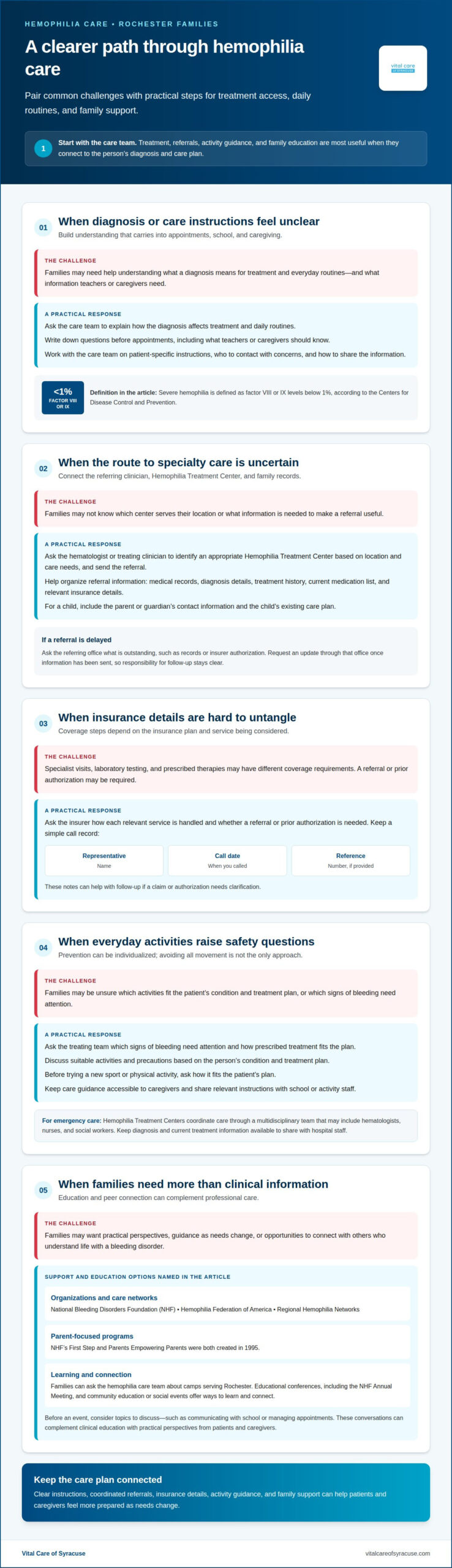
For Rochester families, the National Bleeding Disorders Foundation and Hemophilia Federation of America offer education and support for people affected by bleeding disorders. Regional Hemophilia Networks work to build expertise and comprehensive care teams. These organizations can help families find information and connect with support as needs change, from childhood through adulthood.
Education starts with understanding the diagnosis and care plan. Severe hemophilia is defined as factor VIII or IX levels below 1%, according to the Centers for Disease Control and Prevention. A useful next step is to ask the care team to explain how the diagnosis affects the patient’s treatment and daily routines. Families can also write down questions before appointments, such as what information teachers or caregivers need.
School staff and other caregivers benefit from clear, patient-specific guidance. Families can work with the care team to identify what teachers should know about the bleeding disorder, whom to contact with concerns, and how to share information. For example, a caregiver who understands the child’s plan can communicate more clearly with the family and care team when questions arise.
NHF’s First Step program was created in 1995 to help parents of children recently diagnosed with bleeding disorders. Parents Empowering Parents, also created in 1995, addresses similar needs through parent-focused support. For children, families can ask the hemophilia care team about camp opportunities serving Rochester. Educational conferences, including the NHF Annual Meeting, offer another way for families to learn and connect.
Community education and social events can help families meet others who understand life with a bleeding disorder. Before attending, consider which topics you want to discuss, such as communicating with school or managing appointments. These conversations complement clinical education by allowing patients and caregivers to share practical perspectives. Trusted organizations, informed caregivers, and family connections can make support easier to access in Rochester.
Support options include the National Bleeding Disorders Foundation, Hemophilia Federation of America, and Regional Hemophilia Networks. Families can also ask about community education and social events that connect people affected by bleeding disorders.
Families of children can ask their hemophilia care team about camps serving Rochester. Educational options include NHF’s First Step program, Parents Empowering Parents, and the NHF Annual Meeting.
Insurance and referrals
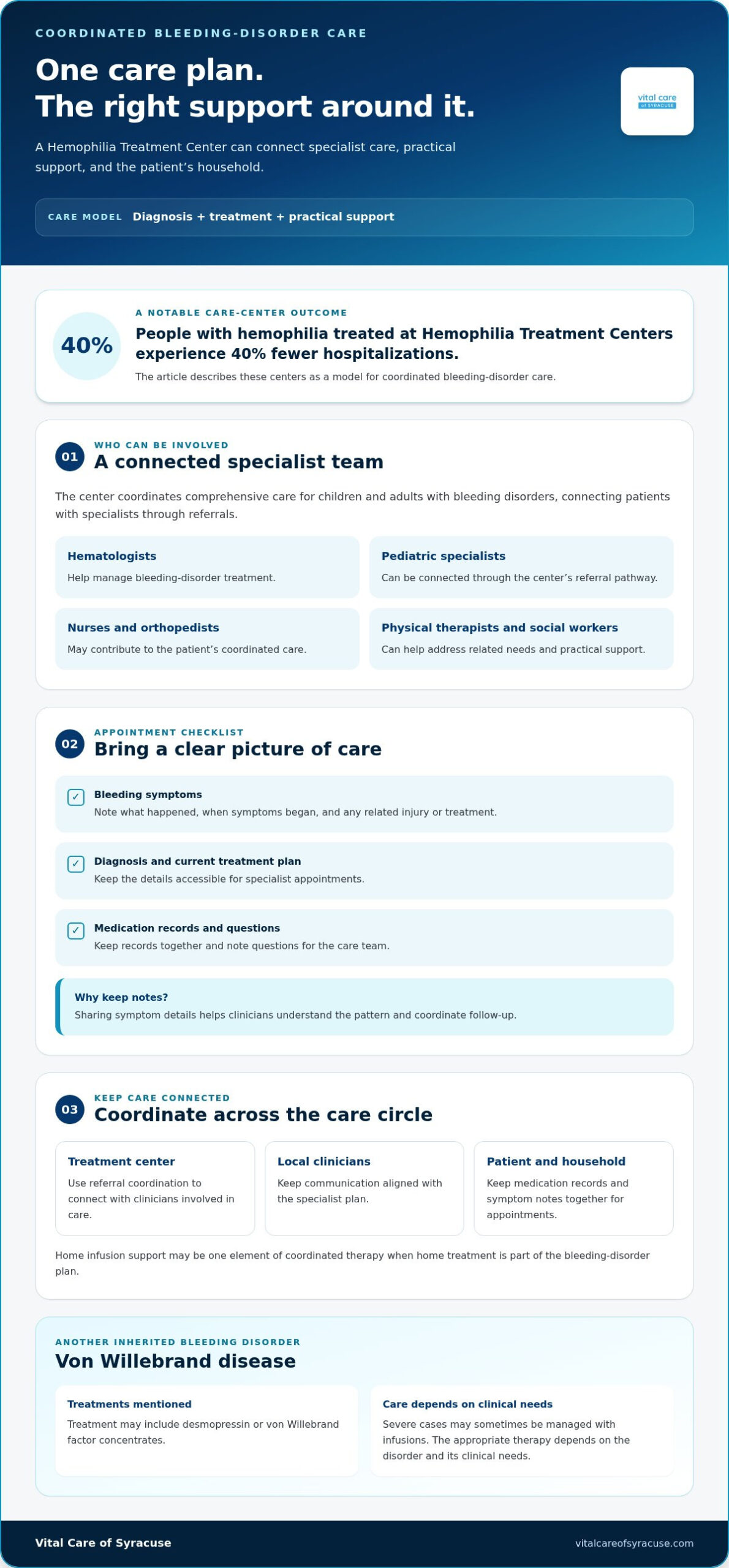
Rochester families can access comprehensive bleeding disorder care through Hemophilia Treatment Centers. These centers care for children and adults with hemophilia and other bleeding disorders. Ask the patient’s hematologist or referring clinician to identify the center serving your location and send a referral. The appropriate destination depends on the patient’s care needs and where they receive treatment.
Referral steps vary by family. A clinician may send medical records, diagnosis details, and treatment history so the center can understand the reason for referral. Before an appointment, organize the referral information, current medication list, and relevant insurance details. For a child, include the parent or guardian’s contact information and the child’s existing care plan.
Insurance steps depend on the plan and service being considered. Ask the insurer how specialist visits, laboratory testing, and prescribed therapies are handled, and whether a referral or prior authorization is required. Record the representative’s name, call date, and any reference number provided. These details can make follow-up easier if a claim or authorization needs clarification.
For Rochester-area contact details, start with the patient’s hematologist or treating clinician, who can direct the referral to an appropriate Hemophilia Treatment Center. Comprehensive centers serve children and adults with hemophilia or another bleeding disorder. The care team determines which services fit the diagnosis and clinical needs. Include insurance information in the referral process so coverage questions can be addressed alongside the care plan.
If a referral is delayed, ask the referring office what is still outstanding, such as records or insurer authorization. Once the information has been sent, request an update through that office. This helps keep the referral, insurance review, and treatment planning connected, with a clear understanding of who is handling each step.
Rochester families receive care through comprehensive Hemophilia Treatment Centers. The patient’s hematologist or treating clinician can identify the appropriate center based on the patient’s location and care needs.
Daily management and injury prevention
A consistent care plan helps patients and families manage hemophilia through everyday routines. The treating team can explain how the condition affects activities, which signs of bleeding need attention, and how prescribed treatment fits the patient’s plan. Keep that guidance accessible to caregivers and share relevant instructions with school or activity staff. Clear communication supports prevention without requiring families to avoid every activity.
For emergency care in Rochester, a Hemophilia Treatment Center coordinates care through a multidisciplinary team that may include hematologists, nurses, and social workers. Keep the patient’s diagnosis and current treatment information available to share with hospital staff, helping them understand the bleeding disorder and coordinate with the treating team.
Injury prevention should reflect the person’s condition, treatment plan, and chosen activities. The care team can discuss suitable activities and precautions that may help reduce injury risk. Before trying a new sport or physical activity, for example, ask how it fits the patient’s plan. Avoiding all movement is not the only approach: individualized guidance can help balance activity and safety.
Discuss sport choices with the care team rather than relying on broad assumptions. The Hemophilia Outreach Center identifies golf as a safe sport for people with bleeding disorders, citing the National Hemophilia Foundation. Families can use examples like golf to start a conversation about other interests, activity intensity, and prevention measures relevant to the individual.
Make daily management easier with a simple communication routine. Ask the care team who should be informed about a change in symptoms, what treatment instructions caregivers need, and what information to provide when seeking medical attention. For children, parents can share relevant guidance with teachers and activity leaders. Consistent, accurate information helps the adults around a child respond appropriately.
At routine visits, discuss changes in activity, recurring concerns, and prevention questions. The team can use these details to review the care plan and coordinate follow-up across specialists. If bleeding concerns arise, follow the patient’s established medical instructions and seek appropriate medical care. A clear plan gives families and caregivers a shared reference at home, school, and the hospital.
Practical advice and emotional support for families
A new diagnosis can bring practical questions and strong feelings for everyone in the household. At a family meeting, choose someone to collect questions and share updates with the care team. Parents might ask how to explain hemophilia to siblings, while older children may want words to use with friends. Making room for everyone’s concerns can help families talk openly about the diagnosis.
Simple routines can ease the mental load. Keep appointment dates, care instructions, and important contacts together in a place the family can access. A shared calendar can show upcoming visits, while a short written summary can help a parent or caregiver explain the patient’s needs to another trusted adult. Review the information when the care plan changes.
Caregivers also need space to share their concerns. A parent can raise a specific worry, such as school participation or family responsibilities, with a social worker on the multidisciplinary care team. The conversation can help identify relevant support or guidance. Patients should also have opportunities to express their priorities, including privacy, independence, and how much they want others to know.
Connecting with other families can offer a different kind of understanding. Patient organizations support people facing bleeding disorders and related challenges throughout life. At a community gathering or conference, families might discuss school conversations, appointments, or changing needs as children grow. Sharing experiences can help families identify questions to bring to their clinical team.
For a practical next step, write down the family’s most pressing concern and the help needed, such as understanding the treatment plan or coordinating hemophilia therapy. Bring that note to the next care discussion, so the conversation can focus on the family’s priorities. Explore professional hemophilia care support as part of planning care for your family.
Vital Care of Syracuse: Hemophilia and Bleeding Disorder Therapy
Vital Care of Syracuse provides Hemophilia and Bleeding Disorder Therapy for families seeking specialized treatment support. This service may be a relevant next step when a patient’s care plan includes hemophilia therapy and the family needs help coordinating treatment. It complements education, referrals, and family support by addressing the therapy component of care.
Discuss treatment needs with the patient’s care team, including how therapy fits the established plan. Vital Care of Syracuse also provides Anti-infective Therapy, Immunoglobulin (IVIG/SCIG), and Parenteral Nutrition (TPN). These therapies address different treatment needs and do not replace hemophilia care.
For a conversation about Hemophilia and Bleeding Disorder Therapy, contact Vital Care of Syracuse.
Choose a next step that fits your family
To find hemophilia support services in Rochester, connect the patient’s treatment plan with the professional support the family needs. Consider what would make care easier to coordinate, then bring that priority to the care team. A clear goal can focus the conversation on therapy and family needs.
For families whose care plan includes specialized hemophilia treatment, Vital Care of Syracuse provides Hemophilia and Bleeding Disorder Therapy. Other clinical offerings include Anti-infective Therapy, Immunoglobulin (IVIG/SCIG), and Parenteral Nutrition (TPN). The appropriate service depends on the treatment needs being addressed.
Take the next step at a pace that feels manageable for your family. Contact Vital Care of Syracuse to discuss hemophilia and bleeding disorder therapy. With a clear plan and the right support, families can move forward with greater confidence.
Frequently Asked Questions
What financial assistance is available for hemophilia treatment in Rochester?
Financial assistance depends on the patient’s insurance plan, prescribed therapy, and eligibility for available support programs. Families seeking hemophilia support services in Rochester can ask their insurer about coverage, authorization requirements, and reimbursement. Vital Care of Syracuse assists with insurance verification, prior authorizations, and reimbursement coordination for infusion therapy. The patient’s care team may also help identify relevant support resources.
Does Rochester have hemophilia support groups for patients and families?
Families seeking hemophilia support services in Rochester can connect with organizations serving people affected by bleeding disorders, including the National Bleeding Disorders Foundation and Hemophilia Federation of America. These organizations provide education and support, while local events and conferences offer opportunities to meet others. Ask the patient’s care team about gatherings or family-focused programs suited to your community and stage of care.
Leave a Reply