


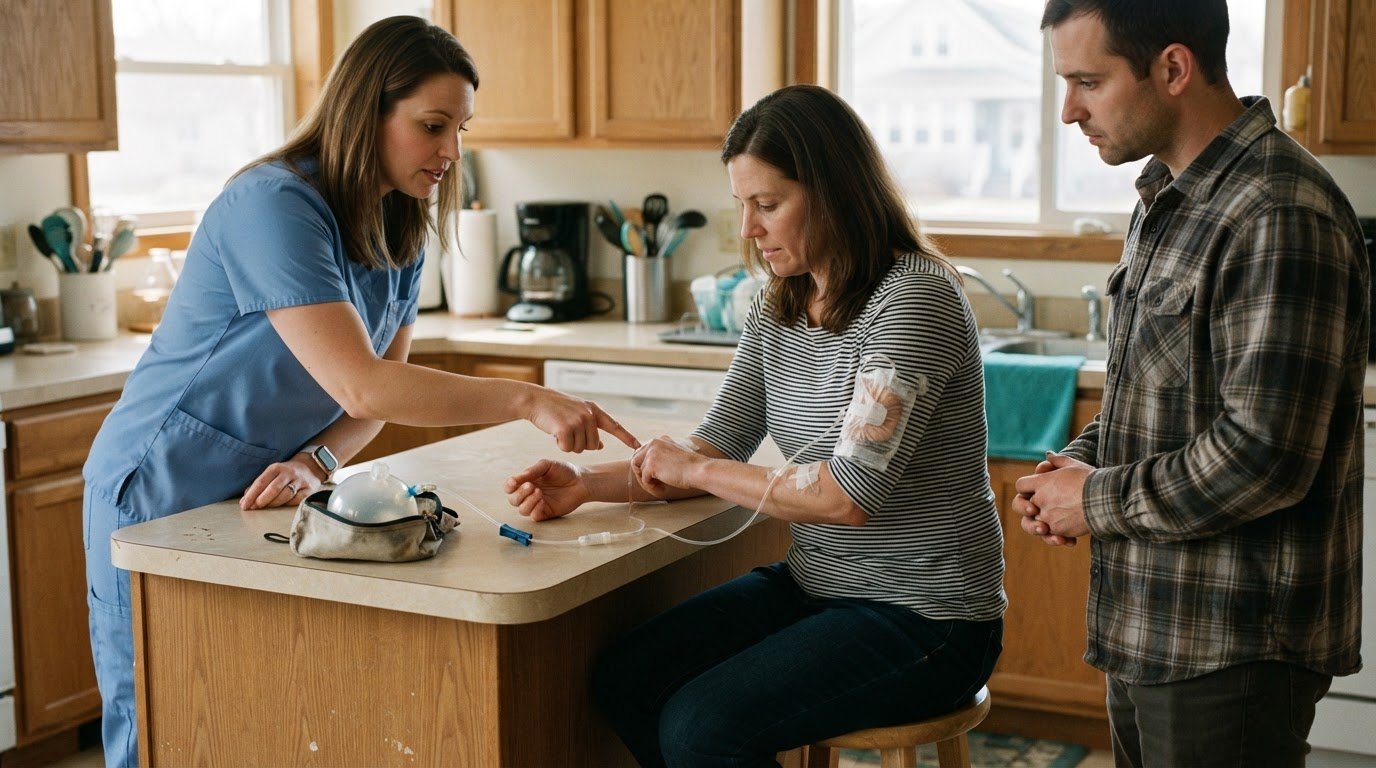
Home IV antibiotics in Utica can provide prescribed antibiotic treatment by infusion for infections when it is part of a patient’s care plan. The infection, medication, and individual care needs shape how treatment is delivered at home.
It’s understandable to want clear answers about which infections may be treated this way and what home infusion involves. This article explains how IV antibiotics may be used, what patients and caregivers can expect from equipment training, and how home infusion fits into treatment. It also covers the transition from a clinical setting to home, so the process feels more familiar and manageable.
Key Takeaways
- Learn what IV antibiotic infusion may involve and how home treatment differs from care in an infusion suite.
- See how equipment training can help patients and caregivers understand the steps involved in administering treatment.
- Explore why infections such as pneumonia and skin infections require treatment choices suited to the specific condition.
- Understand how the infection, prescribed medication, and care plan help shape treatment for infectious diseases at home.
What is IV antibiotics infusion therapy used to treat?
IV antibiotic infusion therapy delivers prescribed medication through a vein to treat a bacterial infection. Treatment may take place at home or in an infusion suite. The care plan outlines the medication, schedule, delivery method, and follow-up. For example, a patient leaving the hospital may continue a prescribed course at home when the clinical team has arranged appropriate care.
To qualify for home IV antibiotics in Utica, a prescribing clinician evaluates the infection, treatment plan, and whether home administration is suitable. That clinician orders the therapy; the prescription and care details guide coordination with the infusion pharmacy and any home health services involved.
The time needed to arrange services varies. Coordination begins once the prescription and treatment details are available, with preparations shaped by the medication, equipment, and care team. Discharge planning may include reviewing medications, explaining test results, and coordinating with physicians and community providers.
Patients in Utica and Oneida County may receive details about the infusion provider and home health services through care coordination. The infusion provider prepares prescribed medication, while a home health agency may provide nursing visits when included in the care plan. The organizations involved depend on each patient’s arrangements.
Equipment is selected to match the prescribed infusion method. An infusion pump controls medication delivery, while supplies support the connection and administration process. Training covers the patient’s actual equipment and plan, including how to follow instructions and recognize problems to report. Home treatment is one setting; an infusion suite is another. A patient may receive therapy in either setting, depending on the treatment plan and care arrangements. Services in different locations nationwide follow their local care arrangements, so location alone doesn’t identify a particular pharmacy or agency.
Patient and caregiver equipment training
Training connects the prescribed equipment with the steps patients and caregivers will follow at home. Discharge education also helps families understand the care plan and whom to contact with concerns.
Equipment Use and Training
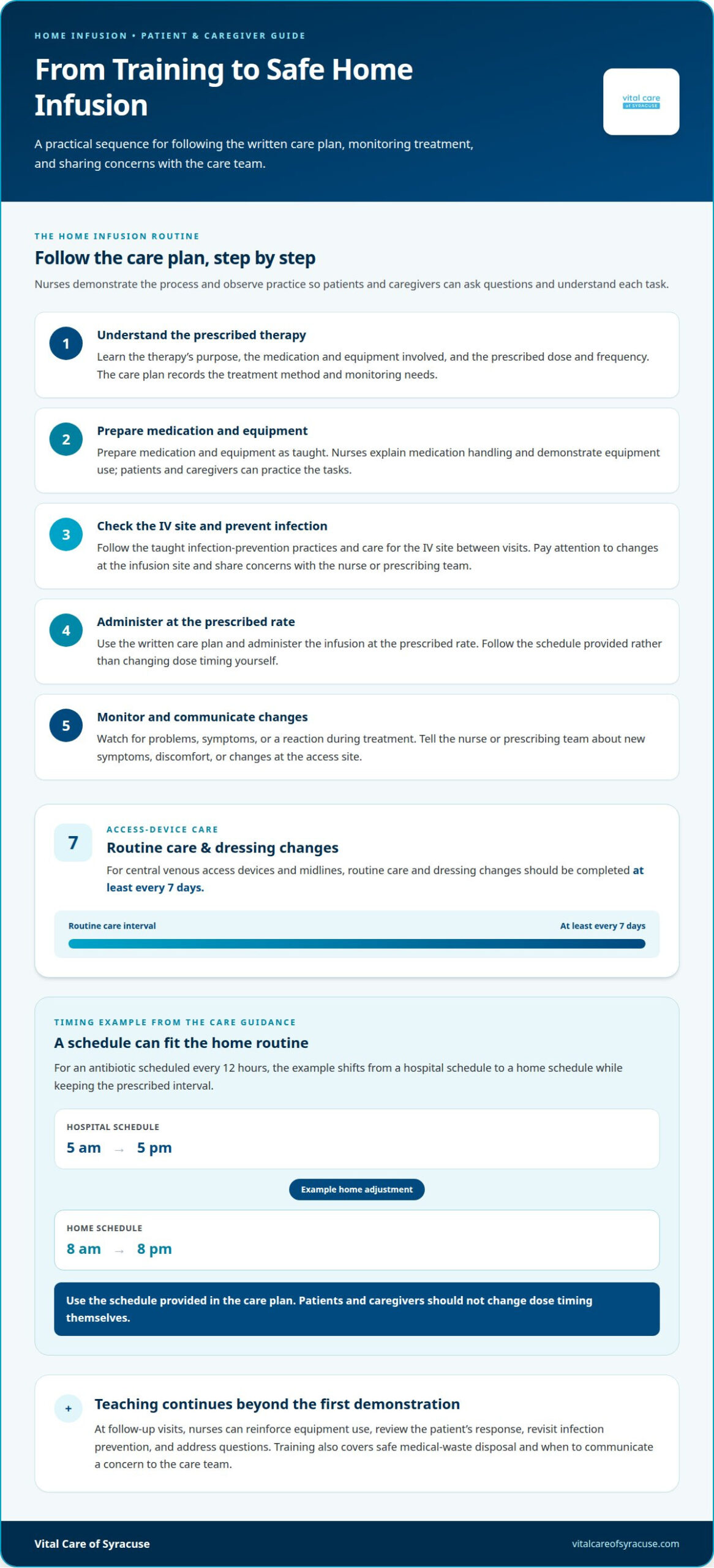
Training should use the equipment prescribed for the patient, such as an infusion pump, and explain how to use it. Patients and caregivers can practice following care instructions and learn how to respond to equipment problems. They should also know what to report and whom to contact. A written plan helps everyone follow consistent directions after discharge.
Nurse Visits and Self-Administration
Depending on the care plan, home IV antibiotics may be administered by a visiting nurse or by a trained patient or caregiver. The plan and training clarify which tasks happen during a visit and which are handled between visits. Patients should understand the prescribed steps, the caregiver’s role, and how treatment fits their daily routine.
Discharge education can include reviewing medications, explaining test results, and discussing warning signs and problems to report. Ask the care team to make sure the instructions are clear and specific to the equipment and treatment plan. Keeping them accessible can help caregivers refer to them during routine care.
Preferences matter when choosing between home treatment and an infusion suite. Discuss practical considerations, such as whether someone can assist at home and whether a clinical setting feels more manageable. If a facility tour is available, seeing the treatment space may help patients understand the setting before discussing the choice with their care team.
A 24/7/365 support arrangement is a distinct service commitment, not something equipment training alone establishes. The home-care plan should clearly explain the contact pathway for questions and equipment concerns, including outside scheduled visits.
Training should explain which warning signs or equipment problems require prompt attention, using the patient’s own instructions. The care plan should also state whom to contact if a concern arises. For an overview of care coordination, patients can review how home infusion support is presented.
Conditions treated, including pneumonia and skin infections
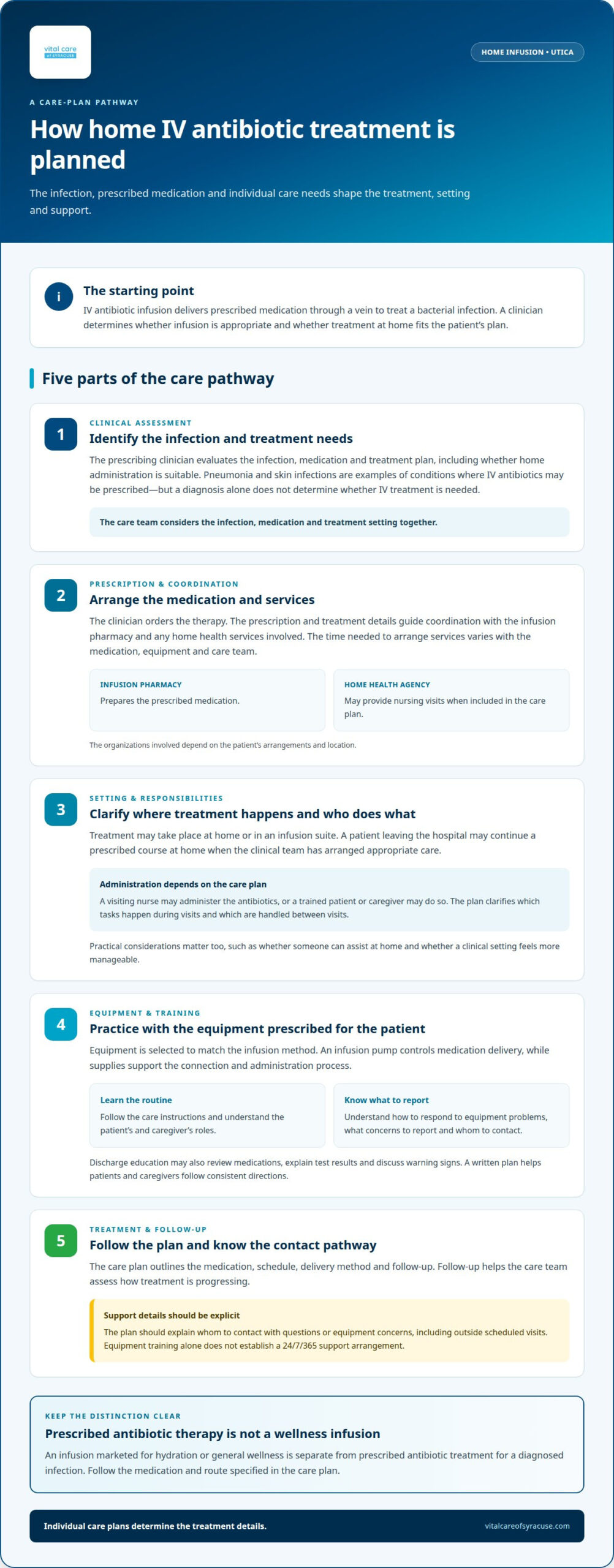
IV antibiotics may be prescribed for a bacterial infection when a clinician determines that infusion is an appropriate route. Pneumonia and skin infections are examples, but a diagnosis alone doesn’t determine whether IV treatment is needed. The care team considers the infection, medication, and treatment setting together.
For a serious infection, treatment starts with a clinical assessment and a care plan. The prescribing clinician identifies the infection and medication, then considers whether outpatient infusion fits the patient’s needs. For example, someone continuing treatment after hospital care may have a home or outpatient plan coordinated around the prescription. Follow-up helps the care team assess how treatment is progressing.
In Utica, home infusion providers and infusion pharmacies may coordinate prescribed antibiotic treatment, while home health services may support care at home. Their roles differ: the pharmacy prepares prescribed medication, and a home health agency may provide nursing visits when the plan includes them. The organizations involved depend on the patient’s arrangements and location.
An individualized treatment plan accounts for the infection, medication, delivery method, and patient’s circumstances. It should make clear where treatment takes place, who is involved, and how to raise questions or concerns. For example, a patient receiving outpatient infusion in Utica may follow a different routine from someone receiving treatment at home.
Aesthetic and wellness infusions are separate from antibiotic therapy. An infusion marketed for hydration or general wellness is not the same as prescribed antibiotic treatment for a diagnosed infection. Patients should follow the medication and route specified in their care plan rather than treating wellness services as substitutes.
To find out whether home IV antibiotics in Utica are suitable for you, start with your healthcare provider. Eligibility depends on the prescribed medication, diagnosis, and clinical considerations determined by your healthcare provider. The treatment plan guides coordination with an infusion provider and, when needed, home health services. Clarify which organizations are involved and what role each one has in your care.
Home IV antibiotics for infectious diseases
Infectious disease treatment begins with identifying the infection and selecting a prescribed antibiotic. The diagnosis, test results, medication history, and treatment response help shape the plan. For example, a clinician may consider whether the infection affects the lungs, skin, or another site before deciding on the route and schedule. IV therapy is a treatment method, not a diagnosis.
Home treatment connects the prescription with a practical care plan. Before care begins, patients should understand which medication is prescribed, how it will be administered, and what follow-up is planned. These details matter when care moves from a hospital or infusion suite to home. A clear handoff helps patients and the care team follow the same instructions.
For an infectious disease, the care team needs a way to assess how treatment is progressing. Follow-up may include discussing symptoms, treatment tolerance, and relevant test results. Patients can keep a simple record of infusion times and new concerns to share with the care team, giving everyone specific details to discuss.
A useful planning conversation covers the infection, the reason for IV medication, and the home routine. Patients can ask what changes to report, whom to contact about medication or equipment concerns, and how follow-up will work. For instance, report new symptoms or difficulty following the prescribed schedule through the contact pathway in the care plan.
Home infusion can support treatment outside a facility when the prescribed plan and home arrangements align. The central takeaway is to connect each part of care: diagnosis, medication, administration instructions, and follow-up. For information related to infection treatment, explore home infusion care as a possible next step in understanding the process.
Vital Care of Syracuse: Anti-infective Therapy
Vital Care of Syracuse offers Anti-infective Therapy for patients whose treatment plan includes home infusion for an infection. It may be a relevant next step after a clinician has prescribed IV antibiotics and arranged home treatment. The prescription and care plan guide the therapy, while the patient’s clinical team oversees treatment decisions and follow-up.
Understanding how an infusion fits into the prescribed plan can make next steps clearer for patients and caregivers. Vital Care of Syracuse also provides therapies for complex care needs, including Immunoglobulin (IVIG/SCIG), Parenteral Nutrition (TPN), and Hemophilia and Bleeding Disorder Therapy.
Contact Vital Care of Syracuse to discuss Anti-infective Therapy and home infusion.
Make Your Next Care Conversation Count
As you consider home IV antibiotics in Utica, think about how prescribed treatment may fit your daily life. Consider who can help at home, how treatment instructions will be shared, and what follow-up belongs in the care plan. Bringing these practical priorities into the conversation can help you and your care team plan the next steps.
Vital Care of Syracuse offers Anti-infective Therapy, along with Immunoglobulin (IVIG/SCIG) and Parenteral Nutrition (TPN). If home infusion is part of your prescribed care, learn how these services may fit your treatment needs.
Contact Vital Care of Syracuse to continue the conversation. A clear next step can help you approach treatment with greater confidence.
Frequently Asked Questions
What insurance plans cover home IV antibiotics in Utica, including Medicare and Medicaid?
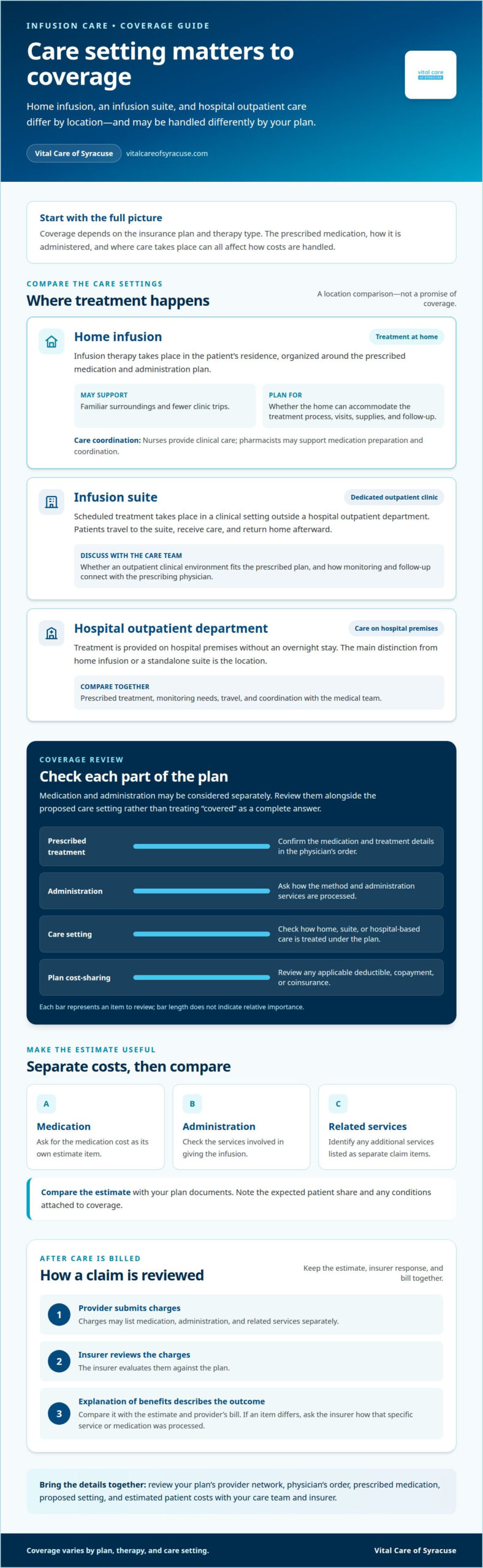
Coverage for home IV antibiotics varies by insurance plan and therapy type. Medicare or Medicaid coverage cannot be assumed based on the program name alone; benefits depend on the specific plan and prescribed therapy. Vital Care of Syracuse assists with insurance verification, prior authorizations, and reimbursement coordination. Reviewing your expected out-of-pocket responsibility can help you plan for medication, supplies, and administration costs.
What are the out-of-pocket costs for home IV antibiotics in Utica?
There is no universal out-of-pocket amount for treatment. Costs depend on the prescribed medication, treatment setting, and coverage under your insurance plan. Coverage varies by insurance plan and therapy type, so patient responsibility can differ. Vital Care of Syracuse assists with insurance verification and reimbursement coordination.
What steps are involved in arranging home IV antibiotic treatment after hospital discharge in Utica?
Once discharge planning begins, the treatment team coordinates the prescription and transition home. Planning may include reviewing medications, explaining test results, and coordinating with physicians and community providers. The team may also evaluate the home before discharge and discuss warning signs with the patient and family. Keeping medication instructions and follow-up details together can make the transition clearer.
How do home IV antibiotics compare with outpatient infusion centers in Utica?
For home IV antibiotics in Utica, the main difference is the treatment setting: care may take place at home or in an infusion suite. Home infusion can fit a patient’s routine, while a suite offers a designated clinical setting. The appropriate option depends on clinical considerations, the prescribed medication, and the patient’s circumstances. Infusion therapy is considered safe when provided by licensed, experienced clinicians following established protocols.
Leave a Reply