



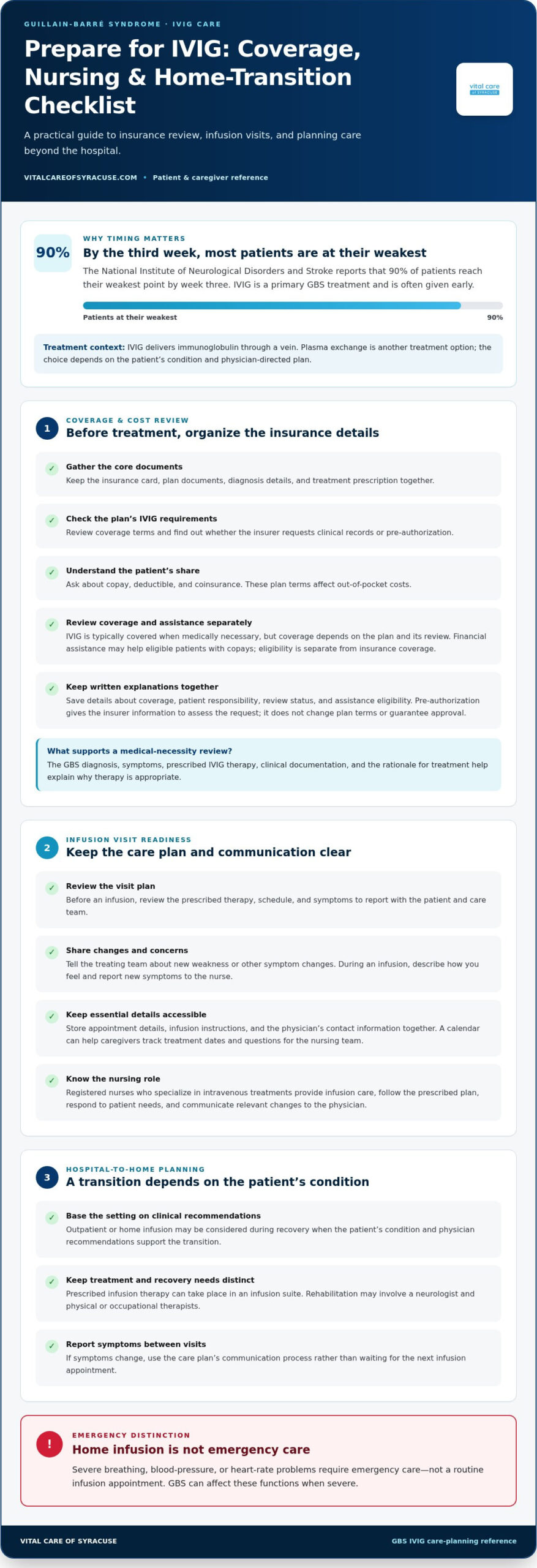
By the third week of Guillain-Barré syndrome, 90 percent of patients are at their weakest, according to the National Institute of Neurological Disorders and Stroke. IVIG is a primary treatment, and some people recovering after hospital care may transition to home infusion for Guillain-Barre syndrome in Albany.
A diagnosis can bring urgent questions about what GBS does, how treatment is given, and what happens after a hospital stay. It’s understandable to want clear, practical answers while focusing on recovery.
This article explains Guillain-Barré syndrome and the role of IVIG, outlines how insurance coverage may work, and describes what to expect from infusion nursing and outpatient care. You’ll also learn how a transition home may fit into a treatment plan, so you can better understand the options and conversations involved.
Key Takeaways
- Understand how IVIG is used as a primary treatment for Guillain-Barré syndrome and why timely care matters.
- Learn what medical necessity means for insurance coverage and which factors can affect out-of-pocket costs.
- Know what infusion nursing and monitoring involve, and recognize that severe breathing or heart-rate problems require emergency care.
- See how a care team may plan a transition from hospital treatment to outpatient or home infusion based on the patient’s condition and physician recommendations.
Conditions listed as treated with infusion therapy
Guillain-Barré syndrome (GBS) is a nerve disorder for which IVIG is a primary treatment. According to the National Institute of Neurological Disorders and Stroke, 90 percent of patients are at their weakest by the third week.
IVIG Therapy for GBS
Intravenous immunoglobulin, or IVIG, is a primary treatment for GBS and is often given early to help reduce symptom severity and duration. It delivers immunoglobulin through a vein as infusion therapy. Treatment timing and whether care continues at home depend on the patient’s condition and physician recommendations. Home infusion is a possible care setting, not a substitute for deciding whether IVIG is appropriate.
IVIG or Plasma Exchange Recommendations
IVIG is one of the primary treatments used for GBS and is often given early. Plasma exchange is another treatment option for GBS, but the choice between therapies depends on the clinical plan and patient’s condition. The National Institute of Neurological Disorders and Stroke reports that most people reach their greatest weakness within two weeks after symptoms appear. That progression makes prompt assessment important when symptoms are worsening.
When is IVIG or plasma exchange recommended? IVIG is often started early after a GBS diagnosis; plasma exchange is another treatment option. The choice depends on the patient’s condition and physician-directed treatment plan.
What are the eligibility requirements for home infusion after Guillain-Barré syndrome? Home infusion may be considered during recovery when the patient’s condition and physician recommendations support the transition. The care plan determines whether home treatment is suitable.
Multiple sclerosis is a separate disease, so its infusion therapy plan differs from GBS treatment. For either condition, prescribed infusion therapy can be given in an infusion suite, while rehabilitation may involve a neurologist and physical or occupational therapists. IVIG is an infusion therapy; plasma exchange is a distinct treatment approach.
Which Albany-area providers offer home IVIG infusion for Guillain-Barré syndrome? The relevant providers are home-infusion services that administer prescribed IVIG in Albany. The referral and clinical plan identify the appropriate service for the patient’s home-care transition.
Is GBS treatment covered by insurance?
IVIG for Guillain-Barré syndrome is typically covered when medically necessary. The plan’s coverage terms and approval process shape what the patient pays.
Insurance Acceptance and Financial Assistance
Coverage depends on the health plan and its assessment of medical necessity. For GBS, the diagnosis, prescribed IVIG treatment, and clinical documentation help explain why therapy is appropriate. Having insurance does not guarantee approval: the plan’s rules determine whether the prescribed care qualifies.
Coverage and Copay Assistance
Before treatment, review the plan’s IVIG coverage, including any copay, deductible, or coinsurance. These terms affect the patient’s share, while financial assistance may help eligible patients with copays. Assistance eligibility and insurance coverage are separate considerations, so review both to understand potential expenses.
How does pre-authorization fit? A pre-authorization request gives the insurer information to review before treatment proceeds under the plan. The request generally connects the GBS diagnosis, symptoms, prescribed therapy, and medical-necessity rationale. A clear record helps the plan assess whether IVIG is appropriate; it does not change the plan’s coverage terms.
To prepare, gather the insurance card, plan documents, diagnosis details, and treatment prescription. Review the insurer’s IVIG requirements, including whether it requests clinical records or pre-authorization. Keep written explanations of coverage and assistance eligibility together. If the plan’s terms are difficult to interpret, ask the insurer to explain the benefit, patient responsibility, and review status in plain language.
For Albany-area patients considering a care transition, understanding the home infusion care process can help frame questions about treatment planning and coverage.
Infusion nursing and patient monitoring
Guillain-Barré syndrome can affect breathing, blood pressure, or heart rate when severe, making it a medical emergency. Home infusion planning must account for the patient’s current condition and prescribed treatment. Registered nurses who specialize in intravenous treatments support infusion care. Their role connects the treatment plan with careful attention to the patient during scheduled infusion visits.
Before an infusion, the patient and care team can review the prescribed therapy, schedule, and symptoms to report. Promptly share changes such as new weakness or difficulty breathing with the treating team. This helps distinguish routine questions about infusion services from symptoms requiring urgent medical attention. Severe breathing, blood-pressure, or heart-rate problems require emergency care, not a routine infusion appointment.
During a visit, nursing care should follow the prescribed plan and respond to the patient’s needs. The patient can describe how they feel before treatment and report new symptoms during the infusion. The nurse can address concerns within the care plan and communicate relevant changes to the physician. Clear communication keeps treatment decisions connected to the patient’s experience.
Scheduling matters for continuity. Keep appointment details, infusion instructions, and the physician’s contact information in one accessible place. If symptoms change between visits, report them through the care plan’s communication process rather than waiting for the next infusion. An appointment calendar can help caregivers track treatment dates and questions for the nursing team.
Home infusion is not emergency care. Severe GBS can interfere with breathing, blood pressure, or heart rate, and those complications need immediate medical attention. For a stable recovery plan, nursing visits focus on the prescribed infusion and patient monitoring. Families can prepare by keeping the treatment schedule visible, documenting symptoms, and knowing which changes need prompt attention.
Transition from hospital to outpatient care
Leaving the hospital can mean a change in care setting, not the end of GBS treatment. Some people recovering from Guillain-Barré syndrome may transition to home IVIG, depending on their condition and physician recommendations.
What steps are needed to arrange home infusion for Guillain-Barré syndrome in Albany? Start with the treating physician’s recommendation and discuss whether home treatment fits the recovery plan. Then coordinate the prescription, referral information, and scheduling with the home infusion team.
A practical transition plan connects hospital care with outpatient treatment. These steps help organize the handoff:
- Discuss readiness. Ask the treating physician to review the patient’s current condition and whether home IVIG fits the clinical plan. The physician’s recommendation guides the next step.
- Clarify the prescription. Make sure the treatment instructions and relevant hospital records are available to the outpatient team. Clear details help align the prescribed therapy with the transition plan.
- Coordinate scheduling. Confirm the planned start and appointment details with the home infusion service. Share the schedule with the patient and caregivers so everyone understands when treatment is expected.
- Plan communication. Identify how the patient or caregiver can share treatment questions and changes with the clinical team. Keep the physician’s instructions and infusion details accessible after discharge.
For example, a patient discharged with a physician-recommended IVIG plan can use these steps to organize the handoff. The discharge instructions, outpatient prescription, and appointment details should be consistent. Nurses can follow the prescribed plan during home treatment, while the physician guides treatment decisions.
Home treatment is not the right setting for every stage of recovery. The patient’s condition and physician recommendations guide whether the transition is appropriate. To explore home infusion care as part of an outpatient plan, take the next step and review the service information.
Vital Care of Syracuse: Anti-infective Therapy
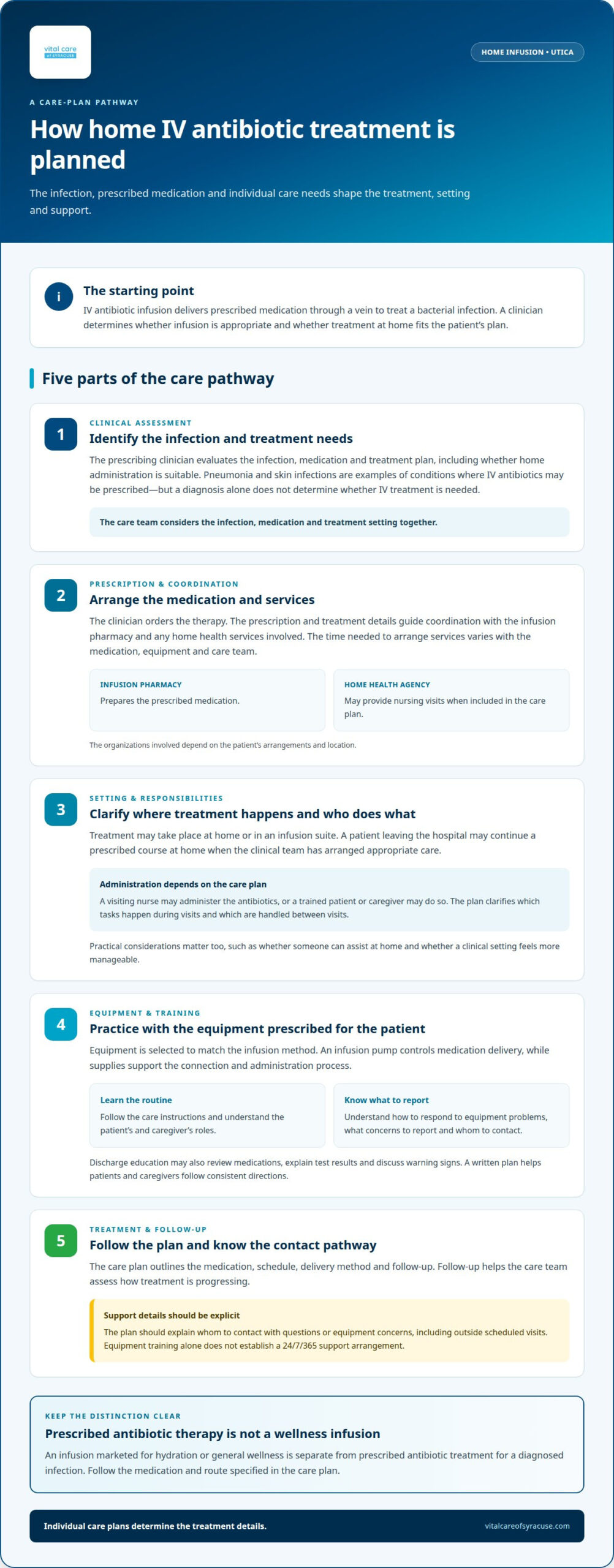
Vital Care of Syracuse provides immunoglobulin therapy, including IVIG/SCIG, which may be relevant to a Guillain-Barré syndrome treatment plan when IVIG is prescribed. Anti-infective therapy is a separate service for prescribed infection treatment, not a GBS therapy. Matching the service to the prescription helps clarify the next step.
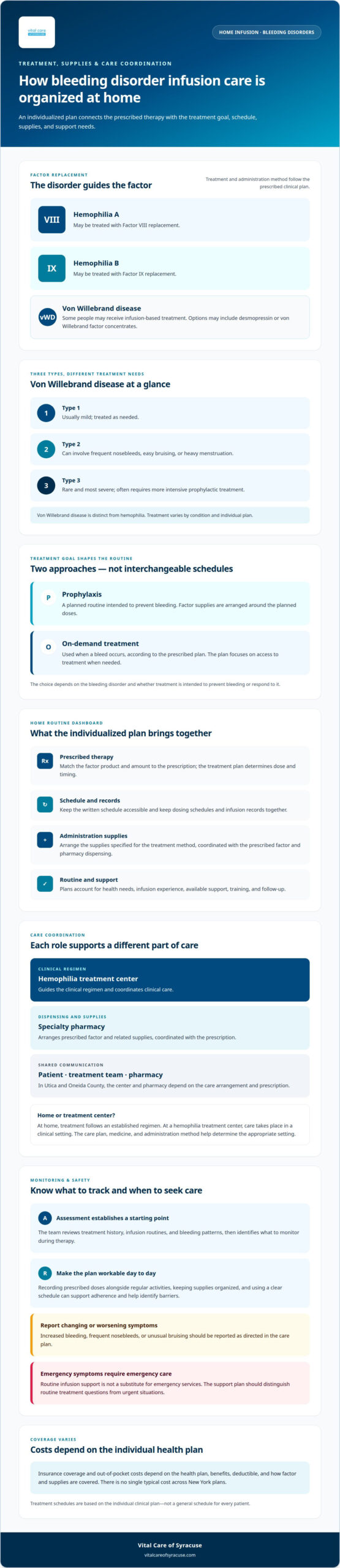
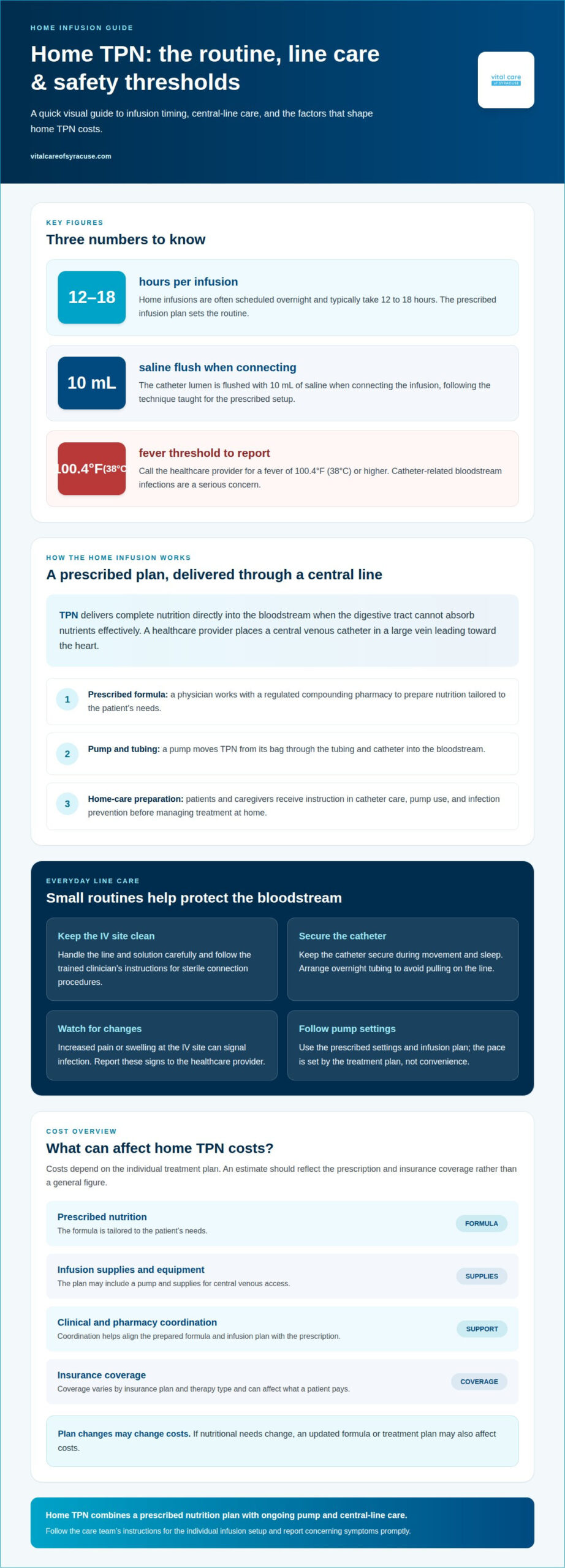
For patients moving from hospital care to outpatient treatment, Vital Care of Syracuse provides home infusion for prescribed therapy when clinically appropriate. The physician’s treatment plan guides whether IVIG is suitable and how care should proceed. Vital Care of Syracuse also provides parenteral nutrition (TPN) and hemophilia and bleeding disorder therapy for other prescribed clinical needs.
For information about infusion services, visit vitalcareofsyracuse.com.
Take the Next Step Toward a Coordinated Care Plan
Planning home infusion for Guillain-Barre syndrome in Albany starts with a clear conversation about the prescribed treatment and the patient’s next stage of care. Bring the physician’s instructions and questions about outpatient coordination, so the discussion can focus on what fits the treatment plan. The patient’s clinical needs determine whether home infusion is an appropriate setting.
Vital Care of Syracuse provides immunoglobulin (IVIG/SCIG), anti-infective therapy, and parenteral nutrition (TPN). These services address different treatment needs, so the prescription and care plan should guide the discussion. The next step is to connect the prescribed therapy with appropriate infusion support and understand how care can continue beyond the hospital.
For a conversation about infusion care and the next step in planning, contact Vital Care of Syracuse. A clear plan can help you move forward with greater confidence and focus on the care ahead.
Frequently Asked Questions
Can IVIG for GBS be given at home?
Yes, IVIG may be given at home during recovery when the treatment plan and patient’s condition support that setting. The prescribing physician determines whether home administration is appropriate, and the infusion team coordinates the medication and nursing oversight. Discharge instructions can identify the therapy, schedule, and contact process for treatment concerns, helping caregivers understand their role before the first home visit.
Is home IVIG infusion used to treat Guillain-Barré syndrome?
Yes. IVIG is a primary treatment for GBS, and some patients recovering from the condition may continue it through home infusion. The home setting changes where treatment is administered, not the need for a physician-directed plan. Discuss whether the patient’s recovery needs fit outpatient treatment or still require hospital-based care.
Can Guillain-Barré syndrome be treated safely with home infusion in Albany, New York?
Home infusion can be appropriate when the patient’s clinical condition supports it and qualified clinicians supervise care. Vital Care of Syracuse is a licensed and accredited infusion therapy provider. Its clinical team follows established protocols, monitors patients, and coordinates with prescribing providers. GBS can become an emergency if it affects breathing, blood pressure, or heart rate, so home treatment is not a substitute for emergency care when severe symptoms occur.
How much does home IVIG infusion cost in Albany, and what does insurance cover?
Treatment costs depend on the prescribed therapy and insurance coverage. IVIG for GBS may be covered when medically necessary, subject to the plan’s terms and review process. Ask your insurer about benefits, authorization, and your share of the cost.
How do home IVIG infusion and hospital-based treatment compare for Guillain-Barré syndrome?
Hospital-based care supports patients who need close clinical attention, while home IVIG may suit some patients during recovery. The appropriate setting depends on the patient’s condition and physician recommendations, not simply preference or convenience. If the discharge plan includes outpatient IVIG, discuss how home treatment fits that plan and how the care team will coordinate follow-up.
What monitoring and emergency support are needed during home IVIG infusion?
Home IVIG requires clinical supervision and close monitoring by nurses and pharmacists, coordinated with the prescribing provider. Follow the infusion instructions and promptly report concerning changes to the care team. Severe breathing difficulty or problems involving blood pressure or heart rate require emergency medical attention, not a routine scheduling call. Keep the treatment plan and emergency instructions accessible to caregivers.
Leave a Reply