


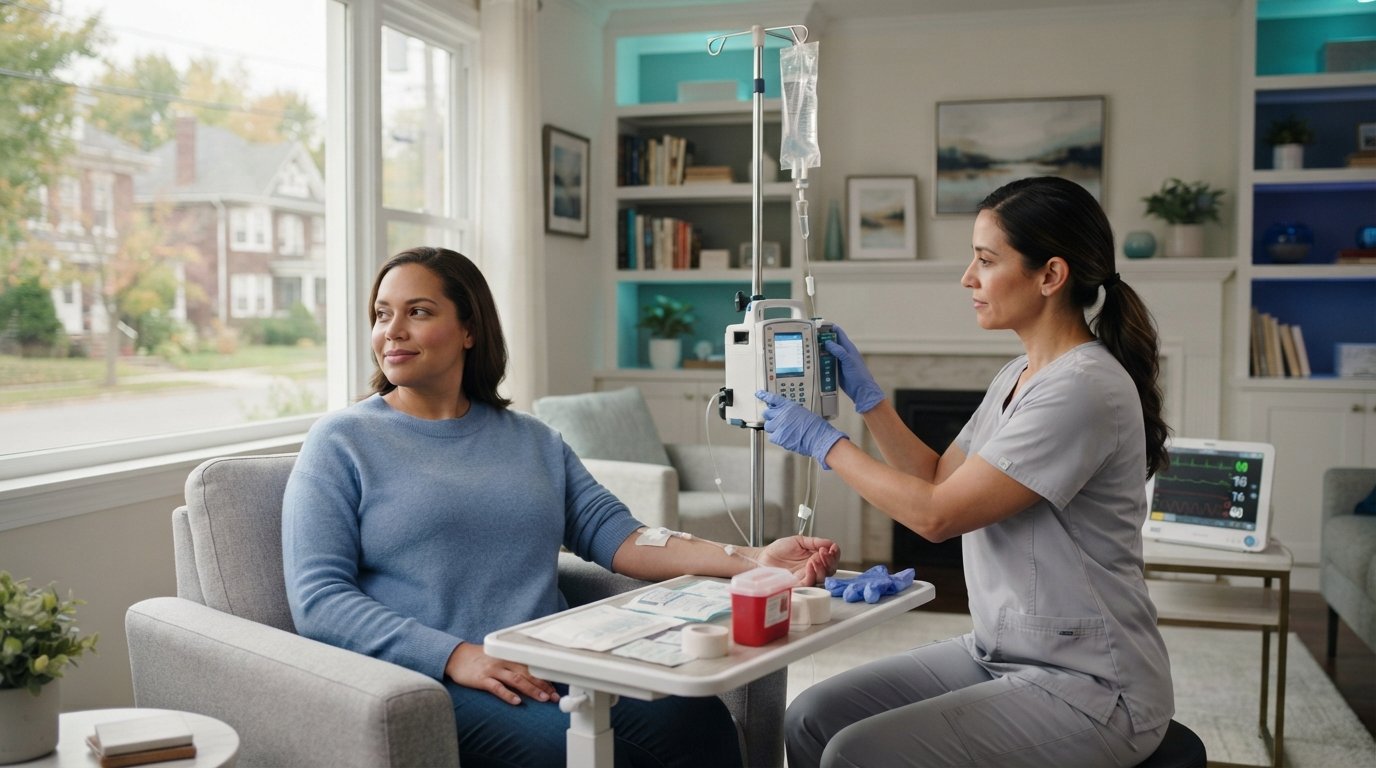
Managing a primary immunodeficiency shouldn’t require risking pathogen exposure in crowded regional waiting rooms or waiting on hold with bureaucratic national specialty pharmacies. If you are exploring home infusion for primary immunodeficiency Utica care options, you already understand the profound physical toll of frequent hospital travel, as well as the quiet anxiety of handling complex biologic therapies outside a traditional acute-care setting. You deserve a healthcare approach that prioritizes your comfort while keeping your clinical safety completely uncompromised.
Discover how specialized home IVIG and SCIG therapies deliver safe, hospital-grade immune management tailored for Utica residents through dedicated local coordination. By partnering with experienced regional infusion nurses and responsive clinical pharmacists who understand your specific health needs, you can maintain steady antibody levels without disruption. This 2026 guide walks you through every essential step, from untangling prior authorizations to establishing seamless, protective treatment right in the comfort of your own living room.
Key Takeaways
- Discover how specialized home infusion for primary immunodeficiency Utica services minimizes infection risks while delivering hospital-grade biologic therapy in your own residence.
- Learn the practical differences between IVIG and SCIG administration pathways to identify the schedule, dosage frequency, and delivery method that best matches your routine.
- See how rigorous safety protocols and dedicated local infusion nurses ensure comprehensive monitoring and reaction management outside a traditional hospital setting.
- Understand how seamless collaboration with Oneida County physicians and regional health systems like Wynn Hospital keeps your immune care closely aligned with your treatment plan.
- Explore the streamlined onboarding process that removes therapy barriers by managing complex insurance prior authorizations and ongoing supply logistics for you.
Understanding Primary Immunodeficiency Care: The Value of Home Infusion in Utica
Primary immunodeficiency diseases (PIDD) represent a spectrum of genetic disorders where the body lacks the vital antibodies needed to fend off recurrent, severe infections. For individuals managing these conditions, consistent immunoglobulin replacement therapy provides the protective IgG levels their immune systems cannot naturally generate. While these infusions are clinically essential, receiving them in traditional outpatient settings often introduces unnecessary health hazards. Transitioning to home infusion for primary immunodeficiency Utica programs allows patients to receive life-sustaining therapy within a controlled, safe living space.
The Burden of Hospital Outpatient Suites for Immune Compromised Patients
Entering an acute healthcare facility inevitably exposes vulnerable individuals to seasonal respiratory viruses and community pathogens circulating in waiting rooms. For an immunocompromised patient, that shared environment poses a distinct, avoidable clinical danger. Travel also extracts a heavy physical toll, especially during harsh Oneida County winters when lake-effect snow and freezing temperatures make routine commutes to regional infusion suites exhausting. Spending hours in a busy clinical suite surrounded by sick individuals drains physical energy, whereas receiving therapy at home removes the commute, eliminates exposure risks, and allows patients to rest comfortably throughout administration.
The Local Advantage: Why Central New York Pharmacy Proximity Matters
Administering specialty biologics safely requires precise scheduling and meticulous cold-chain management. National mail-order specialty pharmacies routinely route medications through distant transit hubs, leaving temperature-sensitive immunoglobulin vulnerable to carrier delays and extreme winter weather along commercial freight routes.
Partnering with a regional pharmacy based in Central New York changes this dynamic entirely. Operating along the I-90 corridor in nearby East Syracuse, Vital Care of Syracuse delivers specialized care directly to Utica residences, offering distinct logistical advantages:
- Reliable medication delivery that avoids the uncertainties of commercial national parcel shipping.
- Direct communication with regional clinical pharmacists who understand local prescribing networks.
- Uninterrupted therapy schedules that keep serum immunoglobulin trough levels stable and protective.
Opting for dedicated home infusion for primary immunodeficiency Utica services provides dependable clinical support backed by professionals who are readily accessible to your household.
Comparing IVIG and SCIG Therapies: Finding Your Ideal Administration Pathway
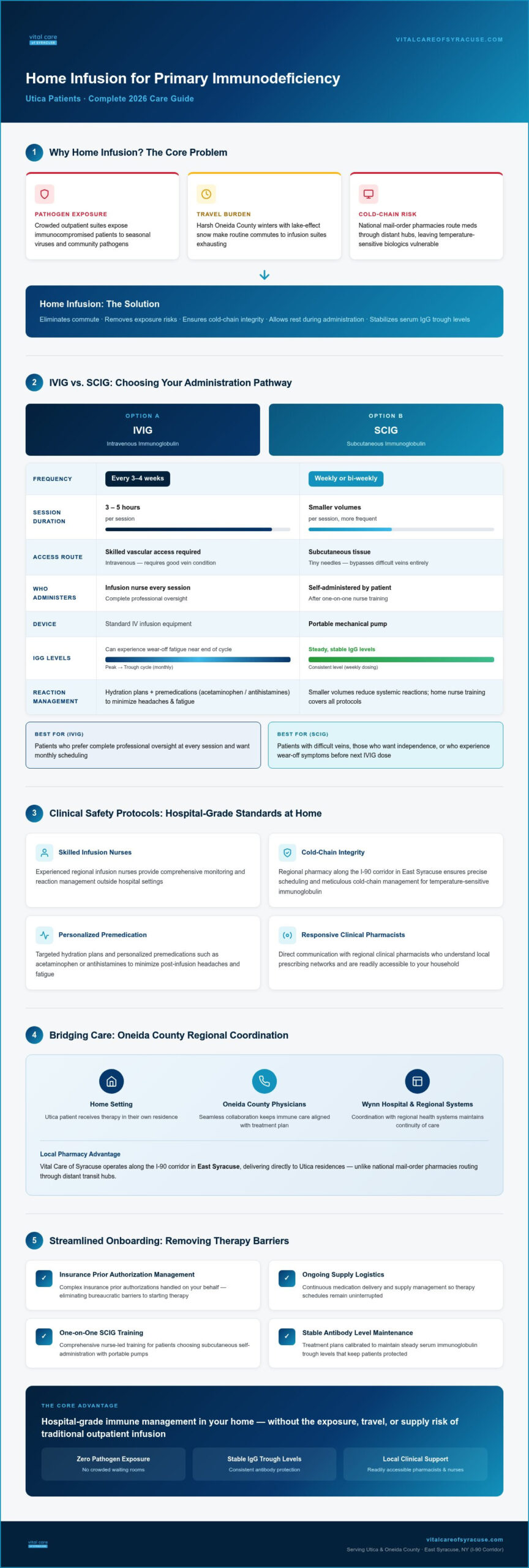
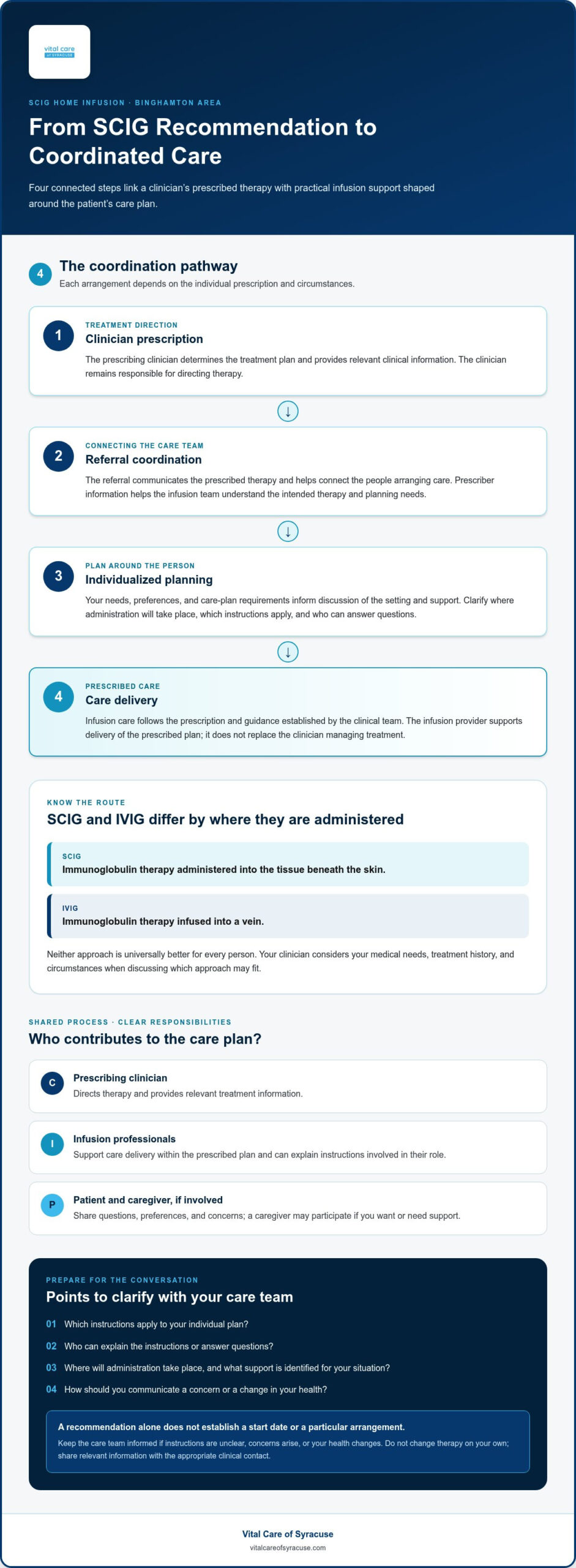
Selecting between Intravenous Immunoglobulin (IVIG) and Subcutaneous Immunoglobulin (SCIG) is a personal clinical decision. Both modalities successfully deliver donor antibodies to protect against severe infections, yet they fit differently into daily life. Your lifestyle, vein condition, and physical tolerance will point toward the optimal route. When arranging home infusion for primary immunodeficiency Utica services, clinical teams customize every infusion parameter to match physician orders and individual tolerability.
Intravenous Immunoglobulin (IVIG): Monthly Dosing with Skilled Nursing Support
IVIG is typically infused every three to four weeks in a session lasting three to five hours. This pathway requires skilled vascular access, making it ideal for individuals who prefer complete professional oversight from an infusion nurse during every administration. To minimize common post-infusion reactions like mild headaches or fatigue, clinical teams implement targeted hydration plans and personalized premedications such as acetaminophen or antihistamines.
Subcutaneous Immunoglobulin (SCIG): Frequent Self-Administration and Steady IgG Levels
SCIG delivers smaller medication volumes into the subcutaneous tissue, usually weekly or bi-weekly, using portable mechanical pumps and tiny needles. This approach bypasses difficult veins entirely, preventing the wear-off exhaustion that can happen near the end of a monthly IVIG cycle. After comprehensive one-on-one training from a visiting nurse, many individuals administer their doses independently at home.
Living in suburban or rural Oneida County often makes self-directed care especially appealing. Setting your own schedule means winter squalls or seasonal road conditions never interfere with a dose. The table below outlines how these two therapies compare in practical day-to-day settings:
- IVIG Administration: Every 3 to 4 weeks; requires 3 to 5 hours per session; full nurse presence; delivers high peak concentrations.
- SCIG Administration: Every 1 to 7 days; requires 1 to 2 hours per session; allows self-administration after training; maintains steady, level IgG blood concentrations.
- Vascular Access: IVIG requires peripheral vein cannulation or an indwelling port, while SCIG uses short subcutaneous needles placed just under the skin.
Deciding which pathway best supports your health goals begins with open clinical dialogue. Exploring specialized support through home infusion for primary immunodeficiency Utica programs allows you and your physician to weigh these administration methods against your personal daily routine.
Clinical Safety Protocols: How Home Infusions Maintain Hospital-Grade Security
Administering biologic therapies in a private residence shouldn’t mean accepting compromises in clinical safety. Contemporary home infusion for primary immunodeficiency Utica protocols adhere strictly to the Infusion Nurses Society (INS) Standards of Practice, mirroring the clinical safeguards of an acute healthcare setting. Prior to connecting the infusion line, your specialized nurse reviews your current health status, confirms the prescriber’s orders, and administers any directed premedications to prevent mild infusion reactions like chills or facial flushing.
The Initial Infusion Protocol: Step-by-Step Titration Monitoring
Every session begins with a comprehensive baseline assessment, recording blood pressure, heart rate, respiratory status, and temperature. Rather than running the medication at a fixed speed, the nurse implements a methodical rate-titration protocol. The infusion starts at a conservative, slow rate and increases in measured increments every 15 to 30 minutes as your physiological tolerance is verified. Vital signs are documented at each interval. After the infusion completes, the nurse continues to observe you to confirm hemodynamic stability before completing the visit.
Comprehensive Anaphylaxis and Adverse Event Readiness at Home
While severe systemic hypersensitivity is uncommon, emergency preparedness is an absolute standard of care. Every specialty medication shipment delivered to your home includes a sealed bedside emergency anaphylaxis kit containing:
- Weight-based epinephrine ready for immediate administration.
- Prescribed rescue medications, including injectable antihistamines and corticosteroids.
- Standardized clinical standing orders for immediate reaction management.
Infusion nurses maintain rigorous clinical competencies in early hypersensitivity detection, recognizing subtle indicators such as cutaneous flushing, urticaria, or subtle respiratory changes before they escalate. Direct communication channels link the visiting nurse to your local clinical pharmacist and your prescribing physician throughout the session. If an unexpected emergency occurs, standardized escalation protocols coordinate immediately with local emergency services. Choosing home infusion for primary immunodeficiency Utica provides hospital-grade clinical diligence in the comfort of your own living space.
Bridging Care in Oneida County: Collaborating with Regional Health Providers
Safe home administration relies on close alignment between your home pharmacy team and your primary specialist. Rather than functioning as a detached supplier, a specialized regional pharmacy operates as a direct clinical extension of your prescribing immunologist. When arranging home infusion for primary immunodeficiency Utica patients benefit from established regional relationships that connect the pharmacy team directly with Mohawk Valley Health System (MVHS) networks, including The Wynn Hospital in downtown Utica and local specialty clinics.
Integrating with Your Utica Specialist and Care Team
Maintaining strong clinical communication ensures your specialist stays fully informed after every infusion. Following each session, the visiting nurse submits detailed tolerability logs, rate records, and vital sign flowsheets directly to your doctor’s office. When routine laboratory monitoring is needed, such as testing serum trough IgG levels or renal function, the infusion nurse draws those blood samples directly in your home. This coordination eliminates separate trips to commercial laboratories and reflects the tangible benefits of a local home infusion company for families across the Mohawk Valley.
Navigating Upstate New York Insurance and Prior Authorizations
Specialty biologic therapies involve detailed paperwork across commercial insurers, Medicare Part B, Medicare Advantage, and New York Medicaid plans. Securing these approvals requires strict clinical documentation and specialized coding:
- Dedicated reimbursement advocates manage the end-to-end prior authorization process to prevent delivery lapses.
- Prescription renewals and reauthorizations are tracked months in advance to avoid abrupt therapy pauses.
- Specialists investigate available manufacturer copay cards and independent charitable disease foundations to offset remaining out-of-pocket costs.
Distant national mail-order call centers often struggle with local provider nuances. By contrast, regional teams communicate directly with Utica physician offices to clarify orders immediately. If you are preparing to establish treatment or want to simplify your current regimen, connect with the team at Vital Care of Syracuse to discover how local care makes home infusion for primary immunodeficiency Utica seamless, safe, and fully supported.
Initiating Therapy: The Transition to Vital Care of Syracuse for Utica Patients
Transitioning from a busy hospital infusion suite or transferring away from an unresponsive national supplier shouldn’t add stress to your life. Establishing home infusion for primary immunodeficiency Utica care involves a structured intake assessment that reviews your clinical history, evaluates your home environment, and aligns therapy schedules with your personal lifestyle goals.
Step 1: Clinical Referral and Insurance Coordination
The onboarding journey begins when your prescribing physician transmits your clinical documentation and treatment orders directly to our regional pharmacy team. Our dedicated reimbursement specialists conduct a thorough benefits verification across Medicare, New York Medicaid, or commercial health plans. We manage the prior authorization process from start to finish, keeping you fully informed so treatment begins with complete clarity and without delay.
Step 2: Medication Delivery and Home Nurse Onboarding
Once clinical approvals are confirmed, our East Syracuse pharmacy team prepares your prescribed biologic under strict cleanroom standards. We coordinate temperature-controlled deliveries directly to your Utica doorstep, ensuring your medications and infusion ancillary supplies arrive safely. We then schedule an experienced infusion nurse who conducts your initial visit, orienting you to the equipment, explaining each step, and establishing a calm clinical environment in your home.
Step 3: Ongoing Clinical Follow-Up and Continuous Support
Sustaining steady immune defense requires long-term consistency. Our pharmacy team tracks your usage to schedule timely supply refills, making sure you never face an unexpected gap between treatments. Regional clinical pharmacists remain accessible to review lab results, discuss any side effects, and collaborate directly with your prescriber whenever dose titrations or therapy modifications become necessary.
If you’re ready to experience hospital-grade immune management without leaving your living room, Contact Vital Care of Syracuse to begin your transition to specialized home infusion for primary immunodeficiency Utica services today.
Empowering Your Immune Care at Home
Living with a primary immunodeficiency shouldn’t mean spending your days in crowded waiting rooms or dealing with impersonal national mail-order pharmacies. By bringing specialized clinical care directly into your home, you safeguard yourself against avoidable exposure risks, eliminate stressful winter commutes along the Thruway, and sustain the steady antibody protection your body needs.
Vital Care of Syracuse is locally based in East Syracuse, providing prompt response and reliable, direct delivery throughout Utica and Oneida County. Our team combines comprehensive clinical pharmacy oversight for advanced IVIG and SCIG therapies with dedicated insurance advocates who resolve prior authorizations and explore copay assistance programs on your behalf. You don’t have to manage complex biologic infusions alone. When you’re ready for a safer, more responsive care experience, connect with our local Central New York clinical team to begin home infusion in Utica. Establishing reliable home infusion for primary immunodeficiency Utica care is the first step toward regaining your peace of mind and personal comfort.
Frequently Asked Questions
Is home infusion for primary immunodeficiency safe compared to hospital suites?
Yes, home infusion for primary immunodeficiency Utica services are just as clinically safe as hospital-based care for medically stable candidates. Treatment adheres to strict Infusion Nurses Society standards, utilizing one-on-one registered nursing supervision and gradual medication titration. Receiving therapy at home also protects you from exposure to respiratory viruses and community pathogens frequently encountered in crowded hospital waiting rooms, offering a distinct safety advantage for immunocompromised individuals.
Can I transition from hospital outpatient infusions to home care in Utica?
Yes, transitioning from an outpatient hospital suite to home care in Utica is a common and straightforward process. If you currently receive infusions at facilities like The Wynn Hospital or regional specialty centers, your immunologist can issue home infusion orders. Vital Care of Syracuse coordinates directly with your physician, gathering your records, confirming insurance coverage, and transferring your therapy smoothly without interrupting your scheduled regimen.
How does Vital Care of Syracuse handle emergency reactions during home infusions?
Vital Care of Syracuse prepares for potential adverse events by sending a sealed bedside emergency anaphylaxis kit alongside every medication delivery. Infusion nurses maintain advanced clinical competencies to detect early symptoms of hypersensitivity. Under physician-approved standing orders, nurses have immediate access to weight-based epinephrine and rescue medications. If an acute situation arises, the nurse halts the infusion and coordinates directly with regional emergency services.
What is the main difference between IVIG and SCIG for home administration?
The primary difference lies in the route of administration, infusion frequency, and independence level. Intravenous immunoglobulin (IVIG) requires vascular access, takes three to five hours every three to four weeks, and requires a visiting nurse on site throughout administration. Subcutaneous immunoglobulin (SCIG) is infused into fatty tissue weekly or bi-weekly. After initial nursing instruction, patients or caregivers can learn to complete SCIG infusions independently.
Does health insurance cover home immunoglobulin infusions in New York State?
Yes, Medicare Part B, New York Medicaid, and most commercial insurance carriers provide coverage for home immunoglobulin therapy when diagnostic guidelines are met. Securing coverage for home infusion for primary immunodeficiency Utica patients requires accurate diagnostic coding and clinical documentation. Reimbursement specialists at Vital Care of Syracuse manage the entire prior authorization process and help identify manufacturer copay programs to assist with remaining out-of-pocket obligations.
How quickly can home infusion services begin once my Utica doctor prescribes it?
Therapy usually begins within several business days after your prescription is received and insurance pre-authorization is finalized. Biologic medications require detailed clinical review by insurance payers, meaning timing often depends on insurer responsiveness. The pharmacy intake team actively tracks your authorization, coordinates your clinical assessment, and dispatches medications and nursing support promptly once approvals are confirmed.
What happens if a severe winter storm affects Utica on my scheduled delivery day?
Proactive adverse-weather protocols ensure your medication and medical supplies arrive safely ahead of major lake-effect storms. Because our compounding facility is located along the I-90 corridor in nearby East Syracuse, our dispatch team closely monitors Oneida County weather patterns. If hazardous road conditions threaten transit, we expedite deliveries in advance and coordinate directly with you and your nurse to ensure therapy continues without disruption.
Leave a Reply