



Imagine the relief of leaving a sterile hospital room in Syracuse or Auburn to finally settle into the comfort of your own favorite chair, all while receiving the life-sustaining nourishment your body requires. For many neighbors living with severe Crohn’s, the fear of malnutrition and the frustration of repeated hospitalizations can feel like an endless cycle. You’ve likely spent nights worrying about your weight or feeling overwhelmed by the thought of managing complex IV equipment on your own. It’s a heavy burden to carry; however, you don’t have to navigate these clinical challenges without a steady, professional hand to guide you.
We understand that your primary goal is to stay healthy and present in your daily life, not confined to a clinical setting. This guide explores how specialized parenteral nutrition for Crohn’s disease Auburn patients can access provides a bridge to stability, allowing you to bypass hospital complexities through expert home-based care. By choosing a local partner who prioritizes your comfort and safety, you can achieve stabilized nutrition and significantly reduced hospital visits. We will walk you through the 2026 standards for home TPN, the latest Medicare coverage updates, and the personalized clinical support available right here in our community to help you reclaim your independence.
Key Takeaways
- Understand why bypassing the digestive tract is often the most effective way to restore health and prevent malnutrition when Crohn’s disease limits nutrient absorption.
- Identify the clinical “red flags,” such as high-output fistulae or chronic obstructions, that signal a need for advanced intravenous nutritional support.
- Discover the significant psychological and physical benefits of receiving parenteral nutrition for Crohn’s disease Auburn patients in the comfort of their own homes rather than in a hospital.
- Learn the practical steps for a seamless transition from hospital discharge to home-based care through coordinated efforts between your gastroenterologist and local clinical experts.
- Explore how personalized, custom-compounded TPN formulas are designed to meet your specific nutritional needs based on your unique laboratory results and health goals.
Understanding Parenteral Nutrition for Crohn’s Disease Management in Auburn
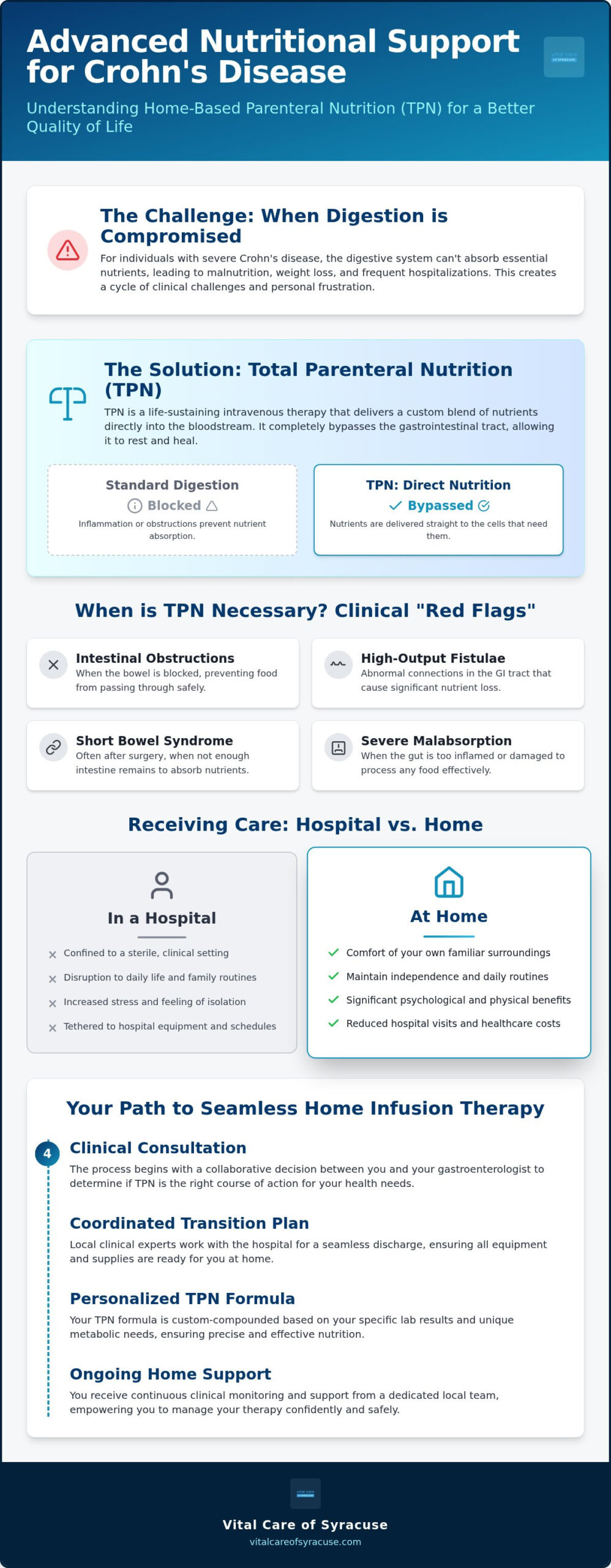
For those living with Crohn’s disease in Central New York, the journey toward health often involves complex decisions about how to best nourish the body when the digestive system is under siege. Parenteral nutrition serves as a vital clinical tool in these moments; it’s a form of intravenous life support that delivers essential nutrients directly into the bloodstream. Unlike traditional eating or tube feeding, this method completely bypasses the gastrointestinal tract. This is particularly crucial when inflammation or complications make standard digestion impossible or even dangerous. By utilizing parenteral nutrition for Crohn’s disease Auburn residents can find a path toward recovery that prioritizes safety and nutritional precision.
When the digestive tract is severely compromised, the body cannot absorb the fuel it needs to maintain weight or repair tissue. In Auburn, this therapy acts as a bridge, allowing patients to receive high-level care without remaining tethered to a hospital bed. It provides a sense of security, knowing that your nutritional needs are being met even when your gut requires a temporary reprieve from the work of digestion.
To better understand the practical side of this therapy, watch this helpful video from the Cleveland Clinic:
How TPN Works for the Crohn’s Patient
Total Parenteral Nutrition, or TPN, is a sophisticated blend of lipids, amino acids, and dextrose tailored to your specific metabolic needs. When Crohn’s causes severe narrowing or obstructions, the body struggles to absorb anything from food. TPN solves this by providing everything your cells need without requiring the bowel to move or process a single bite. TPN acts as a protective advocate for your body, ensuring you receive vital nutrients while your GI tract rests. This distinction between TPN and supplemental IV fluids is key; while supplemental IVs might only provide hydration or limited calories, TPN is designed to be a complete, life-sustaining source of energy and repair.
Bowel Rest: A Strategic Component of IBD Care
The concept of bowel rest is a cornerstone of modern IBD management. By removing the physical stress of digestion, we allow the body to redirect its energy toward reducing inflammation and healing damaged tissues. For many in Auburn, this therapy acts as a strategic bridge. It may be used to stabilize a patient’s weight and nutrient levels before a planned surgery, or it might provide the necessary time for medications to take effect during a severe flare. Whether it’s a short-term intervention or a more permanent solution for complex cases, the goal remains the same: achieving a steady state of health that allows you to focus on life beyond your diagnosis. This local support ensures that you don’t have to face these transitions alone.
When is TPN Necessary for Crohn’s Patients?
Determining the exact moment to transition to intravenous nutrition is a collaborative process between you and your clinical team. While many patients manage their condition through diet or enteral tube feeding, certain “red flags” indicate that the gastrointestinal tract can no longer safely process nutrients. These triggers often include intestinal obstructions, severe malabsorption, or high-output fistulae where the bowel requires complete rest to heal. According to the Crohn’s & Colitis Foundation, Nutritional Support Therapy becomes essential when the gut’s “engine” simply cannot keep up with the body’s demands.
For Auburn residents, consulting with a local gastroenterologist is the first step in identifying these needs. If you’ve undergone multiple bowel resections, you might also face Short Bowel Syndrome, a condition where the remaining intestine isn’t long enough to absorb sufficient calories and fluids. In these complex scenarios, parenteral nutrition for Crohn’s disease Auburn patients provides a reliable way to maintain vitality while bypassing the damaged sections of the digestive system. It’s about finding stability when your body needs it most.
Managing Complex Fistulae and Obstructions
Fistulae, which are abnormal connections between the bowel and other organs or the skin, present a unique challenge in Crohn’s care. When food or liquid passes through the gut, it creates pressure and carries bacteria that can prevent these tracts from closing. By utilizing TPN, we remove the physical stress of digestion, allowing the body’s natural healing processes to take over. Similarly, in cases of strictures or partial obstructions, TPN prevents the dangerous buildup of pressure that often leads to emergency surgery. While the need for TPN can feel overwhelming, it’s often the most effective path to avoiding emergency complications. If you’re navigating these symptoms, specialized clinical support can help you manage the transition safely at home.
Combatting Malabsorption and Weight Loss
Chronic inflammation in the small intestine can lead to an inefficient absorption process. Standard diets often fail in these moments because the nutrients never actually reach the bloodstream. Clinicians carefully track micronutrient deficiencies, specifically looking for drops in Vitamin B12, Iron, and Electrolytes, which can cause profound fatigue and neurological symptoms. When weight loss becomes life-threatening or chronic, TPN allows us to reverse the decline by delivering precise, custom-compounded lipids and amino acids. This methodical approach ensures that your body receives the exact building blocks it needs to repair tissue and restore your energy levels. By delivering parenteral nutrition for Crohn’s disease Auburn patients, we help restore the physical foundation required for long-term health.
The Benefits of Home-Based Parenteral Nutrition in the Auburn Area
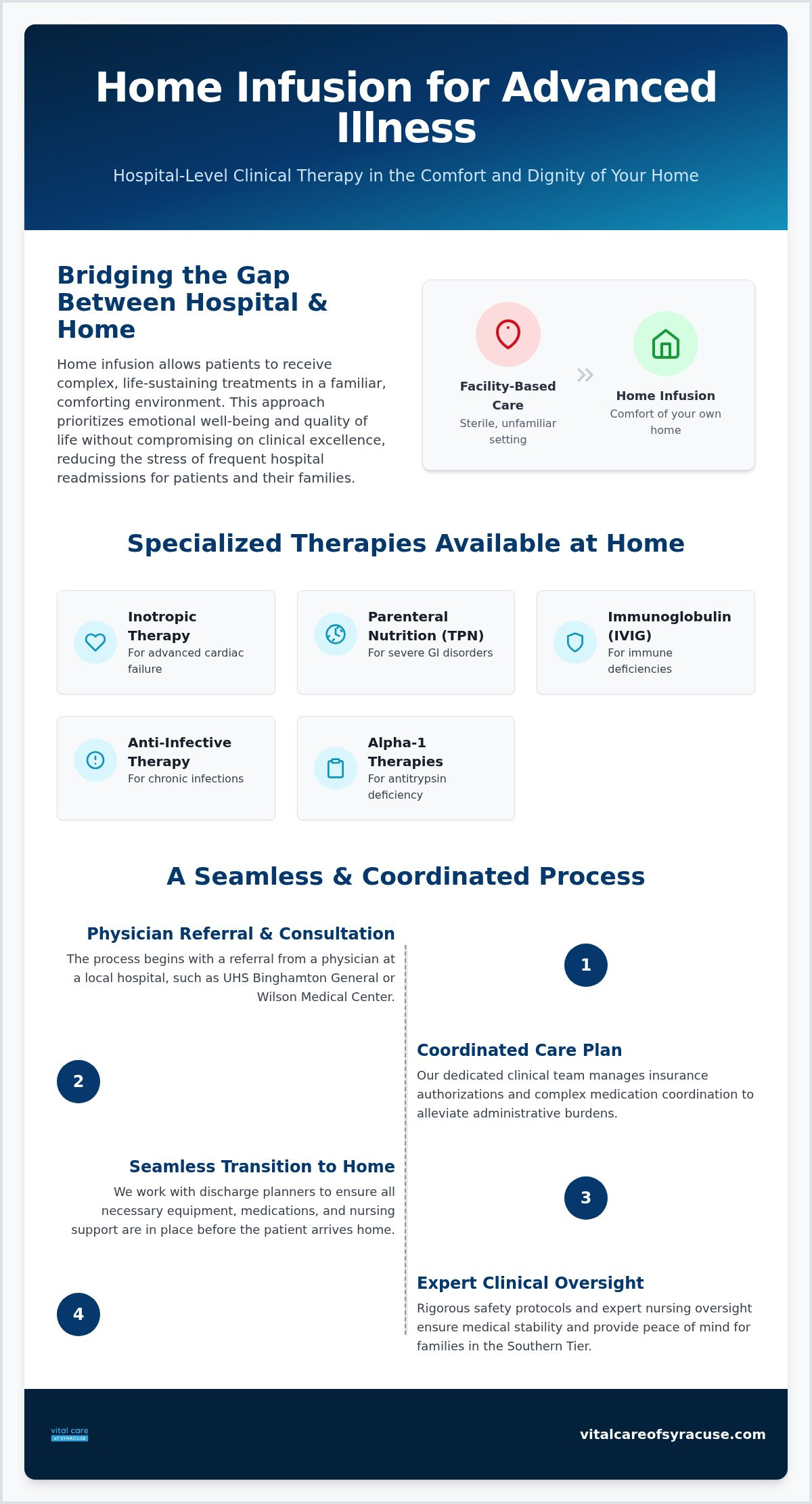
Choosing home-based care represents a significant shift from the clinical environment of Syracuse hospitals to the familiarity of your own space. For many, the prospect of an extended stay in a large facility can add emotional strain to an already difficult health journey. Home infusion allows you to receive high-quality medical support while remaining connected to your family and daily routines. This transition is not just about convenience; it’s a strategic move toward a more sustainable and personalized healing process that respects your privacy and lifestyle.
Healing in your Auburn residence fosters a sense of normalcy that hospitals simply cannot replicate. You can sleep in your own bed, share meals with loved ones, and maintain your independence. Additionally, home care is often a more cost-effective alternative for Central New York families, reducing the financial burdens associated with long-term inpatient stays. It allows you to be a participant in your household while receiving the precise medical intervention you need.
Local Support: Why Auburn Patients Choose Regional Expertise
Auburn patients benefit immensely from working with a team that understands the local healthcare landscape. Having regional expertise means your clinical team is just a short drive away, which simplifies supply deliveries and follow-up coordination. You can learn more about the benefits of a local home infusion company and how it bridges the gap between major medical centers and your front door. This proximity reduces the stress of travel for family members, allowing everyone to focus entirely on your recovery and well-being.
Safety and Monitoring in the Home Setting
Safety remains the highest priority when administering parenteral nutrition for Crohn’s disease Auburn residents receive at home. Your care is guided by established clinical protocols, such as the Parenteral Nutrition Guidelines for Crohn’s Disease, which ensure that every calorie and nutrient is delivered with precision. Home infusion pharmacies provide continuous clinical support, ensuring that help is always available if you have questions about your equipment or therapy. Regular lab monitoring is coordinated directly with your Auburn doctor to track your progress and adjust your formula as your needs evolve. A dedicated home infusion nurse also provides comprehensive education, empowering you to manage your TPN with confidence and security without the need for constant hospital supervision.
Navigating the Transition to Home Infusion Therapy
The journey from a hospital bed to your own home is a significant milestone in your recovery. This transition requires a methodical approach to ensure that your clinical needs are met with the same level of excellence you received during your inpatient stay. For those starting parenteral nutrition for Crohn’s disease Auburn clinicians provide a structured pathway that bridges the gap between acute hospital care and long-term home stability. This process is designed to be transparent and supportive, allowing you to regain your independence with confidence.
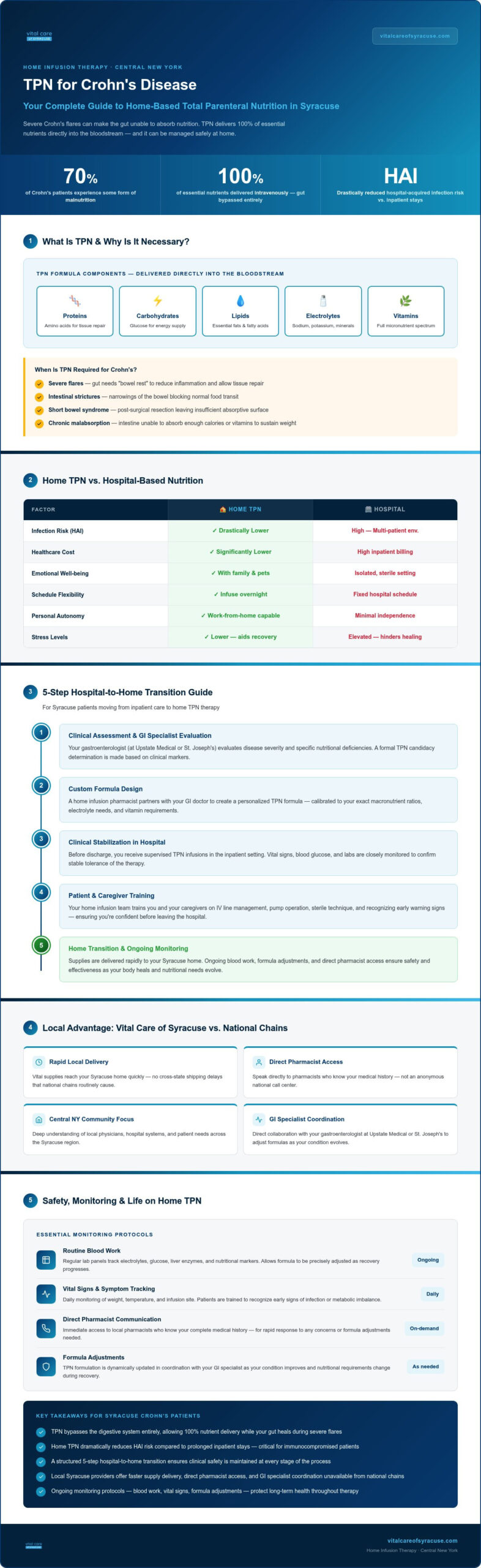
The transition follows five essential steps to ensure your safety and comfort:
- Clinical Assessment: Your journey begins with detailed discharge planning at your hospital in Syracuse or Auburn to determine your specific nutritional requirements.
- Clinical Coordination: We facilitate direct communication between your gastroenterologist and the team at Vital Care of Syracuse to align your home care plan.
- Access Placement: A central line, such as a PICC line or a tunneled catheter, is placed by specialists, followed by comprehensive initial training for you and your caregivers.
- Equipment Delivery: Your custom-compounded TPN formulas and user-friendly infusion pumps are delivered directly to your Auburn residence.
- Ongoing Monitoring: Our clinical team provides continuous oversight, adjusting your nutritional formula based on regular lab results to ensure optimal health.
Essential TPN Equipment and Supplies
Managing therapy at home involves a few specialized tools designed for precision and ease of use. You’ll receive a portable infusion pump, sterile tubing, and specialized dressing kits for your catheter site. Safety is paramount, so TPN bags are stored in a dedicated area of your refrigerator and handled with specific protocols to maintain their integrity. Modern home infusion technology is designed to be discreet and user-friendly, allowing you to focus on healing rather than hardware. These advancements mean your therapy can integrate into your life rather than disrupting it.
Preventing Complications: Infection Control and Catheter Care
Maintaining a safe home environment is a collaborative effort between you and your local care team. The most critical aspect of home-based parenteral nutrition for Crohn’s disease Auburn patients is the use of a strict sterile technique during every connection and disconnection. This discipline is the primary defense against catheter-related bloodstream infections (CRBSI). Your Auburn nurses will teach you to recognize early signs of concern, such as redness, swelling, or unexplained fevers. If you’re ready to take the next step toward home-based healing, contact Vital Care of Syracuse to speak with a clinical expert about your transition plan.
Personalized Parenteral Nutrition Support from Vital Care of Syracuse
Vital Care of Syracuse stands as a dedicated partner for the Central New York community, specifically focusing on the intricate needs of those living with complex gastrointestinal conditions. Our commitment goes beyond simply delivering supplies; we provide a clinical foundation that allows you to manage your health with dignity and precision. By providing parenteral nutrition for Crohn’s disease Auburn residents receive a provider that understands the local landscape and the specific challenges of home-based infusion. We act as a bridge, ensuring that the high standards of hospital care are seamlessly translated into the comfort of your home.
Our clinical team specializes in custom-compounding TPN formulas within our specialized pharmacy environment. Every bag is crafted based on your unique laboratory results, ensuring that the balance of lipids, amino acids, and electrolytes is exactly what your body requires for repair and energy. For patients who may have ties to other parts of the region, we also offer a home infusion for GI disorders Rochester resource to support our neighbors across Central New York. This regional expertise ensures that no matter where you are in the transition process, you have access to authoritative clinical guidance.
A Partner in Your Crohn’s Journey
The role of our clinical pharmacists is one of constant vigilance and adjustment. We don’t just fill a prescription; we monitor your progress through regular blood work, looking for subtle shifts in your electrolyte balance or hydration levels. This “compassionate expert” approach means we treat you as an individual, not just a diagnosis. We also understand that managing a chronic condition involves significant logistical hurdles. Our team assists Auburn families with insurance navigation and supply management, removing the administrative stress so you can focus entirely on your physical recovery and well-being.
Getting Started with Vital Care in Auburn
Beginning your journey with home TPN starts with simple coordination between your medical team and our pharmacy. Whether you’re currently inpatient at an Auburn hospital or working with a local specialist, requesting a referral is the first step toward reclaiming your independence. We work closely with your gastroenterologist to ensure that every detail of your discharge plan is executed with excellence. Our goal is to provide a steady, reliable hand as you transition toward long-term health and nutritional stability. Contact Vital Care of Syracuse to learn how we can support your home TPN needs in Auburn.
Reclaiming Your Independence with Personalized Care
Transitioning to home-based therapy is a profound step toward reclaiming your daily life and personal freedom. By moving beyond the sterile environment of a hospital, you allow yourself the space to heal where you feel most secure. This journey is supported by expert TPN compounding for complex GI needs and a clinical team that views your health through a lens of both precision and kindness. Our patient-centered home infusion specialists act as a bridge between your medical requirements and your personal well-being.
Navigating the complexities of parenteral nutrition for Crohn’s disease Auburn patients face doesn’t have to be an isolating experience. With local clinical support serving Auburn and CNY, you have a dedicated partner to manage your supplies, monitor your labs, and adjust your formula as you progress. We are committed to providing the stability and expertise you need to focus on what truly matters: your recovery. Please contact Vital Care of Syracuse for personalized home TPN support in Auburn to learn how we can assist you. You don’t have to walk this path alone; we’re here to offer a steady, reliable hand every step of the way.
Frequently Asked Questions
Is parenteral nutrition for Crohn’s disease permanent?
Whether parenteral nutrition is permanent depends entirely on the nature of your condition and the health of your gastrointestinal tract. For many patients in Auburn, TPN serves as a temporary bridge to allow the bowel to rest and heal during a severe flare or before a scheduled surgery. However, individuals with Short Bowel Syndrome or extensive intestinal damage may require long-term nutritional support to maintain their health and vitality over many years.
Can I still eat food while on TPN for Crohn’s?
Your ability to eat solid food depends on the clinical reason for your therapy. If your doctor has prescribed TPN for complete bowel rest to heal a fistula or obstruction, you’ll likely be restricted from oral intake. In other cases, TPN is used as a supplement to ensure you receive adequate calories while you continue to eat small, digestible meals. Your gastroenterologist will provide specific guidance based on your current digestive capacity.
What are the most common side effects of home TPN?
Patients may experience side effects such as changes in blood sugar levels, electrolyte imbalances, or potential liver stress over long periods of use. It’s also common to feel shifts in energy as your body adjusts to the intravenous delivery of nutrients. Because these solutions are highly concentrated, our clinical team monitors your lab results closely to minimize these risks and ensure your formula remains perfectly balanced for your unique metabolic needs.
How do I get TPN supplies delivered to my home in Auburn?
Getting the parenteral nutrition for Crohn’s disease Auburn residents need is a streamlined process managed by our local pharmacy team. Vital Care of Syracuse coordinates the delivery of custom-compounded formulas, infusion pumps, and sterile supplies directly to your doorstep. We handle the logistics of shipping and inventory management, ensuring you always have the necessary hardware and nutrients on hand without the stress of traveling to a distant medical center for pickups.
What is the difference between TPN and enteral nutrition?
The primary difference lies in how the nutrients enter your body and which systems they use. Enteral nutrition involves delivering liquid formula through a tube directly into the stomach or small intestine, requiring a functioning digestive tract. TPN, or Total Parenteral Nutrition, bypasses the gut entirely by delivering nutrients directly into the bloodstream through a central venous catheter. This makes TPN the preferred choice when the bowel is obstructed or severely inflamed.
How do I prevent infections while managing a central line at home?
Preventing infections requires a disciplined commitment to sterile technique during every connection and disconnection of your infusion. You’ll receive comprehensive training on proper handwashing, the use of sterile gloves, and the correct way to clean your catheter hub with antiseptic wipes. Our Auburn nursing partners provide hands-on education to ensure you feel confident in maintaining a clean environment, which is the most effective way to avoid catheter-related bloodstream infections.
Will my health insurance cover home parenteral nutrition in New York?
Most insurance providers, including Medicare Part B and New York State Medicaid, cover home parenteral nutrition when it’s deemed medically necessary due to permanent gastrointestinal impairment. As of 2026, specific regulations in New York have even expanded benefit limits for nutritional support. Our staff at Vital Care of Syracuse works directly with your insurance carrier to verify coverage, handle prior authorizations, and explain any potential out-of-pocket responsibilities you might have.
How often do I need blood work while on TPN?
Regular blood work is essential for the safe management of parenteral nutrition for Crohn’s disease Auburn patients. When you first begin therapy, labs may be drawn several times a week to ensure your electrolytes and blood sugar are stable. Once your condition plateaus, monitoring typically shifts to a weekly schedule. These results allow our clinical pharmacists to make precise adjustments to your custom formula, ensuring it continues to meet your body’s evolving nutritional requirements.
Leave a Reply