


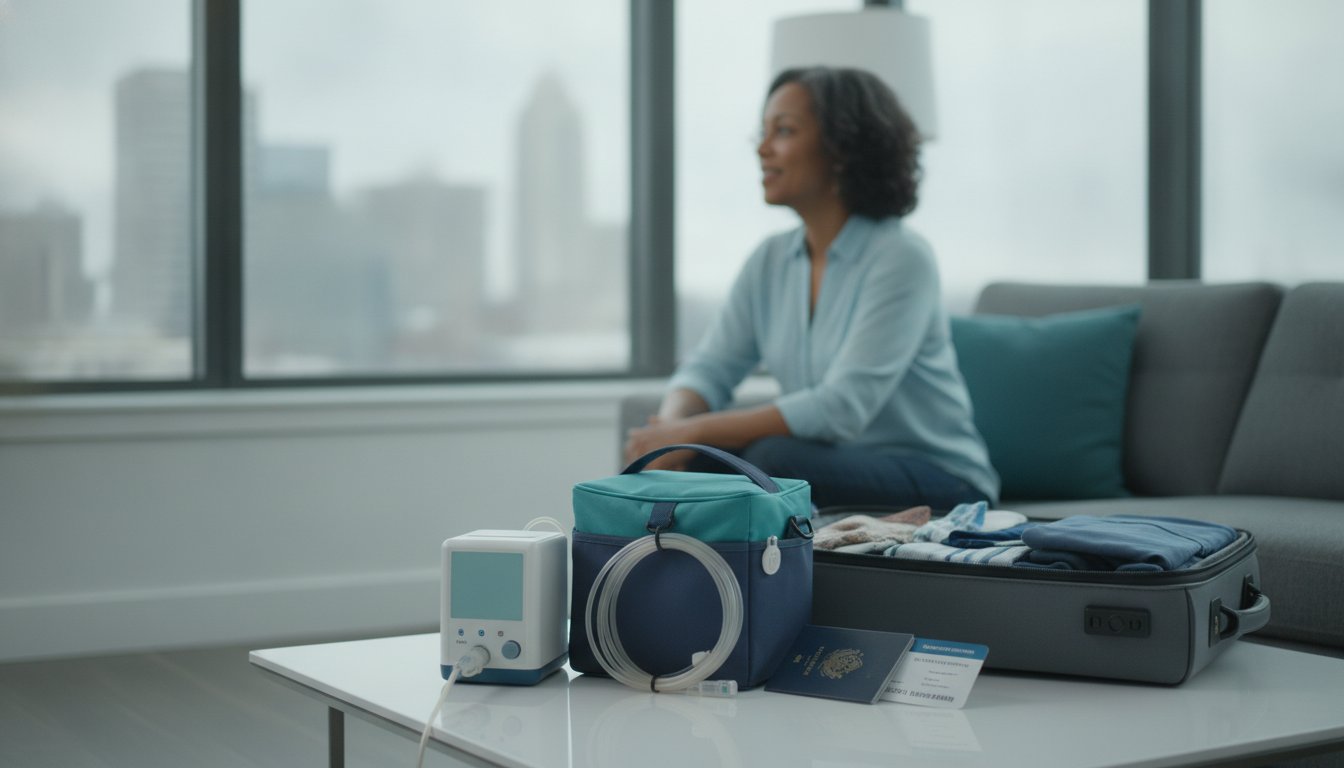
What if the most daunting part of your upcoming journey wasn’t the logistics of your medical care, but simply choosing which sights to see first? For many patients, the thought of traveling with home infusion equipment brings up a wave of questions about security checkpoints and the physical safety of their vital supplies. You might worry about a TSA officer questioning your infusion pump or feel an underlying fear that your medication might lose its integrity during a long flight. It is common to feel as though your therapy tethers you to your home, yet your health should be a bridge to new experiences rather than a barrier to them.
We believe that with the right preparation and clinical coordination, your medical needs can integrate seamlessly into your travel plans. This guide provides a clear roadmap for navigating the 2026 travel landscape with confidence and ease. You’ll learn how to utilize the TSA Cares helpline, understand the current exemptions for medically necessary liquids, and gain professional tips for managing equipment far from home. By the end of this article, you’ll have the tools and the peace of mind to focus on your destination while you maintain your therapy with total security.
Key Takeaways
- Begin your journey with confidence by following a four-week coordination checklist that ensures all medical documentation and supplies are secured well before your departure date.
- Navigate airport security with ease by understanding the specific TSA exemptions for medical liquids and the benefits of requesting a Passenger Support Specialist.
- Master the logistics of traveling with home infusion equipment, from managing the weight of TPN supplies to maintaining the strict temperature requirements of fragile IVIG vials.
- Learn why your medical equipment is protected by FAA regulations, ensuring that vital pumps and supplies won’t count against your standard carry-on allowance.
- Discover how a dedicated, local clinical team provides the personalized oversight and support needed to bridge the gap between your home and your destination.
Can You Travel with Home Infusion Equipment? Reclaiming Your Freedom
Traveling with home infusion equipment involves the meticulous process of transporting medical pumps, medications, and sterile supplies across various jurisdictions, whether you’re crossing state lines or flying over oceans. For many, this represents a significant shift from the restrictive hospital settings of the past. To understand the clinical foundation of these treatments, you might ask, What is Home Infusion Therapy? and how it enables this transition. Reclaiming the ability to travel is not just about logistics; it is about restoring a sense of normalcy and emotional well-being for those managing chronic conditions. Independence is possible.
To better understand how these therapies integrate into a mobile lifestyle, watch this helpful perspective on modern clinical care:
The Shift Toward Patient Mobility
Modern infusion technology has evolved to prioritize your autonomy. We’ve seen a remarkable transition from bulky, stationary equipment to lightweight, portable pumps that fit easily into a carry-on or backpack. These devices often feature extended battery lives and versatile power options, making them ideal for the active lifestyles of our Syracuse patients. Medical independence is the confidence to pursue life’s milestones while your clinical needs are met by a reliable, portable system. As we move through 2026, airline accessibility standards have improved significantly, providing clearer protections for travelers who rely on these life-sustaining tools.
Identifying Your Travel Comfort Zone
Identifying your comfort zone is essential when traveling with home infusion equipment, as it allows you to prepare for the specific stressors of your chosen route. Planning a successful trip begins with an honest assessment of your current health stability. While short road trips through Central New York might require minimal adjustments, international air travel involves complex time zone changes and stricter supply management. You should consult with your clinical team before booking non-refundable tickets to ensure your therapy is stable enough for the duration of the trip. Seeking local expertise from Vital Care of Syracuse serves as your first step in planning. Our team handles the heavy lifting of coordination so you can focus on the journey ahead.
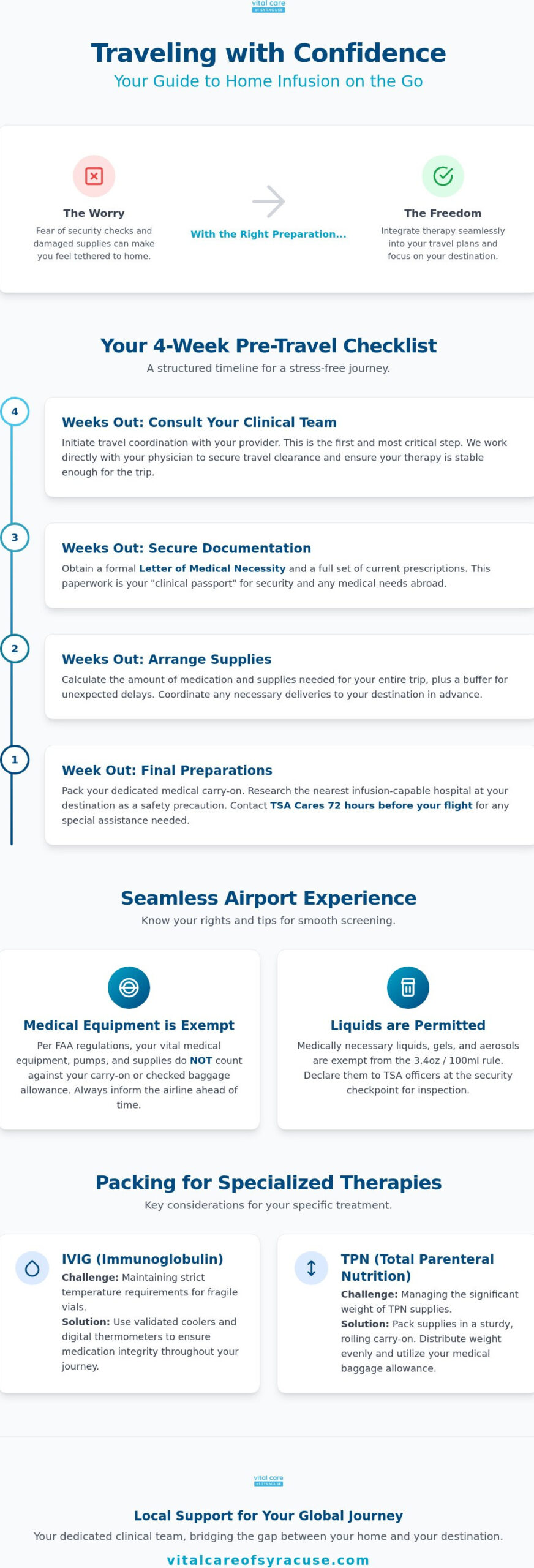
Essential Pre-Travel Coordination: Your 4-Week Clinical Checklist
Success when traveling with home infusion equipment is rarely the result of luck. It’s the product of a structured timeline that begins at least four weeks before your departure date. This lead time allows your clinical team to synchronize with your physician, ensuring that your therapy remains stable while you’re away from Central New York. By initiating this process early, you transform potential stressors into manageable steps, allowing you to focus on the joy of your journey rather than the logistics of your care.
Your first priority is securing a formal Letter of Medical Necessity and a comprehensive set of current prescriptions. These documents act as your clinical passport. They provide essential context to security personnel and local healthcare providers should you require assistance at your destination. Understanding Navigating TSA and Airlines: Rights, Rules, and Reality is much simpler when you have official documentation to validate the medical necessity of your pumps, vials, and syringes. We also recommend researching the nearest infusion-capable hospital at your destination to ensure a safety net is always within reach.
Collaborating with Your Clinical Team
Our team at Vital Care handles the heavy lifting of clinical coordination by working directly with your physician to secure travel clearance. During this phase, we’ll help you calculate and request a buffer of ’emergency’ supplies. This includes extra saline flushes, backup batteries for your pump, and additional sterile dressings to account for unexpected delays or spills. Your pharmacist is a vital partner here, helping you develop a concrete backup plan for equipment failure so you’re never left without a solution in an unfamiliar city.
Destination Logistics and Backup Care
Once your clinical needs are documented, shift your focus to the physical environment of your destination. Whether you’re staying in a hotel or a private residence, verify that you’ll have access to reliable refrigeration and a dedicated, clean workspace for your infusions. If you’re currently managing home infusion for GI disorders in Rochester or surrounding areas, maintaining your strict hygiene and storage protocols is even more critical while on the road. We can often use our professional network to identify support options in other states, providing you with a reachable lifeline regardless of your zip code. If you’re beginning to plan your next adventure, our team at Vital Care of Syracuse is ready to help you coordinate these essential details.
Navigating TSA and Airlines: Rights, Rules, and Reality
Understanding your legal protections is the first step toward a stress-free experience at the airport. According to the Americans with Disabilities Act (ADA) and Federal Aviation Administration (FAA) guidelines, medical equipment and supplies do not count toward your standard carry-on limit. This means your infusion pump and medication bags are permitted in addition to your personal items. When traveling with home infusion equipment, you are entitled to keep your life-sustaining tools within reach at all times. To ensure you have all clinical bases covered, refer to the CDC’s Essential Pre-Travel Coordination: Your 4-Week Clinical Checklist for additional health guidance.
For those flying out of Syracuse Hancock International (SYR) or Frederick Douglass Greater Rochester International (ROC), local TSA teams are accustomed to medical travelers, yet proactive communication remains vital. We recommend calling the TSA Cares helpline at least 72 hours before your flight to request a Passenger Support Specialist. This specialist can meet you at the checkpoint to facilitate a smoother screening process. Additionally, remember that medical infusions are entirely exempt from the 3.4-ounce liquids rule. You may carry as much medication and sterile water as your therapy requires, provided you declare them for inspection during the screening process.
The Security Screening Process
Clear communication with TSA agents about your port or PICC line prevents confusion during the screening process. If you wear an infusion pump, inform the officer before the screening begins. You should never place your infusion pump through the X-ray machine, as the radiation may interfere with the device’s sensitive electronics. Instead, request a manual hand-screening or a visual inspection. If your medication requires refrigeration, gel packs and cooling bags are permitted even if they are partially melted, though they may require additional testing for explosives. This measured approach ensures your supplies remain safe and sterile throughout the transition.
In-Flight Management and Power Needs
Once you are in the air, managing your equipment requires a few practical adjustments. Pressure changes during takeoff and landing can affect gravity-fed infusions, so we often recommend using a pump-driven system for more precise delivery. Before your trip, use tools like SeatGuru or your airline’s mobile app to confirm if your specific aircraft provides under-seat power outlets for your pump’s charger. Maintaining your anti-infective therapy at home or in the sky requires staying well-hydrated and keeping your supplies organized in your seat pocket for easy access. Traveling with home infusion equipment is a manageable reality when you approach the journey with these professional safeguards in place.
Packing and Transporting Specialized Therapies (TPN, IVIG, & More)
Each infusion therapy presents its own set of logistical requirements, making a one-size-fits-all packing strategy insufficient for the modern traveler. If you’re managing Total Parenteral Nutrition (TPN), you’re likely dealing with significant bulk and weight, as a week’s worth of bags can be quite heavy and requires constant refrigeration. Immunoglobulin therapies, such as IVIG or SCIG, require a different focus; these fragile glass vials are sensitive to both impact and temperature fluctuations. When traveling with home infusion equipment, success lies in understanding these nuances and preparing your luggage to protect the integrity of every dose. Organizing anti-infective therapy involves a high volume of sterile connectors and tubing for multiple daily doses, which can quickly become overwhelming without a dedicated system.
We recommend a strategy known as the Double Packing Rule to mitigate the risk of travel disruptions. While medical equipment bags are exempt from airline fees, you should split your essential supplies between two separate bags. Keep a three-day buffer of medications, flushes, and your pump in your primary carry-on, while packing the remainder of your bulk supplies in a secondary medical bag. This ensures that even if one bag is delayed or damaged, your therapy remains uninterrupted. This layered approach provides a vital safety net that allows you to navigate transitions with quiet confidence.
Maintaining the Cold Chain
Preserving the “cold chain” is the most critical aspect of transporting temperature-sensitive medications like TPN or IVIG. For journeys exceeding four hours, a standard insulated lunch bag is rarely enough; instead, invest in a medical-grade cooler designed for 12 to 24 hours of stable transit. In 2026, many patients now utilize Bluetooth-enabled thermometers that sync with a smartphone app, providing real-time alerts if the internal temperature of the cooler begins to rise. If your medication ever exceeds the manufacturer’s safe temperature range, contact your pharmacist immediately before administration to verify the clinical safety of the dose.
Supply Organization and Sterility
Maintaining a sterile environment in a hotel room or a rental home requires intentional planning. We suggest creating a mobile sterile field by packing a few portable, non-porous mats and a generous supply of high-grade disinfectant wipes. Organizing your supplies into individual “treatment day” kits can also simplify your routine, as it prevents you from having to dig through a large bag for a single connector. If you are managing bleeding disorder therapy in Syracuse or during an active vacation, having these kits pre-assembled allows you to spend more time enjoying your trip and less time managing your inventory. If you need assistance organizing your supplies for an upcoming trip, our clinical team at Vital Care of Syracuse is here to provide personalized guidance.
The Vital Care Advantage: Local Support for Your Global Journey
Choosing the right partner for traveling with home infusion equipment makes the difference between a trip filled with anxiety and one defined by adventure. While national providers may offer a wide network, they often lack the personalized, high-touch coordination that a local team provides. At Vital Care of Syracuse, we view ourselves as your clinical advocate, handling the complex heavy lifting of travel logistics so you can focus on your destination. Our Syracuse-based pharmacists and clinical coordinators are not just voices on a phone; they are your neighbors in East Syracuse, dedicated to ensuring your therapy remains seamless whether you are in Rochester, Buffalo, or halfway across the globe.
Our support doesn’t end when you leave Central New York. We provide a 24/7 clinical lifeline, ensuring that a Syracuse-based pharmacist who knows your specific history is always just a phone call away. Whether you have a question about a pump alarm in a different time zone or need help troubleshooting a supply issue, you won’t be routed through a distant call center. We also manage the meticulous preparation of your travel documentation, including clinical letters and prescription copies, which helps you navigate the security protocols discussed earlier in this guide. When your journey concludes, we coordinate your first post-travel delivery and clinical check-in, ensuring a smooth transition back to your home routine.
Personalized Travel Advocacy
We’ve helped countless patients reach important milestones, from attending family weddings to enjoying extended winter stays in warmer climates. Understanding the benefits of a local home infusion company is essential for those who refuse to let a chronic condition limit their horizons. Our commitment to patient freedom means your medical requirements should act as a bridge to new experiences, not a barrier to them. We take pride in navigating the specific hurdles of your therapy, providing the quiet confidence you need to explore the world safely.
Getting Started with Your Travel Plan
The best time to start your travel clinical review is at least four weeks before your departure date. This window allows us to coordinate with your physician for travel clearance and organize the extra buffer of supplies necessary for a worry-free trip. If you are a “snowbird” planning a seasonal move, we can easily update your delivery address and synchronize with local providers in your destination state to ensure uninterrupted care. Your health shouldn’t stop at your doorstep, and with the right clinical partner, it won’t. Call our East Syracuse office today to begin your travel consultation and let us help you reclaim your medical independence on the road.
Embarking on Your Next Adventure with Clinical Confidence
Your health should never be a boundary that prevents you from exploring the world or visiting loved ones. By mastering the 2026 TSA protocols and implementing a disciplined four-week coordination plan, you transform the logistical challenges of your therapy into a manageable part of your itinerary. Successfully traveling with home infusion equipment is a reality achieved through careful preparation, from securing medical-grade cooling systems for TPN and IVIG to utilizing the TSA Cares helpline for a smoother airport experience. These steps ensure that your life-sustaining care integrates seamlessly into your travel lifestyle.
As a locally owned provider in East Syracuse, we’re dedicated to being your protective advocate throughout this entire process. Our team specializes in the complex clinical coordination required for specialized therapies and provides 24/7 clinical support to ensure your peace of mind remains intact, regardless of your destination. We handle the heavy lifting of documentation and supply management so you can focus on the horizons ahead. Plan your next journey with confidence; contact Vital Care of Syracuse for travel coordination. We are here to ensure that your medical independence remains a steady companion on every mile of your journey.
Frequently Asked Questions
Can I fly with a portable infusion pump?
Yes, you are permitted to fly with a portable infusion pump as it is considered essential medical equipment. You should inform the TSA officer about the device before your screening begins to ensure they handle it appropriately. It’s recommended to request a manual hand-inspection or a visual search rather than sending the pump through the X-ray machine to protect its sensitive electronic components from potential interference.
Does TSA allow liquid medical nutrition (TPN) over 3.4 ounces?
Yes, medically necessary liquids like TPN are exempt from the standard 3.4-ounce rule. You may carry these liquids in reasonable quantities for your flight, provided you declare them at the security checkpoint for separate inspection. TSA officers will likely perform additional screening on these items, which may include a visual inspection or testing for explosives to ensure the safety of all passengers.
What should I do if my infusion pump alarms or fails while I am out of state?
You should immediately contact your clinical provider’s 24/7 support line for troubleshooting assistance. When traveling with home infusion equipment coordinated through our team, you have direct access to a Syracuse-based pharmacist who can guide you through alarm resolutions or equipment failures. If the device cannot be restarted, we can help coordinate a local replacement through our professional network to ensure your therapy continues.
Do medical supplies count toward my airline carry-on limit?
No, medical supplies and equipment do not count against your standard carry-on allowance under FAA and ADA regulations. You are entitled to bring your infusion pump, medication bags, and sterile supplies in addition to your permitted personal items. This protection ensures that your life-sustaining therapy remains with you in the cabin where it is safe and accessible rather than being stowed in the cargo hold.
How do I keep my IVIG or antibiotics refrigerated during a long flight?
Maintaining the cold chain requires a medical-grade insulated cooler and high-quality gel packs. These cooling agents are permitted through security even if they are partially melted, though they will undergo additional screening. Using a Bluetooth thermometer allows you to monitor the internal temperature via your smartphone, providing you with constant reassurance that your medications stay within the required clinical range throughout your transit.
Should I tell the airline in advance that I am traveling with infusion equipment?
Yes, notifying the airline at least 48 hours in advance is highly recommended to ensure a smooth boarding process. While not strictly required for all devices, informing them allows you to verify the availability of under-seat power outlets for your pump’s charging needs. Proactive communication helps the flight crew understand your requirements and ensures your equipment is accommodated properly within the cabin environment.
Can I go through a metal detector with a PICC line or implanted port?
Yes, you can safely pass through security with a PICC line or an implanted port. You should inform the TSA officer about your vascular access device before the screening process begins. While these internal devices may occasionally trigger an alarm, the officer will typically resolve the situation through a brief pat-down or a visual inspection of the area to confirm the device’s presence.
What documents do I need to show at the airport for my medical equipment?
You should carry a formal Letter of Medical Necessity from your physician and a copy of your current prescriptions. These documents provide the necessary clinical context for TSA officers and airline personnel when you are traveling with home infusion equipment. Having this paperwork readily available expedites the screening process and serves as a vital reference if you require medical assistance or a supply replacement at your destination.
Leave a Reply