



What if the most impactful part of your treatment wasn’t just the medicine itself, but the freedom you regained between your doses? For many patients in New York, the choice between SCIG vs IVIG therapy often feels like a difficult trade-off between clinical supervision and personal time. You’ve likely experienced the “wear-off” effect where energy levels dip significantly before your next scheduled session, or perhaps you’ve felt the mounting anxiety that comes with frequent needle sticks and long hours in a hospital waiting room. It’s exhausting to feel as though your life is structured around a medical calendar rather than your own goals and interests.
We’re here to provide a steady, reliable hand as you weigh these options, offering a comprehensive look at how each method impacts your daily rhythm and overall well-being. This guide will clarify the clinical and lifestyle differences between intravenous and subcutaneous administration, ensuring you have the information needed to choose a therapy with total confidence. We’ll explore the latest 2026 cost-effectiveness trends and recent clinical updates, such as the May 2026 FDA expansion for ASCENIV, to give you a complete picture of your options for achieving stable energy and greater independence from the clinic.
Key Takeaways
- Understand the biological difference between the “peak and trough” cycle of intravenous treatment and the consistent “steady state” of protection achieved through subcutaneous administration.
- Evaluate the lifestyle implications of SCIG vs IVIG therapy by comparing the convenience of home-based, weekly increments against longer, monthly clinical appointments.
- Learn how to manage potential side effects by distinguishing between systemic reactions common with intravenous infusions and the localized skin responses often seen with subcutaneous methods.
- Discover how choosing the right administration method can enhance your independence, allowing for greater travel flexibility and more stable energy levels throughout your month.
- Explore the transition process for Central New York patients, including how a personalized clinical assessment helps you move from hospital-based care to the comfort of home infusion.
Understanding the Fundamentals of Immunoglobulin Therapy (IVIG and SCIG)
For individuals living with a compromised immune system, Immunoglobulin therapy is a life-sustaining treatment that provides the essential antibodies your body cannot produce on its own. This therapy relies on Immunoglobulin G (IgG), which consists of concentrated antibodies purified from the plasma of thousands of healthy donors. By introducing these antibodies into your system, the treatment acts as a protective shield, identifying and neutralizing harmful pathogens like bacteria and viruses. It is a cornerstone of care for several complex conditions, including Primary Immunodeficiency (PI), Chronic Inflammatory Demyelinating Polyneuropathy (CIDP), and Myasthenia Gravis.
The goal of this therapy is not just to prevent infection, but to provide a steady foundation for a healthier, more active life. While the medicine itself remains consistent, the way it enters your body can vary significantly. Regarding the choice between SCIG vs IVIG therapy, the decision is often a collaborative one between you and your clinical team, based on your specific diagnosis and how you prefer to manage your health journey. Both methods are highly effective, yet they offer very different experiences in terms of how you feel and how you spend your time.
What is IVIG (Intravenous Immunoglobulin)?
IVIG is the traditional method of delivery, where the medicine is infused directly into a vein. Because the medication enters the bloodstream immediately, these sessions involve a higher volume of fluid and typically take several hours to complete. Most patients receive these infusions every 3 to 4 weeks, often overseen by a nurse in a clinical setting or through a dedicated home infusion service. This approach is often preferred when a rapid increase in antibody levels is necessary to stabilize a patient’s condition.
What is SCIG (Subcutaneous Immunoglobulin)?
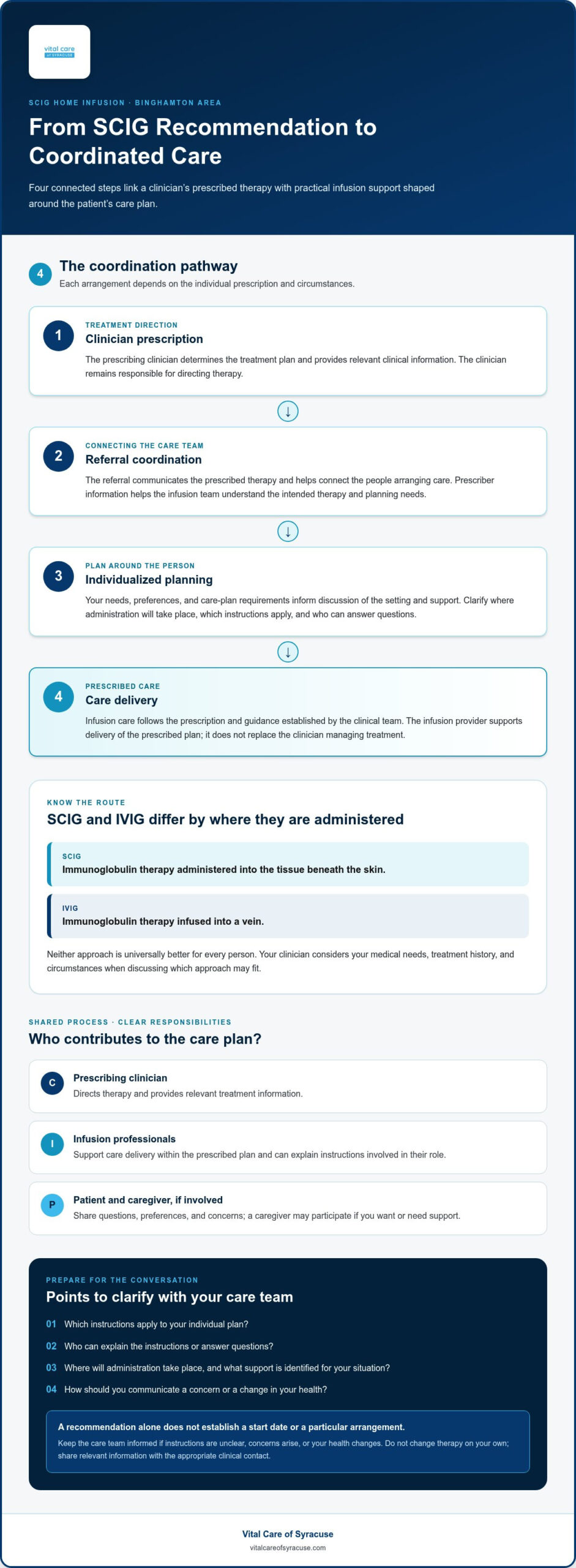
SCIG offers a different rhythm by delivering the medication into the fatty tissue just beneath the skin. Because the tissue absorbs the medicine more slowly than the bloodstream, these infusions use a much smaller volume of fluid but occur more frequently, ranging from daily to weekly sessions. Many patients find comfort in this method because it can be self-administered at home after thorough training. Understanding the functional differences in SCIG vs IVIG therapy allows you to choose a path that balances clinical excellence with the personal freedom you deserve.
Clinical Differences: Serum Levels, Administration, and Frequency
Choosing the right treatment involves more than just a medical prescription; it requires an understanding of how your body will respond to the medication over time. The primary clinical distinction in SCIG vs IVIG therapy lies in how immunoglobulin enters your system and how long it remains at therapeutic levels. While both aim to protect you from infection, the delivery schedule creates a vastly different physiological experience for the patient. One provides a powerful monthly boost, while the other offers a gentle, continuous stream of protection.
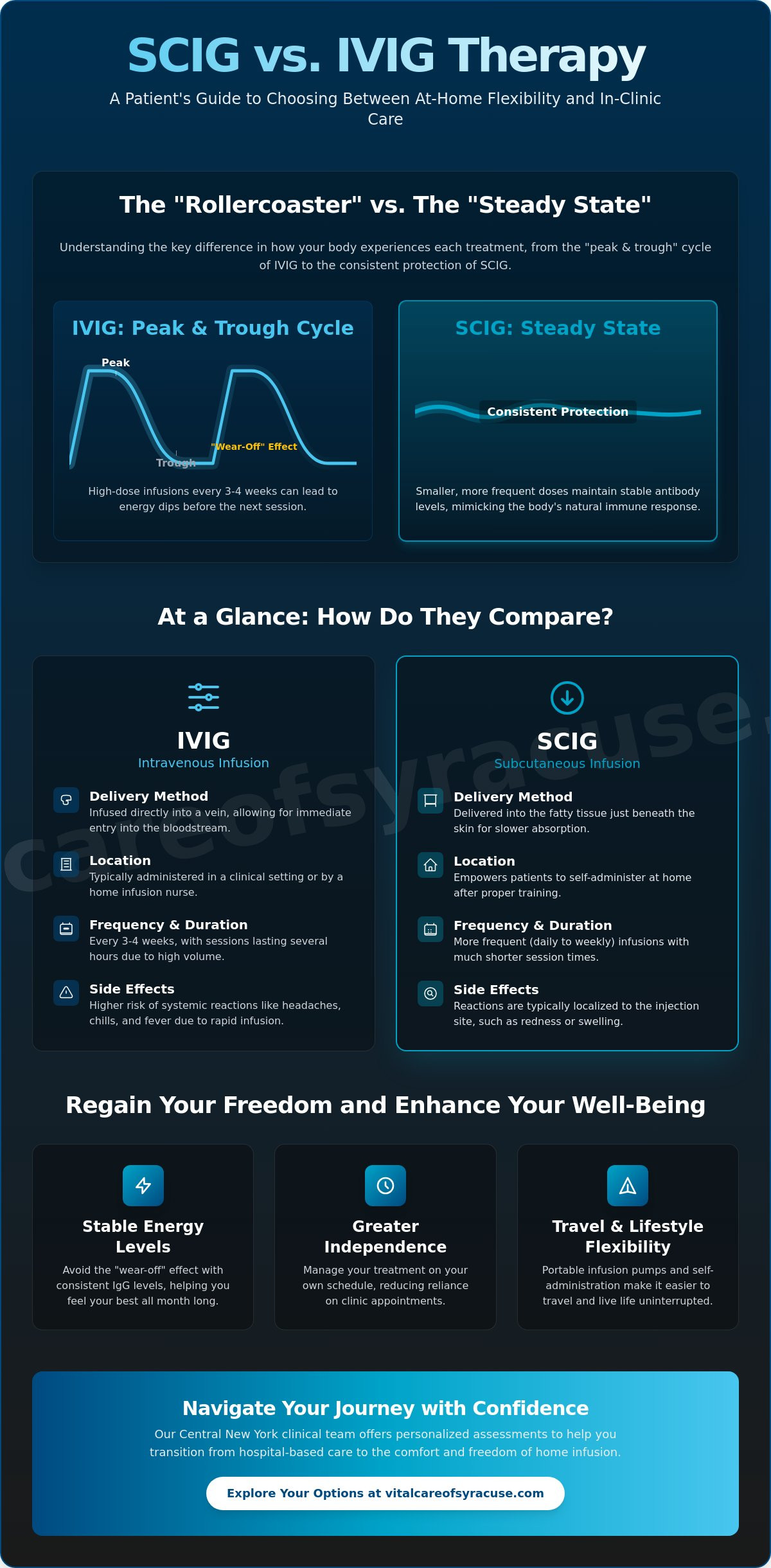
The “Rollercoaster” vs. the “Steady State”
IVIG is characterized by what clinicians call a “Peak and Trough” cycle. When you receive a large dose every three to four weeks, your antibody levels spike almost immediately, providing a massive surge of protection. However, these levels begin a slow, steady decline as your body utilizes the antibodies. By the final week of the cycle, many patients experience a noticeable “wear-off” effect. This trough period can leave you feeling fatigued, sluggish, or more susceptible to minor illnesses just before your next scheduled dose. It can feel like an emotional and physical rollercoaster that resets every month, making it difficult to plan activities during that final week.
In contrast, SCIG focuses on maintaining a “steady state” within your body. By administering smaller doses more frequently, usually once or twice a week, your IgG levels remain remarkably consistent. This approach more closely mimics how a healthy immune system naturally produces and distributes antibodies. A detailed comparison of SCIG and IVIG therapies highlights that this consistency often leads to more stable energy levels. You don’t have to worry about the systemic “crashing” feeling often associated with monthly intravenous cycles, as your protection stays at a reliable, high level every single day.
Administration Logistics: Nurse-Led vs. Self-Care
The time you spend receiving your medication is another critical factor to consider. A typical IVIG session requires a commitment of 2 to 4 hours, during which a specialized infusion nurse monitors your vitals and manages the flow into your vein. This is an excellent option for those who prefer professional supervision and only want to think about their treatment once a month. For many in Central New York, having a dedicated nurse visit for home infusion services provides a sense of security and expert care without the need for a hospital commute.
SCIG infusions are much shorter, usually lasting between 30 and 60 minutes. While they happen more often, the process is designed for patient empowerment. You aren’t tied to a nurse’s schedule or a clinic’s hours. After receiving thorough training from a clinical expert, you can learn to manage your own infusions. This transition from clinical dependence to self-care is a significant shift. It offers you the ability to integrate your health requirements into your life on your own terms, rather than building your life around your treatment schedule.
Lifestyle Impact: Choosing the Therapy That Fits Your Daily Routine
Living with a chronic condition often feels like a full-time job. When you evaluate SCIG vs IVIG therapy, you’re essentially choosing how much of your “time tax” you want to pay in a single installment. IVIG requires a significant monthly commitment, often taking up a half or full day when you account for travel, the infusion itself, and the recovery time some patients need afterward. SCIG, while more frequent, breaks this commitment into manageable increments that fit into a morning coffee routine or a quiet evening at home. It’s the difference between a major monthly event and a minor weekly habit.
The “needle factor” is another personal consideration that impacts your comfort. IVIG involves a single needle stick into a vein, which can be challenging for those with difficult venous access or “rolling” veins. SCIG utilizes much smaller, thinner needles placed just under the skin. While there are typically more needles involved in a subcutaneous session, they’re significantly less invasive. Research Comparing the Pharmacokinetics of Ig With SCIg and IVIg shows that these different routes don’t just change the needle type; they fundamentally alter how the body processes the medication, which can lead to fewer systemic side effects that might otherwise disrupt your day.
Independence and Travel
For patients who enjoy traveling, SCIG offers a level of freedom that’s hard to match. You don’t have to coordinate your vacation around a clinic’s schedule or find a local infusion center in a different city. Instead, you carry your portable supplies with you. This eliminates the stress of being “tethered” to a heavy infusion pump for hours in a hospital setting. Whether you’re visiting family or taking a weekend trip, your therapy moves with you, maintaining your health without dictating your itinerary.
Comfort and Privacy
There is a profound psychological benefit to receiving treatment in your own living room. In Syracuse and Rochester, where winter weather can make traveling to a clinic difficult and stressful, home-based therapy provides a sanctuary of comfort. It helps reduce the “patient identity” that often develops in clinical settings. By integrating your care into your home routine, you remain in control of your environment. We ensure you have all the necessary equipment and supplies delivered directly to your door, so your focus stays on your well-being rather than the logistics of your illness.
Safety and Side Effects: Systemic vs. Local Reactions
When we discuss the safety profile of SCIG vs IVIG therapy, the focus shifts from how the medicine works to how your body responds to the delivery itself. Both methods are clinically proven to be safe and effective, yet they tend to produce different types of side effects. Understanding these reactions allows you to prepare effectively and choose the method that aligns best with your physical comfort. While one method may cause a whole-body response, the other usually limits its impact to the small area where the medicine was administered.
Intravenous infusions are more frequently associated with systemic reactions. Because a large volume of medication enters the bloodstream directly and quickly, the body may respond with headaches, nausea, chills, or even a mild fever. In contrast, subcutaneous infusions are absorbed much more slowly through the fatty tissue. This gradual absorption significantly reduces the risk of severe systemic side effects, as it avoids the rapid spike in serum levels. Instead, the reactions are typically localized to the skin, appearing as temporary redness or slight swelling at the infusion site.
Managing IVIG Side Effects
If you choose intravenous therapy, preparation is your best tool for a comfortable experience. Our clinical team emphasizes several strategies to minimize systemic discomfort:
- Hydration: Drinking plenty of water for 24 to 48 hours before and after your infusion is the most effective way to prevent post-infusion headaches.
- Pre-medication: Many patients find relief by taking over-the-counter antihistamines or acetaminophen shortly before the session begins.
- Rate Titration: Our nurses start every infusion at a very slow pace, gradually increasing the speed only as your body demonstrates it can tolerate the dose comfortably.
Managing SCIG Site Reactions
For those utilizing subcutaneous delivery, the goal is to maintain skin health and prevent irritation. While local redness is a normal part of the process, these steps can help ensure your comfort:
- Site Rotation: You should never use the exact same spot twice in a row. Rotating between the abdomen, thighs, or upper arms allows the tissue time to recover and prevents scarring.
- Proper Technique: Using the “dry needle” technique, where you ensure no medication is on the outside of the needle before insertion, can significantly reduce itching.
- Monitoring: It is normal for the site to feel firm or look red for a few hours. However, if you notice warmth that spreads or pain that increases after the infusion, you should contact your clinical team immediately.
If you have questions about which administration method is safest for your specific health history, reach out to our clinical team for a personalized consultation. Regardless of the path you choose, continuous clinical monitoring is essential to ensure your therapy remains both safe and effective as your needs evolve.
Navigating Your Immunoglobulin Journey with Vital Care of Syracuse
Deciding on the right administration route is a deeply personal step in your health journey. We believe that every patient deserves a treatment plan that respects their time and enhances their quality of life. Our clinical team conducts a thorough, personalized assessment for each individual in Central New York, focusing on the nuances of your diagnosis and your lifestyle preferences. Regarding the choice between SCIG vs IVIG therapy, we help you weigh the clinical benefits against your desire for independence. If you’re currently receiving hospital-based care, we manage the entire transition process to bring your infusions into the safety and privacy of your home.
Our status as a locally-owned provider means our Syracuse-based nurses and pharmacists are members of your community. We’re uniquely positioned to offer a level of responsiveness that national providers often struggle to match. Beyond clinical excellence, we provide dedicated support for insurance navigation and financial assistance. We understand the complexities of coverage, including the 2026 Medicare Part D deductible of $615 and the increased out-of-pocket threshold of $2,100. Our team works tirelessly to ensure your therapy is accessible and affordable by managing authorizations and identifying programs that can help offset costs.
The Vital Care Home Infusion Advantage
Our service area extends across the region, providing 24/7 access to clinical pharmacists for patients in Syracuse, Albany, and Rochester. We deliver your medications and all required supplies directly to your doorstep, eliminating the need for frequent pharmacy trips. Our team adopts a “compassionate expert” philosophy, prioritizing patient education so you feel empowered rather than overwhelmed by your care. This supportive approach turns a complex medical requirement into a manageable part of your daily life. Whether you’re learning to self-administer or working with one of our home nurses, we ensure you have the tools to succeed.
How to Get Started in Central New York
Beginning your home infusion journey is a straightforward process designed to minimize stress. You can refer yourself or a loved one by reaching out to our office, where we’ll begin coordinating with your physician. During the initial home clinical assessment, a nurse will visit to review your medical history, evaluate your home environment, and discuss your goals for treatment. This thorough preparation ensures that your first infusion is safe, comfortable, and tailored to your life. We invite you to Contact Vital Care of Syracuse to discuss your IVIG or SCIG options and discover how we can support your independence.
Empowering Your Choice for a Healthier Future
Deciding on the right path for your treatment is a significant step toward reclaiming your independence and physical well-being. Whether you value the consistent “steady state” of subcutaneous administration or the less frequent schedule of intravenous infusions, the choice between SCIG vs IVIG therapy should always align with your personal lifestyle and clinical goals. By understanding how these options impact your energy levels and daily routine, you can move forward with a sense of security and purpose. For patients who are also exploring ways to improve their overall metabolic health alongside their primary therapy, you can learn more about My NuEra Rx and their approach to medical weight management.
Beyond metabolic health, specialized resources like ah! fertility nutrition can provide guidance on detoxification and nutritional therapy to further support your body’s resilience during treatment.
At Vital Care of Syracuse, we’re proud to be a locally owned and operated partner in East Syracuse, dedicated to supporting patients across Central New York. Our team offers specialized expertise in PI and CIDP therapies, combined with the reassurance of 24/7 clinical pharmacist availability. We don’t just deliver medication; we provide a steady, reliable hand to help you manage your health with confidence and ease.
We invite you to Discuss Your Immunoglobulin Therapy Options with Our Syracuse Clinical Team today. We’re here to ensure your journey toward better health is as comfortable and supportive as possible.
Frequently Asked Questions
Which is more effective, SCIG or IVIG?
Both administration methods are clinically equivalent in their ability to provide life-sustaining antibodies and prevent infections. The primary difference in SCIG vs IVIG therapy is not the efficacy of the medicine itself, but rather the delivery schedule and how your body maintains its antibody levels. While one provides a monthly surge and the other a weekly steady state, both are highly effective at managing immune-compromised conditions when administered correctly.
Can I switch from IVIG to SCIG easily?
Yes, transitioning between these two therapies is a common process that our clinical team manages with precision. We work closely with your physician to calculate a dose adjustment that ensures your protection remains consistent during the move to subcutaneous delivery. We provide thorough, hands-on training in your home to ensure you feel confident with the new equipment and technique before you begin managing your infusions independently.
Does insurance cover both IVIG and SCIG for home infusion?
Most insurance providers, including Medicare, offer coverage for both therapies, though the specific benefit depends on your medical diagnosis and plan type. For patients with immune deficiency, Medicare Part B typically covers 80% of the cost. It is important to note that for 2026, the Medicare Part D deductible is $615, which may impact your out-of-pocket costs for certain medications. Our intake specialists perform a detailed benefit investigation to clarify your specific coverage.
How long does a typical SCIG infusion take compared to IVIG?
A typical subcutaneous infusion is relatively brief, usually lasting between 30 and 60 minutes from start to finish. In contrast, an intravenous infusion requires a larger time commitment of 2 to 4 hours per session. While subcutaneous therapy happens more frequently, the shorter duration allows many patients in Syracuse and Rochester to integrate their treatment into a standard morning or evening routine without disrupting their entire day.
Do I need a nurse for every SCIG infusion?
You do not require a nurse for every session once you have successfully completed your initial training. Subcutaneous therapy is specifically designed for self-administration, allowing you to gain greater independence from the clinic. One of our specialized home infusion nurses will visit you for the first few sessions to provide education and support. Once you demonstrate proficiency and comfort with the process, you can manage your infusions on your own schedule.
What should I do if I have a reaction during a home infusion?
If you suspect you are having a reaction, you should stop the infusion immediately and contact our clinical team for guidance. We provide all our patients with 24/7 access to clinical pharmacists who can help you evaluate minor side effects like localized redness or itching. If you experience signs of a severe allergic reaction, such as difficulty breathing or significant swelling, you must call 911 immediately to receive emergency medical care.
How is SCIG stored at home compared to IVIG?
Most subcutaneous products are designed for room-temperature storage, making them very easy to manage at home or while traveling. Intravenous immunoglobulin products often require refrigeration, which means they must be carefully stored and then brought to room temperature before the infusion begins. We provide specific storage instructions for your particular medication and deliver all necessary supplies directly to your door to ensure your therapy remains stable and effective.
Are there weight or age restrictions for SCIG?
There are no universal weight or age restrictions for subcutaneous therapy, as dosages are customized based on the individual’s weight and clinical needs. The FDA continues to expand approvals for these life-sustaining treatments. For example, in May 2026, the FDA expanded the use of the IVIG product ASCENIV to include pediatric patients as young as two years old. We ensure that the therapy chosen for you or your loved one is clinically appropriate for your specific age and health profile.
Leave a Reply