


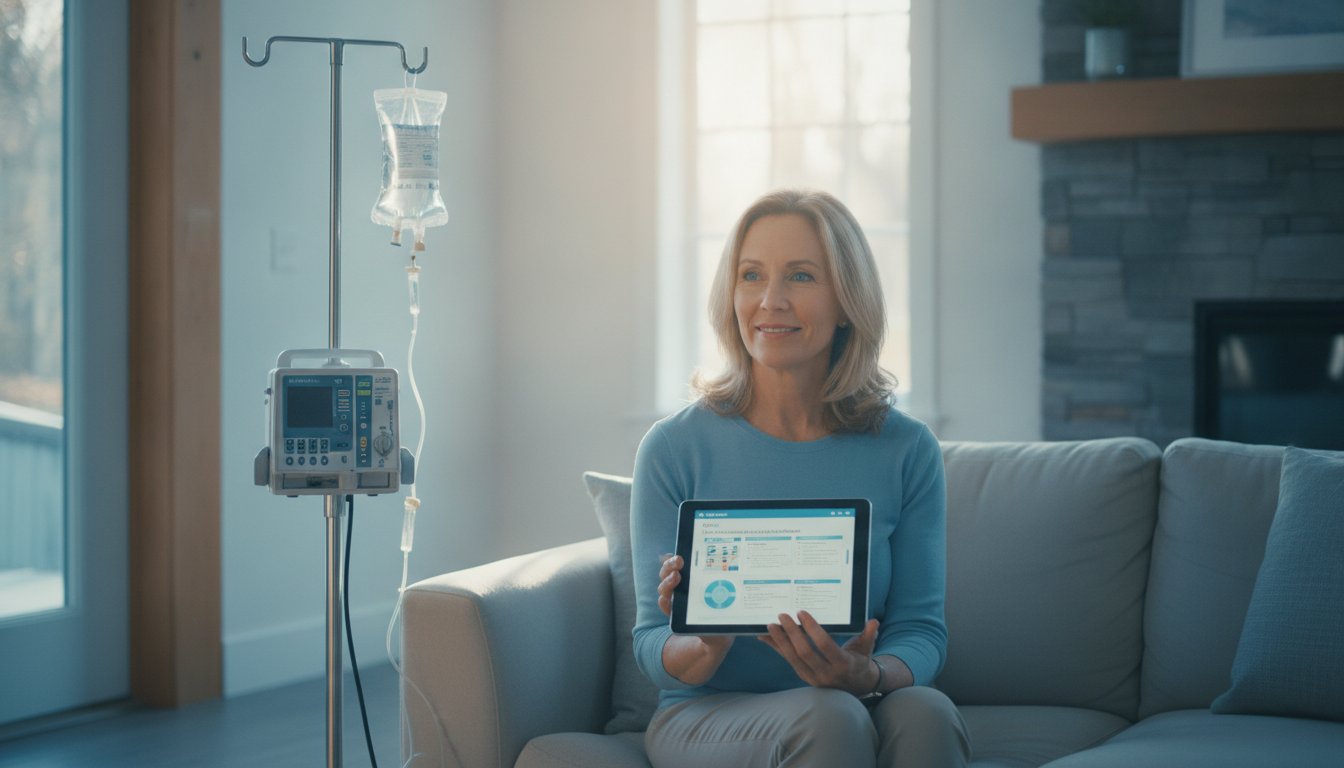
Imagine the quiet of your living room in Syracuse, suddenly interrupted by the unfamiliar beep of a medical pump. For many families, that first night home from the hospital feels less like a recovery and more like a high-stakes science experiment. You’re likely worried about an accidental air bubble or a setting you might have missed; it’s completely natural to feel a bit lost when the steady presence of hospital nurses is replaced by a box of supplies. We understand that transition is daunting, but having the right home infusion patient education materials makes all the difference in your safety and peace of mind.
We believe that you deserve to feel empowered, not overwhelmed, as you manage your health from the comfort of your own home. This guide is designed to help you master your therapy with confidence by providing a clear roadmap to our educational resources and local clinical support. We’ll explore how to navigate complex pump settings, identify the specific moments when you should call our team, and ultimately help you return to the daily routines that make life feel normal again.
Recent updates from CMS in 2026 emphasize that comprehensive patient training is a cornerstone of successful home care. Whether you’re in Buffalo or right here in East Syracuse, our goal is to act as your advocate throughout this journey. By the end of this guide, you’ll have the tools to manage your infusions with the precision and steady hand of a seasoned professional.
Key Takeaways
- Learn how home infusion patient education materials act as a vital safety bridge, transforming complex clinical protocols into simple, manageable routines for your family.
- Master the essential “SASH” technique for anti-infective therapies to ensure every dose is administered safely and effectively.
- Gain clarity on various delivery methods, from gravity drips to sophisticated infusion pumps, so you can operate your specific equipment with total precision.
- Discover a strategic approach for your first 48 hours at home, focusing on high-impact “Quick Start” guides to reduce initial stress and setup errors.
- Understand how local clinical support from Syracuse-based experts complements your written guides, providing a personalized safety net tailored to your home environment.
Understanding the Role of Home Infusion Patient Education Materials
When a loved one is discharged from a hospital in Central New York, the transition to home-based care can feel like a daunting shift in responsibility. To bridge this gap, home infusion patient education materials serve as essential tools designed to translate complex clinical protocols into manageable home routines. At its core, What is Infusion Therapy? involves the administration of medication through a needle or catheter; a process that requires precision and a commitment to sterile technique. These educational resources provide the steady hand you need, ensuring that every step of your therapy is performed with the same excellence you’d expect in a clinical setting.
Beyond the technical instructions, these materials are the cornerstone of patient safety and infection prevention. By clearly outlining how to maintain a sterile field and monitor for complications, they empower families to prevent issues before they arise. This knowledge fosters a significant psychological shift. It replaces the common “discharge anxiety” with a sense of quiet confidence. Instead of feeling abandoned by the hospital system, families in Utica or Syracuse can feel like capable partners in the healing process. To see these protocols in action, watch this helpful demonstration of the SASH technique:
The Anatomy of a High-Quality Patient Guide
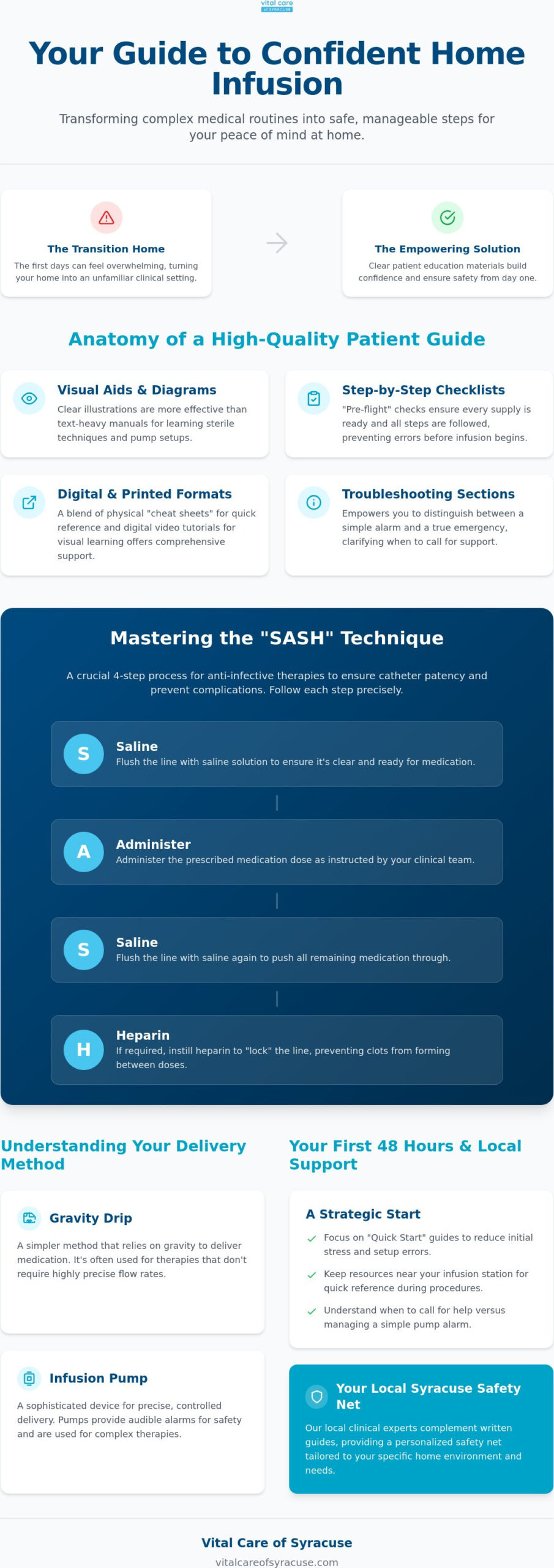
A truly effective guide prioritizes clarity over clinical jargon. Visual aids and detailed diagrams are often more effective than text-heavy manuals, especially when teaching sterile techniques or pump setup. We utilize step-by-step checklists that act as “pre-flight” checks, ensuring every supply is ready before the infusion begins. Additionally, robust troubleshooting sections empower you to distinguish between a simple pump alarm and a true clinical emergency, giving you the clarity to know exactly when to call our local team in East Syracuse.
Digital vs. Printed Resources: Which Should You Use?
We find that a blend of formats offers the best support for our patients. Physical “cheat sheets” or laminated guides are invaluable when kept near your infusion station, providing a quick reference during the actual procedure. Meanwhile, digital video tutorials allow patients in Rochester or Auburn to visualize complex pump setups in real-time. It’s also vital that caregivers have access to the same home infusion patient education materials as the patient, ensuring a unified approach to care. At Vital Care of Syracuse, we tailor these resources specifically for therapies like TPN or IVIG, adapting the information to fit your specific home layout and clinical needs.
Essential Educational Resources for Every Therapy Type
Every clinical journey is unique, which is why we provide specialized roadmaps for each type of treatment. Our home infusion patient education materials are not generic pamphlets; they are structured learning paths that address the specific nuances of your prescribed therapy. Whether you’re managing a short course of antibiotics or a long-term nutritional plan, these resources ensure you have the right information at the right time. By utilizing these therapy-specific home infusion patient education materials, you are taking an active role in your clinical success.
For those receiving anti-infective therapy, the focus is often on mastering the “SASH” technique. This acronym stands for Saline, Administer, Saline, and Heparin. Our materials break down this sequence with clear, color-coded instructions to help you maintain catheter patency and prevent complications. It’s a precise process, but with the right guide, it quickly becomes second nature. We emphasize the importance of timing and sterile technique to ensure your medication is delivered safely every single time.
Parenteral Nutrition (TPN) requires a deeper level of education due to the complexity of managing lipids and programming multi-channel pumps. We provide comprehensive manuals that guide you through the sterile preparation of your infusion and the meticulous care required for central lines. Similarly, for patients receiving Immunoglobulin (IVIG or SCIG), our resources focus on tracking infusion rates and identifying potential side effects early. This proactive approach allows you to stay ahead of any discomfort and maintain your treatment schedule with confidence.
Materials for Complex Chronic Conditions
Managing chronic conditions requires a long-term perspective on care. For Alpha-1 Antitrypsin Deficiency, we provide detailed protocols that explain the rhythm of weekly infusions and long-term vein health. Cardiac patients in Syracuse and Buffalo receiving Inotropic therapy benefit from specialized education that emphasizes symptom monitoring and pump reliability. Additionally, our bleeding disorder guides offer step-by-step instructions for factor replacement, ensuring that clotting management is handled with precision and speed during a bleed.
Nutrition Support and GI Disorders
Patients living with Short Bowel Syndrome or severe malabsorption often face unique challenges in maintaining their nutritional status. We provide teaching diagrams that simplify the management of GI disorders, helping you understand the difference between enteral (tube) feeding and parenteral (IV) nutrition. If you’re looking for more specific local resources, you can explore our comprehensive guide to home infusion for GI disorders in Rochester. If you ever feel uncertain about a step, our local clinical experts are just a phone call away to provide additional clarity.
Mastering Delivery Methods: Step-by-Step Guidance for NY Patients
Understanding the specific way your medication enters your bloodstream is a vital part of your recovery journey. While the medications themselves are powerful, the delivery method determines how you interact with your therapy on a daily basis. We categorize these methods into four primary types: electronic pumps, elastomeric pumps, gravity infusions, and IV push. Each requires a unique set of home infusion patient education materials to ensure you feel comfortable and capable at every step. Whether you’re using a sophisticated device or a simple drip, our goal is to provide the steady guidance you need to succeed.
Success in home therapy starts with a fundamental understanding of safety. The sterile field is a designated area that is kept free from all microorganisms to prevent infection, representing the most critical concept in all delivery education. By maintaining this clean space, you protect your health and ensure the integrity of your treatment. Our resources are designed to help you set up this field in your own home, whether you’re in Utica or Syracuse, with the same precision found in a hospital setting.
Mechanical vs. Non-Mechanical Delivery
Electronic infusion pumps, such as the CADD Solis or Curlin models, offer the highest level of precision for complex therapies like TPN or Inotropic support. Our home infusion patient education materials for these devices focus on interpreting screen alerts and managing battery life so your therapy remains uninterrupted. In contrast, non-mechanical methods like elastomeric “ball” pumps use the physics of internal pressure to deliver medication at a fixed rate, requiring no batteries or programming. For antibiotic therapies, you might use a gravity infusion, which involves mastering the drip rate count to ensure the medication is delivered over the correct timeframe.
Vascular Access and Site Care
Your Vascular Access Device (VAD), such as a PICC line or an implanted port, is your lifeline during therapy. Proper care is essential to prevent complications and maintain the patency of the line. We provide detailed daily flushing protocols that use saline or heparin to keep the line clear and ready for use. It’s equally important to monitor the site for any signs of phlebitis, such as redness or warmth, or occlusions that might block the flow of medication. If you notice these changes, it’s a signal to reach out to our local Syracuse clinical team immediately. Our dressing change checklists help you keep the infusion site dry and secure, providing a clear path to maintaining your line with excellence and care.
How to Effectively Use Patient Resources During Your First Week
The first day home from the hospital is often the most emotionally taxing. While you’re relieved to be back in your own space in Syracuse or Utica, the weight of managing clinical care can feel heavy. We’ve found that the most successful families don’t try to memorize the entire manual on day one. Instead, they treat home infusion patient education materials as a phased roadmap. Your primary focus during the first 48 hours should be the “Quick Start” guide. This condensed resource provides the immediate, essential steps for your first few doses without the overwhelming technical depth of the full clinical manual.
Establishing a dedicated “Infusion Station” is a practical way to regain a sense of control. Choose a clean, well-lit area in your home, perhaps a sturdy table in a quiet corner of your living room in Auburn or a dedicated desk. This space should be reserved solely for your supplies and education guides. We recommend involving your support system early; family members can use your home infusion patient education materials to help double-check settings or prepare the sterile field. When care becomes a shared family effort, the individual patient feels less like a clinical subject and more like a person at home.
A daily log is your most powerful tool for tracking progress and ensuring safety. By recording infusion start times, daily weights, and temperatures, you create a clear clinical picture for our nursing team. This data isn’t just for us; it’s for your peace of mind. Seeing these numbers stabilize over the first week provides tangible proof that your body is responding well to the therapy.
Creating a Safe Home Environment
Organization is the enemy of error. Use labels or color-coding to distinguish between different medications, especially if you’re managing multiple therapies. For safety, New York State health regulations require specific protocols for sharps disposal and hazardous medical waste. We provide clear instructions on how to secure these items in puncture-resistant containers to keep your household safe. For more detail on managing specific treatments, you can refer to our anti-infective therapy at home guide for Syracuse patients.
Managing Information Overload
It’s easy to feel buried under paperwork, so we advocate for a “One Task at a Time” approach. Use our provided checklists to verify each step, which prevents the anxiety of skipped protocols. You don’t need to be a doctor to identify “Red Flag” symptoms like sudden shortness of breath or a spiking fever. Our materials highlight these critical signs so you know exactly when to stop reading and start calling. If you ever feel uncertain, the Vital Care of Syracuse 24/7 clinical team is always available to provide real-time clarification and support.
Why Local Expertise Matters for Your Home Infusion Success
While home infusion patient education materials provide the necessary framework for your care, they’re most effective when backed by a team that understands your local environment. At Vital Care of Syracuse, our nurses don’t just follow a national script; they know the specific discharge protocols of hospital systems across Syracuse, Albany, and Rochester. This local insight allows for a seamless transition, ensuring that the instructions you receive at home perfectly align with the care you started in the hospital. We act as a steady, reliable hand, bridging the gap between the clinical setting and your living room.
We understand that no two homes are identical. Whether you’re setting up your infusion station in a historic Utica residence or a modern apartment in Syracuse, our team adapts your educational resources to fit your physical space. This level of personalization is one of the primary the benefits of a local home infusion company in Central New York, as it ensures your safety protocols are practical and easy to follow within your unique daily routine. By tailoring our approach, we help you maintain the high standards of excellence required for your therapy while respecting the comfort of your home.
24/7 Support: Beyond the Printed Page
When a question arises at 2:00 AM, a generic help portal or a national call center can feel cold and distant. Having a local phone number means you’re speaking with a professional who understands the reality of Central New York logistics. During our harsh winters, we don’t just rely on standard shipping; we have the local capability to manage emergency supply deliveries when the snow starts to pile up. While your home infusion patient education materials are designed to be comprehensive, they’re always supplemented by the option of hands-on nursing visits when you need that extra layer of reassurance.
A Partner in Your Health Journey
Our commitment to your well-being extends across the region, from tailoring long-term care for Alpha-1 patients in Binghamton to supporting heart failure patients in Buffalo with specialized inotropic protocols. There’s a profound emotional benefit to working with a locally owned pharmacy where the staff knows your name and your specific clinical history. We view ourselves as a bridge between complex medical requirements and your personal comfort. If you’re ready to experience a more personalized level of care, Contact Vital Care of Syracuse to learn more about our patient-first approach and how we can support your recovery at home.
Your Path to Confident Recovery at Home
Transitioning to home therapy is a significant milestone that brings both comfort and responsibility. By now, you understand that home infusion patient education materials are more than just instructions; they’re your foundational tools for maintaining safety and mastering complex clinical tasks like the SASH protocol or pump management. Whether you’re navigating the first 48 hours or managing a chronic condition like Alpha-1, these resources ensure you’re never acting alone. You’ve learned how to organize your infusion station and when to call for help, turning a complex medical process into a manageable part of your daily life.
At Vital Care of Syracuse, we pair these comprehensive guides with the steady hand of a locally owned East Syracuse pharmacy. Our team specializes in complex therapies like TPN and IVIG, providing you with 24/7 access to clinical pharmacists and nurses who know your name. This local expertise ensures that your education is always supported by real-time clinical oversight and a team that truly cares about your success. Start Your Safe Transition to Home Infusion with Vital Care of Syracuse today to experience care that prioritizes your comfort and confidence. You have the strength to manage your health, and we’re honored to be your dedicated partner in this journey.
Frequently Asked Questions
Is it safe to administer IV medications at home without a nurse present?
It’s entirely safe to administer your medications once you’ve completed our comprehensive training program and feel comfortable with your home infusion patient education materials. These resources are designed to ensure you can replicate clinical standards of care in your own living room. While a nurse doesn’t need to be physically present for every dose, our local team is always available by phone to guide you through any step where you might feel uncertain.
What should I do if my infusion pump starts alarming?
You should immediately check the display screen on your pump to identify the specific alarm message, such as “upstream occlusion” or “low battery.” Most alarms are simple to resolve, like a kinked tube or a closed clamp, and your troubleshooting guide provides a clear roadmap for these fixes. If the alarm persists after you’ve followed the steps in your manual, please contact our clinical team in East Syracuse for real-time technical support.
How do I know if my PICC line or port is infected?
You can identify a potential infection by monitoring your access site for redness, unusual swelling, warmth, or any new pain. It’s also important to watch for systemic symptoms like a fever or chills, which can indicate that an infection is developing. If you notice any of these “Red Flag” symptoms, it’s vital to call our nursing team immediately rather than waiting for your next scheduled visit.
Can I travel within New York while on home infusion therapy?
You can certainly travel within New York, whether you’re heading to the Adirondacks or visiting family in Buffalo, as long as we coordinate your supply deliveries in advance. We’ll work with you to ensure you have enough medication and portable equipment for your trip. Your home infusion patient education materials include tips for maintaining your sterile field while away from home, allowing you to maintain your clinical routine and your sense of normalcy.
What if I run out of supplies or forget a step in the instructions?
You should call our East Syracuse office immediately if you notice your supply levels are low or if you’re uncertain about a specific step in your protocol. We recommend checking your inventory every Monday to ensure you have everything you need for the coming week. If you forget a step, don’t guess; our 24/7 clinical support line is there to provide a calm, verbal walkthrough of any procedure to ensure your safety.
Do home infusion education materials come in different languages?
We provide educational resources in various languages to ensure that every patient and caregiver in our diverse Central New York community can follow their protocols with total clarity. If English isn’t your primary language, please let our team know during your initial setup. We’re committed to providing materials that are accessible and easy to understand, ensuring that language is never a barrier to receiving high-quality clinical care at home.
How do I properly dispose of used needles and IV bags in Syracuse?
You must place all used needles and syringes into a puncture-resistant sharps container, which we provide as part of your initial supply kit. Once the container is full, it should be sealed and disposed of according to local health department regulations. Empty IV bags and tubing that haven’t touched blood can typically be placed in your regular household trash, provided they’re double-bagged to ensure the safety of local waste handlers.
Are there video tutorials specifically for the CADD Solis pump?
We offer a library of video tutorials that specifically demonstrate how to program and troubleshoot the CADD Solis pump in a home setting. These visual guides are an excellent supplement to your printed manuals, as they allow you to see the screen alerts and button sequences in real-time. Watching these demonstrations can significantly reduce the learning curve and help you feel like a seasoned professional during your first week of therapy.
Leave a Reply