


Last Tuesday, Sarah discovered that her idiopathic diagnosis wasn’t the end of her journey, but the start of a search for targeted relief from the searing pain in her feet. Like many in Albany, she felt the weight of working through a complex healthcare system while dealing with the daily exhaustion of chronic neuropathy. If you’re researching IVIG for small fiber neuropathy Albany residents are increasingly turning to, you’re likely looking for more than just a temporary mask for your pain. You’re seeking a way to address the underlying immune-mediated causes of your condition with precision and care.
We agree that your care should be as supportive and stress-free as possible, especially when dealing with complex therapies. A study published in the journal Neurology highlights that 77% of patients with refractory small fiber neuropathy reported significant improvements in pain and autonomic symptoms after starting IVIG. This 2026 guide will explain how this precision tool works and why receiving treatment in the comfort of your own home is the preferred choice for many. We’ll also preview the latest Medicare home infusion updates and provide a clear, reliable roadmap for starting your therapy locally.
Key Takeaways
- Learn how IVIG therapy targets the root immune-mediated causes of small fiber neuropathy to help alleviate persistent burning and tingling sensations.
- Understand why identifying an autoimmune trigger is a vital step in maximizing treatment effectiveness and successfully navigating insurance requirements.
- Discover the clinical and personal benefits of choosing home-based IVIG for small fiber neuropathy Albany patients, including enhanced comfort and a reduced risk of healthcare-associated infections.
- Follow a practical, step-by-step roadmap that guides you from your initial neurology consultation to your first infusion session within the Capital Region.
- Explore how a dedicated local partner provides the compassionate expertise and clinical precision necessary to manage complex neurological care in a home setting.
Understanding Small Fiber Neuropathy (SFN) and the Role of IVIG
Small Fiber Neuropathy occurs when the tiny, unmyelinated nerve fibers that transmit pain and temperature signals to the brain become damaged. This condition often results in distressing sensations that patients describe as persistent burning, prickly tingling, or sudden electric shock feelings. By Understanding Small Fiber Neuropathy, you can begin to see why traditional pain medications often fail to provide lasting relief; they address the symptom rather than the underlying nerve degradation.
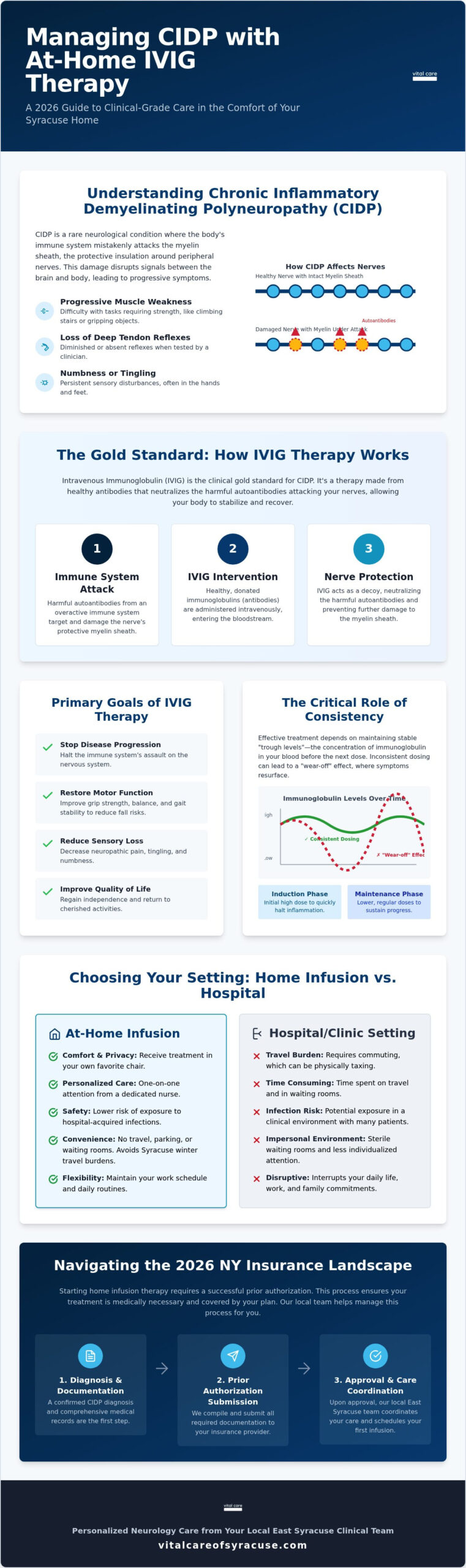
For many patients, Intravenous Immunoglobulin (IVIG) offers a more targeted approach. This therapy involves the administration of concentrated antibodies designed to modulate the immune system and prevent it from attacking healthy nerve fibers. When considering IVIG for small fiber neuropathy Albany families often find that this treatment provides a sense of hope by addressing the potential autoimmune triggers that cause nerve damage in the first place. It isn’t just about managing the pain, but about calming the immune response.
To better understand this concept, watch this helpful video:
The Symptoms of SFN: More Than Just Pain
The sensory changes associated with SFN typically follow a “stocking-glove” pattern, where the most intense discomfort begins in the feet and hands before potentially moving upward. These sensations can be unpredictable, flaring up during the night or during periods of stress. However, the impact extends beyond physical pain. Because these small fibers also control involuntary functions, many individuals experience autonomic symptoms such as irregular heart rate changes, dizzy spells, or unexplained digestive issues. For a resident in Albany, these challenges can make a simple walk through Washington Park or a routine trip to the grocery store feel like an overwhelming hurdle. The frustration is often compounded by the “idiopathic” label, leaving patients feeling as though their symptoms are a mystery without a clear solution.
How IVIG Works to Protect Your Nerves
IVIG works through a sophisticated biological process that helps stabilize a misfiring immune system. It functions by neutralizing pathogenic autoantibodies that mistakenly target the body’s own tissues, effectively acting as a shield for your peripheral nerves. Additionally, the therapy helps reduce the levels of pro-inflammatory cytokines, which are signaling proteins that can irritate nerve endings and exacerbate pain. IVIG is a blood-derived product containing healthy donor antibodies that provides the body with the tools it needs to restore balance.
This dual action not only helps protect existing nerve fibers but also creates a calmer internal environment that may support better quality of life. By choosing IVIG for small fiber neuropathy Albany patients receive a high-standard clinical intervention right where they feel most secure. This approach allows for a steady, reliable path toward recovery that respects the patient’s individual needs and comfort.
The Autoimmune Connection: When is IVIG Most Effective?
Identifying the root cause of nerve damage is the most critical step in determining if IVIG therapy will be successful. Clinical experience suggests that IVIG is typically most effective when an underlying autoimmune trigger is present, as the treatment specifically modulates the immune response. In 2026, clinical standards have shifted to prioritize early intervention in these immune-mediated cases to prevent irreversible fiber loss. For those seeking IVIG for small fiber neuropathy Albany specialists often look for these specific immune markers to ensure the therapy is a precise match for the patient’s needs.
A common hurdle many patients face is the “idiopathic” label, which simply means the cause of the neuropathy is unknown. While this diagnosis describes the symptoms, it often creates a trap when seeking insurance authorization. Most payers require documented evidence of an immune-mediated cause before approving high-register treatments. This is where ongoing IVIG research continues to provide the data necessary to bridge the gap between a vague diagnosis and a successful treatment plan. By moving beyond the idiopathic label, patients can unlock access to the care they deserve.
Key Autoimmune Triggers for SFN
Several systemic conditions are frequently linked to the development of small fiber neuropathy. Sjogren’s Syndrome, Lupus (SLE), and Sarcoidosis are among the most common culprits. These conditions don’t just affect internal organs; they often manifest as localized nerve damage when the immune system mistakenly attacks the small sensory fibers. A comprehensive neurology workup in the Capital Region is essential to rule out these triggers. If you’re navigating these complex diagnostic steps, a specialized home infusion partner can help coordinate the clinical requirements of your prescribed therapy.
Antibody Testing: TS-HDS and FGFR-3
Recent advancements in diagnostic testing have introduced specific panels that look for TS-HDS and FGFR-3 antibodies. These markers are highly significant because their presence strongly correlates with autoimmune small fiber neuropathy. When a patient tests positive for these antibodies, it provides the “smoking gun” needed to secure insurance authorization for IVIG. We encourage patients to discuss these specific panels with their local neurologists to move toward a more definitive care plan. Having these results in hand transforms a frustratingly vague medical history into a clear, actionable roadmap for therapy.
Home Infusion vs. Hospital Care for Albany Patients
Choosing where to receive your therapy is a decision that impacts both your physical health and your mental well-being. For those managing IVIG for small fiber neuropathy Albany home-based care offers a sanctuary that a traditional hospital simply cannot replicate. While medical facilities provide essential services, they often lack the warmth and personalized attention that promote a true sense of healing. In your own home, you can control your environment, from the lighting to the temperature, ensuring that each session is as peaceful as possible.
The clinical benefits of this approach are equally compelling. Research suggests that home infusion can lead to significant savings, with some studies showing a reduction of $1,928 to $2,974 per treatment course compared to a medical facility. Beyond the financial aspect, the risk of healthcare-associated infections (HAIs) is naturally lower when you aren’t sharing space with other acutely ill individuals. You don’t have to worry about the logistics of hospital parking or the stress of navigating crowded hallways. Instead, you receive your treatment while sitting in your favorite chair, surrounded by the comforts of your family life. Patients managing other serious neurological conditions across New York State share this same priority, as seen in how home infusion for ALS patients in Buffalo eliminates the physical strain of traveling to a facility during difficult weather or periods of reduced mobility.
The Clinical Safety of Home IVIG
Safety is the cornerstone of every home-based treatment plan. Our clinical teams follow the same rigorous 2026 safety protocols found in the nation’s top hospitals. Before your first session, a thorough screening process ensures that home infusion is the safest choice for your specific health profile. During the administration, a dedicated infusion nurse remains by your side to monitor your vitals and manage any potential side effects immediately. This level of 1-on-1 attention ensures that your care is never rushed and that every concern you have is addressed with professional precision. Albany residents living with other autoimmune neuromuscular conditions can benefit from this same model, as those exploring IVIG for myasthenia gravis at home Albany discover that clinical-grade monitoring and personalized nursing care can be delivered seamlessly within their own living space.
Cost-Effectiveness and Insurance Navigation
Navigating the complexities of New York State insurance requirements can be a daunting task for any patient. Specialty pharmacies play a vital role here, acting as dedicated advocates to help secure the necessary authorizations for your care. Because home-based administration eliminates the high facility fees associated with hospital stays, it often results in lower out-of-pocket costs for the patient. Understanding the benefits of a local home infusion company can empower you to make an informed choice that supports both your physical recovery and your financial peace of mind. We believe that receiving high-standard care shouldn’t be a source of administrative stress.
Starting Your IVIG Journey in the Capital Region
Moving from a clinical diagnosis to active treatment requires a well-coordinated effort between your medical team and your home environment. For those seeking IVIG for small fiber neuropathy Albany specialists provide the necessary diagnostic foundation, but the transition to home care is where a local support network truly shines. Having a partner that understands the regional medical landscape across Albany and Syracuse ensures that your care remains seamless and that your supplies arrive exactly when needed. This local connection provides a level of stability that national providers often struggle to match.
The specialty pharmacy acts as the central hub of this care coordination team. They don’t just deliver medication; they manage the intricate details of your prescription and act as a dedicated liaison between your neurologist and your insurance provider. This collaborative approach allows you to focus on your recovery while the experts handle the administrative complexities. Preparing for your first session involves a few simple steps, such as creating a dedicated space for your nurse and ensuring you have a reliable way to track your symptoms as therapy progresses.
The Referral and Authorization Process
The path to your first dose follows a structured sequence designed to prioritize your safety and ensure financial coverage.
- Step 1: You’ll need to obtain a definitive diagnosis and a specific prescription from your neurologist, which must document the suspected immune-mediated cause to satisfy insurance requirements.
- Step 2: Coordination between your physician’s office and Vital Care begins immediately to navigate the insurance approval process, utilizing the most current 2026 documentation standards to minimize delays.
- Step 3: A comprehensive clinical review of your medical history and recent lab results is conducted by our pharmacy team to provide a final safety clearance for home-based administration.
What to Expect During Your First Home Infusion
Your first session is a significant milestone in your treatment journey. On the scheduled day, your dedicated infusion nurse will arrive at your Albany home with all necessary supplies and equipment. They’ll begin by establishing a comfortable infusion site and checking your vital signs to create a baseline for monitoring. Because these sessions often last several hours, it’s helpful to have a quiet space prepared with books, a laptop, or music to help pass the time comfortably.
Proper hydration is essential in the 24 hours leading up to your appointment, as it can significantly reduce the likelihood of side effects like mild headaches. Understanding the nuances of home infusion for neurological disorders Syracuse and Albany patients receive can help you feel more prepared for this transition. If you’re ready to take the next step toward reclaiming your mobility and comfort, you can contact our clinical intake team to begin the referral process today.
Neurological Expertise: Why Albany Trusts Vital Care of Syracuse
Vital Care of Syracuse maintains deep roots within the New York medical community, providing a level of accountability and trust that only a local partner can offer. When searching for IVIG for small fiber neuropathy Albany patients deserve a team that understands the specific regional healthcare network and the doctors who practice within it. This local presence allows for more than just medication delivery; it fosters a dedicated partnership that spans from the initial insurance authorization to the final infusion of the month. While our primary focus is the comfort of your home, we also offer the availability of local suites for those who may prefer a clinical environment outside of their residence for certain sessions.
Every patient in the Capital Region has access to 24/7 clinical support, ensuring that a knowledgeable professional is always available to answer questions or address concerns. This constant availability provides a sense of security, knowing that you’re never alone in your health journey. Our clinicians view their work through a lens of kindness and precision, acting as a voice of stability during what can often be a challenging time. We believe that high-standard neurological care should feel supportive and patient-centered rather than cold or detached, and we’re committed to providing that steady hand.
Specialized Care for Rare Conditions
Our team possesses extensive experience in managing a wide range of rare neurological disorders, including the complex requirements for IVIG for stiff person syndrome at home Albany residents may require. We understand that every patient reacts differently to therapy, which is why we carefully tailor infusion rates to minimize discomfort and reduce the likelihood of side effects. By utilizing high-quality immunoglobulin brands and precise delivery systems, we ensure that every dose is administered with the highest degree of excellence. This technical proficiency is always balanced with a gentle approach that respects the physical reality of living with chronic neuropathy. Our broader commitment to neurological care across New York State also extends to conditions like ALS, where our team provides specialized home infusion for ALS patients in Buffalo who require the same level of compassionate, clinically precise support in their own homes.
A Dedicated Partner in Your Health Journey
Local ownership allows us to prioritize patient-centered advocacy above all else. We maintain close communication with Albany-based neurology offices, creating a synchronized care plan that ensures your physician is always informed of your progress. This collaborative effort streamlines the clinical requirements of your therapy, allowing you to focus on regaining your mobility and quality of life. If you’re ready to experience a more personalized approach to your treatment, we invite you to reach out for a clinical consultation today. We’re here to offer the expert guidance and compassionate care you need to move forward with confidence.
Reclaiming Your Quality of Life at Home
Managing the persistent discomfort of nerve damage requires a treatment plan that is as precise as it is compassionate. Throughout this guide, we’ve highlighted how identifying specific autoimmune markers can move you beyond an idiopathic diagnosis and toward a targeted clinical solution. By choosing a home-based approach for IVIG for small fiber neuropathy Albany residents can avoid the stressors of a hospital environment and focus entirely on their recovery in a familiar, supportive space. This path not only respects your personal boundaries but also ensures you receive the highest standard of specialized care.
As a locally owned and operated provider in New York, we’re deeply committed to acting as your protective advocate. Our dedicated neurological infusion specialists and 24/7 clinical support team are here to ensure your journey is stable and predictable. You don’t have to navigate these complex health challenges alone. We invite you to contact Vital Care of Syracuse today to discuss your Albany home infusion options and take the first step toward a more comfortable future. Better days are within reach, and we’re ready to walk beside you every step of the way.
Frequently Asked Questions
Is IVIG FDA-approved for small fiber neuropathy?
IVIG is not currently FDA-approved specifically for the treatment of small fiber neuropathy, which means its use for this condition is considered “off-label.” However, many neurologists prescribe it when they suspect an underlying autoimmune cause, as it’s designed to modulate the immune system. Because it’s an off-label use, insurance providers typically require detailed clinical documentation and evidence that conventional pain management therapies haven’t provided sufficient relief.
How long does it take to see results from IVIG for SFN?
Most patients begin to notice a reduction in symptoms within three to six months of starting their therapy. According to a study published in the journal Neurology, 77% of patients with refractory small fiber neuropathy reported significant improvements in pain and autonomic symptoms after three months of treatment. It’s important to maintain a steady and predictable infusion schedule, as nerve healing is a gradual process that requires consistent immune modulation.
Can I work or exercise while receiving IVIG therapy?
You can typically maintain your normal work and exercise routines between sessions, although we recommend resting during the actual administration. Many patients find they can comfortably work on a laptop or read while receiving IVIG for small fiber neuropathy Albany at home. It’s best to listen to your body and avoid strenuous physical activity on the day of your infusion to allow your system to process the antibodies without unnecessary fatigue.
What are the most common side effects of IVIG infusions?
The most common side effects include mild headaches, chills, fatigue, and muscle aches, which typically occur during or shortly after the infusion. These symptoms are generally manageable and can often be minimized by increasing your hydration or adjusting the infusion rate. Our dedicated nurses monitor you closely throughout the entire process to ensure your comfort and can implement specific protocols to mitigate these effects before they become bothersome.
Does New York State insurance typically cover home IVIG for SFN?
Many New York State insurance plans, including Medicare, provide coverage for home infusion services, though approval for SFN depends on proving medical necessity. Medicare established a specific home infusion therapy benefit effective January 1, 2021, which covers professional services associated with these treatments. Our specialty pharmacy team works directly with your providers to navigate these complex requirements and secure the necessary authorizations for your care in the Capital Region.
How do I find a neurologist in Albany who prescribes IVIG?
We recommend seeking a neurologist in the Albany area who specializes in neuromuscular disorders or peripheral nerve diseases. These specialists are often more familiar with the latest 2026 clinical standards for IVIG for small fiber neuropathy Albany and have experience navigating the specialized antibody testing required for insurance approval. You can often find these experts at large regional medical centers or through professional neurological associations within the Capital Region.
What happens if I have a reaction during a home infusion?
If you experience a reaction during your infusion, your dedicated on-site nurse is trained to intervene immediately according to established clinical safety protocols. They monitor your vital signs throughout the session and can slow or stop the infusion while administering medications to manage symptoms like itching or flushing. This 1-on-1 attention ensures that any issues are addressed with professional precision right in the safety and security of your own home.
How often will I need to receive IVIG treatments for neuropathy?
Treatment frequency is highly individualized, but most patients receive infusions every three to four weeks. Your neurologist will determine the specific dosage and schedule based on your clinical response and the severity of your symptoms. This methodical and steady approach allows for a consistent level of antibodies in your system, which is essential for protecting your nerve fibers from ongoing immune-mediated attacks and supporting your long-term mobility.
Leave a Reply