


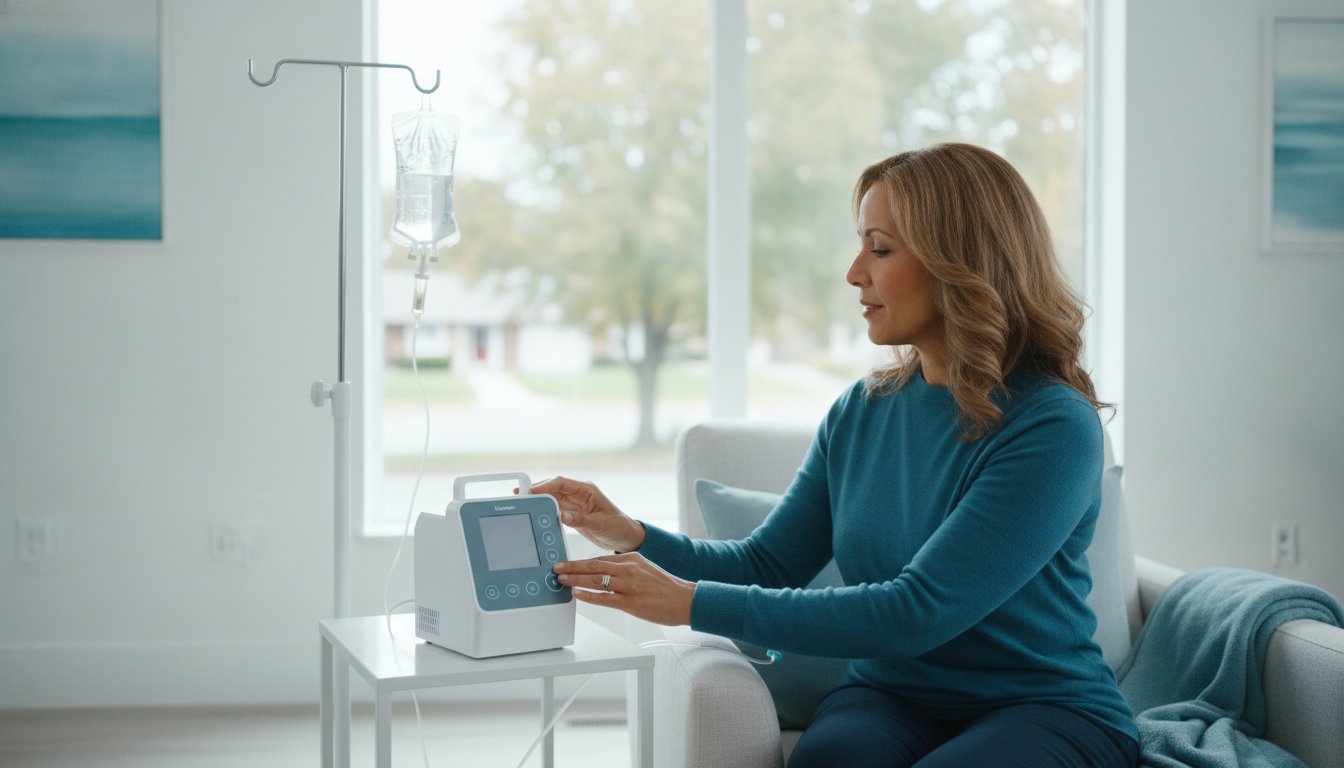
Imagine waking up in the middle of the night to the sharp, insistent beep of your medical equipment, wondering if a simple mistake has put your health at risk. For many, the transition to home-based care feels less like a step toward freedom and more like being tethered to a complex, intimidating machine. It’s entirely natural to feel overwhelmed by the responsibility of managing infusion pump at home, especially when you’re worried about technical malfunctions or the serious risks of infection.
We understand that your peace of mind is just as vital as your clinical outcomes. This guide will provide you with the technical literacy and practical protocols required to operate your device with total confidence. You’ll learn how to handle troubleshooting with ease while ensuring your environment remains sterile and safe. We’ll walk through the essential steps for daily management, grounded in the latest 2026 clinical standards, and provide the reassurance that expert local support is always ready to assist you.
Key Takeaways
- Discover how your infusion pump serves as a vital tool for independence, allowing you to receive professional care in the comfort of your own home.
- Master the practical steps for managing infusion pump at home, including the SASH method and the creation of a sterile “Clean Zone” for supplies.
- Learn to interpret pump alarms as helpful safety features rather than failures, with clear protocols for resolving common issues like tubing occlusions.
- Prepare for the unexpected with strategies for handling local power outages and navigating TSA requirements when traveling with medical equipment.
- Understand the clinical benefits of working with a local provider who offers personalized, expert support that national chains often cannot match.
Understanding Your Home Infusion Pump: A Patient’s First Steps
Transitioning from a clinical setting to your own living room is a significant milestone in your recovery journey. An infusion pump is essentially a sophisticated delivery system designed to provide life-sustaining fluids, nutrition, or medication directly into your bloodstream with pinpoint accuracy. While the device might look complex, it is actually your primary tool for reclaiming independence. By managing infusion pump at home, you can avoid the sterile, restrictive environment of a hospital ward and focus on healing where you feel most comfortable.
Home infusion is frequently used for critical treatments such as parenteral nutrition (TPN), immunoglobulin (IVIG), and various anti-infective therapies. Research consistently shows that receiving these treatments at home reduces the risk of hospital-acquired infections while significantly improving a patient’s emotional well-being. You aren’t expected to be a medical technician; instead, you’re a vital partner in your own care team. We provide the technical expertise, and you provide the familiar, healing environment that hospitals can’t replicate.
To better understand how to safely interact with your equipment, watch this helpful video on the de-accessing process:
Types of Infusion Pumps You Might Encounter
Different therapies require different delivery methods. For example, electronic large-volume pumps are often used for complex nutrition like TPN because they can manage multiple fluids simultaneously. If you’re receiving steady antibiotic delivery, you might use an elastomeric “ball” pump, which uses internal pressure rather than electricity to move medication. For smaller, highly precise doses, a syringe pump is often the preferred choice. Your specific device is selected based on your clinical needs to ensure the highest level of precision and safety. Each type is designed with user-friendly interfaces to make managing infusion pump at home as straightforward as possible.
The Clinical Team Behind Your Device
You’re never alone in this process. Your medication is meticulously prepared by a Syracuse-based pharmacist who understands your unique prescription and health history. During your initial setup, an infusion nurse will visit your home to provide hands-on training, ensuring you feel confident in every procedure. This local oversight is particularly crucial for anti-infective therapy at home, as it allows for rapid adjustments and personalized support that national providers simply cannot replicate. Having a dedicated team nearby transforms the experience from a daunting task into a stable, manageable part of your daily routine. We act as your protective advocate, ensuring every dose is precise and every concern is heard.
Daily Management: Setting Up for a Successful Infusion
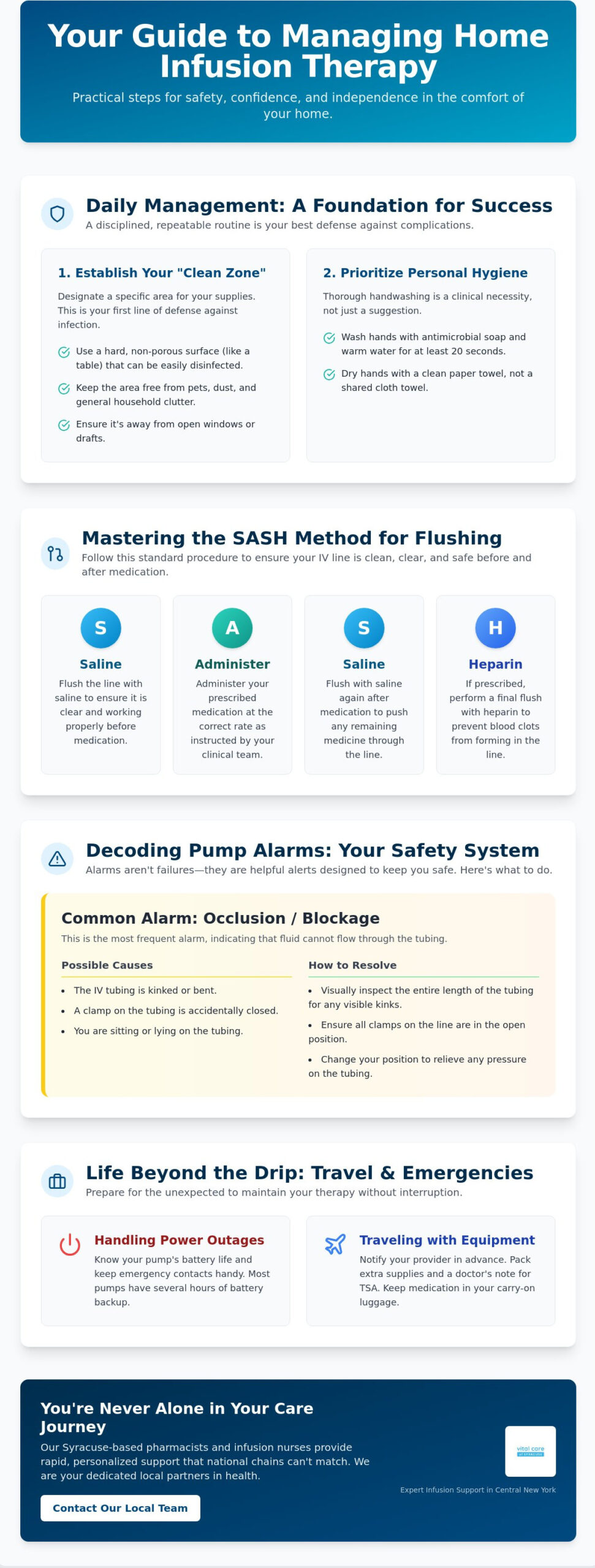
Successful daily care begins with a disciplined, repeatable routine. When you’re managing infusion pump at home, your living space essentially becomes an extension of a clinical environment. Establishing a designated “Clean Zone” is your first and best defense against complications like infection or sepsis. This area should be a hard, non-porous surface, such as a kitchen table or a dedicated medical cart, that you can easily disinfect before every use. Keeping this space free from pets, open windows, or general household clutter helps you maintain the high standard of hygiene required for safe therapy.
Before you begin any technical steps, personal hygiene must be your priority. Thorough handwashing is not just a suggestion; it is a clinical necessity. Use warm water and antimicrobial soap, scrubbing for at least 20 seconds, and dry your hands with a clean paper towel rather than a shared cloth towel. The FDA provides excellent Tips for Using Your Pump at Home that emphasize how these small, consistent habits prevent the introduction of bacteria into your delivery system. If you ever feel uncertain about your setup or sterilization technique, our clinical team at Vital Care of Syracuse is always available to offer additional guidance.
Preparing Your Workspace
Gather all necessary supplies before you start the connection process to reduce stress and prevent errors. Your daily kit typically includes the medication bag, tubing, pre-filled saline flushes, alcohol pads, and sometimes a heparin flush. Check the medication bag for clarity, ensuring there are no unexpected particles or leaks, and verify that the expiration date hasn’t passed. Organizing these items in the order you will use them creates a logical flow that makes the process feel intuitive rather than intimidating.
Step-by-Step Connection Protocol
The connection process follows the “SASH” method, a standard clinical protocol that stands for Saline, Administer, Saline, and Heparin. You’ll start by flushing your central line or PICC line with saline to ensure it’s clear. One of the most critical steps is to “scrub the hub” of your access point with an alcohol pad for at least 15 seconds. This friction is what effectively kills surface bacteria. Once the hub is sterile, you can safely connect the primed tubing. Priming involves running the medication through the line until a single drop appears at the end, which removes any air bubbles that could trigger a pump alarm. By following this structured sequence, you ensure that every infusion is as safe as if it were performed in a hospital setting.
Troubleshooting Your Pump: What to Do When Alarms Sound
Hearing a sudden beep in the middle of the night can be startling. However, these sounds are sophisticated safety mechanisms designed to protect you from potential complications. When managing infusion pump at home, viewing these alerts as helpful guardians rather than equipment failures helps reduce anxiety. Most alarms are triggered by simple, easily corrected physical issues like a pinched line or a closed clamp. The FDA patient safety tips for home infusion pumps suggest that being familiar with your specific device’s alarm codes is one of the most effective ways to ensure continuous, safe therapy. By remaining calm and following a structured check, you can resolve most issues in a matter of seconds.
Common Alarm Meanings and Quick Fixes
The most frequent alert you’ll encounter is the “Occlusion” alarm, which simply means the fluid cannot flow through the tubing. If the pump indicates an “upstream” occlusion, the blockage is usually between the medication bag and the pump. Check if the bag is empty or if the tubing is kinked at the top. A “downstream” occlusion means the blockage is between the pump and your body. Frequently, this is caused by a forgotten clamp on your PICC line or the tubing being tucked too tightly under your clothing. Other common alerts include:
- Air-in-Line: Small bubbles can sometimes trigger an alert. You can often clear these by following the on-screen prompts or gently tapping the tubing to move the air toward the pump’s sensor.
- Low Battery: This is a reminder to integrate charging into your daily routine. Keep your pump plugged in whenever you’re stationary, such as while sleeping or watching television.
- Infusion Complete: This signal means your dose is finished. Follow your specific protocol for disconnecting and flushing the line to maintain its patency.
When to Call Vital Care of Syracuse
While most alarms are easily managed, some situations require professional intervention. If your pump displays a “System Error” or a numeric code that won’t clear after a restart, the device may have a mechanical fault. In these rare cases, our team will coordinate a replacement to ensure your therapy isn’t interrupted. You should also reach out immediately if you notice clinical red flags that aren’t related to the machine. Fever, chills, or increased redness and pain at the catheter exit site are signs that require clinical assessment. Our 24/7 on-call team is dedicated to managing infusion pump at home challenges for patients across Central New York, providing a steady hand for those in Utica, Rochester, and the surrounding Syracuse areas. We’re here to act as your advocate, ensuring you never have to face a technical or clinical hurdle alone.
Life Beyond the Drip: Traveling and Emergency Preparedness
Receiving therapy shouldn’t mean staying confined to your home. Modern technology allows for significant mobility, and many patients find that they can maintain active social lives while managing infusion pump at home. Portable pumps and discreet carrying cases are designed to blend into your daily activities, whether you’re attending a family dinner or taking a walk in a local park. The goal of home infusion is to integrate clinical care into your life, not the other way around. By preparing for various environments and potential disruptions, you can ensure your treatment remains consistent without sacrificing your independence.
Winter Weather Readiness in Upstate NY
For those living in Central New York, lake-effect snow and severe winter storms are a reality that requires specific planning. Syracuse winters can lead to sudden power outages that might affect electronic pumps. It’s vital to coordinate with local utility companies to flag your home as a medical priority, which can help expedite power restoration during a crisis. We also suggest stocking extra supplies well in advance of forecasted storms, as road conditions can sometimes delay standard delivery schedules. If you’re concerned about your backup power options, Vital Care of Syracuse can help you review your equipment’s battery life and emergency protocols.
Traveling with Your Infusion Pump
Traveling requires a bit more logistics but is entirely achievable with the right documentation. Always carry a “Medical Necessity” letter from your provider, which explains the purpose of your device and the need for liquid medications to TSA agents. If your medication requires refrigeration, use a high-quality insulated cooler with gel packs during transit. Whether you’re visiting family in Buffalo or attending an event in Albany, we can help you identify local infusion resources in your destination city. Navigating airport security with a PICC line is a routine process for TSA, but arriving early and being transparent about your equipment will ensure a much smoother experience.
Personalized Infusion Support in Central New York
Choosing a partner for your health journey is a deeply personal decision that extends far beyond the equipment itself. While national chains often rely on distant call centers and rigid, impersonal protocols, a locally owned provider offers a level of responsiveness that is essential for your peace of mind. We act as a protective advocate, bridging the gap between your hospital discharge and the sanctuary of your home. When you’re managing infusion pump at home, having a team that understands the specific geography and clinical landscape of Central New York makes a profound difference in the quality of your care.
Our commitment to the Syracuse, Albany, and Binghamton communities is rooted in the belief that every patient deserves a dedicated partner. We provide comprehensive support for complex clinical needs, including specialized resources for TPN and GI disorders in Rochester. By combining high-register clinical excellence with a patient-centered approach, we ensure that your transition to home-based therapy is seamless, stable, and thoroughly supported by experts who are only a phone call away.
Expert Care for Complex Conditions
Precision and empathy are at the heart of our specialized treatment programs. We utilize evidence-based protocols for home infusion for neurological disorders in Syracuse, ensuring that patients with chronic conditions receive the steady, reliable hand they need. Our team also manages Alpha-1 antitrypsin deficiency and provides critical inotropic therapy support for cardiac patients across the Southern Tier. These complex therapies require more than just technical proficiency; they demand a clinical team that is emotionally present and deeply invested in your long-term well-being.
Joining the Vital Care Family
The first 24 hours of your home journey are the most critical. During this time, our clinical team focuses on establishing a narrative of trust and transparency. We don’t just drop off equipment; we coordinate directly with your existing physicians in Central New York to ensure your care plan is perfectly aligned with your medical history. You can expect thorough, hands-on training that builds your confidence in managing infusion pump at home while knowing that we are monitoring your progress every step of the way. If you’re ready to experience a higher standard of compassionate expertise, contact Vital Care of Syracuse to start your home journey today and discover the difference that local, dedicated care can make.
Embracing Independence with Expert Support
Mastering the technical aspects of your therapy is the first step toward reclaiming your daily life. By maintaining a dedicated Clean Zone and following the structured SASH protocol, you ensure that every dose is delivered with clinical precision. Remember that your device is a sophisticated guardian; those occasional beeps are simply safety features designed to keep you on the right path. Managing infusion pump at home doesn’t mean you’re navigating this journey alone. It’s a partnership between your personal resilience and our professional expertise.
As accredited home infusion specialists locally owned and operated in East Syracuse, we’re deeply committed to your safety. We provide 24/7 on-call clinical support to ensure that help is always within reach, no matter the hour. You deserve a care plan that feels like a steady, reliable hand rather than a technical burden. Discover the comfort of personalized home infusion—Contact Vital Care of Syracuse today. We’re here to protect your well-being and support your transition to a healthier, more independent future.
Frequently Asked Questions
What should I do if my infusion pump beeps and I can’t stop it?
Start by reading the message displayed on the pump’s screen, which will identify the specific issue. Most beeping occurs because of a simple occlusion, such as a kinked tube or a forgotten clamp. If following the on-screen prompts doesn’t stop the alarm, silence the device and reach out to your clinical team. We’re here to provide the steady guidance you need to resolve technical hurdles quickly.
Can I shower while I am connected to my infusion pump?
You may shower while connected, provided you take rigorous precautions to keep the pump and your access site dry. Use waterproof covers or plastic sleeves specifically designed for medical lines to create a moisture barrier. It is essential to avoid direct water pressure on the site. After your shower, carefully inspect the dressing to ensure it hasn’t become damp or loose, as moisture can increase infection risks.
What happens to my infusion if the power goes out in my home?
Your infusion will continue uninterrupted because the pump’s internal battery acts as an immediate backup. Most devices offer several hours of portable power, which is usually sufficient to handle temporary local outages. For longer disruptions, especially during Central NY winters, we recommend having a secondary power source ready. Always keep your device plugged into a wall outlet when you’re stationary to maintain a full charge.
How do I know if my infusion pump is delivering the right amount of medicine?
Your pump is an exceptionally precise instrument designed to follow the exact parameters of your prescription. You can monitor the progress by viewing the “Rate” and “Volume Remaining” indicators on the digital display. If you notice a significant discrepancy in the timing of your infusion, it’s important to notify your pharmacist. This level of oversight is a core part of managing infusion pump at home with professional confidence.
Is it safe to sleep while the infusion pump is running?
Sleeping while your pump is running is safe, provided the equipment is positioned securely on a flat surface. Ensure the tubing has enough slack to allow for natural movement without becoming tangled or disconnected. Many patients find that placing the pump on a nightstand helps them rest easier. By organizing your space before bed, you can maintain your therapy schedule without disrupting your much-needed sleep.
What should I do if I see an air bubble in the infusion tubing?
Small, isolated bubbles are common and are typically managed by the pump’s built-in air detectors. If you notice a larger pocket of air, try gently tapping the tubing to encourage the bubble to move toward the sensor where it can be cleared. You should never disconnect your tubing to remove air on your own. If the “Air-in-Line” alarm persists, contact your clinical support team for a safe, step-by-step resolution.
Who do I call if I have a medical question about my pump at 2:00 AM?
You should call our dedicated 24/7 on-call clinical support line for any urgent technical or medical concerns. We understand that health challenges don’t follow a schedule, so our local experts are always available to provide immediate reassurance. Whether it’s a persistent alarm or a question about your site, a seasoned professional will be on the other end of the line to assist you, even in the middle of the night.
Can I travel out of the Syracuse area while using a home infusion pump?
Traveling is absolutely an option, though it requires careful coordination of your supplies and medication. We recommend carrying a letter of medical necessity and ensuring your medication stays at the required temperature during transit. managing infusion pump at home doesn’t have to limit your horizons. We can help you plan for trips outside the Syracuse area, ensuring you have the supplies and knowledge to continue your therapy safely while away.
Leave a Reply