


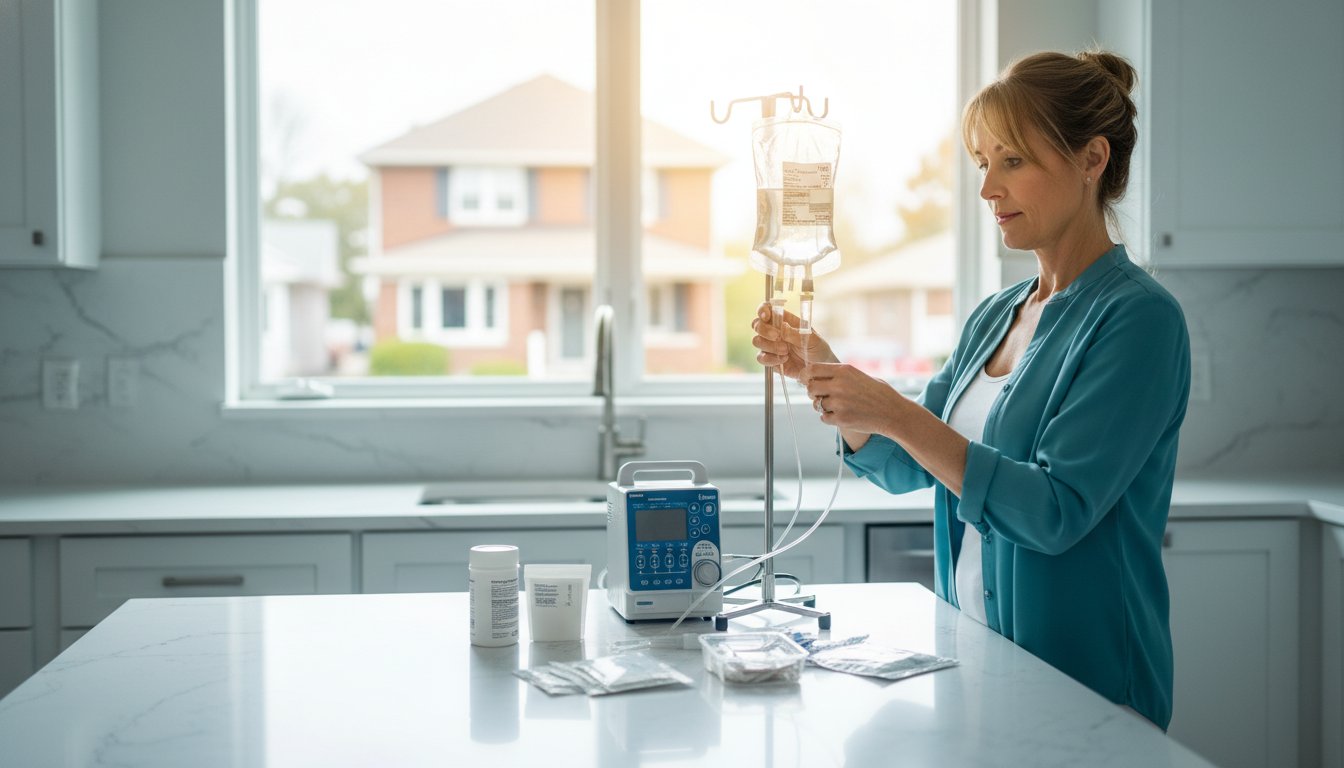
What if the most vital component of your recovery isn’t the time spent in a hospital bed, but the supportive clinical partnership that begins the moment you prepare to leave it? For many patients, the transition from a controlled medical environment to the familiar surroundings of home is a milestone filled with both hope and significant apprehension. It’s entirely natural to feel a sense of trepidation when you think about managing your own care. You might worry about the complexities of catheter safety or the precise nature of nutrient storage when you’re no longer under constant observation by a nursing team.
We understand that these concerns are a reflection of your commitment to your health. This guide offers a comprehensive look at transitioning to and managing TPN for short bowel syndrome Buffalo, ensuring you have the clinical precision and emotional support needed to move forward with confidence. By focusing on a collaborative approach that starts at the bedside, we’ll help you navigate the logistics of home infusions while prioritizing your safety. We will walk through the essential steps of preventing infections, mastering your daily supplies, and utilizing local Western New York resources to restore your independence and maintain your nutritional health.
Key Takeaways
- Understand the essential steps during the 48-hour discharge window that facilitate a smooth transition from hospital care to the comfort of your home.
- Discover how to safely manage TPN for short bowel syndrome Buffalo by establishing a “sterile field” mindset for your daily administration and bag preparation.
- Identify the early clinical warning signs of catheter-related bloodstream infections to minimize re-hospitalizations and protect your long-term health.
- Learn why regular lab monitoring and blood work are vital for adjusting your personalized nutrition plan to meet your body’s specific needs.
- Explore how a local partnership provides the stability of expert clinical oversight while remaining deeply connected to your personal well-being.
Understanding SBS and the Vital Role of TPN in Buffalo Home Care
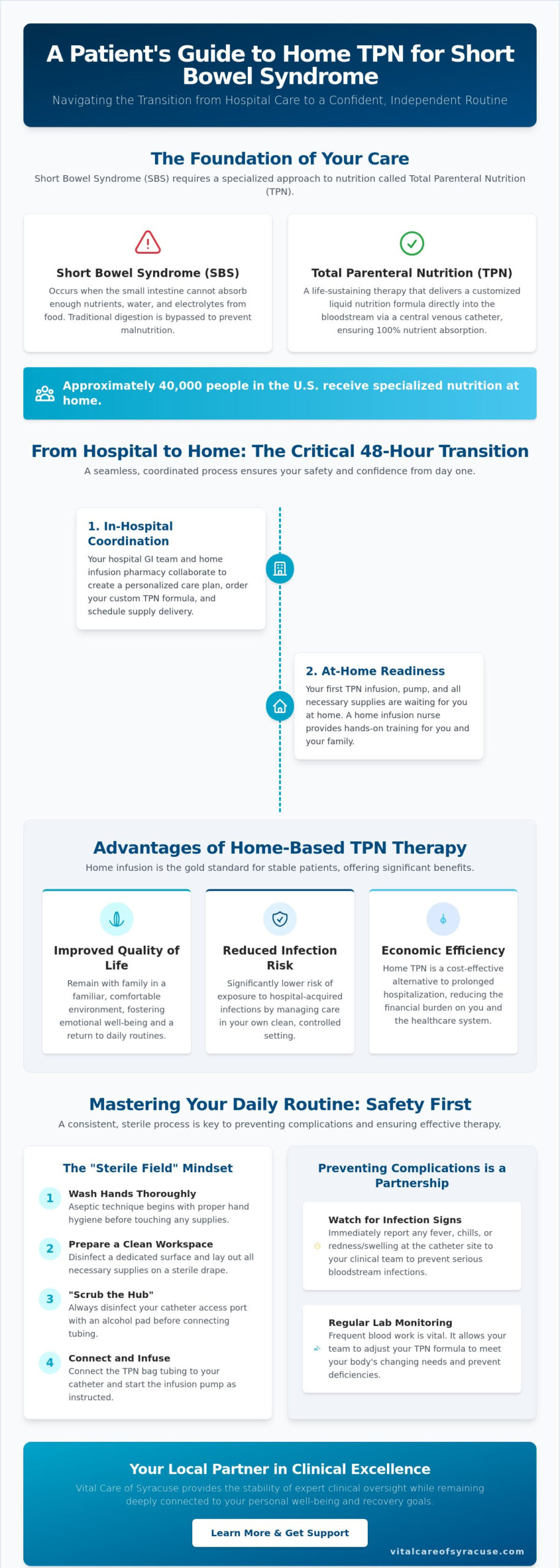
Living with a complex digestive condition requires more than just medical intervention; it demands a comprehensive understanding of how your body receives the fuel it needs to thrive. When the small intestine is unable to absorb sufficient nutrients, water, and electrolytes, a condition known as Short Bowel Syndrome (SBS) occurs. Approximately 40,000 people across the United States currently receive specialized nutrition at home to manage similar challenges. For many patients in Western New York, Understanding Short Bowel Syndrome is the cornerstone of managing long-term health and maintaining nutritional stability. In these instances, Total Parenteral Nutrition (TPN) becomes the primary life-sustaining therapy, delivering essential nourishment directly into the bloodstream.
To better understand how this therapy integrates into your daily life and helps restore your independence, watch this helpful video regarding the management of SBS:
The 2026 clinical standards for parenteral nutrition emphasize that home-based care is the gold standard for patients who are stable enough to leave the hospital setting. Managing TPN for short bowel syndrome Buffalo involves a dedicated partnership between you and your clinical team to ensure every infusion is safe, effective, and tailored to your specific recovery goals. This collaborative approach focuses on transitioning you from the hospital bedside to the comfort of your own home without compromising the quality of your clinical oversight.
How TPN Bypasses the GI Tract
Because the damaged or shortened intestine cannot process food through traditional digestion, TPN utilizes a central venous catheter to deliver nutrients directly into your circulatory system. This intravenous method ensures that your body receives a precise blend of macronutrients, including dextrose for energy, amino acids for protein synthesis, and lipids for essential fats. It’s also supplemented with a tailored mix of vitamins and minerals to prevent deficiencies. In the context of a patient’s surgical history, malabsorption is defined as the inability of the remaining intestinal tract to absorb the necessary nutrients to sustain life without specialized intravenous support. Patients managing other gastrointestinal conditions that require bowel rest, such as those exploring parenteral nutrition for pancreatitis Auburn, face similar challenges in transitioning from hospital-based intravenous feeding to a safe and manageable home routine.
The Benefits of Home-Based Therapy
For many residents, the transition to TPN for short bowel syndrome Buffalo represents a significant step toward reclaiming their daily routine. Choosing home-based therapy offers several advantages that extend beyond basic nutrition. Patients across Western New York, including those seeking home infusion for GI disorders Rochester and the surrounding region, consistently find that receiving care at home provides meaningful clinical and personal benefits:
- Improved Quality of Life: Being at home allows Buffalo families to remain together in a familiar environment, fostering psychological well-being and emotional stability.
- Reduced Infection Risk: Clinical trends suggest that patients often experience a lower risk of hospital-acquired infections when they are cared for in their own clean, controlled home settings.
- Economic Efficiency: Home TPN is a highly cost-effective solution compared to prolonged hospitalization, reducing the financial burden on the healthcare system while providing the same high-register clinical excellence.
Transitioning from Hospital to Home TPN in the Buffalo Area
The journey from the clinical safety of a hospital room to the independence of home care is a pivotal phase in your recovery. This transition isn’t just about moving locations; it’s a meticulously coordinated process that ensures your safety and nutritional stability. In the Buffalo area, the final 48 hours before discharge are particularly vital. During this critical window, your hospital GI team works in tandem with a home infusion pharmacy to synchronize every detail of your care. This ensures that when you arrive home, your first infusion of TPN for short bowel syndrome Buffalo is ready and waiting, allowing for a seamless continuation of your life-sustaining therapy.
Local logistics play a significant role in this success. Because TPN solutions are temperature-sensitive and highly customized, having a provider who understands the geography of Western New York is indispensable. Reliable local delivery ensures that your supplies arrive in pristine condition, regardless of the seasonal weather shifts Buffalo is known for. This level of coordination is a key component of the NIDDK guide to SBS treatment, which emphasizes the need for a structured support system during the transition to home care. When clinical expertise meets local reliability, the fear of leaving the hospital is replaced by the excitement of returning home.
Step 1: Clinical Coordination with Buffalo Health Systems
Effective home care begins with strong institutional partnerships. Vital Care collaborates closely with the medical teams at Buffalo General Medical Center and Roswell Park Comprehensive Cancer Center to bridge the gap between inpatient and outpatient settings. This collaboration involves securing all necessary insurance authorizations before you leave the hospital, preventing any stressful delays in therapy. Additionally, clinicians verify that your home environment is equipped for safe medical storage, ensuring you have a dedicated space for your sterile supplies and refrigeration needs. If you’re currently preparing for discharge, connecting with a local infusion partner early can simplify these logistical hurdles and provide immediate peace of mind.
Step 2: Bedside Education and Training
Confidence is the foundation of successful home management. Before you depart the hospital, you’ll receive comprehensive bedside training tailored to your specific needs. This hands-on education covers everything from sterile catheter care to the precise operation of your infusion pump. You’ll review your unique TPN formula and infusion schedule, ensuring you understand how to monitor your progress effectively. This training isn’t just a checklist; it’s a process of empowerment. By the time you perform your first solo infusion of TPN for short bowel syndrome Buffalo, you’ll have the technical skills and the quiet confidence required to manage your health safely. Our goal is to ensure every Buffalo patient feels like a capable and supported partner in their own healing journey.
The Daily Routine: How to Administer TPN for Short Bowel Syndrome
Establishing a consistent daily routine for TPN for short bowel syndrome Buffalo transforms a complex medical requirement into a manageable part of your home life. This process is built upon a “sterile field” mindset, which means treating your preparation area with the same clinical rigor as a hospital cleanroom. While the steps may feel detailed at first, they quickly become second nature, providing you with the nutritional stability needed to regain your independence. Consistency is the foundation of success; maintaining a regular infusion schedule helps your body regulate fluid levels and prevents the metabolic fluctuations often associated with malabsorption.
Adopting these habits ensures that your therapy remains a supportive part of your day rather than a source of stress. As noted by Boston Children’s Hospital on SBS, the precision of delivery is just as vital as the nutrient mix itself. By mastering the administration process, you’re taking an active role in your clinical outcomes and long-term health.
Preparation and Hygiene Protocols
Safety begins with meticulous hand hygiene. You should wash your hands for at least 20 seconds with antimicrobial soap, followed by an alcohol-based sanitizer for added protection. Your work surface must be cleaned with a disinfectant and allowed to air dry before you begin. Before starting the infusion, carefully inspect your TPN bag for any signs of “breaking,” which appears as oily streaks or large white clumps in the solution. You should also check for any floating particulates or cloudiness that might indicate the formula is compromised. TPN bags should be stored on a dedicated shelf in a clean home refrigerator, kept away from raw foods to prevent any risk of cross-contamination.
Managing the Infusion Pump and Catheter
Once your workspace is ready, the next step involves preparing the equipment for delivery. This includes priming the tubing to remove all air bubbles and confirming that the pump parameters match your specific prescription. When you’re ready to connect, the most critical step is “scrubbing the hub” of your central venous catheter. Use a fresh alcohol prep pad to vigorously clean the connection point for at least 15 seconds, allowing it to dry completely before attaching the tubing. This simple action is your strongest defense against infection. After the infusion of TPN for short bowel syndrome Buffalo is complete, follow your clinical team’s instructions for flushing the line with saline or heparin to maintain catheter patency. These methodical steps ensure your line remains clear and safe for your next scheduled dose.
Preventing Complications and Monitoring Progress at Home
Success with TPN for short bowel syndrome Buffalo isn’t just measured by the completion of a daily infusion; it’s defined by your ability to stay ahead of potential complications through proactive monitoring. While the technical aspects of administration eventually become routine, your role as an observant partner in your own care remains vital. One of the most common emotional hurdles you might face is the paradox of thirst versus hydration. In SBS, drinking large amounts of water can often lead to increased output and dehydration rather than relief. Learning to balance oral intake with your intravenous requirements is a delicate process that requires patience and steady clinical guidance.
A cornerstone of this long-term success is the regular collection of blood work. These labs aren’t just a formality. They provide the precise data your local Buffalo clinical pharmacists need to fine-tune your TPN formula. By analyzing your electrolyte levels and liver function weekly, your team can adjust the dextrose, minerals, or lipids in your bag to match your body’s changing needs. This personalized approach ensures your nutrition remains as dynamic as your recovery, allowing for a higher degree of safety and comfort in your home environment.
Recognizing Red Flags
Vigilance regarding your central line is your best defense against Catheter-Related Bloodstream Infections (CRBSI). It’s important to differentiate between the normal, cool sensation of a starting infusion and the systemic signs of an infection, such as sudden fever, unexplained chills, or a general feeling of malaise. You should inspect your catheter site daily for any redness, unusual swelling, or drainage. If you notice these red flags, you should immediately contact the 24/7 on-call clinical team. Early intervention is the key to resolving issues before they require a return to the hospital, protecting both your health and your independence.
Long-Term SBS Management
The ultimate goal for many patients is intestinal adaptation, a physiological process where the remaining portion of the bowel begins to work more efficiently. Over months or years, this adaptation may allow for a gradual reduction in TPN dependence. Our team monitors your progress through detailed lab draws to ensure this transition happens safely and sustainably without compromising your nutritional status. For those managing complex digestive health alongside other conditions, you might find our guide on GI Specialty Infusion: Navigating TPN and IBD at Home particularly helpful. If you have questions about your current monitoring schedule or need to discuss your transition to home care, reach out to our clinical team for a personalized review of your care plan.
Personalized SBS Support: Why Buffalo Patients Choose Vital Care
Choosing a provider for life-sustaining therapy is a decision that impacts every facet of your daily existence. For residents of Western New York, the choice often comes down to the balance between clinical sophistication and local accessibility. While national providers offer broad resources, they often lack the physical proximity required for immediate, face-to-face clinical intervention. This is where a locally owned franchise with national backing provides a distinct advantage. By operating within the Syracuse-Buffalo corridor, we provide the technical excellence of a large-scale pharmacy alongside the personalized, responsive care of a neighbor.
Our approach to managing TPN for short bowel syndrome Buffalo is built on the foundation of being a “compassionate expert.” We recognize that you aren’t just a patient on a roster; you’re an individual navigating a profound life change. This means our team acts as a bridge, translating complex medical requirements into a manageable home routine that preserves your dignity and comfort. We provide the stability you need to move beyond the hospital walls, ensuring that your nutritional therapy supports your life rather than defining it. This dedicated partnership is designed to instill a sense of security during a time of significant transition.
Local Expertise and Same-Day Support
Proximity is a critical safety feature in home infusion. Being based locally allows for faster supply deliveries and the ability to respond quickly to changing clinical needs. Our team possesses a deep understanding of the Buffalo healthcare landscape, working seamlessly with local GI specialists to ensure your care remains consistent across all settings. You don’t have to wait for a shipment from a distant state; your supplies are managed right here in the region. Understanding the benefits of a local home infusion company in Central New York helps patients see why regional support is the most reliable way to manage a complex condition like SBS. This local presence ensures that we’re always within reach when you need clinical guidance or logistical assistance.
Your Partner in the SBS Journey
Navigating the intricacies of insurance authorizations and long-term clinical monitoring can feel overwhelming, but you don’t have to face these challenges alone. We serve as your dedicated advocate, handling the administrative complexities so you can focus entirely on your recovery. In 2026, the standard for excellence in SBS care involves more than just delivering a bag of nutrients; it requires a commitment to improving your long-term outcomes and fostering intestinal adaptation. Our role is to provide the steady, reliable hand that guides you through every phase of this journey, ensuring that your therapy is adjusted as your body heals. Patients throughout the region, including those exploring home infusion for GI disorders Rochester and neighboring communities, benefit from this same commitment to personalized, regionally grounded care.
Reclaiming your life at home is a courageous step, and we’re honored to be the partner that helps you take it. With the right support, managing TPN for short bowel syndrome Buffalo becomes a gateway to restored independence and nutritional health. We’re here to ensure that your transition is seamless, your care is precise, and your future is bright. You can move forward with the quiet confidence that comes from having a seasoned professional by your side every step of the way.
Moving Forward with Confidence and Support
Managing TPN for short bowel syndrome Buffalo is a journey that requires both technical precision and a dedicated clinical partner. By mastering sterile protocols and staying vigilant with your daily monitoring, you can effectively minimize the risk of complications while reclaiming the comfort of your home. The transition from the hospital is not the end of your care; it’s the beginning of a personalized path toward intestinal adaptation and nutritional stability. We understand that the details of home infusion can feel overwhelming, but with the right guidance, they quickly become a manageable part of your routine.
As a locally owned and operated provider in New York, we combine ACHC Accredited clinical excellence with the accessibility of 24/7 clinical pharmacist support. You don’t have to navigate these complex requirements alone. Contact Vital Care of Syracuse for personalized TPN support in Buffalo to learn how our compassionate experts can help you manage your therapy with peace of mind. Your health and independence are within reach, and we’re here to provide the steady hand you need every step of the way.
Frequently Asked Questions
Can I shower while on home TPN for Short Bowel Syndrome?
You can certainly shower while receiving home TPN as long as your central line exit site remains completely dry and protected. It’s essential to use waterproof barriers or specialized dressing covers designed for infusion patients to prevent moisture from reaching the catheter. Most patients find it easiest to shower during their “off” hours when they aren’t connected to the pump, though the catheter itself still requires rigorous protection to prevent infection.
How is home TPN delivered to my house in Buffalo?
Home TPN is delivered directly to your residence via a temperature-controlled courier service that understands the specific logistics of the Western New York region. Because these solutions are highly customized and sensitive to heat, they’re transported in insulated containers to maintain their clinical integrity. Your delivery schedule is coordinated in advance to ensure you always have an adequate supply of TPN for short bowel syndrome Buffalo without any gaps in therapy.
What happens if my TPN pump alarms in the middle of the night?
If your infusion pump alarms, your first step is to check the display screen for a specific error code, such as an occlusion or a low battery warning. Most alarms are easily resolved by checking for kinked tubing or ensuring the power source is secure. If you can’t resolve the issue quickly, you should contact your on-call clinical pharmacist for immediate troubleshooting guidance to ensure your infusion continues safely.
How often will I need blood work while on TPN for SBS?
Patients typically require blood work once a week during the initial phase of home therapy to ensure their nutrient levels are perfectly balanced. As your condition stabilizes and your body adapts to the regimen, your clinical team might reduce the frequency of these draws. These regular labs are a vital tool for your pharmacist to adjust your formula, ensuring that your TPN for short bowel syndrome Buffalo remains tailored to your body’s changing needs.
Is home TPN covered by insurance for patients in New York State?
Home TPN is generally covered by most major insurance providers in New York, including Medicare and New York State Medicaid, provided there’s a documented medical necessity. For 2026, New York has updated its Medicaid financial eligibility standards, which is an important consideration for Buffalo residents seeking coverage. Our team works directly with your insurance provider to secure the necessary authorizations and help you understand your specific benefit structure before you leave the hospital.
Can I travel while managing home TPN for Short Bowel Syndrome?
Traveling is definitely possible with home TPN, though it requires careful advance planning and coordination with your clinical team. You can use portable infusion pumps and specialized backpacks that allow for mobility while your therapy is running. We can help you arrange for supply deliveries to your destination or provide you with the necessary documentation for airline travel to ensure your journey is as smooth and safe as possible.
What is the difference between TPN and enteral (tube) feeding for SBS?
TPN delivers nutrients directly into your bloodstream through a central vein, bypassing the digestive system entirely to ensure maximum absorption. In contrast, enteral feeding uses a tube to deliver specialized liquid nutrition directly into the stomach or small intestine. For many SBS patients, TPN is necessary because their shortened bowel cannot absorb enough nutrients from enteral formulas to sustain health, making intravenous delivery the most reliable life-sustaining option. Patients recovering from acute pancreatic conditions who also require complete bowel rest may benefit from reviewing our guide on parenteral nutrition for pancreatitis Auburn, which explores how intravenous feeding supports healing when the digestive tract must remain inactive.
How do I dispose of my used TPN needles and supplies safely?
You should dispose of all needles and sharp objects in a puncture-resistant sharps container provided by your pharmacy team. Once the container is full, it must be sealed and disposed of according to local Buffalo medical waste regulations. Non-sharp items like empty TPN bags and tubing can typically be placed in your regular household trash, provided they’re drained and don’t contain any blood or infectious material.
Leave a Reply